Tag: Toyota

  • Top 9 Automakers Dominating Global Vehicle Sales in 2026

    Top 9 Automakers Dominating Global Vehicle Sales in 2026

    The global automotive landscape is shifting rapidly, with established giants and emerging EV leaders vying for dominance. Based on current sales trajectories and market trends, these nine car brands are expected to lead worldwide vehicle sales in 2026.

    Toyota – Continues to dominate global vehicle sales with its dependable models, hybrid leadership, and an unmatched worldwide manufacturing network.

    Volkswagen – Maintains strong demand across markets thanks to a broad portfolio of passenger cars, SUVs, and a growing lineup of electric vehicles.

    BYD – Has emerged as one of the fastest-growing automakers by offering affordable EVs, leveraging battery innovation, and rapidly expanding internationally.

    Honda – Attracts millions of buyers with reliable cars, efficient engines, and strong hybrid offerings across major global markets.

    Hyundai – Expands market share through stylish SUVs, advanced technology, and competitive EV options tailored for modern consumers.

    Ford – Remains a global leader thanks to its bestselling pickup trucks, commercial vehicles, and continued investments in electric vehicles.

    Tesla – Sustains strong global EV demand with software-driven innovation, long-range batteries, and advanced autonomous driving technologies.

    Nissan – Retains customer confidence through practical vehicles, affordable pricing, and an expanding lineup of electrified models.

    Chevrolet – Continues delivering strong sales with versatile SUVs, pickup trucks, and growing electric vehicle options worldwide.

  • Toyota Crown Office Chair: $3,500 Heated, Cooled Luxury Seat with USB Charging

    Toyota Crown Office Chair: $3,500 Heated, Cooled Luxury Seat with USB Charging

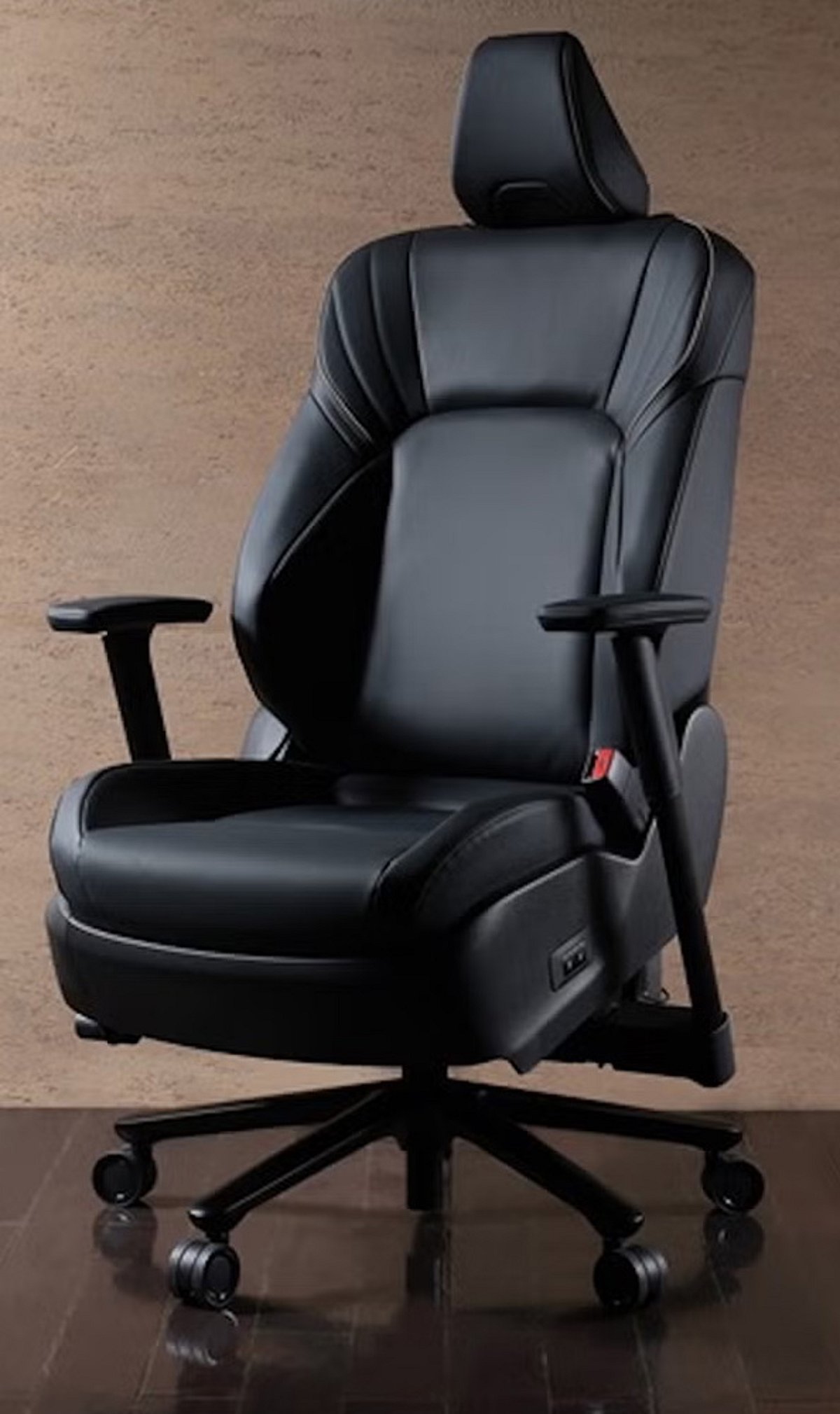
    Toyota has transformed the front power seat of its Crown sedan into a premium office chair that offers heating, cooling, and luxury comfort. The chair is the result of a collaboration between Toyota Boshoku and furniture maker Itoki, merging automotive comfort with office furniture design.

    Users can enjoy heated and ventilated seating with multiple comfort levels, keeping warm in winter and cool during long work sessions. Motorized controls allow adjustment of recline, height, tilt, and lumbar support, replicating the experience of sitting inside a Toyota Crown sedan.

    A clever design twist repurposes the original Crown seatbelt buckle into a handy USB charging port for devices. Premium leather upholstery, chrome accents, and high-density cushioning give the chair a luxury look inspired by Toyota’s flagship sedan.

    Priced at around 495,000 yen ($3,500), the chair is limited to just 70 units and will be sold exclusively through Japan’s THE CROWN dealers. If demand exceeds supply, buyers will enter a lottery system for a chance to own this exclusive chair.

    While its premium price limits mass appeal, the Toyota Crown Office Chair showcases how automakers are bringing luxury car features into home and office spaces.

  • Why Major Automakers Are Splitting Investments Between EVs and Hybrids in 2026

    Why Major Automakers Are Splitting Investments Between EVs and Hybrids in 2026

    Automakers are now taking a more balanced approach to powertrain investments, splitting billions between fully electric vehicles (EVs) and hybrids. Rather than retreating from electrification, companies like Toyota, Ford, GM, Honda, and Stellantis are using hybrids to manage risk and support long-term EV goals.

    Why EV Demand Has Cooled

    Between 2021 and 2024, automakers set ambitious timelines for an all-electric future. But by 2025, EV demand slowed as several markets cut incentives and consumer interest plateaued. Toyota reduced its 2026 global EV production target to 1 million units and delayed its US EV production start. Yet Toyota remained the top-selling automaker in the US in 2025, largely thanks to strong hybrid sales. This shift signals that many buyers still prefer hybrids as a practical, affordable choice.

    Why Hybrids Are Making a Comeback

    Hybrids appeal to buyers who want better fuel economy without worrying about charging infrastructure or the higher upfront cost of many EVs. Ford is adding hybrid options across nearly its entire lineup. Honda is developing a new hybrid platform from the ground up. Stellantis, meanwhile, is moving away from plug-in hybrids in North America toward mild hybrids and range-extended models.

    Why Automakers Need Both Powertrains

    Hybrid production uses existing engine and transmission lines, existing supplier deals, and much smaller battery packs than full EVs. This reduces exposure to volatile lithium and nickel prices and helps factories stay busy while EV demand catches up. Ford expects its EV division, Model e, to turn a profit by 2029, with hybrid profits helping bridge the gap. GM took a $6 billion writedown on its EV business and is rethinking an all-electric Cadillac lineup. Stellantis is building the STLA One platform, designed to handle EV, hybrid, and gas models on the same production lines. This approach doesn’t sideline EVs—it uses hybrid profits to buy time for the industry to get electric mobility right.

    Regional Strategies Shape Powertrain Choices

    No single global strategy works for every market. Easing US emissions rules have reduced the compliance value of plug-in hybrids in some segments, leading Stellantis to retire them in North America. Europe, on the other hand, continues to push for tighter emissions standards and stronger EV incentives. North America’s uneven charging infrastructure keeps hybrids ahead in mainstream segments, while regions with robust charging networks and policy support favor EVs. Executives now describe this as running several regional strategies in parallel, rather than one transition plan with a fixed end date.

    What It Means for Buyers and Investors

    Buyers can expect more hybrid choices in mainstream segments through 2026, alongside EVs positioned carefully where charging infrastructure is mature. For investors, key metrics to watch are hybrid margins, capital committed to shared platforms like STLA One, and how fast EV divisions close their profitability gap.

    Final Thoughts

    Instead of betting solely on EVs or hybrids, automakers are competing on operational flexibility—running both powertrains on shared factories and platforms without overcommitting to either. That flexibility, more than any single technology, is shaping up as the industry’s real competitive advantage for the rest of the decade.

  • IBM and Toyota Transform Automotive Supply Chains with AI and Cloud

    IBM and Toyota Transform Automotive Supply Chains with AI and Cloud

    Clay Sheriff, Senior Partner at IBM, has spent the last five years leading a strategic transformation partnership with Toyota to overhaul the automaker’s North American supply chain. The initiative leverages cloud, data, and artificial intelligence to improve visibility, accelerate decision-making, and build resilience against ongoing disruptions such as parts shortages, geopolitical instability, and tariff volatility.

    The collaboration goes beyond a simple technology upgrade. Sheriff describes it as a co-creation effort, with IBM not only building new capabilities but also helping Toyota operate and continuously improve them. Lessons learned from Toyota’s supply chain are being applied across the broader business, embedding AI-driven workflows into daily operations.

    This partnership reflects a growing trend in the automotive industry, where legacy supply chains are being reimagined through digital innovations to handle a decade of unprecedented disruption. By integrating IBM’s AI and cloud solutions, Toyota aims to achieve faster, more informed decisions and a more adaptable supply chain.

  • AI and Digital Transformation Video Roundup: AWS, IBM, Toyota, and More

    AI and Digital Transformation Video Roundup: AWS, IBM, Toyota, and More

    Stay up to date with the latest insights on artificial intelligence, supply chain modernization, and digital transformation. This curated collection of videos features industry leaders from AWS, IBM, Deloitte, Toyota, Oracle, and other top organizations discussing how they leverage AI and data-driven strategies to drive innovation.

    • Bill Foy: How AWS is Modernising Supply Chains With AI – Learn how AWS applies AI to streamline logistics and inventory management.
    • Clay Sheriff: IBM Helps Toyota Reimagine Supply Chain – Explore IBM’s collaboration with Toyota to build a more resilient, AI-powered supply chain.
    • Deloitte’s Matt Fiorino on Modernising University IT – Deloitte shares approaches for transforming legacy university systems into agile digital platforms.
    • Ascentt’s Nilesh Vyas on Microtransformation at Toyota – A deep dive into incremental AI-driven changes that yield big results at Toyota.
    • Inside the University of Cincinnati’s Digital Transformation – See how the university is leveraging technology to enhance operations and student experience.
    • Toyota North America’s AI & Data-Driven Supply Chain Revamp – Toyota’s strategy for using AI and data analytics to optimize its North American supply chain.
    • Eaton’s Armand van Niekerk on Africa’s Digital Expansion – Eaton’s perspective on scaling digital and AI capabilities across African markets.
    • Lisa Gulker: How Oracle Helps Transform Healthcare Delivery – Oracle’s vision for AI and cloud solutions in modernizing healthcare workflows.

    More videos are available on the source page. Watch and learn from today’s leading digital transformation pioneers.