
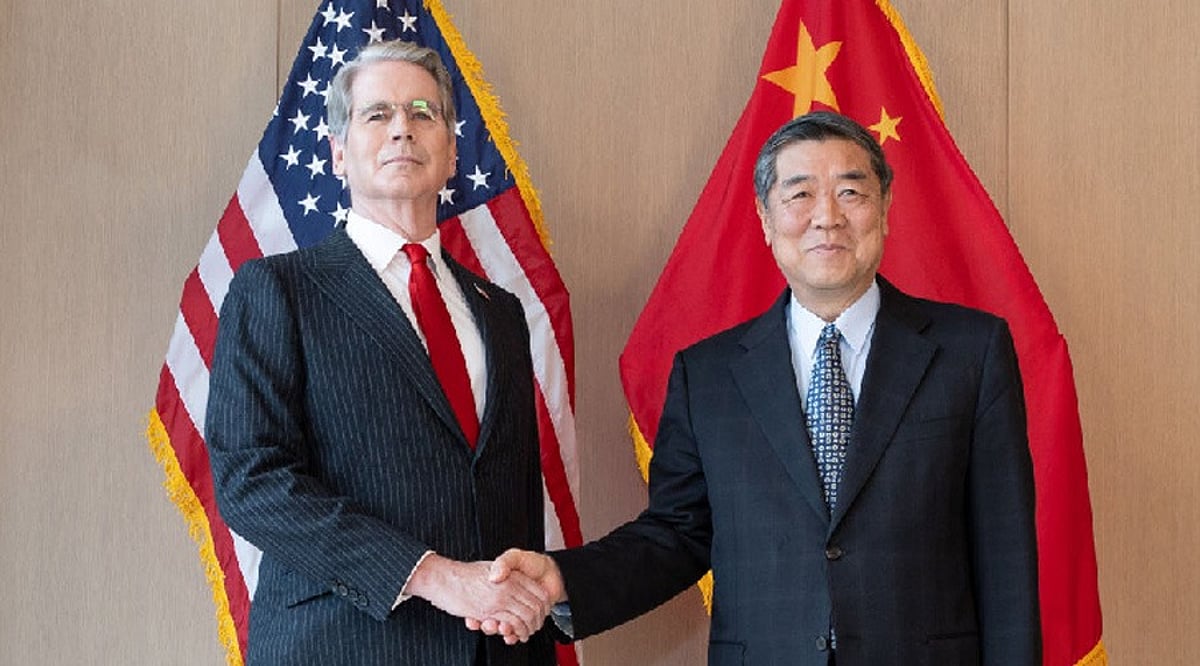
China and the United States have reached agreement on several economic and trade issues after their latest consultations in New York, China’s Ministry of Commerce said. The talks produced a proposed reciprocal tariff reduction and opened the first formal bilateral dialogue on artificial intelligence under the two countries’ economic and trade consultation framework.
Tariff framework targets USD 30 billion in goods on each side
The proposed framework would lower tariffs on selected products worth USD 30 billion on each side. China’s commerce ministry had previously indicated that the two governments were working toward an arrangement covering goods of equivalent value. The plan is intended to ease trade barriers between the world’s two largest economies, but it is not an immediate, across-the-board tariff cut. Specific products and implementation steps remain under negotiation, and the ministry said it would provide further updates as work progresses.
New trade and investment councils proposed
Beyond tariffs, the discussions covered implementation of existing agreements and the creation of trade and investment councils. Those bodies would give both sides a regular mechanism for addressing economic concerns and reviewing earlier arrangements.
First AI dialogue brings technology governance into trade talks
Chinese Vice-Premier He Lifeng and U.S. Treasury Secretary Scott Bessent, who lead their countries’ economic teams, held the first AI dialogue under the economic and trade consultation mechanism. The two governments had already agreed to establish an intergovernmental dialogue on AI, with earlier discussions covering technological risks and global AI governance. AI has become a central part of the broader relationship as the two countries compete in advanced technology and weigh the risks of increasingly capable systems.
Trade tensions remain unresolved
The consensus marks another step in managing a complex relationship rather than a full resolution of outstanding disputes. Tariffs, trade barriers, and other economic issues remain on the agenda, and earlier arrangements are being extended or reviewed. Both sides are expected to continue talks through existing consultation channels.
For businesses, the proposed tariff reductions could eventually bring more clarity on selected product categories if the framework moves into implementation. The formal AI dialogue also gives Beijing and Washington an additional channel to discuss technology risks, governance, and wider implications.
