
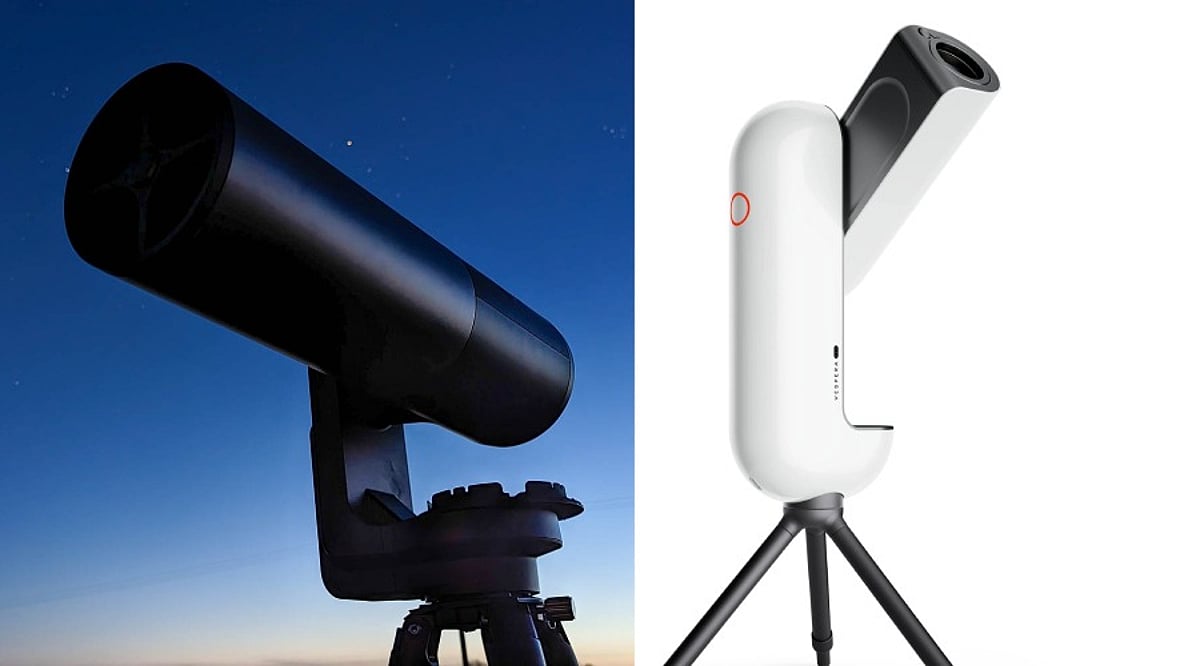
A first telescope is less about raw specs and more about the kind of astronomy a beginner wants to practice. Smart telescopes automate target finding, tracking, and imaging through cameras, motorized mounts, and apps. Traditional telescopes keep the observer in control, teaching manual aiming, focusing, and sky navigation. Both can reveal the night sky, but they ask for different levels of effort and build different skills.
How smart telescopes change the beginner experience
Finding a target is often the hardest part of stargazing. Smart telescopes combine optics, a camera, a motorized mount, and companion software to locate and follow objects automatically. Many models show the view on a screen instead of an eyepiece, and some stack multiple exposures to bring out detail in faint objects. The result is a shorter path from setup to a first image, especially for beginners who want astrophotography without a steep manual learning curve.
What traditional telescopes teach
A manual refractor or reflector puts the beginner at the controls. The observer aims the tube, adjusts focus, and uses a finder or star chart to locate targets. The payoff is a direct eyepiece view rather than a processed screen image. Basic operation is easy to learn, but tracking down faint galaxies, nebulae, and star clusters takes practice. That practice builds real skill in sky navigation, optics, and visual observation.
Skills develop differently
Traditional telescopes train users to focus, track by hand, choose eyepieces, and read the night sky. Smart telescopes shift the learning toward framing shots, managing captures, using software, and understanding basic astrophotography. Neither path is skill-free; they simply develop different abilities.
Compare the full cost, not just the price tag
Entry-level models exist in both categories, but the sticker price is only part of the story. A traditional telescope can start simply and become more expensive as the observer adds eyepieces, filters, a sturdier mount, or a camera. A smart telescope often bundles more hardware and software at purchase, though upgrades may be tied to one manufacturer’s accessories and software ecosystem. Because prices change often, checking current listings before buying is worthwhile.
Light pollution affects each setup differently
Smart telescopes can stack exposures to reveal more detail in faint objects under bright city skies, but they do not erase light pollution. With a traditional telescope, the eye receives the view directly, so light pollution has a stronger impact on how much of a dim target is visible.
Match the telescope to the target
| Target | Smart telescope | Traditional telescope |
|---|---|---|
| Moon | Captures surface detail on a screen | Offers a direct eyepiece view |
| Planets | Can image planets, though methods differ from deep-sky work | Delivers a strong visual reward through the eyepiece |
| Nebulae and galaxies | Strong fit because cameras gather faint light over time | Visible, but faint targets demand dark skies and practice |
| Star clusters | Works well with automated capture | Works well depending on aperture and sky conditions |
How a beginner should decide
Choose a smart telescope if the goal is capturing deep-sky images with minimal setup and automated help. Choose a traditional telescope if the goal is learning manual observing, optics, and sky navigation. Trying both through a local astronomy club, observatory, or dealer can clarify which experience fits before spending money.
Final takeaway
Automation and manual observing are converging as telescope technology improves, and future models will likely borrow features from both sides. A beginner who understands what each system demands today can choose with confidence and adapt later as their interest in astronomy grows.
Frequently asked questions
Are smart telescopes good for beginners?
Yes. They simplify target finding, tracking, and image capture, making them a good fit for beginners who want automated observation and astrophotography.
Are traditional telescopes harder to use?
They usually require more manual work. Beginners may need to learn target finding, focusing, and tracking, but those steps build practical observing skills.
Are smart telescopes better for galaxies and nebulae?
They are designed around imaging, so they can stack exposures to reveal more detail from faint deep-sky objects. Traditional scopes can show these objects too, but faint targets are more demanding visually.
Can traditional telescopes be used for astrophotography?
Yes. They can be paired with cameras and suitable mounts, though additional equipment may be needed depending on the type of imaging.
Should a beginner choose smart or traditional?
It depends on the desired experience. Smart telescopes suit automated imaging and easier setup; traditional telescopes suit hands-on control and visual astronomy.