
Tag: traffic management

  • 8 Breakthroughs Quantum Computing Could Deliver by 2030

    8 Breakthroughs Quantum Computing Could Deliver by 2030

    Quantum computing is no longer a distant theoretical concept—it is rapidly advancing toward practical applications that could transform industries. By 2030, these powerful machines may solve some of the most complex problems facing humanity. Here are eight real-world challenges quantum computers are expected to tackle.

    Drug Discovery

    Quantum computers can simulate complex molecular interactions with unprecedented accuracy. This capability will help researchers identify promising drug candidates much faster than traditional computing methods, potentially accelerating the development of treatments for diseases like cancer and Alzheimer’s.

    Battery Development

    Advanced quantum simulations may revolutionize the design of batteries. By modeling chemical reactions at the quantum level, scientists could create longer-lasting, safer, and more efficient batteries for electric vehicles and renewable energy storage.

    Supply Chain Optimization

    Businesses face enormous complexity in logistics. Quantum algorithms can optimize shipping routes, warehouse operations, and inventory management, reducing costs and improving efficiency across global supply chains.

    Financial Modeling

    Banks and investment firms will use quantum computers to analyze risk scenarios and market trends far faster than classical systems. This will support more informed portfolio management and better forecasting of economic shifts.

    Climate Research

    Modeling Earth’s climate involves countless variables. Quantum computers can simulate atmospheric interactions with greater precision, improving weather forecasts and deepening our understanding of long-term climate change patterns.

    Cybersecurity Research

    Quantum systems offer both challenges and solutions for security. They can strengthen encryption research and help develop communication methods that are resistant to future cyber threats, safeguarding digital infrastructure.

    Material Science

    Designing new materials requires understanding molecular structures. Quantum simulations will enable researchers to create stronger, lighter, and more efficient materials for aerospace, electronics, and manufacturing.

    Traffic Management

    Urban congestion is a growing problem. Quantum-powered optimization algorithms could help cities design smarter traffic signals, improve transportation networks, and enhance public transit systems, reducing travel times and emissions.
  • 10 Smart Cities Using AI to Revolutionize Urban Living

    10 Smart Cities Using AI to Revolutionize Urban Living

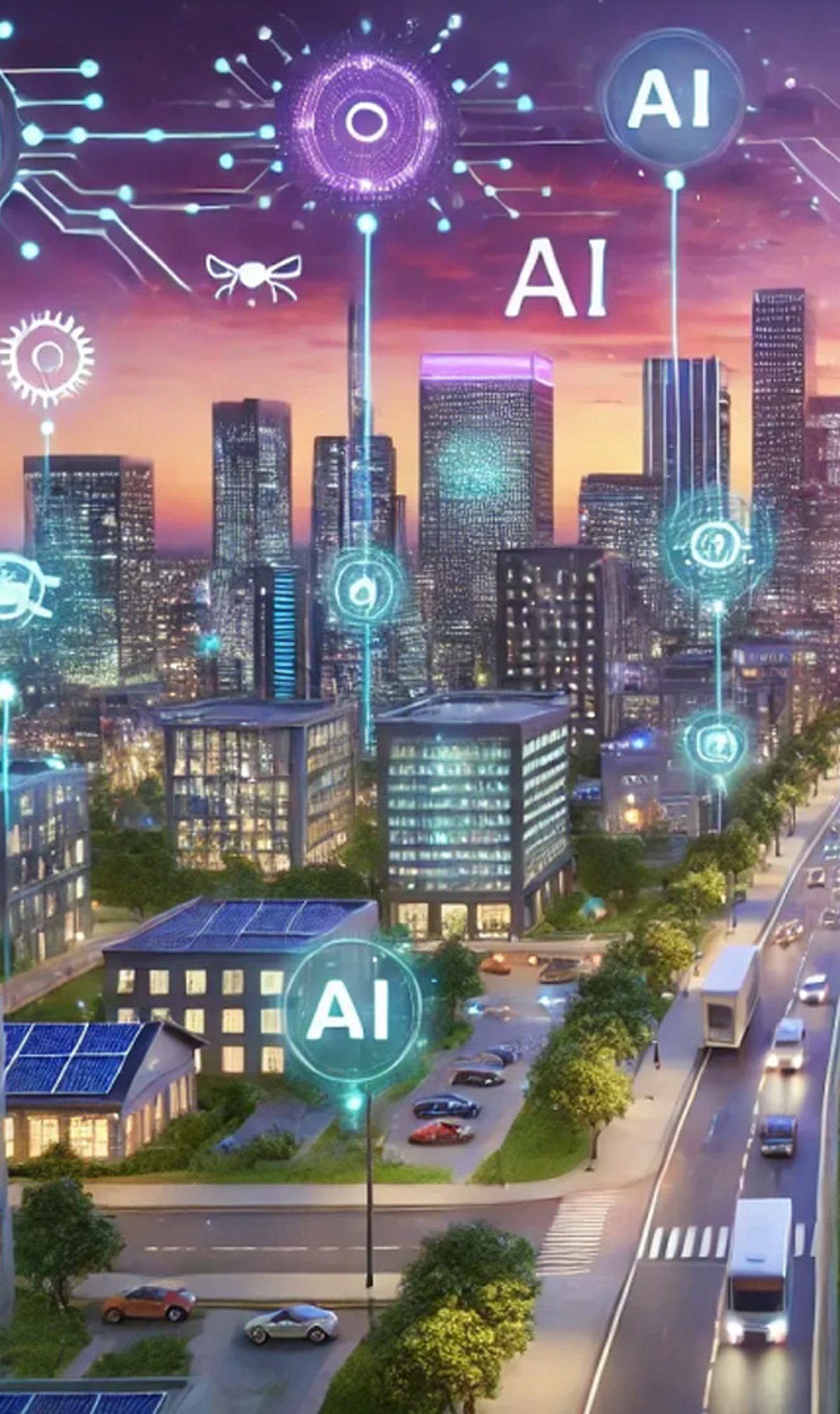
    Artificial intelligence is reshaping urban life, helping cities become more efficient, sustainable, and livable. From traffic optimization to smart energy grids, here are ten cities leading the charge.

    Singapore

    Singapore uses AI for traffic optimization, predictive maintenance, public safety monitoring, and smart urban planning, improving efficiency, sustainability, and residents’ quality of life.

    Dubai

    Dubai implements AI across government services, policing, healthcare, and transportation, accelerating digital transformation while enhancing citizen experiences through intelligent automation.

    Barcelona

    Barcelona employs AI-powered sensors for waste management, traffic control, and energy efficiency, creating cleaner neighborhoods and more sustainable public infrastructure systems.

    Seoul

    Seoul integrates AI into public transportation, emergency response, surveillance, and administrative services, enabling faster decision-making and improved urban convenience for citizens.

    Amsterdam

    Amsterdam uses AI for mobility management, environmental monitoring, and energy optimization, supporting sustainable development while reducing congestion and carbon emissions citywide.

    Tokyo

    Tokyo applies AI to disaster preparedness, transportation networks, and smart infrastructure maintenance, increasing resilience and operational efficiency across one of the world’s busiest cities.

    New York City

    New York City leverages AI for traffic analysis, emergency services, crime prevention, and infrastructure monitoring, helping manage complex urban operations more effectively.

    Helsinki

    Helsinki uses AI-driven digital government platforms and mobility solutions to simplify public services while encouraging environmentally responsible urban development initiatives.

    Copenhagen

    Copenhagen integrates AI with smart energy grids, cycling infrastructure, and environmental monitoring to improve sustainability, resource efficiency, and overall urban livability.

  • Videonetics Deploys AI-Powered Surveillance Network Across Andhra Pradesh for Real-Time Governance

    In a landmark step toward building a future-ready, technology-led governance ecosystem, Videonetics has successfully deployed its AI-powered Unified Video Management Platform across all 28 districts of Andhra Pradesh. This large-scale implementation establishes a connected, real-time intelligence network that enhances public safety, optimizes traffic enforcement, and enables data-driven decision-making across the state.

    Platform Overview

    At the core of this transformation is Videonetics’ unified platform, which brings together video management, AI-driven analytics, traffic management, e-ticketing, and face recognition within a single architecture. Approximately 15,000 IP cameras have been installed across critical locations, enabling continuous monitoring and seamless data flow into command centers.

    Traffic Management

    An advanced traffic management system is operational across more than 680 crucial intersections. This system automates detection of violations such as over-speeding and signal breaches, while also enabling identification of blacklisted vehicles, significantly reducing manual intervention and improving enforcement consistency.

    Face Recognition System

    The face recognition system deployed at nearly 1,000 locations assists authorized law enforcement agencies to identify persons of interest through integration with approved national databases, in compliance with regulatory frameworks.

    Real-World Outcomes

    Within weeks of becoming fully operational, CCTV360 (RTGS) began delivering tangible results beyond enforcement statistics:

    • A stolen two-wheeler reported in Bapatla was recovered within 3 hours. The vehicle was tracked across districts via ANPR and recovered by police in Tenali.
    • Two 11-year-olds reported missing from Yelamanchili were reunited with their families in under 4 hours after being identified using the Face Recognition System at Visakhapatnam Railway Station.
    • A Non-Bailable Warrant offender was flagged by the Face Recognition System at Tirumala Bus Stand, Tirupati, and taken into custody within 81 minutes.
    • A statewide facial recognition alert for a woman missing for over a month from Anantapur helped trace her location at Puttaparthi the very same day.

    State officials reported a broader pattern of reduced crime rates, faster investigations, and measurably safer roads through consistent, automated traffic enforcement.

    Leadership Perspectives

    “Andhra Pradesh represents one of the most progressive examples of how technology can be leveraged to transform governance at scale. At Videonetics, we are deeply committed to supporting the state’s vision of building safer, smarter, and more responsive cities.” — Naresh B. Wadhwa, Vice-Chairman & MD, Videonetics

    “The true value of technology in policing is measured not just by the number of cameras deployed, but by the outcomes delivered to citizens. This platform has helped us recover missing children, apprehend repeat offenders, trace stolen vehicles, and strengthen inter-district intelligence sharing at an unprecedented scale.” — Ch. Srikanth, IPS, Inspector General of Operations, Andhra Pradesh Police

    “Earlier, by the time CCTV footage was manually reviewed, valuable response time was already lost. Today, the system automatically alerts us about suspicious vehicles, wanted offenders, or missing persons within minutes. It has made investigations faster, patrol teams more effective, and field coordination far more efficient.” — Mrs. Malika Garg, IPS, Superintendent of Police (Operations), Andhra Pradesh Police

    Implementation Details

    Implemented in partnership with MATRIX Security & Surveillance Pvt. Ltd., the deployment integrates a vast network of cameras, analytics engines, and enforcement systems into a centralized Command and Control Centre in Amaravati, creating a unified operational backbone for statewide monitoring and response. Built on a modular and scalable architecture, the platform is designed to evolve with the state’s future requirements.

    About Videonetics

    Videonetics’ Unified Video Management Platform, powered by an indigenously developed True AI and deep learning engine, offers a comprehensive, modular, yet integrated solution. It includes applications such as Video Management System (VMS), Video Analytics (VA), Traffic Management System (TMS), and Face Recognition System (FRS). The company has been consistently ranked as the #1 Video Management Software provider in India and among the top 10 in Asia (OMDIA Informa TechTarget 2025).