
Tag: Travel Technology

  • Visa and ONDC Join Forces to Revolutionize Tourism Discovery in India

    Visa and ONDC Join Forces to Revolutionize Tourism Discovery in India

    Visa and the Open Network for Digital Commerce (ONDC) have announced plans to explore a collaboration aimed at enhancing tourism discovery and digital commerce in India. The announcement was made at the Global Fintech Festival 2026.

    The proposed partnership seeks to help travelers find destinations, tourism experiences, itineraries, and local businesses through digital channels. Visa and ONDC will assess how Visa’s digital commerce and discovery capabilities can integrate with ONDC’s open network infrastructure.

    Digital Tourism Discovery Network

    The initiative will focus on leveraging open network technology, trusted digital commerce, and digital tools to improve how travelers search for tourism services. The envisioned system could allow users to discover cities, attractions, travel plans, and businesses through connected digital services.

    Suresh Sethi, Visa Group Country Manager for India and South Asia, noted that open networks have become a vital part of India’s digital development. He emphasized that travelers increasingly expect digital tools to help plan journeys and find relevant experiences. “Tourism can be a very important asset where ONDC can serve as the digital infrastructure for tourism in the country,” Sethi said at the Global Fintech Festival 2026.

    Sethi also highlighted the growing use of digital agents to build travel plans and help users discover services. He suggested that a tourism network could bring together information about cities, travel itineraries, experiences, and small businesses in a connected digital system. “Everything related to tourism, whether discovering experiences, cities or travel itineraries, as well as small and medium businesses of the ecosystem can potentially be housed in one place,” he added.

    Connecting Travelers with Local Businesses

    ONDC views tourism as part of its broader mission to create digital markets for sellers while offering buyers more choices. The network already operates across sectors such as retail, financial services, and logistics.

    Hrushikesh Mehta, Chief Business Officer for Financial Services at ONDC, revealed that the network has processed over 500 million lifetime transactions. He explained that ONDC now sees tourism as another area where its open commerce model can connect buyers with service providers. “At ONDC, our North Star is creating markets for sellers and choice for buyers, whether it is in retail, financial services, logistics or tourism,” Mehta said.

    Mehta also noted that ONDC has received support from the Ministry of Tourism and Culture for its tourism track. However, he stressed the need for stronger participation from the demand side. “We are very keen to work with Visa to see what we can do together to make that happen and help connect travellers with the diverse experiences that India has to offer,” he stated.

    Expanding Access to India’s Tourism Services

    Under the proposed collaboration, Visa and ONDC will explore ways to connect travelers with tourism providers across different destinations and regions. They will also assess how digital discovery tools can make local tourism businesses more accessible.

    The approach could cover travel experiences, destination information, itineraries, and services offered by small and medium enterprises. It may also provide an additional digital channel for tourism operators participating in ONDC’s open network.

    Visa would contribute its digital commerce and discovery capabilities, while ONDC would provide its open network infrastructure. No launch date or detailed rollout plan has been announced yet. For now, the initiative remains in the exploration phase, with both organizations evaluating potential models for tourism discovery and digital commerce to serve domestic and international travelers across India.

  • Axel Hefer’s Tech-Driven Overhaul of Trivago: AI, Data, and the Future of Hotel Search

    Axel Hefer’s Tech-Driven Overhaul of Trivago: AI, Data, and the Future of Hotel Search

    The Vision Behind Trivago’s Transformation

    Axel Hefer’s tenure as CEO of Trivago marked a pivotal era in which technology, data, and artificial intelligence were placed at the heart of hotel search. Under his leadership, Trivago evolved from a simple price-comparison platform into a metasearch engine that understands traveler intent, processes natural language, and delivers personalized accommodation recommendations.

    Technology as the Core Identity

    Hefer viewed technology not merely as a tool but as the defining element of Trivago’s brand. The company leveraged its massive dataset—covering over 5 million hotels and apartments worldwide—to simplify how users discover and compare options. Rather than forcing travelers to wade through endless filters, Trivago aimed to provide clear, actionable insights that speed up decision-making.

    One of the early innovations was the Trivago Score, which aggregated qualitative review data into a single, easy-to-understand signal. This approach helped users quickly gauge a property’s strengths without reading dozens of reviews.

    Pioneering AI-Powered Search

    The next leap came with generative AI. Trivago’s AI Smart Search allows travelers to describe their ideal hotel in plain language—such as “a quiet boutique hotel near the old town with a rooftop pool and workspace”—and the system interprets the intent, matches it to available properties, and presents relevant results. This marked a shift from filter-based search to intent-driven discovery.

    Hefer championed this direction even before the launch of the product. He often pointed out that AI could analyze hundreds of reviews to extract meaningful signals—like pool quality or location suitability—saving users hours of manual research.

    Beyond the Search Box: Partnerships and Infrastructure

    Hefer also expanded Trivago’s technological reach through strategic partnerships. In 2021, Trivago teamed up with Huawei to power accommodation search within Petal Search and Petal Maps, making its technology accessible to a broader audience. Simultaneously, the company invested in back-end infrastructure to handle the massive data volumes required for real-time price and availability comparisons.

    Post-Hefer, Trivago deepened its relationship with AI travel tech firm Holisto, investing to improve the booking experience through Trivago Book & Go. This move further cemented the data-driven foundation laid during his tenure.

    Hefer’s Enduring Legacy

    Though Axel Hefer stepped down as CEO in May 2023, the technological blueprint he established continues to guide Trivago’s strategy. The company’s current AI initiatives are a direct extension of the principles he championed: using data and machine learning to reduce complexity and deliver smarter hotel search.

    Hefer’s legacy is one of transformation—from a straightforward comparison tool to an AI-powered platform that understands what travelers really want.

    Key Takeaways

    • Hefer placed technology, data, and AI at the center of Trivago’s hotel-search experience.
    • AI Smart Search enables natural-language queries, moving beyond rigid filters.
    • Partnerships with Huawei and Holisto extended Trivago’s tech reach beyond its own site.
    • The Trivago Score exemplifies how AI distills qualitative data into simple signals.
    • Hefer’s vision set the stage for a more intuitive, intent-driven travel search.

    Frequently Asked Questions

    Who is Axel Hefer? Axel Hefer is a German technology executive who served as Trivago’s CEO until May 9, 2023.

    How did Axel Hefer influence Trivago? He focused on technology, data, and artificial intelligence to improve hotel search, comparisons, and traveler experiences across Trivago.

    What technology does Trivago use for hotel search? Trivago uses data, artificial intelligence, and natural language processing to help travelers discover hotels that match their preferences and requirements.

    What is Trivago’s AI Smart Search? AI Smart Search allows travelers to describe hotel preferences naturally, helping to identify properties that match specific requirements, locations, and experiences.

    Who succeeded Axel Hefer as Trivago CEO? Johannes Thomas succeeded Axel Hefer as Trivago CEO on May 9, 2023.

  • Revolutionizing Visa Applications: How AI Streamlines the Process for Indian Travelers

    Revolutionizing Visa Applications: How AI Streamlines the Process for Indian Travelers

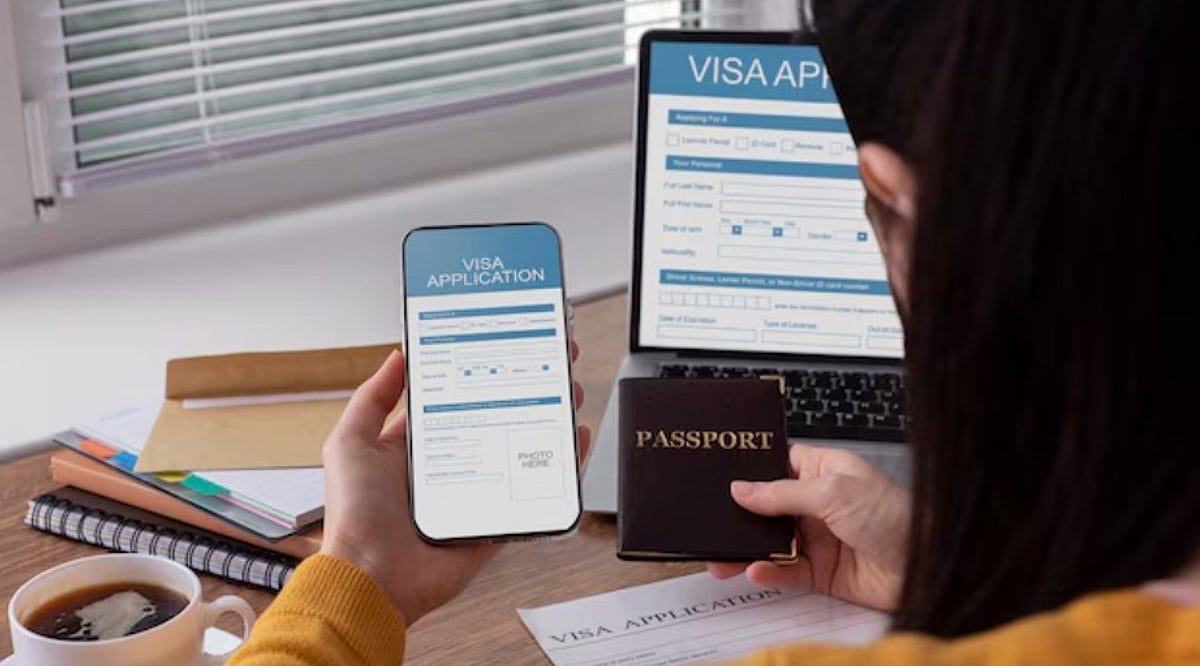
    The process of traveling abroad—whether for leisure, business, education, or visiting relatives—has never been simpler for Indian tourists. While booking flights and accommodations can take just minutes, the visa application process remains a time-consuming and stressful endeavor. Collecting required documents, understanding each country’s specific requirements, filling out forms correctly, and tracking application status can be daunting.

    Fortunately, artificial intelligence is radically changing that. By automating processes, validating documents, and providing step-by-step assistance, AI makes the visa application process faster and less intimidating.

    Challenges Faced by Indian Travelers

    Every nation has its own visa requirements and application procedures. A small mistake—such as uploading the wrong document or filling in a field incorrectly—can lead to delays or requests for additional information. Common challenges include:

    • Navigating country-specific document requirements
    • Organizing financial and supporting documents
    • Filling out lengthy application forms accurately
    • Tracking the status of submitted applications
    • Dealing with multiple document formats (PDF, scans, photos)

    For those juggling work, studies, or family obligations, these tasks can become overwhelming.

    The Role of AI in Streamlining Visa Applications

    Artificial intelligence simplifies the visa application process by reducing manual tasks. Advanced AI guides users through every step, from initial document preparation to final submission. Current systems can analyze uploaded documents, identify gaps, and flag potential errors before submission. AI also provides personalized checklists based on the traveler’s destination and visa type.

    Automated Document Validation

    Document preparation is often the most time-consuming part of visa applications. Travelers must ensure that passports, financial records, identification papers, photographs, and letters of invitation are correct and complete. AI-powered validation tools automatically check documents for errors, missing pages, or inconsistencies. Instead of receiving a rejection notice after submission, travelers get real-time feedback and can fix issues immediately.

    Enhancing Transparency Throughout the Process

    One of the biggest frustrations for applicants is the lack of clarity after submitting documents. Travelers often wonder if more information is needed and when a decision will be made. AI-based platforms solve this by offering centralized dashboards that track status, send notifications, and provide updates on any changes. This transparency helps travelers—especially business travelers and families with fixed trip dates—plan more effectively.

    Visarun AI: An Example in Action

    Visarun AI is a prime example of how artificial intelligence can make visa applications easier for travelers. This AI-enabled B2C platform simplifies the entire process, from preparing the application and organizing documents to tracking status and receiving updates. Rather than leaving travelers to navigate complex requirements alone, Visarun AI uses automation to guide them step by step.

    Advantages Beyond Faster Processing

    In addition to reduced processing time, AI offers several other benefits:

    • Less paperwork and manual effort
    • Greater accuracy in documentation
    • Tailored assistance based on the traveler’s profile
    • Shorter preparation time
    • Increased transparency about application progress
    • Reduced stress during the entire visa process

    These benefits are especially valuable for first-time international travelers.

    The Future of AI in Travel

    Artificial intelligence is expected to play an even larger role in international travel in the coming years. Future advancements may include multilingual assistance, better document recognition, predictive process improvements, and personalized travel recommendations. AI does not replace immigration officials but works alongside existing systems to produce better-prepared applications that are easier to evaluate. As governments worldwide continue digitizing their processes, AI travel assistants will become as common as booking flights, arranging accommodations, and purchasing insurance.

    Conclusion

    For Indian citizens, securing a visa has traditionally involved extensive paperwork, diligence, and uncertainty. Artificial intelligence is revolutionizing this process by automating checks, simplifying document preparation, and increasing transparency. With tools like Visarun AI, travelers can now streamline the visa application process, avoid common mistakes, and minimize stress.