Tag: TSMC

  • AI Reshapes Chip Industry: Top Semiconductor Companies by Market Cap

    AI Reshapes Chip Industry: Top Semiconductor Companies by Market Cap

    AI’s Impact on Semiconductor Valuations

    Artificial intelligence is fundamentally transforming how investors evaluate semiconductor companies. The industry now spans GPUs, memory, foundries, networking chips, manufacturing equipment, and advanced processors. Recent market-cap data underscores this shift, with several chipmakers reaching historic valuations as demand for AI infrastructure expands across data centers and increasingly complex computing workloads worldwide.

    Nvidia Leads the Pack

    Nvidia dominates the semiconductor rankings with a market capitalization of approximately $5.33 trillion. Its position reflects surging demand for accelerated computing, AI processors, and data center infrastructure. The company’s valuation is substantially larger than other listed semiconductor businesses, highlighting the financial importance of AI computing platforms and supporting technologies.

    TSMC Powers Advanced Manufacturing

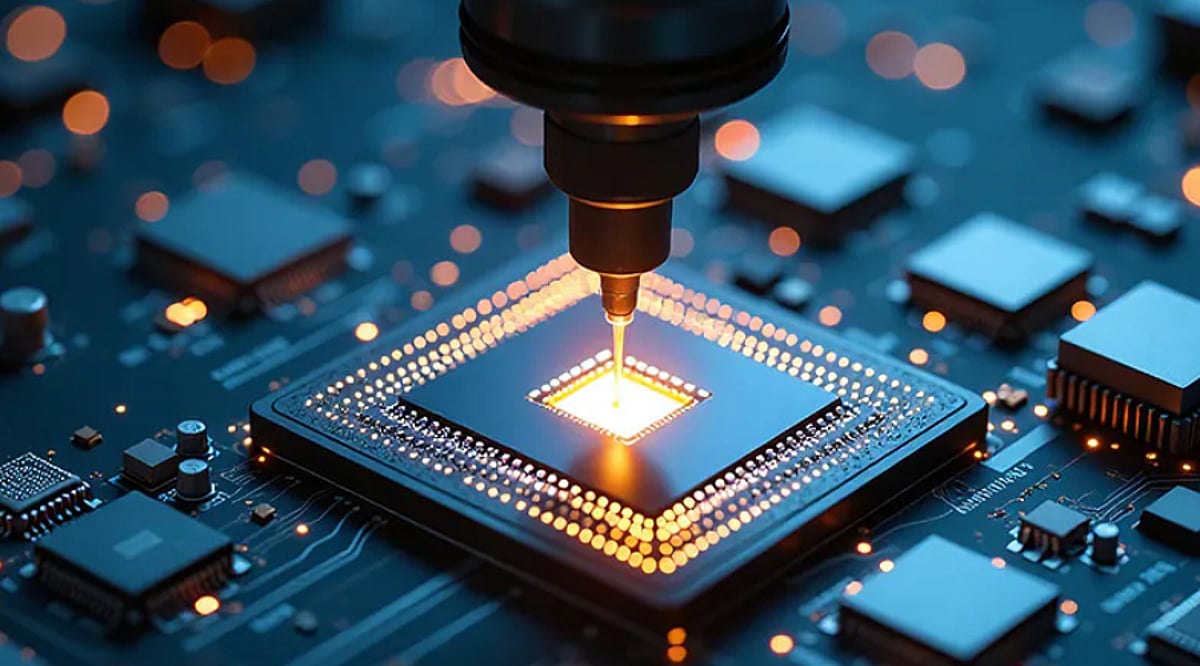
    TSMC ranks second with a market cap of about $2.24 trillion. As the leading contract chip manufacturer for major technology companies, TSMC’s strategic importance has grown with the need for advanced processors — especially energy-efficient chips that can handle demanding AI workloads.

    Broadcom’s Networking Edge

    Broadcom appears among the largest with an estimated market capitalization of $1.72 trillion. Its portfolio includes networking and connectivity technologies that support large-scale computing infrastructure. As AI data centers expand, demand is rising not only for processors but also for high-speed networking and specialized components that connect complex systems.

    Memory Plays a Big Role

    Samsung and Micron hold market caps of approximately $1.20 trillion and $1.12 trillion respectively, while SK Hynix follows at around $907 billion. Their positions reflect the growing importance of memory technologies, particularly high-bandwidth memory (HBM), which is essential for demanding AI workloads and large-scale accelerated computing systems.

    Other Key Players

    AMD is shown at approximately $894 billion, ASML reaches $633 billion, CXMT stands at $565 billion, and Intel follows at about $547 billion. This ranking demonstrates that AI-related value extends beyond GPU manufacturers, encompassing processors, manufacturing equipment, and memory — all critical to producing advanced chips.

    AI Lifts the Entire Stack

    The semiconductor market is becoming increasingly interconnected as AI accelerates demand across multiple layers. Processor designers, memory manufacturers, foundries, networking companies, and equipment suppliers all support expanding AI infrastructure. The market-cap figures illustrate how investors are assigning significant value across this ecosystem, reflecting expectations for continued computing demand and technological investment.
  • AI Demand Drives These Semiconductor Stocks: NVIDIA, TSMC, and More

    AI Demand Drives These Semiconductor Stocks: NVIDIA, TSMC, and More

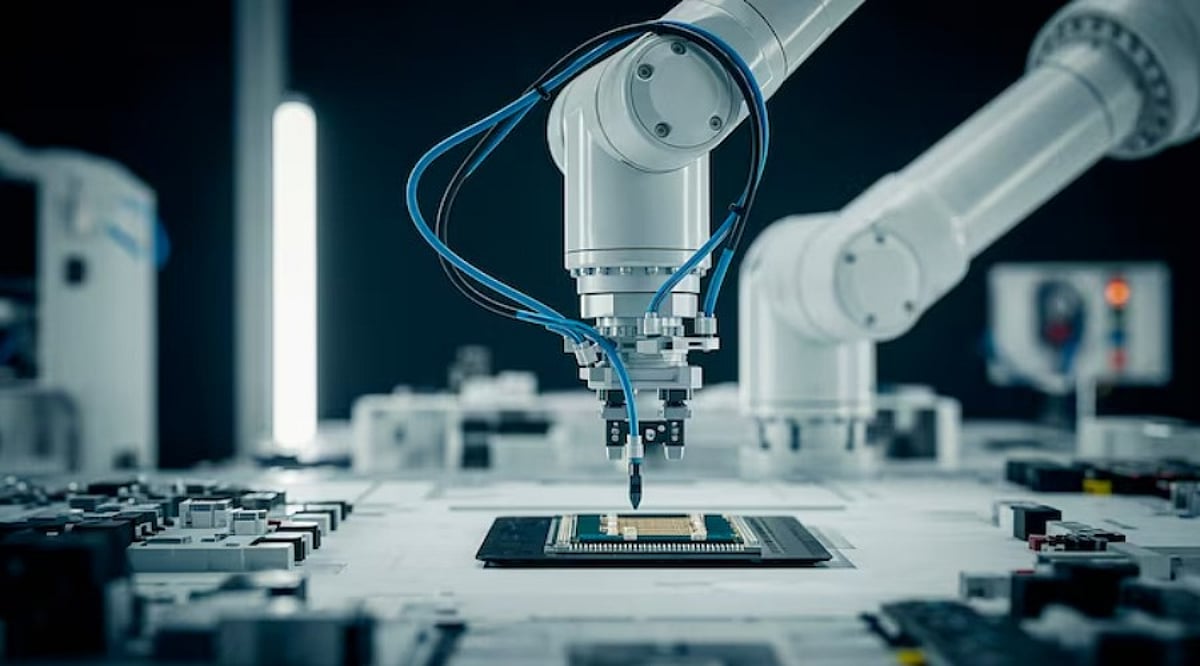
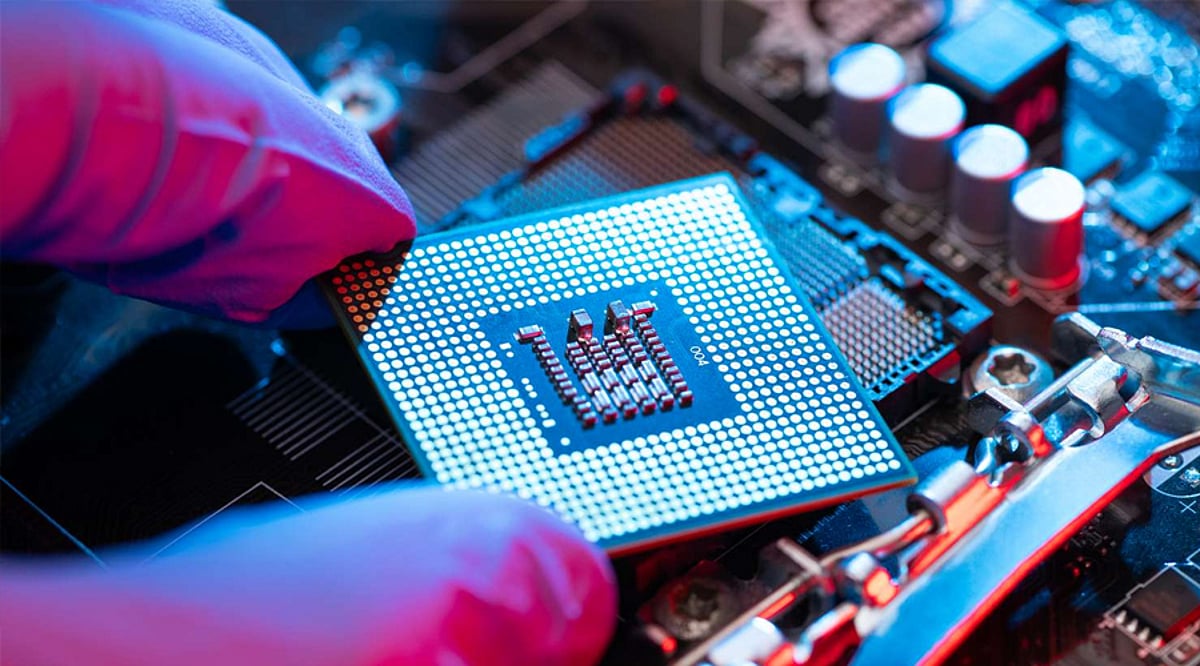
    Artificial intelligence continues to reshape the semiconductor landscape, creating opportunities for investors across the chip supply chain. From GPU leaders to memory manufacturers and equipment providers, several stocks are positioned to benefit from surging AI demand. Below, we analyze the key players and the risks that accompany their growth.

    Key Takeaways

    • NVIDIA remains the dominant AI chip supplier, while Broadcom provides exposure to custom silicon and networking.
    • TSMC and Micron gain from advanced manufacturing and high-bandwidth memory demand.
    • Equipment firms like ASML, Lam Research, Applied Materials, and KLA offer indirect AI growth avenues.

    NVIDIA and Broadcom Lead the AI Chip Race

    NVIDIA’s position as the premier AI chipmaker is unshaken. With its stock near $218.36 and a market capitalization approaching $5.30 trillion, the company supplies GPUs and networking solutions for AI data centers. A 2.26% dip on September 10 reflected broader tech pressure from rising Treasury yields, but its long-term trajectory remains tied to AI deployment.

    Broadcom offers a complementary play. Trading around $360.83, it designs custom AI chips and networking hardware for large tech firms. This diversification allows investors to tap AI growth beyond the GPU market.

    AMD adds a third option. At roughly $521.10, it has gained over 143% year-to-date, competing with NVIDIA through its AI accelerators and EPYC server processors. However, such sharp gains introduce higher valuation risk.

    TSMC and Micron: Supply Chain Pillars

    TSMC is the linchpin of advanced chip fabrication. Its U.S.-listed shares trade near $435.36, valuing the company at $1.58 trillion. The foundry posted record August revenue of NT$514.806 billion, up 53.3% year-over-year, with July revenue also strong at NT$467.580 billion. TSMC forecasts Q3 revenue between $44.6 billion and $45.8 billion, and plans capital expenditure of $60–$64 billion in 2026.

    Micron focuses on high-bandwidth memory (HBM), essential for AI workloads. With shares around $1,028, the company aims to boost HBM output to 100,000 wafers per month by year-end. HBM shortages are raising chip costs, but new entrants and rapidly shifting memory markets add risk. Micron’s fiscal Q4 results on September 30 will be a key catalyst.

    Equipment Stocks Provide Alternative Exposure

    Lam Research, Applied Materials, and KLA supply tools for chip manufacturing. Lam Research trades near $301.06, Applied Materials at $469, and KLA at $177.18—each fell over 3% on September 10. Their fortunes rise with fab expansions, not AI chips directly, making them a different risk-reward proposition.

    Marvell sits at the intersection of custom silicon and connectivity, with a stock price of $235.01 and a 176.55% year-to-date gain. Its high valuation amplifies downside risk.

    ASML stands out as the sole supplier of EUV lithography systems, crucial for shrinking process nodes. Closing near $1,698 on September 10, ASML’s technology monopoly gives it a long-term edge, though its stock can swing with capital spending cycles.

    The AI Chip Trade Faces New Tests

    Strong AI demand does not immunity from broader market forces. Higher oil prices and rising Treasury yields pressured tech stocks, and the broader U.S. market fell on September 10. Yet TSMC’s sales and HBM demand underscore robust chip demand, providing a solid business foundation amid stock volatility.

    NVIDIA, Broadcom, and TSMC offer the widest AI exposure. Micron and AMD provide targeted plays on memory and GPU alternatives. Lam Research, Applied Materials, KLA, and ASML serve the equipment segment. Marvell carries higher potential but also higher risk.

    Investors should monitor chip sales, HBM supply, AI data center budgets, and capital expenditure plans. The critical question is whether supply, capacity, and profits can keep up with the lofty expectations already baked into these stocks.

    FAQs

    Which semiconductor stock has the strongest AI exposure?

    NVIDIA has the most direct AI exposure through its GPUs and data center products.

    Why is TSMC important to AI growth?

    TSMC manufactures advanced chips for major tech firms, forming the backbone of AI processor supply.

    Why has Micron gained attention?

    Micron is a key supplier of high-bandwidth memory, critical for AI data center performance.

    Which semiconductor stocks offer equipment exposure?

    ASML, Lam Research, Applied Materials, and KLA provide exposure to chip manufacturing equipment.

    Are semiconductor stocks low-risk investments?

    No. Even with strong chip demand, share prices can decline due to high valuations, market conditions, and changing expectations.

    Disclaimer: This article is for informational purposes only and does not constitute financial advice. Investing in stocks involves risk, including potential loss of principal. Always conduct your own research before making investment decisions.

  • Leading Chipmakers Race to Dominate Advanced Semiconductor Manufacturing

    Leading Chipmakers Race to Dominate Advanced Semiconductor Manufacturing

    The race for the world’s most advanced chips is led by TSMC, Samsung, and Intel. TSMC currently holds the strongest position in leading-edge manufacturing, while Samsung and Intel are investing heavily to close the gap and secure more advanced chip orders.

    TSMC remains the leader in advanced chip manufacturing. Its 2nm process entered high-volume production in the fourth quarter of 2025, while its A16 technology is planned for volume production in the second half of 2026.

    Samsung Foundry is challenging TSMC with 2nm technology and gate-all-around transistor designs. The company began planning 2nm mass production for mobile chips in 2025 and aims to expand the process to high-performance computing and automotive applications.

    Intel is taking a different route with its 18A process and RibbonFET technology. Intel 18A entered production in 2025, while High-NA EUV is already being used on selected 18A layers for high-volume products, giving Intel an important technology milestone.

    NVIDIA and AMD are major chip designers rather than foundries. NVIDIA leads the AI GPU market, while AMD competes across AI accelerators, CPUs, and GPUs. Both depend on advanced manufacturing partners to turn their chip designs into physical products.

    SK hynix and Micron are also key players in the AI chip race through high-bandwidth memory. HBM supplies the huge amounts of data needed by modern AI processors, making memory technology as important as advanced processors for AI infrastructure.

    ASML sits at the heart of the chip race by supplying the EUV lithography systems used to manufacture leading-edge chips. Its High-NA EUV technology offers higher-resolution patterning and is designed to support future 2nm-class and more advanced manufacturing.

  • World’s Most Valuable Tech Companies: Microsoft, NVIDIA, Apple, and More

    World’s Most Valuable Tech Companies: Microsoft, NVIDIA, Apple, and More

    Microsoft: Leading in cloud computing, artificial intelligence, productivity software, and enterprise services, Microsoft consistently ranks among the world’s highest-valued technology companies.

    NVIDIA: Dominating AI chip development and accelerated computing, NVIDIA powers data centers, gaming, autonomous systems, and advanced artificial intelligence worldwide today.

    Apple: Known for premium devices, software, and services, Apple maintains exceptional brand loyalty while generating massive revenue across global consumer markets.

    Amazon: E-commerce leadership combined with Amazon Web Services strengthens its valuation through cloud infrastructure, digital advertising, logistics, and subscription-based business growth.

    Alphabet: Google’s parent company generates substantial revenue through search, advertising, cloud computing, YouTube, artificial intelligence, and innovative technology investments globally.

    Meta Platforms: Owner of Facebook, Instagram, WhatsApp, and Threads, Meta expands artificial intelligence capabilities while investing heavily in virtual and augmented reality technologies.

    Saudi Aramco: Though primarily an energy company, Saudi Aramco invests significantly in digital transformation, artificial intelligence, and advanced technology infrastructure supporting global operations.

    Broadcom: Broadcom develops semiconductor solutions and enterprise software, benefiting from growing demand for networking hardware, cloud infrastructure, and AI-focused technology markets.

    Taiwan Semiconductor Manufacturing Company (TSMC): The world’s leading chip manufacturer produces advanced semiconductors powering smartphones, AI processors, automotive systems, and next-generation computing technologies globally.

  • India’s Semiconductor Chip Supply Chain: Key Sources and Domestic Ambitions

    India’s Semiconductor Chip Supply Chain: Key Sources and Domestic Ambitions

    India relies heavily on imported semiconductor chips to power its booming electronics, automotive, and telecommunications sectors. Understanding the primary sources of these critical components reveals the global dependencies and strategic initiatives shaping the nation’s tech landscape.

    Taiwan: The Dominant Supplier

    Taiwan stands as India’s largest semiconductor supplier, led by industry giants like TSMC. These manufacturers produce advanced chips for smartphones, computers, automotive systems, and industrial electronics, making Taiwan an indispensable partner in India’s technology ecosystem.

    China: Mature Components Despite Geopolitical Tensions

    China supplies a wide range of mature semiconductor components used across consumer electronics, appliances, telecommunications equipment, and industrial manufacturing. Despite geopolitical challenges, China remains a key source for India’s semiconductor needs.

    South Korea: Memory and Storage Leadership

    South Korean companies Samsung and SK Hynix export memory chips, storage components, and semiconductor technologies that support India’s electronics manufacturing and smartphone production industries.

    United States: Advanced Processors and AI Semiconductors

    American companies design advanced processors, networking chips, and AI semiconductors widely integrated into India’s technology, cloud computing, and enterprise hardware markets.

    Japan: Specialty Materials and Equipment

    Japan provides specialty semiconductor materials, sensors, manufacturing equipment, and electronic components essential for India’s growing electronics and automotive industries across multiple sectors.

    Singapore: Regional Trading and Distribution Hub

    Singapore functions as a regional semiconductor trading and distribution hub, exporting integrated circuits and electronic components from multiple global manufacturers efficiently to India.

    Malaysia: Assembly, Testing, and Packaging

    Malaysia is a major assembly, testing, and packaging center, exporting semiconductor products and electronic components to India’s consumer electronics and automotive manufacturing sectors consistently.

    Vietnam: Emerging Electronics Manufacturing Hub

    Vietnam is an emerging electronics manufacturing hub supplying semiconductor-based components used in smartphones, computers, networking equipment, and other consumer electronic devices worldwide today.

    India’s Domestic Chip Mission

    Government initiatives encourage semiconductor fabrication, packaging, and design through incentives, aiming to reduce import dependence and strengthen domestic manufacturing. This strategic push seeks to build a self-reliant semiconductor ecosystem within India.

  • Apple A20 Pro Chip Leak: 2nm Process and WMCM Packaging Could Power iPhone 18 Pro

    Apple A20 Pro Chip Leak: 2nm Process and WMCM Packaging Could Power iPhone 18 Pro

    Apple’s next-generation A20 Pro chip could be one of the biggest upgrades coming to the iPhone 18 Pro lineup, according to a new report. While Apple has not confirmed any details, early leaks suggest the chipset will introduce two major architectural changes aimed at improving performance, battery life, and on-device AI capabilities.

    2nm Process Could Improve Speed and Efficiency

    The A20 Pro is expected to be built using TSMC’s 2nm manufacturing process. If the report is accurate, it will be the first iPhone chip to move beyond the 3nm process used in Apple’s current-generation processors. A smaller fabrication process allows more transistors to fit within the same chip area, which typically translates into better performance while consuming less power. Users could see faster app launches, smoother gaming, and improved battery life during everyday use.

    WMCM Packaging May Be the Bigger Change

    The second upgrade mentioned is the adoption of Wafer-Level Multi Chip Module (WMCM) packaging technology. Unlike traditional PoP packaging, WMCM brings important elements such as processors, memory, and the Neural Engine into close proximity. This is expected to minimize communication delays, improve memory bandwidth, and better manage heat dissipation.

    Designed for the Next Phase of Apple Intelligence

    Apple has continued to enhance its Apple Intelligence technology, and the A20 Pro is believed to include hardware to support future AI applications. By enabling quicker memory access and better processing efficiency, it would be possible to handle more AI tasks directly on the device without relying on cloud servers.

    Apple Yet to Announce the Chip

    The A20 Pro processor remains a rumor, and Apple has not announced any specifications or confirmed the iPhone 18 Pro series. If the leaks turn out to be true, it would be one of the biggest architectural advancements in Apple’s iPhone processors in recent years. More information can be expected once Apple officially reveals the iPhone 18 Pro series.

  • Top 10 Semiconductor Companies Driving the AI Revolution

    Top 10 Semiconductor Companies Driving the AI Revolution

    The rapid advancement of artificial intelligence is heavily reliant on cutting-edge semiconductor technology. From high-performance GPUs to specialized memory and fabrication, these ten companies are at the forefront of powering AI workloads across data centers, edge devices, and consumer electronics.

    • Nvidia: Leads AI computing with powerful GPUs that accelerate machine learning, generative AI, scientific research, and enterprise data center workloads globally.
    • AMD: Develops high-performance CPUs and GPUs supporting AI workloads, cloud computing, gaming, and enterprise applications with competitive processing capabilities.
    • Intel: Expands AI hardware through advanced processors, AI accelerators, and data center solutions supporting enterprise computing and intelligent automation.
    • TSMC: Manufactures cutting-edge semiconductor chips for leading technology companies, enabling advanced AI processors through world-class fabrication technologies.
    • Samsung Electronics: Produces advanced memory chips and semiconductor technologies powering AI devices, smartphones, servers, and high-performance computing systems worldwide.
    • Qualcomm: Designs AI-enabled mobile processors delivering intelligent photography, voice assistants, efficient performance, and edge AI capabilities across connected devices.
    • Broadcom: Develops networking chips, AI infrastructure components, and connectivity solutions supporting large-scale cloud computing and enterprise artificial intelligence deployments.
    • MediaTek: Builds AI-capable smartphone processors with efficient performance, intelligent imaging, and advanced connectivity for affordable consumer electronics worldwide.
    • Micron Technology: Supplies high-performance memory and storage solutions essential for AI training, inference workloads, and modern data center infrastructure.
  • ASML Stock Jumps After Second 2026 Revenue Upgrade Fueled by AI Chip Demand

    ASML Stock Jumps After Second 2026 Revenue Upgrade Fueled by AI Chip Demand

    ASML shares surged more than 3% on Wednesday after the Dutch lithography giant raised its 2026 sales forecast for the second time this year, driven by robust demand for artificial intelligence chips. The company also reported quarterly revenue and profit that exceeded analyst expectations as chipmakers accelerated spending on advanced production equipment.

    The upgraded outlook reflects strong demand for tools used in AI processors, data centers, and high-bandwidth memory. ASML noted that customer orders remained elevated in the first half of 2026 as foundries and memory producers moved faster on capacity expansion plans.

    ASML Raises Sales and Margin Guidance

    ASML now expects 2026 net sales between €43 billion and €45 billion, up from its previous forecast of €36 billion to €40 billion. The company also lifted its gross margin range to 54%–56%, compared with the earlier 51%–53% guidance.

    Second-quarter net sales reached €9.3 billion, above the €8.8 billion consensus estimate from LSEG analysts. Net profit came in at €2.9 billion, versus the €2.6 billion market forecast. Shares opened more than 7% higher before settling to a gain of about 3.4%.

    CEO Christophe Fouquet described order intake as “extremely strong” during the first half and said customers are accelerating expansion plans across both logic and memory production. These commitments give ASML better visibility into demand through 2028.

    ASML plans to increase its 2026 low-NA EUV capacity by 30% and boost its deep ultraviolet immersion capacity by the same margin. Both systems are manufactured at its facility in Veldhoven, Netherlands.

    AI Spending Drives Equipment Orders

    ASML holds a near-monopoly position in advanced chip production as the sole supplier of extreme ultraviolet lithography machines used to manufacture the most advanced semiconductors. Its customers include TSMC, Intel, SK Hynix, and Micron Technology.

    Fouquet said stronger end-market demand encouraged customers to raise capital spending and bring forward expansion plans. “This has also translated practically into very strong order booking through the first half of 2026,” he said.

    Orders for EUV systems now extend into 2028, reflecting sustained investment in AI servers, advanced processors, and memory chips. Chipmakers are also seeking faster productivity gains through upgrades to installed equipment.

    TSMC, one of ASML’s largest customers, reported a 68% rise in June sales. The Taiwanese company is also preparing new advanced packaging plants to meet growing demand for AI chips and related services.

    TSMC Earnings Draw Closer Scrutiny

    ASML’s report arrives one day before TSMC is scheduled to release second-quarter results on July 16. Analysts expect TSMC to report earnings of $3.89 per share on revenue of $39.31 billion, based on consensus estimates.

    Investors will focus on TSMC’s capital spending plans, its 2-nanometer production ramp, and demand for advanced packaging. ASML’s order strength suggests major customers are still committing funds to new capacity, though TSMC’s guidance will provide the next key update.

    China remains an important market for ASML despite tighter export controls. The company still expects China to account for about 20% of annual sales. China’s share fell to 14% in the second quarter from 19% in the first quarter.

    South Korea became ASML’s largest market during the quarter, contributing 43% of sales. The company plans to provide a broader update on long-term targets at its Capital Markets Day on June 10, 2027.

  • ASML Stock Climbs After Second 2026 Revenue Forecast Hike Fueled by AI Chip Demand

    ASML Stock Climbs After Second 2026 Revenue Forecast Hike Fueled by AI Chip Demand

    ASML shares rose more than 3% on Wednesday after the Dutch chip equipment maker raised its 2026 sales forecast for the second time this year. The company also reported quarterly revenue and profit above market estimates as chipmakers increased spending on advanced production tools.

    The update points to demand for equipment used in AI processors, data centers, and high-bandwidth memory. ASML said customer orders stayed strong during the first half of 2026 as foundries and memory producers moved faster on capacity plans.

    ASML Lifts Sales and Margin Outlook

    ASML now expects 2026 net sales between €43 billion and €45 billion. Its earlier forecast called for sales between €36 billion and €40 billion. The company also raised its gross margin range to 54% to 56%, from 51% to 53%.

    Second-quarter net sales reached €9.3 billion, above the €8.8 billion expected by analysts surveyed by LSEG. Net profit came in at €2.9 billion, compared with the €2.6 billion market forecast. Shares opened more than 7% higher before trimming gains to about 3.4%.

    Chief Executive Christophe Fouquet said order intake was ‘extremely strong’ during the first half. He added that customers were accelerating expansion plans across logic and memory production. Those commitments gave ASML better visibility into demand through 2028.

    ASML plans to increase its 2026 low-NA EUV capacity by 30%. It will also add 30% to its deep ultraviolet immersion capacity. The company produces both systems at its site in Veldhoven, Netherlands.

    AI Spending Drives Equipment Orders

    ASML holds a central position in advanced chip production. It is the only supplier of extreme ultraviolet lithography machines used to make the most advanced semiconductors. Its customers include TSMC, Intel, SK Hynix, and Micron Technology.

    Fouquet said stronger end-market demand had encouraged customers to lift capital spending and bring forward expansion plans. ‘This has also translated practically into very strong order booking through the first half of 2026,’ he said.

    Orders for EUV systems now extend into 2028. That longer order window reflects continued investment in AI servers, advanced processors, and memory chips. Chipmakers also seek faster productivity gains from upgrades to installed equipment.

    TSMC, one of ASML’s largest customers, reported a 68% rise in June sales. The Taiwanese company is also preparing new advanced packaging plants as demand grows for AI chips and related services.

    TSMC Earnings Draw Closer Scrutiny

    ASML’s report arrives one day before TSMC is due to release second-quarter results on July 16. Analysts expect TSMC to report earnings of $3.89 per share and revenue of $39.31 billion, based on consensus estimates.

    Investors will watch TSMC’s capital spending plans, its 2-nanometre production ramp, and demand for advanced packaging. ASML’s order strength suggests major customers are still committing funds to new capacity, though TSMC’s guidance will provide the next update.

    China is an important market for ASML despite tighter export controls. The company still expects China to account for about 20% of annual sales. China’s share fell to 14% in the second quarter from 19% in the first quarter.

    South Korea became ASML’s largest market during the quarter, contributing 43% of sales. The company plans to provide a broader update on long-term targets at its Capital Markets Day on June 10, 2027.

  • TSMC Posts Record Q2 Revenue as AI Chip Demand Drives 36% Growth

    TSMC Posts Record Q2 Revenue as AI Chip Demand Drives 36% Growth

    Taiwan Semiconductor Manufacturing Co. reported record second-quarter revenue as demand for chips used in artificial intelligence systems lifted sales. The company generated NT$1.27 trillion, or about $39.62 billion, from April through June. Revenue rose 36% from a year earlier and came in slightly above the NT$1.264 trillion estimate drawn from 20 analysts.

    The result placed TSMC near the upper end of its official revenue forecast of $39 billion to $40.2 billion. The chipmaker supplies advanced processors to major technology companies, including NVIDIA and Apple.

    Investors now turn to the full earnings report, where profit, margins, spending and the next sales forecast will receive closer attention. TSMC gives its quarterly guidance in US dollars rather than Taiwan dollars, so currency movements can affect direct comparisons with reported sales.

    June Revenue Records Sharp Annual Growth

    TSMC generated NT$442.68 billion in June revenue. Sales rose 67.9% from June 2025 and increased 6.2% from May. The annual rise marked the company’s fastest monthly growth rate in 2026 and completed a record quarter for the Taiwan-based chip producer.

    Meanwhile, first-half revenue reached about NT$2.4 trillion, equal to approximately $74.99 billion. That figure was 35.6% higher than the same period last year. First-half sales were equal to about 63% of TSMC’s full-year revenue for 2025. TSMC originally planned the June report for Friday, July 10, but delayed the release after Typhoon Bavi closed financial markets in Taipei.

    AI Chip Orders Support TSMC Sales

    TSMC produces semiconductors designed by other companies and operates the world’s largest dedicated chip foundry business. Its production network gives the company a central role in supplying processors used by AI developers, cloud providers, smartphone makers and computer companies.

    Strong demand for high-performance computing chips has supported recent revenue growth. The brief sales statement did not show how much June revenue came directly from AI-related products. It also gave no product or customer revenue breakdown.

    Additionally, Taiwan plans to expand advanced chip packaging capacity in Chiayi Science Park. TSMC will add two more packaging plants at the site, according to Taiwan’s science and technology minister. The first facility already runs mass production, while officials expect the second facility to begin operations soon. Advanced packaging combines several chip parts for demanding AI computing systems.

    Earnings Report Shifts Focus to Outlook

    TSMC will release its full second-quarter results on Thursday, July 16. The earnings conference starts at 2 p.m. Taiwan time. Analysts expect second-quarter net profit to rise 58.8% from a year earlier, though the monthly sales statement did not include profit, earnings per share or margin figures.

    Investors will watch the company’s third-quarter revenue forecast, gross margin range and capital spending plans. TSMC previously guided for a second-quarter gross margin of 65.5% to 67.5% and an operating margin of 56.5% to 58.5%. Management did not issue updated guidance with the June sales release.

    TSMC’s Taipei-listed shares closed 1% higher on Monday before the sales figures became public. The broader Taiwan market finished the session almost unchanged. The company carried a market value of about $1.96 trillion at the time of the report, making it Asia’s most valuable publicly traded company.