Tag: TVs

  • Top Tech Deals at Amazon Prime Big Deal Days 2026: Smartphones, Laptops, TVs & More

    Top Tech Deals at Amazon Prime Big Deal Days 2026: Smartphones, Laptops, TVs & More

    Amazon Prime Big Deal Days 2026 is here with massive savings across a wide range of tech products. From smartphones and laptops to TVs, wearables, audio gear, and home appliances, discounts reach as high as 75% on select items. Here’s a comprehensive look at the best deals available.

    Smartphone Deals

    Redmi Note 17 Pro 5G

    The Redmi Note 17 Pro 5G in Purple Vibe is priced at Rs. 39,999 (MRP Rs. 54,999), offering a 27% discount. It features 8GB RAM and 256GB storage.

    Redmi Note 17 Pro Max 5G

    The Redmi Note 17 Pro Max 5G in Secret Sunrise costs Rs. 49,999 (MRP Rs. 69,999), a 29% discount. It comes with 8GB RAM and 256GB storage.

    Redmi 15C 5G Prime Edition

    The Redmi 15C 5G Prime Edition in Midnight Black is available for Rs. 21,499 (MRP Rs. 33,999), a 37% discount. It features 8GB RAM, 128GB storage, a 6000mAh battery, and a 120Hz display.

    OnePlus N6 Lite

    The OnePlus N6 Lite in Midnight Hype costs Rs. 16,999 (MRP Rs. 24,999), a 32% discount. It includes 4GB RAM, 64GB storage, a 7000mAh battery, and a 120Hz display.

    vivo S2 5G

    The vivo S2 5G in Regal Bronze is priced at Rs. 39,999 (MRP Rs. 66,999), a 40% discount. It boasts 8GB RAM, 128GB storage, a 50MP Sony main sensor, 3D curved AMOLED display, and 4K video support.

    vivo X300 Ultra 5G

    The vivo X300 Ultra 5G in Eclipse Black costs Rs. 1,59,999 (MRP Rs. 1,99,999), a 20% discount. It features 16GB RAM, 512GB storage, ZEISS Triple Prime Lenses, a 200MP ZEISS camera, and Snapdragon 8 Elite Gen 5 chip.

    vivo X300 FE 5G

    The vivo X300 FE 5G in Lilac Purple is priced at Rs. 99,999 (MRP Rs. 1,29,999), a 23% discount. It includes 12GB RAM, 512GB storage, a 50MP ZEISS telephoto camera, and a 6.31-inch compact screen.

    Lava Bold N4 Lite

    The Lava Bold N4 Lite in Empire Gold costs Rs. 8,399 (MRP Rs. 9,999), a 16% discount. It features 3GB RAM, 32GB storage, a 6.56-inch qHD display, and a 5000mAh battery.

    Tecno POP X 5G

    The Tecno POP X 5G in Midnight Blue is available for Rs. 15,999 (MRP Rs. 27,999), a 43% discount. It comes with 4GB RAM, 128GB storage, a 6500mAh battery, and 45W fast charging.

    Samsung Galaxy Z Fold8 Ultra 5G

    The Samsung Galaxy Z Fold8 Ultra 5G in Violet costs Rs. 2,59,999 (MRP Rs. 2,84,999), a 9% discount. It features Galaxy AI and a premium foldable design.

    Redmi 17 5G

    The Redmi 17 5G in Eternal Orange is priced at Rs. 26,999 (MRP Rs. 41,999), a 36% discount. It includes 8GB RAM, 128GB storage, a 7900mAh battery, Snapdragon 4 Gen 5 processor, and 50MP AI dual camera.

    Wearables & Audio

    boAt Rockerz 255 Pro+

    The boAt Rockerz 255 Pro+ neckband is available for just Rs. 999 (MRP Rs. 3,990), a massive 75% discount. It offers a 60-hour battery, fast charging, and IPX7 protection.

    OnePlus Watch 2R

    The OnePlus Watch 2R costs Rs. 9,999 (MRP Rs. 19,999), a 50% discount. It runs Wear OS 4 and features Snapdragon W5.

    Home & Appliances

    ECOVACS DEEBOT N30 White 2 in 1 Robot Vacuum Cleaner & Mop

    The ECOVACS DEEBOT N30 is priced at Rs. 23,995 (MRP Rs. 59,995), a 60% discount.

    ECOVACS DEEBOT N50 Pro Omni 2 in 1 Robotic Vacuum Cleaner & Mop

    The ECOVACS DEEBOT N50 Pro Omni costs Rs. 59,995 (MRP Rs. 1,69,999), a 65% discount.

    Bajaj Skive 5 Litre Instant Water Heater

    The Bajaj Skive costs Rs. 3,949 (MRP Rs. 7,730), a 49% discount. It features a 5-litre capacity and high-grade stainless-steel build.

    TVs & Laptops

    cocoaa 164 cm (65-Inch) 4K Ultra HD Smart Mini LED QLED TV

    The cocoaa 65-inch TV is priced at Rs. 41,999 (MRP Rs. 79,990), a 48% discount. It features Mini LED, QLED, HDR, Dolby Vision, and a 120Hz refresh rate.

    ASUS Zenbook A14 (2026)

    The ASUS Zenbook A14 costs Rs. 1,65,990 (MRP Rs. 2,66,990), a 38% discount. It features a 70Wh battery, thin-and-light design, and Copilot+ features.

    Other Deals

    Ayuzera Wellwith Himalayan Sea Buckthorn Pulp Concentrate

    This wellness product is priced at Rs. 736 (MRP Rs. 849), a 13% discount.

    Promom Neo Wearable Electric Breast Pump

    The Promom Neo costs Rs. 6,149 (MRP Rs. 7,999), a 23% discount. It features a wearable, hands-free design.

    FAQs

    1. What is the highest discount shown in the deals?
    The highest discount is 75% on the boAt Rockerz 255 Pro+.

    2. Which smartphone has the highest listed price?
    The Samsung Galaxy Z Fold8 Ultra 5G at Rs. 2,59,999 after a 9% discount.

    3. Which phone offers the largest discount percentage?
    The Tecno POP X 5G offers a 43% discount, while the vivo S2 5G has a 40% discount.

    4. Are there deals on products besides smartphones?
    Yes. The selection includes laptops, TVs, smartwatches, audio, robot vacuum cleaners, and home appliances.

    5. Which robot vacuum has the larger discount?
    The ECOVACS DEEBOT N50 Pro Omni 2 in 1 has a 65% discount, while the DEEBOT N30 has a 60% discount.
  • Reliance Digital Ganesh Chaturthi Tech Deals: Laptops, TVs, Smartphones & More

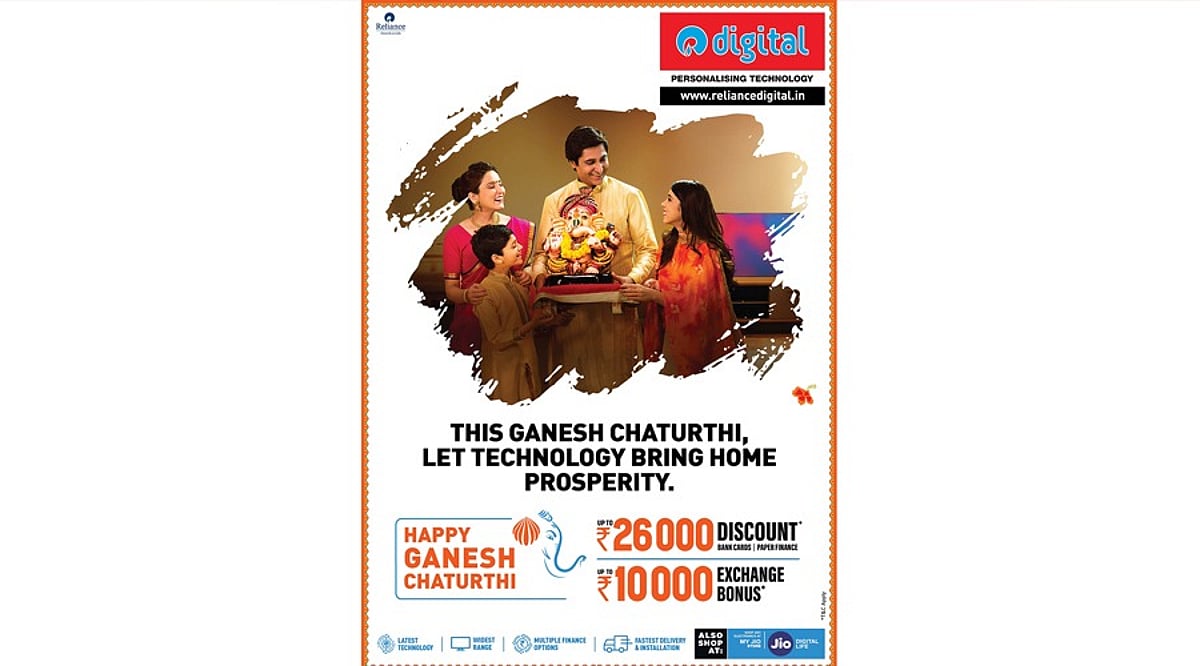
    Reliance Digital Ganesh Chaturthi Tech Deals: Laptops, TVs, Smartphones & More

    Ganesh Chaturthi is the perfect time to upgrade your home with useful technology. Reliance Digital’s festive lineup features laptops, televisions, smartphones, audio gear, and smartwatches across various price points.

    The selection ranges from a 32-inch Xiaomi TV at ₹13,999 to premium devices such as the Lenovo LOQ laptop and Samsung Galaxy Watch 8 Classic. Prices and offers below reflect the latest details listed for the products.

    Laptops for Work, Study and Play

    The HP 15 15-fd0682TU costs ₹75,499 (MRP ₹1,24,097) — a 39% discount. It features an Intel Core 5 120U processor, 16GB RAM, 512GB PCIe NVMe SSD, and Intel Iris Xe Graphics. The 15.6-inch Full HD anti-glare display (1920×1080) comes with Windows 11 Home and MS Office Home 2024 preloaded, plus one year of Microsoft 365 Basic. Additional features include a 1080p FHD webcam, backlit keyboard, Wi-Fi 6, Bluetooth 5.4, and up to 7 hours 45 minutes battery life. A one-year warranty and 7.5% discount on Axis cards are also available.

    The Lenovo LOQ 15ARP10E 83S000FYIN is priced at ₹1,07,990 (MRP ₹1,46,790) — a 26% discount. It runs on an AMD Ryzen 5 7535HS processor with 16GB DDR5 RAM, 512GB SSD, and NVIDIA GeForce RTX 3050 6GB GDDR6 graphics (65W TGP). The 15.6-inch FHD anti-glare display (1920×1080) comes with Windows 11 Home Single Language and Office Home & Student 2024. It also includes a backlit keyboard, three USB ports, HDMI, LAN, Bluetooth 5.2, and Nahimic stereo audio.

    TVs for a Festive Home Upgrade

    The Xiaomi F Series 32-inch HD Ready Smart TV L32MB-FIN costs ₹13,999 (MRP ₹24,999) — a 44% discount. This 81.28 cm display offers 1366×768 HD Ready resolution, 60Hz refresh rate, and supports Netflix, JioHotstar, Prime Video, and YouTube via two HDMI and two USB ports. A 20W speaker provides sufficient audio for daily use.

    The iffalcon 65U65 65-inch 4K UHD TV is available at ₹39,990 (MRP ₹1,20,990) — a 67% discount. The 165.1 cm screen delivers 3840×2160 4K resolution at 60Hz, with Google TV for access to Google Play, YouTube, and featured apps. It includes three HDMI ports and one USB port.

    The TCL 55C6K 55-inch QD-Mini LED Google TV costs ₹61,990 (MRP ₹1,07,990) — a 43% discount. This model features 4K 3840×2160 resolution with a 144Hz refresh rate. Google TV powers the software, while four HDMI ports, one USB port, and LAN offer broad connectivity. A two-year manufacturer warranty and up to ₹8,000 off with HDFC or ICICI credit cards are included.

    Smartphones and Personal Tech

    The Redmi A7 4G (64GB, 3GB RAM, Sky Blue) costs ₹12,999 (MRP ₹25,999) — a 50% discount. It features a 6.88-inch HD+ 120Hz display (600 nits brightness), 13MP rear camera, 8MP front camera, 5200mAh battery, HyperOS 3, Bluetooth 5.4, USB Type-C 2.0, and support for up to 2TB expandable storage.

    The POCO C81x (64GB, 3GB RAM, Crystal Black) is priced at ₹11,999 (MRP ₹18,999). It offers a 6.88-inch 120Hz HD+ display, 13MP dual AI rear camera, Unisoc T7250 processor, 64GB internal storage, Android 15 Go, fingerprint scanner, water resistance, and expandable memory slot.

    The Apple AirPods Pro 2nd Gen (USB-C and MagSafe Charging Case) costs ₹18,900 (MRP ₹24,900). These earbuds provide Active Noise Cancellation, Transparency mode, and Personalized Spatial Audio with dynamic head tracking. Both earbuds and case carry IP54 rating, with the case supporting USB-C, Apple Watch, MagSafe, and Qi wireless charging. Total play time is up to 30 hours.

    Smartwatches for a Premium Festive Gift

    The Samsung Galaxy Watch 8 Classic 46mm Bluetooth (Black, L500N) costs ₹27,599 (MRP ₹46,999) — a 41% discount. It features a rotating bezel, Sapphire glass, Armor Aluminum, and Super AMOLED display with up to 3000 nits brightness. The 3nm processor, BioActive Sensor, and Dual GPS support daily fitness and health functions.

    The Samsung Galaxy Watch 8 40mm Bluetooth (Graphite, L320N) is priced at ₹20,399 (MRP ₹32,999) — a 38% discount. Its 8.6 mm slim-fit design uses Sapphire glass and Armor Aluminum, with a Super AMOLED screen reaching up to 3000 nits. The 3nm processor, BioActive Sensor, Dual GPS, and Galaxy AI health features provide a premium experience in a smaller size.

    With options from compact TVs and affordable phones to powerful laptops and premium wearables, this Reliance Digital selection gives Ganesh Chaturthi tech purchases a clear purpose: a useful upgrade that stays relevant beyond the festive season.

  • Amazon Great Freedom Sale 2026: Smart Strategies for Real Tech Deals

    Amazon Great Freedom Sale 2026: Smart Strategies for Real Tech Deals

    Amazon’s Great Freedom Sale 2026 kicks off on August 7, with Prime members getting early access from August 6. The sale promises discounts across smartphones, laptops, TVs, wearables, and home appliances. But not all markdowns deliver genuine value—especially on newly launched devices. Comparing specs, exchange offers, and price history can help shoppers make smarter buying decisions.

    This year’s sale arrives as tech prices remain elevated across many categories. Component costs and memory prices have climbed steadily through 2026, and manufacturers have passed some of that along to buyers. That backdrop changes what a “sale” actually means. A device marked down 10% from an inflated launch price is not the same as a genuine drop against last year’s pricing.

    Smartphones: Timing Beats the Badge

    Amazon’s sale page has flagged the iPhone lineup and Samsung Galaxy S25 as headline devices, along with OnePlus, iQOO, and Realme. Recently launched phones rarely carry deep cuts this early, since retailers protect margins on fresh stock. The stronger opportunity sits with last year’s flagship models, paired with a solid exchange offer through Amazon’s trade-in program. That combination often lowers the effective price far more than the sale badge implies. A quick check against a price-history tool confirms whether a listing reflects a real drop or simply restates the original price with a new label.

    Laptops: Configuration Decides the Value

    HP, Lenovo, Asus, and Dell have carried most laptop deals in past Freedom Sale cycles and are expected to do so again, though final participation depends on what goes live August 7. The key detail is upgrading headroom. Many budget and mid-range laptops solder RAM directly onto the board, ruling out later upgrades. Storage expandability also varies across models within the same product line. A laptop with a slightly higher price but a newer processor and room to grow often holds its value longer than a cheaper unit that looks like a better deal today. Checking the full spec sheet—not just the discount percentage—protects against buying a laptop that feels limited within a year.

    Televisions: Specs Matter More Than Screen Size

    Large-screen TVs have often carried the steepest single-day price drops during festive sales. Brands like Sony, LG, Samsung, TCL, and Xiaomi are expected to participate. The detail worth checking is display technology, not inch count. HDMI 2.1 support enables higher frame rates for gaming and newer content formats, and panel type—Mini LED against standard LED—affects picture quality far more than the headline discount. A bigger screen at a lower price is not automatically the smarter purchase if the panel is a generation behind.

    Audio and Wearables: Compatibility Over Specs

    Earbuds and smartwatches from boAt and other major brands typically dominate this category during Freedom Sale events. What often gets missed is compatibility. Codec support shapes actual sound quality more reliably than driver size claims printed on the box. A smartwatch delivers real value only when its health tracking and notifications sync fully with the phone already in use. Shoppers replacing an aging pair of earbuds tend to notice a clearer upgrade than those adding a third pair purely for the discount.

    Home Appliances: Check the Full Cost, Not the Sticker

    Kitchen appliances, air conditioners, and other home essentials are confirmed for this sale. The part shoppers miss most often is the cost outside the listed price. Installation charges and warranty terms get billed separately in many cases. Amazon’s Exchange Mela trade-in bonuses can lower the real cost of a large appliance more than the visible discount suggests. A lower sticker price with a vague installation fee can end up costing more than a slightly higher listing that includes setup.

    Amazon vs. Flipkart: Worth the Extra 5 Minutes

    Flipkart is reported to open its own Freedom Sale on August 8, a day behind Amazon, with early access for Plus and Black members starting August 7. Both platforms compete hard on electronics during this window, so a short comparison pays off before any purchase above a few thousand rupees. Four things decide the better deal: the final price after coupons, the trade-in value offered, active bank card discounts, and delivery speed if timing matters. A product priced slightly higher on one platform can still work out cheaper once exchange value and card offers enter the calculation.

    Final Thoughts

    The sharpest value this year will likely sit away from the loudest discount banners. Last year’s flagship phones, laptops with real upgrade rooms, and older TV panels clearing out fast are where the numbers actually work in a buyer’s favor. A five-minute comparison between Amazon and Flipkart, paired with a quick look at price history, does more for the final bill than chasing the biggest percentage off.

    FAQs

    1. When does the Amazon Great Freedom Sale 2026 start?
    The Amazon Great Freedom Sale 2026 begins on August 7, with Prime members getting early access from August 6. The sale features discounts across smartphones, laptops, smart TVs, home appliances, wearables, and audio products.

    2. Which categories offer the best value during the sale?
    Previous-generation smartphones, laptops with upgrade room, smart TVs, audio devices, wearables, and home appliances often provide the strongest value. Exchange offers, bank discounts, and bundled promotions can further improve the final price.

    3. How can I check if a sale price is genuine?
    Compare the current sale price with the product’s recent price history instead of relying only on the displayed discount. Also consider exchange offers, bank promotions, warranty coverage, and product specifications before buying.

    4. Should I compare Amazon and Flipkart before making a purchase?
    Yes. Comparing prices, exchange values, bank offers, delivery timelines, and warranty benefits across both platforms can help you identify the better overall deal, especially for high-value electronics.

    5. Are newly launched devices worth buying during the sale?
    Newly launched devices often receive smaller discounts than previous-generation models. For the best value, last year’s flagship phones and laptops often offer a better balance of performance, features, and price.

  • Best Samsung Neo QLED TVs in India for Gaming, Movies & Streaming (2026 Guide)

    Best Samsung Neo QLED TVs in India for Gaming, Movies & Streaming (2026 Guide)

    Samsung’s Neo QLED lineup delivers bright displays, deep contrast, and smooth motion, making it a top choice for gaming, movies, and streaming in India. With Mini LED technology and sizes from 55 to 75 inches, these TVs cater to different budgets and room sizes. Here are the best models for 2026.

    Top Samsung Neo QLED TVs Compared

    After evaluating the lineup, three models stand out:

    • Samsung 55-inch Neo QLED (QA55QN90CAKLXL): The best all-rounder with a 120Hz refresh rate, excellent picture quality, and strong gaming performance.
    • Samsung 65-inch Mini-LED Neo QLED (QA65QN80FAULXL): Offers an immersive large screen at a lower price than 8K models, ideal for movies and sports.
    • Samsung 65-inch 8K Neo QLED (QA65QN800CKXXL): Ultra-high detail and smart upscaling for future-proof viewing, though premium-priced.

    Which One Should You Buy?

    For most buyers, the QA55QN90CAKLXL is the top pick—balancing price and premium features. If you want a bigger screen without breaking the bank, go for the QA65QN80FAULXL. Enthusiasts seeking cutting-edge technology should consider the 8K model.

    Final Verdict

    Samsung Neo QLED TVs excel in brightness, natural colors, and smooth performance. Whether for gaming, streaming, or movie nights, there’s a model for every need. Take your room size, budget, and viewing habits into account when choosing.

    Frequently Asked Questions

    Which Samsung Neo QLED TV is best for gaming?
    The QA55QN90CAKLXL offers a 120Hz refresh rate and smooth console performance.

    Which model offers the best value?
    The QA55QN70HAULXL provides a strong mix of features and price.

    Is a 65-inch Neo QLED good for movies?
    Yes, the larger screen creates an immersive cinema-like experience.

    Should I buy 4K or 8K?
    Most users will be satisfied with 4K. 8K is for those wanting the latest display tech.

    Are these TVs good for streaming?
    Yes, they support popular apps and deliver bright, detailed pictures.

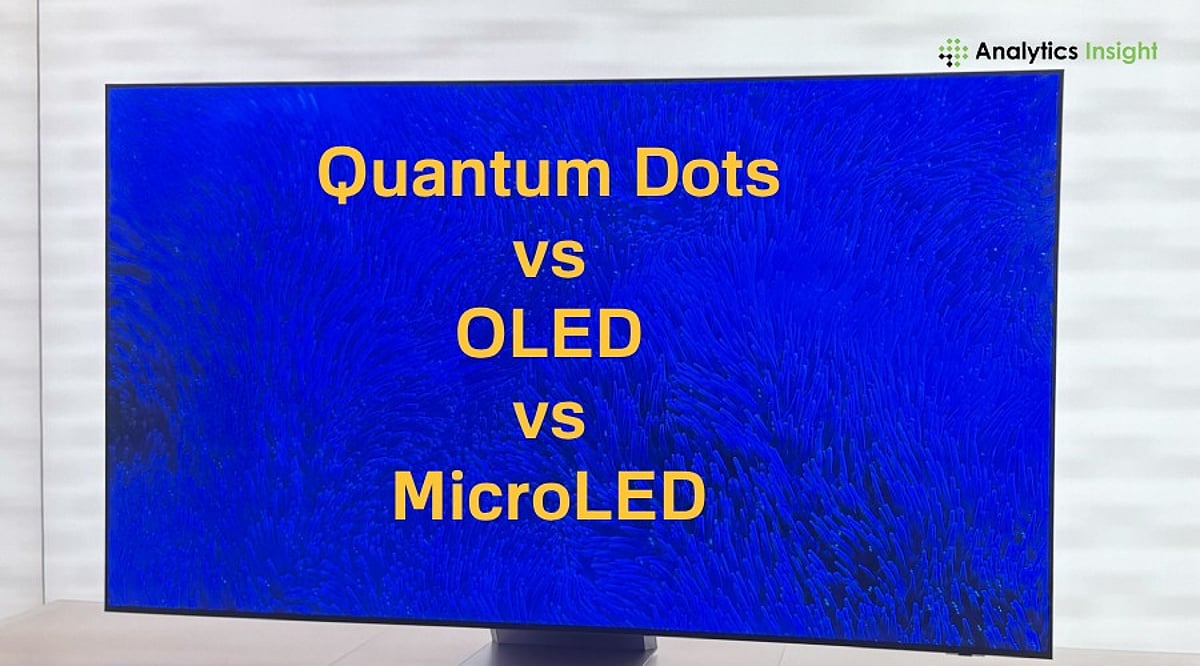
  • Display Tech Showdown: How Quantum Dots, OLED, MicroLED, and RGB Mini-LED Compare for 2026

    Display Tech Showdown: How Quantum Dots, OLED, MicroLED, and RGB Mini-LED Compare for 2026

    The battle for the best TV display is no longer just about picture quality. Manufacturing scale, production costs, and commercial readiness are shaping the market as much as image performance. OLED and quantum dot LCD started this race, but RGB Mini-LED and MicroLED have since widened it into a genuine four-way contest. Here’s how each technology stacks up for 2026.

    The 2026 Brightness Reality

    Brightness has come a long way this year. Samsung’s flagship S95H hit 2,553 nits in standard mode, while the S99H crossed 2,700 nits. LG rates its 2026 Tandem WOLED panel at up to 4,500 nits, but independent testing of the 2025 LG G5 measured only 2,213 nits—a reminder that spec sheet promises often differ from real-world performance.

    TCL is pushing harder with its new RGB Mini-LED sets, claiming up to 10,000 nits peak brightness and as many as 20,000 local dimming zones. Real-world results won’t reach those numbers, but even scaled back, RGB Mini-LED runs brighter than any OLED TV on the market today.

    Burn-In: A Key Differentiator

    Leave a static image on an OLED or QD-OLED screen long enough, and it can leave a permanent mark, though pixel shifting has made this far less likely. QLED, RGB Mini-LED, and MicroLED use inorganic LEDs that don’t degrade like organic pixels, making them immune to burn-in—a clear advantage for static content like TV logos or desktop interfaces.

    Manufacturing Decides the Winner

    Picture quality alone never determines which technology wins—scalability does. Industry estimates suggest MicroLED mass-transfer yields need to approach 99.99% for cost-effective production, and current yields remain below that. Closing that gap takes serious time, money, and engineering.

    MicroLED’s current position is reflected in commercial products: the Garmin Fenix 8 Pro wearable and a Sony-Honda MicroLED display for EV exteriors. Notice what’s missing: a television. Analysts expect the next two years to settle whether MicroLED enters consumer TVs after 2027 or stays in wearables, cars, and signage.

    Meanwhile, RGB Mini-LED isn’t waiting. It’s cheaper to build, faster to scale, and delivers serious brightness—which is why Samsung, LG, Hisense, and TCL have all launched RGB Mini-LED sets this year. Reviewers now call it the go-to pick for bright rooms that QLED once owned.

    A Market Split Four Ways

    There isn’t one right answer anymore. OLED and QD-OLED still own dark-room movie nights. RGB Mini-LED has carved out bright-room viewing, sports, and everyday use. MicroLED chips away at manufacturing challenges while growing in wearables and commercial screens. Quantum dot LCD remains the value pick for solid performance without the premium price.

    Final Thoughts

    The next big leap in display tech won’t come from more nits—it will come from solving manufacturing problems. Solve the mass-transfer yield issue, and MicroLED has a real shot at consumer TVs after 2027. Until then, the best display isn’t the newest on paper. It’s the one that best matches the room, viewing habits, and budget.

    FAQs

    1. Which display technology will dominate in 2026? OLED and QD-OLED lead the premium consumer market for picture quality and availability, while MicroLED remains niche due to high costs.

    2. Is MicroLED better than OLED? MicroLED offers higher brightness, longer lifespan, and no burn-in, but OLED is more practical and affordable for most consumers.

    3. What is the difference between Quantum Dot and OLED displays? Quantum Dot uses LED backlighting enhanced with quantum dots for brightness and color; OLED uses self-emissive pixels for perfect blacks and infinite contrast.

    4. Does OLED still suffer from burn-in in 2026? Modern OLEDs include pixel shifting and screen refresh to reduce burn-in risk. It’s far less common during normal use.

    5. Which display technology is best for gaming and HDR? QD-OLED and OLED offer exceptional contrast and fast response times for gaming; QLED excels in bright rooms; MicroLED is premium but too expensive for most buyers.