Tag: UAE

  • Why Global Investors Are Flocking to the UAE: Key Growth Drivers

    Why Global Investors Are Flocking to the UAE: Key Growth Drivers

    The United Arab Emirates has emerged as one of the most attractive destinations for international capital. With a sharp rise in foreign direct investment (FDI) and a clear push toward economic diversification, the country is positioning itself as a hub for long-term opportunity beyond traditional energy markets.

    Foreign Investment Is Surging

    FDI inflows into the UAE jumped 48.7% in 2024, reaching $45.6 billion compared to $30.7 billion the previous year. This surge reflects growing global confidence in the country’s business climate, modern infrastructure, and expanding investment landscape.

    An Economy Moving Beyond Oil

    The UAE is actively building a more diversified economy. Sectors such as tourism, finance, transport, construction, and technology are playing increasingly important roles. The World Bank expects non-oil activity to remain a key growth driver, supported by structural reforms, investment incentives, and infrastructure development.

    AI and Digital Infrastructure Take Center Stage

    Artificial intelligence is becoming a cornerstone of the UAE’s economic strategy. Significant investments in data centers, cloud computing, GPUs, and digital networks are advancing the country’s push toward an AI-driven economy. The World Bank has recognized the UAE as one of the Gulf’s leaders in digital transformation and AI readiness.

    Infrastructure Built for Global Business

    The UAE continues to invest heavily in infrastructure that connects businesses to international markets. Transport networks, logistics hubs, digital services, and financial systems are all being upgraded to support its status as a global business gateway. Abu Dhabi’s long-term economic vision also prioritizes resilient financial markets and world-class infrastructure.

    Fintech and Emerging Sectors Expand Opportunity

    Financial technology is another growing area of interest. The UAE’s official Investor Navigator highlights fintech as a high-potential sector, alongside ICT, logistics, tourism, manufacturing, renewables, gaming, and smart cities. This diverse mix offers investors far more than traditional real estate and energy plays.

    Trade Agreements Open New Markets

    The UAE’s investment story is closely tied to its role as a major trading hub. Economic policies are focused on boosting exports and expanding market access. Comprehensive Economic Partnership Agreements with countries across Asia, Europe, and beyond are strengthening trade connectivity and business activity.

    A Long-Term Bet on Diversification

    Ultimately, the UAE’s appeal lies in its long-term economic transformation. The country’s 2031 vision targets a larger economy, higher non-oil exports, stronger tourism, and expanded foreign trade. For investors, the narrative is clear: this is a story built on diversification, technology, infrastructure, and global connectivity.


  • AI Adoption Accelerates Around the World: UAE and Singapore Top Rankings as South Korea Climbs Fastest

    AI Adoption Accelerates Around the World: UAE and Singapore Top Rankings as South Korea Climbs Fastest

    AI Adoption Is Accelerating Worldwide

    Generative AI continues to expand its reach across the globe. According to Microsoft’s latest estimates, 18.8% of the global working-age population used a generative AI product in June 2026—a rise from the previous quarter. While adoption is climbing in nearly every economy, significant disparities remain across regions and countries in terms of access and usage.

    UAE Leads Global Adoption

    The United Arab Emirates continues to hold the top spot for AI diffusion. Microsoft’s June 2026 data shows that 73.3% of the country’s working-age population used AI tools. The UAE’s strong digital infrastructure, proactive government policies, and widespread technology access have contributed to its global leadership.

    Singapore Remains a Major Hub

    Singapore ranks second globally, with a 64.3% AI diffusion rate as of June 2026. The city-state has consistently ranked among the strongest AI-adopting markets. Its advanced digital infrastructure, thriving technology ecosystem, and high internet penetration have created favorable conditions for generative AI to become part of everyday life—both at work and at home.

    South Korea Shows Fastest Growth

    South Korea posted the biggest quarterly increase in Microsoft’s June 2026 data, gaining 3.5 percentage points. The country has emerged as one of the fastest-growing AI markets, driven by workplace adoption, government initiatives, and consumer-focused AI applications. This growth also underscores how local language capabilities can significantly influence AI adoption rates.

    Japan and Türkiye See Rapid Growth Too

    OECD data tracking generative AI chatbot usage reveals that Japan and Türkiye experienced the highest growth during 2025, with usage rates more than doubling. Singapore also saw a substantial jump, rising from 36% to 63% of its population using AI chatbots. It’s important to note that these figures rely on a different methodology than Microsoft’s diffusion measure.

    The Global AI Adoption Gap

    The gap between developed and developing economies remains wide. Microsoft estimates that 28.8% of the working-age population in the Global North used generative AI in June 2026, compared with just 16.2% in the Global South. Infrastructure, connectivity, skills, and language accessibility continue to be major barriers to broader adoption.

    What the Numbers Show

    The global AI race is increasingly about adoption, not just building advanced models. Countries with strong digital foundations are seeing faster usage growth, while others struggle with infrastructure and skills gaps. Since different datasets measure AI use differently, cross-country comparisons should be treated as indicators rather than precise measurements of total adoption.

  • iPhone 18 Price Showdown: India, UAE, US – Which Country Pays the Most?

    iPhone 18 Price Showdown: India, UAE, US – Which Country Pays the Most?

    Apple’s latest iPhone lineup—the iPhone 18 Duo, iPhone 18 Pro, and iPhone 18 Pro Max—hit the global market on September 9, 2026, with pricing that varies sharply across regions. A new comparison reveals that the United States offers the lowest official prices, while India tops the list as the most expensive market for Apple’s flagship devices.

    Global Price Comparison: US, UAE, Saudi Arabia, UK, and India

    Across every storage configuration tested, the US provides the cheapest sticker price for the iPhone 18 Duo, iPhone 18 Pro, and iPhone 18 Pro Max. The UAE ranks second, followed by Saudi Arabia. The UK and India are the priciest, with India taking the top spot for highest costs.

    iPhone 18 Duo (256GB) Pricing

    The entry-level 256GB iPhone 18 Duo is priced at $1,999 in the US, which converts to roughly AED 7,336. In the UAE, the same model retails at AED 8,499—a gap of about AED 1,163. Indian buyers face a much higher cost: Rs. 2,99,900, which translates to approximately AED 11,527.

    Higher Storage Widens the Gap

    As storage increases, the price difference becomes even more pronounced. For example, the 2TB iPhone 18 Duo costs about AED 11,740 in the US (after conversion), AED 13,599 in the UAE, and nearly AED 17,293 in India.

    iPhone 18 Pro and Pro Max Pricing

    The iPhone 18 Pro starts at $1,199 in the US for the 256GB variant, while the UAE lists it at AED 5,099 and India at Rs. 1,64,900. Similarly, the iPhone 18 Pro Max begins at $1,299 in the US, AED 5,499 in the UAE, and Rs. 1,79,900 in India. Higher storage options further amplify these disparities.

    Beyond the Sticker Price: Taxes and Other Factors

    The US advantage is not absolute. Apple’s US prices are quoted before state and local sales taxes, so the final checkout amount varies by location. International buyers must also factor in travel costs, currency conversion fees, warranty limitations, and import duties, which can eat into apparent savings.

    For Indian consumers, the UAE presents a closer alternative than the US, but only after accounting for taxes, travel expenses, exchange rates, and import regulations. While the US offers the lowest list prices, the true cost depends on individual circumstances.

  • Odisha Chief Minister Launches UAE Investment Roadshow in Abu Dhabi and Dubai

    Odisha Chief Minister Launches UAE Investment Roadshow in Abu Dhabi and Dubai

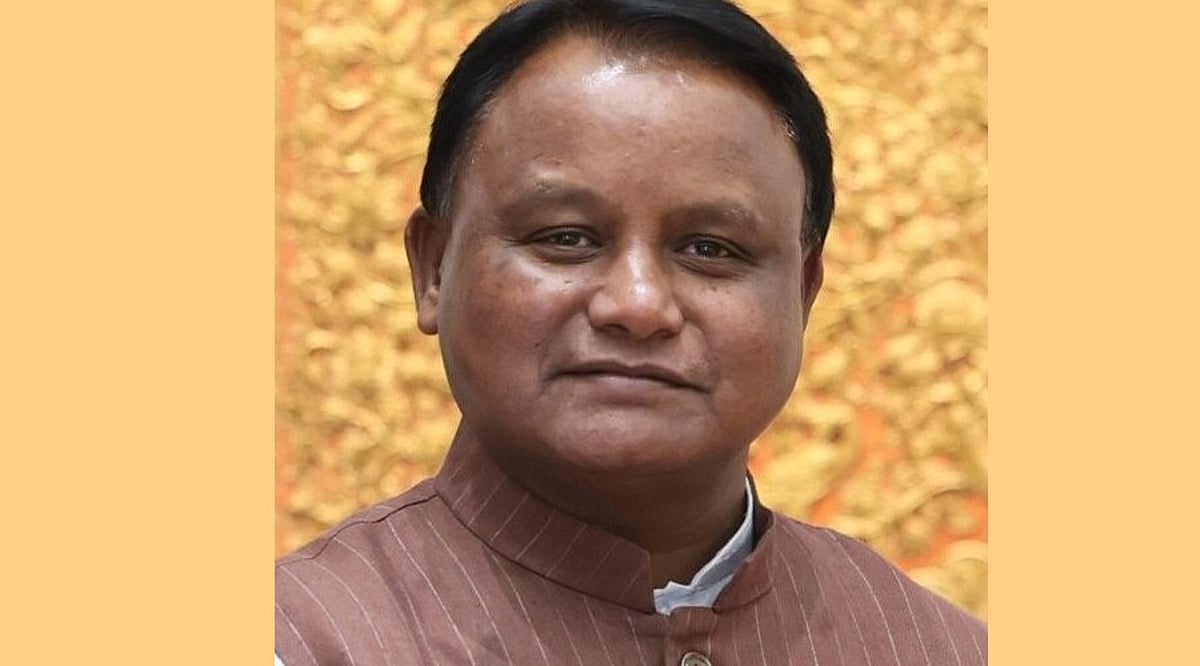
    Odisha Chief Minister Mohan Charan Majhi has embarked on a three-day investment roadshow in the United Arab Emirates, covering Abu Dhabi and Dubai. The visit, his second international investment outreach, aims to attract global capital and showcase Odisha’s industrial opportunities.

    Majhi will meet with UAE government officials, sovereign investment funds, institutional investors, and business leaders. The Odisha government will present the state’s industrial policies, infrastructure, and investment-ready projects to companies operating in the Gulf region.

    Abu Dhabi Meetings

    The chief minister’s program begins in Abu Dhabi, where he will hold a roundtable with International Holding Company (IHC), a major Abu Dhabi-based investment group. He is also scheduled to meet UAE Minister of Investment Mohamed Hassan Alsuwaidi and representatives of sovereign investment funds. The Odisha delegation plans to sign Memoranda of Cooperation to strengthen business ties with UAE institutions.

    Before the trip, Majhi stated, “Our vision is clear: to make Odisha the first choice for investors seeking opportunity, stability and sustainable growth.” He added that the state would use the UAE visit to expand engagement with international investors.

    Dubai Events

    After Abu Dhabi, Majhi will travel to Dubai for direct meetings with company executives and prospective investors. Discussions will focus on potential investment projects and industrial partnerships. He will also attend the Odisha Investors’ Meet in Dubai on September 11, bringing together investors, business representatives, and officials to explore sector opportunities. Additionally, Majhi will engage with the Odia diaspora in the UAE as part of the state’s broader outreach.

    Investment Opportunities

    During the meetings, the Odisha government will showcase its investment-ready projects, industrial infrastructure, and policy support. Officials will discuss emerging sectors seeking domestic and foreign investment. Majhi emphasized, “With a strong focus on EoDB, investor confidence, enabling policies and faster project execution, we are creating an ecosystem where businesses can invest, grow and thrive.”

    The state expects the UAE meetings to open further discussions with companies and investment institutions interested in India, while exploring opportunities to increase trade and industrial cooperation between Odisha and the UAE.

    Senior officials including Industries Minister Sampad Chandra Swain and Chief Secretary Anu Garg are part of the delegation. The UAE outreach concludes on September 12, after which Majhi will return to Odisha.

  • Emirates Integrates Crypto.com Pay for UAE Flight Bookings, Supporting Dubai’s Cashless Vision

    Emirates Integrates Crypto.com Pay for UAE Flight Bookings, Supporting Dubai’s Cashless Vision

    Emirates has launched Crypto.com Pay for eligible UAE residents booking flights through its website and mobile app. Customers can now pay from a crypto wallet, while every ticket settles in Emirati dirham. The service went live in late July 2026 and currently excludes other currency markets.

    Crypto Payments Enter Emirates Checkout

    The mobile process starts when customers choose Crypto.com Pay during checkout. The Emirates app then redirects them to the Crypto.com app, where they approve the payment from their available wallet balance. After approval, customers return to the Emirates app and receive their booking confirmation and electronic ticket. The process requires an existing Crypto.com account, but it removes the need for cards or bank transfers.

    Desktop users follow a similar route through emirates.com. They scan a QR code at checkout, approve the transaction inside the Crypto.com app, and receive confirmation on the Emirates website. The airline has not identified the cryptocurrencies customers can use. Still, payments come directly from balances held inside eligible Crypto.com wallets.

    Emirates said the service targets younger customers who manage payments and other financial activities through smartphones. Access remains limited to eligible UAE residents during the first stage.

    Regulated Dubai Entity Handles Settlement

    Crypto.com processes the payments through Foris DAX Middle East FZE, its Dubai entity. The company holds a Stored Value Facilities license from the Central Bank of the United Arab Emirates. The central bank granted the authorization in May 2026. Crypto.com then became the first Virtual Asset Service Provider in the UAE to secure this type of license.

    The framework covers stored balances that customers deposit before using them for payments. Therefore, Crypto.com manages the payment service, while Emirates avoids operating as a crypto service provider. Emirates still prices and settles each ticket in dirhams. Crypto.com converts the customer’s crypto balance before funds reach the airline, so Emirates needs no internal crypto payment infrastructure.

    Crypto.com uses a similar system for payments to Dubai government bodies. Under that arrangement, the provider converts digital assets into dirhams before transferring funds to government accounts.

    Launch Supports Dubai Cashless Strategy

    Emirates and Crypto.com first outlined the integration through a memorandum of understanding in July 2025. The companies completed the regulated payment launch roughly one year later. The service also supports Dubai’s Cashless Strategy, which targets about 90% digital transactions across government and private-sector payments by the end of 2026. The program forms part of the D33 Economic Agenda.

    What makes this launch different from earlier airline crypto payment options? Emirates embeds the service directly into its platforms, while a central-bank-regulated provider manages payment processing and dirham settlement. airBaltic first accepted Bitcoin in 2014 and later added other digital assets through BitPay. Travala.com also accepts more than 90 cryptocurrencies across over 600 connected airlines.

    However, Travala.com acts as an intermediary between customers and airlines. Emirates instead keeps the booking contract directly between the passenger and the carrier. For now, eligible UAE residents can use Crypto.com Pay for dirham bookings. Emirates has announced no expansion into other markets or currencies.

    Conclusion

    Emirates now offers Crypto.com Pay to eligible UAE residents through its website and app. Crypto.com handles conversion and dirham settlement under its central bank license. The service expands regulated crypto payments into direct airline bookings while access remains limited to the UAE market.

  • Sen. Elizabeth Warren Blasts UAE Chip Export Rule as ‘Corrupt’ Over Crypto-Linked Deal

    Sen. Elizabeth Warren Blasts UAE Chip Export Rule as ‘Corrupt’ Over Crypto-Linked Deal

    Senator Elizabeth Warren has accused the Trump administration of granting favorable chip export treatment to United Arab Emirates companies tied to a disputed foreign crypto arrangement. Her criticism followed a Commerce Department rule that gives selected UAE entities easier access to advanced computing equipment.

    Commerce Eases UAE Chip Export Controls

    The Bureau of Industry and Security published the final rule in the Federal Register on July 14, taking effect on July 10. The measure removes the UAE from two restricted country groups and places it in Country Group A:5, opening access to more license exceptions. Under the change, UAE government agencies and named companies may receive certain advanced AI chips and servers without separate licenses. G42 and Core42 appear on the approved list. Amazon, Apple, Google, Meta, Microsoft, OpenAI, Oracle, and xAI also receive streamlined treatment for eligible operations in the UAE.

    Commerce said the policy supports military and commercial cooperation between Washington and Abu Dhabi, citing UAE trade controls, its regional security role, and a May 2025 technology framework. Existing end-user and end-use checks still apply to covered shipments.

    Warren Links Chip Rule to USD1 Stablecoin Deal

    Warren, the ranking Democrat on the Senate Banking Committee, called the arrangement a ‘corrupt deal.’ She said Commerce Secretary Howard Lutnick and Under Secretary Jeffrey Kessler should testify before the committee about the rule and related national security concerns. Her statement linked the policy change to UAE investments involving World Liberty Financial, a crypto company associated with Trump and members of his family. Warren cited reports that a UAE royal connected to G42 and MGX acquired a 49% interest in the business.

    MGX announced a $2 billion minority investment in Binance in March 2025. World Liberty co-founder Zach Witkoff later said MGX would settle the transaction with USD1, the company’s dollar-linked stablecoin. Warren also cited a reported $263 million gain for Trump linked to the wider UAE arrangement, presented as part of his reported crypto income.

    Security Questions Drive Hearing Calls

    Warren raised doubts about whether advanced US technology could reach China through UAE-linked entities. She said the policy moves forward ‘despite reported concerns’ about technology diversion and other security risks. Commerce has not accepted her claim that the rule reflects improper conduct.

    The final rule states that US officials will keep monitoring sensitive exports. BIS maintains an export-control officer in the UAE, while listed approvals do not cancel restrictions tied to prohibited users or uses. G42 and Core42’s current authorizations expire on April 6, 2027, unless BIS issues another notice.

    Meanwhile, Warren urged Senate committees to examine whether foreign crypto holdings influenced administration decisions. She also tied the dispute to pending cryptocurrency legislation, saying Congress should address presidential and family profits from digital assets before approving new rules. The Commerce Department based its decision on the UAE’s security partnership, technology safeguards, and investment ties with the United States. The published rule does not mention USD1, World Liberty Financial, or Trump family income.

  • Which Countries Are Setting the Standard for AI Education in 2026?

    Which Countries Are Setting the Standard for AI Education in 2026?

    Preparing students for an AI-powered future has become a national priority worldwide. Leading countries are introducing AI into schools, expanding university programs, and supporting digital skills. These efforts define the global leaders in AI education in 2026. Here is how the top contenders stack up—and where ambition meets reality.

    Key Takeaways

    • China and the UAE are the only nations running compulsory, national AI curricula since the 2025-26 school year.
    • India, Estonia, and South Korea reveal three different speeds of rollout—from a ten-million-teacher training push to a public reversal.
    • The nations pulling ahead are matching curriculum ambition to teacher readiness, not chasing the boldest headline.

    Every government wants to claim it leads in AI education. Few can prove it with a classroom that actually works. The gap between what gets announced and what reaches a teacher standing in front of thirty students will become the real story worth telling.

    Two Speeds of Compulsory Rollout

    China moved early, and it moved fast. By September 2025, AI had become a compulsory subject for every student from age six, sitting alongside mathematics on the timetable, not tucked away as an elective. Beijing schools now owe every student at least eight hours of AI instruction a year, and in a growing number of classrooms, platforms like Squirrel AI are already doing the adaptive teaching. What has not kept pace is everything around the technology: ethics, data privacy, and equal access. The rollout outran the guardrails.

    The UAE got there first in a different sense. A Cabinet decision in May 2025 made it the first country on record to mandate a nationwide AI curriculum for K-12 students, full stop. Close to a million children in government schools are now working through seven curriculum strands, taught by more than a thousand teachers trained specifically for this. Private schools are not required to follow suit, not yet at least, though a fair number have adopted the material on their own, without waiting to be told to.

    When Ambition Outpaces Readiness

    South Korea shows what happens when a rollout runs ahead of its teachers. Seoul planned mandatory AI textbooks from 2025, but adoption sat below 30% by March, and that August, the National Assembly stripped the textbooks of official status after unions said the pace had outrun preparation. Korea responded with a $960 million plan to build AI talent centers and vocational high schools through 2030. The setback was not proof that AI education fails. It showed that mandates without matching teacher training buckle under their own weight, even in a well-funded system.

    India is betting bigger than anyone. From 2026 to ’27, AI and computational thinking will become mandatory from Class 3 across government and private schools, backed by a Rs. 500 crore center of excellence and the Rs. 10,372 crore India AI mission. The open question is delivery: roughly 10 million teachers need training, and only 15% were AI-fluent as of a 2025 survey. Whether India becomes the largest AI-literate student population in the world depends entirely on whether that math closes in time.

    Coherence Over Scale

    Singapore’s edge is not size but order of operations. Its Smart Nation strategy targets AI leadership by 2030, with teacher training promised at every level by 2026. A government-funded research center pilots tools with the Ministry of Education before they reach classrooms, rather than after.

    Finland and Estonia are playing a different game entirely, treating AI fluency as a civic skill rather than a career pipeline. Finland’s Elements of AI course has reached hundreds of thousands of citizens; Estonia’s AI Leap gave 20,000 students and 3,000 teachers early access, with plans to scale nationwide by 2027.

    Also Read: The World Is Your Campus: Where to Study AI and Programming at the Planet’s Greatest Universities

    Research Depth, Classroom Gap

    The United States still leads in university-level AI research, and Washington has tried to close the K-12 gap too, through an executive order that created a federal task force and a student AI challenge. However, the same period saw the Department of Education shutter its Office of Educational Technology. Only four states include AI in computer science standards, and enrollment in the subject fell 11% between 2024 and 2025, even as graduate AI programs kept growing. A country can lead the world in research capacity while still trailing far smaller nations in the classroom.

    There is no single best country here, only different goals pursued at different speeds. What separates the nations worth watching is not the size of the announcement, but the honesty of the follow-through—and Korea’s public reversal is proof that admitting a gap is not the same as failing to close it.

    Also Read: Case Studies: Universities That Rebuilt Curricula for AI vs Those That Just Added It

    Final Thoughts

    The competition to be the first to educate about AI isn’t about being the loudest or the first to shout. It will be given to the people who make the often-ugly but ultimately beautiful things happen: training teachers, updating classrooms, keeping students safe, and working at it year after year, well past the news cycle. The countries leading the way in 2027 will not be those with the most impressive plan on paper. This will be where that plan has become a normal part of a school day without being noticed.

    You May Also Like:

    FAQs

    1. Which country leads AI education in 2026?

    There is no single leader. China leads in scale, the UAE in national curriculum rollout, Singapore in implementation, and the United States in AI research.

    2. Which country made AI education compulsory first?

    The UAE became the first country to introduce a nationwide mandatory AI curriculum for K-12 students in May 2025. China also made AI compulsory for school students from age six.

    3. Why is teacher training important for AI education?

    Teachers need the skills to use AI effectively in the classroom. Without proper training, even well-funded AI education policies can struggle to deliver results.

    4. Is AI now a compulsory subject in India?

    India plans to introduce AI and computational thinking as compulsory subjects from Class 3 beginning in the 2026–27 academic year, supported by the IndiaAI Mission and teacher training initiatives.

    5. What makes an AI education system successful?

    A successful AI education system combines a strong curriculum, trained teachers, ethical guidelines, digital infrastructure, and regular updates to keep pace with advances in AI technology.

  • How Data Analytics Reveals Hidden Infrastructure Risks: Paulson Geo Philip’s Approach

    How Data Analytics Reveals Hidden Infrastructure Risks: Paulson Geo Philip’s Approach

    An experienced project manager outlines three ways to identify risks before they impact critical infrastructure operations. As data volumes surge, organizations struggle to act on insights—65% of teams still make decisions without leveraging available data, according to the Sisense State of Analytics report. The question is: how can organizations turn information into a tool for risk management and operational reliability?

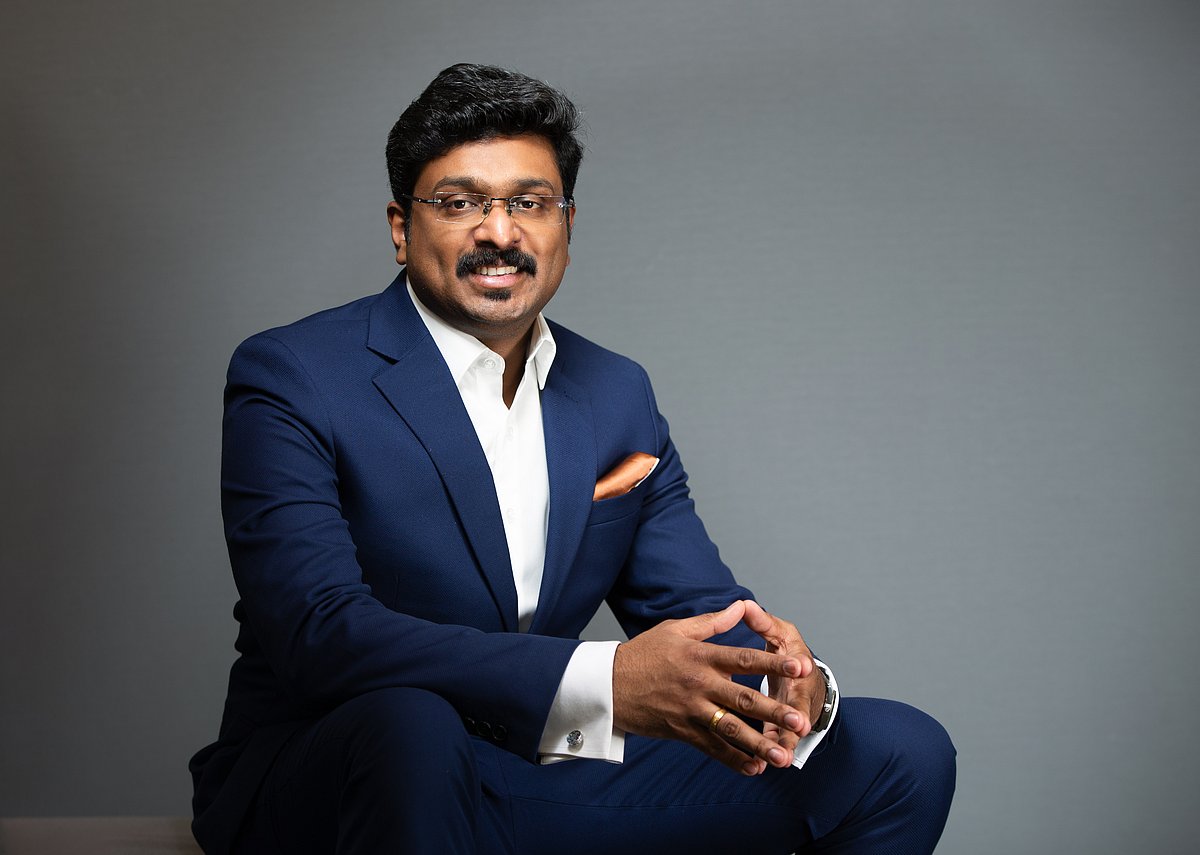
    Paulson Geo Philip, a Project & Maintenance Manager at UAE Television & Radio (Channel 4 Group), has tackled this challenge for over 14 years. He has applied analytics-driven approaches to infrastructure initiatives valued at more than AED 120 million, leading teams of over 800 professionals and improving project efficiency and cost performance by nearly one-third. Philip is also an author of multiple scientific publications, an invited evaluator at the AITEX Summit Winter 2026, and a Senior Member of the Institute of Electrical and Electronics Engineers.

    Philip believes that the most important project risks reveal themselves through patterns. “I have learned to look at information as a connected system,” he explains. “The most valuable insights rarely come from a single metric. They emerge when you understand how different parts of a project influence one another. Analytics helps create that perspective and allows leaders to make decisions with greater confidence.”

    At UAE Television & Radio, Philip oversaw infrastructure projects worth over AED 120 million, coordinating multidisciplinary teams of engineers, contractors, and technical specialists. His analytics-driven approach helped major infrastructure projects move faster and operate more efficiently, improving schedule performance and reducing costs by 20–30%.

    The role of the infrastructure project leader is evolving beyond managing schedules and budgets. Today’s leaders are expected to make sense of growing volumes of information and translate it into better operational decisions. Another key issue is the high cost of unplanned equipment and infrastructure failures. As infrastructure assets become more connected, maintenance is evolving into a data-driven discipline. Operational data can reveal how equipment performance changes over time, allowing organizations to improve asset utilization, extend service life, and make more informed maintenance decisions.

    Drawing on his experience, Philip has explored these questions through publications. In The American Journal of Engineering and Technology, he introduced concepts such as a Multi-Layer Cognitive Energy Twin and an Adaptive Predictive Resilience Index to forecast system conditions and evaluate infrastructure resilience. In his paper “Artificial Intelligence and Machine Learning Applications in Project Schedule Forecasting” (Earth Science Research Network, SSRN), Philip presented a predictive framework to identify schedule risks before they affect project outcomes.

    “Today, more and more organizations view operational data not as a record of past performance, but as a tool for forecasting future conditions,” notes Philip. “That shift from reactive management to predictive management is becoming one of the defining trends across infrastructure and operations.”

    Philip also served on the judging panel at the AITEX Summit Winter 2026, an international forum for artificial intelligence, digital technologies, innovation, and sustainable development. He holds Senior Member status in the IEEE. “I would encourage organizations to create more opportunities for collaboration between practitioners, researchers, and technology specialists,” he says. “Some of the best ideas I have come across were developed by people working in very different fields.”

    Looking ahead, Philip sees analytics becoming an increasingly important part of how organizations manage risk and reliability. His experience points to three priorities: recognizing patterns before problems escalate, using data to anticipate future conditions, and carefully evaluating the technologies that guide operational decisions. Together, these capabilities transform information from a byproduct of operations into a tool for managing reliability and performance.

  • 2026 Guide to the Best Managed Security Service Providers (MSSPs) in the UAE

    2026 Guide to the Best Managed Security Service Providers (MSSPs) in the UAE

    Overview

    Compare the leading Managed Security Service Providers (MSSPs) in the UAE, including Help AG, CPX, Deloitte Middle East, Orixcom, and global cybersecurity firms. Learn how to evaluate MSSPs based on SOC maturity, managed detection and response (MDR), regulatory compliance, incident response, and UAE-specific cybersecurity requirements. Understand the importance of selecting an MSSP that aligns with your organization’s industry, compliance obligations, and operational security needs.

    Why the UAE Market Is Different

    Search for ‘best MSSP UAE 2026,’ and most results are self-promotional vendor blogs ranking themselves first. Yet the underlying need is real: UAE organizations face tighter regulations, a persistent shortage of skilled SOC analysts, and rising attack volumes in banking, healthcare, and government. Outsourcing security operations has shifted from optional to near-standard practice. The real question is not who’s ranked number one, but which provider fits your regulatory and operational reality.

    The regulatory backdrop here is more specific than most regions. NESA (UAE Information Assurance) standards apply broadly; Dubai ISR governs entities in the emirate; ADHICS sets healthcare-specific controls; and financial institutions answer to SCA guidelines on top of ISO 27001:2022. A provider excellent in the US or Europe but unfamiliar with these frameworks will cost you time during onboarding. This is also why ‘sovereign SOC’ has become a genuine differentiator: government-linked entities and critical infrastructure operators increasingly require data residency and analyst teams physically based in the UAE.

    What Separates a Real MSSP from a Reseller with a Dashboard

    The honest test is whether a provider runs its own SOC with its own analysts, or resells someone else’s platform with a support layer. Genuine SOC maturity shows up in specific, checkable things: 24/7 monitoring with named analyst headcount, documented incident response timelines, alignment to frameworks like MITRE D3FEND or NIST CSF, and a low noise-to-signal ratio so your team isn’t drowning in false alerts. MSSPs are no longer optional extensions of IT; they are core strategic pillars for resilience, but only those with real SOC operations behind the sales pitch deliver.

    Providers Actually Worth Evaluating

    Help AG, CPX, Deloitte Middle East, Orixcom, and select global providers with local SOC presence each offer distinct strengths. Evaluate them against your sector’s compliance needs and desired level of threat intelligence integration.

    Questions to Ask Before Signing Anything

    • Pricing transparency: Does the quote include onboarding, tool licensing, and scaling costs? Hidden fees are a common buyer complaint.
    • Compliance frameworks: Which UAE-specific frameworks has the provider been audited against, not just globally?
    • Client references: Ask for a real client in your sector, not a generic case study. A healthcare provider’s ADHICS needs look nothing like a bank’s SCA requirements.
    • Incident response: What happens during an actual breach? Response time commitments are meaningless if escalation routes through three time zones before reaching someone who can act.

    Key Takeaways

    The right MSSP for a Dubai-based fintech startup and the right one for an Abu Dhabi government entity are rarely the same company, regardless of any ranked list. Match the provider to your regulatory exposure and sector first. The marketing rankings can wait.

    Why This Matters

    As cyber threats evolve and regulatory requirements tighten, organizations across the UAE need continuous security monitoring and rapid incident response. Choosing the right MSSP helps businesses strengthen cyber resilience, meet local compliance standards, reduce operational risk, and address the growing shortage of skilled cybersecurity professionals.

    FAQs

    What is a Managed Security Service Provider (MSSP)?

    A Managed Security Service Provider (MSSP) delivers outsourced cybersecurity services such as 24/7 threat monitoring, managed detection and response, incident management, vulnerability assessments, compliance support, and Security Operations Center (SOC) services to help organizations strengthen their security posture.

    Why are MSSPs becoming more important in the UAE?

    Growing cyber threats, stricter regulatory requirements, and a shortage of skilled cybersecurity professionals have increased demand for MSSPs. They help organizations improve security operations while meeting standards such as NESA, Dubai ISR, ADHICS, and financial sector regulations.

    How do I choose the best MSSP in the UAE?

    Organizations should evaluate SOC maturity, response times, local regulatory expertise, data residency capabilities, incident response processes, compliance experience, industry knowledge, pricing transparency, and proven success supporting businesses within the UAE.

    What services do MSSPs typically offer?

    Most MSSPs provide managed detection and response (MDR), 24/7 SOC monitoring, vulnerability management, threat intelligence, incident response, firewall management, endpoint protection, cloud security monitoring, compliance support, and continuous risk assessments.

    Why is a local SOC important for UAE organizations?

    A locally operated SOC supports compliance with UAE data residency requirements and enables faster incident response. Organizations in regulated sectors often prefer MSSPs with analysts based in the UAE who understand local regulations and security requirements.