
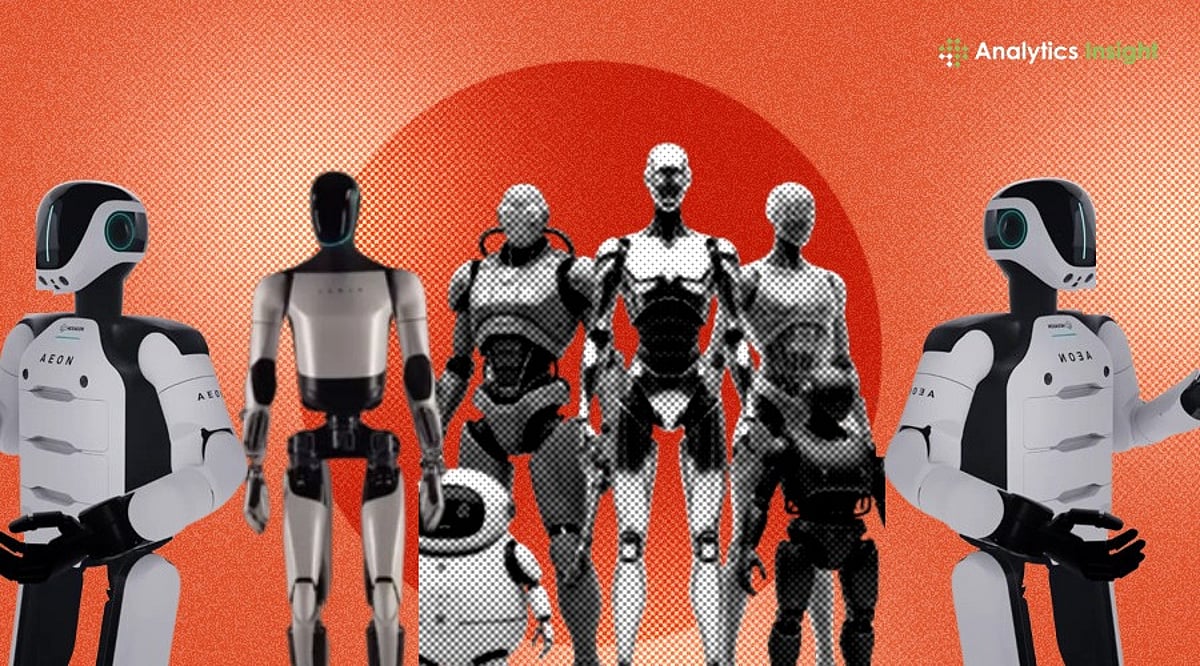
Humanoid robots are steadily moving into factories, warehouses, and industrial environments. Competition is accelerating as companies refine AI, mobility, and manufacturing efficiency. The industry’s next phase will be shaped by scalable deployments and reliable real-world performance.
Overview
Figure AI has moved past demos. Its robots have logged real production hours inside a BMW plant, setting it apart from most competitors. Unitree has turned volume and low cost into a profitable business strong enough to support a Shanghai IPO filing. Tesla, Apptronik, Boston Dynamics, and Agility each chase a different edge: factory scale, enterprise trust, engineering precision, or warehouse focus.
A humanoid robot sorted more than 200,000 packages on a public livestream this year, almost unnoticed outside robotics circles. That quiet detail reveals the state of the industry — humanoid robots have left the demo stage but remain far from mass adoption. A small group of companies is now placing very different bets on how to close that gap.
Quick Comparison
- Figure AI: Real factory deployment with 1,250+ production hours at BMW.
- Tesla: Leveraging existing manufacturing infrastructure; still in R&D stage.
- Apptronik: Enterprise partnerships with Mercedes-Benz and GXO, backed by DeepMind AI.
- Unitree: Highest volume shipped (5,500+ units) with strong margins and an IPO filing.
- Boston Dynamics & Agility: Specialists in dynamic manipulation and warehouse automation.
Figure AI: Deployment is the Real Headline
Figure has become the closest thing to a proof point in the industry. Its robots have run production shifts inside BMW’s Spartanburg plant for more than 1,250 hours, loading over 90,000 parts across roughly 30,000 vehicles. The newer Figure 03 has scaled to 40 units at the same site. This track record sits atop Helix, Figure’s in-house vision-language-action model, which lets a robot respond to spoken instructions without task-specific programming. A Series C round above $1 billion in September 2025 valued the company at $39 billion, and Figure now sells access through a subscription model priced at roughly $1,000 per robot per month.
Tesla: Manufacturing Muscle, Proof Still Pending
Tesla’s edge comes from the infrastructure it already owns. The company runs car factories at a scale most rivals face building from scratch, and Optimus draws on perception software adapted from Tesla’s self-driving systems. Roughly $20 billion of Tesla’s 2026 capital spending plan is tied in part to Optimus production, though this covers wider manufacturing and AI compute. Musk has described Optimus as still in early R&D on recent earnings calls, and outside customer deployments remain limited compared to Figure or Apptronik.
Apptronik: Betting on Enterprise Partnerships
Apptronik’s Apollo robot is currently piloting inside Mercedes-Benz manufacturing lines and GXO Logistics warehouses, made possible by a partnership with Google DeepMind that brings Gemini Robotics models into Apollo’s software. This enterprise-first approach is backed by $935 million raised across its Series A round and extension, pushing valuation close to $5.5 billion. Apptronik favors named customers and real factory data over flashy public demos.
Unitree: Winning on Price, Volume, and Actual Profit
Unitree shipped over 5,500 humanoid units in 2025, more than any competitor worldwide, built on an affordable actuator design and reinforcement learning methods. An open SDK has attracted a wide base of researchers and universities. Revenue grew 335% year-over-year with gross margins above 60%, strong enough to support a roughly $610 million IPO filing on Shanghai’s STAR Market in March 2026. Most revenue still comes from research and education buyers, so the industrial proof point that Figure and Apptronik hold is one Unitree is still working to earn.
Boston Dynamics and Agility: Specialists Worth Watching
Boston Dynamics rebuilt Atlas around electric actuators and whole-body motion planning, choosing precise dynamic manipulation over raw hydraulic power. Agility Robotics focuses on warehouse work, running some of the earliest humanoid pilots inside Amazon facilities. Two other names to watch are 1X Technologies and Sanctuary AI, both pushing embodied AI research that could reshape next year’s rankings.
What This Means Going Forward
This race is not just about who can build the most impressive prototype. It has become a contest of deployment scale, software reliability, manufacturing efficiency, and cost per productive hour. The companies that solve those problems — not simply those with the largest funding rounds — will define the next phase of industrial automation.
Final Thoughts
The rise of humanoid robots will depend on more than technological breakthroughs. Success will increasingly be shaped by how well these machines integrate into existing workflows, earn workforce trust, and deliver consistent performance across diverse industries.
FAQs
- What are the top humanoid robot companies to watch in 2026? Figure AI, Tesla, Apptronik, Unitree, Boston Dynamics, and Agility Robotics are among the leaders, competing through AI, real-world deployments, manufacturing scale, and industrial automation.
- Which humanoid robot company is leading in commercial deployments? Figure AI stands out with robots operating in BMW manufacturing facilities; Apptronik and Agility are also expanding enterprise pilots in logistics and industrial environments.
- Which company offers the most affordable robots? Unitree Robotics is recognized for affordable humanoid robots like the G1, making advanced robotics more accessible for research, education, and early commercial applications.
- How are humanoid robots being used in 2026? They are deployed for material handling, warehouse logistics, manufacturing support, quality inspection, and repetitive industrial tasks, mostly in pilot or early commercial stages.
- What will determine the success of humanoid robot companies? Long-term success depends on reliable AI, scalable manufacturing, cost-effective production, real-world performance, and the ability to deliver measurable productivity gains for enterprise customers.