Tag: upskilling

  • upGrad Review: AI-Powered Online Learning Platform for Career Development

    upGrad Review: AI-Powered Online Learning Platform for Career Development

    Overview

    upGrad is an online learning platform that leverages artificial intelligence to deliver professional programs, certifications, executive education, and degrees in partnership with leading universities and industry experts. It offers flexible learning, live mentoring, career assistance, and practical projects across fields such as AI, Data Science, Business, Marketing, Software Development, and Management. While premium programs can be costly, success largely depends on the learner’s dedication.

    General Information

    • Founded: 2015
    • Platform Support: Web, Android, iOS
    • Download: Click Here

    Main Features of upGrad

    • Courses in AI, Data Science, Machine Learning, Business, Marketing, Software Development, and MBA
    • Self-paced learning via live online classes and video sessions
    • Industry expert mentoring and career guidance
    • Hands-on projects, case studies, and assignments
    • Career assistance including resume building, mock interviews, job recommendations, and placement help

    Benefits of upGrad

    • Flexible study schedules suitable for professionals and students
    • Partnerships with renowned universities and companies
    • Mentorship, career guidance, and networking opportunities
    • Job-relevant practical projects
    • Offline study centers, peer networks, and career assistance

    Challenges of upGrad

    • High cost for quality certifications
    • Placement is not guaranteed despite assurances
    • Some advanced courses require prior technical knowledge
    • Course durations can range from months to over a year
    • Success depends heavily on self-discipline and time management

    Subscription Information

    upGrad offers both free and paid packages. Free packages provide foundational knowledge in AI, Data Science, Digital Marketing, and Business. Paid options include professional certifications, executive education, bootcamps, postgraduate diplomas, master’s, and PhD programs. Pricing varies by course.

    Support Options

    Help resources include course documentation, FAQs, recorded lectures, tutorials, community forums, blogs, and webinars. Customer support is available via email, phone, learner success managers, academic mentors, career coaches, and technical support.

    Conclusion

    upGrad is a reliable AI-based learning platform that helps learners gain industry-relevant skills through online education, mentoring, and projects. Its affiliations with reputable institutions, career services, and wide course selection make it a solid choice for upskilling. Despite high costs and no placement guarantees, it remains a top-tier learning platform.

  • Top AI Certifications for Professionals in 2026: Boost Your Career and Salary

    Top AI Certifications for Professionals in 2026: Boost Your Career and Salary

    Artificial intelligence has become an integral part of daily work across industries. Companies now rely on AI for writing, research, customer support, data analysis, software development, and business planning. As a result, many professionals are eager to learn AI and validate their skills with a certification. According to Pearson’s 2026 Value of IT Certification Report, 35% of employees plan to earn an AI certification in 2026—up from just 17% the previous year.

    Why AI Certifications Matter

    Earning an AI certification demonstrates not only knowledge but also practical understanding of AI in the workplace and a commitment to responsible AI practices. Research from Revelio Labs shows that certified AI professionals earn an average of $79,800 per year, compared to $72,300 for non-certified peers—a difference of about $7,500 annually. Additionally, 38.9% of certified professionals reach executive positions, versus 32.5% of those without certification.

    What Employers Want

    Employers now seek professionals who can solve real business problems with AI, not just recite terminology. They value skills such as reviewing AI responses critically, protecting company data, practicing responsible AI, and improving workflows with smart tools. Consequently, modern AI certifications emphasize practical skills like prompt writing, workflow optimization, responsible AI use, and business applications over theoretical knowledge.

    Best AI Certifications for Working Professionals

    Google Generative AI Leader

    Ideal for managers, marketers, product teams, and business professionals. Exam cost: $99. Duration: 50–60 questions. Valid for three years. Covers AI strategy, prompt optimization, business use cases, and Google’s AI ecosystem.

    AWS Certified AI Practitioner

    For IT professionals, business analysts, cloud teams, and project managers. Exam: 65 questions, $100, valid three years. Topics include AI basics, machine learning, generative AI, and responsible AI.

    NVIDIA Certified Associate – Generative AI LLMs

    Designed for developers and AI enthusiasts. Exam cost: $125, valid two years. Covers prompt engineering, large language models, Python, neural networks, and AI application development.

    Databricks Certified Generative AI Engineer Associate

    For AI engineers and ML professionals. Exam: 45 questions, $200. Requires about six months of hands-on experience. Covers advanced generative AI topics.

    Great Choices for Beginners

    No coding experience? No problem. These certifications welcome beginners:

    • Google AI Professional Certificate (Coursera): Seven courses covering AI fundamentals, communication, productivity, research, and responsible AI. No technical prerequisites.
    • IBM Generative AI Engineering Professional Certificate (Coursera): Six-month program covering LLMs, prompt engineering, RAG, AI agents, LangChain, and deployment.
    • IBM AI Developer Professional Certificate: Focuses on Python, chatbots, Watson AI, and generative AI. Also six months.
    • DeepLearning.AI AI for Everyone: Explains AI strategy, business opportunities, and organizational adoption without coding.

    Time and Cost Considerations

    Short AI courses typically take 5–10 hours. Beginner certificates require 10–20 hours. Professional certificate programs take 3–6 months. Cloud certification prep needs 20–40 hours. Exam fees remain affordable: Google Generative AI Leader ($99), AWS AI Practitioner ($100), NVIDIA Associate ($125), Databricks Engineer ($200). Coursera subscriptions vary by pace.

    Long-Term Value

    AI skills demand is growing across sectors. Employers seek talent in prompt engineering, LLMs, responsible AI, automation, cloud AI, LangChain, RAG, machine learning basics, and AI productivity tools. An AI certification provides systematic training and signals competence to employers. The statistics—higher salaries, better promotion rates, and rising employee interest—confirm the value. For working professionals, an AI certification is a practical investment in their future.

    FAQs

    1. Which AI certification is best for beginners?
    Google AI Professional Certificate and DeepLearning.AI’s AI for Everyone are top choices as they require no coding experience.

    2. Do AI certifications increase salary?
    Yes. Certified professionals earn an average of $79,800 vs. $72,300 for non-certified peers.

    3. How long does an AI certification take?
    Short courses: 5–10 hours; professional certificates: 3–6 months.

    4. Which certification is best for developers?
    NVIDIA Certified Associate – Generative AI LLMs, IBM AI Developer Professional Certificate, or Databricks Certified Generative AI Engineer Associate.

    5. Are AI certifications worth it in 2026?
    Yes. As AI adoption accelerates, certifications validate skills, improve job prospects, and prepare for future opportunities.

  • From Software Developer to Upskilling Pioneer: How Krishna Kumar Built Learnbay to Tackle Career Anxiety

    From Software Developer to Upskilling Pioneer: How Krishna Kumar Built Learnbay to Tackle Career Anxiety

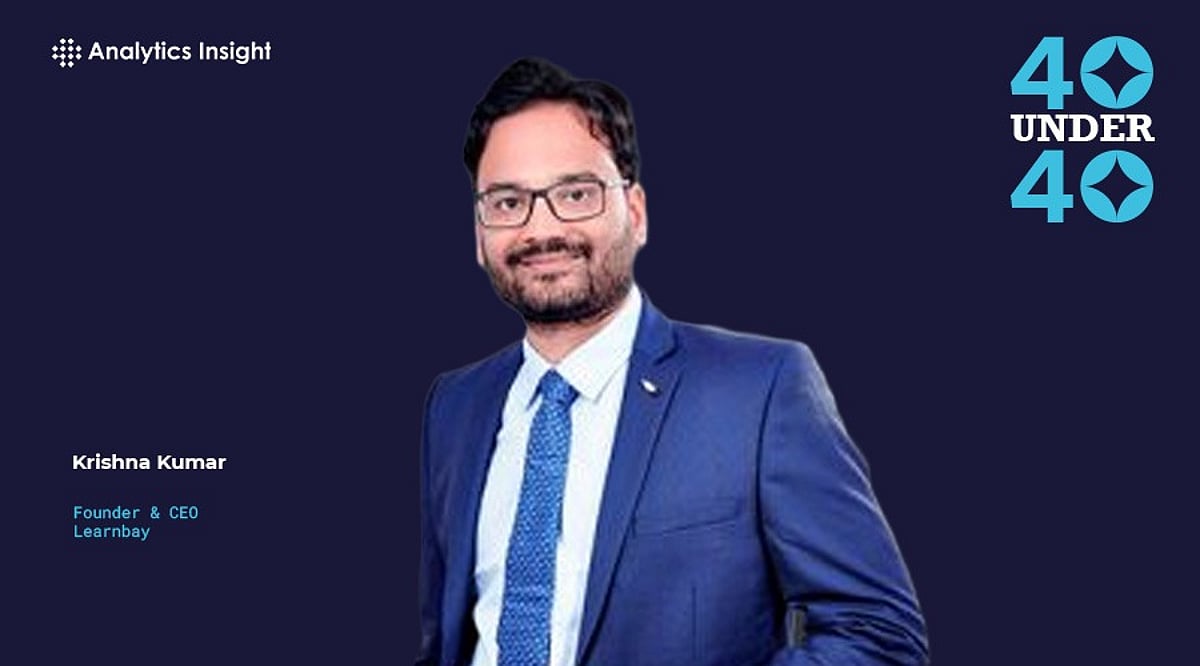
    Krishna Kumar, a veteran software engineer with stints at Wipro, Cisco, and Samsung, turned his own observations of career stagnation into Learnbay — an upskilling platform that helps working professionals transition into AI, data science, and cloud roles. Launched in 2015, Learnbay has grown from a single Bangalore classroom to a multi-city hub with a presence in seven Indian cities and several international locations.

    Krishna’s journey began when he noticed that many talented professionals, despite working tirelessly, lacked future-proof career paths. He believed that a technical background or coding skills were not prerequisites for a successful career in the AI era. This conviction drove him to create Learnbay as an open-learning platform that prioritizes real-time exposure over pre-recorded sessions.

    Learnbay’s curriculum evolves continuously to keep pace with industry trends, covering everything from basic data science and cloud & DevOps to advanced GenAI and Agentic AI. Strategic partnerships with IBM, Microsoft, NASSCOM, IIT Patna, and Woolf University ensure industry relevance. In 2023, the platform achieved 300% growth, reflecting its impact.

    Krishna emphasizes outcomes over vanity metrics. Learnbay’s hybrid training model — combining live online sessions with face-to-face capstone projects — is designed for busy professionals. Placement assistance, customized mentorship, and interview preparation are core services, not add-ons. The platform’s success is measured by learners’ career transitions and placements at over 350 MNCs.

    Looking ahead to 2026 and beyond, Krishna remains focused on disciplined upskilling strategies, expanding GenAI and Agentic AI offerings, and deepening partnerships. His philosophy is simple: a course succeeds only when the learner’s career goals are met. Learnbay aims to make reskilling tangible, measurable, and accessible for professionals from any domain.

  • How AI Is Revolutionizing Lifelong Learning Across Industries in 2026

    How AI Is Revolutionizing Lifelong Learning Across Industries in 2026

    Artificial intelligence is reshaping lifelong learning by making education more personalized, accessible, and skill-focused in 2026. AI-powered learning platforms now adapt lessons based on individual progress, enabling learners to master concepts at their own pace.

    Professionals are leveraging AI assistants to acquire coding, business, marketing, design, and communication skills faster than ever before. Companies are adopting AI-driven training programs to help employees reskill for emerging technologies and evolving job roles. Universities and online education providers are integrating AI tutors that deliver instant feedback and personalized study support.

    Industries such as healthcare, finance, manufacturing, and retail are utilizing AI learning tools to boost workforce productivity and ensure compliance. Generative AI helps learners create summaries, practice interviews, solve problems, and prepare for professional certifications. Experts recommend balancing AI assistance with critical thinking, fact-checking, and practical experience to build lasting skills.

    As AI continues to evolve, lifelong learning is becoming an essential strategy for career growth and staying competitive across every industry.

  • The Hardest IT Roles to Fill in 2026: AI, Cybersecurity, and the Rise of Hybrid Professionals

    The Hardest IT Roles to Fill in 2026: AI, Cybersecurity, and the Rise of Hybrid Professionals

    The IT hiring landscape has shifted dramatically. Open requisitions are no longer for generalists or entry-level specialists. Instead, positions that remain unfilled for six to nine months demand a rare combination: an engineer who writes strong code, navigates AI platforms, assesses risk exposure, and aligns technical decisions with business priorities. Three skills, one person, a small pool. This is the core talent challenge organizations face as they head into the second half of this decade.

    The 2026 State of the CIO survey from Foundry confirms the shift. AI and machine learning, along with cybersecurity, now share the top position as the hardest IT skills to hire for, with data science and analytics ranked third. What stands out is not the ranking itself but the nature of the shortage. Hiring teams are no longer struggling to find specialists—they are struggling to find professionals who operate across disciplines simultaneously, at speed, and with sound judgment under real constraints.

    AI and Machine Learning: From Prompt Engineers to Agentic Builders

    The role of the AI professional has evolved significantly over the past two years. Prompt engineering as a standalone function has largely faded. Organizations today need AI product engineers who can deploy agents, build testing frameworks, manage cost-latency-quality trade-offs, and govern model risk. They also need professionals filling governance and red-team roles that did not appear on org charts three years ago. The center of gravity has moved from people who build models to people who wield them. That is a very different resume, and the candidate pool remains thin.

    Approximately 50% of US employers report difficulty finding qualified AI candidates, and Gartner research consistently identifies this shortage as the single largest roadblock for data and analytics teams. The challenge compounds with the pace of change: skills acquired at one organization may not transfer to another, and knowledge from six months ago can already be obsolete.

    Cybersecurity: A Skills Crisis, Not a Headcount Problem

    Six in ten organizations now report that skills gaps outweigh staffing shortages as their primary workforce challenge—a 20-point shift from just a year ago. The consequences are measurable: 27% of cybersecurity leaders report breaches directly tied to capability gaps, while 61% say team stress has increased over the past two years. The shortage is concentrated at the senior architect level. Professionals who can make sound security trade-offs under real constraints, rather than just read a dashboard, are exceptionally difficult to find. Attack surfaces have expanded with every SaaS addition, API, and AI agent deployed. Security teams manage a faster-moving threat landscape with the same AI tools that adversaries now use to build and revise attacks in under an hour.

    74% of organizations say AI is already impacting the size of their cybersecurity teams and the roles within them. Entry-level SOC analyst positions—the traditional training ground for future security architects—are among the most likely to be displaced as AI reshapes security operations.

    Risk Management and Automation: The Rising Tier

    Both risk management and business/IT automation have climbed into the top five hardest-to-fill roles for the first time. The reason is the same for both: AI has expanded the surface area of risk and the complexity of process automation simultaneously. GRC functions built for SOX and PCI compliance are not well positioned to address model risk, prompt injection, or third-party AI exposure. Organizations are now hiring for a discipline that is roughly five years old against a job description that is twenty years old. That gap defines the problem.

    On the automation side, there is no need for additional robotic process automation developers—that work has become a commodity. What organizations need are professionals who can assess a workflow and decide what to automate, what to retire, and what to redesign entirely. That combination—business analyst, process engineer, and technologist in a single professional—is rare and commands a significant salary premium.

    Software Engineering, DevOps, and the Midlevel Squeeze

    AI coding tools have not reduced demand for software engineers; they have changed its shape. A strong engineer with solid AI tooling now produces roughly what three engineers accomplished just a few years ago. Hiring is bifurcating toward experienced leaders who bring judgment and ownership, and toward junior talent that is AI-native from day one. The professionals in the middle—those whose primary value was execution rather than architecture—are finding demand for their profile contracting. For DevOps specifically, platform engineering is emerging as the growth function. The generic DevOps title is being absorbed into platform or site reliability engineering, with consolidation likely to continue over the next two to three years.

    Why This Matters

    The talent shortage in these roles is not resolving through traditional hiring. The professionals who can bridge AI fluency with domain expertise, risk literacy, and system-level thinking are naming their price, and organizations competing for the same small candidate pool are losing ground. The more productive response, as several technology leaders have confirmed, is internal upskilling. Strong engineers trained deliberately on AI platforms and governance frameworks have outperformed externally hired AI specialists in productivity and retention at multiple large enterprises.

    The organizations closing this gap are not doing so primarily through external hiring. They are investing in internal capability development, redesigning job descriptions around skills rather than credentials, and building structured pathways for engineers to grow into hybrid roles. The gap between organizations that act with that kind of intention now and those that continue chasing the same external candidates will only widen from here.