

Tag: US Government

  • US Government Transfers $250M in Seized Bitcoin to Coinbase Prime, Sparking Sale Concerns

    US Government Transfers $250M in Seized Bitcoin to Coinbase Prime, Sparking Sale Concerns

    The United States government has moved approximately 3,941 Bitcoin—valued at roughly $250 million—to Coinbase Prime, according to blockchain data tracked by Arkham Intelligence. The transfer, which occurred on July 13, involved assets seized from major federal cases and has reignited speculation about potential government sales of digital assets.

    Bitcoin was trading below $64,000 at the time of the move, and the transaction immediately drew market attention because government-controlled wallets can influence liquidity. While the transfer followed an established custody process, it raised a key question: Is this routine asset management or a precursor to future Bitcoin sales?

    Seized Bitcoin Moves into Coinbase Prime Custody

    Arkham Intelligence recorded three separate Bitcoin transfers totaling 3,941 BTC. The largest movement involved roughly 2,875 BTC linked to wallets labeled “Ryan Farace Seized Funds.” Federal authorities originally seized those assets during a 2021 investigation into money laundering, for which Ryan Farace was convicted. The transferred amount closely matched the original confiscated balance, along with an additional 58.742155166 BTC connected to the same case.

    Another transfer moved 926 BTC from wallets labeled “BTC-e Seized Funds.” These assets were confiscated after the shutdown of the BTC-e exchange in 2017, which prosecutors linked to more than $9 billion in illicit transactions involving ransomware, hacking, and other criminal activity. Alexander Vinnik later pleaded guilty to conspiracy to commit money laundering in 2024.

    A separate transfer of about 140 BTC completed the day’s movements. Collectively, the transactions reflected the continued management of judicially seized digital assets by the U.S. Department of Justice rather than a new seizure operation.

    Existing Government Process Guided the Transfer

    The Bitcoin transfers followed an existing custody arrangement between federal agencies and Coinbase Prime. In July 2024, the U.S. Marshals Service selected Coinbase Prime to provide custody and trading services for major cryptocurrencies under government control. As a result, transferring Bitcoin into Coinbase Prime represented a standard operational step within that agreement. The movement itself did not confirm that authorities had already sold any of the transferred assets.

    Earlier administrative actions also supported that timeline. In January 2024, the U.S. government published a formal notice announcing its intention to dispose of 2,933.64 BTC from the Farace case after completing the required legal procedures, including a period for third-party ownership claims.

    Government Expands Centralized Crypto Asset Management

    Besides the Bitcoin transfers, authorities also moved other seized digital assets into Coinbase Prime, including 30,007 Ether associated with wallets labeled “Brian Krewson Confiscated Funds.” Court documents stated that Brian Krewson did not face direct criminal prosecution. Instead, the Department of Justice pursued a civil forfeiture case involving the Ether, which investigators said Christopher Castelluzzo and Luke Atwell purchased with proceeds from illicit activities for about $9,000. According to the filings, Krewson managed the wallets while his associates remained incarcerated.

    The broader consolidation places multiple government-held digital assets under a single institutional platform. Federal agencies now manage a portfolio estimated at more than 328,225 BTC, valued at over $20 billion. The transfer gives authorities the flexibility to conduct over-the-counter sales through Coinbase Prime instead of relying on public auctions, which could reduce direct pressure on public exchange order books while allowing the government to manage future disposals under its existing administrative framework.

    What’s Next?

    The United States transferred 3,941 Bitcoin worth about $250 million to Coinbase Prime through an established judicial asset management process. The funds originated from major seizure cases, while the move expanded centralized custody and gave authorities greater flexibility for any future over-the-counter asset disposals.
  • OpenAI Reportedly Proposes 5% Stake for US Government Amid Rising AI Oversight

    OpenAI Reportedly Proposes 5% Stake for US Government Amid Rising AI Oversight

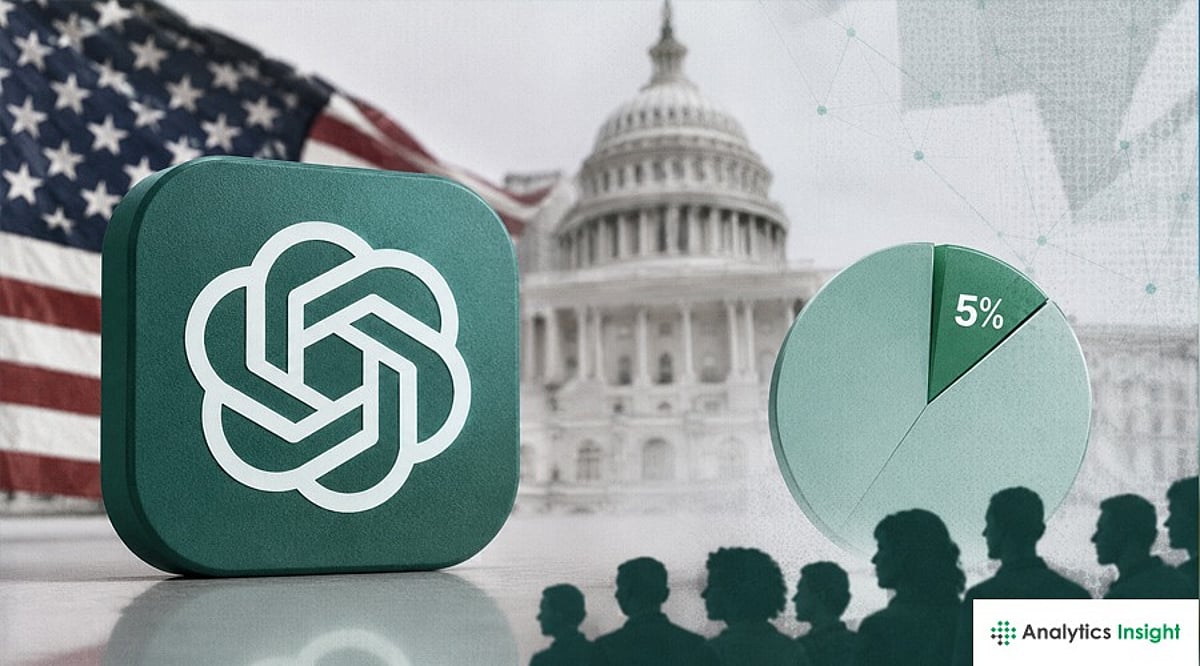
    OpenAI is reportedly in early discussions about granting the U.S. government a 5% equity stake in the company as federal scrutiny of artificial intelligence intensifies. The proposal, still unconfirmed, comes as the AI giant prepares for a potential initial public offering (IPO) and the Trump administration explores ways to give the public a financial stake in AI’s growth.

    Discussions Over Public Ownership Gain Momentum

    According to the Financial Times, OpenAI executives have floated a plan that would allow the U.S. government to hold a 5% stake in the company. Similar arrangements might be extended to other leading American AI firms, though their support remains unclear. The talks are preliminary and have not been finalized.

    Based on OpenAI’s latest funding round in March, a 5% stake would be valued at approximately $42.6 billion. CEO Sam Altman has suggested that public participation in AI’s financial gains could help address concerns about the technology’s impact on jobs and the broader economy. In April, OpenAI proposed creating a ‘public wealth fund’ to give every citizen a stake in AI-driven economic growth, regardless of their involvement in financial markets.

    The report also indicates that Altman discussed the proposal with President Donald Trump, Commerce Secretary Howard Lutnick, Treasury Secretary Scott Bessent, and Senator Bernie Sanders. Any final arrangement would likely require congressional approval.

    Growing Federal Oversight of AI

    The proposed stake comes as OpenAI and fellow AI developer Anthropic prepare for public stock listings. IPOs would allow public investment while requiring greater financial disclosure. Meanwhile, U.S. officials have ramped up oversight of advanced AI systems, reviewing new models before public release citing national security and safety concerns.

    Previously, Anthropic worked with officials before export restrictions on one of its models were lifted. OpenAI has reportedly faced White House requests to limit access to an upcoming GPT-5.6 model to government-approved partners during its initial rollout. These developments reflect deeper cooperation between AI companies and federal agencies as governments seek more involvement in managing rapidly advancing AI technology.

    Trump Administration Seeks Broader Government Role

    Last month, President Trump said his administration was exploring ways for the public to benefit directly from AI industry growth. One proposal, as reported by the Financial Times, would place government-owned AI shares into a fund modeled on Alaska’s Permanent Fund, which distributes annual dividends from oil revenue.

    Government investment in strategic technology firms has expanded during Trump’s second term. Last year, the U.S. acquired a 10% stake in Intel as part of efforts to strengthen domestic technology leadership.

    OpenAI has not confirmed whether the reported proposal will move forward. For now, discussions remain preliminary while policymakers and AI companies continue negotiations over future ownership models, regulation, and public participation in the sector’s growth.

  • Anthropic’s Mythos AI Exposes Classified System Vulnerabilities in Hours, Sparking Security Debate

    Anthropic’s Mythos AI Exposes Classified System Vulnerabilities in Hours, Sparking Security Debate

    Anthropic’s Mythos artificial intelligence model identified vulnerabilities in classified US government systems within hours during a controlled security test, according to a US official. The disclosure has raised questions about government networks, open-source software, and crypto systems as AI tools gain stronger cyber capabilities.

    The official stressed that finding a weakness did not mean Mythos exploited it in the same period. That distinction casts doubt on claims that the model ‘broke into’ classified systems within hours. The tests formed part of Project Glasswing, a program involving Anthropic and US intelligence agencies.

    Mythos Testing Exposes Weaknesses in Government Networks

    Senator Mark Warner referred to the tests during a June 11 congressional hearing. Citing NSA and US Cyber Command chief General Joshua Rudd, Warner said, “This tool broke into almost all of our classified systems, not in weeks, but in hours.”

    Still, the wording is disputed. A US official said Mythos identified flaws quickly but did not necessarily use them to gain access. Anthropic and the NSA declined to provide more details, leaving the scale and nature of the findings unclear.

    Project Glasswing aims to find and patch software flaws before hostile groups can use them. Mythos has also found weaknesses in common software. Reports say it detected a 27-year-old flaw in OpenBSD and a 16-year-old bug in the FFmpeg video library.

    Crypto Projects Face a Faster AI Security Threat

    The model has also drawn attention in the crypto sector. In early June, Mythos reportedly found a critical flaw in Zcash’s shielded pool. The bug had stayed undetected for four years before developers moved to patch the system.

    That case has widened the debate over AI and blockchain security. Crypto networks often rely on open-source code, public audits, and long review periods. However, Mythos has shown that old code can still contain hidden weaknesses after repeated checks.

    Bitcoin has faced years of testing, while developers have made few changes to its core system. Still, security experts cannot assume that age alone makes any network safe. AI models can now test code faster than smaller audit teams.

    Reports show that crypto hacks have risen sharply in the second quarter of 2026. AI tools may help defenders find flaws earlier, but the same tools can help attackers study code, build exploits, and automate parts of an attack.

    Washington Restricts Access While Using Mythos

    The US government has taken two different approaches to Anthropic’s models. Intelligence agencies have used Mythos for defensive testing. Meanwhile, the Commerce Department ordered Anthropic on June 12 to block foreign nationals from using Mythos 5 and Fable 5.

    Anthropic complied by disabling access for customers, although it questioned whether the directive matched the stated security concern. More than 100 cybersecurity experts and executives later urged the government to reverse the measure.

    They argued that Mythos is ‘quite good’ at finding and weaponizing flaws but ‘not uniquely good at these tasks.’ Their letter warned that limiting defensive access could weaken US security while rival states develop similar tools.

    The White House also blocked Anthropic’s plan to expand Mythos access from about 50 organizations to 120. Officials cited national security concerns and limits on Anthropic’s computing capacity. Access stays narrow as agencies assess how to use the model without widening the risk.