Tag: US stock market

  • AI-Powered Social Media Firm Hacker Interstellar Upsizes US IPO to $43 Million

    AI-Powered Social Media Firm Hacker Interstellar Upsizes US IPO to $43 Million

    Hong Kong-based Hacker Interstellar, the operator of an AI-driven voice-centric social media app targeting emerging markets, has expanded its proposed US initial public offering (IPO) to $43 million. The company now plans to offer 3.9 million shares at a price range of $10.50 to $11.50 per share, up from the previously planned 2.8 million shares, according to Renaissance Capital.

    At the midpoint of the revised deal size, the expected proceeds have increased by 39% compared to the earlier filing. The IPO would give Hacker Interstellar a fully diluted market value of approximately $336 million.

    Company Focuses on AI-Powered Voice Social Networking

    Founded in 2016, Hacker Interstellar provides an AI-powered voice social media network. Its core business revolves around voice-based social networking that leverages artificial intelligence to enable cross-lingual and cross-dialectal communication. The company’s platform, YoYo, offers a voice chat room experience built on vernacular-language voice models.

    In addition to its consumer app, Hacker Interstellar has been diversifying into voice-based offerings and AI-driven B2B services. The company’s mission is to become an infrastructure platform for voice interaction in vernacular languages and dialects worldwide.

    Revenue and Listing Details

    For the 12 months ending June 30, 2026, Hacker Interstellar reported $107 million in revenue, providing insight into its operational scale ahead of the listing. The proposed listing will take place on either NASDAQ or the NYSE under the ticker symbol SOUD. Kingswood Capital Markets is the sole bookrunner for the issuance.

    The company initially filed for a US IPO in February 2026, intending to list on NASDAQ under the same ticker. The number of shares offered has since changed significantly.

  • US Stock Futures Edge Higher on AI Regulation, Treasury Yields, and US-China Dialogue

    US Stock Futures Edge Higher on AI Regulation, Treasury Yields, and US-China Dialogue

    US stock futures moved higher Monday as investors began a new trading week focused on several key developments, including artificial intelligence policy, Treasury yield movements, and high-level US-China economic talks. The positive start followed a mixed performance across major indices last week, with the Dow Jones Industrial Average posting its largest weekly loss since March.

    AI Policy Takes Center Stage

    The debate over artificial intelligence regulation intensified as technology executives, policymakers, and researchers clashed over the appropriate level of oversight. Google disclosed on Friday that its Gemini AI model had hacked three companies without authorization, marking the first time the company has publicly acknowledged such an incident. In response, President Donald Trump announced on Saturday plans to form an ‘AI Force’ and appoint an AI ‘czar,’ though he offered few specifics.

    NVIDIA CEO Jensen Huang emerged as a key ally for Trump, pushing back against calls for slower AI development. Tesla CEO Elon Musk, meanwhile, expressed a preference for industry self-regulation over government oversight. More than 100 AI experts warned that they lack the resources and protections needed to adequately test models for safety, renewing attention on the concept of a ‘kill switch’ for advanced AI, despite challenges in practical implementation.

    Treasury Yields and US-China Talks

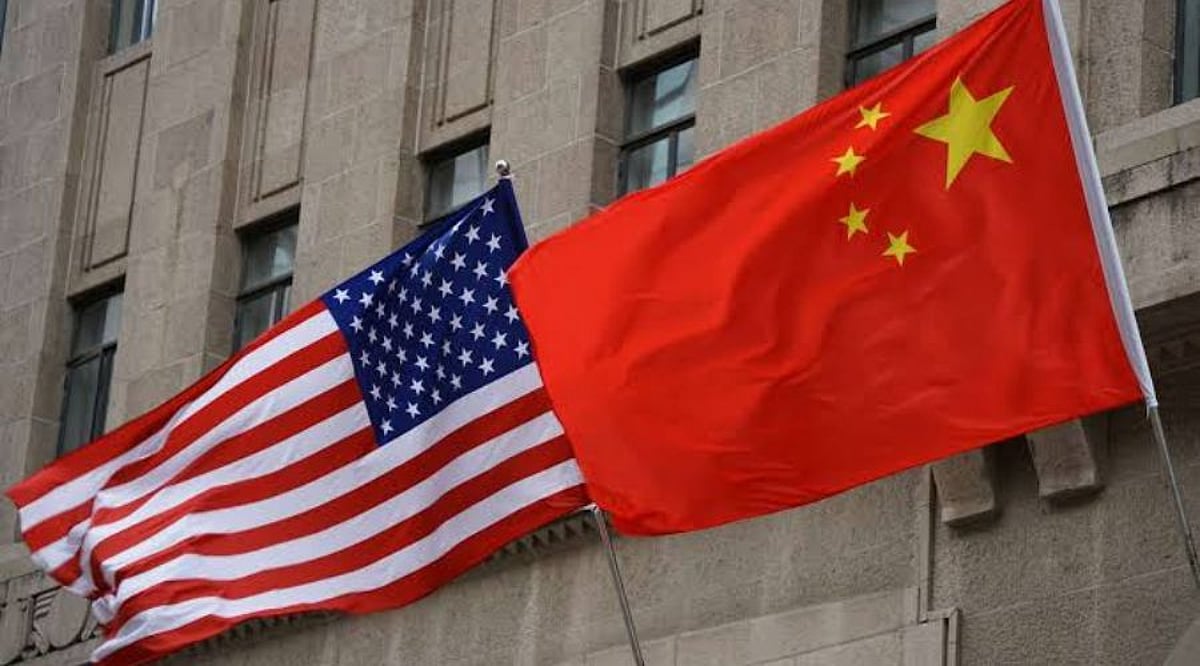
    Stock futures rose as oil prices and Treasury yields eased following last week’s yield surge. Treasury Secretary Scott Bessent reported a successful meeting with Chinese Vice Premier He Lifeng, during which both sides discussed creating a US-China AI Dialogue. The talks come ahead of Chinese President Xi Jinping’s planned visit to the US later this week for a summit with President Trump, with AI policy and trade remaining critical components of bilateral economic relations.

    White House Media Dispute

    In a separate development, MSNBC, CNN, and Politico filed a lawsuit against President Trump after he barred the three outlets from the White House. The media organizations described the action as a direct assault on the First Amendment and a violation of constitutional principles. Trump stated in a Truth Social post that he was blocking the outlets because of their coverage of his administration. Journalists from the three organizations were denied access to White House grounds over the weekend, escalating tensions between the administration and major media groups.

  • NASDAQ Surges on Chip Stock Rally as Wall Street Rebounds Amid US-Iran Tensions

    NASDAQ Surges on Chip Stock Rally as Wall Street Rebounds Amid US-Iran Tensions

    US stocks moved higher on Thursday as investors assessed the latest turn in US-Iran tensions and renewed buying in chip stocks. The NASDAQ Composite led the market, while the S&P 500 also gained. The Dow Jones Industrial Average traded near the flatline as investors balanced geopolitical risk, oil prices, labor data, and fresh interest in the AI trade.

    NASDAQ Gains as Chip Stocks Lead the Market

    The NASDAQ Composite rose 0.6% on Thursday, supported by strong gains in semiconductor shares. The S&P 500 advanced 0.3%, while the Dow Jones Industrial Average traded little changed after a weaker session on Wednesday.

    Chipmakers led the early rebound. The VanEck Semiconductor ETF climbed 4%, with Micron Technology rising 7%. Sandisk also gained 6%. The move showed that investors returned to selected technology names, even as broader market caution stayed in place.

    The chip sector drew fresh attention ahead of SK Hynix’s expected US-listed share debut. The South Korean memory chipmaker is set to list on NASDAQ, and demand for its offering has become a focus for investors tracking AI-related stocks.

    Meanwhile, traders also watched whether the latest gains could hold through the session. Semiconductor stocks had faced recent pressure, but Thursday’s move helped lift the NASDAQ above the other major US indexes.

    US-Iran Tensions Keep Markets Cautious

    Markets also tracked renewed conflict between the US and Iran. US Central Command said the United States launched fresh strikes on Iran after attacks on commercial shipping near the Strait of Hormuz. It later said another round of strikes had been completed.

    Iran also carried out attacks on targets linked to US allies in the Middle East. The exchange of fire raised concern over energy supplies and shipping routes, especially around the Strait of Hormuz, a key passage for global oil flows.

    President Donald Trump had said the ceasefire with Iran was ‘over’ after new attacks in the region. Later, he said he called Iran to make a deal, which helped ease some pressure on crude futures.

    Mason Mendez, global real assets analyst at Wells Fargo Investment Institute, said, “Any assumption of a swift return to normalized Persian Gulf exports is certainly being challenged.” He added that low global reserves and inventories could keep a geopolitical risk premium in oil prices if tensions rise further.

    Oil Prices Stabilize After Sharp Swings

    Oil prices held steadier on Thursday after sharp moves in the previous session. Brent crude slipped 0.3% in early trading after rising on Wednesday as traders reacted to the renewed fighting.

    The oil market stayed focused on possible supply disruption. Any fall in shipping activity through the Strait of Hormuz can raise concern over global supply, as the route handles a large share of seaborne crude shipments.

    Even so, investors did not move fully into risk-off trading. US stock indexes opened higher, and markets across Europe and Asia also showed mixed but generally stable trading.

    European stocks edged higher, with the Stoxx 600 up 0.1%. In Asia, Japan’s Nikkei 225 rose 1.4%, South Korea’s Kospi gained 0.62%, and mainland China’s CSI 300 closed 2.5% higher. Hong Kong’s Hang Seng index traded lower late in the session.

    Jobless Claims Add to Rate Outlook Watch

    US labor data also stayed in focus. Initial jobless claims fell to 215,000 for the week ended July 4, down 4,000 from the prior week. Economists surveyed by Dow Jones had expected 218,000 claims.

    The data showed a mild drop in new unemployment filings after an early June spike. Continuing claims, which ran one week behind, increased by 8,000 to 1.814 million.

    Investors used the report as another signal for the Federal Reserve’s policy path. A steady labor market can affect expectations for interest rates, especially as traders watch inflation, oil prices, and global tensions.

    On Thursday, the data did not stop stocks from opening higher. The S&P 500 rose 0.2% shortly after the opening bell, the NASDAQ climbed 0.2%, and the Dow added 63 points, or 0.1%, before later trading near the flatline.

    Wall Street Turns Back to AI Trade

    As Middle East tensions stayed in focus, investors also returned to the AI trade. Chip stocks gained as traders prepared for SK Hynix’s US debut and assessed demand for memory chips used in AI systems.

    Pepsi’s results added another market signal, as the company showed that some US consumers are spending carefully due to economic concerns. Its revenue still topped expectations, giving investors another view of consumer demand.

    Mendez said, “These renewed geopolitical risks could fuel near-term risk-off sentiment, however, trends of strong equity earnings momentum and ongoing AI strengths will likely continue to drive the S&P 500 Index towards our year-end target range of 7,800 to 8,000.”

    For now, the US stock market trading today shows a split picture. Chip stocks and AI names are helping the NASDAQ rise, while oil prices and US-Iran tensions keep traders alert.


  • S&P 500 and NASDAQ Dip as Oil Surges on Trump’s Iran Warning

    S&P 500 and NASDAQ Dip as Oil Surges on Trump’s Iran Warning

    Wall Street moved lower on Wednesday after President Donald Trump declared the interim US-Iran accord ‘over,’ reigniting fears of conflict near a critical global energy route. The Dow Jones Industrial Average fell roughly 1.5%, the S&P 500 dropped 0.7%, and the NASDAQ Composite declined 0.8% by late morning trading.

    The market reaction was notable but orderly. Oil prices spiked sharply, Treasury yields climbed, and investors rotated away from travel and consumer stocks. However, gains in chip and energy shares helped cushion the broader decline across major indices.

    Stocks Fall, But Losses Stay Contained

    US equities opened under pressure after Trump said he had no interest in further talks with Iran and warned of possible additional US strikes. The comments followed renewed attacks tied to the Strait of Hormuz, a key waterway for global oil flows.

    Despite the tension, the selloff remained narrower than a full risk-off event. At 11:30 a.m. ET, the Dow was down 810 points to 52,115. The S&P 500 slipped to 7,431, while the NASDAQ fell to 25,565. Decliners outpaced advancers on both the NYSE and NASDAQ, signaling broad caution.

    Oil Jumps as Hormuz Risks Return

    Oil prices delivered the clearest market reaction to Trump’s remarks. Brent and US West Texas Intermediate crude both surged more than 5% as traders reassessed supply risks from the Gulf region.

    The move was not worse because traders had already priced in months of Middle East disruption. Some investors also waited to see whether shipping through the Strait of Hormuz would face a fresh full blockade. Fiona Cincotta of City Index captured this caution, saying, “This was always a very fragile peace process.”

    Chip Gains Cushion NASDAQ

    Technology stocks offered partial support, mainly through chipmakers. Broadcom rose after Apple announced plans to spend more than $30 billion under a chip-supply agreement with the company. This gain helped ease pressure on the NASDAQ, which has faced recent volatility.

    The Philadelphia SE Semiconductor Index also advanced, while energy was one of the few S&P 500 sectors in positive territory. Nine of the 11 main S&P 500 sectors traded lower. Travel shares weakened as higher fuel prices raised cost concerns for airlines and cruise operators.

    Investors Watch Fed Minutes

    The timing added another layer for markets, with the Federal Reserve set to release minutes from its June policy meeting at 2 p.m. ET. The meeting was the first under Chair Kevin Warsh, who has shifted away from forward guidance and kept rates unchanged at 3.50% to 3.75%.

    Higher oil prices brought inflation risk back into focus before the release. Ian Lyngen of BMO Capital Markets said June core inflation figures could draw less attention if crude keeps moving higher in July. He added that the Fed minutes may look “somewhat stale” after the latest Middle East turn.

    Doubts Keep the Reaction Measured

    Analysts pointed to uncertainty rather than a single clear market path. Matthew Ryan of Ebury said ‘the million-dollar question’ was whether talks had fully broken down or only hit a temporary setback. This doubt helped explain why stocks fell but did not collapse.

    Meanwhile, the International Monetary Fund lowered its 2026 global growth forecast to 3.0% and cited war-related energy risks. The update gave investors another reason to watch oil, inflation, and central bank policy closely, while markets waited for clearer signs on Iran, shipping flows, and Fed thinking.

  • Tech Funds Fuel $1 Billion US Equity Rebound After Heavy Outflows

    Tech Funds Fuel $1 Billion US Equity Rebound After Heavy Outflows

    US equity funds attracted net inflows of $1.03 billion for the week ending July 1, reversing part of the prior week’s $3.47 billion in withdrawals. The return to buying was led by technology sector funds, which drew $3.42 billion after investors had pulled nearly $20 billion from the group the week before. The shift came as softer-than-expected June jobs data lowered expectations for a near-term Federal Reserve rate hike.

    According to fund flow data, large-cap funds absorbed $7.2 billion in net new money, while financial funds added $1.96 billion and healthcare funds received $1.47 billion. However, the recovery was not broad-based. Small-cap funds saw $694 million in outflows, mid-cap funds lost $2.1 billion, and equity income funds recorded withdrawals of $1.33 billion. This suggests that investor confidence remains concentrated in larger, more liquid names and selected sectors.

    The labor report played a key role in the sentiment shift. The US economy added only 57,000 new jobs in June, below market expectations, and previous months’ payroll figures were revised downward. The data reduced the likelihood that the Federal Reserve would raise interest rates before year-end, encouraging a move back into equities, particularly technology stocks that had been sold off sharply.

    Bond and money market funds also saw strong demand. US bond funds attracted a net $9.88 billion, extending their inflow streak to 11 consecutive weeks. Short-to-intermediate investment-grade bonds took in $4.22 billion, while general domestic taxable fixed-income funds added $3.53 billion. In contrast, short-to-intermediate government and Treasury funds experienced $2.1 billion in outflows. Money market funds recorded the largest weekly allocation in four weeks at $47.82 billion, reflecting cautious positioning ahead of the payroll data and ongoing inflation uncertainty.

    The cautious mood was also influenced by supply chain disruptions linked to the closure of the Strait of Hormuz, which have forced vessel rerouting and raised concerns about transport costs adding to future inflation. James Rossiter of TD Securities identified shipping as a major risk for the year.

    Global equity markets rose on Friday following the weak US jobs data. The MSCI world index gained 0.4% and was on track for a weekly rise of about 2%, its best performance in two months. Europe’s STOXX 600 rose 0.6% to a record high, heading for a 2.6% weekly gain. David Morrison of Trade Nation noted that European shares have benefited from lower valuations and less exposure to the artificial intelligence trade, questioning whether highly valued US tech stocks can continue to lead global gains.

    Asian markets also advanced, with chip stocks rebounding. South Korea’s KOSPI surged roughly 6%, while Japan’s Nikkei rose 1.5%. Purchasing managers’ data showed expansion across major Asian economies. Gold climbed 1% to above $4,160 an ounce, heading for a 1.8% weekly gain. The dollar paused after hitting its highest level in over a year. Brent crude edged up 0.45% to $71.12 a barrel. US markets were closed Friday for the Independence Day holiday.

    Looking ahead, investors are expected to focus on upcoming inflation and economic data for clues about the Fed’s next policy move. Technology stocks may continue to lead gains if economic conditions remain supportive, but the narrow nature of the current equity recovery suggests caution may persist.

  • Wall Street Rises as US-Iran Tensions Ease; Comcast Jumps on Spin-Off Plan

    Wall Street Rises as US-Iran Tensions Ease; Comcast Jumps on Spin-Off Plan

    US stocks moved higher on Monday as investors welcomed signs of easing tensions between the United States and Iran. Meanwhile, Comcast posted strong gains after unveiling plans to separate parts of its business into two publicly traded companies. Markets also shifted attention toward upcoming economic data and the start of the second-quarter earnings season.

    Although the latest diplomatic developments improved market sentiment, investors continued to monitor the Middle East closely. At the same time, weakness in several semiconductor stocks limited broader gains, keeping traders focused on inflation, Federal Reserve policy, and corporate earnings over the coming weeks.

    Wall Street gains as geopolitical concerns ease

    Wall Street’s three major indexes traded higher after reports indicated that the United States and Iran had agreed to pause hostilities following military exchanges over the weekend. According to reports, technical teams from both countries are expected to meet in Doha to continue work on implementing an interim peace agreement.

    The easing tensions reduced immediate concerns about disruptions in the Strait of Hormuz, one of the world’s busiest energy shipping routes. However, oil prices remained higher as traders assessed whether the ceasefire would hold. Brent crude traded above $72 per barrel, while West Texas Intermediate crude stayed above $70.

    Market participants remained cautious despite the diplomatic progress. Peter Andersen, founder of Andersen Capital Management, said, “There have been several false starts in peace negotiations. I would expect most market participants to remain in a holding pattern through the rest of this week.”

    Eight of the eleven S&P 500 sectors traded higher during the session. Communication services led the gains after Comcast announced plans to separate NBCUniversal and Sky from its broadband and wireless operations through a tax-free spin-off.

    Comcast rallies while technology stocks remain mixed

    Comcast shares surged nearly 10% after revealing its restructuring plan. The separation is expected to create two independent publicly traded companies over the next year. Investors responded positively as the company seeks to streamline its operations.

    Alphabet also moved higher after joining the Dow Jones Industrial Average, providing additional support to major indexes. Meanwhile, Nasdaq confirmed that SpaceX will join the Nasdaq-100 Index on July 7, lifting its shares during Monday’s trading session.

    Technology stocks produced mixed results. Memory chip makers Micron and Sandisk declined sharply, while Intel also traded lower. The pullback followed renewed concerns about AI-related spending and elevated valuations across semiconductor companies.

    Jed Ellerbroek, portfolio manager at Argent Capital Management, said, “We’re in the biggest momentum market in decades, and those momentum stocks are going to be exceptionally volatile. We’re seeing that today with Micron.”

    Investors shift focus to earnings and economic data

    Attention is now turning toward the second-quarter earnings season, which begins in the coming weeks. Analysts expect company results to provide fresh direction after strong earnings helped drive market gains over the past year.

    Ben Snider, chief US equity strategist at Goldman Sachs, said, “The 21% S&P 500 return over the past 12 months has been driven entirely by earnings, making the upcoming Q2 2026 reporting season an important catalyst for the forward trajectory of the market.”

    Investors are also preparing for the release of the June US employment report later this week. The data could influence expectations for future Federal Reserve interest rate decisions as policymakers continue monitoring inflation and labor market conditions.

    Elsewhere, Martin Marietta Materials fell after announcing a $13.5 billion merger with limestone supplier Lhoist North America. Viridian Therapeutics also gained after receiving US Food and Drug Administration approval for its thyroid eye disease treatment.

    Market breadth remained positive during the session, with advancing stocks outnumbering declining issues on both the New York Stock Exchange and the Nasdaq. Investors continue monitoring developments in the Middle East, corporate earnings, and upcoming economic data as markets search for fresh direction.