Tag: USDC

  • Crypto Matures: Arc and Prosper Take Opposite Routes to Institutional Trust

    Crypto Matures: Arc and Prosper Take Opposite Routes to Institutional Trust

    Crypto has spent years chasing the same goal from two directions: more real economic activity, more serious capital, without becoming either fully permissioned finance or a pure speculative casino. This week produced two answers to that problem, launched a day apart, and neither one looks like the other.

    Circle’s Arc: Permissioned Trust via Institutional Validators

    Circle’s answer is Arc. The Layer 1 network went live with a founding validator cohort that reads like a partial list of global finance itself: BlackRock, the Depository Trust & Clearing Corporation, ICE, Mastercard, MoneyGram, SBI Group, Standard Chartered, Sumitomo, Visa, Worldpay and Galaxy. The chain is explicitly permissioned. Circle presents that as a selling point, pairing it with a defined governance perimeter it says lets banks use a public chain for treasury, trading and confidential payments. USDC, with roughly $74 billion in circulation, is wired in as the network’s gas token. The company also completed the genesis mint of ARC this week, all 10 billion tokens created at once, while being careful to say the mint is not a commitment to a public launch. It’s a technical step toward a possible move to proof of stake, not a trading debut. Arc’s bet is that institutions will trust a public chain more readily if the validator set looks like the institutions themselves.

    Prosper’s Performance Markets: Permissionless Transparency

    Prosper’s answer is close to the opposite bet. Performance Markets, launched on Pharos the same week, keeps everything public and permissionless. Any curator with an onchain track record can deploy a vault. There’s no validator gate, no cohort of institutional backers, no allocation set aside for insiders on the token side. Instead of importing trust through recognizable names, Prosper tries to manufacture it through transparency: every vault’s NAV, fees, and buybacks are verifiable onchain, and a high-water mark — the standard hedge-fund mechanism that only credits gains above a fund’s previous peak — governs when a share of performance fees buys back and burns the vault’s token.

    What that token is, and isn’t, is the part worth sitting with. Laura Shi, Chief Business Officer at Pharos, where she leads business architecture, RealFi innovation and ecosystem expansion, frames it this way:

    “Think of p{VAULT} as a token built around a public track record, not a share in a fund. Anyone can see how the Curator and the strategy are performing onchain, and use that information to decide what the token is worth. Strong results may build confidence; weak results may reduce it. But there is no automatic one to one link to the Vault’s NAV. Buyback and burn affects supply, it does not promise price support.”

    That’s the core difference between the two experiments. Arc is trying to earn trust by putting familiar institutions in the room. Prosper is trying to earn it by putting the data in the open and letting the market decide what a track record is worth, without wrapping that decision in an ownership claim.

    Which Model Will Prevail?

    Neither model has proven itself yet. Arc’s real test is whether the institutions that signed on as validators actually route meaningful volume through the chain, rather than treating the launch as a pilot. Prosper’s real test is narrower and more mechanical: whether curators show up in numbers, and whether the first vaults clear their high-water marks publicly — the moment the buyback mechanism actually has fees to work with.

    Watching which of these gains traction first won’t settle which model is “right.” But it will say something concrete about what kind of trust crypto’s next phase actually runs on: borrowed from institutions, or built from data anyone can check.

  • Crypto Market Surge: Bitcoin ETFs See $999M Inflow, Bitmine Adds 27,562 ETH, Circle Launches BTC-Backed Loans

    Crypto Market Surge: Bitcoin ETFs See $999M Inflow, Bitmine Adds 27,562 ETH, Circle Launches BTC-Backed Loans

    The cryptocurrency market witnessed a flurry of major developments on September 22, 2026, with spot Bitcoin ETFs recording nearly $1 billion in daily inflows, Bitmine Immersion Technologies adding a significant amount of Ethereum, and Circle introducing Bitcoin-backed USDC loans for institutional clients. Additionally, Kazakhstan reported over $10 billion in regulated crypto trading turnover for 2025.

    Bitcoin ETFs Attract $998.95 Million in Inflows

    According to data from SoSoValue, U.S. spot Bitcoin ETFs saw a total net inflow of $998.95 million on the previous day. BlackRock’s ETF, IBIT, led the pack with a daily net inflow of $381.37 million, bringing its historical total to $64.51 billion. Ark Invest and 21Shares’ ETF, ARKB, followed with a $289.12 million daily inflow, accumulating $1.37 billion historically. The combined net asset value of all spot Bitcoin ETFs now stands at $110.14 billion, representing 6.3% of Bitcoin’s total market cap, with cumulative net inflows reaching $56.16 billion.

    Bitmine Acquires 27,562 ETH

    Bitmine Immersion Technologies, a NYSE-listed company, purchased 27,562 Ethereum (ETH) during the week ending September 20, increasing its total holdings to 5,983,940 ETH. Valued at approximately $16.1 billion based on a reference price of $2,688 per coin, the weekly acquisition is worth roughly $74 million to $75 million at current market prices. This represents 4.9% of Ethereum’s circulating supply of about 122.1 million tokens. Bitmine has set a public goal of accumulating 5% of all ETH.

    Circle Launches Bitcoin-Backed USDC Loans

    Stablecoin issuer Circle has introduced an institutional Bitcoin-backed USDC loan service through its Circle Mint platform. The tool, called Digital Asset-Backed Borrowing (DABB), allows institutional entities to secure immediate liquidity in digital dollars without selling their Bitcoin reserves. Clients deposit Bitcoin to mint Circle Wrapped Bitcoin (cirBTC), which is held under fiduciary standards with a 1:1 backing ratio. Users then interact from a non-custodial Smart Wallet with integrated decentralized finance (DeFi) markets, with Morpho protocol being the first to support cirBTC and allow fund withdrawals. The resulting USDC balance is credited directly to the user’s corporate account on Circle Mint.

    LayerZero Partners with Anchorage Digital for Stablecoin Issuance

    Anchorage Digital, the parent company of the first federally chartered crypto bank in the U.S., has selected LayerZero as its interoperability partner for stablecoin issuance. This partnership will provide cross-chain capabilities for assets issued under the Anchorage Digital Bank platform, ensuring a unified and secure infrastructure for financial institutions globally. By adopting LayerZero’s Omnichain Fungible Token (OFT) standard, institutional stablecoins like Tether’s USAT can optimize cross-border payments, treasury management, and decentralized lending across over 170 blockchain networks, including Ethereum, EVM-compatible chains, and Solana.

    Kazakhstan’s Regulated Crypto Market Surpasses $10 Billion

    Kazakhstan’s regulated cryptocurrency market has exceeded $10 billion in annual trading turnover, driven by the expansion of licensed digital asset services and a growing domestic Web3 developer ecosystem. Deputy Minister of Artificial Intelligence and Digital Development Gizzat Baitursynov reported that trading turnover reached $10.58 billion in 2025, up from $320 million in 2023, while the number of users grew from 53,000 to 215,000 over the same period. The figures were disclosed during a government meeting on September 15, highlighting the success of the country’s initial crypto market pilot with the Astana International Financial Centre.

  • Column Launches Unified Stablecoin and Banking Platform for USDC and USDT Payments

    Column Launches Unified Stablecoin and Banking Platform for USDC and USDT Payments

    Column has introduced four financial infrastructure products that bring stablecoins, card issuing, global banking, and multicurrency accounts together on a single platform. Announced on September 16, the rollout enables fintech companies to use USDC and USDT alongside traditional bank accounts, cards, and payment networks.

    Column co-founder William Hockey said the launch completes a multi-year effort to build the company’s technology stack. In a company post, Hockey stated, “We have finally completed that build.” He added that the products are already handling billions of dollars for fintech companies, including Ramp, Brex, Bilt, Mercury, Slash, and Kapital.

    Stablecoin Services Integrated with Bank Payment Rails

    Column’s stablecoin service allows businesses to send and receive USDC and USDT while converting funds to and from US dollars at any time, 24/7. The company built the service directly into its banking core, so customers do not need to prefund balances with a separate provider before making a stablecoin transfer. The platform connects stablecoin activity with both US and international payment rails.

    For example, a business receiving USDC from Mongolia could convert the funds into dollars, split the money, send one portion to a US community bank through FedNow, and convert another into euros for a SWIFT payment. Column said the entire process can take place within seconds via its APIs and operates around the clock, including weekends and holidays.

    Card Issuing Combines Banking, Processing, and Capital

    Column also launched a card issuing product after building its own issuer processor. The service brings together the issuing bank, processing system, and capital into a single integration. Customers can use the platform to create credit, debit, prepaid, and stablecoin-backed card programs on the Visa and Mastercard networks. Column had previously sponsored card programs but now controls the processing layer, allowing it to manage card authorization and settlement within the same system that supports its banking products. This reduces the number of separate providers fintech companies need when launching card programs. The processor has direct connections to Visa and Mastercard and runs on the same core infrastructure used for Column’s other banking services.

    Global Banking and Multicurrency Accounts

    The third product extends Column’s account and card infrastructure to verified customers outside the United States. Businesses can offer US dollar or local currency accounts and cards to eligible users in other markets while using the same compliance tools and APIs used for domestic customers. Column did not publish a full list of supported countries, so availability depends on its banking and verification coverage.

    Column also introduced multicurrency accounts that allow customers to receive, hold, and send foreign currencies. Users can convert supported currencies to and from US dollars instantly and connect payments to international systems, including SEPA Instant. Supported currencies include euros, British pounds, and Canadian dollars, among others.

    Together, the four products enable fintech companies to connect stablecoins, bank accounts, cards, and foreign currency payments through one platform. Column said the services work together because they use the same underlying infrastructure. The company did not provide separate transaction volumes for each product, but Hockey noted the services are already moving billions of dollars for fintech customers.

  • Why Instant Payouts Are Becoming the New Standard for Crypto Gaming Platforms

    Why Instant Payouts Are Becoming the New Standard for Crypto Gaming Platforms

    We’ve become very bad at waiting. A movie starts the second we press play. Money lands in a friend’s account before we’ve put our phone back in our pocket. Groceries, taxis and takeout can all be summoned in a few taps.

    So when a platform tells someone they need to wait two to three business days to get their own money back, it feels, and has become, outdated.

    That shift is showing up in payments. 57% of consumers who try instant payouts go on to make them their most-used way of receiving money. Instant payments were also the preferred method for 41% of US disbursement recipients in 2025, up from 33% in 2021.

    Once people get used to money moving quickly, they notice when it doesn’t. Online gaming and betting platforms are starting to run into the same problem, and some already have a solution.

    Depositing Takes Seconds. Withdrawing Doesn’t

    There has always been an awkward part of the online betting experience when a user deposits money instantly. A bet settles the moment a match ends or a casino game produces a result in seconds. Then they hit withdraw.

    Suddenly there are a wave of reviews, processing windows and vague estimates measured in hours or even days. Some of those delays can be considered legitimate. Operators still need fraud controls, identity checks and compliance systems, and crypto transactions themselves can be slowed by network congestion.

    But consumers don’t care about the technical background behind a transaction. They care about what they see: the money left quickly, so why is it coming back slowly?

    Now, payout speed is becoming a more visible battleground among crypto-focused gaming platforms. Roobet says crypto withdrawals are sent once requested, with the final arrival depending on blockchain confirmation. Cloudbet says most crypto withdrawals are processed instantly, although some can take up to 24 hours.

    It is a new area of competition from the one the gambling industry usually competes for. Instead of fighting over welcome bonuses and promotions, platforms have to answer this new question: How quickly can I actually get my money out?

    When the Withdrawal Is In the Millions

    When the number on the screen has seven figures, then platforms are really put to the test if users can trust them to pay up, or drag out payment and pull a shady move.

    Looking at one case in August, a crypto player reportedly deposited 1 million USDC on 1win and put the entire amount on Paris Saint-Germain to beat Aston Villa at odds of 1.74.

    The bet came in, earning the player $1.749 million. Cha-ching!

    The size of the wager caught a lot of attention, but the part that really matters is what comes afterward: the player withdrawing the winnings. The coverage and blockchain records of the $1.74 million win backed up that the payout was real and successfully completed.

    Taking a million-dollar deposit is easy for a platform, because that’s money coming in the bank. When that needs to flow out of an account to the tune of $1.75 million with a customer win, it shows whether the payment infrastructure actually works and the platform can be trusted to pay up.

    1win’s crypto system supports deposits and withdrawals in under 90 seconds across assets including BTC, ETH, USDT, TON, TRX, XRP, LTC and DOGE, depending on the network and processing conditions. The platform also has added support for USDC deposits and withdrawals on Solana, offering another option for transferring stablecoins.

    The minimum deposit is 5 USDC, and SOL deposits start from just 0.0099353 SOL.

    The company has built crypto further into the platform than many competitors because it prioritizes that payout time and traceability. Its broader business spans sportsbook, casino, and Web3, with crypto used to facilitate its entertainment ecosystem.

    Fast Payouts Are About Trust

    Withdrawal is becoming part of how users judge a platform. When a withdrawal sits in “pending” for hours, people ask questions.

    Has something gone wrong? Is the platform going to ask for another document? Does it actually have the liquidity to pay? Is someone manually reviewing the transaction?

    Even if nothing is wrong, waiting creates doubt and uncertainty. Fast and predictable payouts remove a lot of that anxiety for players. Crypto makes the process more transparent because, once a transaction is sent, users can see it moving on-chain rather than watching a status bar inside an app and hoping for the best.

    Consumers have already been trained by the rest of the internet to expect things immediately. Payments are now catching up. Mastercard has similarly pointed to real-time payment networks and instant transfers as forces reshaping expectations around how quickly money should move.

    For gaming platforms, the cashier is part of the product experience itself. Players still care about odds, games, bonuses and VIP perks. But once two platforms offer roughly the same entertainment, the one that returns someone’s money in 90 seconds rather than two days has a big advantage.

  • Kamino Launches Solana USDC Yield Vault Targeting 7-8% Returns via Commodity Trade Financing

    Kamino Launches Solana USDC Yield Vault Targeting 7-8% Returns via Commodity Trade Financing

    Kamino has introduced a new institutional yield vault on Solana, offering USDC depositors a target return of 7% to 8%. The product, launched on August 4, comes with a $25 million initial deposit cap and connects Solana-based USDC with short-term commodity trade financing through an approved fund structure.

    Unlike typical DeFi lending, the vault channels deposited USDC into real-world commodity deals rather than crypto-backed loans. A commodity trader can use the funds to bridge the gap between purchasing goods and receiving payment from the final buyer. Kamino describes the platform as “on-chain vault infrastructure connecting real-world, institutional credit markets with on-chain users.”

    Depositors receive kicUSDC tokens representing their share in the vault. The offchain lending activity is managed by a fund structure supervised by the Cayman Islands Monetary Authority. Loans are backed by physical commodities or cash held in escrow, providing a layer of security.

    However, the model introduces different risks than standard DeFi lending. Loan repayment depends on multiple external parties, including traders, banks, insurers, shipping companies, and legal agreements outside the Solana ecosystem. Users can make quick withdrawals as long as sufficient USDC remains in the vault’s liquidity buffer, but larger requests may face delays when outstanding loans must be repaid first.

    The 7% to 8% target return therefore comes with liquidity and counterparty risks. The launch gives Solana a new avenue for connecting onchain stablecoin capital with real-world credit markets. Future performance will hinge on repayment records, withdrawal reliability, and realized returns rather than the headline target alone.

  • Changelly Research Reveals Three Distinct Stablecoin User Types in 2026

    Changelly Research Reveals Three Distinct Stablecoin User Types in 2026

    New data from Changelly, an instant crypto exchange, covering the first half of 2026, challenges the idea that stablecoin adoption is moving in a single direction. Instead of a steady climb toward heavier stablecoin use, the platform’s transaction history points to three separate usage habits that don’t appear to blend into one another over time.

    Three Ways Users Relate to Stablecoins

    Changelly grouped users by how frequently stablecoins appeared in their trading activity, and observed a sharp split among the three groups that emerged:

    • Nearly half of all users made no stablecoin transactions at all during the period.
    • Up to 45% used stablecoins in almost every trade.
    • The remaining ~15% moved freely between stablecoins and other crypto assets.

    This third, smallest group—those switching between asset types—actually trades the most: They transacted as much as 6.2x more than users who never touch stablecoins. In comparison, heavy stablecoin users traded less often but moved more money per trade, with average transaction sizes reaching 2.5x the platform norm.

    “Our data shows there is no longer a single type of stablecoin user. Instead, we’ve identified distinct behavioral patterns that vary by user type and transaction size.” —Daria Morgen, Head of Research at Changelly.

    Low Transaction and High Volume Share

    Even though stablecoins were involved in under 20% of all Changelly transactions, they drove nearly 50% of total trading volume—a gap explained almost entirely by the size of trades rather than their frequency. Stablecoin trades averaged 4.2x the size of non-stablecoin trades on the platform.

    USDT led by a wide margin, appearing in about 14% of transactions but responsible for over 40% of trading volume. USDC came in a distant second, with just over 4% of transactions and roughly 7% of volume. All remaining stablecoins combined for a negligible slice of activity.

    Stablecoins have also worked their way into the platform’s most-used trading routes, appearing in 31% of Changelly’s top ten swap pairs—evidence that they are becoming a mainstream trading tool.

    Streamlining How Users Move Stablecoins

    Because stablecoins already sit inside nearly a third of Changelly’s most-traded pairs, giving users an easy way to shift them across chains has become a priority. Changelly supports this with competitive stablecoin swap rates, including 1:1 pricing on cross-chain exchanges, making it easier for users to move stablecoins across networks.

    Methodology

    The findings are based on anonymized, aggregated transaction data collected by Changelly across web and mobile platforms during H1 2026. Transactions were grouped by the general share of stablecoin activity within overall trading. The study examined broad trends in trading behavior, volume, and asset preference based on Changelly data, not the whole stablecoin market.

    Disclaimer: All data presented is anonymized and generalized. Changelly does not track or disclose personal or identifying user information.

    About Changelly

    Changelly is an instant crypto exchange trusted by over 12 million users worldwide. Founded in 2015, the platform offers secure, intuitive crypto-to-crypto swaps across over 1,200 cryptocurrencies, along with 24/7 live customer support. Changelly also features a built-in smart fiat on-ramp aggregator, giving users access to up to 220 competitive offers from verified providers and enabling seamless purchases of 350+ cryptocurrencies with 20+ global payment methods. Changelly is available on desktop, iOS, and Android.

  • Circle Wins $49M Arbitration Case Against Tether-Linked Heka Funds

    Circle Wins $49M Arbitration Case Against Tether-Linked Heka Funds

    Circle has won an arbitration dispute against Heka Funds, defeating a $49 million damages claim linked to a 2023 platform suspension, according to a report. Circle suspected trading patterns that favored Tether’s USDT and removed the fund’s access. The outcome became public on July 14, 2026.

    None of the parties has issued an official statement. Therefore, the report remains the only public account of the dispute and ruling.

    Circle Defeats Claim After Platform Suspension

    Circle operates the USDC stablecoin and controls access to its platform services. In late 2023, the company suspended Heka Funds after reviewing its trading activity. According to the report, the fund’s trading patterns allegedly favored USDT in a targeted manner. Circle viewed the conduct as close to market manipulation.

    The company considered the activity a threat to USDC’s market integrity. It then withdrew the fund’s access to its platform and related services. Heka Funds challenged the suspension through arbitration in 2024. It demanded $49 million for profits it claimed to have lost after losing platform access.

    The fund relied on Circle’s issuance, redemption, and trading channels. Therefore, the suspension reduced the number of routes available for its arbitrage strategy.

    Heka Built its Business Around Stablecoin Arbitrage

    The arbitrator dismissed the damages claim and ruled in Circle’s favor. As a result, Circle did not have to pay the requested amount. The report did not disclose the ruling date or the arbitrator’s detailed reasoning. Arbitration proceedings usually keep financial disputes outside public courtrooms.

    A privately appointed arbitrator decides the case. Both parties must generally follow the ruling and have limited options to challenge it. Heka Funds operates through Heka Funds SICAV p.l.c. in Malta. Its Elysium Global Arbitrage Fund uses a strategy managed by London-based Abraxas Capital Management.

    The fund began operating in late 2018 and focused on stablecoin and Tether arbitrage. It targeted small price differences across exchanges and digital tokens. These strategies depend on large transaction volumes and fast settlement. Losing a major trading partner can reduce available opportunities and lower potential returns.

    Platform Access Shapes Stablecoin Competition

    A 2021 Protos investigation said the fund held up to €540 million, or about $570 million, across USDC and USDT. The investigation also reported cumulative gains above 100% since the fund’s launch. In 2021, the fund recorded about €49 million in annual profit. That amount resembles the later arbitration claim. However, the figures relate to separate matters from different years.

    Access decisions directly affect arbitrage funds since their strategies depend on issuer redemption channels and several trading routes. Circle and Tether lead the global stablecoin market, while USDT holds the larger market value. Circle has traded on the NYSE since June 2025.

    The company uses the ticker CRCL. Its public listing also places its operations under greater market and regulatory scrutiny. Meanwhile, the United States is developing federal stablecoin rules through the GENIUS Act. The proposed framework covers reserves, audits, disclosures, and issuer requirements. No official response has emerged from Circle, Tether, Heka Funds, or Abraxas Capital. The detailed basis for the arbitrator’s ruling therefore remains undisclosed.

    What’s Next?

    Circle defeated Heka Funds’ $49 million damages claim after suspending the fund over trading patterns that allegedly favored USDT. Although the arbitrator backed Circle, the reasoning remains undisclosed. Market participants should watch for official statements that may clarify the case and its impact on stablecoin platform access.

  • Stablecoin Transaction Volumes Hit All-Time High of $1.79 Trillion in June, USDC Leads Growth

    Stablecoin Transaction Volumes Hit All-Time High of $1.79 Trillion in June, USDC Leads Growth

    Stablecoin Transaction Volume Reaches Record $1.79 Trillion in June

    Stablecoin transaction volume hit a record $1.79 trillion in June, marking the highest monthly level ever recorded. According to Visa’s stablecoin analytics dashboard, which uses Allium data, the figure represents a 63% increase from May’s $1.1 trillion total. The June total also surpassed the previous record of $1.78 trillion set in February 2026. On an annual basis, stablecoin transaction volume rose 125%, reflecting broader adoption of dollar-pegged crypto assets across payments, DeFi activity, and cross-border transfers.

    Record Monthly Volume Driven by Real User Activity

    Visa’s on-chain analytics dashboard reported $1.79 trillion in adjusted stablecoin transaction volume for June. The dashboard filters out inorganic activity, including bot-driven transfers and wash transactions, providing a clearer view of genuine user and institutional activity. The latest reading comes as stablecoins play an increasingly central role in crypto market infrastructure, being widely used for trading, lending, settlement, and payments. They also act as a bridge between traditional money and blockchain-based services.

    “June 2026 was another record month for stablecoin transaction volume, slightly ahead of February 2026,” said Grayscale Head of Research Zach Pandl, highlighting the narrow gap between the two record months. Notably, stablecoin usage grew even as the broader crypto market faced weaker price action, suggesting that stablecoins are used for more than just trading. Their role in payments and transfers has expanded as blockchain networks offer faster settlement and lower costs for certain use cases.

    USDC Leads Monthly Stablecoin Activity

    USDC accounted for the largest share of stablecoin transaction volume in June, processing about $1.21 trillion — nearly 67% of total adjusted volume. USDT, issued by Tether, ranked second with approximately $576 billion, or about 32% of the monthly total. PayPal’s PYUSD followed in third place with $2.42 billion in June volume.

    Although USDT still holds the largest stablecoin market capitalization, the June volume data shows stronger transaction activity for USDC. Regulatory conditions in Europe, particularly the Markets in Crypto-Assets (MiCA) rules, have added pressure on some stablecoins, leading several European platforms to reduce or end support for tokens that do not meet the new requirements. Circle has positioned USDC for regulated markets, including Europe, making the token more attractive for exchanges, payment firms, and institutions seeking clear compliance standards. Meanwhile, Tether has increased USDT supply, including a recent $2 billion mint on Ethereum.

    Base, Ethereum, and Tron Carry Most Stablecoin Transfers

    Base, Coinbase’s Ethereum Layer 2 network, processed the largest share of stablecoin transaction volume in June at approximately $565 billion (31.5% of the total). Ethereum followed closely with around $562 billion in volume. Tron ranked third among networks, with about $320 billion (close to 18% of the monthly total). Solana also saw strong activity, supported by low fees and fast settlement times.

    The network data reveals that stablecoin usage is spread across multiple blockchain systems. Ethereum remains central, while Base has grown rapidly as a major rail for USDC transfers. Tron continues to serve users moving stablecoins across borders and between exchanges. The broader stablecoin market has expanded, with total market capitalization crossing $322 billion. Visa’s dashboard shows about $10.2 trillion in adjusted stablecoin volume over the past 12 months. Additionally, Visa has expanded its stablecoin settlement pilot across several blockchain networks, with an annualized run rate of about $7 billion as of April.

    The June record underscores that stablecoins have become a fundamental part of digital asset activity, driven by payments, DeFi use, exchange transfers, and cross-border flows.

  • Standard Chartered Launches Direct USDC Minting and Redemption for Institutional Clients in Dubai

    Standard Chartered Launches Direct USDC Minting and Redemption for Institutional Clients in Dubai

    Standard Chartered has become the first Global Systemically Important Bank to offer direct USDC minting and redemption services to eligible institutional clients. The service, launched through the bank’s Dubai International Financial Centre operations on July 2, 2026, integrates banking, custody, and digital asset access into a single onboarding process.

    In partnership with Circle, the issuer of USDC, Standard Chartered enables institutions to mint and redeem the stablecoin without needing a separate account with Circle. The bank stated that this launch marks the initial phase of a broader stablecoin strategy, with plans to expand into additional markets pending regulatory approvals.

    Dubai Operations Open USDC Access for Institutions

    Standard Chartered is the first systemically important bank licensed to offer institutional access to USDC minting and redemption through its own platform. The service connects fiat banking, digital asset infrastructure, and public blockchain networks under the bank’s existing compliance, governance, and risk management frameworks.

    Eligible clients can now access USDC through the bank’s Dubai operations. Future market expansions will depend on regulatory clearance and local market readiness, though the bank has not yet specified which regions will follow.

    This launch adds another regulated digital asset service to the United Arab Emirates, which has been developing a robust blockchain and stablecoin ecosystem. However, Standard Chartered has not disclosed client numbers, transaction limits, fees, or minimum account requirements.

    Service Supports Settlement, Treasury, and Liquidity

    The service targets institutional use cases such as on-chain settlement, treasury operations, and liquidity management. Clients can move value between traditional banking systems and blockchain networks through a single provider.

    Standard Chartered plans to combine banking, custody, and digital asset services within the same institutional offering, applying its normal controls to stablecoin-related transactions. Roberto Hoornweg, CEO of the bank’s corporate and investment banking division, noted that digital assets are becoming a key part of global financial infrastructure and that institutional clients expect “the same levels of trust and governance” found in traditional markets.

    The current offering focuses on minting and redemption. Clients can create USDC by transferring eligible funds through the bank and redeem the stablecoin back into fiat currency. Payment-related services remain under development, with no launch date announced.

    Circle Partnership Expands Institutional USDC Access

    Circle provides the USDC infrastructure behind the service. The company issues the stablecoin through regulated entities and manages the minting and redemption process. Kash Razzaghi, Circle’s Chief Commercial Officer, said financial institutions are seeking “trusted ways to access stablecoins” and blockchain-based markets, and that the partnership could support settlement, payments, and treasury operations while maintaining compliance standards.

    As of July 2, 2026, USDC traded near $1.00, with a market capitalization of approximately $73.2 billion and a 24-hour trading volume of about $15.6 billion. The stablecoin operates across several public blockchain networks and is widely used for transfers, settlement, trading, and liquidity management.

    Future versions of the service may support payment-related uses, but the bank has not provided a timeline. Retail customers are not included in the initial rollout.

  • Hinkal Protocol Drained of $830K in Proofless Deposit Exploit; Stolen Funds Laundered Through Tornado Cash and Thorchain

    Hinkal Protocol Drained of $830K in Proofless Deposit Exploit; Stolen Funds Laundered Through Tornado Cash and Thorchain

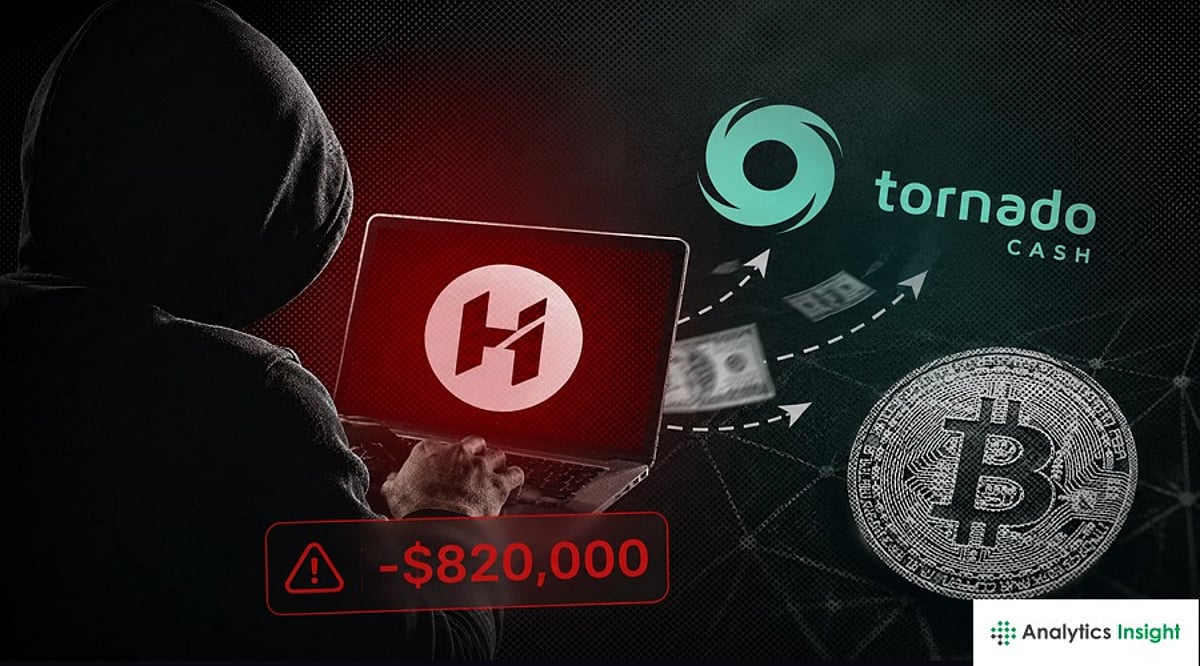
    On July 3, attackers exploited Hinkal, a privacy-focused DeFi protocol, draining approximately $830,000 in USDC — nearly the entire total value locked (TVL) across the five blockchains it supports. Blockchain security firm CertiK traced the breach to an externally owned account that repeatedly executed ‘Transact’ calls after completing a ‘proofless deposit.’ According to DeFiLlama, Hinkal’s TVL stood at roughly $829,000 just before the attack.

    How the Exploit Worked

    CertiK identified the attacker’s wallet as 0xbB3f01a1b1C68F3DEB36C55342b5F5706c32fc20 and reported that it siphoned over $800,000 from a Hinkal smart contract. Meanwhile, PeckShield, citing on-chain investigator Specter, placed the total loss near $820,000 — slightly lower than CertiK’s estimate. The exploit leveraged a vulnerability in Hinkal’s deposit mechanism, allowing the hacker to withdraw funds without providing the required proof.

    Laundering the Stolen Crypto

    After the theft, the attacker converted the stolen USDC into Ether and quickly moved the funds through privacy tools and cross-chain bridges. CertiK noted that the wallet deposited 410 ETH (worth about $700,000) into Tornado Cash, an Ethereum mixer currently under U.S. sanctions. Separately, PeckShield reported that the attacker sent 44.67 ETH through Thorchain, converting it into Bitcoin, which eventually reached an address beginning with bc1qr2sf. This laundering pattern — combining sanctioned mixers with decentralized bridges — is commonly observed in DeFi exploits.

    A research article presented at the ACM Web Conference 2026 found that sanctioned cryptocurrency mixers still provide effective anonymity despite increased regulatory pressure. CertiK has also noted that both criminals and legitimate privacy-conscious users continue to use Tornado Cash, complicating efforts to distinguish illicit transactions from lawful ones.

    Impact on Hinkal’s Institutional Privacy Model

    Hinkal markets itself as an institutional-grade privacy layer, enabling users to create shielded addresses and perform swaps, transfers, and payments without exposing balances or counterparties. The protocol operates on Ethereum, Arbitrum, Base, Polygon, and OP Mainnet. It raised $5.5 million in seed and strategic funding from investors including Draper Associates, Quantstamp, and NGC Ventures. Just one day before the exploit, Hinkal announced a partnership with wallet infrastructure provider Turnkey to bring privacy features to Turnkey users.

    At the time of the attack, Hinkal ranked near the bottom of privacy protocols by TVL. DeFiLlama listed Tornado Cash at $440 million, Railgun at $77.5 million, and Privacy Pools at about $7.8 million — while Hinkal held just $829,000 before the exploit drained nearly all of it.

    What’s Next

    The Hinkal exploit removed roughly $830,000 in USDC, nearly matching the protocol’s total locked value. Users are advised to monitor official updates from Hinkal and carefully assess the risks associated with privacy-focused DeFi platforms.