
Tag: Vera Rubin

  • NVIDIA Stock at $219: Key Drivers Behind Its $5.3 Trillion Market Cap and AI Spending Outlook

    NVIDIA Stock at $219: Key Drivers Behind Its $5.3 Trillion Market Cap and AI Spending Outlook

    NVIDIA (NVDA) closed near USD 219.34 on September 17, 2026, giving the company a market capitalization of roughly USD 5.30 trillion. The chipmaker became the first in history to cross the USD 5 trillion mark in October 2025, and it has stayed above that level ever since.

    Record Revenue and Data Center Growth

    NVIDIA’s fiscal Q2 2027 results showed record revenue of USD 96.2 billion, up 106% year-over-year. Data Center revenue reached USD 89.0 billion, up 117%, driven primarily by Blackwell systems and early production shipments of the next-generation Vera Rubin platform. GAAP gross margin came in at 75.0%, with diluted EPS of USD 2.46. The company guided Q3 revenue to USD 108.0 billion, plus or minus 2%, and noted that figure assumes no Data Center compute revenue from China.

    Trillion-Dollar Demand Outlook

    CEO Jensen Huang stated at NVIDIA’s GTC event that the company expects at least USD 1 trillion in demand and purchase orders for its Blackwell and Vera Rubin chips through 2027. This forward-looking outlook is not a signed order book, and analysts will watch actual shipments against that projection. NVIDIA’s disclosed purchase and supply commitments had climbed to about USD 279 billion by the end of fiscal Q2, reflecting the company’s efforts to lock in capacity.

    AI Spending Durability Under Scrutiny

    While demand for AI computing is evident, the key question is whether hyperscalers, AI labs, and enterprises can sustain the pace of capital spending. This uncertainty came into focus on September 14, when the Philadelphia Semiconductor index fell 5.9% and NVIDIA shares dropped about 3.4%. The selloff followed warnings from AI industry executives about the pace and economics of AI infrastructure spending, marking one of several sector-wide declines this year tied to debt-funded data center buildouts. NVIDIA’s future growth depends heavily on that spending pace holding up.

    China, Competition, and Valuation

    NVIDIA’s current guidance excludes Data Center compute revenue from China due to ongoing US export restrictions. Any policy shift could affect revenue, product mix, and margins. The company’s competitive edge rests on its CUDA software ecosystem, combined hardware and networking lineup, and deep ties with major cloud and AI customers. Custom chips from cloud providers, including Google’s TPU line, and AMD’s accelerators pose longer-term threats, though neither has slowed NVIDIA’s momentum so far. The stock’s low dividend yield reflects a focus on growth over shareholder payouts.

    Final Thought

    NVIDIA’s stock price reflects a company posting real, verified growth while carrying a demand outlook that assumes years of heavy AI infrastructure spending. The September selloff was a reminder that markets are pricing confidence in that spending pace, not just the chips themselves. The next earnings report, scheduled for November 25, will provide fresh evidence on whether Data Center growth holds its current speed and whether customer AI budgets remain strong.

  • How Jensen Huang Built NVIDIA Into the AI Infrastructure Powerhouse

    How Jensen Huang Built NVIDIA Into the AI Infrastructure Powerhouse

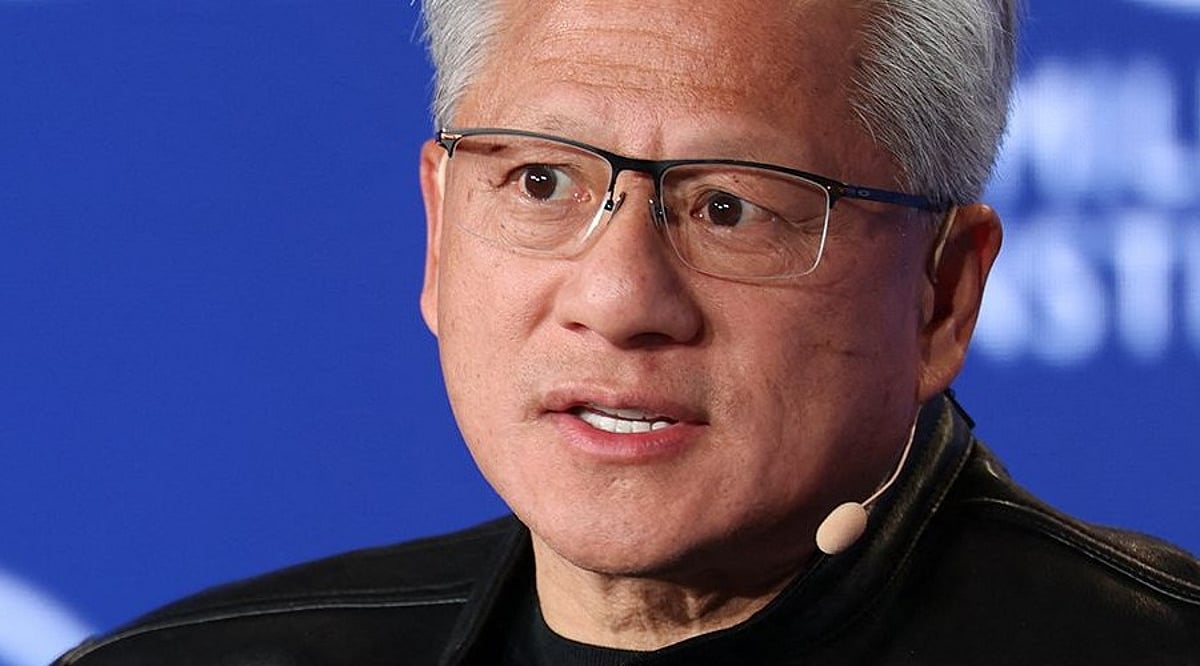
    Jensen Huang, NVIDIA’s founder and CEO, saw early that the AI boom would depend not just on chatbots but on massive data centers packed with chips, memory, networks, and power systems. His strategy turned NVIDIA from a graphics chip company into a foundational supplier for the entire AI economy.

    The GPU Became the Start of a Much Bigger System

    Huang’s key bet was that a graphics processor could do far more than graphics. NVIDIA built CUDA, a software platform that lets developers use its GPUs for advanced computing. That choice gave the company a strong base when AI models began demanding huge amounts of compute.

    For the quarter ended July 26, 2026, NVIDIA posted $96.2 billion in revenue, up 106% year-over-year. Data Center revenue reached $89.0 billion, up 117%. Net income hit $59.7 billion, with a gross margin of 75%. NVIDIA expects $108 billion in revenue for the next quarter and about 70% revenue growth for fiscal 2028, though supply limits still affect that outlook.

    Vera Rubin Turns the Rack into One AI Computer

    NVIDIA’s latest move takes the strategy further. The Vera Rubin platform combines Rubin GPUs, Vera CPUs, NVLink 6, ConnectX-9 network chips, BlueField-4 DPUs, Spectrum-6 systems, and Groq 3 LPX. Several racks can act as one large AI computer.

    NVIDIA says Vera Rubin can deliver 10 times the agent throughput of the Grace Blackwell platform at scale. The platform is designed for AI agents that call tools, search data, write code, and take many steps before completing a task. Such workloads need fast chips, fast memory, and fast links between every part of the system.

    A data center can no longer rely on raw GPU speed alone. Memory, storage, network systems, security, and power all affect the final cost of each AI response. NVIDIA now sells an architecture that connects these pieces.

    Power, Capital and Cloud Capacity Join the Strategy

    Huang has also moved closer to the physical side of AI infrastructure. NVIDIA now treats land, power, and data center space as key resources. In August, the company partnered with SB Energy to secure land, power, and shell capacity at the PORTS-Pike Technology Campus in Ohio. OpenAI will serve as the tenant.

    Capital has become another part of the plan. NVIDIA announced partnerships with Apollo, BlackRock, Blackstone, Brookfield, Goldman Sachs, and KKR. These platforms aim to mobilize more than $500 billion in third-party capital for AI infrastructure over time. The capital does not count as NVIDIA revenue; the goal is to give AI companies and cloud providers access to large pools of long-term infrastructure money.

    AWS and NVIDIA plan to deploy 2 million additional NVIDIA GPUs across AWS infrastructure in 2027–2028. The deal also covers Vera CPUs, network systems, open models, data tools, and robotics.

    NVIDIA has also expanded its reach into software. On September 3, the company agreed to acquire Hugging Face for $12.93 billion. The deal would give NVIDIA a deeper role in the open AI software ecosystem and help expand access to models, tools, and AI infrastructure.

    Huang’s Real Advantage is the Full Stack

    The central idea behind Huang’s strategy is not a single GPU. It is control of the system around the GPU. NVIDIA supplies compute, software, network systems, and rack architecture. It now has a role in power access, infrastructure finance, and developer software as well.

    That model helps explain why the company can grow as AI hardware becomes more complex. Every new AI workload creates demand across several layers at once.

    The next test will come from agentic AI, where one request can trigger hundreds or thousands of steps. That workload can create far more demand for compute than a simple chatbot response. NVIDIA has built Vera Rubin around that shift.

    Huang’s long bet has reached a new stage. NVIDIA no longer sells only the engine for AI. It sets the factory around it, from the first line of code to the data center floor.

  • Anthropic’s $10B Norway Compute Deal Taps 121MW of NVIDIA Vera Rubin Capacity

    Anthropic’s $10B Norway Compute Deal Taps 121MW of NVIDIA Vera Rubin Capacity

    Anthropic has reportedly signed a six-year, $10 billion compute agreement with Volta Infra Holdings for 121 megawatts of NVIDIA Vera Rubin capacity in Norway. Bloomberg identified Anthropic as the unnamed AI laboratory behind the contract, citing people familiar with the matter.

    Key Details at a Glance

    • Parties: Anthropic (reported), Volta Infra Holdings, and Bitdeer
    • Capacity: 121 critical IT megawatts of NVIDIA Vera Rubin compute
    • Location: Bitdeer’s hydro-powered Tydal campus in Norway
    • Timeline: First capacity by December 31, 2026; second phase by March 31, 2027

    A Major Early Win for Volta Infra

    Volta, which began operations in January 2026, will supply the NVIDIA-based infrastructure from Bitdeer’s Tydal site. The company describes itself as an integrated compute platform that combines infrastructure capital, secured power, and industrial-scale development. Co-founders Boada and Sofia Gumuzio previously worked at Brookfield Asset Management.

    Volta operates within NVIDIA’s Cloud Partner program, a network of providers that deploy NVIDIA GPUs while arranging physical data center sites through landlords and infrastructure owners.

    Lease Terms Give Bitdeer Long-Term Revenue Visibility

    Bitdeer’s Tydal subsidiary signed a 16-year lease with a Volta unit covering 121 critical IT megawatts and roughly 133 gross megawatts. Scheduled payments total approximately $4.7 billion during the base term. An optional eight-year extension could lift the total contract value to about $8 billion over 24 years.

    • Lease pricing begins near $202 per kilowatt-month, with 3% annual increases.
    • Bitdeer expects net operating income margins near 90% from contracted revenue.
    • Volta’s obligations carry about $1.3 billion in standby letters of credit, supported by affiliates of JPMorgan and another unnamed global institution.
    • The structure resembles Alphabet’s $43.8 billion in lease guarantees across its TPU ecosystem.

    Bitdeer shares rose as much as 23% on the news before settling about 10% above the previous close.

    Hydropower and Liquid Cooling Shape the Buildout

    Dell Technologies will provide NVIDIA’s Vera Rubin platform. Each Vera Rubin NVL72 rack combines 72 Rubin GPUs and 36 Vera CPUs inside a liquid-cooled chassis. Liquid cooling is required because chip-level heat density exceeds the limits of standard air cooling, and this shapes the design of the four planned data halls. Bitdeer has operated in Norway since 2018 and acquired the Tydal site in 2024, with delivery planned in two phases across those four halls.

    Norway produces more than 90% of its electricity from hydroelectric sources. Its cold climate helps Nordic facilities reach power usage effectiveness ratios near 1.1, versus about 1.58 for the average U.S. facility. At 121 megawatts of IT load, that efficiency advantage can free about 48 megawatts that would otherwise go to cooling and overhead.

    Anthropic’s Expanding Compute Footprint

    Anthropic previously signed a 300-megawatt agreement for SpaceX’s Colossus 1 facility in Memphis and has arranged computing deals with Amazon, Google, and Fluidstack. In November 2025, NVIDIA and Microsoft agreed to invest a combined $15 billion in Anthropic, alongside a $30 billion Azure compute purchase at a valuation near $350 billion.

    The reported Norway deal secures six years of Vera Rubin capacity for Anthropic, gives Volta a major launch customer, and locks in long-term lease income for Bitdeer. Delivery depends on two construction phases scheduled between late 2026 and March 2027 at Tydal. The disclosures do not state whether Anthropic will own the campus or the chips, nor do they divide capacity between model training and inference.

  • NVIDIA Stock Stays Below $200 Ahead of Vera Rubin Launch Amid Rising Competition and AI Spending Trends

    NVIDIA Stock Stays Below $200 Ahead of Vera Rubin Launch Amid Rising Competition and AI Spending Trends

    NVIDIA shares continue to trade below the $200 mark despite a modest rebound, as investors shift their attention to the company’s upcoming Vera Rubin platform and its expanding robotics business. The stock has underperformed the broader semiconductor sector in 2026, even as demand for artificial intelligence infrastructure remains robust.

    NVIDIA Trails Semiconductor Sector Despite AI Demand

    Shares of NVIDIA rose about 1.5% to $197.96 in early Tuesday trading. However, the stock has gained only about 5% year-to-date, while the PHLX Semiconductor Index has surged approximately 94% in the same period, making NVIDIA one of the weaker performers among major chip companies. Investors have been reallocating capital to other areas of the AI supply chain, including memory chipmakers, custom chip developers, and CPU manufacturers. Intel and Advanced Micro Devices have posted significantly stronger gains in 2026, and the iShares Semiconductor ETF has also outperformed NVIDIA. Analysts point to concerns over export restrictions affecting China and questions about future growth rates as factors weighing on the stock.

    Vera Rubin Platform and Robotics Expansion

    The market is now focused on NVIDIA’s next-generation Vera Rubin platform, which could strengthen the company’s position in AI infrastructure if it delivers substantial performance improvements. Competition is intensifying as large technology companies diversify their AI spending across multiple suppliers. Meanwhile, NVIDIA is expanding beyond AI chips into robotics, having opened more than a dozen robotics-related positions in Beijing, Shanghai, and Shenzhen. The roles cover embodied intelligence, simulation, implementation, and robotics solutions. NVIDIA says the robotics team aims to build a leading platform and ecosystem for autonomous machines, speeding the transition from research to commercial use. Employees will work on Project GR00T, the Cosmos physical simulation world model, and NVIDIA’s GPU computing platform.

    Market Watches AI Spending and China Competition

    NVIDIA remains one of the world’s largest listed companies with a market valuation of about $4.696 trillion—a 1% move changes its value by approximately $47 billion. Investors are tracking broader AI capital expenditure: the Bank for International Settlements projects that the five largest hyperscalers will invest more than $1 trillion in AI capex over 2025 and 2026, while also noting funding pressure and supply constraints around power, advanced chips, and grid infrastructure. Separately, Reuters reported that Baidu’s Kunlunxin chip business targets a $50 billion Hong Kong IPO, and IDC data shows domestic suppliers now hold 41% of China’s AI accelerator server market. Despite these headwinds, NVIDIA continues to project strong growth. The company forecast fiscal second-quarter revenue of $91 billion, above analyst expectations, and announced an $80 billion share buyback. CEO Jensen Huang stated, ‘We should be growing faster than hyperscale capex.’ Analysts are monitoring whether AI investment can sustain its pace through the coming years.