
Tag: vibe coding

  • What Is Vibe Coding? How AI-Powered Development Lets Anyone Build Apps Without Writing Code

    What Is Vibe Coding? How AI-Powered Development Lets Anyone Build Apps Without Writing Code

    Building an app once required years of learning programming languages, debugging errors, and understanding complex logic. That barrier is fading fast. Vibe coding has changed how people approach software development, letting anyone describe an idea in plain English and watch an AI model turn it into working code.

    What Vibe Coding Actually Means

    Vibe coding is a method of building software where a person describes their goal in natural language, and an AI model writes, runs, and fixes the code based on that description. Instead of learning syntax or writing every function manually, a user simply says something like “build me a to-do list app with dark mode,” and the AI generates a working version.

    The term was coined by AI researcher Andrej Karpathy in February 2025, when he described giving in to “the vibes” and letting AI handle the coding almost entirely. Collins Dictionary later named vibe coding its Word of the Year for 2025, officially defining it as the practice of using natural language prompts to make an AI program produce the desired code.

    How the Process Actually Works

    Vibe coding generally follows a simple loop: describe what you want to build, the AI interprets the request and writes the underlying code, you review the output and ask for adjustments, and the AI refines it further based on that feedback.

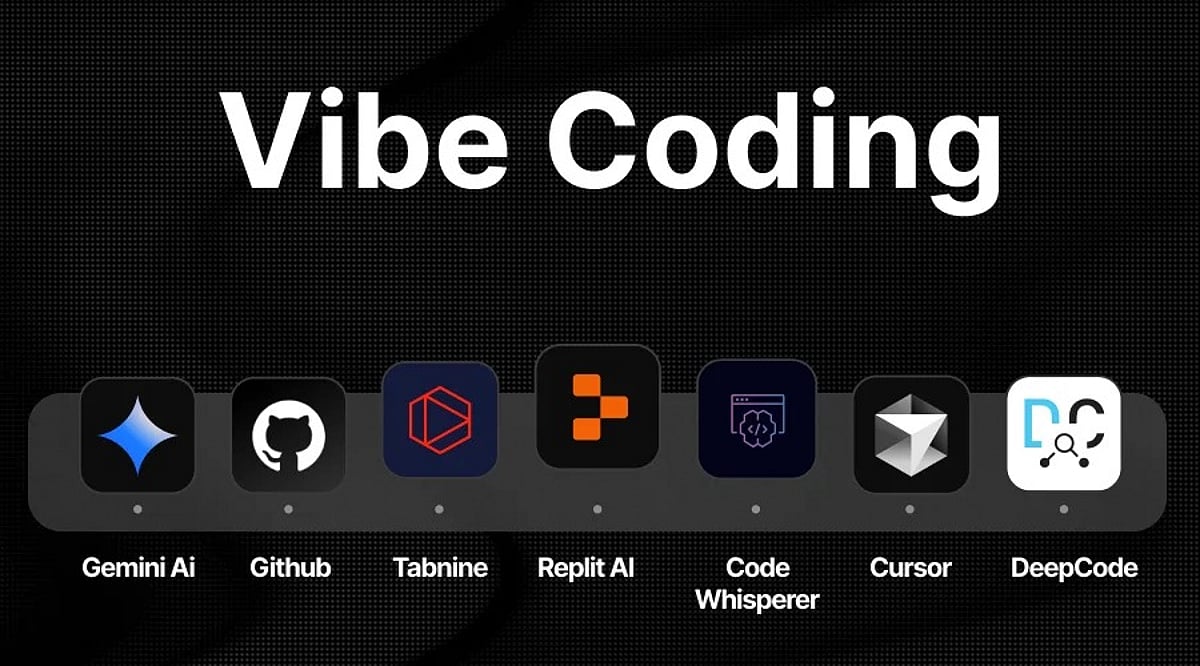
    Tools such as Lovable, Replit, Bolt, GitHub Copilot, and Cursor have built entire platforms around this workflow, handling tasks like database setup, real-time updates, and error debugging automatically. Instead of writing a complex database query, a user might simply describe the dashboard they want, and the AI generates the required logic behind it.

    Why It Matters for Non-Coders & Businesses

    Vibe coding lowers the barrier to entry for building software in a way few previous tools have managed. People with no programming background can now launch functional apps, websites, and prototypes without hiring a developer or spending months learning to code. Businesses benefit too, since ideas can move from concept to a working demo in hours rather than weeks. According to reports, by mid-2026 roughly 25 percent of Y Combinator startups were building products using mostly AI-generated code, showing how quickly this shift has moved from a novelty into standard practice for early-stage teams.

    The Limits & Risks Worth Knowing

    Vibe coding is not without its downsides. Since users often skip reading the generated code line by line, mistakes and security gaps can slip through unnoticed. Early adopters have reported issues ranging from broken features to AI-generated content that misrepresented real data, such as fake product reviews appearing on a demo app.

    Developers who understand the underlying logic can catch these problems faster, which is why many experts recommend treating AI output as a strong first draft rather than a finished product, especially for anything handling sensitive user data.

    The Road Ahead for App Development

    Vibe coding is reshaping who gets to build software, shifting the developer’s role from writing every line of code to guiding an AI assistant toward the right outcome. As AI models keep improving at understanding context and intent, the applications people can create this way will only grow more capable.

    It is not about replacing skilled developers entirely, but about giving far more people the tools to turn their ideas into something real, faster than ever before.

    Frequently Asked Questions

    1. What is vibe coding? Vibe coding is an approach where a person describes an idea in plain language and lets an AI assistant translate it into working software, rather than writing the code line by line.
    2. Does vibe coding replace developers? No, it does not replace skilled developers entirely. It gives more people the tools to turn their ideas into working applications, and experienced developers still play a key role in guiding, refining and reviewing the output.
    3. Can someone with no coding experience use vibe coding to build an app? Yes, vibe coding makes app building accessible to people who never learned to program, since the process relies on describing intent rather than writing syntax.
    4. Is AI-generated code from vibe coding safe to use directly? Experts recommend treating AI output as a strong first draft rather than a finished product, especially for anything handling sensitive user data, so a review step remains important.
    5. How will vibe coding evolve as AI models improve? As AI models get better at understanding context and intent, the applications people can build through vibe coding are expected to grow more capable and complex over time.
  • Andrej Karpathy: Speak Naturally, Not Perfectly — Why Casual Voice Prompts Outperform Polished AI Instructions

    Andrej Karpathy: Speak Naturally, Not Perfectly — Why Casual Voice Prompts Outperform Polished AI Instructions

    Artificial intelligence researcher Andrej Karpathy, the mind behind the term “vibe coding,” is challenging the common obsession with crafting the perfect AI prompt. Instead, he advocates for a more natural approach: simply say what you want, even if your thoughts are messy or incomplete.

    In a post on X on July 21, 2026, Karpathy explained his preference for using voice mode when interacting with large language models (LLMs). Rather than typing carefully refined instructions, he speaks freely, allowing the AI to organize his scattered ideas into a coherent response. He often tells the chatbot upfront that his thoughts may be messy or contain mistakes, so the model focuses on intent rather than literal interpretation.

    “One pattern I find useful for working with LLMs is a nice long ramble session. Sometimes the LLM needs more bits to understand what you’re trying to achieve, but you’re too lazy to type them. In these cases I like to lean back, switch to voice and just ramble.”

    Karpathy argues that many users provide too little context. He believes longer, more natural instructions give the AI a better chance to grasp the real objective than short, polished prompts. His comments come amid growing investment by AI companies in voice-driven assistants designed to facilitate more fluid conversations.

    Karpathy coined the term “vibe coding” in early 2025, referring to a coding method where developers use natural language prompts to generate code via AI instead of writing every line manually. His latest message reinforces that philosophy: forget about perfect prompts, focus on clear communication.

  • How AI Is Transforming Web Design: Personalization and Optimization at Scale

    How AI Is Transforming Web Design: Personalization and Optimization at Scale

    Just about every business is trying to conjure up ways to leverage the foretold productivity increases offered by artificial intelligence. While most are familiar with AI apps that are predominantly chatbots and generators of content, some are making use of the technology behind the scenes.

    Websites are being targeted as fertile ground for AI. Web design, building sites, and running them are all seen as areas that can be improved by the tech when applied correctly. As it stands, personalization is the Holy Grail, and given what AI could provide, it’s easy to see why.

    Optimizing Optimized Platforms

    Essentially, a website can hold unlimited options. It’s wholly digital, meaning that there aren’t any walls and that space is barely an issue. This does lead to many that offer a wide collection of options or products, filling up with as many as possible. This way, the site can have a much broader appeal and hit more specific searches.

    Already, these heavily stocked sites are well optimized. You’ll see home pages loaded with categories to scroll through, the most important and appealing picks up top, and an easy navigation flow. The bingo sites UK player go to follow this format, making it straightforward to explore their hundreds of options.

    Up top is a tight bar of all of the categories. Under the banner, the rotating options of live and upcoming bingo rooms move through to assist in quick access. Scroll further, and there are the new games, originals, jackpots, trending games, favorites, and more on horizontal scrolls for easy navigation.

    What AI seeks to do is transform this layout in a way that always personalizes it. This way, segments aren’t optimized for the experience of all, but tailored through a predictive program that creates real-time changes. Of course, even for AI, this would be quite a demanding addition to a website, but one that could transform the online experience.

    A Lot of Variety in AI Web Design

    As has been covered by BI, AI and vibe coding are very much trending in the web design and development department right now. More and more platforms that allow people to build their ideal sites without knowing any code have begun to introduce AI tools for users and AI behind the scenes for the platform as a whole.

    However, not all AI is made equal, and pulling together the most useful tools and applications can sometimes be quite the task. What’s important is not to simply use AI because it’s a useful tool, but to make sure the application of the tech is done properly and with a strong amount of oversight and supervision.

    AI is a tool, and a tool can only be as useful as its user lets it. So, whenever AI is applied to a website, it needs to be done with careful consideration of what you want and, just as importantly, what you don’t want from it. Continually reviewing the results in test conditions is the most straightforward way of eventually getting a useful AI application for your website.

    There’s a lot of promise around AI, particularly in its potential for further optimizing websites. However, it takes considerable time and skill to realize its true power.