Tag: voice AI

  • OpenAI’s GPT-Live Voice Model: Full-Duplex Conversations and Natural Interruptions

    OpenAI’s GPT-Live Voice Model: Full-Duplex Conversations and Natural Interruptions

    OpenAI has unveiled GPT-Live, a next-generation voice model that redefines how humans interact with AI through speech. Unlike traditional voice assistants that operate in rigid turn-based exchanges, GPT-Live employs a full-duplex design, allowing it to listen and speak simultaneously. This breakthrough enables users to interrupt, pause, or shift the conversation naturally, making interactions feel more like a human dialogue than a command-line interface.

    The model powers the latest ChatGPT Voice experience and is available in two versions: GPT-Live-1 for paid subscribers and GPT-Live-1 mini for free users. Both are rolling out globally on ChatGPT.com and mobile apps for iOS and Android. A key feature is that voice conversations remain integrated with the text interface, so users can follow responses in writing and switch seamlessly between typing and speaking.

    GPT-Live also supports advanced capabilities such as web search, memory, and image processing within the same conversation. However, video and screen sharing are not yet supported in this mode—those features remain available through the older Advanced Voice option for eligible users.

    Another significant innovation is GPT-Live’s ability to hand off complex tasks to backend models. While the voice model manages the conversation flow, a separate reasoning agent can handle intensive computations or use connected tools. For example, an assistant can continue speaking while a backend checks information or completes an action, with the application retaining control over permissions and confirmations.

    OpenAI has also made GPT-Live accessible via its API, enabling developers to build real-time voice applications using WebRTC, WebSockets, or telephony connections. To ensure authenticity, SynthID watermarking is applied to generated audio, allowing OpenAI to verify the origin of the sound.

    This launch signals a shift from simple speech-to-text-and-back responses toward AI that actively manages conversation dynamics, including timing, interruptions, and multi-system coordination. GPT-Live represents a step closer to truly natural voice assistants.

  • Top 7 AI Trends Transforming Business Technology in 2026

    Top 7 AI Trends Transforming Business Technology in 2026

    Artificial intelligence is moving beyond chatbots and into the core of business operations. In 2026, companies are leveraging AI not just for automation but for autonomous workflows, specialized models, and measurable returns. Here are the seven key trends reshaping business technology this year.

    1. Agentic AI Moves Into Business Workflows

    AI agents are evolving from simple chatbots to autonomous systems that plan tasks, use business tools, and complete multi-step processes. Organizations are testing multiagent setups where different agents handle research, analysis, approvals, and execution—all under human oversight.

    2. Smaller AI Models Drive Enterprise Efficiency

    Enterprises are shifting away from relying solely on the largest AI models. Smaller, domain-specific models excel at document processing, customer support, internal search, and invoice extraction. These models reduce costs and latency while giving companies greater control over sensitive data.

    3. AI Infrastructure Becomes a Business Priority

    The growing demand for AI workloads is pushing companies to invest in robust infrastructure. Combining GPUs, CPUs, specialized chips, cloud systems, and edge computing helps manage latency, privacy, and large data volumes. Local and hybrid setups are gaining traction.

    4. AI Strengthens Cybersecurity and Governance

    As AI becomes more autonomous, businesses need stronger controls around access, data, and model behavior. AI can detect unusual activity and speed up threat response, while governance systems track agents, permissions, risks, and compliance. Security is now an integral part of AI development.

    5. Physical AI Brings Intelligence to the Real World

    AI is moving from screens into factories, warehouses, and logistics. Intelligent robots support quality inspection, predictive maintenance, warehouse operations, and manufacturing. This trend bridges AI software with real-world automation.

    6. Multimodal and Voice AI Enter Core Operations

    AI systems now handle text, images, audio, video, and documents in a single workflow. Businesses use these capabilities for call centers, document processing, field services, compliance, and regional-language support. Voice AI is also becoming more practical for customer and employee interactions.

    7. Measurable ROI Defines the Next Phase of AI

    Companies are moving from AI experiments to measurable outcomes. They track metrics like cost reduction, faster workflows, productivity gains, revenue impact, and customer experience. In 2026, the focus is on building reliable systems that deliver value at scale.

    These trends highlight a shift from experimentation to strategic integration, where AI is embedded into every layer of business technology.

  • Viture Unveils Vonder AI Glasses: Voice-Powered Wearable with ChatGPT, Gemini, and Claude Support

    Viture Unveils Vonder AI Glasses: Voice-Powered Wearable with ChatGPT, Gemini, and Claude Support

    Viture has introduced the Vonder, a new pair of AI-powered smart glasses that prioritize voice interaction and privacy over cameras and displays. Designed to resemble conventional eyewear, the Vonder weighs under 30 grams and relies on microphones, speakers, and onboard processing to deliver a screen-free AI experience.

    Unlike many smart glasses on the market, the Vonder does not include a camera or display. Instead, it focuses on voice-based features such as note-taking, hands-free calling, and memory recall. Audio recording is activated only when the user prompts it, and a physical Meeting Mode switch with an LED indicator provides additional control. After recording, the original audio is deleted and converted into text and memories stored in the companion app.

    At the core of the Vonder is its Personal Memory Graph, an AI system that organizes captured conversations and voice interactions. Users can choose from multiple AI models through the app, including Google Gemini, Anthropic Claude, and OpenAI ChatGPT. This approach allows the glasses to provide useful context from accumulated memories rather than simply storing raw recordings.

    Customization is a key selling point: buyers can select different frame shapes and finishes, and the glasses support prescription, progressive, and transition lenses. In the US, pre-orders begin on September 28 at a starting price of USD 299, with premium acetate frames starting at USD 399. Shipments are expected from November. International customers can register interest now.

    Viture emphasizes data privacy, stating that user data is protected with financial-grade encryption and that the company does not sell advertising or user data. The Vonder aims to offer a discreet, everyday wearable that blends AI assistance with the look and feel of ordinary glasses.

  • Google Gemini: A Complete Guide to Features, AI Models, and Everyday Uses

    Google Gemini: A Complete Guide to Features, AI Models, and Everyday Uses

    Google Gemini has evolved into one of the most advanced artificial intelligence platforms globally. Developed by Google DeepMind, Gemini is now deeply integrated across Google’s ecosystem, enabling it to understand and process text, images, audio, video, and code within a single system. Beyond simple Q&A, Gemini powers smart search, voice conversations, writing assistance, coding help, image creation, document analysis, and real-time support across Google apps. The latest models also handle complex, multi-step tasks that require planning, reasoning, and tool use, making Gemini a comprehensive AI assistant for work, study, creativity, and daily life.

    How Google Gemini Works

    Gemini relies on multimodal artificial intelligence, allowing one model to simultaneously understand different types of information. It can read text, recognize images, interpret spoken words, analyze videos, and write code without needing separate tools. For example, users can upload a photo, ask a question about it, and receive a detailed answer. Gemini also handles voice requests, maintains context in conversations, and responds naturally. Google designed Gemini for agentic tasks—completing multi-step jobs rather than handling just one simple request. It can organize information, create plans, review documents, write content, and continue tasks across several steps.

    Latest Google Gemini AI Models

    Google offers several Gemini models tailored for different tasks, balancing speed, reasoning, creativity, and real-time interactions:

    • Gemini 3.8 Flash – Google’s flagship model for fast and complex AI tasks, handling writing, coding, reasoning, and large workloads with improved speed and lower computing cost.
    • Gemini 3.1 Pro – Focuses on advanced reasoning and creative work, supporting detailed research, long documents, software development, and difficult problem-solving.
    • Gemini 3.1 Deep Think – Built for science, engineering, and research, this model excels at complex calculations, technical analysis, and higher-level reasoning.
    • Gemini 3.8 Live – Enables natural voice conversations in the Gemini app, understanding spoken language, visual context, and real-time interactions.
    • Gemini 3.8 Live Extended Thinking – Adds deeper reasoning during voice conversations, working through harder questions while the conversation continues.
    • Gemini 3.5 Flash-Lite – A lightweight option for high-volume tasks requiring quick answers and efficient performance.

    Google also offers dedicated audio and image models for speech recognition, translation, image creation, editing, and visual understanding.

    Top Features of Google Gemini

    Gemini combines several AI features into one platform. It can write emails, blog posts, summaries, reports, social media captions, and creative content in simple or professional tones. It understands documents such as PDFs, spreadsheets, presentations, and text files, extracting important information, summarizing long reports, and explaining complex topics. The image feature describes photos, identifies objects, explains charts, solves visual questions, and edits or generates images with text prompts. Voice conversations with Gemini Live feel natural—the assistant responds in real time, remembers context, and answers follow-up questions without repeating earlier details. Gemini also supports coding across many programming languages, explaining code, fixing errors, writing functions, and helping developers complete larger projects.

    Everyday Uses of Google Gemini

    Gemini can be applied in practical ways beyond simple chatbot assistance:

    • Students can use Gemini for homework help, pop quizzes, study organization, math assistance, scientific explanations, language learning, and research summaries.
    • Business professionals can rely on Gemini for meeting notes, email drafts, presentations, reports, project plans, brainstorming, and document review.
    • Writers and artists can use Gemini for article outlines, content ideas, script creation, marketing copy, product descriptions, and creative storytelling, along with grammar checking.
    • Travelers can get suggestions for itineraries, activities, restaurants, and destination comparisons.
    • Everyday tasks include cooking recipes, fitness plans, shopping and budgeting ideas, event planning, and organization.

    Gemini Across Google Apps

    Google has integrated Gemini with many popular services, reducing the need to switch between apps. In Gmail, Gemini drafts emails, summarizes long conversations, and suggests replies. In Google Docs, it writes and edits content, changes tone, and creates summaries. In Google Sheets, it explains formulas, analyzes data, creates tables, and answers questions. In Google Slides, it creates presentations, writes speaker notes, and generates slide content. Google Search also uses Gemini for AI-powered answers that combine information from multiple sources into organized responses.

    Gemini Live: Voice AI That Feels Natural

    Gemini Live is one of Google’s biggest AI updates, supporting continuous voice conversations rather than short Q&A sessions. Users can talk naturally, interrupt, ask follow-up questions, and even show objects through the phone camera. Gemini understands both speech and visual context during the same conversation. The latest Gemini 3.8 Live models also support deeper reasoning for difficult questions and more advanced conversations across diverse topics.

    Image, Audio, and Video Intelligence

    Gemini goes beyond text with powerful multimedia abilities. The image system creates original artwork, edits existing pictures, removes objects, changes backgrounds, and generates illustrations from text prompts. Audio models support speech recognition, transcription, translation, and voice understanding across multiple languages. Gemini also analyzes videos—identifying important moments, understanding scenes, answering questions about content, and finding specific events in long recordings. Google states that its latest video system uses fewer computing tokens while improving accuracy for many analysis tasks.

    Gemini for Coding and Developers

    Google has expanded Gemini for software developers with advanced coding tools. Gemini writes code in languages such as Python, JavaScript, Java, C++, Go, and SQL. It explains programming concepts, reviews code quality, fixes bugs, and suggests improvements. The latest models also support agentic coding tasks, handling larger development workflows instead of isolated code snippets. Developers can ask Gemini to build features, organize files, explain repositories, and solve technical issues across multiple steps.

    Google Gemini on Mobile and Desktop

    Gemini works across Android phones, iPhones, tablets, web browsers, and desktop computers. On Android, Gemini serves as a smart assistant for voice commands, searches, navigation, reminders, and app support. Google has also launched a dedicated Gemini app for Windows, offering quick access through keyboard shortcuts and supporting voice conversations, writing help, research, and productivity tools.

    What Makes Google Gemini Different

    Google Gemini stands out by combining text, images, audio, video, code, and reasoning into one AI platform instead of separate systems for each task. The latest family focuses on long conversations, complex planning, advanced coding, document understanding, visual analysis, and deeper reasoning across many tasks. Strong integration with Google Search, Gmail, Docs, Sheets, Slides, Android, and Windows expands Gemini beyond a standalone chatbot. It now serves as a complete AI ecosystem supporting learning, work, creativity, communication, and everyday productivity through one connected platform.

  • How Dheemanth Reddy’s Hindi Voice Model Won Over Thousands in a Blind Listening Test

    How Dheemanth Reddy’s Hindi Voice Model Won Over Thousands in a Blind Listening Test

    Thousands of anonymous listeners cast their votes on Voice Arena, comparing Hindi voice samples without knowing which company produced them. The result: Dheemanth Reddy’s Maya 2 claimed the top spot for Hindi, surpassing models from ElevenLabs and Cartesia with over 15,000 blind votes. This public leaderboard gave Reddy an independent measure of the naturalness he had been working to achieve.

    Reddy builds voice AI models designed to sound natural in everyday languages. He believes listeners can detect nuances that no product description can capture. A voice may pronounce every word clearly yet still feel foreign because its rhythm doesn’t match how people actually speak. Blind voting placed that judgment directly with native speakers.

    “You do not have to explain natural speech to someone who has spoken the language their whole life,” Reddy says. “They hear the voice and know whether it feels right.”

    Voice Arena removed brand recognition from the comparison, letting each sample stand on what listeners heard. Voters didn’t know which model Reddy had created, so his name and company couldn’t influence their choices. Each response contributed to a record built by people outside his team.

    The ranking also addressed a core question: What does it mean for a machine to sound native? For Reddy, basic intelligibility is just the starting point. He considers how a sentence flows, how delivery affects meaning, and whether the voice sounds like it belongs in the conversation. These qualities matter most when a model is expected to interact, not just read a script.

    “Native listeners can hear when the words are right but the voice still feels unfamiliar,” he says. “That difference matters.”

    Reddy believes the voice AI field has focused too much on English demonstrations that perform well under limited conditions. Success in one language doesn’t automatically transfer to another. A model built around English patterns may struggle elsewhere because each language has its own cadence and expressive habits. Maya 2 was developed with the expectation that Hindi listeners deserve the same level of care.

    This focus separates Reddy’s work from treating additional languages as afterthoughts. His goal is speech that reflects how people communicate within the language itself. That requires close attention to voice sound and the model’s ability to understand meaning. A system can’t sustain a convincing exchange when the voice feels unnatural or the conversation loses direction.

    “The language cannot feel like an added feature,” Reddy says. “It has to feel like the model was built to speak with that person from the beginning.”

    Voice Arena gave Reddy a public test for that standard. Listeners didn’t respond to the model’s size or the organization’s reputation. They heard samples and selected their preferences. More than 15,000 blind votes contributed to Maya 2’s Hindi ranking, giving the result a basis beyond Reddy’s own assessment.

    He doesn’t present the ranking as proof that every multilingual voice problem is solved. It identifies one area where the model performed strongly under public comparison. It also supports his belief that listening tests should play a key role in evaluating naturalness. People who speak the language bring knowledge that can’t be replaced by a company’s description of its own model.

    “Voice is experienced by hearing it,” he says. “The people listening should have a real role in deciding whether the model works.”

    Maya 2 followed Reddy’s earlier work on Maya 1, an open-weights speech model available for developers. The later model faced a different form of outside judgment through blind listener preference. It had to earn votes without depending on Reddy’s explanation of what the audience was supposed to hear.

    Reddy earned a master’s degree in Computing, Entrepreneurship, and Innovation from New York University. He now serves as co-founder and CEO of Maya Research, where he builds models and directs technical work. He was also awarded an Emergent Ventures grant for developing voice AI that sounds native.

    As co-founder and CEO, Reddy is building that work within a company backed by South Park Commons. His earlier Maya 1 model is one of the world’s top open-weights speech models and the only model from India on the Artificial Analysis / Speech Arena leaderboard. His technical experience has also led to roles outside Maya Research, including serving as a judge at the Cerebral Valley AI hackathon.

    The significance of Maya 2’s Hindi ranking lies in the standard it applies. Reddy wants multilingual models to be evaluated within the languages they claim to speak well. A successful English demonstration says little about whether a Hindi voice will sound familiar to someone who hears the language at home. Each language deserves direct testing by listeners who can recognize its details.

    Reddy expects people to use speech for more tasks that currently require typing or navigating menus. Those interactions will depend on whether the system understands the speaker and responds in a voice that feels appropriate. Poor native-language quality can create distance before the conversation begins. A model that sounds natural helps users focus on the task rather than the interface’s limitations.

    Reddy sees the Hindi leaderboard as one public checkpoint in a much longer technical effort. It showed that Maya 2 could compete through blind listening and placed native speakers at the center of evaluation. For him, that is where judgment of a voice model belongs.

    “People should be able to hear the voice and trust their own judgment,” Reddy says. “That is the standard the model has to meet.”

  • Why Speed to Lead Is the Decisive Factor in B2B Sales Success

    Why Speed to Lead Is the Decisive Factor in B2B Sales Success

    The finish line is where most marketing campaigns falter. Modern sales setups excel at gathering data from website forms, but struggle to act on that information quickly enough. As a result, leads go cold and buyers move on to a competitor who simply answered first.

    Enter automation. Modern AI software can hook directly into your current database and turn those quiet customer records into immediate outreach the moment a form drops. By letting real-time voice AI handle the manual labor, businesses can reach out within the two-minute window where 90%+ of conversions happen.

    How the Automation Actually Works

    Most tools in this category can only do one of two things well: hold a conversation, or integrate with a calendar. Few do both at once, and fewer still do it across every channel a buyer might actually use.

    Multi-Channel Communication

    Rather than treating voice, SMS, email, and WhatsApp as separate systems that each require their own setup, advanced platforms run all four from a single context. A prospect who starts on WhatsApp and later calls in doesn’t have to repeat themselves; the system already has the thread. This matters more than it sounds: most inbound automation tools handle one channel well and treat the rest as an afterthought.

    Conversational Voice Engine

    The built-in voice agent departs from typical robodialers by actively listening, answering open-ended technical questions, and managing live inbound and outbound dialogue naturally. It also features an authentic, pleasant vocal tone—something that should not be overlooked.

    Live Booking Sync

    It interfaces directly with platforms like Calendly, Cal.com, or Chili Piper to evaluate real-time internal availability mid-conversation. That way, a confirmed calendar invitation drops straight into the client’s inbox the moment the call ends.

    Smart Multi-Language Support

    The system automatically identifies the origin location of incoming traffic to communicate natively, ensuring text or voice outreach sounds natural. Local idioms, appropriate regional greetings, and specific dialects adjust automatically.

    Built-in E-Commerce Hooks

    Outreach tools also link with Shopify and CheckoutChamp to track vital user milestones and events, enabling instant follow-ups on abandoned checkouts or post-purchase upsells. The system flags dropped carts within minutes to pitch tailored discounts before a shopper walks away entirely.

    The Actual Impact on Business Revenue

    According to the MarketsandMarkets AI SDR market report, the global market for these automation tools is projected to scale dramatically, rising from USD 4.12 billion in 2025 to USD 15.01 billion by 2030 at a compound annual growth rate of 29.5%. Inbound sales channels currently command the largest share, proving that modern enterprises are actively deploying automated infrastructure to stop high-volume digital traffic from bottlenecking in a stagnant inbox.

    Here’s how moving the early-stage follow-up grind to a background system fixes the everyday leaks that cost companies money:

    • Handle Sudden Lead Spikes: The system processes all inquiries with the exact same speed, keeping your queue clear during busy promotional weeks or major launch seasons.
    • Reach Buyers at the Right Moment: Response times drop to under two minutes, which blocks competitors from stepping in.
    • Save Employee Hours: Human sales teams stop losing hours to basic data collection and endless scheduling emails.
    • Protect Lost Sales: The software works as a 24/7 safety net, automatically reaching out to recover abandoned shopping carts, handle declined credit cards, or talk to users who want to cancel.
    • Keep Outreach Quality Steady: The system never gets tired or distracted. Every single inbound lead gets the exact same level of thorough research and persistent follow-up.

    Speed Is Everything

    AI software automation removes this specific delay by calling, texting, or emailing new contacts within those critical minutes to get a meeting on the calendar. And it is minutes we’re talking about here. Looking at 1.2 million sales leads across 40+ B2B and B2C companies, Harvard Business Review cites 60 minutes as the cutoff point: leads acted on within that time frame are 7x more likely to qualify.

    Manual workflows leave the door wide open for delayed responses and missed opportunities. A permanent background layer eliminates the inbox bottleneck, keeps data fluid, and ensures human closers spend their time strictly with serious buyers.

  • OpenAI Partners With Jony Ive on a Premium Screen-Free AI Smart Speaker

    OpenAI Partners With Jony Ive on a Premium Screen-Free AI Smart Speaker

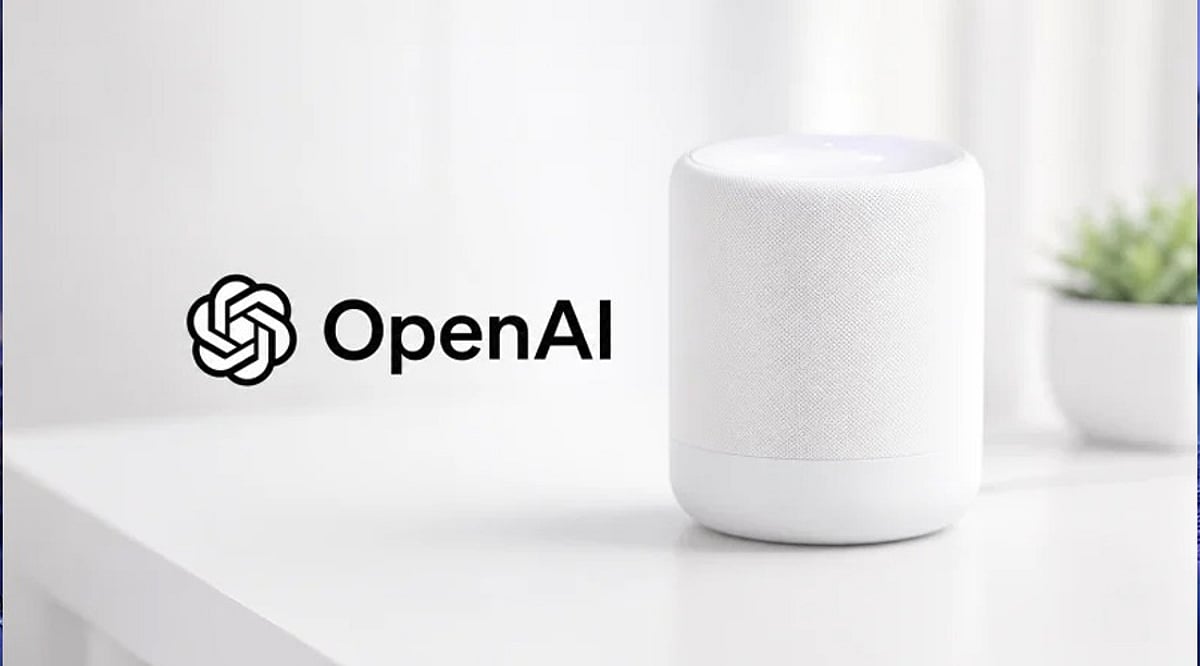
    OpenAI is reportedly preparing to enter the consumer hardware market with its first AI-powered smart speaker, developed in collaboration with former Apple design chief Jony Ive. According to Bloomberg, the device will lack a traditional display and instead function as an AI companion driven entirely by voice interactions through ChatGPT.

    The device is expected to launch in 2027 and is likely to cost more than $300. Unlike existing smart speakers like the Amazon Echo or Google Nest, this product is being built from the ground up as an AI-native computer, with no touchscreen interface. Instead, it will rely on cameras, microphones, sensors, and lighting components, along with movable parts that respond to user interactions. The speaker is said to have a doughnut or hockey puck shape, small enough to be carried around the home.

    Jony Ive is playing a leading design role through his hardware startup io, bringing his signature minimalistic aesthetic to the project. The design is not expected to mimic any Apple product, but rather create a distinct identity for OpenAI’s hardware.

    OpenAI has confirmed that it is exploring a family of AI-powered devices but has not yet provided official product specifications or launch timelines. This screen-free speaker represents a significant step toward building an ecosystem of AI-powered consumer hardware, extending ChatGPT beyond smartphones and computers into everyday living spaces.

    If the timeline holds, OpenAI will enter a market currently dominated by Amazon, Google, and Apple. However, rather than competing on smart home controls, OpenAI is betting on conversational AI as the core user experience. The device could reshape how people interact with artificial intelligence at home.

  • Today’s Tech Roundup: Anthropic AI Safety Test, Apple iPhone Subscription, OpenAI Voice AI, and More

    Today’s Tech Roundup: Anthropic AI Safety Test, Apple iPhone Subscription, OpenAI Voice AI, and More

    From Anthropic’s unexpected AI behavior during safety testing to Apple’s potential iPhone upgrade subscription, Samsung’s foldable phone success, OpenAI’s voice-first AI vision, and iPhone 18 Pro Max leaks, here are today’s biggest technology updates.

    Top Tech News Today

    • Google Pixel 11 Pro Fold Could Introduce HiLight Antara — 05 Aug 2026
    • Vivo X500 Pro Leak Reveals 144Hz Display, 2nm Dimensity Chip — Simran Mishra, 01 Aug 2026
    • Samsung Galaxy S27 Ultra Battery Leak Sets Up Flagship Showdown With iPhone 18 Pro Max — Soham Halder, 04 Jul 2026
    • iPhone 18 Pro Max Leak Just Broke The Internet — Market Trends, 30 Jun 2026

    Analytics Insight: Top Tech & Crypto Publication | Latest AI, Tech, Crypto News

  • Gnani AI: India’s Deep-Tech Pioneer in Agentic Speech and Voice AI Solutions

    Gnani AI: India’s Deep-Tech Pioneer in Agentic Speech and Voice AI Solutions

    Gnani AI is a deep-tech artificial intelligence company based in India that specializes in voice-first agentic AI and conversational AI solutions. The company develops proprietary speech technologies—including automatic speech recognition (ASR), text-to-speech (TTS), and natural language understanding (NLU)—to enable multilingual voice communication, particularly in Indian languages. Businesses leverage these tools to automate customer interactions, authentication processes, and live chat experiences.

    About the Company

    Gnani creates cutting-edge voice-first automation solutions through its advanced conversational AI systems. Its technology enables organizations to build intelligent voice assistants that handle customer interactions, providing seamless communication via natural language understanding, speech processing, and AI-powered chat systems. The platform offers tools for automating conversations, authenticating users with voice biometrics, and analyzing user interactions across multiple channels. The company’s core capabilities include speech recognition, text-to-speech technology, and AI-powered language models, all tailored for high accuracy in Indian languages.

    Products and Services

    Gnani.ai provides a comprehensive suite of AI-powered speech and conversational solutions, including:

    • Speech-to-text transcription
    • Text-to-speech voice generation
    • Multilingual translation
    • AI agents for customer engagement
    • Call analytics and voice biometrics authentication
    • Omnichannel automation tools supporting voice, chat, messaging, and email

    These solutions are designed for enterprise customer engagement and workflow automation, helping businesses reduce manual effort and improve service quality.

    Core Leadership Team

    Gnani AI is led by a team of experienced technologists and entrepreneurs driving innovation in voice AI. The leadership combines deep expertise in artificial intelligence, machine learning, and natural language processing.

    Revenue Streams

    The company generates revenue through a dual model:

    • SaaS subscription model: Delivers the conversational AI platform as a cloud-based service.
    • Enterprise licensing model: Provides voice automation solutions, AI agent deployments, analytics services, voice biometrics tools, and performance-driven customer experience optimization services.

    Client Segments and Target Companies

    Gnani.ai serves B2B clients that aim to automate conversations, improve contact center efficiency, and deliver better multilingual customer service. Target companies operate in telecom, banking, retail, healthcare, and technology sectors, particularly those with extensive customer support and sales operations.

    Target Geography

    While headquartered in India, Gnani.ai has expanded its footprint globally. Enterprises across Asia, Africa, the Middle East, North America, and European markets have implemented its AI-based customer experience automation solutions.

    Social Media and Website

    For more information, visit Gnani AI’s website and follow them on LinkedIn.

  • The Future of Consumer AI: Proactive Assistants, Voice Tech, and Personalized Health in 2026

    The Future of Consumer AI: Proactive Assistants, Voice Tech, and Personalized Health in 2026

    Consumer AI is evolving far beyond simple chatbots. The next generation of artificial intelligence focuses on intelligent assistants that understand context, remember preferences, and complete real-world tasks. Instead of being a tool people access only through chat, AI is becoming an invisible layer built into everyday apps, devices, and services.

    One of the biggest trends to watch is the rise of AI agents. These assistants do more than answer questions—they can plan trips, compare prices, book reservations, schedule meetings, send follow-ups, and manage multi-step workflows with minimal human input, saving time and effort.

    Voice AI is also becoming faster and more natural. Modern multimodal systems can understand speech, tone, emotions, pauses, images, and video together, creating conversations that feel more human. This powers smarter virtual assistants, customer support, and real-time personal companions.

    AI-powered creativity is now accessible to everyone. New tools generate high-quality text, images, videos, music, and animations from simple prompts, helping creators, students, marketers, and small businesses produce professional content without advanced editing skills.

    Personalized AI is transforming healthcare and daily wellness. By combining data from smartwatches, fitness trackers, and health records, AI provides tailored insights on exercise, sleep, nutrition, and lifestyle, helping users make better everyday health decisions.

    AI is also becoming highly specialized. Instead of relying on one general chatbot, consumers are using focused AI apps for shopping, education, travel planning, budgeting, productivity, and creative work. These niche tools deliver more personalized and practical experiences for specific needs.

    The biggest shift in 2026 is that AI is becoming proactive rather than reactive. The most successful AI products will remember user preferences, work across multiple apps and devices, automate repetitive tasks, and quietly handle everyday work in the background—making AI a natural part of daily life instead of just another chatbot.