Tag: Wall Street

  • Goldman Sachs CEO David Solomon Breaks with Banking Peers to Endorse CLARITY Act for Crypto Regulation

    Goldman Sachs CEO David Solomon Breaks with Banking Peers to Endorse CLARITY Act for Crypto Regulation

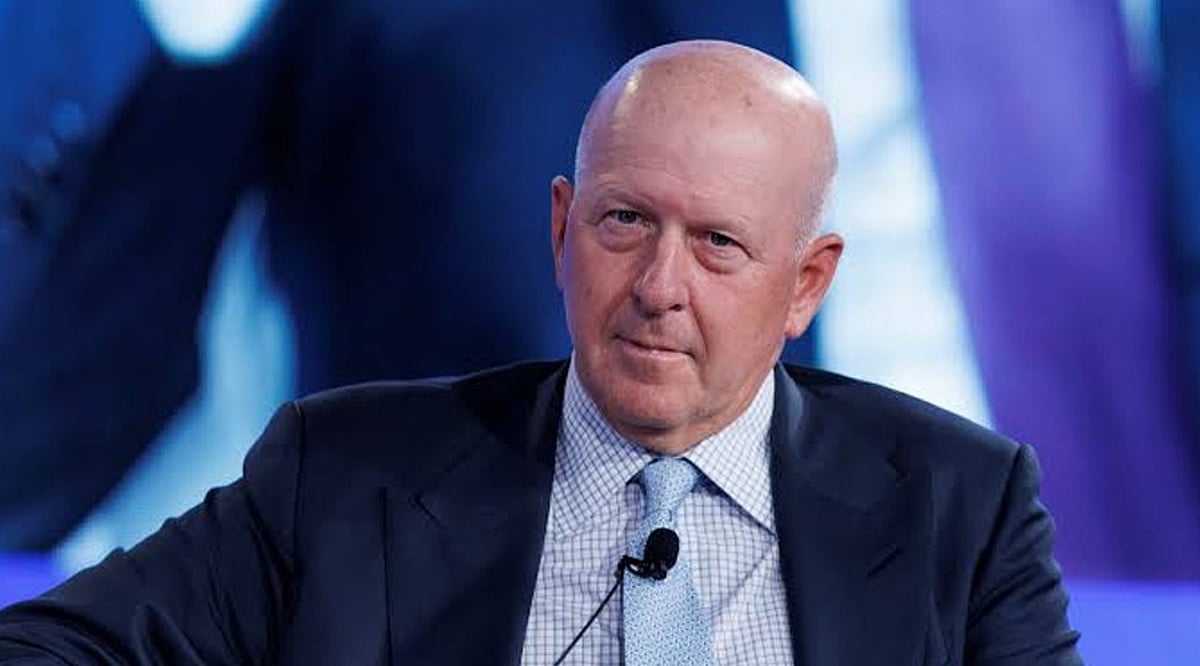
    Goldman Sachs CEO David Solomon has publicly endorsed the CLARITY Act, a proposed U.S. digital asset market structure bill, despite widespread opposition from major banking groups. Solomon’s stance places Goldman Sachs at odds with other Wall Street leaders who object to provisions on stablecoin rewards.

    In an interview reported on July 23, 2026, Solomon described the bill as “not perfect” but argued it would create a level playing field, support market stability, and allow digital asset markets to develop under clearer standards. He stated he was “very supportive of moving the CLARITY Act forward,” urging Congress to establish a market structure that encourages continued innovation.

    The House passed an earlier version of the Digital Asset Market Clarity Act in July 2025, which aims to divide regulatory oversight between the Securities and Exchange Commission (SEC) and the Commodity Futures Trading Commission (CFTC). Senate committees have since been working on their own version.

    Stablecoin Rewards Divide Major Banks

    JPMorgan Chase CEO Jamie Dimon has opposed provisions that would allow crypto companies to offer rewards tied to stablecoin holdings. Dimon argues that such products function like interest-bearing deposits without facing equivalent capital, liquidity, and consumer protection rules. Bank trade groups echoed these concerns after senators released an updated draft on July 22, warning that the bill could drain deposits from traditional lenders and reduce funds available for local lending. They have urged lawmakers to close what they view as a regulatory gap in stablecoin reward rules.

    Crypto companies take a different view. Coinbase CEO Brian Armstrong contends that banks seek tighter limits because stablecoin rewards could compete with traditional deposit products. The core dispute centers on whether reward programs should be subject to bank-style controls or separate digital asset regulations.

    Democrats Seek Stronger Ethics and Consumer Protections

    Seven Senate Democrats have criticized the Republican-backed text as “falls short,” citing concerns over ethics rules, consumer protection, illicit finance, conflicts of interest, and market integrity. Senator Elizabeth Warren called the revised proposal “dead on arrival,” arguing its ethics language lacks sufficient enforcement against financial conflicts involving federal officials. Democrats also want state attorneys general to hold enforcement authority rather than leaving it primarily with the Justice Department.

    Republican supporters counter that the draft adds limits on crypto activity by senior federal officials and strengthens national security controls. Senator Tim Scott has said the framework protects consumers and gives businesses clearer rules, while Senator Cynthia Lummis has defended the ethics provisions.

    Lawmakers have yet to reach a final deal on stablecoin rewards, ethics enforcement, or consumer protections. A Senate vote could occur after these disputes are resolved, testing whether bipartisan support can be preserved. Until then, Solomon’s backing gives the CLARITY Act a significant endorsement from one major Wall Street firm while the broader banking sector remains divided.
  • Why Massive AI Spending Is Rattling Wall Street

    Why Massive AI Spending Is Rattling Wall Street

    Artificial intelligence is reshaping industries, but the enormous investments required are creating a wave of anxiety on Wall Street. As tech giants pour billions into AI infrastructure, talent, and compliance, investors are questioning whether the returns will ever justify the costs.

    The Infrastructure Boom

    Companies are spending staggering sums on AI chips, cloud servers, and massive data centers. This infrastructure buildout is essential for training and deploying advanced models, but it also locks firms into long-term capital commitments that may not pay off for years.

    Profit Pressure Mounts

    Investors are increasingly worried about whether AI investments will generate sufficient returns. The gap between spending and revenue is widening, and any hint of disappointing earnings triggers sharp market reactions. Wall Street’s patience is wearing thin.

    Rising Competition and Talent Costs

    Big Tech firms are locked in an arms race, escalating AI spending to stay ahead. At the same time, hiring top AI engineers and researchers has become prohibitively expensive, further squeezing margins. The talent war shows no signs of cooling.

    Regulatory and Monetization Hurdles

    Compliance with emerging AI governance frameworks adds billions to operational expenses. Meanwhile, many companies still struggle to convert AI capabilities into sustainable profits. Monetization challenges remain a critical weak point in the AI business case.

    Market Volatility and Long-Term Opportunity

    Wall Street reacts swiftly whenever AI earnings fall short of expectations, creating volatility. Yet despite these risks, AI remains one of the most significant investment opportunities of the decade. The key will be balancing bold spending with realistic milestones and clear paths to profitability.

    As the AI revolution accelerates, the tension between massive outlays and financial discipline will continue to shape market sentiment. The companies that navigate this delicate balance may emerge as the leaders of the next economic era.

  • Bank of America Appoints Digital Assets and AI Heads to Drive Global Markets Strategy

    Bank of America Appoints Digital Assets and AI Heads to Drive Global Markets Strategy

    Bank of America has appointed separate executives to lead its digital assets and artificial intelligence programs as it expands both technologies across its global markets business. The bank named Sonali Theisen head of its global digital assets platform and appointed Kevin Milsom head of AI transformation, according to internal memos reported by Reuters and Bloomberg.

    The appointments place blockchain infrastructure and AI integration under dedicated leadership as major banks expand tokenization, custody, settlement, trading, and market operations.

    Digital Assets Platform Gains Dedicated Leadership

    Theisen will oversee the design, development, governance, and expansion of Bank of America’s global digital assets platform. She will also retain her existing responsibilities. She currently leads electronic trading and strategic investments within the bank’s fixed income, currencies, and commodities division.

    Theisen will work with Adam Dixon, who remains responsible for the bank’s digital asset transformation strategy. His remit covers tokenized deposits, stablecoins, digital collateral, crypto settlement, and custody. Meanwhile, Milsom will lead efforts to integrate artificial intelligence across global markets. The bank aims to apply AI to trading, risk management, and operational processes.

    Could the next phase of digital finance develop quietly inside major banks instead of through separate crypto businesses?

    Wall Street Expands Digital Asset Leadership

    The appointments follow a wider shift across Wall Street, where financial institutions are moving blockchain projects into core business functions. Earlier this month, Vanguard began recruiting its first digital assets head to develop a cryptocurrency strategy for wealth management clients.

    Morgan Stanley has also expanded its digital asset strategy after advancing spot Bitcoin and Solana exchange-traded fund initiatives. Beyond banking, companies are exploring how AI can support digital asset trading, tokenization, custody, and financial market analysis.

    A Polygon Labs team member said on X that Bank of America’s platform would span stablecoins, tokenized deposits, custody, and crypto settlement. The post referred to internal memos reported on July 17. The memos gave Theisen an added mandate and named Milsom head of platforms AI transformation.

    Stablecoin Claims Require Added Context

    The appointments arrived as Bitcoin traded near $65,000 on July 20, more than $50,000 below its level one year earlier. Separate social media posts linked the staffing changes to a claim that $6 trillion in bank deposits could move into stablecoins.

    Bank of America Chief Executive Brian Moynihan made a related comment during the bank’s fourth-quarter earnings call on January 14. Moynihan said deposits could migrate if stablecoins could pay interest. The GENIUS Act does not permit interest payments on stablecoins.

    The estimate also predates the July appointments. An April 2025 Treasury Borrowing Advisory Committee presentation placed potentially exposed transactional deposits at about $6.6 trillion.

    Bank of America’s new leadership structure brings digital assets and artificial intelligence into its core global markets strategy. The appointments support wider use of stablecoins, tokenization, custody, crypto settlement, and AI tools as major financial institutions modernize their market infrastructure.

  • Wall Street Futures Gain Despite US-Iran Tensions as Nasdaq Leads Tech Rally

    Wall Street Futures Gain Despite US-Iran Tensions as Nasdaq Leads Tech Rally

    U.S. stock index futures edged higher on Monday, with investors setting aside renewed military tensions between the United States and Iran as optimism over diplomatic engagement and resilient corporate earnings buoyed market sentiment.

    Despite lingering geopolitical nervousness, futures on the technology-heavy Nasdaq outperformed their peers, signaling that traders continue to focus on fundamentals and earnings rather than reacting to events in the Middle East.

    Nasdaq Futures Outperform the Broader Market

    As of 4:47 AM GMT-5, E-mini Nasdaq-100 futures rose 183.25 points, or 0.64%, to 28,956.50. E-mini S&P 500 futures gained 24.50 points, or 0.33%, to 7,522.25, while E-mini Dow Jones Industrial Average futures climbed 145 points, or 0.28%, to 52,520.00.

    The stronger showing in Nasdaq futures reflects ongoing investor interest in technology shares ahead of the start of the U.S. cash market.

    Markets Shift Focus from Conflict to Diplomacy

    Trading began cautiously following fresh U.S. military strikes against Iran, which kept geopolitical tensions elevated. During the session, oil prices were mixed and U.S. Treasuries rose, indicating initial concerns about the situation.

    However, market sentiment turned positive after Iranian Foreign Ministry spokesman Esmail Baghaei stated that communication channels remained open. According to Iranian news reports, Baghaei noted that messengers were continuing to send messages to Tehran despite the new U.S. strikes, adding that negotiations with the United States were possible as long as they aligned with Iran’s interests.

    Investors Remain Focused on Equities

    The United States has conducted its ninth consecutive strike on Iran overnight, keeping the geopolitical situation tense. Nevertheless, Monday’s gains suggest that traders are hopeful the crisis can be contained through diplomacy.

    Another key factor is that the upward movement in futures markets indicates optimism about U.S. equities. With the ongoing earnings season and strong interest in tech stocks, traders appear to be balancing geopolitical risks against stable corporate performance.

    As the U.S. cash market opens, all eyes will be on whether this positive momentum can be sustained amid ongoing geopolitical developments.

  • Netflix Stock Tumbles 7% as Wall Street Questions Growth After Q3 Revenue Miss

    Netflix Stock Tumbles 7% as Wall Street Questions Growth After Q3 Revenue Miss

    Netflix shares plunged 7.26% on Friday, closing at $68.95, after the streaming giant issued a third-quarter revenue forecast that fell short of Wall Street expectations. The disappointing outlook has reignited concerns about the company’s growth trajectory and investor confidence.

    Over the past 12 months, Netflix stock has lost approximately 46% of its value. Despite multiple earnings reports and strategic initiatives, investors have yet to see a clear path back to faster growth.

    Analysts See Few Near-Term Catalysts

    Bank of America analyst Jessica Reif Ehrlich described Netflix as being in ‘no man’s land,’ noting that the earnings report offered little for bullish investors while providing ample ammunition for bears. She suggested that an acquisition could serve as a potential catalyst, pointing to NBCUniversal as a possible target following Comcast’s plans to spin off the division. However, Netflix has not announced any such move.

    LightShed Partners analyst Rich Greenfield echoed the sentiment, stating that investors now question whether Netflix can return to stronger growth and view the company as having moved beyond its main expansion phase. ‘This is fundamentally investors believing that Netflix has gone ex-growth,’ he said, adding that the market currently has ‘no patience’ for the company.

    Transparency Concerns and Limited Guidance

    Netflix also announced it will publish its ‘What We Watched’ report once a year instead of twice, raising concerns about reduced transparency around engagement and user activity. Management offered limited details on how it plans to address slower growth, leaving analysts to focus on pricing, advertising, live events, and account-sharing tools as potential levers.

    Some Analysts Still See Long-Term Support

    William Blair analysts maintained a more optimistic view, citing Netflix’s ability to raise prices while retaining customers, as well as its growing advertising business, live sports programming, and paid sharing initiatives. They believe these tools can support double-digit growth over the long term, though they acknowledged the lack of a near-term catalyst. The firm suggested that investors could consider accumulating shares during the pullback but warned that a recovery may require patience.

    Netflix now faces pressure to deliver stronger results in upcoming reports. Wall Street will closely monitor advertising sales, viewer engagement, pricing changes, and returns from live programming as key indicators of the company’s future performance.

  • Wall Street Slips as Renewed US-Iran Tensions Lift Oil Prices and Drag Down Chip Stocks

    Wall Street Slips as Renewed US-Iran Tensions Lift Oil Prices and Drag Down Chip Stocks

    US stocks declined on Monday as escalating tensions between the United States and Iran prompted investors to adopt a cautious stance. The S&P 500 fell 0.4% at its session low, while the NASDAQ Composite dropped 1%. The Dow Jones Industrial Average traded roughly 56 points lower, or 0.1%.

    The market weakened after President Donald Trump announced the reinstatement of a blockade targeting Iranian shipping through the Strait of Hormuz. Oil prices surged on the news, adding pressure to growth stocks and other risk assets. This came despite the S&P 500 posting two consecutive weekly gains amid volatile chip shares and renewed Middle East risks.

    Oil Surges After New Hormuz Order

    Trump stated that the United States would act as ‘THE GUARDIAN OF THE HORMUZ STRAIT’ and impose a 20% charge on cargo shipped through the route to cover security costs. He said the action would prevent Iranian ships and customers from entering or leaving via the waterway.

    West Texas Intermediate crude futures gained more than 5%, moving above $75 per barrel. Brent crude climbed about 5.3% to $80. The gains followed another exchange of strikes between the US and Iran over the weekend, renewing concerns over energy supplies and shipping access.

    Chip Stocks Lead the Market Decline

    Semiconductor shares posted some of Wall Street’s steepest losses. US-listed shares of SK Hynix fell 7% after surging 13% during its NASDAQ debut on Friday. Micron Technology dropped about 6% to 7%, while Sandisk lost close to 10%. Seagate Technology fell 6%, and Advanced Micro Devices and Intel traded around 4% lower. The Philadelphia Semiconductor Index slid 3.6%, standing more than 14% below its late-June record.

    Technology became the weakest S&P 500 sector during the morning session, falling about 1.3%. Four of the index’s 11 sectors traded lower early. The NASDAQ posted the largest decline among the three major indexes, while gains in IBM and UnitedHealth helped limit losses in the Dow.

    “Markets have started the week firmly on the defensive,” said Daniela Hathorn, senior market analyst at Capital.com. She linked the weaker mood to renewed US-Iran tension and uncertainty over the path toward a lasting agreement.

    Earnings and CPI Move into Focus

    Wall Street also prepared for a busy week of corporate results. JPMorgan Chase, Goldman Sachs, Morgan Stanley, Bank of America, Citigroup, and Wells Fargo will report. Netflix, Johnson & Johnson, and UnitedHealth also have results scheduled.

    Analysts expect second-quarter S&P 500 earnings to rise by more than 23% from a year earlier, based on FactSet and LSEG estimates. Investors will track bank results for signs of consumer strength and credit quality. Technology earnings will also draw attention as companies update AI spending plans.

    The June consumer price index report arrives Tuesday morning. The data could reshape interest-rate expectations after higher oil prices renewed inflation concerns. Federal Reserve Chair Kevin Warsh will also deliver his first monetary policy testimony before Congress on Tuesday.

    Apple drew attention after Citi raised its price target to $365 from $315, citing potential market share gains despite slower demand. Analyst Asiya Merchant noted that ‘selective price increases’ may offset margin pressure, and pointed to the September iPhone 18 launch as a possible catalyst before Apple reports earnings on July 30.

  • Wall Street Surges as June Jobs Data Softens Fed Rate Hike Outlook

    Wall Street Surges as June Jobs Data Softens Fed Rate Hike Outlook

    U.S. stocks moved higher on Thursday after a weaker-than-expected June employment report eased concerns that the Federal Reserve might raise interest rates in the near term. The Dow Jones Industrial Average reached a new record intraday high above 52,800, while the S&P 500 also advanced. Investors shifted focus to labor market data that pointed to slower hiring while unemployment remained relatively stable.

    The report pushed Treasury yields lower and lifted expectations that the Fed may leave rates unchanged at its next policy meeting. Gains in materials and consumer staples helped offset continued weakness in semiconductor stocks, allowing major indexes to climb.

    June Payrolls Miss Forecasts as Unemployment Holds Steady

    The U.S. economy added 57,000 nonfarm payroll jobs in June, well below economists’ expectations of around 110,000 to 115,000. Despite slower hiring, the unemployment rate came in at 4.2%, slightly better than the forecasted 4.3%. The softer data interrupted several months of stronger hiring and was seen as a sign that the labor market is cooling without broad weakness, reducing the need for the Fed to tighten monetary policy further.

    Florian Ielpo, head of macro at Lombard Odier Investment Managers, described the report as “the best number we could hope for,” noting that the job market remains fine but not hot enough to accelerate inflation. Bret Kenwell, US investment analyst at eToro, added that while the report doesn’t signal labor-market trouble, it does cool the hawkish narrative.

    Markets Trim Expectations for Another Fed Rate Hike

    Following the employment data, traders lowered odds of a near-term Fed rate increase. The two-year Treasury yield, which closely tracks policy expectations, fell. Market pricing shifted toward a greater probability that policymakers would keep rates unchanged later this month.

    Fed Chair Kevin Warsh had noted on Wednesday that inflation risks had eased, reaffirming the central bank’s 2% target. The latest jobs figures shifted attention to the labor side of the Fed’s dual mandate. Bradford Smith, portfolio manager at Janus Henderson Investors, said the print “takes some of the pressure off” the Fed to hike near term, especially with moderating oil prices and softer hiring.

    Dow Reaches Another Record While Chip Stocks Lag

    The Dow Jones Industrial Average set a fresh intraday record above 52,800, and the S&P 500 traded higher. However, the Nasdaq underperformed as semiconductor shares extended recent losses. The VanEck Semiconductor ETF declined, with Teradyne, KLA, Nvidia, and Micron trading lower.

    Despite chipmaker weakness, market participation broadened. Materials and consumer staples led S&P 500 sector gains, and advancing stocks outnumbered decliners on both the NYSE and Nasdaq. Ielpo noted that investors are finding value outside AI and technology, favoring a broader market approach.

    Investors Monitor Inflation Risks and Broader Trends

    Although the jobs report eased immediate rate-hike fears, investors continue watching inflation and geopolitical developments, particularly oil price volatility tied to tensions involving Iran and the Strait of Hormuz. Indirect U.S.-Iran talks showed little progress, but oil prices moved lower on hopes that tensions would remain contained.

    Active fund managers posted stronger June performance as market breadth improved. According to Jefferies strategist Steven DeSanctis, about 70% of active managers beat their benchmarks, with nearly 88% of small-cap managers outperforming as leadership expanded beyond high-growth stocks. Investors also monitored AI-related shares after recent volatility, with analysts noting that improving breadth has allowed gains to spread across sectors.

    Disclaimer: This article is for informational purposes only and does not constitute investment advice. Always conduct your own research before making investment decisions.

  • Wall Street Opens July with Mixed Trading as Chip Stocks Decline and Iran Tensions Persist

    Wall Street Opens July with Mixed Trading as Chip Stocks Decline and Iran Tensions Persist

    Wall Street kicked off the second half of 2026 with mixed trading on Wednesday, as geopolitical tensions in the Middle East and profit-taking in semiconductor stocks weighed on investor sentiment. The Dow Jones Industrial Average managed modest gains, while the NASDAQ Composite fell as chipmakers retreated following a strong first half of the year. Investors also monitored fresh economic data and comments from Federal Reserve Chair Kevin Warsh ahead of this week’s US jobs report.

    Middle East Tensions and Fed Outlook Keep Markets Cautious

    Major US indexes traded unevenly during Wednesday’s session as renewed uncertainty surrounding US-Iran relations kept investors cautious. Tehran said it would not meet senior US officials who had traveled to the region after recent hostilities. Meanwhile, technical discussions between the two countries reportedly took place in Doha, though public statements suggested a broader agreement remained uncertain.

    According to Reuters, concerns surrounding the conflict continued to influence financial markets as investors assessed possible effects on global energy supplies. At the same time, traders remained focused on monetary policy after expectations grew that the Federal Reserve could raise interest rates at least once before the end of the year.

    Federal Reserve Chair Kevin Warsh spoke at the European Central Bank forum in Portugal, noting that “we’ve seen that prices are too high.” His remarks came after the central bank removed forward guidance from its latest policy statement, leaving markets dependent on incoming economic data.

    The Institute for Supply Management reported that US manufacturing activity slowed in June following stronger growth during the previous month. Investors are now waiting for Thursday’s June nonfarm payrolls report for more direction on the health of the labor market.

    Chip Stocks Retreat After a Record First Half

    Technology shares led losses across the broader market as investors locked in gains following a powerful rally during the first six months of 2026. The information technology sector declined while several leading semiconductor companies traded lower.

    Micron fell about 6%, Sandisk dropped roughly 8%, NVIDIA lost around 2%, and Broadcom also moved lower. Despite the pullback, many of these companies remain among the year’s strongest performers after benefiting from continued demand tied to artificial intelligence infrastructure.

    The VanEck Semiconductor ETF gained 82% during the first half of 2026, marking its strongest first-half performance since the fund launched in 2000. Market participants said some investors were reducing exposure ahead of the upcoming corporate earnings season.

    Shawn Snyder, economic strategist at Potomac Fund Management, told CNBC: “We’re in this range where valuations increasingly need to be validated. I think investors are probably just taking some chips off the table after a really tremendous first half.”

    Paul Hickey, co-founder of Bespoke Investment Group, added: “Over the long term, we still like the semis, but I wouldn’t be aggressive towards it here.”

    Meta Surges While Corporate Developments Drive Individual Stocks

    Meta Platforms climbed about 10% after reports that the company is developing a cloud computing business designed to monetize excess artificial intelligence infrastructure. According to the report, Meta is considering offering hosted AI models or direct access to computing power for external customers.

    The report boosted communication services stocks and helped offset part of the weakness seen across the technology sector. Investors viewed the potential business as another way for Meta to generate returns from its growing AI investments.

    Elsewhere, Shutterstock dropped nearly 31% after ending its planned merger with Getty Images. Kroger also slipped after announcing a $1.65 billion agreement to acquire regional supermarket chain Giant Eagle.

    Despite weakness in several large-cap technology names, smaller companies continued to outperform. The Russell 2000 reached a new all-time high after extending its winning streak to six sessions. The small-cap index has gained more than 21% during the first half of 2026, marking its strongest first-half performance since 1991.

    As Wall Street moves into the second half of 2026, investors are maintaining optimism around AI-driven growth while monitoring concerns over valuations, interest rates, geopolitical risks, and the upcoming earnings season for clearer market direction.

    Disclaimer: This article is provided for informational purposes only and does not constitute investment advice. Readers are encouraged to conduct their own research before making any investment decisions.

  • Wall Street Poised for Best Quarter in Years as Tech Stocks Rebound Amid Geopolitical Calm

    Wall Street Poised for Best Quarter in Years as Tech Stocks Rebound Amid Geopolitical Calm

    Wall Street is on track to close the second quarter with its strongest performance in years, even as ongoing US-Iran tensions continue to create geopolitical uncertainty. Investors have maintained buying momentum, buoyed by optimism over the upcoming earnings season and easing concerns about Middle East hostilities. Major indexes posted solid gains, with technology shares staging a recovery after a challenging June.

    Major US Indexes Target Strongest Quarterly Gains

    The S&P 500 and NASDAQ Composite are heading toward their best quarterly gains in six years, while the Dow Jones Industrial Average is on pace for its strongest quarter since 2022. In Tuesday trading, the S&P 500 rose 0.34%, the NASDAQ gained 0.76%, and the Dow traded nearly flat. These gains reflect continued investor confidence despite earlier volatility driven by semiconductor weakness.

    The Dow is also on track for its best first-half performance since 2021. The S&P 500 has posted more than an 8% gain during the first six months of 2026, while the NASDAQ has advanced over 11%. The Russell 2000 has outperformed larger indexes, climbing more than 21% in the same period.

    Technology Stocks Recover as Earnings Season Approaches

    Technology stocks helped lift markets after suffering sharp losses earlier in June. Investors are now shifting focus to the upcoming corporate earnings season, expecting strong results to support current valuations. Chipmakers led Tuesday’s rally: NVIDIA gained more than 1%, Advanced Micro Devices advanced about 3%, and Intel climbed roughly 4%.

    Semiconductor exchange-traded funds also delivered record quarterly gains. The VanEck Semiconductor ETF surged around 70% during the second quarter, while the iShares Semiconductor ETF gained approximately 94%. Micron was among the sector’s strongest performers, rising about 240% during the quarter.

    Despite Tuesday’s rebound, June remained challenging for several technology stocks. The S&P 500 and NASDAQ are still on track to end two consecutive months of gains as investors reassess AI-related valuations.

    Geopolitical Developments and Interest Rates Remain in Focus

    Investors continue monitoring US-Iran developments. Recent signs of reduced hostilities have improved market sentiment after both countries agreed to halt attacks and allow commercial shipping through the Strait of Hormuz. Oil prices remained relatively stable, with Brent crude trading near $73 per barrel and West Texas Intermediate around $70. Stable energy prices have helped ease concerns about additional inflation pressure.

    Markets are also focused on monetary policy expectations. Traders now anticipate at least one Federal Reserve rate hike before the end of 2026, following stronger economic data that shifted expectations away from earlier forecasts for rate cuts. Investors are awaiting comments from Federal Reserve Chair Kevin Warsh after fresh job openings and consumer confidence reports.

    Individual Stocks Post Mixed Performance

    Several individual companies recorded notable moves during Tuesday’s session. Concentrix shares fell more than 20% after lowering its full-year revenue and adjusted profit forecasts, pushing the stock to a record low. In contrast, AeroVironment surged about 22% after reporting a strong increase in quarterly revenue. Morgan Stanley slipped around 1% after Oppenheimer downgraded major Wall Street investment banks and encouraged investors to consider alternative asset managers.

    European markets also ended higher on the final trading day of June, with technology stocks leading regional gains. Major indexes in Germany, France, Italy, and the United Kingdom all closed in positive territory. Although analysts continue monitoring geopolitical developments and interest rate expectations, strong corporate earnings and resilient investor demand have kept Wall Street positioned for one of its strongest quarters in recent years.

  • Wall Street Rises as US-Iran Tensions Ease; Comcast Jumps on Spin-Off Plan

    Wall Street Rises as US-Iran Tensions Ease; Comcast Jumps on Spin-Off Plan

    US stocks moved higher on Monday as investors welcomed signs of easing tensions between the United States and Iran. Meanwhile, Comcast posted strong gains after unveiling plans to separate parts of its business into two publicly traded companies. Markets also shifted attention toward upcoming economic data and the start of the second-quarter earnings season.

    Although the latest diplomatic developments improved market sentiment, investors continued to monitor the Middle East closely. At the same time, weakness in several semiconductor stocks limited broader gains, keeping traders focused on inflation, Federal Reserve policy, and corporate earnings over the coming weeks.

    Wall Street gains as geopolitical concerns ease

    Wall Street’s three major indexes traded higher after reports indicated that the United States and Iran had agreed to pause hostilities following military exchanges over the weekend. According to reports, technical teams from both countries are expected to meet in Doha to continue work on implementing an interim peace agreement.

    The easing tensions reduced immediate concerns about disruptions in the Strait of Hormuz, one of the world’s busiest energy shipping routes. However, oil prices remained higher as traders assessed whether the ceasefire would hold. Brent crude traded above $72 per barrel, while West Texas Intermediate crude stayed above $70.

    Market participants remained cautious despite the diplomatic progress. Peter Andersen, founder of Andersen Capital Management, said, “There have been several false starts in peace negotiations. I would expect most market participants to remain in a holding pattern through the rest of this week.”

    Eight of the eleven S&P 500 sectors traded higher during the session. Communication services led the gains after Comcast announced plans to separate NBCUniversal and Sky from its broadband and wireless operations through a tax-free spin-off.

    Comcast rallies while technology stocks remain mixed

    Comcast shares surged nearly 10% after revealing its restructuring plan. The separation is expected to create two independent publicly traded companies over the next year. Investors responded positively as the company seeks to streamline its operations.

    Alphabet also moved higher after joining the Dow Jones Industrial Average, providing additional support to major indexes. Meanwhile, Nasdaq confirmed that SpaceX will join the Nasdaq-100 Index on July 7, lifting its shares during Monday’s trading session.

    Technology stocks produced mixed results. Memory chip makers Micron and Sandisk declined sharply, while Intel also traded lower. The pullback followed renewed concerns about AI-related spending and elevated valuations across semiconductor companies.

    Jed Ellerbroek, portfolio manager at Argent Capital Management, said, “We’re in the biggest momentum market in decades, and those momentum stocks are going to be exceptionally volatile. We’re seeing that today with Micron.”

    Investors shift focus to earnings and economic data

    Attention is now turning toward the second-quarter earnings season, which begins in the coming weeks. Analysts expect company results to provide fresh direction after strong earnings helped drive market gains over the past year.

    Ben Snider, chief US equity strategist at Goldman Sachs, said, “The 21% S&P 500 return over the past 12 months has been driven entirely by earnings, making the upcoming Q2 2026 reporting season an important catalyst for the forward trajectory of the market.”

    Investors are also preparing for the release of the June US employment report later this week. The data could influence expectations for future Federal Reserve interest rate decisions as policymakers continue monitoring inflation and labor market conditions.

    Elsewhere, Martin Marietta Materials fell after announcing a $13.5 billion merger with limestone supplier Lhoist North America. Viridian Therapeutics also gained after receiving US Food and Drug Administration approval for its thyroid eye disease treatment.

    Market breadth remained positive during the session, with advancing stocks outnumbering declining issues on both the New York Stock Exchange and the Nasdaq. Investors continue monitoring developments in the Middle East, corporate earnings, and upcoming economic data as markets search for fresh direction.