Tag: whale accumulation

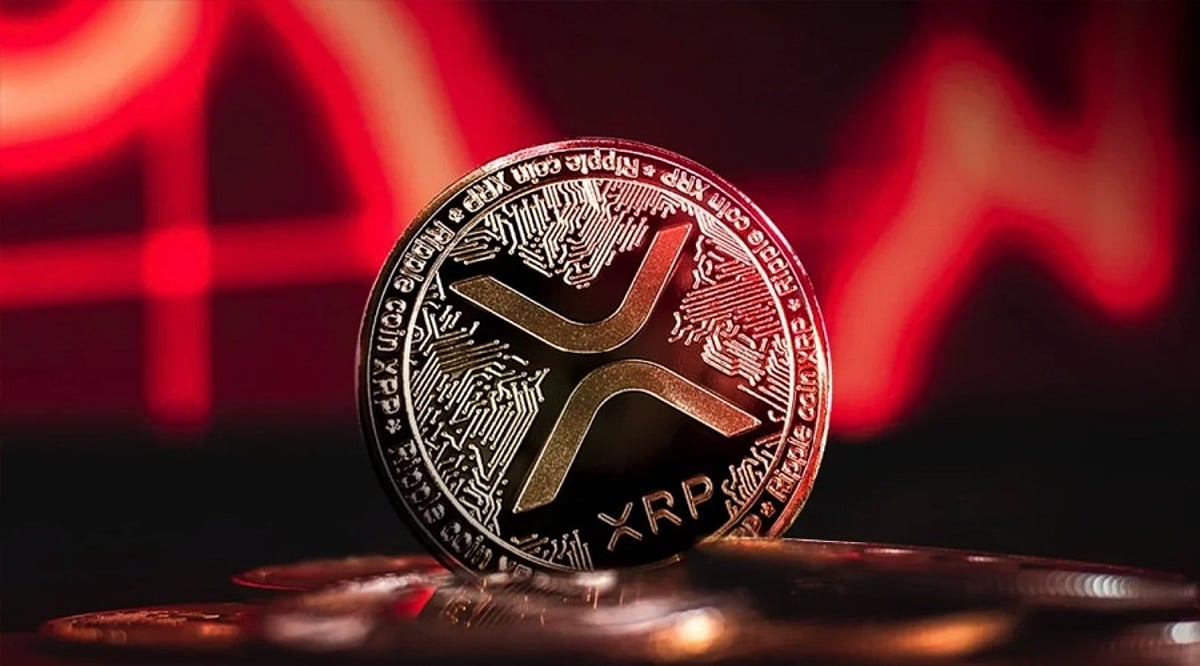
  • XRP Surges Over 60% as Whales Accumulate 470M Tokens and Analysts Eye $1.60 Breakout

    XRP Surges Over 60% as Whales Accumulate 470M Tokens and Analysts Eye $1.60 Breakout

    XRP has posted a gain of more than 60% over the past month, driven by significant whale accumulation, increased activity on the XRP Ledger, and bullish technical indicators. The token is currently trading near $1.50 after a slight dip of over 2% attributed to profit-taking. Market participants are closely watching the $1.60 level, which analysts see as the next critical resistance that could pave the way toward $2.

    Veteran trader Peter Brandt recently shared a chart showing a long-term target of $5.40 for XRP, representing a potential upside of about 260% from current prices. Brandt did not provide a specific timeline for this projection but emphasized that posting a chart does not constitute a trade recommendation. His analysis relies on historical chart patterns and market cycles.

    Analyst Targets and Institutional Outlook

    Standard Chartered has maintained an even more ambitious long-term forecast, reiterating a $28 price target for XRP by 2030. However, the bank revised its 2026 forecast downward from $8 to $2.80. Institutional interest continues to grow around XRP Ledger applications such as payments, liquidity, tokenization, stablecoins, and decentralized finance.

    Near-term technical analysts, including Ali Martinez, have identified $2 as a possible next target if XRP breaks above $1.60. Martinez also pointed to an inverse head-and-shoulders formation on the daily chart, which places a clear technical threshold between XRP’s current price and the next projected level.

    Whale Activity Accelerates

    Large XRP holders have been accumulating aggressively during the rally. On-chain data shows that wallets holding between 1 million and 10 million XRP added more than 470 million tokens within five days, worth approximately $724 million. Their combined holdings rose from nearly 12.37 billion to 12.80 billion XRP.

    Earlier in the rally, about 1.54 billion XRP moved into large wallets over a 96-hour period, signaling strong conviction among whales. This accumulation comes as traders watch whether XRP can clear the $1.60 resistance level.

    XRP Ledger Activity and Stablecoin Growth

    Account activity on the XRP Ledger has also increased. New accounts rose 34% to about 3,200 last week, while active accounts stood at 17,800. While wallet accumulation and account growth indicate broader participation, they measure different aspects of network health.

    Decentralized exchanges on XRPL processed about $4.38 million in trading volume over a recent 24-hour period, with the network recording 40,326 active addresses. Application fees totaled $130,926, far exceeding the base-layer chain revenue of $49,494.

    Stablecoin capitalization on the XRP Ledger has reached nearly $1.191 billion, with RLUSD identified as the native stablecoin. In comparison, total value locked in XRPL DeFi protocols is about $44.63 million, and real-world assets under management stand at $20.88 million. The stablecoin market is now more than 26 times larger than DeFi TVL, highlighting a growing use case for the ledger.

    The recent profit-taking was partly linked to geopolitical developments, including US President Donald Trump’s rejection of Iran’s proposal to reopen the Strait of Hormuz. Trump expects talks with Iran to resume this week, adding an element of uncertainty to broader markets.

    As XRP’s monthly rally surpasses 60%, traders remain focused on the $1.60 level for the next directional move, while longer-term forecasts range from Brandt’s $5.40 target to Standard Chartered’s $28 projection for 2030.

  • Bitcoin Nears $16 Billion Options Expiry as Whale Accumulation Persists

    Bitcoin Nears $16 Billion Options Expiry as Whale Accumulation Persists

    Bitcoin Approaches Major Derivatives Event

    Bitcoin is trading near USD 86,000 ahead of a significant derivatives event that could reshape short-term market conditions. Nearly USD 16 billion in Bitcoin options are set to expire on Deribit on September 25. Meanwhile, wallets holding between 100 and 1,000 BTC continue to accumulate coins, and traders are closely watching key strike levels.

    The upcoming expiry is important because options positioning can influence Bitcoin’s price behavior before contracts settle. Market makers regularly buy or sell the cryptocurrency and related instruments to balance their exposure as prices change. These hedging flows can absorb part of a market move under certain conditions, potentially keeping realized volatility lower ahead of the expiry even while substantial exposure remains open.

    Whale Accumulation Adds Another Market Factor

    Wallets holding between 100 and 1,000 BTC have accumulated 113,950 Bitcoin since July 15, according to Santiment. Their combined holdings have increased 2.22% to 5.24 million BTC. This accumulation continued while Bitcoin recovered and briefly touched USD 87,000 earlier this week before retracing and stabilizing near USD 86,000.

    Santiment has monitored this wallet group for five years. Historical data shows that periods of strong accumulation have often occurred before or alongside stronger Bitcoin price moves. The latest buying therefore indicates that larger holders continued accumulating during the recovery, meaning the recent price move has not relied solely on retail participation.

    Still, the source of the broader recovery remains important. Trace Finance co-founder Bernardo Brites said the pace of the rebound partly reflected a short squeeze. Brites noted that the larger question concerns where fresh capital is entering the market and cautioned against treating the move as evidence of a broad return in risk appetite.

    Key Strike Levels in Focus

    Nearly USD 16 billion in Bitcoin options open interest will expire on September 25. Calls account for approximately USD 9.6 billion, while puts represent about USD 6.4 billion. A notable amount of call open interest sits near the USD 90,000 and USD 100,000 strike prices, meaning those levels contain substantial options positioning as the expiry approaches.

    However, call open interest does not automatically represent a direct bet on higher Bitcoin prices. Traders also use calls within spreads, hedging strategies, and market-making positions. Instead, the data identifies areas where derivatives exposure has accumulated. As Bitcoin moves toward major strikes, changes in option values can require market makers to adjust their hedges, which may involve buying or selling Bitcoin and related instruments. The size and direction of those adjustments depend on how market makers hold and hedge their exposure. Therefore, price behavior before the expiry may partly reflect derivatives mechanics rather than only changes in demand for Bitcoin itself.

    Market-Maker Hedging and Post-Expiry Outlook

    Bitcoin’s recent stability does not necessarily mean the underlying market has become less volatile. Options positioning can influence how strongly prices react before contracts expire. Market makers continuously adjust their exposure as Bitcoin moves, and depending on their positioning, those transactions can absorb some buying or selling pressure and reduce realized price swings.

    The structure changes once the September 25 contracts expire. Some positions disappear, while others may move into contracts with later expiration dates. As this exposure resets, the hedging activity linked to the expiring contracts can also decline. Bitcoin may then respond differently to a new wave of spot buying or selling.

    Brites also connected Bitcoin’s recent strength with a wider macro backdrop, pointing to a rate hike, oil near USD 100, and elevated yields during the rally. He suggested some investors may view Bitcoin as a hedge against inflation, fiscal pressure, and geopolitical risk rather than a simple bet on easier monetary conditions. This distinction adds another element to the market structure surrounding the expiry. Bitcoin enters September 25 with large options exposure, continued whale accumulation, and sizeable positioning around USD 90,000 and USD 100,000.

    Conclusion

    Bitcoin approaches the September 25 expiry with nearly USD 16 billion in options exposure and sustained buying from 100-to-1,000-BTC wallets. The expiry could alter market-maker hedging flows, while accumulation and macro-driven demand remain important factors for traders tracking the next price move.

  • Uniswap (UNI) Surges Past $10 as Whale Accumulation and CME Futures Launch Fuel Rally

    Uniswap (UNI) Surges Past $10 as Whale Accumulation and CME Futures Launch Fuel Rally

    Uniswap (UNI) has broken above a year-long consolidation base, surging more than 15% past the $10 mark. The rally is driven by significant whale buying and CME Group’s announcement of regulated Uniswap futures, set to launch on October 19.

    Tracked whale wallets have accumulated nearly $4 million worth of UNI through on-chain transactions, coinciding with the breakout. Meanwhile, CME Group confirmed plans to introduce standard and Micro Uniswap futures, pending regulatory review. The standard contract will represent 10,000 UNI, while the Micro contract will cover 1,000 UNI.

    The technical breakout broke through a rounding-bottom formation that had contained price action for months. The next key resistance level sits at $12.0532, while $9.2734 remains crucial support that buyers must defend if the rally retraces.

    Whale buying occurred through identifiable wallet activity rather than exchange order flow, reinforcing the strength of the move. The breakout followed a period of consolidation, not a single-session spike, adding technical credibility to the rally.

    CME Group’s expansion into Uniswap futures is part of a broader push into altcoin derivatives. The exchange reported average daily crypto futures and options volume of 279,800 contracts in the first half of 2026, representing $8.3 billion in notional value. Altcoin futures for Cardano, Chainlink, Stellar, Avalanche, and Sui have collectively generated over $1 billion in year-to-date notional volume.

    Giovanni Vicioso, CME Group’s Global Head of Cryptocurrency Products, noted that market participants increasingly need regulated tools for managing digital-asset price risk. The new contracts will trade on Globex, with around-the-clock cryptocurrency trading available since May 29.

    Bitcoin Cash (BCH) also reacted sharply to the announcement, climbing from $270 to $328 on Binance within 90 minutes. UNI traders are now watching the $12.0532 resistance and $9.2734 support levels closely.

  • Bitcoin Miners Offload BTC as Whales and ETFs Drive $1.2B Demand

    Bitcoin Miners Offload BTC as Whales and ETFs Drive $1.2B Demand

    Bitcoin is holding above $64,000 even as major mining firms send hundreds of coins to exchange-linked platforms. At the same time, large whale wallets and spot Bitcoin ETFs are showing renewed buying interest, creating a clear split between short-term selling pressure and institutional demand.

    Miners Move Bitcoin to Exchange Platforms

    On Thursday evening, MARA deposited 200 BTC to NYDIG, according to Lookonchain. Riot Platforms transferred another 381 BTC, worth roughly $24.5 million, around the same time. These exchange-related deposits can increase available supply if the coins are sold. MARA continues to hold more than $2.3 billion in Bitcoin despite reporting over $600 million in second-quarter losses.

    The latest transfers follow reports that Bitcoin miners sold a record 32,000 BTC during the first quarter of 2026. That period also saw a sharp drop in network hash rate. Smaller mining operations have been under particular strain during the prolonged bear market. Poolin has filed for Chapter 11 protection in New Jersey and is seeking approval for a $52 million sale of its Texas mining properties.

    Whale Accumulation Contrasts With Smaller Holder Selling

    Santiment data shows wallets holding between 10 and 10,000 BTC have accumulated more than 20,000 BTC since July 29. At current prices, that is approximately $1.2 billion. Meanwhile, smaller holders have continued to reduce their Bitcoin exposure. Santiment says this divergence improves the odds of Bitcoin trading above $70,000 and lowers the risk of a drop below $60,000.

    That contrast raises a key question: can growing whale demand absorb sustained selling from miners while Bitcoin remains below a decisive breakout level? Analysts have linked recent price weakness to uncertainty around the CLARITY Act, limited directional movement, and the Coldcard hardware wallet hack, which involved about $120 million worth of Bitcoin.

    ETF Inflows Return While Bitcoin Tests Resistance

    SoSoValue data shows US spot Bitcoin ETFs recorded $754.69 million in net inflows this week. That pace puts the products on track for their strongest week since April. Demand has returned after a difficult June, when the funds saw their worst month since launch. Nexo analyst Liya Kalchev said ETF-related volumes offer an early sign of renewed institutional demand.

    Spot Bitcoin ETFs also received more than $240 million on Wednesday. Kalchev added that the products have attracted more than half a billion dollars during August. Still, Bitcoin has not achieved a decisive upside breakout. Kalchev described the current bid as tactical rather than conviction-driven, with a clear move above $65,000 remaining important. Technical indicators suggest a larger rally could develop if Bitcoin clears resistance. Regulatory developments also remain in focus, with the CLARITY Act unlikely to pass the Senate this month.

    Outlook: Can Institutional Demand Offset Miner Selling?

    Bitcoin faces competing forces near $65,000. MARA and Riot have increased exchange-related transfers, while whales have accumulated more than 20,000 BTC and ETF inflows have strengthened. The market is now watching whether institutional demand can absorb miner supply as Bitcoin tests resistance and investors await regulatory clarity.

  • Ethereum Price Outlook for August 2026: Key Levels, ETF Inflows, and Whale Activity

    Ethereum Price Outlook for August 2026: Key Levels, ETF Inflows, and Whale Activity

    Ethereum (ETH) continues to trade below key technical resistance despite steady institutional buying and whale accumulation. As the second-largest cryptocurrency hovers near $1,850–$1,890, traders are weighing improving ETF inflows against weakening derivatives sentiment. The asset struggles to hold above the 100-day Exponential Moving Average (EMA), leaving the market poised for a potential breakout or further decline.

    ETF Inflows Signal Institutional Confidence

    According to SoSoValue, on August 5, Ethereum spot ETFs recorded a total net inflow of $60.8576 million. BlackRock’s ETF ETHA led with a single-day net inflow of $50.3442 million, bringing its cumulative total to $11.53 billion. BlackRock’s Staked ETH ETF ETHB followed with a single-day net inflow of $4.9382 million, reaching a cumulative total of $555 million. Additionally, the Morgan Stanley MSSE ETF saw its first inflow, indicating rising institutional participation.

    Technical Resistance Caps Upside Moves

    Ethereum has failed to break above the May peak and the 100-day EMA at $1,930 three times, signaling strong seller defense at that level. The Relative Strength Index (RSI) sits near the mid-50s, reflecting neutral momentum. The asset is currently confined within a narrow trading range of $1,840–$1,950, a pattern of price compression that often precedes sharp directional moves.

    Immediate support lies between $1,837 and $1,872, where the 20-day EMA, 50-day EMA, and the 0.382 Fibonacci retracement converge. A break below this band could push ETH toward the next horizontal support at $1,711. On the upside, a daily close above $1,930 would open the path to $1,940, $2,042, and the psychological resistance zone around $2,000–$2,170.

    Whale Accumulation Offsets Bearish Derivatives Sentiment

    While perpetual futures positioning has turned cautious, the spot market tells a different story. CryptoQuant data shows increased ETH derivatives volume, with Net Taker Volume shifting negative and the Taker Buy-Sell Ratio dropping below 1—indicating aggressive sellers currently outnumber buyers.

    Yet whales continue to accumulate. Lookonchain reports that one whale deposited 19,000 ETH from Gemini into staking and has accumulated 112,000 ETH over the past three weeks. Another wallet has purchased nearly 79,216 ETH since late June at an average price of $1,777. Meanwhile, BitMine Immersion Technologies grew its stake to 5.797 million ETH—about 4.8% of circulating supply—and expanded its buyback program. Staking revenue from its holdings is estimated at approximately $247 million annually.

    Historical Context and Outlook

    August has historically been a mixed month for Ethereum, with a median return of -1.87% over the past 11 years; seven of those years ended with a negative monthly close. While seasonal weakness remains a headwind, continued ETF inflows, whale accumulation, and a breakout above the $1,930–$1,961 resistance zone could allow ETH to reclaim the $2,000 mark in the coming weeks.

  • Ethereum Price Outlook: Institutional Rotation and Whale Accumulation Signal Bullish Breakout

    Ethereum Price Outlook: Institutional Rotation and Whale Accumulation Signal Bullish Breakout

    Ethereum (ETH) is showing renewed signs of strength as institutional investors increase exposure and on-chain data reveals significant activity from large holders. While recent whale transactions initially raised concerns about selling pressure, the broader market has remained resilient, and derivatives traders continue to maintain bullish positions.

    Institutional Capital Shifts Toward Ethereum

    Recent fund flows indicate a notable rotation from Bitcoin into Ethereum investment products. Over the past week, Bitcoin-based exchange-traded funds (ETFs) recorded approximately $60 million in net outflows, while Ethereum-focused products attracted $20 million in inflows. This shift suggests that some institutional investors are increasing their allocations to Ethereum. At the same time, the network continues to expand its role in decentralized finance (DeFi), stablecoin settlements, and tokenized real-world assets — among the fastest-growing sectors in the digital asset space.

    Whale Transactions Highlight Active Accumulation

    According to Lookonchain, a major wallet withdrew 40,000 ETH worth nearly $76.6 million from Binance in a single transaction. Large withdrawals from exchanges are generally viewed as a bullish signal, as they reduce the readily available supply for sale and may indicate longer-term accumulation. Additionally, ETH’s largest wallets recently redistributed 226,435 ETH valued at around $430 million — one of the biggest surges in whale activity seen in recent weeks. Instead of triggering immediate concerns, the market absorbed these movements while the price held above key support levels.

    Derivatives Market Maintains Bullish Bias

    Data from CoinGlass shows that Ethereum’s OI-weighted funding rate has remained positive for most of July, currently sitting at 0.0022%. This indicates that long traders are paying a premium to keep their positions open. Although the rate briefly dipped below zero, it has since recovered, reinforcing a generally bullish sentiment. The long/short ratio also leans bullish at 0.9904. On Binance, Top Trader accounts show a ratio of approximately 1.78, while Binance overall stands at 2.24 and OKX at 1.66. Overall, investors remain positioned for longs rather than shorts.

    Technical Structure

    Ethereum has strengthened its foundation after forming a double bottom near the $1,550–$1,600 support range and reclaiming the significant $1,900 level. The 200-day Exponential Moving Average (EMA) is starting to decline in the $2,100–$2,200 range, which serves as a key resistance zone with a long-term supply area. If the price breaks above this range, bulls could target $2,500. On the downside, maintaining support above $1,900 is critical. A break below that level could expose ETH to another test of the $1,750–$1,800 demand area.

    With institutions positively adding to their holdings, whale activity remaining bullish, and derivatives traders staying long, Ethereum is entering an important phase that may shape its medium-term price trajectory.

    FAQs

    Why are institutional investors becoming more interested in Ethereum?

    Recent fund flow data shows capital rotating from Bitcoin investment products into Ethereum-focused funds. Investors are also attracted by Ethereum’s growing role in decentralized finance (DeFi), stablecoins, and tokenized real-world assets.

    What does whale accumulation mean for Ethereum’s price?

    Large withdrawals of ETH from exchanges are generally viewed as a bullish signal since they reduce the immediately available supply for selling. This often suggests long-term accumulation rather than short-term profit-taking.

    What do Ethereum’s funding rates indicate?

    According to CoinGlass, Ethereum’s OI-weighted funding rate has remained positive for most of July, indicating that long traders are paying a premium to maintain their positions. Positive funding typically reflects optimistic sentiment in the derivatives market.

    What are the key technical levels to watch for ETH?

    Ethereum has important support around $1,900, while the primary resistance lies between $2,100 and $2,200, where the 200-day EMA is located. A breakout above this zone could strengthen the bullish trend and bring $2,500 into focus.

    What does the long/short ratio suggest about market sentiment?

    The long/short ratios across major exchanges remain tilted toward long positions. Binance Top Trader accounts, Binance overall accounts, and OKX all show more long positions than shorts, indicating that professional traders continue to maintain a constructive outlook for Ethereum.

  • XRP Price Faces Pivotal Test at $1.12 Resistance as Institutional Inflows and Whale Activity Surge

    XRP Price Faces Pivotal Test at $1.12 Resistance as Institutional Inflows and Whale Activity Surge

    Ripple’s XRP is currently trading at $1.07, recovering from a low of $1.04 on July 28 and approaching a critical resistance zone at $1.08. Despite cautious market sentiment, institutional participation is improving, whales continue to accumulate, and derivatives data points to growing bullish positioning.

    Institutional Demand Shows Signs of Recovery

    Institutional interest in XRP has shown signs of recovery. According to SoSoValue, US spot XRP ETFs recorded $584,000 in net inflows on Wednesday and $5.98 million on Thursday, extending the inflow streak to three consecutive weeks. This uptick is partly driven by plans to tokenize the Aviva Investors USD Liquidity Fund on the XRP Ledger (XRPL), following the implementation of the fixCleanup3_2_0 amendment, which is expected to enhance the platform’s appeal for institutional projects.

    Whale Accumulation Continues Despite Market Caution

    Large holders continue to increase their positions. Santiment data shows that wallets holding between 10,000 and 100,000 XRP now account for 11.9% of total supply, up from 11.64% on July 1. Similarly, addresses with 100,000 to 1 million XRP have increased their share to 11.75% from 11.45% in the same period. Retail participation is also rising, with perpetual futures open interest reaching 2.27 billion XRP as traders build positions ahead of a potential breakout.

    Technical Structure Points to Key Levels

    From a technical perspective, XRP remains below key moving averages. The 50-day EMA at $1.127, 100-day EMA at $1.211, and 200-day EMA near $1.405 all point to a broader bearish bias. The RSI stands at 43.66, indicating modest downside momentum, while the MACD line is slightly below zero and flattening, suggesting weakening bearish pressure. Immediate resistance is at the 50-day EMA ($1.127), followed by the 100-day EMA ($1.211). On the downside, $1.000 serves as key psychological support; a daily close below this level could trigger further declines.

    Derivatives Data Shows Bullish Positioning

    The funding rate for XRP has jumped to 0.089%, the highest since July 20, indicating that long traders are willing to pay a premium to maintain their positions. Meanwhile, Binance’s long/short ratio stands at 2.57, reflecting a significant bullish bias.

    FAQs

    1. Why is XRP approaching a critical resistance level? XRP is trading below its key moving averages, with the 50-day EMA around $1.127 acting as the first major resistance. A sustained breakout above this level could improve short-term momentum and shift sentiment in favor of buyers.

    2. What do the latest XRP ETF inflows indicate? According to SoSoValue, XRP ETFs recorded $584,000 in net inflows on Wednesday, followed by $5.98 million on Thursday. The continued inflows suggest that institutional interest in XRP is gradually improving.

    3. Are XRP whales continuing to accumulate? Yes. Santiment data shows wallets holding between 10,000 and 100,000 XRP increased their share of the total supply to 11.9%, while wallets with 100,000 to 1 million XRP also expanded their holdings, indicating continued confidence among large investors.

    4. What do the funding rate and long/short ratio reveal? According to CoinGlass, XRP’s funding rate has climbed to 0.089%, the highest since July 20, showing that long traders are willing to pay a premium to maintain bullish positions. Binance’s 2.57 long/short ratio also reflects stronger bullish positioning.

    5. What are the key support and resistance levels for XRP? Immediate resistance is located near the 50-day EMA at $1.127, followed by the 100-day EMA at $1.211. On the downside, $1.00 remains the key psychological support, and a break below that level could increase the risk of further downside.

    Disclaimer: This article is for informational purposes only and does not constitute financial advice. Cryptocurrency investments are risky and may result in loss. Always conduct your own research before investing.

  • Bitcoin Holds Steady Near $63.9K, Ethereum and XRP Gain Ahead of Fed Decision

    Bitcoin Holds Steady Near $63.9K, Ethereum and XRP Gain Ahead of Fed Decision

    Bitcoin traded near $63,882, up 0.96%, as investors awaited the Federal Reserve’s rate decision. Whale accumulation supported sentiment despite ETF outflows and liquidations, while Ethereum, XRP, and Hyperliquid outperformed. Markets now watch the Fed for the next major crypto catalyst.

    Bitcoin Price Today

    Bitcoin trades at $63,882.29, up 0.96% over the past 24 hours. This reflects live CoinMarketCap data tracked through today’s session. Market cap stands near $1.28 trillion, with 24-hour volume at $23.65 billion. Price action stays tied to Fed rate bets and whale accumulation trends.

    Whales Accumulate Despite Weak Sentiment

    Akshat Siddhant, Lead Quant Analyst at Mudrex, said Bitcoin is consolidating after briefly touching a 10-day low near $63,000. A sell-off in Asian semiconductor stocks spilled into crypto this week. Liquidations crossed $510 million, while ETF outflows added further pressure. Whale wallets still added nearly 19,700 BTC over eight days. Bitcoin needs to reclaim $65,000 to regain momentum.

    Fed Decision and Inflation Data in Focus

    The CoinSwitch Markets Desk noted BTC dipped below $63,000 on Senate delays around the CLARITY Act. Prices recovered toward $64,000 soon after. Near-term direction depends on the Fed’s tone, core PCE inflation, and GDP data. A rate hold with softer guidance could push Bitcoin toward $68,000.

    Institutions Turn Cautious Before FOMC

    Vikram Subburaj, CEO of Giottus, placed Bitcoin near $63,620 heading into the Fed decision. Markets still see roughly a 33% chance of a rate hike this cycle. US spot Bitcoin ETFs booked outflows near $476.8 million across three sessions. Support holds near $62,700, with resistance at $66,700. He advised staggered buying over large directional bets.

    Consolidation Ahead of the Next Catalyst

    Riya Sehgal, Research Analyst at Delta Exchange, said crypto markets are consolidating after the recent correction. Bitcoin is recovering from support but stays below the $65,500 resistance zone. Ethereum mirrors this pattern, holding support near $1,865. Elevated oil prices remain a watch point for inflation and Fed policy.

    Institutional Flows Turn Selective

    Nischal Shetty, founder of WazirX, said Bitcoin retreated earlier this week before stabilizing near $63,785. Liquidation activity and softer institutional flows weighed on broader sentiment. Spot Bitcoin ETFs saw modest outflows, while Ethereum products kept attracting inflows. XRP holds above $1.05, with a push past $1.10 signaling renewed altcoin strength.

    Crypto Prices Today: Top 10 Coins at a Glance

    Based on live CoinMarketCap data as of today’s session.

    Biggest Gainers: HYPE, XRP, ETH

    Hyperliquid led the top 10 board, climbing close to 4% through the session. XRP followed with a sharp 2% move, while Ethereum extended its steady climb past $1,900.

    Relative Laggards: USDC, USDT, SOL

    Stablecoins stayed pinned near their peg, barely moving through the day. Solana posted the smallest gain among majors, holding just above the $73 mark.

    Crypto News Today: Top Headlines Impacting Prices

    Macro data, regulatory delays, and geopolitical risk are steering sentiment across desks today.

    Fed Meeting Concludes With Rate Verdict Due

    The Fed’s two-day meeting wraps up today, with the decision and press conference due this afternoon. CME’s FedWatch data shows hold odds have firmed, though hike bets stay elevated. Traders view this announcement as the week’s defining catalyst for crypto and equities alike.

    Apple Crosses $5 Trillion as Oil Rebounds on Iran Tensions

    Apple’s stock hit an all-time high, pushing its market capitalization above $5 trillion past Nvidia. Reports of renewed tension near a US military base sent crude oil rebounding sharply higher. The move revived geopolitical risk concerns that had briefly eased earlier this month, adding pressure on rate-sensitive assets.

    CLARITY Act Stays Stalled in the Senate

    The crypto market structure bill remains stuck over ethics provisions, with Republicans needing seven Democratic votes to advance it. Prediction markets have trimmed 2026 passage odds sharply from earlier estimates. The delay keeps regulatory uncertainty elevated for exchanges awaiting clearer digital asset rules heading into August.

    Whale Wallets Keep Buying Through the Dip

    On-chain data shows large Bitcoin holders added nearly 19,700 BTC over eight sessions. This accumulation came even as spot ETF flows turned choppy and outflows persisted. Analysts read this as a sign of longer-term conviction beneath short-term price weakness.

    Ethereum ETFs Keep Attracting Fresh Inflows

    Spot Ethereum products continued pulling in fresh capital even as Bitcoin funds saw outflows. This divergence suggests institutional investors are rotating exposure rather than exiting crypto broadly. Ether’s relative strength this week reflects that shifting allocation pattern among larger funds.

    HYPE Token Unlock Adds Supply Pressure

    Hyperliquid faces a token unlock releasing over 4% of circulating supply this week. Despite the added supply, HYPE still posted the sharpest gain among the top 10 coins. Traders are watching whether this momentum holds once the unlocked tokens hit the market.

    Investor and Market Outlook

    Bitcoin holds near $63,880 as traders weigh whale accumulation against Fed rate uncertainty. A close above $65,000 could open a path toward the $68,000 resistance zone. A slip below $63,000 risks exposing support closer to $62,500 in coming sessions.

    Ethereum trades near $1,903, holding firm above key support after a volatile week. Altcoins including Hyperliquid and XRP remain most sensitive to shifts in risk appetite. The Fed’s rate verdict stands as this week’s defining catalyst for broader crypto direction.

    FAQs

    What is the Bitcoin price today?

    Bitcoin trades near $63,882.29, up 0.96% over the past 24 hours. Support holds near $63,000, while resistance builds around $65,000 and $68,000. Analysts expect range-bound trading until the Fed’s decision brings clearer direction to markets this week.

    Why is the Fed meeting affecting crypto prices?

    Traders are pricing in a likely hold with some chance of a hawkish surprise at today’s FOMC decision. Higher rate expectations typically pressure risk assets like Bitcoin and altcoins. A dovish tone could ease that pressure and support a relief rally.

    What is the biggest crypto news today?

    The CLARITY Act’s stalled Senate progress and Apple’s $5 trillion milestone are shaping sentiment today. Renewed Iran-linked tensions pushed oil higher, adding fresh weight to the broader market narrative heading into the Fed decision.

    Which coins are performing best today?

    Hyperliquid leads gains with a near 4% rise, followed by XRP and Ethereum with solid advances. Stablecoins and Solana posted the smallest moves, staying relatively flat across the top 10 board today.

    What should investors watch this week?

    Track the Federal Reserve’s rate verdict, ETF flow trends, and Bitcoin’s key support zones closely. Senate action on the CLARITY Act remains a critical signal. Watch Treasury yields and oil prices for added direction cues.

  • Bitcoin ETFs See $68.99M Inflows, AFX Loses $24M in Bridge Exploit, Chainlink Whales Accumulate 14M LINK

    Bitcoin ETFs See $68.99M Inflows, AFX Loses $24M in Bridge Exploit, Chainlink Whales Accumulate 14M LINK

    Bitcoin ETF Inflows Surge Led by BlackRock’s IBIT

    Bitcoin spot ETFs recorded a combined net inflow of $68.99 million on July 22, 2026, according to SoSoValue. BlackRock’s IBIT led with $38.78 million in daily inflows, bringing its historical total to $60.81 billion. The Grayscale Bitcoin Mini Trust ETF ($BTC) followed with $37.88 million, while Grayscale’s GBTC saw the largest daily outflow of $38.30 million. The total net asset value of Bitcoin spot ETFs now stands at $80.36 billion, with a historical cumulative net inflow of $51.85 billion.

    AFX Trade Loses $24 Million in Cross-Chain Bridge Exploit

    Decentralized exchange AFX, operating on Arbitrum, reportedly lost $24.15 million in a hack targeting one of its cross-chain bridges. Security firm Blockaid and Web3 researcher SunSec indicated that compromised keys, rather than a smart contract bug, were likely responsible. Arbitrum’s native bridge was not compromised.

    Hyperliquid Open Interest Hits Record $11.51 Billion

    Hyperliquid’s total open interest reached $11.51 billion, the highest since the October 10, 2025 market correction. The platform’s native token HYPE is up approximately 34% since the crash. Growth is driven by real-world asset (RWA) perpetuals, with daily open interest under HIP-3 at $3.61 billion. HIP-3 allows anyone staking 500,000 HYPE to deploy a perp market without core team approval.

    Injective Launches Mint for Tokenized Real-World Assets

    Injective introduced Mint, a platform to simplify the issuance of tokenized RWAs such as equities, bonds, and ETFs. It integrates custody, compliance, and permission management. The protocol is in private alpha and has already processed over $6.8 billion in cumulative volume with $1.1 billion in native issuance.

    Chainlink Holds $8.54 as Whales Accumulate 14 Million LINK

    Chainlink (LINK) traded near $8.54, down 0.6% in 24 hours, with a market cap of $6.39 billion and volume of $175.24 million. Onchain data from analyst Ali Martinez shows whales accumulated over 14 million LINK in less than a month, with more than 20 transactions over $1 million recorded in a single session.

    FAQs

    1. How much flowed into Bitcoin spot ETFs? $68.99 million net inflow, led by BlackRock’s IBIT.
    2. What happened in the AFX exploit? $24.15 million lost via a cross-chain bridge hack; compromised keys suspected.
    3. Why is Hyperliquid attracting attention? Record $11.51 billion open interest, driven by RWA perpetuals.
    4. What is Injective Mint? A platform for tokenizing real-world assets with custody and compliance.
    5. Why are traders watching Chainlink? Whales accumulated 14 million LINK, indicating large investor interest.
  • XRP Surges Past $1.15 as Whale Buying, ETF Inflows, and Clarity Act Optimism Drive Rally

    XRP Surges Past $1.15 as Whale Buying, ETF Inflows, and Clarity Act Optimism Drive Rally

    XRP climbed more than 3% this week as large holders accumulated tokens, spot exchange-traded funds attracted fresh inflows, and regulatory optimism strengthened across the crypto market. The token reached an intraday high of $1.1511 before settling near $1.1485. Its market value remained close to $68 billion.

    The move followed reports that President Donald Trump accepted an ethics provision linked to Senate negotiations over the Clarity Act. Bitcoin also rose above $66,000, while stronger Asian technology stocks supported broader demand for risk assets.

    Whales Build Positions as Retail Wallets Exit

    Santiment data showed that wallets holding between 100,000 and 100 million XRP increased their combined balances by 2.8% during the past five weeks. These wallets accumulated while XRP traded between roughly $1.05 and $1.12. Meanwhile, wallets holding less than 0.01 XRP reduced their balances by 5.2% during the same period. The shift created a clear divide between large holders and the smallest retail accounts.

    Santiment said XRP has historically followed large-holder activity more closely than movements among small wallets. Still, accumulation alone does not guarantee further price gains. XRP later broke above the $1.13 resistance level that had limited several rallies since late June. The advance also triggered about $2.93 million in leveraged short liquidations.

    The token gained around 3.5% during the day. Among the 50 largest cryptocurrencies, only Ondo and Cardano posted stronger gains during the reported period.

    ETF Inflows, Ledger Upgrades Add Support

    XRP spot ETFs recorded $5.09 million in net inflows on July 21. They also attracted $2.27 million on July 20 and $6.10 million on July 16. Those inflows followed a brief period of withdrawals earlier in July. ETF demand remains one factor that could influence institutional participation and short-term market liquidity.

    Meanwhile, XRP Ledger validators expect to vote on a major upgrade package within the coming weeks. The proposed amendments would add batch transactions and confidential transfers. The package also includes improvements to the network’s Multi-Purpose Token standard. These changes would expand how developers issue and manage different token types on the ledger.

    Broader market conditions also supported XRP’s advance. Five-day Bitcoin ETF inflows exceeded $700 million, while gains in Asian artificial intelligence and semiconductor shares strengthened the risk-on environment.

    Clarity Act Talks Renew Regulatory Focus

    The Clarity Act carries direct implications for XRP because the legislation would classify the token as a digital commodity. This designation could reduce regulatory uncertainty surrounding institutional use.

    Senate Democrats have sought an ethics provision that would restrict the president and his family from directly benefiting from cryptocurrency businesses. The provision delayed negotiations for several months. Reports said the White House, Senator Cynthia Lummis, and Senator Bernie Moreno reached an agreement on the issue Sunday. The exact language has not yet emerged.

    Democratic support also remains uncertain. The Senate must act before its August recess, leaving lawmakers with a narrow period for further negotiations and a possible vote. Polymarket participants raised the estimated chance of Clarity Act passage to 43%. The figure had recently fallen as low as 32%.

    Conclusion

    XRP’s rise above $1.15 reflects whale accumulation, renewed spot ETF inflows, planned XRP Ledger upgrades, and improving Clarity Act prospects. Still, broader market conditions and Senate progress remain critical factors to watch.