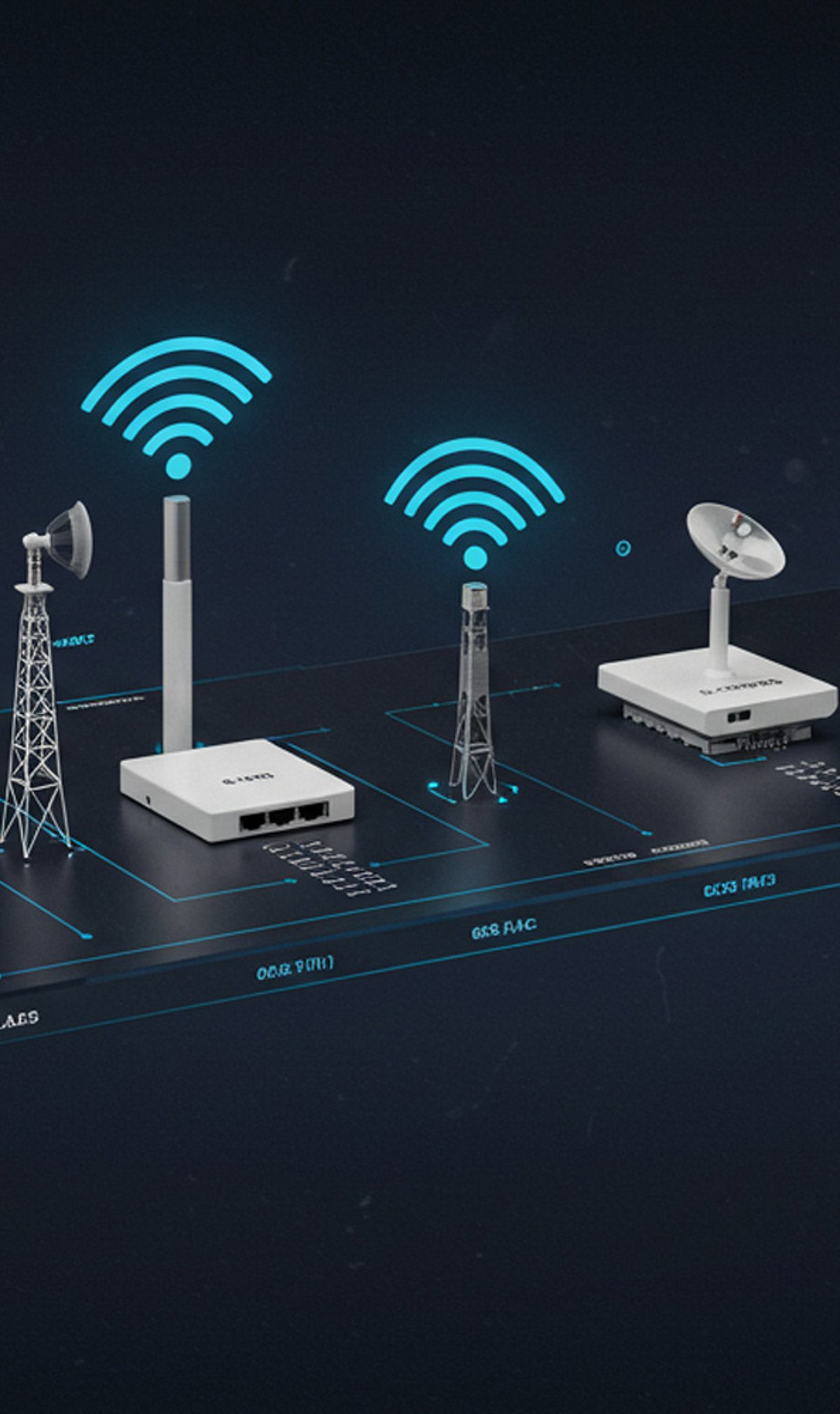
Wi-Fi technology has undergone remarkable transformations since its inception, evolving to meet the growing demands for speed, capacity, and reliability. Here is a concise timeline of the major Wi-Fi generations:
- Wi-Fi 1 (802.11b) – Introduced in 1999, this standard brought wireless networking to homes, offering speeds up to 11 Mbps over the 2.4 GHz band.
- Wi-Fi 2 (802.11a) – Arriving shortly after, Wi-Fi 2 delivered faster 54 Mbps speeds and operated on the 5 GHz band, reducing interference and improving performance.
- Wi-Fi 3 (802.11g) – Launched in 2003, it combined 54 Mbps speeds with 2.4 GHz compatibility, making faster wireless connections more accessible to consumers.
- Wi-Fi 4 (802.11n) – This generation introduced MIMO technology and wider channels, achieving speeds up to 600 Mbps and significantly improving coverage and multi-device performance.
- Wi-Fi 5 (802.11ac) – Focused on gigabit-class speeds, Wi-Fi 5 enhanced 5 GHz performance, capacity, and reliability, enabling smoother streaming, gaming, and connected device experiences.
- Wi-Fi 6 (802.11ax) – With technologies like OFDMA and MU-MIMO, Wi-Fi 6 dramatically improved efficiency in crowded networks, delivering faster speeds and stronger connections overall.
- Wi-Fi 7 (802.11be) – The latest generation pushes boundaries with multi-link operation, wider channels, and extremely high speeds designed for demanding modern applications such as augmented reality, 8K streaming, and industrial IoT.
Each iteration has built upon its predecessor, making wireless connectivity faster, more reliable, and better suited for an increasingly connected world.