Tag: Wireless Technology

  • How Bluetooth Beacons Transform Indoor Spaces into Connected Environments

    How Bluetooth Beacons Transform Indoor Spaces into Connected Environments

    Finding a specific item in a large facility sounds simple, but it becomes challenging when that item is constantly moving. A hospital cart may shift floors, a warehouse tool may transfer between stations, or a visitor may struggle to navigate a sprawling venue. Bluetooth beacons offer a practical solution, making spaces easier to navigate and track.

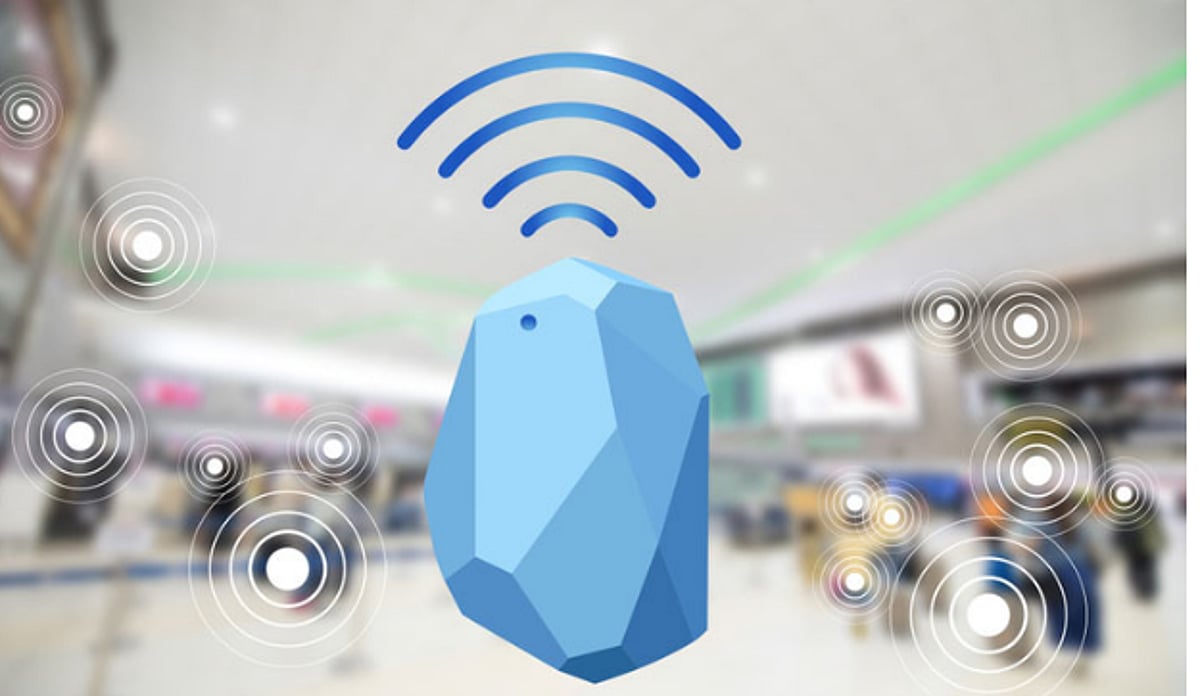
    This technology uses Bluetooth Low Energy (BLE) transceivers to send and receive small data packets to and from enabled devices like smartphones or gateways. The system doesn’t require constant communication with every receiver; beacons simply broadcast information at regular intervals. A device within range picks up the signal and forwards it to a program or management system, which then makes decisions and performs actions.

    What Makes a Bluetooth Beacon Useful?

    The primary advantage is simplicity. Beacons don’t need to stay connected to every receiver—they only broadcast packets periodically. A warehouse management system can detect a tagged trolley entering a loading bay, a museum app can recognize a visitor near an exhibit, or an office system can track equipment moving between rooms. All this is possible without attaching complex, power-hungry computers to every object.

    Bluetooth Low Energy Helps Save Power

    Battery life is critical when deploying dozens or hundreds of wireless devices. BLE was designed for short message exchanges, allowing transmitters to enter sleep mode after sending a signal and wake up only when needed. Battery longevity depends on transmitter power, broadcast frequency, battery size, temperature, and other factors. Striking a balance between update frequency and power conservation is essential.

    Why Indoor Tracking Needs Different Technology

    GPS works well outdoors but fails indoors due to signal blockage by walls and ceilings. Bluetooth beacons circumvent this by using a network of receivers inside buildings that pick up signals from wireless devices and relay them to software. The software processes data to determine an object’s location—often down to the floor or department rather than centimeter-level precision, which is sufficient for many business needs.

    Practical Uses Across Different Industries

    • Asset tracking: In large warehouses, wireless tags help workers quickly locate tools, containers, and vehicles.
    • Healthcare: Portable medical equipment can be found faster, saving critical time for hospital staff.
    • Retail: Apps recognize when a customer enters a section and provide relevant information or directions.
    • Indoor positioning: Airports, museums, universities, and conferences use beacon-based systems to replace physical signs with digital guidance.
    • Manufacturing: Production chains can be monitored automatically, reducing manual checks.

    Understanding Range and Location Accuracy

    Signal strength can indicate proximity, but real-world obstacles like walls, metal shelves, people, and other wireless devices distort signals. Therefore, signal strength should not be relied upon for precise distance measurement. For higher accuracy, advanced methods like direction finding using multiple antennas are available. Businesses should choose the approach that fits their needs.

    Choosing Hardware for the Real Environment

    Specifications alone don’t tell the full story. Installation environment greatly affects performance. Key questions include: How far must the signal travel? Is the device indoors or outdoors? What are the temperature extremes? How long should the battery last, and how often can it be changed? Mounting method matters too—a device on a moving vehicle differs from one on a fixed structure. Hardware should be appropriate to the task, not necessarily the toughest option.

    Software Matters as Much as the Device

    Wireless hardware is just a transmitter; real value comes from analytics, location history, alerts, and integrations. For example, an asset management system might alert when inventory leaves a location, or a warehouse dashboard shows which aisle a container is in. Systems must integrate seamlessly with gateways, apps, APIs, cloud platforms, and existing infrastructure. Compatibility issues can derail an otherwise excellent solution.

    Security Should Be Part of the Design

    Wireless broadcasts can be intercepted by any compatible receiver. Never transmit sensitive information in open packets. Instead, send only an identifier and store data in a protected application or database. Protect device configuration with passwords, authentication, and secure firmware to prevent unauthorized changes that could affect coverage, battery life, or system integrity. When personal devices are involved, define what data can be collected and why.

    Test Before Installing at Scale

    A pilot project is crucial to avoid costly mistakes. Test devices in real environments—especially busy areas, doorways, and challenging spots like thick-walled rooms or near heavy machinery. Experiment with receiver placement; moving a gateway a few feet can improve coverage. Document factors like advertising intervals, transmit power, mounting location, battery characteristics, and firmware version. This data helps quickly resolve issues during testing.

    Building a System That Solves a Real Problem

    Start with a clear goal: locate equipment faster, enable indoor positioning, track materials, etc. Choose technologies based on the need. Systems should be built around a purpose, not complicated by unnecessary features. A Bluetooth beacon provides a simple signal, but receivers, software, network infrastructure, and planning turn that signal into something useful. Plan for maintenance—battery changes, firmware updates, and coverage checks. Realistic expectations and thorough testing make Bluetooth-based location systems practical and valuable. Successful implementations often start modestly and expand based on actual performance.

  • The Evolution of Wi-Fi: From 802.11b to Wi-Fi 7

    The Evolution of Wi-Fi: From 802.11b to Wi-Fi 7

    Wi-Fi technology has undergone remarkable transformations since its inception, evolving to meet the growing demands for speed, capacity, and reliability. Here is a concise timeline of the major Wi-Fi generations:

    • Wi-Fi 1 (802.11b) – Introduced in 1999, this standard brought wireless networking to homes, offering speeds up to 11 Mbps over the 2.4 GHz band.
    • Wi-Fi 2 (802.11a) – Arriving shortly after, Wi-Fi 2 delivered faster 54 Mbps speeds and operated on the 5 GHz band, reducing interference and improving performance.
    • Wi-Fi 3 (802.11g) – Launched in 2003, it combined 54 Mbps speeds with 2.4 GHz compatibility, making faster wireless connections more accessible to consumers.
    • Wi-Fi 4 (802.11n) – This generation introduced MIMO technology and wider channels, achieving speeds up to 600 Mbps and significantly improving coverage and multi-device performance.
    • Wi-Fi 5 (802.11ac) – Focused on gigabit-class speeds, Wi-Fi 5 enhanced 5 GHz performance, capacity, and reliability, enabling smoother streaming, gaming, and connected device experiences.
    • Wi-Fi 6 (802.11ax) – With technologies like OFDMA and MU-MIMO, Wi-Fi 6 dramatically improved efficiency in crowded networks, delivering faster speeds and stronger connections overall.
    • Wi-Fi 7 (802.11be) – The latest generation pushes boundaries with multi-link operation, wider channels, and extremely high speeds designed for demanding modern applications such as augmented reality, 8K streaming, and industrial IoT.

    Each iteration has built upon its predecessor, making wireless connectivity faster, more reliable, and better suited for an increasingly connected world.

  • Next-Generation Wi-Fi: Faster Speeds, Lower Latency, and Smarter Connectivity Explained

    Next-Generation Wi-Fi: Faster Speeds, Lower Latency, and Smarter Connectivity Explained

    Next-generation Wi-Fi is here, bringing blazing-fast speeds, lower latency, and smarter connectivity that transform the way we stay connected. This new standard delivers multi-gigabit speeds for smoother streaming, gaming, and downloads, while reducing lag to make video calls, cloud gaming, and smart home devices more responsive than ever.

    Advanced networking technology efficiently handles dozens of connected devices simultaneously, and enhanced encryption and authentication protocols provide stronger protection against cyber threats. Modern Wi-Fi intelligently switches devices between frequency bands for optimal performance, and improved signal strength combined with mesh networking reduces dead zones throughout your home or office.

    Energy efficiency is another key benefit, as connected devices consume less power thanks to smarter wireless communication technologies. Next-generation Wi-Fi is designed to support AI, AR/VR, and ultra-high-definition content, making it a future-ready networking solution.

  • 9 Visionary Entrepreneurs Driving India’s Fastest-Growing Startup Ecosystem

    9 Visionary Entrepreneurs Driving India’s Fastest-Growing Startup Ecosystem

    India’s startup ecosystem continues to thrive, powered by visionary founders who are disrupting industries and redefining business norms. From beauty and fintech to quick-commerce and wireless communication, these nine entrepreneurs have built some of the country’s fastest-growing companies, each bringing a unique blend of innovation, strategy, and execution.

    Falguni Nayar – Nykaa

    Falguni Nayar transformed Nykaa into India’s leading beauty platform by executing a strong omnichannel strategy and curating premium brands. Her vision reshaped online cosmetics retail, making Nykaa a household name.

    Vineeta Singh – SUGAR Cosmetics

    Vineeta Singh scaled SUGAR Cosmetics into a top beauty brand by targeting young, style-conscious consumers with innovative products and a digital-first marketing approach. Her brand resonates with the modern Indian woman.

    Neha Satak – Astrome

    Neha Satak founded Astrome to develop advanced wireless communication technologies that improve broadband connectivity in underserved regions of India. Her work bridges the digital divide, bringing high-speed internet to remote areas.

    Roshni Mahatani – Greylabs AI

    Roshni Mahatani created AI-powered fintech solutions at Greylabs AI, enabling financial institutions to enhance decision-making, automate processes, and deepen customer engagement through intelligent analytics.

    Shashank Kumar – Razorpay

    Shashank Kumar co-founded Razorpay, a platform that simplified digital payments for businesses across India. With secure, scalable fintech solutions, Razorpay now serves millions of merchants nationwide.

    Nithin Kamath – Zerodha

    Nithin Kamath revolutionized stock investing in India by introducing low-cost brokerage services and technology-driven trading platforms. Zerodha empowered retail investors with accessible, affordable investment tools.

    Nikhil Gupta – Neo Group

    Nikhil Gupta built Neo Group into a rapidly expanding wealth management platform catering to high-net-worth clients. His focus on modern investment solutions and personalized service has driven impressive growth.

    Nitin Gupta – Uni Cards

    Nitin Gupta launched Uni Cards to redefine credit experiences in India. The platform offers flexible payment options, digital-first services, and simplified financial management tools for a new generation of users.

    Aadit Palicha – Zepto

    Aadit Palicha scaled Zepto into a leading quick-commerce platform by pioneering ultra-fast grocery deliveries. Through efficient logistics and technology innovation, Zepto has set new standards for convenience in e-commerce.

  • How Metamaterials Are Revolutionizing Wireless Technology for 6G and Beyond

    How Metamaterials Are Revolutionizing Wireless Technology for 6G and Beyond

    Metamaterials are redefining wireless communications by transforming the environment itself into an active part of the network. From Reconfigurable Intelligent Surfaces (RIS) and holographic MIMO antennas to smarter spectrum management and battery-free IoT sensors, these engineered materials promise to improve signal coverage, reduce interference, and support the high-frequency demands of 6G. While challenges around large-scale deployment and standardization remain, metamaterials are rapidly emerging as a cornerstone of next-generation wireless infrastructure.

    What Are Metamaterials?

    A metamaterial is an artificially engineered structure whose electromagnetic properties are determined by its design rather than its chemical composition. Natural materials interact with electromagnetic waves in ways governed by physics—they absorb, reflect, or transmit signals according to their molecular structure. Metamaterials are different. By engineering arrays of sub-wavelength structures—patterns far smaller than the wavelength of the signal they interact with—designers can create surfaces that bend, focus, redirect, or absorb electromagnetic waves in ways that do not occur naturally. Negative refractive index materials, for instance, can bend radio waves backward, a property that exists in no naturally occurring substance.

    The Problem With High-Frequency Wireless Signals

    The transition from 4G to 5G and ongoing planning for 6G have pushed wireless communication into progressively higher frequency bands. Higher frequencies carry more data but come with a critical weakness: they are easily blocked by physical obstacles. Walls, buildings, trees, and even the human body can significantly attenuate millimeter-wave and terahertz signals, creating coverage gaps that adding more base stations can only partially address. As IEEE researchers have noted, engineers are approaching the practical limits of transmitter and receiver efficiency. Getting more performance out of next-generation wireless networks will increasingly require engineering the wireless channel itself, not just its endpoints.

    Reconfigurable Intelligent Surfaces: Smart Skins for Buildings

    The most immediately practical metamaterial application in wireless technology is the Reconfigurable Intelligent Surface, or RIS—a programmable panel made from metamaterial elements whose electromagnetic properties can be adjusted electronically in real time. Unlike a passive surface that reflects signals at a fixed angle, an RIS can redirect incoming signals toward specific locations, fill coverage dead zones, or steer beams toward moving users. Rather than requiring line-of-sight between a base station and a device, networks equipped with RIS panels can route signals around corners and around obstacles without additional base stations.

    Holographic MIMO and Antenna Miniaturization

    Metamaterials are enabling a fundamentally different approach to antenna design. Conventional antenna arrays require individual elements to be spaced at half-wavelength intervals, a physical constraint that sets a floor on compactness while maintaining performance. Metamaterial-based antenna elements can be packed far more densely, approaching what researchers describe as a continuous radiation aperture. This makes holographic MIMO possible, in which an entire surface—rather than a discrete set of antennas—creates and steers highly precise signal beams. For 6G networks targeting terahertz frequencies, where wavelengths are measured in fractions of a millimeter, this level of integration is not a refinement but a practical necessity.

    Sensing, Spectrum, and Beyond Connectivity

    Metamaterial applications extend beyond pure connectivity. Metasurface-based sensors can detect environmental changes in temperature, humidity, and chemical presence by monitoring shifts in their electromagnetic response, enabling passive, battery-free IoT sensors that communicate purely through interaction with ambient radio signals. On the spectrum side, metamaterial filters with exceptionally sharp frequency selectivity and low insertion loss allow more precise use of increasingly congested radio bands, separating signals that conventional filters would blur.

    From Research to Real Networks

    The central challenge for wireless metamaterials in 2026 is the transition from laboratory demonstrations to deployed infrastructure. Fabrication at the scale and cost required for widespread deployment, integration with existing network management systems, and the development of coordination standards between RIS panels and base stations are all active areas of engineering work. Major vendors, including Huawei, Ericsson, and Nokia, alongside academic institutions across Europe and Asia, are running field trials and prototype deployments. The technology’s trajectory is clear; what remains is the engineering and standardization work that separates metamaterials as a research field from metamaterials as the physical infrastructure layer of the next generation of wireless networks.

    Why This Matters

    The future of wireless communication depends not only on faster processors and better antennas but also on controlling the physical environment through which signals travel. Metamaterials offer a fundamentally new approach by making buildings, walls, and other surfaces part of the communication network itself. This could reduce infrastructure costs, eliminate signal dead zones, improve spectrum efficiency, and accelerate the deployment of 6G, autonomous vehicles, smart cities, industrial IoT, and extended reality applications. As the demand for ultra-fast, low-latency connectivity continues to grow, metamaterials may become one of the most important enabling technologies of the next decade.

    Frequently Asked Questions

    What are metamaterials, and how are they different from conventional materials?

    Metamaterials are artificially engineered materials whose electromagnetic properties are determined by their internal structure rather than their chemical composition. Unlike conventional materials that naturally absorb, reflect, or transmit electromagnetic waves, metamaterials can manipulate radio waves in unique ways, such as bending, focusing, or redirecting them. This makes them valuable for advanced wireless communications, imaging systems, and next-generation networking technologies.

    How can metamaterials improve wireless communication networks?

    Metamaterials improve wireless communication by giving engineers the ability to control how radio signals travel through the environment. Instead of simply boosting transmitter power or receiver sensitivity, metamaterial-based surfaces can redirect signals around obstacles, reduce interference, and eliminate coverage dead zones. This results in stronger connectivity, higher data speeds, improved energy efficiency, and more reliable wireless performance, especially in dense urban environments.

    What is a Reconfigurable Intelligent Surface (RIS), and why is it important?

    A Reconfigurable Intelligent Surface (RIS) is a programmable panel made from metamaterial elements that can dynamically alter how electromagnetic waves are reflected. Unlike ordinary walls or surfaces that passively reflect signals, an RIS can steer signals toward specific users or around obstacles in real time. This technology is considered one of the most promising innovations for future 6G networks because it improves coverage without requiring additional base stations.

    Why are metamaterials considered essential for future 6G networks?

    Future 6G networks are expected to operate at terahertz frequencies, which can deliver extremely high data rates but are easily blocked by walls, buildings, trees, and even people. Metamaterials help overcome these limitations by intelligently redirecting signals through programmable surfaces. This improves network coverage, reduces signal loss, and supports ultra-low latency applications such as autonomous vehicles, holographic communication, and immersive extended reality experiences.

    Can metamaterials reduce the need for more mobile towers and base stations?

    In many scenarios, yes. Metamaterial-based Reconfigurable Intelligent Surfaces can redirect existing wireless signals into areas with weak coverage, reducing the need to install additional base stations. While they may not completely replace traditional infrastructure, they can significantly improve network performance in cities, stadiums, airports, office buildings, and underground transportation systems, potentially lowering deployment costs for telecom operators.