Tag: workforce development

  • 10 Supply Chain Priorities for AI-Driven Operations in 2027

    10 Supply Chain Priorities for AI-Driven Operations in 2027

    Supply chains are entering a new phase of AI adoption. Chief Supply Chain Officers (CSCOs) must now move beyond isolated pilots and build operating models designed for continuous AI-assisted decision-making. According to recent Gartner research, data readiness, legacy-system integration, talent, governance, and measurable value are critical foundations. Agentic AI and physical AI are also pushing supply chains toward greater autonomy.

    1. Build an AI-Ready Data Foundation

    AI-driven supply chains depend on accurate, accessible, and contextual data. Poor master data undermines forecasting, planning, and automation. CSCOs should audit critical datasets, assign clear ownership, and improve data quality across functions. A unified data foundation supports faster insights and more consistent decisions across the network.

    2. Integrate AI with Legacy Systems

    Replacing every legacy platform is neither practical nor necessary. Gartner reports that 56% of CSCOs identify integration with legacy systems as a major AI challenge. Leaders should create integration layers that connect existing systems with newer AI capabilities while gradually moving toward a more composable architecture.

    3. Scale Demand Forecasting and Predictive Planning

    Forecasting remains one of the clearest opportunities for supply chain AI. CSCOs should identify planning processes where AI can improve demand sensing, inventory decisions, and scenario analysis. Start with measurable use cases, establish baseline performance, and scale only when accuracy, speed, or service improvements are demonstrated.

    4. Prepare for Autonomous Decision-Making

    Agentic AI can move beyond generating recommendations to planning and executing actions. Gartner identifies agentic AI as a major supply chain technology trend, but stresses the need for guardrails around accountability and explainability. CSCOs should define which decisions AI can recommend, execute, or escalate.

    5. Strengthen AI Governance and Security

    As AI influences procurement, planning, and logistics, governance cannot be an afterthought. Establish policies covering data access, model monitoring, cybersecurity, explainability, and human escalation. Decision governance should make AI-enabled decisions auditable and accountable, especially when autonomous workflows affect customers or suppliers.

    6. Redesign Supply Chain Workflows Around AI

    Adding AI to inefficient processes can simply automate existing problems. Gartner recommends reimagining operating models rather than bolting AI onto traditional workflows. CSCOs should map end-to-end processes, identify unnecessary handoffs, and redesign decision flows around AI-assisted planning and execution.

    7. Upskill Planners and Build an AI-Ready Workforce

    Technology alone will not deliver an AI-driven supply chain. Gartner says 50% of CSCOs cite limited internal AI expertise as a major challenge, while demand for supply-chain roles requiring AI skills has risen sharply. Leaders should invest in AI literacy, digital skills, and redesigned roles rather than relying solely on external hiring.

    8. Improve Visibility and Supply Chain Resilience

    AI should help organizations detect disruptions earlier and respond faster. Connect supplier, inventory, manufacturing, logistics, and customer data to create greater end-to-end visibility. AI-enabled analysis can then help teams evaluate alternatives and respond to geopolitical, operational, or demand-related shocks.

    9. Create a Clear AI Investment and ROI Framework

    AI spending must translate into measurable business value. Gartner reports that 55% of CSCOs are unclear about the ROI of their AI investments. For every major initiative, define baseline metrics, target outcomes, adoption measures, and financial impact. Tie change-management resources to the initiatives with the strongest strategic value.

    10. Balance Human Judgment with AI

    The autonomous supply chain should not mean removing people from critical decisions. Human expertise remains essential for exceptions, strategic trade-offs, and accountability. CSCOs should establish clear decision rights that specify when AI acts independently, when employees approve recommendations, and when issues must be escalated.

    The goal for 2027 should not be maximum automation. It should be a supply chain that uses AI where it creates measurable value while maintaining resilience, governance, and human oversight. Leaders who combine strong data foundations with better workflows, skilled teams, and controlled autonomy will be better positioned to build an AI-driven supply chain that can adapt as technology and business conditions change.
  • AI-Powered Simulations Reshape Enterprise Learning: A Conversation with Enparadigm’s CTO

    AI-Powered Simulations Reshape Enterprise Learning: A Conversation with Enparadigm’s CTO

    As businesses accelerate their pace, conventional training approaches often fall short in preparing employees for dynamic workplace challenges. AI-powered simulations are emerging as a transformative solution, offering practical environments where teams can hone skills, sharpen judgment, and achieve workplace readiness.

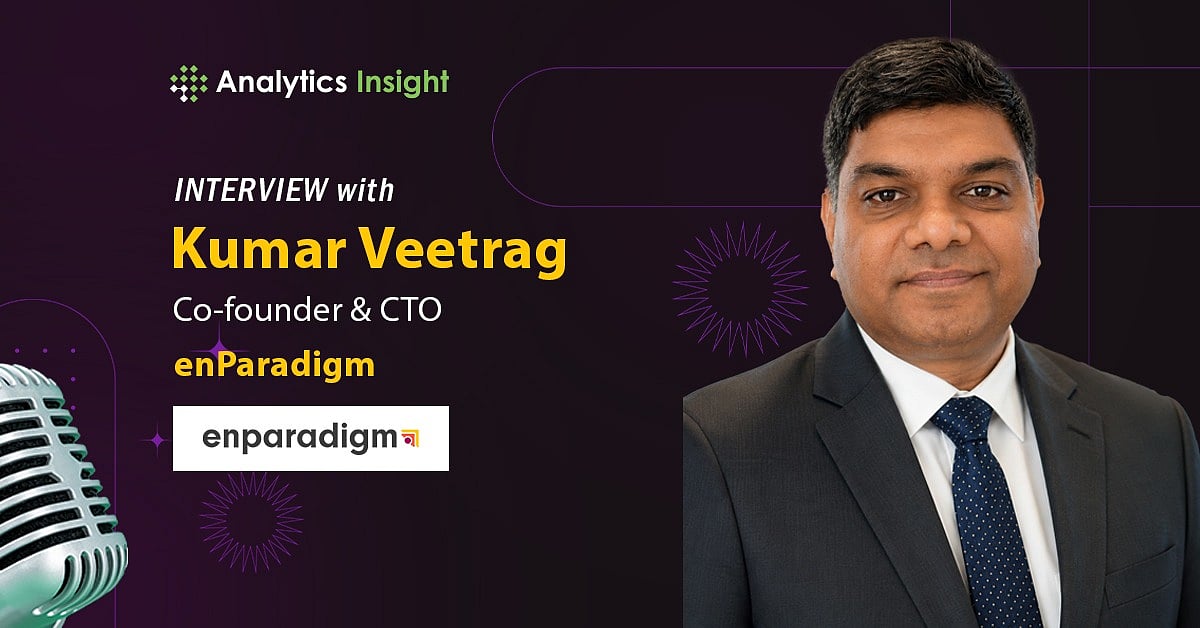
    In a recent episode of the Analytics Insight Podcast, host Priya Dyalani sat down with Kumar Veetrag, Co-founder and CTO of Enparadigm, to examine how AI and simulation-based technologies are reshaping enterprise learning and talent development. The discussion covered the transition from traditional training to experiential learning, the role of AI in assessments and coaching, and the potential of talent analytics to enhance hiring and workforce strategies. The conversation also touched on the critical importance of responsible AI, human oversight, and governance as organizations integrate these tools.

    Key Insights from the Interview

    1. What is experiential learning, and why does it matter for enterprises?

    Experiential learning focuses on practicing skills in realistic contexts rather than relying solely on theoretical knowledge. The podcast highlighted that employees often need to practice judgment, communication, and decision-making before applying these skills on the job. AI-powered simulations create safe practice environments that help employees become proficient faster.

    2. How is AI transforming simulation-based learning?

    AI accelerates, flexibilizes, and personalizes simulation-based learning. Organizations can design scenarios and AI avatars that let employees practice real workplace interactions. These simulations can be customized for different languages, accents, vocabulary levels, and job roles, enabling enterprises to deliver more relevant experiences at scale.

    3. How do AI-based assessments improve traditional talent evaluation?

    AI-based assessments address common pain points in traditional evaluation methods, such as time, cost, and scalability. Thousands of employees can participate simultaneously, while organizations receive faster feedback and consistent scoring. Moreover, assessment data can guide coaching and development, helping employees pinpoint specific areas for improvement.

    4. How can organizations ensure fairness in AI-driven talent decisions?

    To maintain fairness, organizations should pair AI with human judgment and non-AI systems, rather than letting AI make decisions autonomously. Reliable outcomes require clear guardrails, careful AI configuration, multiple AI systems, peer evaluations, and human calibration. Protecting sensitive data and adhering to responsible AI practices throughout the process are also essential.

    5. How will AI influence the future of workforce development?

    The podcast suggested that competitive advantage is shifting from simply hiring the best talent to continuously upskilling existing employees. As business needs evolve rapidly, organizations require adaptable individuals who can learn, practice, and pivot quickly. AI can power this through personalized simulations, coaching, and ongoing skill development.

  • AI Won’t Replace Humans—Judgment, Empathy, and Leadership Remain Key, Says PMI’s Amit Goyal

    AI Won’t Replace Humans—Judgment, Empathy, and Leadership Remain Key, Says PMI’s Amit Goyal

    Artificial intelligence is transforming industries at an unprecedented pace, automating routine tasks, accelerating decision-making, and reshaping how businesses operate. Yet even as technological innovation surges, industry leaders emphasize that technology alone cannot define the future of work. Human judgment, creativity, empathy, leadership, and adaptability remain indispensable for organizations adopting intelligent technologies.

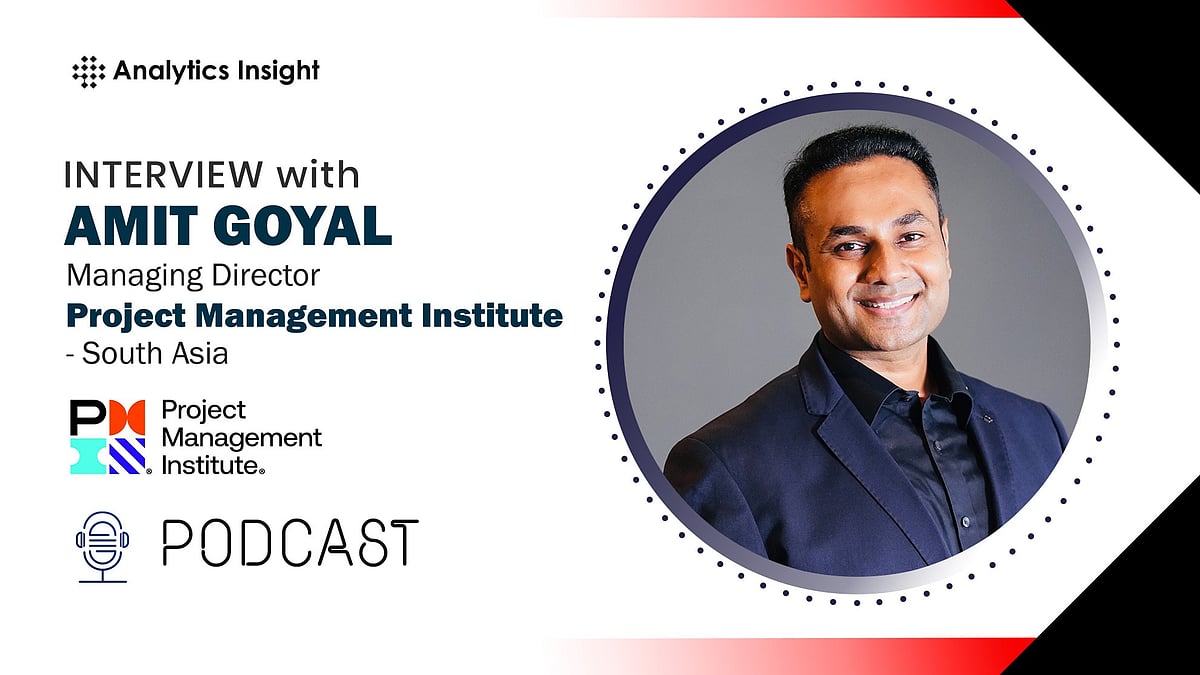
    In the latest episode of the Analytics Insight Podcast, host Priya Dialani speaks with Amit Goyal, Managing Director of the Project Management Institute (PMI) for South Asia, about why humans—not technology—will ultimately determine AI’s success. Goyal shares insights on the human side of the AI era, essential skills for professionals, workforce development shifts, and the future of education. Key excerpts from the conversation follow.

    Why AI Conversations Must Focus on People as Much as Technology

    “Technology provides options, but people make things happen,” Goyal explains. AI can write reports, analyze data, write code, and even plan projects—but it cannot grasp organizational politics, human emotions, ethics, or nuanced decision-making. Throughout history, the greatest challenge with major technological advances has never been the technology itself but its acceptance. Organizations should not fear AI replacing people; instead, they should focus on how to combine AI with human talent.

    What Gives Humans the Edge in an AI-Driven World

    The true human advantage lies in judgment, empathy, creativity, contextual understanding, and accountability. While AI processes massive datasets at incredible speed, it cannot mediate between conflicting parties, motivate teams during uncertainty, or take responsibility for tough choices. “The challenge is not to race with AI in speed, but to ask better questions, make wise decisions, and connect people toward a common purpose,” Goyal notes.

    Key Skills for the AI Economy

    Professionals who master AI technology should also build AI literacy—understanding how AI works, its benefits, and its limitations. Beyond technical knowledge, project management, communication, critical thinking, flexibility, and a commitment to continuous learning are essential. In a rapidly evolving tech landscape, success belongs to those who learn fast and collaborate effectively with AI, not those who claim to have all the answers.

    Preparing the Workforce for AI

    Organizations must shift from annual training programs to continuous learning as a core strategic element. Adopting AI should go beyond providing new tools; it must include employee training aimed at achieving practical business outcomes, improving customer experience, reducing risks, and boosting productivity. “The successful application of AI won’t be about owning the latest technology, but about training competent people,” Goyal emphasizes.

    Evolving Education for the AI Era

    Education systems should move from exam-driven models to producing practical, job-ready professionals. Real-world experience, industry collaboration, teamwork, project implementation, ethical considerations, and problem-solving must complement theoretical knowledge. AI can provide instant access to information, but learners need to apply that knowledge practically. The focus should be on employability and practice-oriented learning.

    The One Human Skill AI Will Never Replace

    Decision-making will become the most critical ability over the next decade, Goyal predicts. AI can interpret data, present options, and offer confident answers, but it cannot own its decisions. Human judgment will be indispensable when data is incomplete, time is limited, and difficult choices must be made. “Those who succeed will not only master AI but also know when to accept or reject its suggestions and rely on their own judgment,” he concludes.

    The full discussion is available on the Analytics Insight Podcast.

  • How a Process-Oriented Approach Links Recruitment and Retention for Sustainable Manpower Development

    How a Process-Oriented Approach Links Recruitment and Retention for Sustainable Manpower Development

    In today’s competitive talent landscape, organizations often treat recruitment and retention as separate functions. But according to Lakshmikanth Subramaniam, an experienced people-management professional, the two are deeply interconnected. His career has focused on creating work environments where employees feel valued, responsible, and connected, leading to long-term contribution and stability.

    The Philosophy Behind Low Attrition

    Subramaniam’s approach is rooted in the belief that employees are an organization’s greatest strength. Over the years, he has maintained an employee retention ratio of less than 8% within his teams — a remarkable figure in a fluid job market. He attributes this to a culture where individuals feel personally and professionally tied to the organization. Rather than seeing recruitment as a one-time event, he treats it as a retention tool, ensuring continuity and alignment with organizational goals.

    Measurable Impact on Team Performance

    His human-centric methods have directly improved team stability and productivity. In many roles, his teams grew 15–20% larger than comparable teams, and achieved nearly 30% higher output. These results stem from genuine relationship-building, motivation, and thoughtful engagement — not just processes.

    Adapting to a Changing Workforce

    Subramaniam acknowledges the challenges of today’s job market, especially with Gen-Z employees who prioritize flexibility, recognition, and meaningful work. To address this, he introduced self-centric evaluation processes that help employees see how their productivity links to team outcomes. Personal accountability, combined with careful observation and timely guidance, has been key to overcoming retention challenges.

    The Future of Human Resource Development

    Looking ahead, Subramaniam emphasizes balancing technological advancement with human connection. While AI can streamline processes and reduce costs, it cannot replace the authenticity of human interactions. Organizations that treat recruitment and retention with equal seriousness will be better positioned for long-term success, creating workplaces that are both productive and humane.

    Through his steady track record and people-first approach, Lakshmikanth Subramaniam provides a template for connecting recruitment with retention. His work shows that when employees are treated as essential contributors rather than replaceable inputs, organizations gain stability, trust, and loyalty — essential ingredients for achieving strategic objectives.

  • Unlocking Workforce Potential: How VR Training Data Drives Performance Insights

    Unlocking Workforce Potential: How VR Training Data Drives Performance Insights

    Virtual reality (VR) training is rapidly transforming corporate learning, but the real breakthrough lies in the data it generates. Every movement, glance, and reaction inside a simulated environment captures rich telemetry that reveals how employees truly perform under pressure. Moving beyond traditional completion rates, organizations now have the tools to turn raw headset data into actionable business intelligence.

    Making Sense of Immersive Telemetry

    When a trainee dons a VR headset, the system records hundreds of data points per second—head orientation, eye gaze, hand gestures, and reaction times. This flood of information can feel overwhelming. However, by focusing on scenario-based assessment metrics, companies can uncover whether an employee hesitated before a critical safety decision or where their attention wandered during a high-stakes interaction. This level of detail transforms training from a passive exercise into an objective map of skill application.

    From 3D Interactions to Real-World Outcomes

    The ultimate goal of any training program is improved job performance. Spatial tracking and heatmaps visualize exactly where users focus their attention. For example, if a technician is supposed to monitor a specific gauge, heatmaps confirm whether they actually looked at it. This capability enables trainers to verify attention allocation for safety hazards, analyze physical ergonomics to prevent repetitive strain injuries, and track navigational efficiency to identify workflow bottlenecks. Behavioral tracking also measures soft skills: decision-making speed, adaptability, and procedural knowledge in unpredictable scenarios.

    Overcoming the Analytics Learning Curve

    Many enterprises struggle to isolate the metrics that correlate with long-term success. Data silos further complicate integration with existing Learning Management Systems (LMS). Without clear visualization tools, raw coordinates in spreadsheets offer little value. A well-designed VR ecosystem automatically highlights performance trends, flags safety risks, and generates reports that stakeholders can act on immediately. Specialized providers, such as Roundtable Learning, help bridge this gap by translating complex telemetry into straightforward business intelligence.

    Elevating Training Strategy with Expert Partners

    Working with experienced partners allows internal teams to focus on coaching while experts handle the technical heavy lifting. Whether assessing emergency response, refining leadership communication, or teaching complex procedures, the right partner ensures VR initiatives deliver scalable results and clear ROI. Organizations that master immersive data will build safer, more efficient, and highly adaptable workforces ready for tomorrow’s challenges.

  • MIT’s New Manufacturing Initiative Gains Traction with Industry, Workforce, and Startup Programs

    MIT’s New Manufacturing Initiative Gains Traction with Industry, Workforce, and Startup Programs

    In its first year, the Initiative for New Manufacturing (INM) at MIT has built significant momentum by bridging research, workforce development, and industry engagement to accelerate the deployment of advanced manufacturing technologies. The initiative marked its first anniversary with MIT Manufacturing Week in May 2026, attracting over 800 registrants—including students, faculty, industry leaders, investors, entrepreneurs, and government officials—for four days of workshops, symposia, and discussions on AI in factories, startup innovation, and workforce solutions.

    “INM launched a year ago with the premise that strengthening the industrial base needed a coordinated response, and MIT has a responsibility to lead it,” said Paula T. Hammond, dean of MIT’s School of Engineering and co-chair of INM’s Steering Committee. “The response and participation level has been huge. MIT Manufacturing Week proved that the appetite for change—from students to chief executives—is real and urgent.”

    Manufacturing Week Highlights

    Manufacturing Week opened with a cybersecurity workshop co-led by INM and Google Cloud for industry members. It continued with the MIT MIMO (Machine Intelligence for Manufacturing Operations) symposium on deploying AI on factory floors, alongside sessions on workforce development, emerging technologies, startups, and industrial transformation. The week closed with a regional research showcase and competition featuring more than 140 graduate students and postdocs from across New England.

    Over the past year, INM also hosted a distinguished speaker series with manufacturing leaders including Keith Flynn (Anduril), Roland Busch (Siemens), and Venky Alagirisamy (Nike).

    Fostering New Manufacturing Startups

    A central goal of INM is to help students see manufacturing as a frontier for scientific discovery, technological innovation, entrepreneurship, and societal impact. The initiative partnered with NSF I-Corps New England to host its first manufacturing research showcase. More than 140 teams from 17 universities applied; 40 finalist teams received mentorship, and eight teams shared $50,000 in prize funding.

    The top prize for “most transformative innovation” went to MIT PhD student Jake Read for “The End of G Code,” a project on modular machine control architectures. Vatsal Patel (MIT) and Joshua Grace (Yale) won the research excellence category for “VisFT,” scalable six-axis force-torque sensors. Project themes included AI tools for manufacturing, semiconductor process control, robotics, digital twins, new materials, additive manufacturing, next-generation shipbuilding, and biomanufacturing.

    “Entrepreneurship is a transformative pathway to take research to market, and to drive faster innovation and scale-up,” said John Hart, INM faculty co-director and head of MIT’s Department of Mechanical Engineering. “At INM’s inaugural research showcase, we had tremendous interest from universities across New England, along with enthusiastic participation from industry, investors, and experienced founders. We are excited to build on this success and work toward a nationwide program and platform for entrepreneurship and translation in manufacturing.”

    Growing Industry Consortium

    During Manufacturing Week, First Solar became INM’s eighth industry member, joining Amgen, Autodesk, GE Vernova, Flex, PTC, Sanofi, and Siemens. The consortium’s growth reflects a recognition that modern manufacturing challenges—supply chain resilience, workforce development, industrial competitiveness—require cross-sector collaboration. INM provides a platform to convene and develop solutions through workshops and working groups on cybersecurity, digital twins, AI agents in regulatory environments, and continuous innovation.

    “Our members see MIT as a partner that can help them both address today’s challenges and think far into the future,” said Rick Locke, dean of the MIT Sloan School of Management and co-chair of INM’s steering committee. “This kind of multi-industry engagement is unusual and powerful.”

    Research and Workforce Development

    INM issued a call for proposals on AI and automation, receiving an overwhelming response and funding eight seed research projects. The initiative plans to publish eight white papers in June as part of a broader study on the future of manufacturing. During MIT’s Independent Activities Period in January 2026, INM collaborated with NSF I-Corps to guide 13 early-stage teams through customer discovery via the I-Corps Spark program.

    Workforce development is a major focus. MIT launched the Technologist Advanced Manufacturing Program (TechAMP), led by Principal Research Scientist John Liu, to create a new generation of shop floor leaders at six sites across New England, including three community colleges. “INM has the potential to transform the national manufacturing workforce,” said Liu. “It will require deep engagement between how people learn and lead, and how firms adopt new technologies and transform. We’re just getting started.” INM is now exploring a national rollout of TechAMP and expansion into biomanufacturing and semiconductor manufacturing.

    On campus, INM supported student engagements including an AI and automation lunch series and a Factory Observatory program. This spring, students founded MIT’s first manufacturing club, holding its launch event during Manufacturing Week. “We’re thrilled students are taking the lead,” said Sloan associate professor and INM faculty co-director Karen Zheng. “It was really exciting to see a full room of 80-plus students across campus coming together for the kickoff event during the busiest final period of a semester. This speaks to the students’ enthusiasm.”

    Global Reach and Future Plans

    While focused on strengthening domestic manufacturing, INM aims for global impact. It is collaborating with NAMTECH in Ahmedabad, India, where students are now taking an adaptation of MIT’s “yo-yo course” (2.008: Design and Manufacturing II). Next year, INM plans to bring more manufacturing leaders to campus, offer additional programming for emerging entrepreneurs, graduate TechAMP’s first cohort, expand TechAMP to new states, grow the consortium, and deepen research into manufacturing productivity.

    “INM aims to be a catalyst for transforming manufacturing across the nation to drive innovation, economic growth, and new types of jobs,” said Chris Love, faculty co-director of INM. “MIT’s work on the PIE (Production in the Innovation Economy) study in 2013 highlighted the value of proximity between production and innovation. INM seeks to rekindle this relationship in manufacturing across the country.”