

Tag: Workforce

  • MIT Forum Explores How AI Reshapes Jobs, Democracy, and Society

    MIT Forum Explores How AI Reshapes Jobs, Democracy, and Society

    At the AI and Society Forum held at MIT, leading researchers from across the Institute gathered to examine the profound ways artificial intelligence is influencing employment, democratic processes, and the very fabric of society. Co-organized by the School of Humanities, Arts, and Social Sciences (SHASS) and the Social and Ethical Responsibilities of Computing (SERC), the event featured keynote talks, panel discussions, and even a musical performance blending generative AI with live instrumentation.

    AI and the Future of Work

    Economist David Autor challenged the widespread fear that AI will simply eliminate jobs. Instead, he argued that the technology’s impact hinges on how it alters the scarcity and value of human expertise. “When I think about how technology interacts with the value of labor, I think about it in terms of how it changes the scarcity of expertise, whether it makes it more valuable or whether it makes it more of a commodity,” Autor said. He emphasized that proactive policies—like worker training, wage insurance, and broader capital ownership—are essential to navigate the coming changes.

    During a panel moderated by Rob Loughlin of McKinsey & Company, MIT experts explored the changing nature of work. Daniela Rus, director of CSAIL, envisioned AI as a collaborative assistant: “I’d like to imagine the robot as your friend and assistant… but the role of the human as the decider, as the person with good judgment, remains super important.” David Mindell added that history shows work constantly evolves, and the key is to “constantly be creating the new work.” Sendhil Mullainathan cautioned that while AI offers productivity gains, long-term growth requires careful differentiation, and we are entering a period of high variance in workforce restructuring.

    Democracy and AI

    The second session turned to AI’s impact on democratic institutions. Chara Podimata of MIT Sloan presented research auditing large language models for bias in election information. Her study of 12 major models during the 2024 U.S. presidential election revealed that responses varied dramatically based on users’ stated demographics and political leanings. A new audit is planned for the 2026 midterms.

    In a panel moderated by Songyee Yoon, experts voiced both concerns and cautious optimism. Bailey Flanigan warned that automating decision-making could strip away the procedural rituals essential to democracy. Charles Stewart III highlighted the risk of AI-induced chaos in elections, noting that “if an election is called into question, that can lead to violence.” Lily Tsai argued that AI designers must embed democratic values such as agency, equality, and mutual respect. She shared a promising example: a Socratic dialogue chatbot that helps people articulate their beliefs, which actually moderated their policy positions.

    A Call for Interdisciplinary Action

    In his opening remarks, SHASS Dean Agustín Rayo stressed that “paying attention to the societal consequences of AI is not a departure from MIT’s mission; it’s a way of ensuring that our technical leadership has maximum impact.” Dan Huttenlocher, dean of the MIT Schwarzman College of Computing, echoed the need for interdisciplinary research to avoid overreliance and unintended consequences. The forum made clear that as AI continues to advance, understanding its societal impacts is as critical as the technology itself.
  • AWS Chief Matt Garman Says AI Will Reshape Jobs, Not Erase Them

    AWS Chief Matt Garman Says AI Will Reshape Jobs, Not Erase Them

    AWS CEO Matt Garman has pushed back against fears that artificial intelligence will lead to widespread job displacement, arguing instead that AI will transform white-collar roles and create new opportunities. In a recent appearance on the Platformer podcast, Garman said that while half of all white-collar jobs “may change” due to AI, that does not mean they will disappear.

    Drawing a historical parallel, Garman compared AI’s impact to the introduction of Microsoft Excel. “Wipe out and change are different,” he explained. “The key thing is not to look at a still picture of the world and say that job’s not going to exist. New jobs will be created.”

    Garman emphasized that entry-level employees remain highly valuable. “They come in with an energy and excitement, a new view on things,” he said. Amazon plans to hire more than 11,000 software development engineering interns and early-career engineers globally in 2026, underscoring its commitment to nurturing new talent.

    According to Garman, adaptability will become more important than specific technical skills. “I actually think one of the things we start to look for in employees is not what skill set you have, but whether you have the ability to learn,” he stated.

    Amazon continues to invest heavily in AI, with AWS generating roughly $130 billion in annual revenue. The company is developing AI-powered tools for coding, security, productivity, and recruitment, signaling that the transformation Garman describes is already underway.

  • Microsoft CEO Satya Nadella Calls Out Hypocrisy in Tech’s AI Messaging

    Microsoft CEO Satya Nadella Calls Out Hypocrisy in Tech’s AI Messaging

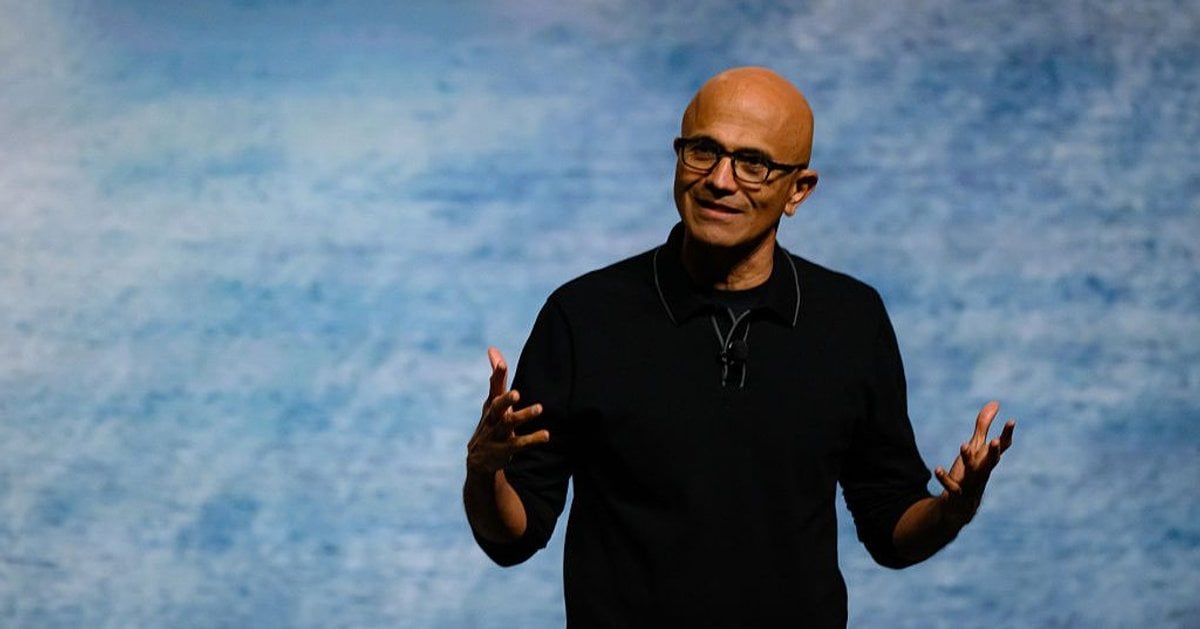
    Microsoft CEO Satya Nadella has publicly challenged the contradictory messaging from AI leaders who warn about job displacement while simultaneously pushing for unlimited expansion of costly AI systems. In an interview with The Wall Street Journal, Nadella highlighted a growing disconnect that he believes undermines public trust and threatens the long-term viability of AI.

    “You can’t warn that AI is coming for jobs and sell unlimited expansion in the same breath,” Nadella stated. He argued that companies demanding vast computational resources for AI development while cautioning about workforce displacement create an untenable position that erodes social permission.

    Nadella urged businesses to rethink their approach, advocating for AI as a tool to enhance rather than replace employees. He described a combination of human capital and “token capital”—the computational resources powering AI systems—as a “recipe” for effective collaboration. Success, he emphasized, depends on demonstrating tangible economic benefits rather than theoretical promises.

    Addressing cost barriers, Microsoft has launched more affordable AI models and introduced Copilot Cowork, an autonomous agent that uses cheaper models for larger tasks. The company has even considered hosting a version of DeepSeek, the cost-effective Chinese model criticized by competitors for allegedly copying proprietary technology.

    Other industry leaders have echoed concerns about AI’s workforce impact. Anthropic CEO Dario Amodei warned that AI could eliminate many entry-level white-collar jobs, while OpenAI’s Sam Altman has publicly acknowledged the risk of redundancies. Nadella, however, stresses that restructuring existing roles is the primary goal, stating, “Companies have to offer people real economic opportunity.”