Tag: xAI

  • Elon Musk Ditches Luxury for an Airstream Trailer at xAI’s Memphis Data Center

    Elon Musk Ditches Luxury for an Airstream Trailer at xAI’s Memphis Data Center

    Elon Musk is swapping five-star comforts for a compact Airstream trailer while he oversees xAI’s rapidly expanding artificial intelligence operations in Memphis. The Tesla and SpaceX CEO described the trailer as his “palace” during a recent appearance on the All-In podcast, where he was joined by SpaceX President and COO Gwynne Shotwell.

    A Hands-On Approach in Memphis

    Musk has been staying near xAI’s Colossus supercomputer facility, which supports the company’s Grok AI models. According to reports, he has lived in the trailer for more than 10 days, choosing the basic setup so he can be close to the project instead of commuting from a conventional residence.

    The exact Airstream model was not disclosed, but these compact trailers typically include sleeping quarters, a kitchen, and a bathroom — enough to keep the billionaire close to the action without sacrificing basic comforts.

    Why Memphis Matters to xAI

    xAI began building the original Colossus facility in 2024 and is now working to expand its computing capacity in Memphis. Musk said he needed to be on site to help bring additional GPUs online, describing the trailer as his base near the infrastructure work.

    During the podcast, Shotwell noted Musk’s habit of staying close to major projects and confirmed he has been helping with construction work in Memphis. The expanded facility is expected to support the next wave of Grok AI development and reinforce xAI’s position in the competitive artificial intelligence race.

    “I needed to be in Memphis to work on additional GPUs online,” Musk said, explaining why he chose the Airstream over a more traditional stay.

    Musk’s temporary living arrangement underscores how the project has become a personal priority for the billionaire as xAI pushes forward with one of the largest AI computing installations in the region.

  • Indian Startup Sarvam AI Builds 1-Trillion-Parameter Model to Compete Globally

    Indian Startup Sarvam AI Builds 1-Trillion-Parameter Model to Compete Globally

    Bengaluru-based artificial intelligence startup Sarvam AI is making a bold bet on a massive 1-trillion-parameter foundation model, signaling its ambition to compete with global AI leaders. The announcement came during the company’s Epoch 2026 event, where co-founder Pratyush Kumar outlined the model’s focus on coding, cybersecurity, scientific research, and simulation workloads.

    Developed from scratch, the model aims to enable developers and enterprises to build AI solutions tailored specifically for Indian languages and use cases. At the same event, Sarvam AI revealed pricing for its earlier Sarvam 105B model: $0.80 per one million blended tokens—significantly cheaper than comparable global large language models (LLMs).

    To bolster its efforts, the startup announced partnerships with three Indian Institutes of Technology (IITs) and two state governments for pilot projects in education and public service delivery. Additionally, the company has brought on board Devendra Singh Chaplot, a former xAI researcher, as a part-time advisor. Chaplot previously contributed to founding teams at Mistral AI and Mira Murati’s Thinking Machines Lab.

    However, industry observers question whether building ever-larger models remains the right strategy. The AI landscape has shifted toward efficiency, with many companies adopting architectures like Mixture-of-Experts (MoE) to deliver strong performance with lower computational costs. A large model alone will not guarantee success—Sarvam must also develop practical tools that solve real-world problems for users and businesses.

    While hiring a former xAI researcher and launching the 1-trillion-parameter project are significant steps, the startup’s biggest challenge will be turning these ambitious ideas into trusted, everyday products.

  • OpenAI Elevates Indian-Origin Engineer Uday Ruddaraju to Chief Technology Officer of Compute

    OpenAI Elevates Indian-Origin Engineer Uday Ruddaraju to Chief Technology Officer of Compute

    OpenAI has promoted Indian-origin technology executive Uday Ruddaraju to the role of Chief Technology Officer (CTO) of Compute, marking a significant leadership milestone at the AI frontrunner. The appointment, announced nearly a year after Ruddaraju joined from Elon Musk’s xAI, positions him to steer the company’s compute infrastructure as it scales next-generation AI systems.

    In a LinkedIn post, Ruddaraju described his first year at OpenAI as “incredibly rewarding” and expressed enthusiasm for leading the compute division during a period of rapid expansion. As CTO of Compute, he will oversee the massive computing power required to train and deploy frontier models, including GPT-5.6. His team is focused on scaling capacity while strengthening compute, networking, storage, and machine learning systems.

    From Hyderabad to Silicon Valley

    Ruddaraju’s journey began in Hyderabad, India, where he earned a Bachelor’s degree in Computer Science from Chaitanya Bharathi Institute of Technology (CBIT). During his undergraduate studies, he interned at Amazon Web Services. He then moved to the United States for a Master’s degree in Computer Science at the University of Minnesota. His professional career includes stints at eBay and Robinhood before joining xAI as Head of Infrastructure Engineering. In 2025, he moved to OpenAI, rising from Head of Compute and Infrastructure to the CTO of Compute role.

    Strategic Importance for OpenAI

    Ruddaraju’s elevation underscores OpenAI’s push to strengthen its computing backbone as AI models grow more complex. The company is actively hiring talent in distributed systems, hardware engineering, manufacturing, and large-scale data center development to support future AI growth. His appointment also highlights the growing influence of Indian-origin technology leaders in shaping the future of artificial intelligence.

    Ruddaraju’s roadmap includes significantly scaling compute infrastructure to meet the demands of increasingly powerful AI systems, positioning OpenAI to maintain its competitive edge in the global AI race.

  • Musk and Altman Exchange Public Insults as AI Rivalry Heats Up

    Musk and Altman Exchange Public Insults as AI Rivalry Heats Up

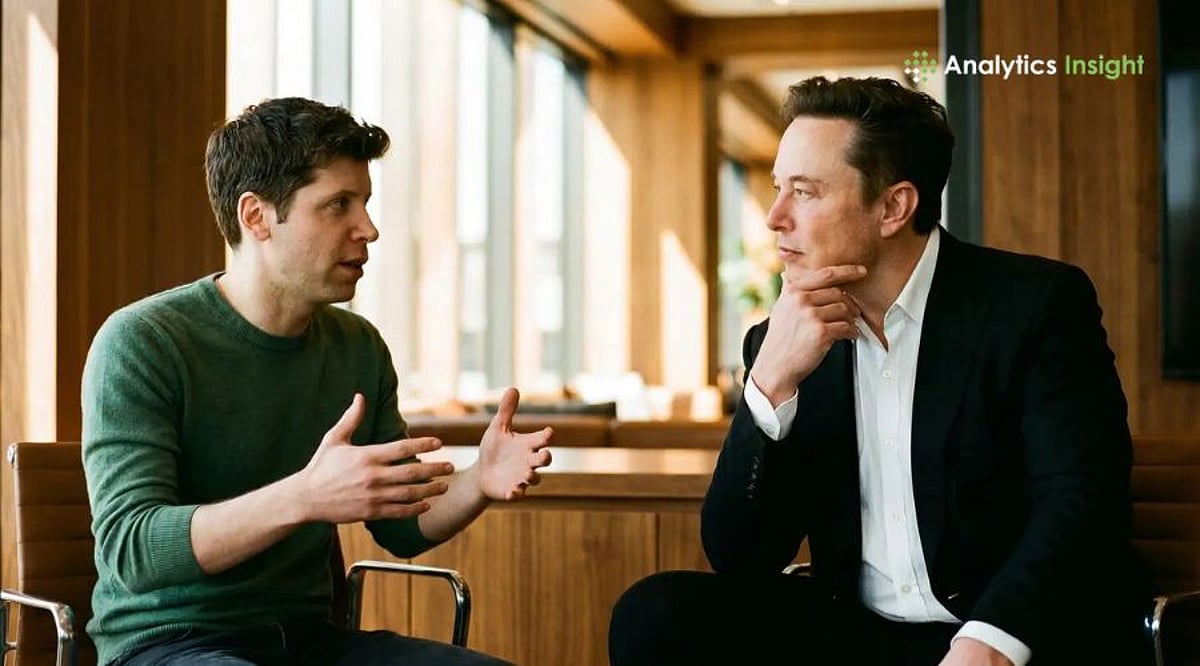
    The long-standing public feud between Elon Musk and OpenAI CEO Sam Altman escalated again this week, with both leaders trading pointed insults on X (formerly Twitter). The exchange, which began on July 11, quickly went viral, drawing millions of views and sparking widespread discussion across the platform.

    The latest round started when Musk reshared an old post labeling Altman a “scammer,” adding his own comment: “He takes scamming to a whole new level.” Altman responded with a humorous jab at billionaires who dream of building cities on other planets—a clear reference to Musk’s SpaceX ambitions. Altman’s post read: “homeboy you’re the one selling public market investors on short-term space datacenters.”

    The exchange highlights the deepening rift between two of the most influential figures in technology. Musk co-founded OpenAI in 2015 but left the board in 2018; he now runs xAI, a competing artificial intelligence venture. Altman has led OpenAI through its meteoric rise, including the launch of ChatGPT and GPT-4.

    Beyond personal jabs, the spat reflects a fundamental philosophical divide. Musk has long championed making humanity a multi-planetary species through SpaceX. Altman, meanwhile, believes AI will be the most transformative tool ever created, reshaping work, education, science, and daily life. Their exchange essentially asked: which vision matters more—colonizing space or mastering intelligence on Earth?

    Social media users quickly turned the exchange into memes, screenshots, and reaction threads. The feud has become part of internet culture, with each new post generating more viral content than the last. What began as a business disagreement now plays out in real time on a global stage, where humor often travels faster than serious arguments.

    As both leaders push forward with competing AI initiatives—Musk’s xAI and Altman’s OpenAI—every public interaction between them draws intense scrutiny. This latest round shows that their rivalry is not just about technology, but about two competing visions for the future of humanity.

  • Tesla Limits Employee AI Tool Spending to $200 Per Week Amid Corporate Cost Reviews

    Tesla Limits Employee AI Tool Spending to $200 Per Week Amid Corporate Cost Reviews

    Tesla will cap employee spending on outside AI tools at $200 per week starting July 6, according to internal reports. The move comes as companies across the U.S. review rising workplace AI costs after pushing staff to adopt the technology. Grok, the AI system linked to Elon Musk’s xAI, is excluded from the limit, while higher spending will require special approval.

    Tesla Sets Weekly AI Spending Limit

    Tesla’s new rule places a weekly limit on staff use of external AI systems, including tools for coding, research, writing, and other workplace tasks. The cap is set at $200 per employee each week, with higher spending requiring approval. This marks a shift from earlier corporate pressure to increase AI adoption. Tesla and other companies had urged employees to use AI tools to raise output and speed up work. Musk said earlier this year that AI could make worker “output” get “nutty high.”

    However, AI use has become more expensive as workers rely on advanced tools and coding agents. These systems can run tasks continuously, retry failed steps, and consume large amounts of computing power. As a result, companies are now monitoring how much each employee spends. The cap also shows how firms are trying to separate useful AI work from routine or low-value use. Some employees may now have to choose cheaper tools or reserve AI use for tasks that need more support.

    Corporate AI Bills Face New Scrutiny

    Tesla is not alone in adding limits. Uber recently capped employee use of AI tools at $1,500 per month. Meta, Walmart, Coinbase, and AT&T have also moved to review or limit staff use of external AI systems, according to reports. The change follows a period when many companies pushed workers to use AI as much as possible. Some firms tracked usage through tokens, which measure how much an AI system processes. This trend became known as “tokenmaxxing,” as workers were judged by how much AI they used.

    Nevertheless, the approach created cost concerns. Reports say some companies spent their full annual AI budgets within a few months. In other cases, small groups of employees spent more on AI tools than larger teams. AI coding agents are one reason for the higher costs. Unlike a chatbot that replies once, an agent may call AI models many times while completing a task. That can raise bills quickly, even when the price of each computing unit falls. Meanwhile, companies are trying to balance adoption with expense control. The new limits do not signal a full pullback from AI use. Instead, they show that firms want clearer rules on how employees use paid tools.

    Musk Defends Long-Term AI Growth

    The cost controls come as investors debate whether heavy AI spending can produce enough business returns. Large AI infrastructure spending has helped lift parts of the stock market, but rapid corporate adoption remains central to that growth case. Responding to a post on X this week about a possible tech crash, Musk wrote, “There are always momentary dips, even in a rapidly growing economy.” He added that “the productivity gains from AI and robotics are so enormous” that the wider trend is “overwhelmingly up.”

    Tesla still wants to present itself as an AI-focused company. Musk has pointed to driverless technology and Optimus Robots as major parts of Tesla’s future. This week, he said Tesla had started making Optimus bots at its Texas factory. However, the company faces pressure in its main electric vehicle business. Tesla is competing with lower-cost Chinese EV makers, while demand in some markets has shifted. Even so, the company posted a 25% rise in quarterly sales this week after a rebound in Europe. The weekly AI cap shows that Tesla is still pushing AI use, but under tighter spending rules. For now, the company is asking staff to use outside AI tools with more control as corporate AI bills face closer review.

  • Elon Musk Dismisses SpaceX AI Smartphone Rumors as ‘Utterly False’

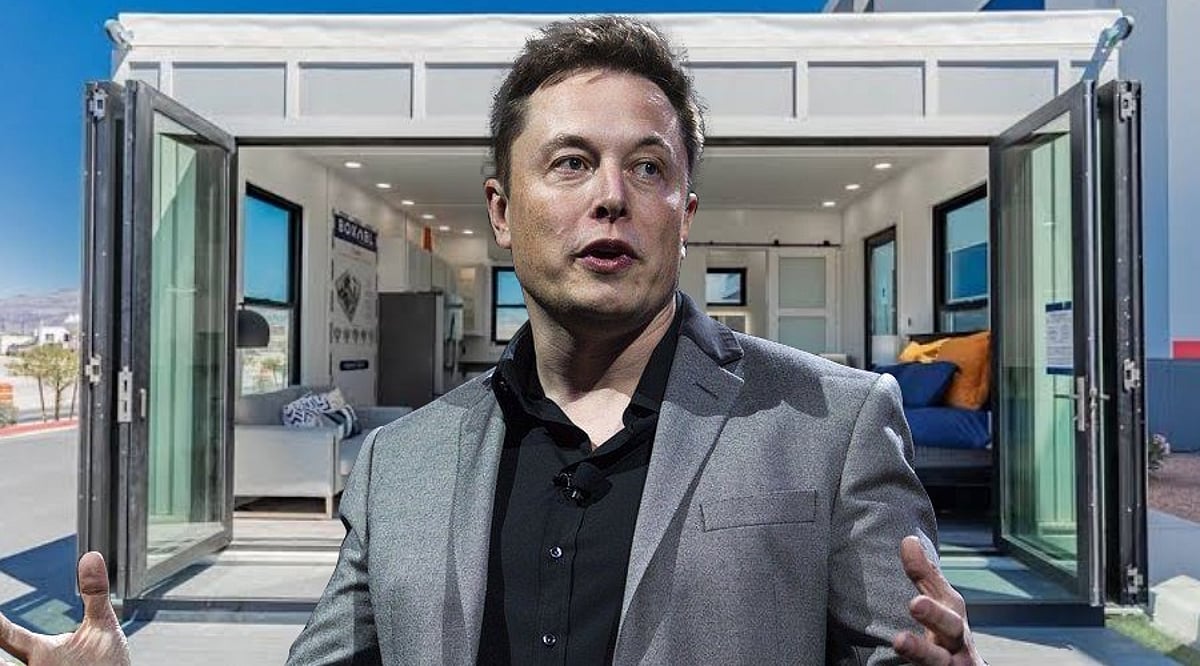
    Elon Musk Dismisses SpaceX AI Smartphone Rumors as ‘Utterly False’

    Elon Musk has publicly denied recent reports claiming that SpaceX is developing an AI-powered smartphone. The rumors, which gained traction after reports of a prototype AI device, have been firmly rejected by the billionaire entrepreneur.

    The speculation began when The Wall Street Journal reported that SpaceX was working on an AI handheld device powered by Qualcomm’s Snapdragon chipset and running a custom operating system with AI capabilities from xAI, Musk’s AI company. The report also suggested that SpaceX had shown an early prototype to investors ahead of its record-breaking IPO. Days earlier, the Financial Times reported that SpaceX COO Gwynne Shotwell had discussed launching a mobile service in the U.S. using the Starlink satellite network, further fueling the rumors.

    In response, Musk took to X (formerly Twitter) on July 1, 2026, posting a simple but definitive statement: “Utterly false.” This is not the first time he has denied such claims. Earlier this year, he refuted a Reuters report, stating that SpaceX is “not developing a phone.” During an event in Pennsylvania last year, Musk made his position clear: “The idea of making a phone makes me want to die. If we have to make a phone, we will, but we will aspire not to make a phone.”

    Despite the denial, the rumors underscore growing industry interest in dedicated AI hardware. OpenAI is also reportedly exploring purpose-built AI devices. Industry analysts believe that if OpenAI pursues such a device, Musk would want to compete. SpaceX and its sister company Tesla have the manufacturing expertise to mass-produce AI hardware, and SpaceX has signaled interest in expanding into wireless services via Starlink Mobile, potentially challenging Verizon and AT&T.

    Musk continues to focus on artificial intelligence, recently predicting that AI could surpass the combined intelligence of all humans within the next four to five years. While a SpaceX smartphone remains off the table, the broader AI hardware race is accelerating, with the potential to reshape how users interact with AI through purpose-built devices.

  • xAI Launches Grok 4.5 Beta: Musk Claims It Outperforms Anthropic’s Claude Opus

    xAI Launches Grok 4.5 Beta: Musk Claims It Outperforms Anthropic’s Claude Opus

    Elon Musk’s artificial intelligence company, xAI, has introduced Grok 4.5 in private beta, marking the latest update to its flagship chatbot. The company claims the new model delivers stronger performance than rival AI systems, including Anthropic’s Claude Opus, across several benchmarks.

    The release comes as AI companies continue to roll out increasingly capable models, with firms racing to improve reasoning, coding, and conversational abilities while attracting enterprise customers.

    Grok 4.5 Enters Limited Testing

    According to xAI, Grok 4.5 is currently available only to a select group of testers. The company said the private beta will help evaluate the model’s performance before a wider rollout. Musk described the model as the company’s most advanced AI system so far, saying it offers improvements in reasoning, factual accuracy, and response quality. He also claimed the latest version performs better than competing frontier models in several evaluation tests. However, xAI has not released detailed benchmark data or independent validation to support all of its performance claims.

    Competition in AI Heats Up

    The launch adds yet another chapter to the fast-moving AI race, where companies like OpenAI, Anthropic, Google, and Meta keep releasing new models at a rapid pace. Over the past few months, developers have been fixated on sharpening coding help, multimodal skills, extended-context reasoning, and enterprise setups. Performance comparisons have become a major marketing focus, with AI firms regularly releasing benchmark results to show they are improving faster than others.

    Analysts point out that even if benchmark scores provide a way to judge progress, real-life results often hinge on how well models actually handle everyday business and consumer tasks.

    xAI Expands Its AI Ambition

    Since developing Grok, xAI has been increasing the bot’s functionality on the X platform while making substantial investments in computational technology and large language models. xAI presents Grok as a competing solution to current AI assistants for its real-time information provision and better conversational capabilities. The new release of Grok 4.5 shows that xAI continues competing with other AI firms as the demand for advanced generative AI solutions grows rapidly.

    The wider launch is expected after testing is complete and feedback from beta users is received. xAI has provided no official timeline; however, the update reveals that competition among top AI firms is not weakening.