Tag: XRP Ledger

  • XRP Bullish Sentiment Surges as XRP Ledger Exceeds 8 Million Active Accounts

    XRP Bullish Sentiment Surges as XRP Ledger Exceeds 8 Million Active Accounts

    The XRP Ledger (XRPL) has achieved a significant milestone, surpassing 8 million activated accounts for the first time. This growth comes amid rising bullish sentiment, increased DeFi activity, and a notable shift in stablecoin liquidity toward alternative Layer-1 networks.

    Market Rotation Fuels Altcoin Interest

    Current market data indicates conditions typical of an altcoin season. While Bitcoin dominance has risen above 59% for three consecutive weeks, Ethereum dominance has also gained, lifting the ETH/BTC ratio by over 10% in the past three weeks. This suggests capital is rotating beyond Bitcoin, spreading to other major cryptocurrencies.

    According to AMBCrypto, fear of missing out (FOMO) surrounding XRP and Ethereum has reached its highest level in five weeks, while Bitcoin sentiment remains neutral. XRP currently leads Ethereum in bullish discussions, with a 3.02-to-1 bullish-to-bearish comment ratio compared to Ethereum’s 2.31-to-1.

    On-Chain Activity Strengthens

    The XRP/BTC ratio has been consolidating around the 0.000015 level for nearly 10 weeks, indicating potential long-term accumulation rather than short-term speculation. Meanwhile, on-chain metrics are improving. DeFiLlama data shows total value locked (TVL) on XRPL increased by over 3% in the last 24 hours, while stablecoin supply on the network grew by more than 6%, bringing nearly $1 billion back into the ecosystem.

    In contrast, over $2 billion in stablecoins left the Ethereum network during the same period, suggesting liquidity is shifting toward XRPL and other Layer-1 alternatives. If this trend continues, XRP could benefit from stronger network participation beyond mere sentiment.

    XRPL Crosses Historic User Milestone

    The XRP Ledger has officially exceeded 8 million activated accounts, reaching 8,000,688 wallets. According to XRPScan, these wallets collectively hold 67.526 billion XRP, representing the token’s circulating supply. Unlike previous reports that counted all ever-created wallets (including deleted ones), this milestone counts only activated accounts, marking the first official time the network has achieved this level of active participation.

    With improving DeFi metrics, growing stablecoin liquidity, and extended XRP/BTC consolidation, the network is drawing increased attention. Investors will watch closely to see if these fundamentals translate into sustained market strength.
  • XRP Price Stabilizes Near $1.08 as CLARITY Act Progress and Ripple’s European Expansion Drive Optimism

    XRP Price Stabilizes Near $1.08 as CLARITY Act Progress and Ripple’s European Expansion Drive Optimism

    XRP traded near $1.08 on July 13, 2026, as investors weighed improving long-term developments against continued uncertainty across the wider cryptocurrency market. The digital asset remained within a trading range of $1.00 to $1.13 while traders awaited fresh catalysts that could shape the next price move.

    At the same time, regulatory progress, Ripple’s expanding institutional presence, and growing XRP Ledger adoption supported the long-term outlook, although macroeconomic concerns continued to limit stronger market momentum. As a result, many participants maintained a cautious approach while monitoring upcoming regulatory and market events.

    CLARITY Act and European Approval Draw Market Attention

    The proposed CLARITY Act remains one of the most closely watched developments for XRP. The legislation aims to establish a regulatory framework for digital assets in the United States. It previously cleared the Senate Banking Committee and was expected to reach the full Senate in July.

    The latest update indicates that the full Senate vote is now scheduled for August. According to the available information, the legislation could classify XRP as a digital commodity across most markets if lawmakers approve the measure.

    Although the delayed vote slowed immediate market expectations, many analysts continue to identify the legislation as a major long-term event for XRP. Meanwhile, investors continue tracking its progress as they assess future regulatory clarity. Could regulatory certainty become the catalyst that shifts XRP out of its current trading range?

    Besides developments in the United States, Ripple secured full Markets in Crypto-Assets (MiCA) authorization in Luxembourg. Consequently, the company can now operate within a regulated framework across member countries of the European Economic Area.

    Institutional Activity Supports XRP Ledger Growth

    Institutional participation continues to support XRP alongside expanding utility across the XRP Ledger ecosystem. The network increasingly serves payment services, liquidity management, and institutional transactions.

    At the same time, tokenization of real-world assets has become one of the fastest-growing applications on XRPL. Ripple’s RLUSD stablecoin also supports settlements across the ecosystem while providing additional liquidity for enterprise digital asset payments.

    Furthermore, Ripple continues expanding its on-demand liquidity services throughout Asia, Latin America, and other regions. These services allow banks and payment providers to settle cross-border transactions without maintaining pre-funded accounts.

    Ripple Prime, together with custody and treasury management services, also continues to add institutional clients. During the past month, spot XRP ETFs recorded inflows between $1.4 billion and $1.5 billion, although weekly inflows and outflows continued as investors responded to changing market conditions. Large wallets also continued accumulating XRP during market pullbacks. Even so, the available information indicates that prices may remain restrained without stronger bullish sentiment.

    Macro Conditions Continue to Shape Market Direction

    XRP continues moving alongside broader cryptocurrency market conditions. The token also remains closely correlated with Bitcoin, linking its short-term performance to overall digital asset sentiment. Meanwhile, expectations that U.S. interest rates could remain higher for longer continue supporting the U.S. dollar while reducing demand for higher-risk assets, including cryptocurrencies.

    Elsewhere, the reported agreement reached during U.S. and Iran talks may reduce geopolitical uncertainty and broader market volatility. Even so, the information suggests that any direct benefit for crypto assets could remain limited.

    Looking ahead, market participants continue monitoring several developments, including progress on the CLARITY Act, institutional positioning through spot XRP ETFs, growth in RLUSD adoption, rising XRPL transaction activity, Ripple’s European expansion following MiCA implementation, and future comments from the U.S. Federal Reserve regarding monetary policy.

    What’s Next?

    XRP price remained near $1.08 as investors balanced regulatory progress, Ripple’s European expansion, and growing XRP Ledger adoption against broader macroeconomic uncertainty. Market participants continue watching the CLARITY Act, Spot XRP ETFs, RLUSD growth, and Federal Reserve policy for the next major catalyst.

  • XRP Ledger Hits $4B in Tokenized Assets: How It Challenges Ethereum and BNB Chain

    XRP Ledger Hits $4B in Tokenized Assets: How It Challenges Ethereum and BNB Chain

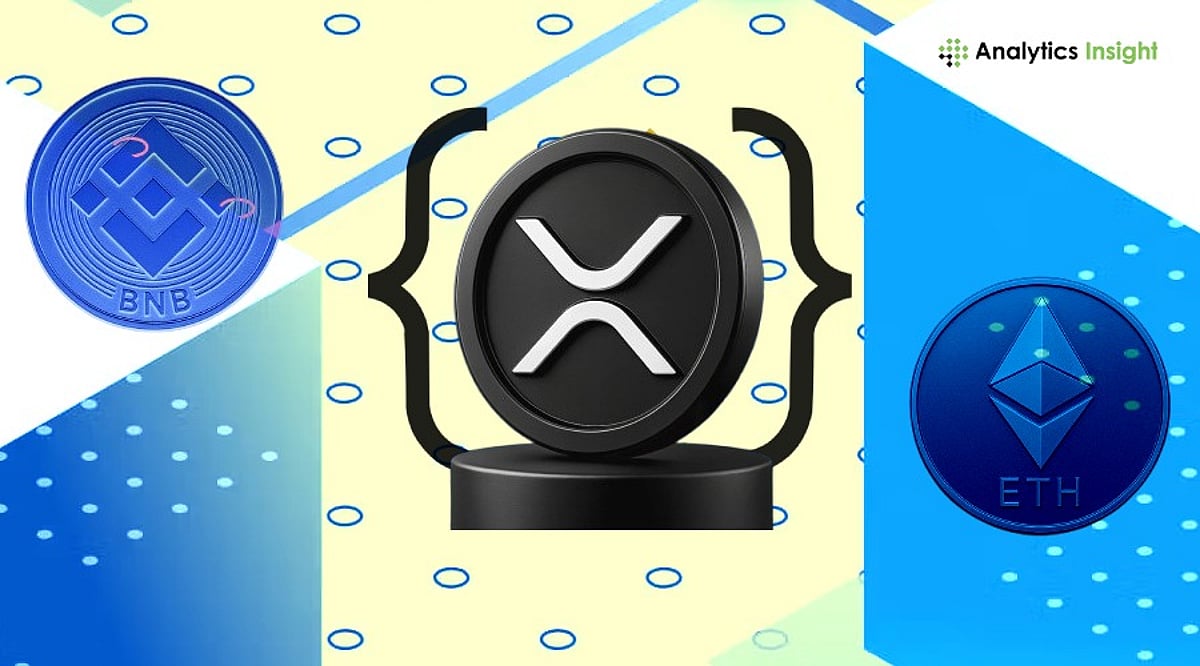
    The XRP Ledger (XRPL) has achieved a remarkable milestone, with the value of tokenized assets on its network surpassing $4 billion. This represents a dramatic increase from approximately $150 million just one year ago, placing XRPL among the top blockchain networks for real-world asset tokenization and intensifying competition with established platforms like Ethereum and BNB Chain.

    Tokenized assets are blockchain-based digital representations of real-world financial instruments, such as bonds, stocks, real estate, and investment funds. The rapid growth on XRPL underscores rising institutional confidence in blockchain technology for faster, cheaper, and more transparent financial transactions.

    Explosive Growth in One Year

    The leap from $150 million to over $4 billion within twelve months highlights the accelerating adoption of XRPL for tokenization. This growth is driven by a combination of institutional interest, network upgrades, and enterprise demand. Financial institutions are increasingly turning to XRPL for its low transaction costs, high-speed settlement, and robust infrastructure.

    Institutional Adoption Fuels Expansion

    Major financial organizations are leveraging XRPL to tokenize government bonds, treasury products, and investment funds. The network’s established reputation in digital payments, combined with its efficient design, makes it an attractive choice for institutions seeking modern financial solutions. This institutional push has been a key catalyst for the surge in tokenized asset value.

    Network Improvements Support Growth

    Recent upgrades, including the introduction of Multi-Purpose Tokens (MPTs), have enhanced XRPL’s ability to support regulated financial assets and enterprise requirements. These features simplify the issuance and management of digital versions of traditional financial products. Stronger stablecoin activity and broader ecosystem participation further bolster the network’s appeal.

    Implications for Ethereum

    Ethereum remains the dominant force in asset tokenization, thanks to its extensive developer community, smart contract capabilities, and mature DeFi ecosystem. However, the rise of XRPL introduces new competition. Some enterprises may prefer XRPL for its lower fees and faster settlement, especially for regulated financial products. Despite this, Ethereum’s rich ecosystem of interconnected applications, such as lending platforms and decentralized exchanges, gives it a significant advantage.

    Implications for BNB Chain

    BNB Chain has built its reputation on low fees, fast speeds, and a strong retail user base, making it a hub for DeFi and trading. The growth of XRPL is likely to increase competition in institutional tokenization rather than retail finance. BNB Chain remains well-positioned for consumer-focused blockchain services, while XRPL attracts enterprise-level, regulated asset tokenization. Both networks may serve distinct niches in a multi-chain future.

    A Multi-Chain Future

    This milestone does not signal the end of Ethereum’s leadership. Instead, the blockchain industry is moving toward a multi-chain landscape where different networks excel in different areas. Ethereum leads in smart contracts and DeFi, XRPL strengthens in enterprise payments and regulated tokenization, and BNB Chain continues to serve retail users. This specialization allows each network to thrive without displacing others.

    Why This Matters

    XRPL reaching $4 billion in tokenized assets is a clear signal that Wall Street seeks specialized, high-performance infrastructure for digital finance. The rapid growth demonstrates that the market is ready for a multi-chain ecosystem where each network dominates specific use cases, rather than a single platform ruling everything.

    FAQs

    1. What are tokenized assets?
    Tokenized assets are blockchain-based digital certificates representing real-world financial products like bonds, stocks, and real estate, enabling seamless digital trading.

    2. Why has XRP Ledger grown so quickly?
    Rapid growth is driven by institutional adoption, ultra-low transaction costs, high-speed settlements, and network upgrades tailored for enterprise compliance.

    3. Will XRP Ledger replace Ethereum?
    No. Ethereum remains dominant in DApps and smart contracts, while XRPL carves out a specialized niche in regulated institutional finance.

    4. How is BNB Chain affected?
    BNB Chain stays strong in retail finance and community apps, while XRPL attracts the enterprise side of tokenized asset markets.

    5. Why is real-world tokenization important?
    Tokenization modernizes finance with 24/7 market access, fractional ownership, lower costs, instant settlements, and full transparency on a public ledger.

  • XRP Climbs to $1.11 as Ripple Boosts RLUSD Minting on XRP Ledger

    XRP Climbs to $1.11 as Ripple Boosts RLUSD Minting on XRP Ledger

    XRP rose 1.33% to trade near $1.11 within 24 hours, outperforming Bitcoin’s 0.61% increase and the broader crypto market’s 0.97% rise. The token maintained a 9.37% weekly gain, though declining trading volume indicated limited buying pressure.

    Market data points to a broad crypto recovery as the primary driver of XRP’s move. The token tracked the wider market but posted stronger gains. No clear token-specific catalyst appeared in the price data, while trading volume fell 16.26%. Traders are monitoring whether XRP can sustain support between $1.05 and $1.10 and test resistance near $1.15.

    XRP Outpaces Bitcoin as Volume Falls

    XRP’s daily gain placed it ahead of Bitcoin and the crypto market. The relative strength suggests selective demand, although the move still followed the wider market direction. The Altcoin Season Index also dropped to 46, indicating that capital has not strongly shifted into altcoins.

    The lower trading volume limits confirmation of the advance. A daily close above $1.12 could support a move toward $1.15, while a drop below $1.08 may signal weaker momentum. Bitcoin’s next move will also be critical, as a broad market decline could pressure XRP without a new coin-specific event.

    Ripple Expands RLUSD Supply on XRP Ledger

    Ripple increased RLUSD minting across the XRP Ledger (XRPL) and Ethereum, issuing a total of $291.6 million. Approximately $225.8 million, or 77%, was minted on XRPL, while Ethereum accounted for about $65.8 million.

    On July 1, Ripple minted roughly $169.8 million and burned $150,000, with nearly all issuance on XRPL. On July 2, the company minted $121.8 million and burned $68.1 million across both networks. After the two-day activity, XRPL recorded a net supply increase of $167.7 million, while Ethereum added about $55.75 million.

    The latest issuance followed a large XRPL burn at the end of June. Ripple burned about $146.3 million on June 30, producing a net supply drop of $136.1 million that day. Part of the July minting therefore replaced supply removed earlier rather than creating entirely new growth.

    RLUSD’s total supply now stands near $1.634 billion. XRPL holds about $844.5 million, or 51.7%, while Ethereum holds approximately $789.83 million, or 48.3%. The figures show a near-even split, with recent minting activity leaning toward XRPL.

    Santiment Flags Deep XRP Holder Losses

    Santiment reported that XRP’s 30-day market value-to-realized value (MVRV) ratio fell to its weakest level since December 2020. The data shows the average active trader down about 47%, placing many recent buyers in a deep loss position.

    The analytics firm said ‘fear and frustration’ had reached rare levels that previously appeared before rebounds. Still, Santiment added that ‘weak MVRV readings alone do not guarantee a reversal.’ The statement frames the data as a possible relief-rally setup, not confirmation of a durable recovery.

    Social sentiment has also turned more negative, with bullish and bearish commentary moving closer to balance. Such readings can reduce selling pressure when many holders already sit at a loss. However, XRP still needs stronger volume, stable Bitcoin trading and fresh market demand to confirm any wider rebound.

    Some market watchers are tracking a possible move toward $1.40 if XRP holds support and buying interest improves. The key levels sit near $1.05 on the downside and $1.15 on the upside, while a daily close above $1.12 could provide the first technical sign of stronger momentum.

  • XRP Defends $1 Support as ETF Inflows and Network Activity Surge

    XRP Defends $1 Support as ETF Inflows and Network Activity Surge

    XRP remained near $1 after losing 1.05% during the latest session, while lower leverage and stronger network activity helped buyers defend support. The token fell from $1.0476 to $1.0366, then recovered after testing levels near $1.02. Traders now focus on whether the $1 base can support a move toward $1.08-$1.10.

    Leverage Reset Changes XRP’s Short-Term Setup

    Open interest dropped from a $1.3 billion peak to below $150 million, removing much of the leveraged positioning created during earlier rallies. Funding rates also turned negative as traders reduced long exposure. At the same time, long liquidations surged 832% above their three-month average. One candle cleared $6.7 million from leveraged positions, showing the scale of the recent market reset. Even so, XRP continued to hold above the $1 psychological level. The token traded between $1.0201 and $1.0476, while buyers repeatedly responded near the lower end of that range.

    Network Activity and RLUSD Trading Expand

    XRP Ledger activity improved during the second half of June. Daily active addresses rose from about 23,000 on June 14 to nearly 39,500 by June 27, marking a 72% increase. Meanwhile, Ripple-backed Evernorth said RLUSD has become a growth engine for XRP Ledger activity rather than a replacement for XRP. Its June 30 report ranked RLUSD among the ledger’s most-traded issued assets. RLUSD’s share of on-chain trading increased from below 1% to about 12% during 2026. The RLUSD/XRP pair also recorded about $900 million in trading volume over six months. Since launch, more than $2.5 billion has traded through RLUSD pairs on the XRP Ledger. The growth developed alongside rising address activity and continued demand for XRP-linked investment products.

    ETF Inflows Rise as Traders Watch Key Levels

    XRP spot ETFs recorded $15.34 million in inflows on June 29. The inflows extended institutional demand even as broader crypto sentiment remained weak. Selling pressure broke support near $1.0350 during the June 30 session before XRP tested $1.0249 and stabilized. Buyers then returned near the lows as trading volume increased sharply. Volume reached 92.73 million XRP at 01:00 UTC, about 134% above the 24-hour average. A later rebound lifted XRP from $1.024 to $1.038. During that rebound, volume rose to 3.88 million XRP as the price moved above resistance near $1.032. The next immediate barrier remains near $1.0460.

    XRP still trades below its major moving averages. The 20-day EMA stands near $1.11, followed by the 50-day near $1.20 and the 100-day near $1.31. The 200-day moving average remains near $1.52. Meanwhile, the 14-day RSI recovered to about 33, although momentum still sits below neutral levels. Bollinger Bands narrowed after June’s selloff, pointing to lower volatility. XRP still needs to reclaim the middle band near $1.12 before the technical structure improves. Immediate support sits between $1.0250 and $1.0350. A daily close below $1 would bring the $0.90-$0.85 area back into focus, while a break above $1.10 would strengthen recovery prospects.

    What’s Next?

    XRP continues to defend the $1 support level as leverage declines, network activity expands, and ETF inflows remain positive. However, the token must reclaim $1.08 to $1.10 to confirm stronger momentum. Traders should monitor the $1 floor closely since a sustained break could expose lower support zones.

  • XRP Holds Above $1 as ETF Inflows Increase and XRPL Lending Protocol Enters Testing

    XRP Holds Above $1 as ETF Inflows Increase and XRPL Lending Protocol Enters Testing

    XRP maintained its crucial $1 support level as leverage declined, network activity expanded, ETF demand continued, and Ripple opened its proposed XRPL Lending Protocol for developer testing. The token gained 1.59% during the session, although resistance near $1.10 prevented a confirmed technical recovery.

    XRP Defends $1 After Major Leverage Reset

    XRP rose from $1.0451 to $1.0544 within a 24-hour range of $0.0435. The token later consolidated between $1.03 and $1.06, leaving the market range-bound rather than signaling a broader recovery. It remains 19% lower for the month. Trading activity peaked on June 29 at 17:00 UTC, with volume reaching 86.5 million XRP—about 67% above the session’s average volume. Open interest across major exchanges dropped below 150 million after reaching 1.3 billion previously, removing much of the crowded leverage behind XRP’s earlier rally. Funding rates turned negative, and forced long liquidations cleared additional bullish positioning. The four-hour relative strength index recovered from oversold conditions to 46. XRP still trades below major moving averages, with resistance near $1.10, followed by the 50-day EMA around $1.20 and the 100-day EMA near $1.31.

    Network Growth and XRP ETF Inflows Continue

    Daily active addresses climbed from 23,000 on June 14 to nearly 39,500 by June 27—a 72% surge in two weeks. At the same time, XRP spot ETFs recorded an eighth consecutive week of inflows, bringing cumulative inflows to $144.7 million despite broader weakness across cryptocurrency investment funds. On June 26, XRP ETFs attracted $15.6 million in net inflows, while Bitcoin ETFs saw $444.5 million in outflows and ether funds lost $12.9 million. The strength in network use and sustained ETF inflows could push XRP through the $1.10 resistance zone, but price action has not yet confirmed that shift. Initial resistance sits at $1.06, followed by $1.09–$1.10. A move above $1.20 would provide a stronger recovery signal; a break below $1 could bring the $0.90–$0.87 region back into focus.

    Ripple Opens XRPL Lending Protocol Testing

    Ripple announced that developers can now test the proposed XRPL Lending Protocol in a dedicated environment. The system would introduce native borrowing and lending functions to the XRP Ledger via two technical specifications—XLS-65 and XLS-66. These would help financial firms structure credit agreements directly on the network. The Single Asset Vault creates a standard format for pooling assets, while the Lending Protocol manages loan terms, servicing, and repayment rules. If network validators approve both specifications, institutions could use tokenized real-world assets like money market funds and commodities as working capital for lending. Developers can experiment with the framework while XRP continues trading between key support and resistance levels.

    What’s Next for XRP?

    XRP continues to defend the $1 support level with declining leverage, strengthening network activity, and positive ETF inflows. The XRPL lending development adds another institutional use case. Traders should watch whether XRP can break above $1.10 and advance toward $1.20 in the coming sessions.

  • RLUSD Supply on XRP Ledger Surpasses Ethereum as XRP Utility Prospects Improve

    RLUSD Supply on XRP Ledger Surpasses Ethereum as XRP Utility Prospects Improve

    Ripple USD (RLUSD) has achieved a significant distribution milestone, with the XRP Ledger (XRPL) overtaking Ethereum as the stablecoin’s largest native network. On-chain data shows approximately $801.8 million in RLUSD on XRPL, compared to about $795.6 million on Ethereum, giving Ripple’s blockchain a narrow lead in the $1.6 billion RLUSD market.

    However, the shift is largely attributed to Ethereum token burns rather than a surge in new demand on XRPL. About three-quarters of the RLUSD removed over the past month came from Ethereum through redemptions and burns, making the ‘flippening’ partly a result of treasury operations rather than a clear migration of users or trading activity.

    RLUSD now ranks among the ten largest stablecoins, with daily trading volume reaching approximately $166 million. The stablecoin’s activity on XRPL can involve XRP directly, as users pay transaction fees in XRP and the network can route trades through XRP when direct markets between two assets lack liquidity. This could create additional XRP use across payments, exchange transfers, and decentralized trading, provided users actively move the stablecoin and create active markets.

    Meanwhile, RLUSD has expanded into Japan through SBI VC Trade after receiving regulatory clearance, with Ethereum serving as the initial network for the Japanese rollout. An XRPL Foundation representative noted that Ethereum’s early role was expected and that XRPL-based RLUSD could join the Japanese market later, though no fixed timetable has been confirmed.

    The central question remains whether RLUSD on XRPL will generate sustained trading, payment, and liquidity activity to drive XRP demand, or if the supply shift will remain a technical milestone without lasting external volume.