Tag: XRP

  • XRP Market Cap Crosses $100B as XRPL Permission Upgrade Enters Countdown

    XRP Market Cap Crosses $100B as XRPL Permission Upgrade Enters Countdown

    XRP has regained the $100 billion market cap milestone after a sharp 24-hour rally, while the XRP Ledger (XRPL) moves one step closer to activating a major new feature. Data from CoinGecko shows XRP rose 8% in the latest session, with the token testing resistance near $1.65 amid expanded trading activity.

    Market-Wide Crypto Strength

    The move placed XRP among the top performers in the broader cryptocurrency market. Other assets including Arbitrum, Flare, and Zcash also recorded meaningful gains during the same trading period.

    Even with the latest surge, XRP remains more than 55% below its all-time high from nearly a year ago. The gap underscores how much ground the token still needs to cover to regain its previous peak.

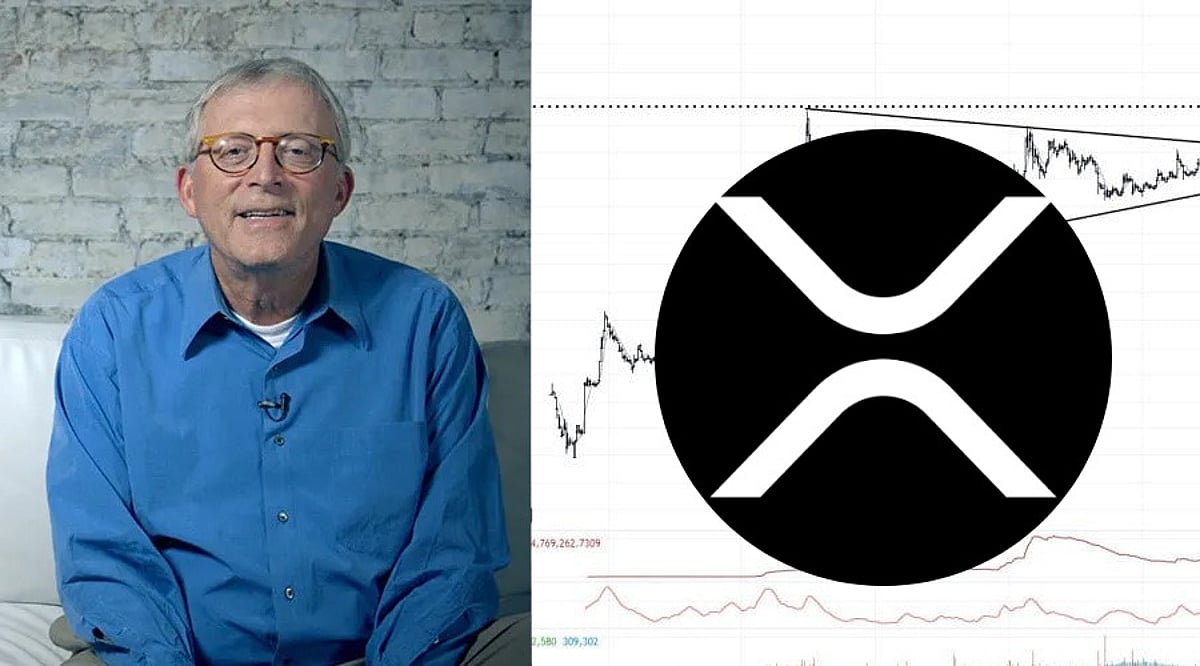
    Trader Peter Brandt has suggested XRP could eventually reach $5.40. Meanwhile, Coinbase data indicates that expected volatility around XRP has risen in recent sessions.

    ETF Inflows and Whale Activity Pick Up

    US spot XRP ETFs recorded $13.03 million in net inflows on September 22, according to CoinGlass. That followed a day with zero net inflows. Total cumulative inflows across those funds now stand at roughly $936.66 million.

    One fund accounted for about $12.47 million of the September 22 total, or around 95.7% of the day’s net buying, signaling that a single product drove most of the demand.

    On-chain data also points to rising activity. Santiment logged 1,917 XRP transactions worth at least $100,000 on Tuesday, the highest one-month count. The XRP Ledger added 3,647 new wallets during the same stretch.

    Notably, the burst in high-value transfers came while XRP was rallying, not during a selloff. That timing sets the current increase apart from the large transfers that often accompany market declines.

    XRPL Permission Upgrade Moves Toward October Activation

    The PermissionDelegationV1_1 amendment entered a 14-day activation countdown on September 21 after 29 of the XRP Ledger’s 35 trusted validators voiced support. If that support is maintained, the amendment could activate on October 5 at 11:18 UTC.

    The feature must keep the backing of at least 80% of validators, meaning 28 or more validators must stay supportive during the countdown. If support falls below that level, the activation clock resets.

    When active, the protocol will allow one XRPL account to grant limited authority to another account without giving up control of the primary keys. For example, a stablecoin issuer could authorize a compliance system to approve customers, while keeping its main keys offline.

    Another operations account could receive permission to process payments, but it would not be able to change keys or transfer permissions to a third party. Each delegated account can receive up to 10 permissions, and the main account can later modify or revoke them.

    This design mirrors traditional banking controls, where payment, compliance, and other functions run under separate authority structures.

    Revised Upgrade Follows Earlier Security Flaw

    PermissionDelegationV1_1 is the second attempt to introduce delegated permissions on the XRP Ledger. The original version contained a vulnerability that could have allowed an attacker to force another account to pay transaction fees without a valid signature.

    Repeated transactions with deliberately high fees could have drained a victim’s XRP balance. The issue stemmed from the order in which the software validated transactions: account permissions were checked before the system verified whether a signature was valid.

    As a result, some failed transactions could still charge fees before the invalid signature was detected. A community tester found the flaw on September 15, 2025, while testing outside the main network.

    Validators were told to reject the original amendment, and it never reached activation. The revised PermissionDelegationV1_1 proposal has now gathered enough initial support to start the countdown, but it still needs sustained validator backing through October 5 to become active.
  • Peter Brandt Highlights $5.40 XRP Price Target as 2026 Correction Reshapes Long-Term Outlook

    Peter Brandt Highlights $5.40 XRP Price Target as 2026 Correction Reshapes Long-Term Outlook

    Veteran trader Peter Brandt has pointed to $5.40 as a potential long-term target for XRP in a monthly chart shared on September 21. The projection is based on a technical structure that has formed over nearly a decade, although Brandt did not specify a timeline for the move.

    What the Monthly Chart Shows

    Brandt’s XRP/USD chart tracks roughly ten years of price action and highlights both a rising support line and a descending resistance line. The resistance line begins at the 2018 cycle peak, while support has been drawn from lows recorded in 2020 and subsequent pullbacks.

    Between those two boundaries, XRP spent several years compressing in a broad range. The 2021 rally produced a high below the 2018 peak, keeping the downward-sloping resistance intact. That pattern eventually led to a breakout in 2024–2025, with monthly candles climbing toward the $3.00–$3.50 zone — the highest sustained area since 2018.

    Current Price Position

    After the sharp advance, XRP entered a correction in 2026. The latest part of the chart shows a pullback unfolding in a smaller descending channel or wedge. In September 2026, XRP was trading near $1.4901, roughly 20.6% below its 18-month moving average of about $1.877. A faster moving average sits closer to price, but the longer-term trend measure remains above the token.

    Interpreting the $5.40 Objective

    Brandt described $5.40 as an eventual technical objective rather than an active trade. The figure is not drawn as a horizontal line directly on the chart, and the trader did not provide a completion date.

    From the chart’s displayed price near $1.49, XRP would need to gain approximately 262% to reach $5.40. Based on the slightly higher market price near $1.54, the required advance would be about 251%, placing the target at roughly 3.5 times the reference price.

    XRP was reported near $1.54 after gaining around 8.7% in 24 hours as Brandt’s chart drew attention. Even so, the token remains far below the projected level. The key tension in the setup is that XRP is still under its 18-month moving average and trading inside a declining structure from the 2025 highs, even as the broader multi-year formation supports a much higher long-term target.

    Brandt’s use of the word “eventual” leaves the timing open. For traders watching the trend, the main question is whether the current descending structure resolves before the next major monthly advance begins.

  • Bitrue Celebrates 8 Years with XRP-Centric 88,888 USDT Trading Competition

    Bitrue Celebrates 8 Years with XRP-Centric 88,888 USDT Trading Competition

    Bitrue is celebrating its 8th anniversary with a trading campaign that offers up to 88,888 USDT in prizes, daily USDT distributions, and a luxury cruise draw. The milestone also marks the exchange’s return to a key decision made at its 2018 launch: offering XRP as a base trading pair.

    Under the anniversary theme “8 Years of Trust. Built for What’s Next,” Bitrue will rank traders by cumulative volume across eligible pairs, with prizes awarded according to final leaderboard positions. As of writing, there are more than 100 XRP trading pairs across spot and futures markets on Bitrue. The exchange also operates an XRP Ledger validator, contributing to the network’s infrastructure.

    The 8th anniversary highlights Bitrue’s continued XRP ecosystem development alongside an expanding suite of tokenized real-world assets, including first-of-its-kind retail exposure to SpaceX through 3x leveraged tokenized stock tokens, and the launch of Bitrue AI, a free AI-powered trading copilot with Explainable AI built in.

    For the campaign, trading activity will earn users tickets throughout the anniversary period. Each day, Bitrue will divide 3,888 USDT among eligible ticket holders, with users who trade more receiving a larger share. The trading competition will use cumulative volume across eligible pairs to update its leaderboard in real time. The premier prize is a luxury cruise draw, awarded to users who meet top-tier trading thresholds; a winner will be announced when the event closes.

    Additional campaign mechanics include a Lottery Mission Center with milestone-based spin rewards, a daily check-in streak with escalating prize tiers, and a referral structure that rewards users for bringing friends into the anniversary event. For more details, visit Bitrue’s official channels.

    Disclaimer: This article is for informational purposes only and does not constitute investment advice. Cryptocurrencies are risky; always conduct your own research before investing.

  • Ripple and XRP in the Age of Agentic AI: Opportunities and Challenges for Autonomous Payments

    Ripple and XRP in the Age of Agentic AI: Opportunities and Challenges for Autonomous Payments

    AI Agents Need Payment Infrastructure

    Autonomous AI agents require payment systems that can handle frequent, small transactions without manual approval. Traditional systems are adapting, with Mastercard launching Agent Connect and partnering with Alchemy for AgentCard.

    Ripple’s Move into Agentic Payments

    Ripple launched the XRPL AI Starter Kit in June, enabling developers to build agents that create wallets, check balances, and make payments. The kit supports x402 for purchasing API calls and AI inference using XRP or RLUSD. The September update added support for Stripe and Tempo’s Machine Payments Protocol and the Open Wallet Standard.

    XRP and RLUSD: Different Roles

    XRP can be used for frequent small payments through XRPL payment channels, while RLUSD offers stable dollar-denominated value for agents that prefer predictable costs. RLUSD has $2.39 billion in circulation as of September 21.

    Does Agentic AI Guarantee Higher XRP Demand?

    Not necessarily. Agents can use RLUSD or other assets on XRPL, so network activity doesn’t directly translate to XRP demand. Ripple’s MPP integration is still in beta with no disclosed customers or volumes.

    Why This Matters

    Agentic commerce could generate millions of automated transactions. XRPL’s fast settlement and support for both XRP and stablecoins position Ripple to compete in the emerging machine-payment standards.

    Final Thoughts

    Agentic AI may create a new class of blockchain users: autonomous software. Ripple is positioning itself, but adoption is early. The impact on XRP will depend on developer usage and transaction volumes.

    Frequently Asked Questions

    1. How could AI agents use the XRP Ledger? AI agents can create wallets, check balances, and pay for APIs and digital services using XRPL’s fast settlement.
    2. What is the XRPL AI Starter Kit? A toolkit from Ripple for connecting AI agents to XRPL payments, supporting x402, Machine Payments Protocol, and Open Wallet Standard.
    3. What role could XRP play in agentic payments? XRP can serve as a native settlement asset, but agents may also use RLUSD or other assets.
    4. Why could RLUSD be useful for AI agents? It provides dollar-denominated value for predictable purchasing power in automated transactions.
    5. Will growth in agentic AI automatically increase XRP demand? Not necessarily; impact depends on adoption, transaction volumes, and asset preferences.

    Disclaimer: This article is for informational purposes only and does not constitute investment advice. Cryptocurrencies carry risk; always conduct your own research before investing.

  • How the XRP Ledger Enables Mining-Free Transactions Through Validator Consensus

    How the XRP Ledger Enables Mining-Free Transactions Through Validator Consensus

    The XRP Ledger (XRPL) is a public blockchain that processes XRP transactions without the need for energy-intensive mining. Instead, it relies on a consensus protocol where validators vote on transactions, confirming transfers within three to five seconds at a minimal cost.

    Separating the Network, Token, and Ripple

    The XRP Ledger serves as the blockchain where XRP transactions occur. XRP is the native cryptocurrency used to pay transaction fees. Ripple, a private financial technology company, develops payment products and holds a large amount of XRP, but it does not own the ledger. Independent developers maintain the open-source software, while universities, exchanges, and other organizations run servers.

    The network was developed by David Schwartz, Jed McCaleb, and Arthur Britto starting in 2011, with the goal of creating a payment system that did not depend on mining. The XRP Ledger launched in June 2012 with a fixed supply of 100 billion XRP. The founders later gave 80 billion XRP to the company that became Ripple, which placed much of its supply in escrow accounts releasing XRP on a fixed schedule. Critics have raised concerns about the concentration of tokens under one company.

    Validator Consensus Without Mining

    The XRP Ledger uses the XRP Ledger Consensus Protocol instead of proof-of-work mining. Validators review proposed transactions and vote on the next ledger version. Each validation round typically takes between three and five seconds, and a transaction becomes final once validators approve the updated ledger. Users do not need to wait for multiple block confirmations.

    Each server follows a Unique Node List (UNL) that identifies the validators it trusts when checking transaction proposals. Operators can create their own lists, though many use a recommended default. The system continues to operate when fewer than 20% of trusted validators act incorrectly. If the share exceeds that level, the network may stop reaching consensus. More than 80% would need to coordinate to approve an invalid transaction.

    Account Reserves and Destination Tags

    The XRP Ledger requires each active account to hold a base reserve of 1 XRP, with an additional 0.2 XRP required for certain ledger objects such as trust lines and open trading offers. This rule limits the creation of unused accounts and reduces unnecessary ledger data. Users cannot spend the reserved amount while the account remains active, so anyone moving XRP into self-custody should include the reserve in their planned balance.

    Destination tags are essential when sending XRP to an exchange. Many exchanges use a single XRP address for multiple customers, and the destination tag tells the exchange which customer should receive the deposit. A missing or incorrect tag may prevent automatic crediting, and the XRP may remain under the exchange’s control until support staff can identify the sender. Users should verify both the address and tag before approving a transfer.

    Fees, Self-Custody, and German Tax Rules

    A standard XRP Ledger transaction carries a minimum fee of 0.00001 XRP, which can rise during heavy network activity. The network destroys the fee instead of paying it to validators, discouraging spam and gradually reducing the total XRP supply.

    The ledger also includes a decentralized exchange where users can trade XRP and issued tokens through offers recorded on the network. Non-XRP tokens require trust lines because another party issues and backs them.

    Users who keep XRP on an exchange do not control the private keys. Self-custody gives them direct control but also makes them responsible for protecting the recovery seed. A personal XRP wallet normally does not require a destination tag.

    In Germany, selling XRP within one year of purchase may create a taxable private disposal gain. Crypto-to-crypto swaps can also count as sales. Investors should retain complete transaction records and seek qualified tax advice, as individual circumstances and future legal changes can affect the final treatment.

  • XRP Rebounds Above $1.40: Support Levels, ETF Demand, and Market Signals to Watch

    XRP Rebounds Above $1.40: Support Levels, ETF Demand, and Market Signals to Watch

    XRP has bounced back above $1.40 after a sharp weekly selloff, with lower open interest and heavy short liquidations shaping the recovery. The token had fallen from a weekly peak of $1.50 to below $1.30 after the U.S. Senate failed to advance the CLARITY Act in a 49–50 cloture vote. However, a broader crypto recovery—led by Bitcoin reclaiming $80,000—triggered a short squeeze that lifted several altcoins.

    Spot Volume and Short Liquidations Spike

    XRP spot volume reached approximately $1.36 billion in 24 hours as the price climbed about 7% to $1.41. Total turnover tracked by CoinMarketCap jumped nearly 90% to $4.9 billion. Meanwhile, short liquidations hit roughly $8.05 million, showing how quickly bearish positions came under pressure.

    The rebound followed a drop toward the $1.23–$1.30 area earlier in September. The move did not arrive with a fresh fundamental catalyst. Instead, it tracked the broader crypto recovery as Bitcoin pushed back above $80,000.

    Key Support and Resistance Zones in Focus

    Analyst Ali Martinez identified the $1.31–$1.35 range as the immediate support zone, with XRP repeatedly trading around that area after this week’s decline. A sustained hold would keep attention on $1.38–$1.40, followed by heavier resistance near $1.50–$1.54.

    The technical setup also includes a potential golden cross, as XRP’s five-day moving average approaches its 200-day moving average. Traders often treat that crossover as a bullish momentum signal, although it does not guarantee further gains.

    Can XRP defend $1.31–$1.35 while building enough spot demand to challenge the $1.50 area again? That question now sits at the center of the short-term price setup. Analysts also point to improving altcoin conditions as traders watch for capital rotation away from Bitcoin.

    Leverage Declines as Short Liquidations Rise

    Futures open interest dropped more than 20% within several days during this week’s deleveraging. That decline shows leveraged traders reduced exposure after regulatory and macro volatility. Lower leverage can weaken immediate momentum, but it can also reduce the risk of a liquidation cascade.

    Saturday’s rebound still carried a strong derivatives component. XRP shorts absorbed about $8.05 million in liquidations, while long liquidations reached roughly $2.36 million. Across the broader crypto market, leveraged liquidations totaled about $300 million as Bitcoin moved above $81,000.

    XRP futures volume remained near $5.71 billion, more than four times spot volume. Futures activity had also reached a six-month high in August before later volatility. That balance keeps leverage central to the next move even after open interest declined.

    The gap between futures and spot activity remains important because large derivatives positions can amplify price swings. Another leverage flush could reverse a fast rally, while lower open interest may reduce the risk of a similar cascade.

    ETF Flows and Utility Remain in the Spotlight

    Institutional demand remains visible through U.S. spot XRP ETFs, which have recorded more than $1.7 billion in inflows. That figure stands apart from the token’s recent price weakness and gives traders another measure of demand beyond short-term market moves.

    At the same time, 21Shares has pointed to a gap between XRPL utility growth and XRP price performance. Whale activity has also increased: about 1.6 billion XRP moved into Binance over 30 days, marking a six-month high, while exchange reserves reached a 69-day high.

    CryptoQuant analysts said those flows could reflect reallocation rather than direct selling. Even so, the larger Binance balance creates potential supply if holders choose to sell. Ripple has also added XRP and RLUSD to Stripe and Tempo’s AI agentic payments effort.

    Another derivative catalyst arrives next: the Moscow Exchange plans to launch XRP perpetual futures on September 22. That product will add another venue for XRP-linked derivatives as traders continue watching spot demand, leverage, support levels, and ETF flows.

    Conclusion

    XRP has recovered above $1.40 after its sharp selloff, with lower open interest and short liquidations shaping the rebound. Traders are now tracking $1.31–$1.35 support, resistance near $1.50, XRP ETF inflows, Binance whale activity, and the September 22 Moscow Exchange futures launch.

  • Ripple CEO Says Crypto Adoption Can Thrive Even as CLARITY Act Stalls in Senate

    Ripple CEO Says Crypto Adoption Can Thrive Even as CLARITY Act Stalls in Senate

    Ripple CEO Brad Garlinghouse says the crypto industry has more than one path to growth, even as the U.S. CLARITY Act remains stuck in Congress. The bill, designed to provide clearer federal rules for digital assets, failed to advance in the Senate last week.

    What Happened With the CLARITY Act?

    The Senate voted 49–50 against moving the CLARITY Act forward, well short of the 60 votes needed to proceed. The legislation would have clarified which federal agencies oversee different segments of the crypto market and given companies a more defined compliance roadmap.

    Garlinghouse: Technology and Adoption Matter More Than Legislation

    Speaking at a digital asset conference in Kansas City on September 15, Garlinghouse said crypto growth doesn’t depend on any single bill. He pointed to faster, more efficient blockchain technology as a key adoption driver.

    “The industry can keep building, and users can keep adopting the technology while lawmakers debate new rules,” Garlinghouse emphasized.

    Market Impact and Ripple’s Legal Battle

    The Senate setback added fresh uncertainty to U.S. crypto policy, and the market reacted sharply. Roughly $571 million in crypto long positions were liquidated across exchanges following the vote.

    Separately, Ripple has spent more than $150 million defending itself in an ongoing legal battle with the U.S. Securities and Exchange Commission. The company remains focused on expanding its cross-border payment solutions despite regulatory headwinds.

    Why This Matters for Crypto Companies

    Clearer rules would make it easier for companies to launch new products and services, but innovation isn’t on hold. Real-world use cases, lower costs, and faster settlement times continue to attract users regardless of legislative progress.

    Garlinghouse’s remarks underscore a broader industry sentiment: while clear regulation is welcome, the long-term growth of crypto isn’t dependent on any one piece of legislation.

  • XRP in 2026: 10 Key Facts Every Investor Should Understand

    XRP in 2026: 10 Key Facts Every Investor Should Understand

    XRP remains one of the most closely watched digital assets in 2026 as its ecosystem expands beyond cryptocurrency trading. Developments involving exchange-traded products, Ripple’s RLUSD stablecoin, tokenization, and institutional infrastructure have increased attention on the XRP Ledger. At the same time, the XRP Ledger (XRPL) continues to introduce features designed for regulated financial applications and faster digital-asset settlement. However, understanding these developments requires distinguishing between XRP, XRPL, and Ripple, as each plays a different role within the broader ecosystem.

    1. XRP and Ripple Are Different

    XRP is XRPL’s native digital asset, while Ripple is a technology company building payments and digital-asset infrastructure. Ripple holds significant XRP, but the XRP Ledger operates as an open-source blockchain. Ripple is one participant in the broader XRPL ecosystem and does not own or operate the blockchain itself. XRP can also be transferred and used on XRPL independently of Ripple’s products and services.

    2. XRP Has a Fixed Maximum Supply

    XRP started with a fixed supply of 100 billion tokens. Unlike Bitcoin, additional XRP is not produced through mining. A small amount of XRP is permanently destroyed as transaction fees whenever activity occurs on the network. This means XRP’s total supply gradually declines rather than increasing through the creation of new tokens.

    3. Ripple Holds Significant XRP

    Ripple reported 37.66 billion XRP under its control, including 31.28 billion held in on-ledger escrow. Around 62 billion XRP had been distributed. The escrow mechanism releases XRP according to predefined ledger rules, with unused amounts potentially returned to escrow. Ripple’s holdings and XRP distributions remain closely watched since changes in circulating supply can influence market liquidity.

    4. XRPL Offers Fast Settlement

    XRPL transactions typically settle within seconds. This makes the network suitable for payments and asset transfers where faster settlement is important. Faster finality can reduce the time counterparties must wait before considering a transaction completed. This capability is particularly relevant for cross-border payments, tokenized assets, and other applications requiring rapid value transfers.

    5. XRPL Does Not Use Mining

    XRPL validators use a consensus process rather than Bitcoin-style proof-of-work. Consequently, transaction validation does not depend on energy-intensive cryptocurrency mining. Independent validators participate in reaching agreement over the ordering and validity of transactions submitted to the ledger.

    6. XRP Has US-Listed ETF Exposure

    Institutional access expanded after the Grayscale XRP Trust ETF began trading on NYSE Arca under ticker GXRP. SEC filings show the fund’s registration statement became effective in November 2025, while another post-effective registration became effective in April 2026.

    7. RLUSD Is Different from XRP

    Ripple USD is a dollar-backed stablecoin, whereas XRP’s market price fluctuates. Ripple reported USD 2.396 billion of circulating RLUSD and USD 2.518 billion in reserve funds as of September 3, 2026. Reserves are subject to monthly third-party attestations.

    8. Institutional Infrastructure Is Expanding

    XRPL is developing infrastructure for regulated financial activity. Permissioned Domains can define credential-based environments designed to support features including permissioned exchanges and lending applications.

    9. XRPL Development Continues

    XRPL version 3.2.0 arrived in June 2026, bringing maintenance changes and fixes affecting Single Asset Vaults, lending, permissioned DEX functionality, Multi-Purpose Tokens, and Permissioned Domains.

    10. Utility Does Not Guarantee XRP Gains

    Network development, ETF demand, and institutional adoption may affect XRP sentiment, but they do not guarantee price appreciation. Liquidity, circulating supply, regulation, and broader crypto-market conditions remain important.

    Why This Matters

    XRP’s 2026 investment narrative extends beyond price speculation. ETFs, RLUSD, and institutional XRPL infrastructure are widening access to the ecosystem, but investors still need to distinguish genuine network adoption from assumptions about future XRP price performance.

    Final Thoughts

    XRP’s ecosystem continues evolving through regulated investment products, stablecoins, and institutional blockchain infrastructure. These developments broaden potential XRPL use cases, but XRP remains a volatile crypto asset whose performance depends on both network fundamentals and wider market conditions.

    Frequently Asked Questions

    1. What is the difference between XRP, Ripple, and the XRP Ledger?

    XRP is the native digital asset of the XRP Ledger, while XRPL is the underlying open-source blockchain. Ripple is a separate technology company that develops payment, stablecoin, and digital-asset infrastructure using blockchain technology.

    2. What is the maximum supply of XRP?

    XRP was created with a fixed maximum supply of 100 billion tokens. Unlike Bitcoin, XRP is not mined, meaning additional tokens are not continuously created through a proof-of-work mining process.

    3. Does XRP have ETF exposure in the United States?

    Yes. US-listed investment products now provide investors with regulated exposure to XRP. The Grayscale XRP Trust ETF trades on NYSE Arca under the GXRP ticker, expanding access through traditional brokerage infrastructure.

    4. What is the difference between XRP and Ripple USD (RLUSD)?

    XRP is a market-priced cryptocurrency whose value fluctuates, while RLUSD is Ripple’s US dollar-backed stablecoin. RLUSD is designed to maintain dollar parity and is backed by reserve assets subject to third-party attestations.

    5. What could influence XRP’s performance in 2026?

    XRP can be affected by ETF demand, liquidity, circulating supply, regulation, broader cryptocurrency sentiment, and developments across XRPL. Growing network usage or institutional adoption may support activity but does not guarantee XRP price appreciation.

    Disclaimer: This article is for informational purposes only and does not constitute investment advice. Always conduct your own research before making any investment decisions.

  • XRP Ledger Sets Transaction Record as CLARITY Act Faces Senate Vote

    XRP Ledger Sets Transaction Record as CLARITY Act Faces Senate Vote

    XRP is back in the spotlight after the XRP Ledger recorded an impressive 3,254 validated transactions in a single block on September 14. This milestone coincided with the rollout of the fixCleanup3_3_0 amendment on mainnet. At the same time, traders are weighing mixed technical indicators while the US Senate prepares for a procedural vote on the CLARITY Act, which requires 60 votes to advance.

    XRP Ledger Hits New Single-Block High

    According to reports from Finance Biggo, the XRP Ledger achieved a new all-time high of 3,254 transactions in one block after the fixCleanup3_3_0 amendment went live. This surge in throughput highlights the network’s expanding capacity, which bolsters its technical credibility and makes it more attractive for transaction-heavy use cases.

    The record comes amid renewed market attention, but price action remains constrained. XRP is caught between supportive longer-term structure and short-term resistance, leaving traders uncertain about whether demand will strengthen further.

    Technical Indicators Mixed Near Resistance

    On the hourly chart, XRP is trading below the MA-20 at $1.4224 but remains above the MA-50 at $1.3847. The daily price also stays above the MA-200 at $1.2739, indicating underlying bullish structure. The Ichimoku Kijun line sits at $1.4337, forming immediate resistance.

    Momentum indicators are split: MACD shows a strong buy signal and ADX points to buying pressure, while RSI is at 47.913 and CCI along with Bull/Bear Power lean toward selling. Stochastic RSI is oversold, and the Awesome Oscillator remains neutral. This mixed picture suggests XRP could struggle to break higher without a clear catalyst.

    Garlinghouse Pushes for CLARITY Act Support

    Ripple CEO Brad Garlinghouse has urged US senators to back the latest version of the CLARITY Act. The Senate is set to hold a procedural vote on September 15, with 60 votes needed for advancement. Garlinghouse noted that lawmakers made significant compromises during negotiations, including a revised version with 126 changes requested by Democrats, covering ethics, digital assets, decentralized finance, banking, and enforcement.

    “Perfect can’t be the enemy of good,” Garlinghouse said. He added, “The world is watching and voters are watching. Now is the time to vote yes.” Treasury Secretary Scott Bessent also voiced support, stating the bill would help the US compete in digital assets while protecting community banks from stablecoin-related deposit risks. Bessent said it would grant him more authority if stablecoins cause deposit shifts away from community banks, tying the bill to the administration’s broader digital asset agenda following the GENIUS Act.

    Roundup

    XRP enters the September 15 Senate vote with a record transaction block and mixed technical signals. The CLARITY Act could gain traction if it secures 60 votes, with strong backing from both Garlinghouse and Bessent. Traders will be watching resistance near the $1.4337 Kijun level for any breakout or reversal.

  • XRP Plunges 10% as US Senate Blocks CLARITY Act, Triggering Broad Crypto Selloff

    XRP Plunges 10% as US Senate Blocks CLARITY Act, Triggering Broad Crypto Selloff

    XRP led major cryptocurrencies lower on Wednesday after the US Senate failed to advance the CLARITY Act, a bill aimed at providing clearer regulatory guidelines for digital assets. The token dropped nearly 10% to $1.30 during Asian trading, marking the steepest decline among major cryptocurrencies.

    Broader Market Weakens

    The broader crypto market also weakened following the procedural defeat. Bitcoin slipped nearly 3% to just above $76,000, while Ether dropped almost 5% to around $2,410. Solana declined 5% to just above $97, and dogecoin lost nearly 5%. Zcash and Hyperliquid’s HYPE each fell close to 4%. BNB and Tron recorded smaller declines of about 1% each. The moves followed a broad reduction in risk exposure across major digital assets.

    XRP drew particular attention due to its connection with banking-focused digital asset activity and the RLUSD stablecoin. The CLARITY Act sought to establish clearer rules covering digital assets and their use within traditional finance.

    Senate Vote Falls Short

    The Senate failed to advance the bill in a 49-50 cloture vote, according to CoinDesk. The measure needed 60 votes to proceed to debate, and several Republicans joined the opposition. Negotiators had prepared more than 600 pages of compromise language, but disputes over ethics provisions became a central obstacle before the vote.

    Michigan Democratic Senator Elissa Slotkin said the ethics safeguards were ‘simply too thin.’ She also raised concerns about CFTC staffing, money laundering controls, and terrorist financing provisions. Slotkin also pointed to crypto-related financial interests involving President Donald Trump, his children, and Cabinet members, forming part of broader Democratic objections to the legislation.

    Crypto Stocks Slide as Fed Decision Looms

    Crypto-related equities recorded even steeper losses than major tokens. Coinbase fell nearly 9% to $174.42, while Circle dropped more than 9% to $88.26. Galaxy Digital declined 8%, Gemini lost 7%, and Bullish and Riot Platforms each fell 5%. Robinhood, MARA Holdings, CleanSpark, IREN, and Core Scientific dropped between 3% and 4%.

    Attention now shifts toward federal regulators. The Securities and Exchange Commission continues work on its proposed Reg Crypto framework and rules covering tokenized securities. At the same time, markets await the Federal Reserve’s rate decision Wednesday. Traders placed the probability of a rate increase near 93%, while the 10-year Treasury yield hovered around 5%.