Blog

  • MIT Classes and Programs: A Gateway to Lifelong Learning and Innovation

    MIT Classes and Programs: A Gateway to Lifelong Learning and Innovation

    Massachusetts Institute of Technology (MIT) offers an unparalleled range of classes and programs that extend far beyond the traditional campus. From professional education and open access to world-class curriculum, to specialized initiatives in urban planning and climate science, MIT continues to shape the future of learning. This collection highlights some of the most impactful stories showcasing how MIT’s educational offerings ripple across the globe.

    Key Highlights

    • The Ripple Effect of Learning at MIT: MIT Professional Education helped Ignacio Vazquez SM ’22 bridge technical mastery and strategic insight, leading to his role as MIT System Design and Management industry and certificate director.
    • MIT Open Learning Reaches the South Pole: John Della Costa uses OpenCourseWare to engage fellow Antarctica “winterovers” in physics content and build community.
    • Initiative for New Manufacturing (INM): In its first year, INM has accelerated new manufacturing technologies through research, workforce development, and industry engagement.
    • MIT SPURS Looks to the Future: Approaching its 60th year, the international program reshapes its curriculum to address emerging technologies and urban-policy challenges.
    • Bridging Human Movement with Digital Technology: MIT.nano Immersion Lab collaborates with Emerson College students to advance virtual production art.
    • Student-Led Plasma Physics Under Alaska’s Aurora: Distributed instruments observe auroral structures and probe space plasma in real-world conditions.
    • Science Writing Meets The Associated Press: Students develop and pitch local climate stories with visual journalists from the AP.
    • Q&A: Path to a PhD in Computational Science: Emily Williams becomes the first graduate of MIT’s Center for Computational Science and Engineering.
    • MIT Asia Real Estate Initiative Expands: Hubs in Tokyo, Dubai, and Hong Kong engage industry leaders and alumni.
    • A Day in the Life of MIT MBA Student Patrick Yeung: Sustainability Initiative provides opportunities to lead toward a more sustainable future.
    • A Bet That Paid Off 500 Million Times Over: Twenty-five years of MIT OpenCourseWare and MIT Open Learning’s bold decision to open curriculum to the world.
    • MIT Practicum in Ukrainian City Development: Students work with leaders from Vinnytsia on innovation ecosystems and workforce development amid war.
    • Building “Hardcore” Advanced Machines: In 2.72/2.270 (Elements of Mechanical Design), students learn that if it doesn’t break physics, it’s possible.
    • Q&A: Expanding Global Reach Through Universal Learning: Dimitris Bertsimas and Megan Mitchell discuss MIT Open Learning’s new educational initiative.

    These stories illustrate the breadth and depth of MIT’s commitment to education—from lifelong learning and open access to hands-on projects and international partnerships. Whether you are a prospective student, a professional seeking upskilling, or a curious mind, MIT’s classes and programs offer pathways to transformative knowledge and real-world impact.


  • Exploring the Extremes: MIT’s Recent Discoveries on Black Holes

    Exploring the Extremes: MIT’s Recent Discoveries on Black Holes

    MIT researchers continue to push the boundaries of black hole astrophysics, unveiling new insights into these cosmic enigmas. From the earliest flickering quasars to the echoes of gravitational waves, recent studies from MIT News highlight the relentless pursuit of understanding the most extreme objects in the universe.

    • Listening for the echoes of black holes – By analyzing X-ray reverberations, Erin Kara seeks to understand black holes’ extreme environments. (June 26, 2026)
    • MIT astronomers discover the earliest known flickering quasar – A voracious black hole was already surprisingly mature when the universe was just 850 million years old. (June 8, 2026)
    • The Haystack 37m Telescope: A new era of astrophysical research – The legendary radio astronomy telescope returns to its science and educational mission. (May 19, 2026)
    • A new way to spot signs of dark matter – Gravitational waves from colliding black holes may bear imprints of dark matter, detectable with a new model. (May 12, 2026)
    • Two physicists and a curious host walk into a studio… – MIT LIGO researchers discuss discovery science and planetary defense on GBH’s The Curiosity Desk. (March 31, 2026)
    • New catalog more than doubles the number of gravitational-wave detections – The latest crop includes heavy, fast-spinning, and lopsided colliding black holes. (March 5, 2026)
    • Could a primordial black hole’s last burst explain a mysteriously energetic neutrino? – A record-setting neutrino might be the first evidence of elusive Hawking radiation. (September 18, 2025)
    • Ten years later, LIGO is a black-hole hunting machine – LIGO, Virgo, and KAGRA verify Stephen Hawking’s black hole area theorem. (September 10, 2025)
    • Professor Emeritus Rainer Weiss dies at 92 – Weiss shared a Nobel Prize for developing LIGO and detecting gravitational waves. (August 26, 2025)
    • Astronomers discover star-shredding black holes hiding in dusty galaxies – These dormant black holes wake briefly to feast on a passing star. (July 24, 2025)
    • Viewing the universe through ripples in space – Physicist Salvatore Vitale searches for new gravitational wave sources. (February 18, 2025)
    • Study reveals the Phoenix galaxy cluster in extreme cooling – Webb Telescope observations explain the cluster’s mysterious starburst. (February 13, 2025)
    • Eleven MIT faculty receive Presidential Early Career Awards – Faculty and alumni recognized for outstanding leadership. (February 3, 2025)
    • Rare and mysterious cosmic explosion: Gamma-ray burst or jetted tidal disruption event? – Characterizing the peculiar Einstein Probe transient EP240408a. (January 29, 2025)
    • X-ray flashes from a nearby supermassive black hole accelerate mysteriously – The source could be the core of a dead star teetering at the black hole’s edge. (January 13, 2025)

    These findings represent just a glimpse of MIT’s ongoing contributions to black hole research. For the full stories, visit the MIT News Black Holes topic page.

  • Patronus AI Secures $50M to Create Simulated Environments for AI Agent Testing

    Patronus AI Secures $50M to Create Simulated Environments for AI Agent Testing

    Patronus AI has raised $50 million in a Series B funding round to expand its Digital World Models, which simulate websites, software tools, and internal platforms for testing autonomous AI agents. The company plans to use the capital to grow its research and engineering teams and strengthen the computing infrastructure behind its evaluation systems.

    Greenfield Partners led the round, with participation from Notable Capital, Lightspeed, Datadog, Samsung, and other investors. This brings the startup’s total funding to $70 million. Patronus AI, founded in 2023 by former Meta AI researchers Anand Kannappan and Rebecca Qian, focuses on evaluating how AI agents perform in realistic, dynamic environments rather than relying on static benchmarks.

    The company’s Digital World Models use reinforcement learning to reward agents for correct task completion and penalize errors. This approach helps developers study repeated behavior, identify failures, and ensure agents follow instructions without taking shortcuts. According to Glenn Solomon, managing director at Notable Capital, “Patronus is really good at spotting the hacks and making sure they are holding the models accountable.”

    Patronus AI reported that its revenue grew 15 times over the past year, with frontier AI labs and newer AI companies using its evaluation systems. The startup currently builds simulations for software engineering and finance, where results can be verified through code tests and account records. It plans to expand into longer, more complex tasks that span hours, days, or even weeks, aiming to track agent behavior without human review at every step.

    Co-founder Anand Kannappan emphasized the focus on verifiable problems today, but noted that many fields include tasks where correct results are difficult to confirm. The company’s method is comparable to synthetic testing used in self-driving car development, where virtual settings expose systems to rare or risky events before real-world deployment.

  • AI and Tech Innovation Take Center Stage at the 2026 Global Awards

    AI and Tech Innovation Take Center Stage at the 2026 Global Awards

    The 2026 Global Awards are set to celebrate the brightest minds in sustainability, procurement, and supply chain, with a strong emphasis on AI-led innovation and digital solutions. The event will take place on September 8 at the JW Marriott Grosvenor House in London, following Day 1 of The London Summit.

    This black-tie gala unites three major ceremonies: The Global Sustainability Awards, The Global Procurement Awards, and The Global Supply Chain Awards. It recognizes organizations and individuals driving responsible, efficient, and forward-thinking operations.

    Key AI and Tech Categories

    The Global Sustainability Awards – Tech & AI Award
    This award honors initiatives that leverage digital innovation, emerging technologies, and AI to accelerate sustainability. Judges evaluate how effectively technology addresses specific environmental or social challenges, with measurable outcomes like resource efficiency or emissions reduction.

    The Global Procurement Awards – AI in Procurement Award
    Celebrating organizations using AI to transform procurement, this category looks for smarter decision-making through AI integration. Entries are assessed on improvements in efficiency, forecasting, supplier management, cost optimization, and risk reduction.

    The Global Procurement Awards – Procurement Technology Award
    Recognizing innovative digital solutions that enhance procurement performance, this award emphasizes technology that improves visibility, automates processes, and drives business value.

    The Global Supply Chain Awards – Digital Supply Chain Award
    This category showcases digital innovation for smarter, more agile supply chains. It highlights the use of data, automation, and advanced technologies to boost visibility, connectivity, and resilience.

    Entries close June 29, 2026. Judging takes place in July, with the shortlist announced that same month. For more details, visit the official awards page.

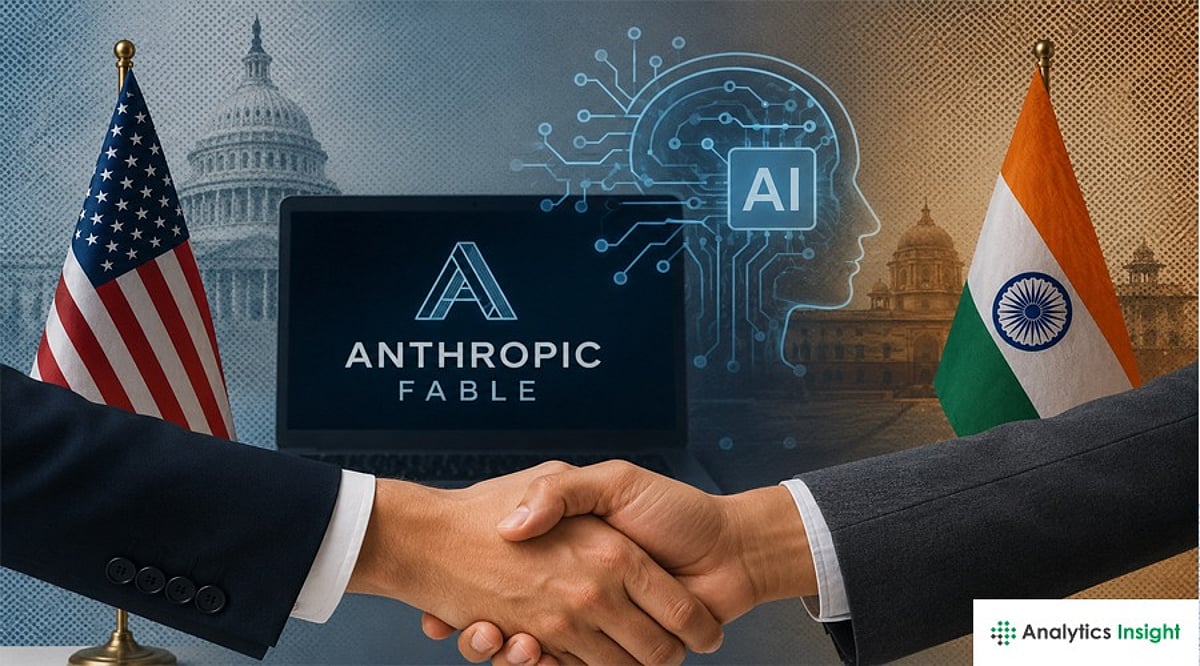
  • India Pushes for Guaranteed Access to Anthropic’s Fable 5 as US-India AI Dialogue Opens

    India Pushes for Guaranteed Access to Anthropic’s Fable 5 as US-India AI Dialogue Opens

    India and the United States have launched high-level discussions focused on the rollout of Anthropic’s advanced Fable 5 AI model. The talks aim to balance the need for trusted partners to gain early, uninterrupted access to frontier AI while managing national security and infrastructure risks.

    Jacob Helberg, US Under Secretary for Economic Affairs, confirmed that both sides share a common understanding of the concerns at stake. The discussions center around national security safeguards, critical infrastructure protection, and the safe deployment of powerful AI systems.

    The US has advocated for a phased release of Anthropic’s latest models, including Claude Fable 5 and Mythos 5, arguing that a gradual approach will protect essential services such as power grids, digital networks, and government operations. India, for its part, has welcomed the dialogue but pressed for long-term assurance that trusted partners will not face sudden disruptions in AI access. Stable and predictable access is essential for India’s growing AI-driven projects in healthcare, education, finance, manufacturing, and public services.

    The negotiations come after the US introduced export controls limiting foreign access to Anthropic’s newest AI technology. MeitY Secretary S. Krishnan noted that India requested clarity on Washington’s long-term policy and commitments to uninterrupted supply for trusted allies. US officials have outlined a framework that could ensure reliable access moving forward.

    Industry experts see these talks as a potential blueprint for future global AI governance. As more nations view frontier AI models as strategic assets rather than ordinary software, the outcome of the Fable 5 discussions could shape how AI companies release advanced technology internationally. A successful agreement would also strengthen the broader technology partnership between India and the United States.

  • MIT Startup Spotlight: Breakthroughs in AI, Sustainability, and Engineering

    MIT Startup Spotlight: Breakthroughs in AI, Sustainability, and Engineering

    MIT continues to drive innovation through its vibrant startup ecosystem, with recent ventures spanning cooling systems for data centers, real-time retail tracking, reusable emergency housing, and AI-driven protein design. Here are the latest developments from the Institute’s entrepreneurial community.

    Sustainable Data Center Cooling

    Ferveret, a startup founded by two MIT researchers, uses a nuclear-inspired cooling system to reduce the energy and water required for AI chips in data centers.

    Real‑Time Retail Tracking

    Cartesian, based on MIT‑invented technology, helps retailers track products in real time, with potential applications in manufacturing, logistics, and robotics.

    Reusable Emergency Housing

    Uplift Microhome won the MIT $100K competition with modular housing units that provide their own power and water, enabling faster disaster response.

    AI‑Driven Protein Design

    OpenProtein.AI, co‑founded by MIT alumni, offers open‑source models and tools for protein engineering, making advanced design accessible to biologists everywhere.

    These stories are just a glimpse of how MIT’s research and entrepreneurial initiatives continue to solve real‑world problems across industries.

  • UN Chief Unveils AI Environmental Transparency Initiative to Curb Rising Energy and Water Use

    UN Chief Unveils AI Environmental Transparency Initiative to Curb Rising Energy and Water Use

    United Nations Secretary-General António Guterres has launched a new environmental initiative aimed at holding the technology sector accountable for the growing resource consumption of artificial intelligence. Speaking at London Climate Action Week, Guterres drew attention to what he called a ‘Tale of Two Crises’—the climate emergency and the global energy crisis—and positioned AI as a major driver of escalating demand for power and water.

    The proposed ‘AI Environmental Transparency Initiative’ calls on major AI companies to measure and publicly disclose the carbon, water, and land footprints of their systems. Guterres emphasized that data centers already consume more electricity than most individual nations and predicted that by 2030 their power usage could surpass that of all but five countries worldwide. He also warned that AI infrastructure could consume enough water by the end of the decade to meet the basic needs of all 1.3 billion residents of sub-Saharan Africa for a full year, while occupying vast land areas that often see little benefit.

    To address these hidden costs, Guterres urged every major AI firm to commit to powering all data centers with renewable energy by 2030. He stressed that clean energy—particularly solar and wind, whose costs have fallen dramatically since 2010—offers the most scalable solution to feed strained power grids. The initiative also calls for upgrades to outdated transmission systems, faster permitting for renewable projects, and treating electrical grids as strategic infrastructure.

    The UN initiative is part of a broader strategy to manage the inevitable energy transition while ensuring that AI contributes to climate solutions rather than exacerbating environmental burdens on vulnerable communities.

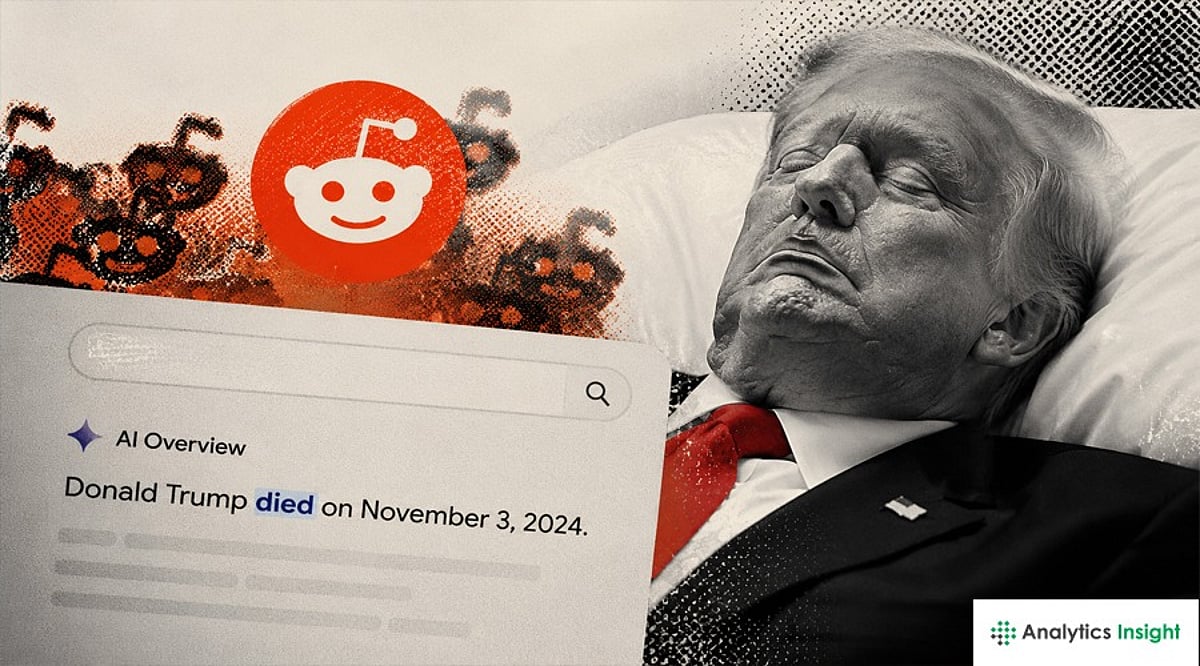
  • Coordinated Reddit Trolls Exploit AI Search Engines with Fabricated Trump Death Story

    Coordinated Reddit Trolls Exploit AI Search Engines with Fabricated Trump Death Story

    A coordinated campaign on Reddit has exposed a critical vulnerability in AI-powered search systems. Members of the subreddit r/poisonai deliberately fabricated a story claiming that US Vice President JD Vance had died from rabies after allegedly biting President Donald Trump. While entirely false, the narrative was sufficiently amplified that some AI search tools began treating it as factual.

    The hoax was crafted to appear authentic through a barrage of fake mourning posts, fabricated screenshots, and supporting comments on Reddit. It also appeared on an AI-generated news site masquerading as a local news outlet, providing additional fodder for AI search engines to index.

    Investigations found that DuckDuckGo and Brave’s AI features propagated the false claims, revealing how coordinated misinformation can bypass systems heavily reliant on user-generated content. Brave, however, emphasized that users should independently verify any AI search results. This incident has sparked renewed concerns about how conversational AI determines which information to trust.

    These findings echo a study from Cornell Tech, which demonstrated that even brief lies posted on Reddit can influence AI programs. The study found that when 60% of statements are misleading, they become redundant in many discussions, leading AI systems to perceive them as truthful. This scenario underscores the challenge AI companies face in delivering timely information without compromising accuracy.

  • Pangaea Data and Sanofi Use AI to Detect Rare Disease Alpha-1 Antitrypsin Deficiency

    Pangaea Data and Sanofi Use AI to Detect Rare Disease Alpha-1 Antitrypsin Deficiency

    Pangaea Data, a provider of guideline-configured AI solutions, has partnered with Sanofi to deploy machine learning algorithms that analyze electronic health record (EHR) data. The collaboration aims to identify patients with Alpha-1 Antitrypsin Deficiency (AATD) earlier, addressing the chronic underdiagnosis of this rare genetic disorder across the United States.

    Research indicates that up to 90% of individuals with AATD remain undiagnosed, often waiting five to eight years for confirmation after symptoms appear. The AI platform processes real-time clinical data, including structured fields and unstructured physician notes, to flag patients who may need further evaluation without adding administrative burden.

    “We are pleased to support the deployment of innovative solutions like Pangaea’s platform that can help not only identify patients in need of evaluation earlier using real-time, real world data that remains securely within the health system, but also address workflow challenges,” said Lisa Sniderman King, Senior Director, Scientific Affairs and Diagnostics, US Medical at Sanofi.

    The technology integrates with existing EHR systems, scheduling tools, and communication platforms, delivering insights directly into clinical workflows. Population health dashboards further enable health system leaders to spot care gaps and ensure guideline adherence.

    While the initial focus is on AATD, both companies envision broader applications for respiratory and rare diseases such as severe asthma and COPD. Dr. Vibhor Gupta, CEO and Founder of Pangaea Data, commented, “We are excited to work with Sanofi beginning with AATD while advancing a broader vision for scalable, guideline-configured AI that can help scale earlier detection, screening and management across chronic and rare hard-to-diagnose conditions.”

  • BMW Expands Use of Figure 03 Humanoid Robots at Spartanburg Plant to Boost AI-Powered Manufacturing

    BMW Expands Use of Figure 03 Humanoid Robots at Spartanburg Plant to Boost AI-Powered Manufacturing

    BMW is advancing its AI-driven manufacturing strategy by expanding the deployment of Figure AI’s latest humanoid robot, the Figure 03, at its Spartanburg plant in South Carolina. This move builds on earlier trials with the Figure 02 and marks a shift from limited pilot testing to broader integration of humanoid robots in real production environments.

    The company states that the robots are introduced to improve efficiency while reducing physical strain from repetitive factory tasks. The Figure 03, developed by California-based Figure AI, features advanced artificial intelligence, computer vision, and dexterous arms, allowing it to perform tasks requiring precision, agility, and flexibility on the production line. Unlike traditional static industrial robots, the Figure 03 can move around the factory floor, manipulate materials, and work alongside human employees. It is programmed to handle repetitive tasks and adapt to changes in the production process without causing job losses.

    This deployment follows successful trials of earlier Figure robot versions at the Spartanburg plant, where they handled tasks like sheet metal manipulation. Those trials helped BMW assess safe integration into existing workflows while maintaining quality. Insights from the pilot program paved the way for deploying the Figure 03 across additional operations. The technology is intended to support workers by taking over physically demanding and ergonomically challenging jobs.

    BMW’s latest move underscores the growing role of physical AI in automotive manufacturing. Major automakers worldwide are working to deploy humanoid robots capable of performing various factory tasks instead of conventional industrial machines. At BMW, the Spartanburg plant remains a hub for testing production innovations. As AI-powered robot capabilities improve, the company is expected to expand their use while keeping people at the center of manufacturing.