Blog

  • How Huawei’s AI-Powered Monitoring Platform Is Rescuing the Critically Endangered White-Headed Langur

    How Huawei’s AI-Powered Monitoring Platform Is Rescuing the Critically Endangered White-Headed Langur

    In the limestone karst mountains of Guangxi, southern China, technology is playing a pivotal role in bringing a critically endangered primate back from the brink. The white-headed langur, a species found only in Chongzuo and rarer than the giant panda, is experiencing a population recovery thanks to an intelligent monitoring platform powered by artificial intelligence by Huawei.

    The platform, developed in partnership with the Guangxi Chongzuo White-headed Langur National Nature Reserve and the China-ASEAN Artificial Intelligence Application Cooperation Center, uses video-based animal monitoring devices deployed along cliffs. These devices collect real-time data on the langurs’ distribution, surroundings, and activity patterns. AI-driven automated labeling and data analytics then process this information to create a comprehensive dashboard for visualized management.

    To date, the system has recorded over 37,200 instances of langur activity, providing researchers with unprecedented insights into the species’ behavior and habitat use. This AI system excels at processing complex geographical data in the challenging karst landscape, which would be extremely difficult to monitor with conventional methods alone.

    Technology operates within a broader conservation framework that includes legal protection and ecological restoration. The Chongzuo White-Headed Langur Habitat Protection Regulations provide the legal foundation, while efforts have restored 77.6 hectares of habitat, built two drinking water sources and 18 water drinking points, and constructed two ecological corridors. As a result, the white-headed langur population has grown to more than 1,400 individuals across 130 groups.

    Huawei Guangxi Deputy General Manager Tian Yongsheng notes that the company is committed to conserving nature with technology. The project demonstrates AI’s immense value in processing complex geographical data and massive volumes of species data. Huawei’s digital inclusion projects for environmental protection have been implemented in 65 protected areas worldwide, improving biodiversity conservation efficiency and showcasing the scalability of AI-powered conservation solutions across diverse ecosystems.


  • Coupa Honors 2026 Partner Award Winners at Inspire Conference, Emphasizing AI and Procurement Innovation

    Coupa Honors 2026 Partner Award Winners at Inspire Conference, Emphasizing AI and Procurement Innovation

    Coupa has announced the winners of its 2026 Partner Awards during the Coupa Inspire Partner Summit in Las Vegas, celebrating the ecosystem driving next-generation procurement, automation, and AI-powered business transformation. The awards recognize partners that have delivered measurable value, accelerated digital innovation, and helped enterprises modernize operations at scale using the Coupa platform.

    “We are thrilled to recognize our 2026 award winners for their unwavering commitment to excellence,” said Greg Harbor, Chief Partner Officer at Coupa. “Our partners are the backbone of the Coupa community, helping our mutual customers drive margin growth and future-proof their operations. Together, we are achieving ambitious goals and shaping the future of spend management.”

    Global Partner of the Year

    The awards placed strong emphasis on AI-enabled transformation, operational resilience, and data-driven decision-making — areas increasingly critical as enterprises scale automation and improve visibility across global supply chains. Accenture received Coupa’s highest distinction: Global Partner of the Year, recognized for exceptional impact across customer success, innovation, global delivery, and strategic collaboration. According to Coupa, Accenture earned the award for its strong global performance, customer outcomes, and ability to align Coupa’s autonomous spend management capabilities with complex enterprise transformation initiatives.

    Sales Partners of the Year

    These partners expanded the Coupa community by helping organizations solve unique regional and market-specific spend challenges:

    • North America: Cross Country Consulting
    • EMEA: KPMG EMEA
    • APJ: KPMG Japan
    • Latin America: Accenture

    Customer Success Partners of the Year

    Recognized for driving adoption and ensuring customers exceed their business goals:

    • North America: KPMG USA
    • Latin America: Paramētā
    • EMEA: Supply Chain Partner
    • APJ: FourPL

    Specialized Partner Winners

    • Supply Chain Partner of the Year: Miebach Consulting
    • Independent Delivery Partner of the Year: Acquis Consulting Group
    • Coupa App Marketplace Partner of the Year: Rossum
    • Coupa Pay Digital Payments Partner of the Year: Viewpost
    • Coupa Pay Virtual Card Partner of the Year: Mastercard
    • Coupa Advantage Partner of the Year: Lowe’s
    • AI Partner of the Year: PwC
    • Innovation Partner of the Year: DataMap

    Channel and Emerging Partners

    Honoring partners rapidly scaling their Coupa practices and bringing autonomous spend management to new markets:

    • Reseller of the Year – North America: RSM
    • Reseller of the Year – International: Procurion GmbH
    • New Breakout Partner – Americas: Clearsulting
    • New Breakout Partner – International: Cogniviti Labs

    Coupa Inspire 2026 continues to spotlight the pivotal role of partners in driving AI-driven procurement transformation and operational excellence across industries.

  • Jotform AI Transforms Data Collection with Conversational Form Building

    Jotform AI Transforms Data Collection with Conversational Form Building

    Jotform has launched a new conversational AI tool that lets users create, edit, and deploy forms simply by describing what they need — either by typing or speaking. The tool, called Jotform AI, is designed to eliminate manual configuration and speed up form creation.

    Users can go from an idea to a live form in seconds. By describing the desired form through a persistent chat interface in the Jotform Workspace, the AI assistant named Podo generates a fully structured form complete with fields, conditional logic, and design styling. The assistant can also handle editing tasks like renaming fields or adding multi-step conditional logic.

    A companion feature, the Form Copilot, works inside the Form Builder itself. Instead of manually adjusting settings, users can ask the Copilot to reorder questions, add conditional fields, generate scoring calculations, or create notification and autoresponder email workflows.

    Jotform AI includes several exclusive capabilities not commonly found in other form-building tools: AI-generated calculations for scoring, totals, and field calculations; AI-driven notification email generation; AI-generated test submissions; and an AI assistant that answers product questions with guidance across a broader feature set.

    Users can upload spreadsheets or documents and have Jotform AI automatically convert the content into a structured form. Uncommon branding tools allow teams to match form styling to an existing website or brand kit by simply supplying a URL or image file.

    Aytekin Tank, Founder and CEO at Jotform, said: “Jotform AI represents the next stage of our evolution, inspiring people to create any form experience they can imagine, however they like. Jotform has shifted from a traditional form and productivity tool to an intelligent data management platform that executes at the request of a prompt.”

    The practical applications cover industry, team, device, and use types. Adaptive forms with conditional logic can dynamically adjust based on user responses without manual rule configuration. High-volume form testing allows teams to simulate realistic submissions and validate logic before distribution. On-brand styling updates colors, fonts, and backgrounds conversationally. Integrated workflows streamline data to storage, CRM, or management solutions. Mobile-ready creation lets users build forms on the go by talking to the AI or uploading pictures.

    Jotform AI combines end-to-end conversational creation with advanced automation inside an enterprise-ready ecosystem, setting a new bar for form builders.

  • Accenture Acquires Alfahealth to Advance AI-Powered Healthcare in Italy

    Accenture Acquires Alfahealth to Advance AI-Powered Healthcare in Italy

    Accenture has announced its agreement to acquire Alfahealth, an Italian digital health technology company, in a move that underscores the growing importance of artificial intelligence in healthcare. The acquisition aims to strengthen Accenture’s capabilities in delivering AI-driven, data-secure, and personalized care across Italy’s healthcare system.

    Alfahealth brings over two decades of experience in developing digital health platforms that support patient journeys, clinical workflows, diagnostics, and administrative operations. By integrating Alfahealth’s technology with Accenture’s expertise in AI, cloud computing, cybersecurity, and data analytics, healthcare organizations will gain access to more intelligent and connected systems. These systems can unify data from hospitals, clinics, community providers, and public institutions, enabling advanced AI applications such as predictive analytics, automated workflow optimization, and real-time clinical insights.

    Teodoro Lio, Market Unit Lead for Accenture in Italy, emphasized the strategic timing: “Italy is at a pivotal moment in the transformation of its healthcare system, with growing investments in digital health, interoperability, and new models of care.” He added that the combination will help healthcare providers accelerate innovation, improve care delivery, and enable more connected, data-driven experiences for all Italians.

    The acquisition also adds approximately 1,200 healthcare specialists to Accenture’s team, bolstering its ability to deliver large-scale transformation initiatives. As healthcare systems face pressure from aging populations and rising demand, AI-driven automation and decision support are becoming essential. This deal positions Accenture to help Italy move toward predictive, preventive, and personalized care models, leveraging AI for earlier disease detection, optimized resource allocation, and enhanced patient engagement.

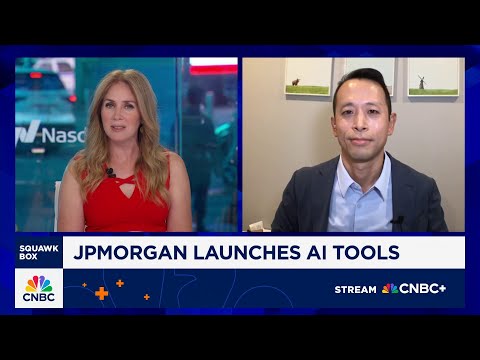
  • JPMorgan Equips 250,000 Employees with AI Assistants from OpenAI and Anthropic

    JPMorgan Equips 250,000 Employees with AI Assistants from OpenAI and Anthropic

    JPMorgan Chase is taking a major step in integrating artificial intelligence across its operations by providing 250,000 employees with access to LLM Suite, a platform that connects staff to large language models from OpenAI and Anthropic. The initiative aims to move beyond simple chatbots toward autonomous AI agents that can handle complex tasks across multiple business functions.

    Derek Waldron, Chief Analytics Officer at JPMorgan, described the vision as one where the bank becomes a fully AI-connected enterprise. In a demonstration, Waldron showed how the platform can create an investment banking presentation in 30 seconds—work that previously required hours from junior bankers.

    Launched in 2023, LLM Suite initially offered OpenAI’s models for drafting emails and summarizing documents. It now incorporates Anthropic’s Claude model as well. About half of the 250,000 employees with access use it daily, and the platform is updated every eight weeks with new data from the bank’s business units.

    Key capabilities include drafting confidential merger and acquisition documents, providing personalized AI assistants for every employee, automating routine back-office processes, and using AI agents to handle complex multi-step tasks autonomously.

    Waldron acknowledged that while AI will empower some workers, others face displacement as processes no longer require human involvement. In May, the head of JPMorgan’s consumer banking division told investors that operations staff would fall by at least 10% over five years due to AI deployment. Senior Wall Street executives have discussed changing the ratio of junior bankers to senior managers from 6-1 to 4-1 as AI handles more work.

    Despite the rapid deployment, Waldron noted it will take years to fully connect AI models with the bank’s data and software, which has an annual technology budget of $18 billion. An MIT report from July found that most corporations had not generated returns on AI projects despite over $30 billion in investments.

  • MIT Mechanical Engineering Department News: Pioneering Research, Rankings, and Innovations in 2026

    MIT Mechanical Engineering Department News: Pioneering Research, Rankings, and Innovations in 2026

    MIT Mechanical Engineering: A Hub of Innovation

    MIT’s Department of Mechanical Engineering continues to be a global leader in engineering education and research. In 2026, the Institute once again topped the QS World University Rankings as the No. 1 university, marking its 15th consecutive year at the pinnacle. The department itself advanced breakthroughs in biomedicine, manufacturing, climate technology, and student-led initiatives.

    Top Stories from MIT Mechanical Engineering

    QS Ranks MIT World’s No. 1 University for 2026-27

    For the 15th year in a row, MIT secured the top spot in the QS World University Rankings, also placing first in 12 subject areas. The ranking reflects the Institute’s sustained excellence across disciplines.

    MIT’s Initiative for New Manufacturing Builds Momentum

    In its first year, the Initiative for New Manufacturing (INM) has accelerated research, workforce development, and industry engagement to bring new manufacturing technologies to real-world deployment.

    The Tenured Engineers of 2026

    Ten faculty members across MIT’s School of Engineering received tenure in 2026, including several from the Department of Mechanical Engineering, highlighting the strength of the academic community.

    Ingestible Sensor Measures Temperature Inside the Body

    MIT engineers developed a tiny ingestible sensor that can continuously monitor body temperature from inside the gastrointestinal tract, offering a noninvasive way to track patients at risk of hypothermia.

    Drug Delivery Directly to the Esophagus

    A new gel-like drug formulation coats the esophageal lining, enabling targeted treatment for inflammatory conditions affecting the esophagus. This innovation could improve patient outcomes and reduce side effects.

    Hertz Foundation Fellowships Awarded to MIT Affiliates

    Several MIT affiliates received 2026 Hertz Foundation Fellowships, supporting doctoral students tackling pressing challenges in science and technology.

    Innovative Projects to Combat Extreme Heat

    With seed funding from MIT’s Climate Project, researchers are exploring low-cost personal cooling and emissions-free air conditioning as part of broader efforts to address extreme heat.

    Novel Carbon Capture Methods

    MIT researchers developed an efficient, flexible alternative to conventional carbon capture, offering a promising pathway to reduce atmospheric CO₂.

    Ambassadors of STEM: Promoting Hands-On Education

    A new student club for FIRST Robotics alumni aims to enhance K-12 STEM education through hands-on activities and mentorship.

    Ultrasound-Based Pacemaker Steadies the Heart Noninvasively

    Engineers designed a pacemaker that uses ultrasound to stimulate the heart without surgery, potentially replacing traditional implants.

    Eleven from MIT Accept 2026 Fulbright Awards

    Over half of MIT’s Fulbright applicants won awards this year, with students and alumni embarking on research and teaching projects abroad in 2026-27.

    Bridging Human Movement and Digital Technology

    MIT.nano’s Immersion Lab collaborated with Emerson College to advance virtual production, merging real human motion with digital tools.

    MIT Affiliates Elected to National Academy of Sciences for 2026

    Six MIT faculty and ten additional alumni were recognized by the National Academy of Sciences for their contributions to natural and social sciences.

    Building ‘Hardcore’ Advanced Machines

    In the course 2.72/2.270 (Elements of Mechanical Design), students learn that “if it doesn’t break the laws of physics, it’s possible; you just have to figure out how to engineer it.”

    Measuring the ‘Klein’ – A New Unit in Honor of an MIT Alumnus

    In a playful nod to the smoot, MIT researchers introduced the “klein” to honor Martin Klein ’62, renaming a section of the Charles River bridge the “Shortfellow Bridge.”

    For more details, visit the MIT Mechanical Engineering News page.

  • MIT Political Science Department: Pioneering Research on Democracy, AI, and Global Affairs

    MIT Political Science Department: Pioneering Research on Democracy, AI, and Global Affairs

    MIT’s Department of Political Science continues to produce groundbreaking research at the intersection of politics, technology, and society. From the impact of architecture on political participation in Ghana to the ethical implications of artificial intelligence, MIT scholars are addressing critical questions facing democracies worldwide.

    How Architecture Influences Political Activity

    New research shows that semi-communal “compound houses” in Ghana significantly affect voting and political engagement. (June 25, 2026)

    Exploring the Societal Impacts of AI

    Leading MIT researchers examined AI’s influence on employment and democracy during the AI and Society Forum. (June 23, 2026)

    The Crucial Human Component in Computing and AI

    The MIT Ethics of Computing Research Symposium highlighted ethical and social impacts in technology. (June 5, 2026)

    Democracies and Safe Drinking Water

    Researchers find that while developing economies provide public water, safety lags due to low visibility. (May 21, 2026)

    Committed to Caring: Professor Daniel Hidalgo Honored

    Associate Professor Daniel Hidalgo, a political scientist studying Latin American elections, receives recognition for graduate student mentorship. (May 13, 2026)

    MIT Affiliates Awarded Guggenheim Fellowships

    Afreen Siddiqi, Kathleen Thelen, and Vinod Vaikuntanathan, along with alumna Kate Manne, are appointed 2026 Guggenheim Fellows. (May 1, 2026)

    Built to Fly: Brian Robinson’s Intersection of Aviation, Politics, and Technology

    MIT senior and master’s candidate Brian Robinson works at the nexus of aviation, politics, and technology. (April 15, 2026)

    Why Does Wealth Inequality Matter?

    An MIT Stone Center event examined origins, mechanisms, and political consequences of high inequality. (April 3, 2026)

    Fostering MIT’s Japan Connection

    MISTI Japan managing director Christine Pilcavage supports students and faculty exploring Japanese culture with a STEM focus. (January 15, 2026)

    Eighteen MIT Faculty Honored as “Committed to Caring”

    The program recognizes outstanding mentorship of graduate students for 2025-27. (January 8, 2026)

    How Drones Are Altering Contemporary Warfare

    A new book by Erik Lin-Greenberg examines evolving dynamics of military and state action centered around drones. (November 13, 2025)

    Q&A: How MITHIC Is Fostering Collaboration at MIT

    The MIT Human Insight Collaborative supports new interdisciplinary initiatives across the Institute. (October 30, 2025)

    Studying War in the New Nuclear Age

    MIT political scientist Caitlin Talmadge scrutinizes military postures and international dynamics to understand escalation risks. (October 28, 2025)

    MIT Schwarzman College of Computing Welcomes 11 New Faculty

    New faculty bring varied backgrounds and expertise to the MIT community. (October 17, 2025)

    Meet the 2025 Tenured Professors in SHASS

    Faculty members granted tenure in Linguistics and Philosophy, Music and Theater Arts, and Political Science. (September 18, 2025)

    These stories reflect the breadth and depth of research at MIT’s Political Science Department, where scholars are shaping our understanding of governance, technology, and global affairs.

  • MIT Department of Architecture: Latest News and Breakthroughs

    MIT Department of Architecture: Latest News and Breakthroughs

    MIT’s Department of Architecture remains at the forefront of design, research, and innovation. In 2026, the Institute was ranked the world’s No. 1 university by QS for the 15th consecutive year, placing first in 12 subject areas. Recent projects include low-cost personal cooling and emissions-free air conditioning as part of MIT’s Climate Project seed funding, and a speech-to-reality system that combines AI and robotics to create objects on demand.

    Architecture students are exploring new frontiers: a running shoe that adapts to the runner using granular convection, and human-machine interaction in the kitchen. The School of Architecture and Planning celebrated its Commencement with Alejandro Aravena urging graduates to lead with kindness and honor the truth. MIT also marked its first Robert R. Taylor Day with Tuskegee University, honoring the Institute’s first Black graduate.

    The Mexico City Initiative fosters cross-border collaborations to solve complex urban problems, while a new MIT course examines how buildings define regions. Graduate students like C Jacob Payne reimagine historic architecture using AI and design. John Ochsendorf was named associate dean for research, and Miho Mazereeuw’s new book explores Japan’s disaster planning in architecture.

    These stories highlight how MIT Architecture shapes the built environment and tackles global challenges through interdisciplinary work.

  • Exploring the Mind: MIT’s Brain and Cognitive Sciences Department Advances Neuroscience Research

    Exploring the Mind: MIT’s Brain and Cognitive Sciences Department Advances Neuroscience Research

    The MIT Department of Brain and Cognitive Sciences is a hub for groundbreaking research into how the brain works, from neural circuits to cognition. Recent highlights from the department showcase a wide range of discoveries and innovations.

    Key Research Highlights

    A new study in Scientific American explores how curiosity-driven science is essential to America’s success, featuring promising young scientists and icons at MIT. Another study reveals that people expect reciprocal generosity only in interactions with friends or those of equal social status. Myriam Heiman has been named director of The Picower Institute for Learning and Memory, where she will lead research on neurodegenerative diseases like Huntington’s and Parkinson’s.

    Innovative MRI sensors developed at MIT now detect target molecules in the brain and body with greater sensitivity. Researchers have also uncovered the rules neurons follow to process visual input, shedding light on how brain cells organize thousands of circuit connections. Six MIT faculty and ten alumni were elected to the National Academy of Sciences for 2026, recognized for outstanding contributions to natural and social sciences.

    Four members of the MIT community, including computational neuroscientist Sven Dorkenwald and cell biologist Whitney Henry, were named 2026 Searle Scholars. Language development research shows that the brain’s language network is still evolving in adolescence, but by age 4, language processing is already lateralized to the left side. A powerful shrinking technique developed at MIT could enable devices that compute with light.

    Researchers are also rethinking how the brain uses categories to make sense of the world, proposing a challenge to traditional views. The MIT BrainTrust program supports neighbors living with brain injuries through a buddy program involving nearly 100 students. Rett syndrome studies using advanced human cell cultures highlight potential for personalized treatments, tracking how different mutations alter neural circuit development.

    Beacon Biosignals, founded by MIT alumni, is mapping the brain during sleep with an AI-driven platform to diagnose and treat disease. MIT senior Olivia Honeycutt investigates how language shapes our views of the world. Finally, a study in nematodes reveals how neurons sense bacteria in the gut, showing neural interaction with bacteria has important effects on animal brains.

  • MIT AeroAstro Department: Pioneering Research in AI, Robotics, and Spaceflight

    MIT AeroAstro Department: Pioneering Research in AI, Robotics, and Spaceflight

    MIT’s Department of Aeronautics and Astronautics (AeroAstro) continues to lead in aerospace engineering and technology. Below are recent highlights from the department, showcasing breakthroughs in robotics, artificial intelligence, quantum systems, and space traffic management.

    LLMs Help Robots Understand Vague Instructions

    Researchers used large language models to help robots interpret ambiguous commands and ignore irrelevant details, improving task performance in dynamic environments like homes and factories. (June 26, 2026)

    Exploring the Societal Impacts of AI

    The AI and Society Forum at MIT brought together leading researchers to discuss critical questions about AI’s influence on employment and democracy. (June 23, 2026)

    New Chip Enables Tiny Robots to Traverse Complex Environments

    A novel chip combining an efficient algorithm with dedicated hardware allows small robots to rapidly generate 3D navigation maps using minimal memory and power. (June 23, 2026)

    QS Ranks MIT World’s No. 1 University for 2026-27

    MIT secured the top spot for the 15th consecutive year, also ranking first in 12 subject areas. (June 17, 2026)

    The Tenured Engineers of 2026

    Ten faculty members received tenure across MIT’s School of Engineering, reflecting excellence in research and teaching. (June 15, 2026)

    Creating Distinguishable Quantum States

    Researchers established key insights for reading and writing information in quantum systems, advancing quantum sensing, communication, and computing. (June 15, 2026)

    New Imaging System Sees Through Murky Waters

    The ‘Sonar-MASt3R’ system combines sonar and visual data to generate real-time 3D maps even in cloudy water, aiding underwater exploration. (June 11, 2026)

    The Crucial Human Component in Computing and AI

    The MIT Ethics of Computing Research Symposium highlighted work at the intersection of ethical and social impact in technology. (June 5, 2026)

    MIGHTY: Open-Source Robot Path Planning

    A new open-source system rapidly produces smooth path plans that cut travel time and avoid obstacles, useful for disaster recovery and delivery. (May 19, 2026)

    Managing Traffic in Space

    Associate Professor Richard Linares develops techniques to help satellites navigate safely in increasingly congested orbits. (April 19, 2026)

    Flying at the Edge of the Stratosphere

    MIT students experience the Earth’s curvature through a reborn AeroAstro introductory course, combining hands-on flight with education. (April 14, 2026)

    These stories represent the breadth of innovation at MIT AeroAstro, from fundamental research to real-world applications. For more details, visit the official MIT News site.