
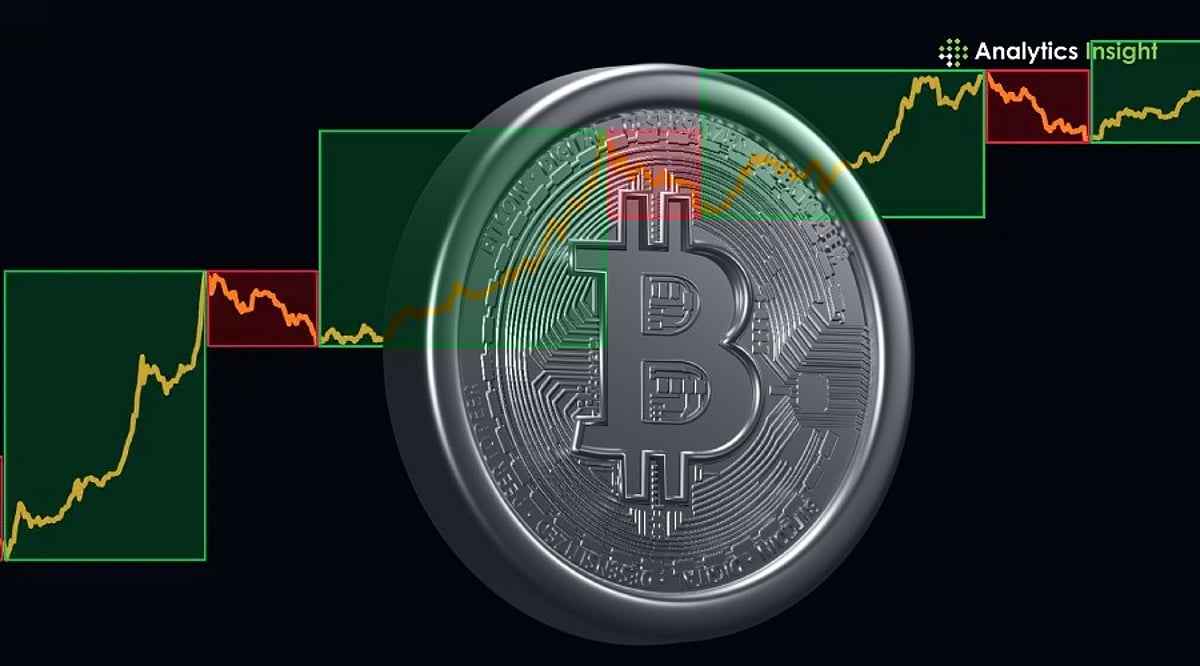
Bitcoin has a built-in system where miner rewards get cut by 50% every four years. The purpose is straightforward: it slows the influx of new Bitcoins into the market, making supply progressively limited. With a hard cap of 21 million coins, that inherent scarcity has always captured attention. When supply tightens and demand remains robust, prices typically rise. For years, traders have relied on this pattern to forecast price movements.
What Past Halving Events Showed
After the 2012 halving, Bitcoin surged from around $12 to over $1,100 within a year. The 2016 halving preceded a rally that pushed Bitcoin near $20,000 in 2017. The 2020 halving set the stage for a run to almost $69,000 in 2021. This repeated pattern led many to believe Bitcoin followed a clear four-year cycle where halving triggered major price growth.
The 2024 Halving and Market Changes
The latest halving occurred in April 2024, cutting miner rewards from 6.25 to 3.125 Bitcoin per block. Initially, it met expectations—Bitcoin touched a record high near $126,000 during late 2025. But the market shifted quickly. In the first half of 2026, Bitcoin saw strong downward pressure, dropping below $60,000—a loss of more than 30% since the start of the year. This weakness surprised analysts, as previous halving cycles typically remained strong for longer periods.
Institutional Investors Changed the Market
A major reason for this shift is the rise of institutional investors. In earlier years, Bitcoin relied mainly on retail traders and crypto enthusiasts. Today, large financial firms play a much bigger role. After the approval of spot Bitcoin ETFs in 2024, billions of dollars entered the market through traditional channels. But in recent weeks of 2026, reports indicated $4.5 billion to $6 billion exited Bitcoin ETFs, creating heavy selling pressure. Bitcoin no longer reacts solely to supply reduction after halving; large money movements now exert stronger influence.
Bitcoin Now Reacts to the Global Economy
Another important change is Bitcoin’s integration with the global financial system. Earlier, Bitcoin mostly moved based on crypto market trends. In 2026, broader economic events affect price much more. Interest rate decisions, central bank policies, inflation concerns, and overall market confidence now shape Bitcoin movement. Capital has also shifted heavily toward artificial intelligence companies and semiconductor stocks this year, diverting speculative money that once flowed into crypto. Bitcoin now behaves more like a global financial asset than a market dependent solely on its internal cycle.
Pressure on Bitcoin Miners
Mining companies face serious challenges after the latest halving. With smaller rewards, miners earn less Bitcoin for the same work. High electricity costs in many countries compound the issue. Lower Bitcoin prices in 2026 have made the situation even harder. Some miners have been forced to sell Bitcoin reserves to cover expenses, adding extra selling pressure that diminishes the halving’s usual positive impact.
Why Halving Still Matters
Despite these changes, the halving cycle cannot be dismissed entirely. Bitcoin still has fixed supply rules, and scarcity remains one of its strongest features. Some analysts believe the current correction resembles older cycles. Research published in June 2026 suggests Bitcoin may form a stronger bottom later this year before another recovery phase. Several forecasts expect Bitcoin to recover toward $90,000 to $170,000 once market conditions improve and investor confidence returns.
The Future Beyond 2026
Bitcoin halving is no longer the sole factor controlling price. “Halving used to be the main engine behind every major rally. Institutional money, ETF flows, government regulation, economic policy, and global investor sentiment now have equal or greater influence than supply reduction,” notes one analyst. Limited supply remains part of Bitcoin’s core value, but the predictable four-year boom pattern no longer holds. In 2026 and beyond, Bitcoin will continue to follow its halving structure, but price movement will depend heavily on external forces. Crypto has matured. Bitcoin now sits inside a larger financial system where supply still matters, but demand and macro conditions do most of the heavy lifting.
FAQs
1. What is Bitcoin halving?
Bitcoin halving is a built-in event that reduces miner rewards by 50% roughly every four years, slowing new Bitcoin supply creation.
2. Why did Bitcoin halving matter historically?
Past halvings in 2012, 2016, and 2020 were followed by major price rallies due to reduced supply and rising demand.
3. Why is the 2024–2026 cycle different?
Large institutional participation, ETF inflows/outflows, and macroeconomic factors have changed Bitcoin’s traditional market behavior.
4. Does Bitcoin still follow the four-year cycle?
Not as predictably as before. Halving still matters, but external financial factors now play a much bigger role.
5. Can Bitcoin recover after the 2026 correction?
Many analysts believe Bitcoin can recover if market confidence improves, with forecasts ranging between $90,000 and $170,000.
Leave a Reply