Category: Cryptocurrency

  • Ethereum’s 2030 Roadmap: Scaling, Quantum Security, and the Future of Layer-2

    Ethereum’s 2030 Roadmap: Scaling, Quantum Security, and the Future of Layer-2

    Ethereum’s development roadmap is increasingly focused on scaling, privacy, faster finality, and protection against future cryptographic threats. Rather than a single transformation, developers are planning successive upgrades that could substantially change Ethereum’s architecture before 2030.

    Glamsterdam Comes Next

    Ethereum’s next major upgrade, Glamsterdam, is targeted for Q4 2026. It focuses on increasing Layer-1 processing capacity while keeping hardware requirements manageable for node operators. Its major changes include Block-Level Access Lists (BALs) and enshrined Proposer-Builder Separation. BALs provide information about which parts of Ethereum’s state transactions will access, helping prepare the network for parallel transaction processing. Proposer-builder separation restructures the responsibilities involved in producing blocks.

    The Ethereum Foundation reported in May that developers had established a credible 200 million gas limit target after Glamsterdam, although reaching that level depends on performance improvements and testing.

    Hegotá Could Arrive in 2027

    Glamsterdam is expected to be followed by Hegotá, currently targeting Q2 2027, although Ethereum.org says the date remains unconfirmed. One scheduled feature is Fork-Choice Enforced Inclusion Lists (FOCIL), designed to improve censorship resistance by allowing multiple validators to require valid transactions to be considered for inclusion rather than leaving that decision entirely with one block builder.

    Quantum Resistance Becomes a Priority

    Ethereum’s most ambitious deadline extends beyond individual upgrades. The Ethereum Foundation’s Protocol cluster is targeting a quantum-resistant Layer 1 across execution, consensus, and data by December 2029. Developers are deliberately planning around an aggressive assumption that a cryptographically relevant quantum computer could potentially emerge as early as 2030. The Foundation acknowledges that many credible estimates place this event later, but argues that migration should occur before quantum computers become an immediate threat.

    Five Research Areas Shape Ethereum’s Future

    Ethereum’s longer-term development is organized around five multi-fork research arcs: fast finality, post-quantum security, privacy, state management, and zkEVM development. Fast finality aims to reduce finalization times from minutes to seconds. Privacy research seeks protocol-level support for private balances and transactions, while state improvements address Ethereum’s growing storage requirements.

    The zkEVM roadmap could eventually allow validators to verify compact cryptographic proofs instead of independently re-executing every transaction in a block. The exact upgrade sequence remains under development.

    Layer 2 Remains Central to Scaling

    Ethereum has moved away from its original traditional shard-chain strategy as rollups became its primary scaling architecture. Fusaka introduced PeerDAS in December 2025, enabling nodes to sample portions of blob data rather than every node downloading every blob. Ethereum.org says PeerDAS provides roughly an order-of-magnitude increase in data-availability capacity for Layer-2 networks.

    Full Danksharding remains a longer-term objective designed to help Ethereum eventually support more than 100,000 transactions per second, largely through Layer-2 scaling.

    Final Thoughts

    Glamsterdam and Hegotá represent Ethereum’s next major development milestones. By 2030, quantum resistance, zkEVMs, faster finality, and rollup scaling could reshape the network significantly. However, Ethereum’s community-driven roadmap means features and timelines can still change.

    Frequently Asked Questions

    • What is Ethereum’s 2030 roadmap focused on? Ethereum’s longer-term roadmap focuses on scalability, faster finality, privacy, quantum resistance, state management, and zkEVMs. Layer-2 rollups also remain central to increasing network capacity.
    • What is the Ethereum Glamsterdam upgrade? Glamsterdam is currently targeted for Q4 2026 and includes features such as Block-Level Access Lists and enshrined Proposer-Builder Separation. It aims to improve Layer-1 processing and prepare Ethereum for further scaling.
    • What is Ethereum’s Hegotá upgrade? Hegotá is expected after Glamsterdam and is currently targeting Q2 2027, although the timing is not confirmed. Its planned features include FOCIL, designed to strengthen transaction inclusion and censorship resistance.
    • Why is Ethereum preparing for quantum computing? Ethereum developers want Layer 1 to become quantum-resistant across execution, consensus, and data by December 2029. The goal is to prepare before cryptographically capable quantum computers become a practical threat.
    • How could Ethereum scale to more than 100,000 transactions per second? Ethereum plans to combine Layer-2 rollups with technologies such as PeerDAS and eventually full Danksharding. These systems are intended to significantly increase data availability and overall transaction capacity.

    Disclaimer: This article is provided for informational purposes only and does not constitute investment advice. Cryptocurrencies are risky; you are responsible for your own research before making any investments.
  • SEC vs. CFTC: Understanding Crypto Regulation in the US

    SEC vs. CFTC: Understanding Crypto Regulation in the US

    Cryptocurrency regulation in the United States is divided among several authorities rather than controlled exclusively by one agency. The Securities and Exchange Commission (SEC) and Commodity Futures Trading Commission (CFTC) have different statutory responsibilities, with oversight depending heavily on how an asset, transaction, or financial product is classified.

    SEC Oversees Securities

    The SEC administers federal securities laws. Its authority applies when crypto-related activities involve securities, including transactions structured as investment contracts.

    In March 2026, the SEC issued an interpretation explaining how federal securities laws apply to crypto assets and transactions. It established a taxonomy covering categories including digital commodities, digital collectibles, digital tools, payment stablecoins, and digital securities. The CFTC simultaneously provided guidance explaining that it would administer the Commodity Exchange Act consistently with the SEC interpretation.

    Importantly, a crypto asset that is not itself a security can still be involved in an investment contract depending on how it is offered and the surrounding circumstances.

    In August, the SEC also proposed Regulation Crypto Assets, which would establish a tailored securities-offering framework for certain investment contracts involving crypto assets. The proposal has not itself replaced existing federal law.

    The CFTC Oversees Commodity Derivatives

    The CFTC’s established authority includes derivatives markets involving commodities, including futures, options, and swaps tied to digital commodities.

    Spot markets are more complicated as the CFTC does not have the same comprehensive regulatory framework for ordinary spot commodity trading that it has over derivatives.

    In September 2025, SEC and CFTC staff clarified that SEC- and CFTC-registered exchanges are not prohibited from facilitating certain spot crypto commodity products. However, the statement itself did not change existing law or create new obligations.

    The CFTC continued updating its crypto guidance in September 2026. On September 24, staff revised FAQs covering matters including tokenized permitted investments and blockchain-based recordkeeping for registered market participants.

    Congress Has Not Finalized a Broader Framework

    Congress has considered legislation intended to create clearer statutory boundaries for digital-asset regulation.

    On September 15, the Senate failed to advance the CLARITY Act, with the procedural vote receiving a 49-50 majority but falling short of the 60 votes required to proceed. Four Republican senators joined Democrats in opposing advancement. Senator Thom Tillis moved to reconsider the vote, preserving the possibility that the measure could be reconsidered.

    For now, this leaves the SEC and CFTC operating largely through their existing statutory authorities rather than a newly enacted comprehensive crypto market-structure law.

    Classification Determines Oversight

    The key regulatory question is therefore not simply whether cryptocurrency belongs to the SEC or CFTC.

    A digital security or transaction involving an investment contract can fall under securities laws, while derivatives involving digital commodities fall within the CFTC’s established jurisdiction.

    Stablecoins, banking activities, anti-money-laundering requirements, and state licensing can bring additional regulators into the picture.

    The SEC added further clarification on September 25 through staff FAQs addressing its March crypto interpretation. The agency specifically notes that these FAQs represent staff views and have no legal force or effect.

    Why This Matters

    Whether a crypto product falls under SEC or CFTC oversight can affect registration, trading, disclosures, and compliance obligations. Clearer jurisdictional boundaries could therefore influence how exchanges, issuers, and financial institutions structure cryptocurrency products for the US market.

    Final Thoughts

    US cryptocurrency regulation remains divided between the SEC, CFTC, and other authorities. Recent guidance has clarified some boundaries, but it does not replace legislation establishing a comprehensive market structure. Future congressional action could further define how responsibilities are divided.

    Also Read: How the GENIUS Act Could Change Stablecoin Regulation

    FAQs

    1. Does the SEC or CFTC regulate cryptocurrency in the US? Both agencies have roles. The SEC administers securities laws, while the CFTC regulates commodity derivatives and has authority under the Commodity Exchange Act within its statutory jurisdiction.
    2. When does cryptocurrency fall under SEC oversight? SEC oversight can apply when a crypto asset is a security or a transaction involves an investment contract. The SEC issued a detailed interpretation of these classifications in March 2026.
    3. What cryptocurrency activities does the CFTC regulate? The CFTC regulates derivatives involving digital commodities, including relevant futures, options, and swaps. Its authority over ordinary spot commodity markets differs from its comprehensive derivatives oversight.
    4. What is the SEC’s Regulation Crypto Assets proposal? Proposed in August 2026, Regulation Crypto Assets would establish tailored offering exemptions and other rules for certain investment contracts involving crypto assets. The proposal is not yet a final rule.
    5. Why does crypto classification matter for regulation? Classification can determine which federal laws and regulatory requirements apply to an asset, transaction, or market participant. It can affect areas such as registration, disclosures, trading, and compliance obligations.
  • Ripple to Release 1 Billion XRP From Escrow: What Investors Should Expect

    Ripple to Release 1 Billion XRP From Escrow: What Investors Should Expect

    Ripple is scheduled to unlock up to 1 billion XRP from escrow on October 1, continuing its monthly token release system that began in 2017. The program was designed to make XRP supply changes more predictable for the market.

    However, the headline figure of 1 billion XRP does not mean all tokens will immediately enter circulation or reach cryptocurrency exchanges. Ripple has the ability to return unused XRP to new escrow contracts, effectively reducing the amount that becomes available in the market.

    Recent releases illustrate why context is crucial. After September’s unlock of 1 billion XRP, 700 million was re-escrowed, meaning only 300 million actually entered circulation. The October release could similarly produce less new supply than the initial figure suggests.

    Investors will closely monitor Ripple wallets after the unlock to determine whether XRP is re-escrowed, transferred, or moved toward exchanges. XRP’s price response may depend on actual market supply, broader crypto sentiment, and demand around the scheduled release.

    The key takeaway is straightforward: watch where the unlocked XRP goes next, rather than treating the entire billion as immediate selling pressure.

  • Ethereum Layer-2 Scams: How to Protect Your Crypto from Fake Networks and Bridges

    Ethereum Layer-2 Scams: How to Protect Your Crypto from Fake Networks and Bridges

    Fake Ethereum Layer-2 networks are on the rise, mimicking legitimate projects, websites, RPCs, and bridges to deceive users. Scammers build convincing infrastructure that looks authentic, then lure victims into bridging real ETH into a fraudulent network. The fake bridge accepts deposits while the promised Layer-2 never actually exists.

    One recent case, the fake GIWA network, reportedly attracted about 767 ETH from around 1,335 addresses. Eventually, approximately 766 ETH was drained from the bridge. A familiar Chain ID does not guarantee a network is genuine. For instance, the GIWA scam used Chain ID 9134 even though the official mainnet had not yet launched.

    A working RPC, successful transactions, or a functioning blockchain also cannot confirm who controls the network. Attackers can create all the infrastructure needed to appear real. Watch for unofficial “mainnet live” announcements, unknown RPC links, newly created bridge websites, urgent deposit requests, and networks missing from the official project documentation.

    Before bridging, verify the Layer-2’s official website, launch status, Chain ID, RPC URL, bridge contract, block explorer, and contract addresses. Ethereum’s security guidance recommends carefully checking network information before using any bridge. Additionally, never grant a smart contract unlimited spending access when a smaller limit is possible. Set spending limits to only the amount required.

    Already connected to a suspicious bridge? Stop interacting immediately, revoke unnecessary token approvals, move remaining funds to a clean wallet if needed, save all transaction details, and ignore anyone promising guaranteed crypto recovery.

  • Quant’s QNT Token Skyrockets After Role in US Clearing House Tokenized Payments Network

    Quant’s QNT Token Skyrockets After Role in US Clearing House Tokenized Payments Network

    Quant’s native token QNT experienced a dramatic price surge after The Clearing House selected the company to support its new tokenized payments network for financial institutions. The token climbed from the USD 60–70 range to an intraday high above USD 350 before profit-taking caused a partial pullback.

    QNT Price Rally Details

    Data from TradingView shows QNT broke out from a months-long trading range near USD 60–80, surged past the USD 100 mark, and then accelerated sharply through USD 120, 150, 170, and 194 before reaching an intraday peak above USD 350. The rally brought QNT close to its all-time high of USD 427.42 set in 2021, though subsequent selling trimmed some gains.

    Quant Joins The Clearing House’s On Chain Money Initiative

    The catalyst was the announcement that The Clearing House selected Quant to provide interoperability, transaction management, and orchestration for its On Chain Money network. Quant will also help connect the platform with existing payment systems such as RTP and CHIPS. The initiative aims to link tokenized commercial bank deposits with traditional payment infrastructure, enabling faster and programmable settlement. Participating financial institutions are expected to gain access during the first half of 2027.

    The Clearing House clears and settles over USD 2 trillion daily through wire transfers, ACH payments, check images, and real-time payments. Quant CEO Gilbert Verdian called the selection a major milestone for programmable money, noting that tokenized deposits allow banks to move money on-chain while keeping those deposits within the regulated banking system.

    Expansion of Quant’s Banking Role

    This US project follows a similar initiative in the UK, where major banks including Barclays, HSBC UK, Lloyds Banking Group, Monzo, Nationwide, NatWest, and Santander completed live customer transactions using tokenized sterling deposits on Quant’s infrastructure under the Great British Tokenized Deposit initiative. The tests moved beyond simulations, including two remortgage transactions and an online marketplace payment with conditional fund reservation.

    Together, these projects place Quant at the center of two institutional programs exploring blockchain-based commercial bank deposits. However, the token’s price performance remains separate from its technology’s institutional adoption, as market participants must assess the token’s economic factors independently.

    Technical Analysis and Support Levels

    Before the rally, QNT traded in a narrow range near its 200-day moving average of USD 69.40. The breakout left the token far above that level, creating a wide gap with limited recent trading activity between roughly USD 100 and the upper rally levels. This leaves less defined support structure during pullbacks. QNT remains within reach of its 2021 all-time high of USD 427.42 if buyers regain control above the latest resistance area.

  • Capital B Boosts Bitcoin Treasury by 13 BTC, Total Reaches 3,538

    Capital B Boosts Bitcoin Treasury by 13 BTC, Total Reaches 3,538

    Capital B, a French company, has purchased 13 additional Bitcoin, increasing its treasury holdings to 3,538 BTC. The acquisition was funded by proceeds from a EUR 0.98 million share sale to asset manager TOBAM.

    Details of the Purchase

    According to the September 28 announcement, Capital B issued 172,978 new shares at an average price of EUR 5.68 each to TOBAM funds between September 14 and September 22. The company raised EUR 982,872.69 and used approximately EUR 0.97 million to acquire 13 BTC. The average share issue price was 3.8% above the closing price on the trading day before the announcement.

    CEO’s Strategy

    CEO Alexandre Laizet stated in an interview at BTC Prague that Capital B intends to buy Bitcoin “as much as possible, as fast as possible” while seeking terms that increase its holdings per share. He emphasized the company’s long-term holding plan and its reliance on public stock and debt markets for funding, as many large investors cannot buy Bitcoin directly under current regulations.

    Treasury Reserve Details

    Capital B and its Luxembourg subsidiary reported an acquisition cost of EUR 310.6 million for the 3,538 BTC treasury, averaging EUR 87,805 per BTC. The net asset value was approximately EUR 259.9 million based on the prior trading day’s Bitcoin price. The company also disclosed a 2.20% BTC Yield for 2026 to date, representing the change in Bitcoin held per fully diluted share. Additionally, 61 BTC are held for operational needs, separate from the treasury reserve. Swissquote Bank Europe executed the latest purchase and serves as the sole BTC custodian.

  • Crypto Weekly: Bitcoin ETFs See $2.38B Inflows, QNT Jumps 260%, UK Launches Crypto Licensing

    Crypto Weekly: Bitcoin ETFs See $2.38B Inflows, QNT Jumps 260%, UK Launches Crypto Licensing

    Bitcoin spot ETFs recorded $2.38 billion in weekly net inflows, while Quant (QNT) surged 260% to a five-year high. Meanwhile, the Bitget hacker began moving stolen funds, Wintermute-linked shorts on Hyperliquid reached $126 million, and the UK Financial Conduct Authority (FCA) opened its new crypto licensing window.

    Bitcoin Spot ETFs Attract $2.38 Billion

    According to SoSoValue, Bitcoin spot ETFs saw a net inflow of $2.38 billion last week. BlackRock’s IBIT led with $1.158 billion, followed by Fidelity’s FBTC at $702 million. The total net asset value of Bitcoin spot ETFs now stands at $108.42 billion, with the ETF net asset ratio at 6.43% and cumulative net inflows totaling $57.55 billion.

    QNT Surges to Five-Year High

    QNT climbed roughly 260% weekly to a peak of about $370 before settling around $205. The rally was driven by The Clearing House selecting Quant for its On-Chain Money Initiative. Additional catalysts include Quant’s integration into Murex MX.3 and its selection by the European Central Bank for digital euro testing.

    Bitget Hacker Moves Stolen Funds

    The wallet linked to the September 24 Bitget hack began transferring Ethereum (ETH) into THORChain vaults and swapping assets into Bitcoin. Bitget confirmed the breach did not compromise private keys; instead, a critical backend component was exploited to pass fraudulent transaction data through the exchange’s authorization process.

    Wintermute’s Hyperliquid Shorts Reach $126 Million

    Onchain Lens reported that a Wintermute-linked wallet held roughly $126.25 million in short positions on Hyperliquid as of September 28, with a $46.92 million Ethereum short representing the largest position. The wallet showed approximately $963,600 in unrealized profit at the time and a lifetime P&L of around $197.22 million.

    UK Opens New Crypto Licensing Window

    The FCA began accepting crypto license applications at 7 am UK time on September 30. Firms have until February 28, 2027, to submit during the main application window. The new regime starts October 25, 2027. The FCA published a 73-page preview requiring details such as firm activities, regulated permissions, control structure, customer asset handling, and financial/operational standards.

    FAQs

    How much did Bitcoin spot ETFs attract last week?

    Bitcoin spot ETFs recorded $2.38 billion in weekly net inflows. BlackRock’s IBIT led with $1.158 billion, followed by Fidelity’s FBTC with $702 million.

    Why did QNT surge 260% in a week?

    The rally coincided with The Clearing House selecting Quant for its On-Chain Money Initiative. Other factors include Quant’s integration with Murex MX.3 and its involvement in digital euro testing.

    What happened to the funds stolen from Bitget?

    A wallet linked to the September 24 Bitget breach began moving ETH through THORChain and swapping into Bitcoin. The exchange attributed the breach to a compromised backend component.

    How large are the Wintermute-linked Hyperliquid short positions?

    On-chain tracking identified approximately $126.25 million in short positions. The largest was a roughly $46.92 million ETH short.

    When does the UK’s new crypto licensing window open?

    The FCA’s crypto authorization gateway opened on September 30, 2026. The main application window runs until February 28, 2027, with the new regime beginning October 25, 2027.

  • Kenya’s DCI Warns Public About Forex and Crypto Scams Hidden Behind Flashy Social Media Lifestyles

    Kenya’s DCI Warns Public About Forex and Crypto Scams Hidden Behind Flashy Social Media Lifestyles

    Kenya’s Directorate of Criminal Investigations (DCI) has issued a public warning about online investment scams that use luxury lifestyles and fabricated trading profits to lure victims. The agency specifically cautioned against taking social media displays of wealth as evidence of successful investing.

    Social Media Glamour vs. Real Returns

    On Monday, September 28, the DCI highlighted a group it referred to as ‘Masharp Boys/Girls,’ whose accounts feature images of cash, expensive cars, drinks, and overseas trips alongside offers related to forex trading, cryptocurrency, arbitrage, and betting. Some of these accounts promote trading platforms or share signals via Telegram. The DCI urged Kenyans to question the link between those glamorous images and the advertised returns.

    The warning specifically addressed screenshots that appear to show large trading profits. According to the DCI, a dashboard may display a number, but viewers cannot verify from an image alone whether the trades actually occurred or whether the account holder withdrew the money. The agency described these as ‘phantom profits.’ Its statement did not name any specific individual or claim that everyone posting about trading is committing fraud.

    The DCI noted that some promoters may stage photographs or use hired vehicles to create a false impression of success. These displays help build trust before asking followers to invest in a scheme. The agency’s concern is the use of apparent wealth to support an investment pitch, not the possession of luxury goods itself.

    Fake Platforms and Phishing Risks

    The DCI also warned about fake trading platforms, fraudulent cryptocurrency wallets, and phishing links. These tools can make an offer look legitimate while giving criminals access to deposits or personal data. The agency cited identity fraud, deepfakes, and other deceptive methods as risks associated with online financial scams.

    A person responding to an online offer may be asked to register, send funds, or provide account details before any claimed return can be verified. The DCI advised Kenyans to be cautious when promoters promise substantial profits with little effort or risk. It also warned that those running fraudulent schemes could face legal consequences.

    The DCI’s message covers several types of offers, including forex and crypto pitches. It does not state that trading in those markets is inherently a scam. The concern is whether a promoter uses false records, misleading claims, or a fake platform to obtain money from the public.

    Regulator Weighs In

    The DCI’s warning follows a separate September statement from Kenya’s Capital Markets Authority (CMA). The regulator cautioned the public about entities offering investment services without the required license or approval. It urged people to avoid operators that disguise fraudulent activity as an investment opportunity.

    The CMA said members of the public could report suspected schemes to their nearest DCI office. Its notice provides a practical step for anyone considering an offer: check whether the provider has the required approval before sending money. A social media following, a trading screenshot, or a display of expensive purchases does not serve that purpose.

    The DCI asked Kenyans to remain alert when online claims of easy wealth lead to requests for funds or personal details. Its warning encourages the public to independently verify the advertised business and its claimed returns.

  • Bitcoin Drops to $83,000 as Oil Price Rally Triggers Widespread Crypto Selloff

    Bitcoin Drops to $83,000 as Oil Price Rally Triggers Widespread Crypto Selloff

    Bitcoin fell to $83,000 on Monday as a surge in oil prices above $100 per barrel triggered losses across both cryptocurrency and traditional financial markets. The leading cryptocurrency dropped 1.7% since midnight UTC and 2.1% over the past 24 hours, while altcoins suffered even deeper declines.

    Oil Rally Pressures Risk Assets

    The market downturn followed a continued rise in crude oil prices, with Brent crude returning above $100 to trade at $100.83, a 3.2% gain during the session. The move came after President Donald Trump rejected Iran’s latest terms for reopening the Strait of Hormuz, which included demands for access to frozen funds, relief from oil sanctions, and an end to the US naval blockade of Iranian ports.

    Traditional markets also weakened. Gold fell 3.3% to $4,144, silver dropped 5.1% to $61.00, while S&P 500 futures lost 0.44% and NASDAQ 100 futures declined 0.95%. The US dollar index edged up 0.06% to 101.09, indicating broad selling pressure across multiple asset classes rather than an isolated crypto decline.

    Altcoins Hit Harder

    The CoinDesk 100 index fell 2.6% to 1,874.56, with 91 of its 100 constituents trading lower. Total crypto trading volume surged 70% to $172 billion over 24 hours, yet market-wide futures open interest dropped 3% to $150 billion, suggesting traders closed positions even as activity accelerated.

    Altcoins recorded sharper losses. QNT dropped 16% since midnight after a 39% gain during Friday’s session. GRT fell 12%, and ONDO also declined 12%. The DeFi Select Index lost 6.4% during the session and 7.3% over 24 hours, while the CoinDesk Computing Index fell 3.2% and 5.0% over the same period.

    Bitcoin Futures Show Traders Reducing Leverage

    Bitcoin futures open interest declined to 650,000 BTC, its lowest level since March. Funding rates turned negative across major exchanges, indicating that remaining leveraged positions leaned bearish. As of September 22, leveraged funds increased their net Bitcoin futures short position by 1,599 contracts to a total of 7,953 contracts, while asset managers added 411 contracts to raise their net long position to 3,171 contracts.

    The broader derivatives market later showed leverage declining further. The 24-hour taker long-short split stood at 46.9% against 53.1% as of 09:50 UTC, giving aggressive sellers a modest advantage. Ether saw a similar decline in leveraged exposure, with ETH futures open interest falling to 12.85 million ETH from 13.95 million on July 1.

    XRP and HBAR Break from Broader Trend

    XRP futures open interest moved differently, reaching a four-week high of 2.46 billion XRP early in the session before easing to 2.37 billion. Whale positioning varied: Binance whales remained bullish on Bitcoin, though weaker than Friday, turned bearish on Ether, and remained bullish on Solana. XRP positioning returned to bearish territory but less so than Friday.

    HBAR recorded an even stronger increase in derivatives activity, with open interest surging to a record 2.30 billion HBAR while its spot price climbed 48% over 24 hours. However, its 24-hour open-interest-adjusted cumulative volume delta remained negative, and annualized funding stayed only slightly above zero, indicating aggressive buying did not dominate.

    Options Market Shows Mixed Sentiment

    On Deribit, the $84,000 Bitcoin put expiring September 30 became the most traded Bitcoin options contract over 24 hours, while the $2,850 Ether call expiring October 20 led ETH options activity. Bitcoin implied volatility increased slightly as Volmex’s BVIV rose to 37.4% after rebounding from below 36% last week. Wall Street’s VIX rose to 16 on Friday from below 14, reflecting broader market uncertainty.

    Separately, Pluang data showed only nine of 50 major cryptocurrencies rising as 40 declined. Harmony led the gainers with a 30.54% rise, while GRT gained 17.15% and BAL advanced 11.14%.

    Bitcoin’s decline to $83,000 came as oil returned above $100 and selling spread across cryptocurrencies and traditional assets. Futures data showed lower leverage, negative funding, and bearish taker activity, while XRP and HBAR recorded stronger open interest. Options activity showed demand for both downside protection and selective upside exposure.

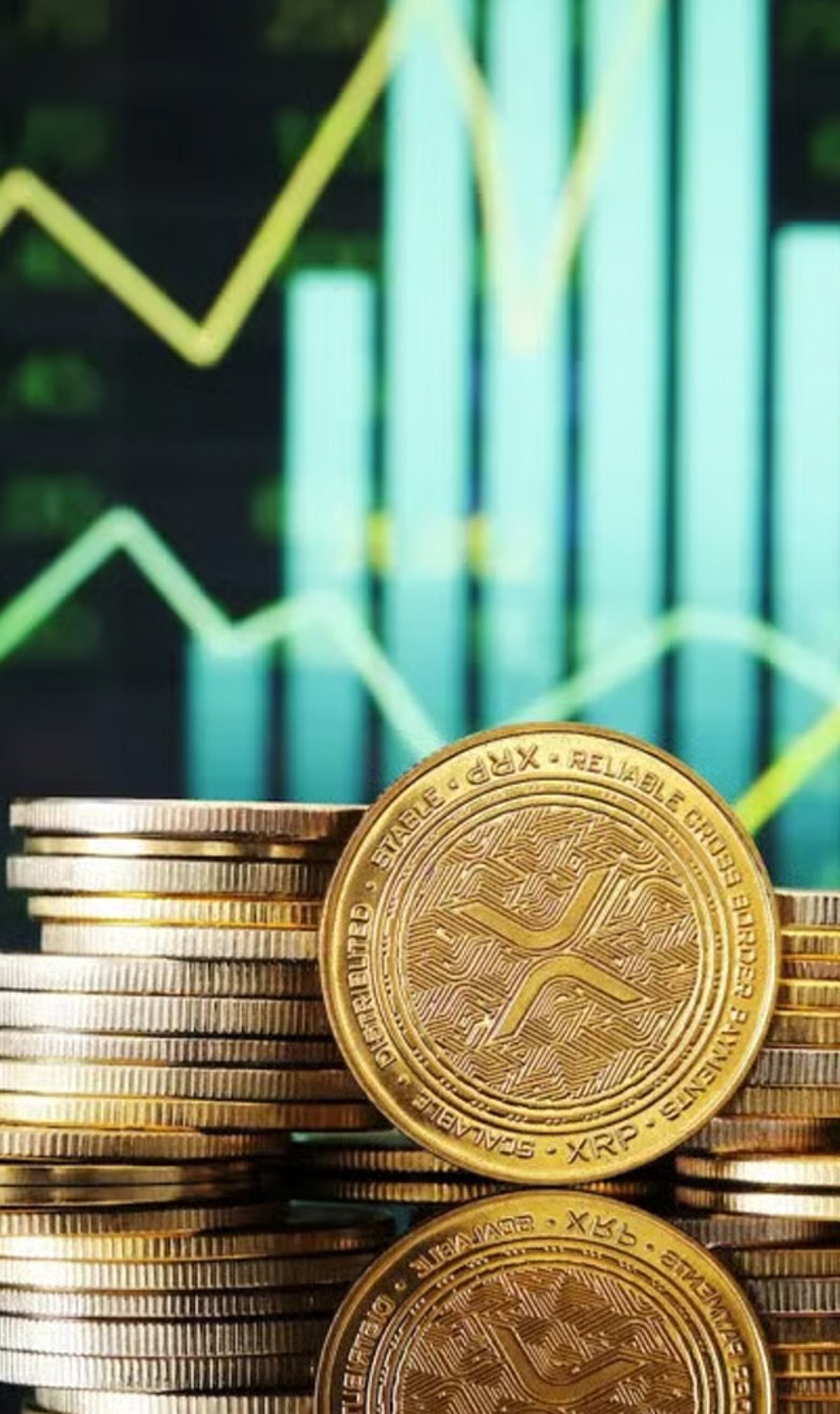
  • XRP Surges Over 60% as Whales Accumulate 470M Tokens and Analysts Eye $1.60 Breakout

    XRP Surges Over 60% as Whales Accumulate 470M Tokens and Analysts Eye $1.60 Breakout

    XRP has posted a gain of more than 60% over the past month, driven by significant whale accumulation, increased activity on the XRP Ledger, and bullish technical indicators. The token is currently trading near $1.50 after a slight dip of over 2% attributed to profit-taking. Market participants are closely watching the $1.60 level, which analysts see as the next critical resistance that could pave the way toward $2.

    Veteran trader Peter Brandt recently shared a chart showing a long-term target of $5.40 for XRP, representing a potential upside of about 260% from current prices. Brandt did not provide a specific timeline for this projection but emphasized that posting a chart does not constitute a trade recommendation. His analysis relies on historical chart patterns and market cycles.

    Analyst Targets and Institutional Outlook

    Standard Chartered has maintained an even more ambitious long-term forecast, reiterating a $28 price target for XRP by 2030. However, the bank revised its 2026 forecast downward from $8 to $2.80. Institutional interest continues to grow around XRP Ledger applications such as payments, liquidity, tokenization, stablecoins, and decentralized finance.

    Near-term technical analysts, including Ali Martinez, have identified $2 as a possible next target if XRP breaks above $1.60. Martinez also pointed to an inverse head-and-shoulders formation on the daily chart, which places a clear technical threshold between XRP’s current price and the next projected level.

    Whale Activity Accelerates

    Large XRP holders have been accumulating aggressively during the rally. On-chain data shows that wallets holding between 1 million and 10 million XRP added more than 470 million tokens within five days, worth approximately $724 million. Their combined holdings rose from nearly 12.37 billion to 12.80 billion XRP.

    Earlier in the rally, about 1.54 billion XRP moved into large wallets over a 96-hour period, signaling strong conviction among whales. This accumulation comes as traders watch whether XRP can clear the $1.60 resistance level.

    XRP Ledger Activity and Stablecoin Growth

    Account activity on the XRP Ledger has also increased. New accounts rose 34% to about 3,200 last week, while active accounts stood at 17,800. While wallet accumulation and account growth indicate broader participation, they measure different aspects of network health.

    Decentralized exchanges on XRPL processed about $4.38 million in trading volume over a recent 24-hour period, with the network recording 40,326 active addresses. Application fees totaled $130,926, far exceeding the base-layer chain revenue of $49,494.

    Stablecoin capitalization on the XRP Ledger has reached nearly $1.191 billion, with RLUSD identified as the native stablecoin. In comparison, total value locked in XRPL DeFi protocols is about $44.63 million, and real-world assets under management stand at $20.88 million. The stablecoin market is now more than 26 times larger than DeFi TVL, highlighting a growing use case for the ledger.

    The recent profit-taking was partly linked to geopolitical developments, including US President Donald Trump’s rejection of Iran’s proposal to reopen the Strait of Hormuz. Trump expects talks with Iran to resume this week, adding an element of uncertainty to broader markets.

    As XRP’s monthly rally surpasses 60%, traders remain focused on the $1.60 level for the next directional move, while longer-term forecasts range from Brandt’s $5.40 target to Standard Chartered’s $28 projection for 2030.