
Author: vitorcherulli

  • Understanding Trade Finance: Key Tools That Power Global Commerce and Support Businesses

    Understanding Trade Finance: Key Tools That Power Global Commerce and Support Businesses

    Overview

    Trade finance helps businesses manage risks and funding needs in international trade. Letters of credit provide payment support between exporters, importers, and banks. Trade finance also helps smaller businesses access working capital and enter global markets.

    What Is Trade Finance?

    When a company sells goods to a buyer in another country, the transaction is rarely as simple as shipping the product and waiting for payment. Delays, currency risks, working-capital pressures, and uncertainty about whether the buyer will pay can complicate the process. This is where trade finance comes in.

    Trade finance refers to financial products and techniques that help businesses manage the risks and funding requirements involved in international trade. It supports transactions between exporters and importers by addressing issues such as payment risk, working capital, delayed payments, and political or commercial uncertainty.

    The US Department of Commerce describes trade finance as financial instruments used to mitigate risks in international trade while helping ensure payment to exporters and delivery of goods and services to importers.

    Why Trade Finance Matters

    International trade often creates a gap between when a company has to spend money and when it receives payment. For example, an exporter may have to buy raw materials, manufacture goods, and arrange shipping before receiving payment from an overseas customer.

    Trade finance can help fill that void. It may provide exporters with working capital and offer importers a financing structure that aligns with their cash flow cycle.

    There is also a significant volume of this type of financing available. According to the World Trade Organization, trade finance is among the biggest sources of cross-border financial flows and amounts to well over $10 trillion per year. However, access to trade finance is uneven. Firms in developing countries may have more trouble accessing it.

    How Trade Finance Works

    Banks and other financial institutions can provide financing, payment guarantees, and risk-management products depending on the transaction and the buyer-seller relationship.

    One of the most commonly used methods is the letter of credit (LC). Under this method, the bank of the importer guarantees payment to the exporter upon fulfillment of the terms and conditions laid out. This gives the exporter peace of mind regarding non-payment, while providing the importer documentary proof that all conditions have been met.

    Other trade financing methods include export working capital financing, export credit insurance, factoring, forfaiting, and standby letters of credit.

    Different Forms of Trade Finance

    • Export Working Capital Financing: Helps exporters cover short-term expenses such as materials, labor, and inventory. It can also support receivables generated through export sales.
    • Export Credit Insurance: Protects exporters against commercial and political risks, including buyer default, insolvency, and political events. It also makes it easier to offer open-account payment terms.
    • Factoring: In international factoring, an exporter can transfer short-term foreign receivables to a factoring company in exchange for cash at a discount.
    • Forfaiting: Provides financing against trade-related receivables, including bills of exchange, promissory notes, or letters of credit.

    Managing the Risks of Global Trade

    Doing business across borders comes with risks. A buyer may delay payment or fail to pay altogether. Political instability, currency problems, and business uncertainties can also affect transactions.

    Although trade finance does not eliminate these risks, it can help allocate or reduce them across exporters, importers, banks, and insurers. This is especially crucial for firms operating in new markets or dealing with clients whose creditworthiness is hard to determine.

    According to the World Trade Organization, the global trade finance gap amounted to US$2.5 trillion in 2022, with developing countries facing serious financing challenges. Trade finance coverage remains lower in many developing nations compared to developed ones.

    Why Small Businesses Need Trade Finance

    For small and medium-sized enterprises, access to affordable trade finance can make a significant difference. Smaller companies may lack the cash to fulfill large export orders or offer the payment terms overseas customers expect.

    Working-capital facilities help these businesses purchase materials, pay workers, and maintain inventory while waiting for export proceeds. Credit insurance provides additional protection against foreign buyer default.

    Keeping Global Trade Moving

    At its core, trade finance helps keep both money and goods moving through international supply chains. It gives businesses financing options, payment mechanisms, and protection against cross-border transaction risks.

    For companies looking to expand internationally, reliable access to trade finance is an important part of their ability to compete, fulfill orders, and participate in global trade.

    FAQs

    What is trade finance?

    Trade finance provides financial products that help businesses manage payment risks, working capital, and uncertainty during international trade transactions.

    Why is trade finance important?

    It helps exporters and importers manage cash flow, reduce transaction risks, and complete cross-border trade with greater financial certainty.

    What is a letter of credit?

    A letter of credit is a bank commitment to pay exporters when specified transaction conditions and required documents are fulfilled.

    What are the main types of trade finance?

    Major types include export working capital financing, export credit insurance, factoring, forfaiting, letters of credit, and standby letters.

    How does trade finance support small businesses?

    Trade finance helps small businesses access working capital, fulfill export orders, offer competitive payment terms, and manage foreign-buyer risks.

  • 5 AI-Powered Workflow Automation Apps to Boost Professional Productivity

    5 AI-Powered Workflow Automation Apps to Boost Professional Productivity

    AI workflow automation is moving beyond simple “if this, then that” tasks. Modern platforms can connect workplace apps, interpret information, make decisions, and trigger actions with limited manual intervention. For professionals handling repetitive tasks, these tools can reduce administrative work and simplify complex processes. Here are five AI workflow automation apps worth considering in 2026.

    Zapier

    Zapier remains one of the most accessible options for professionals who want to connect different workplace applications without extensive coding. Its platform now supports more than 9,000 apps and includes AI-powered features for building workflows, summarising information, classifying data, and making decisions.

    Zapier’s Copilot can turn a plain-language description into a workflow outline, helping users create and refine automations without building every step manually. Its AI capabilities have also expanded, with AI by Zapier allowing users to add AI-powered steps to workflows. The platform supports AI providers including OpenAI, Anthropic, Google Gemini, Azure OpenAI, and Amazon Bedrock. AI can analyze data and return structured information within a workflow.

    Best for: Professionals who want straightforward, no-code automation across multiple apps.

    Make

    Make is designed for people who need greater visibility in complex workflows. It offers over 3,000 integrations and lets users create workflows through visualization, coding, and natural language. The software includes an AI feature that enables content creation, information classification, information enrichment, and summarization of customer feedback. Integration with Make is possible through AI agents that make decisions dynamically, rather than executing workflows coded by the user. The visualization feature gives teams greater visibility into information flow within workflows.

    Best for: Teams requiring flexible workflows and more advanced automation logic.

    n8n

    n8n is an advanced workflow automation tool that lets you design workflows using visual and code-based methods. n8n’s AI powers agents and workflows, giving you visibility into the underlying automation logic and actions. n8n has gained much popularity recently because of its versatility and advanced automation features. You can install it either in the company’s managed cloud or on-premises, and thanks to its source-available platform, you can customize and extend workflows. n8n’s AI capabilities include the AI Agent node, several LLMs and vector stores, pipelines for generation and retrieval-augmented generation, multi-agent workflows, and human-in-the-loop approvals.

    Useful for: Professionals who are looking for more customization and control in their automations.

    Microsoft Power Automate

    Microsoft Power Automate is particularly useful for professionals already working within Microsoft’s ecosystem. It combines cloud workflows, desktop automation, robotic process automation, process mining, and AI capabilities. Its Copilot allows users to describe the automation they want in natural language and helps create and modify workflows. Power Automate can also work across tools such as Teams, SharePoint, OneDrive and Dynamics 365. Microsoft’s AI Builder can classify and extract information from documents such as invoices, receipts and contracts. At the same time, process and task mining can help organizations understand how work moves through their systems.

    Best for: Microsoft 365 users and organizations managing enterprise workflows.

    Relevance AI

    Relevance AI focuses more heavily on AI agents and what it calls an AI workforce. Its platform lets teams build specialist agents for tasks across sales, customer support, marketing, operations, and research. The platform can connect agents to business applications and coordinate multiple components of an AI workflow. This makes it suited to processes that require more than simple trigger-and-action automation. Unlike other automation systems, which are restricted to predetermined sequences, AI-powered software can perform knowledge-based tasks involving complex business activities.

    Best for: Professionals and groups who want to automate knowledge-based, multi-step business processes using AI agents.

    What’s the Best AI Workflow Automation Software?

    Depending on workflow complexity and how much control you want over your automation, you have many platforms to choose from. Zapier is a good place to start for basic cross-application automation, Make is known for its visual flexibility, n8n suits tech-savvy professionals, Power Automate works well for those in the Microsoft ecosystem, and Relevance AI is built for AI agent business workflows. It’s not about automating every task, but about recognizing which business processes are suitable for automated decision-making by AI agents.

    FAQs

    What is AI workflow automation?

    AI workflow automation uses artificial intelligence to automate repetitive tasks, connect applications, process information and manage multi-step workflows.

    Which AI workflow automation app supports the most integrations?

    Zapier supports more than 9,000 apps, making it a strong choice for professionals seeking extensive cross-platform automation capabilities.

    Which AI automation platform is best for technical users?

    n8n suits technical teams seeking deeper customization, coding flexibility, AI agents, self-hosting options, and greater workflow control.

    Is Microsoft Power Automate useful for Microsoft 365 users?

    Yes, Power Automate integrates with Microsoft tools including Teams, SharePoint, OneDrive and Dynamics 365 for streamlined workplace automation.

    What is Relevance AI mainly designed for?

    Relevance AI focuses on AI agents that automate knowledge-heavy, multi-step tasks across sales, support, marketing, operations and research workflows.

    Also Read: Best Agentic AI Tools, Platforms, and Frameworks in 2026 | Best AI Citation Tracking Tools in 2026

  • Weekend Deal: Save Up to 68% on Coffee Makers at Flipkart – Top Picks for Espresso & Brewers

    Weekend Deal: Save Up to 68% on Coffee Makers at Flipkart – Top Picks for Espresso & Brewers

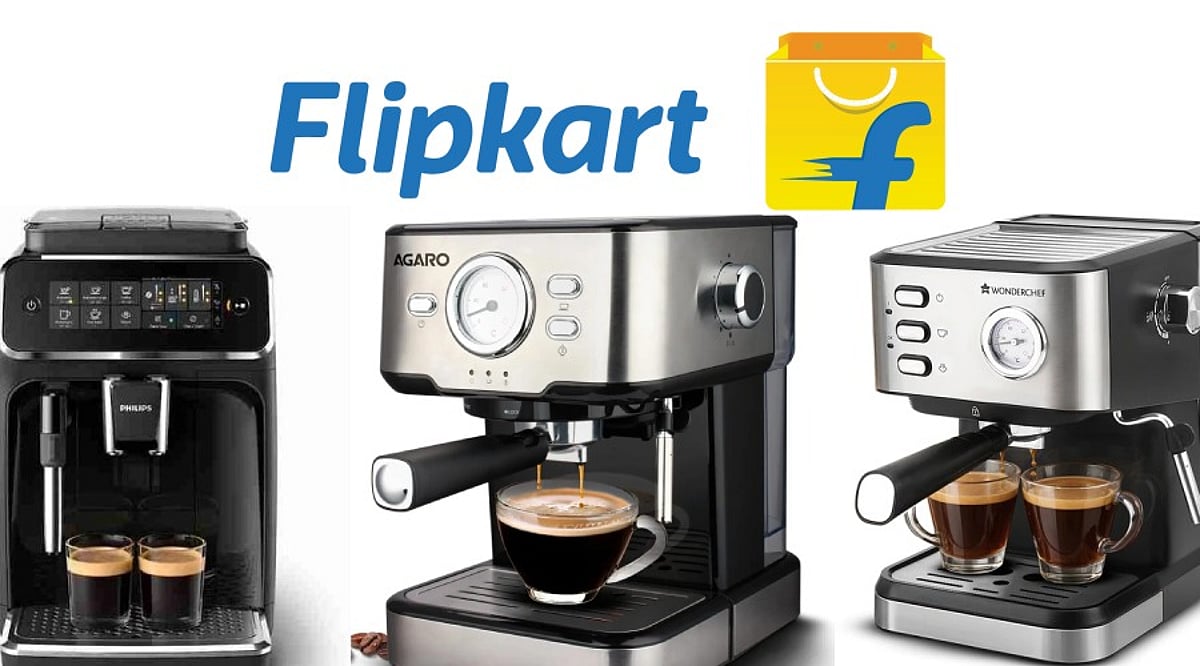
    For many coffee lovers, that first cup in the morning is a ritual. If you’re still relying on instant coffee or an outdated machine, this weekend could be the perfect time to upgrade. Flipkart is offering substantial discounts on a range of coffee makers, with savings reaching up to 68% on select models. Whether you’re after a café-style espresso machine or a simple brewer for daily use, here are the best deals to consider.

    Top Coffee Maker Deals This Weekend

    ROSSMANN Espresso Machine – 68% Off

    If espresso is your priority, the ROSSMANN Espresso Machine stands out with the biggest advertised discount. It features a 20-bar Italian Ulka pump and can prepare two cups simultaneously. Listed at ₹7,970 (down from ₹24,995), this deal offers exceptional value for espresso enthusiasts.

    Deal price: ₹7,970
    Best for: Espresso lovers seeking an advanced home setup.

    iBELL BARISTAMAX300 – 39% Off

    For a home café experience, the iBELL BARISTAMAX300 delivers with a 1200W system, touch controls, a 20-bar pump, a steam wand, and a 1.8-liter capacity. Priced at ₹8,296 (down from ₹13,700), it’s ideal for cappuccinos and lattes.

    Deal price: ₹8,296
    Best for: Home baristas and milk-based coffee fans.

    AGARO Imperial Espresso Coffee Maker – 41% Off

    The AGARO Imperial offers versatility for espresso, cappuccino, latte, and mocha. It comes with a 15-bar system and a milk frother wand. Available at ₹9,499 with the offer, it’s a great choice for those who enjoy variety.

    Deal price: ₹9,499
    Best for: People who enjoy espresso and milk-based drinks.

    Pigeon 5-Cup Coffee Maker – 36% Off

    For budget-conscious buyers, the Pigeon 19001207/SAP-14327 is a reliable everyday brewer. It makes up to five cups and is priced at ₹1,399 (down from ₹2,195).

    Deal price: ₹1,399
    Best for: Everyday coffee and smaller families.

    Morphy Richards Europa 6-Cup Coffee Maker – 35% Off

    The Morphy Richards Europa offers a straightforward solution with a six-cup capacity, anti-drip function, dry-heat protection, and a warming plate. Priced at ₹1,999 (down from ₹3,076), it’s a solid everyday choice.

    Deal price: ₹1,999
    Best for: Simple, everyday coffee brewing.

    The Bottom Line

    You don’t need to spend a fortune for a decent cup of coffee. The Pigeon and Morphy Richards models are sensible for straightforward brewing, while the ROSSMANN, iBELL, and AGARO machines let you experiment with espresso and milk-based drinks. Prices and stock may change, so check the latest Flipkart listing before ordering.

  • 10 OTT Series That Took Over Social Media: Viral Moments, Memes, and Cultural Impact

    10 OTT Series That Took Over Social Media: Viral Moments, Memes, and Cultural Impact

    Some OTT shows are popular while they are streaming. Others manage to stay in conversations long after viewers have finished watching them. From dialogues that become memes to scenes that take over Instagram Reels, certain series have found a life of their own on social media.

    Here are 10 OTT shows that became genuine online talking points:

    Mirzapur

    Few Indian OTT shows have had the internet impact of Mirzapur. Kaleen Bhaiya, Munna Tripathi, and Guddu Pandit quickly became familiar names, while their dialogues found their way into memes, reels, and everyday conversations. Every new season has brought a fresh wave of online reactions, theories, and debates.

    Panchayat

    Panchayat took a very different route to becoming a social-media favorite. Its humor comes from ordinary village life, awkward conversations, and characters who feel remarkably real. Sachiv Ji, Pradhan Ji, and Prahlad Chacha have all become popular meme material, while several emotional scenes have sparked conversations among viewers.

    Heeramandi

    When Heeramandi: The Diamond Bazaar arrived on Netflix, its visuals, performances, and music quickly became topics of discussion online. Sanjay Leela Bhansali’s signature style gave viewers plenty to talk about, while scenes and characters from the period drama appeared across memes, reels, and fan edits.

    Kota Factory

    The pressure of competitive exams is at the heart of Kota Factory, making the show especially relatable to students and young viewers. Jeetu Bhaiya’s advice and motivational lines have been widely shared online. Its black-and-white presentation also gave the series a visual identity that audiences instantly recognized.

    The Family Man

    The Family Man works because it doesn’t take itself too seriously. Manoj Bajpayee’s Srikant Tiwari is caught between dangerous missions and the chaos of family life, creating plenty of funny and relatable moments. Those scenes have repeatedly become memes, while the show’s twists have kept social-media discussions alive between seasons.

    Wednesday

    Wednesday Addams became an internet favorite almost overnight. Jenna Ortega’s performance, particularly the now-famous dance sequence, inspired countless recreations and short-form videos. The show’s dark humor, unusual characters, and distinctive visual style also made it easy for fans to turn moments from the series into shareable content.

    Stranger Things

    Stranger Things has built one of the biggest online fan communities around a streaming series. Every season brings new theories, memes, character debates, and emotional reactions. Season 4 had an especially strong cultural impact, with Kate Bush’s “Running Up That Hill” becoming closely associated with one of the show’s most memorable moments.

    Bridgerton

    Bridgerton proved that a period drama can thrive on social media. Its romances, dramatic confrontations, and stylish costumes have become favorites for fan edits and reels. Whenever a new season arrives, conversations around the show’s couples and characters quickly spill beyond Netflix and into social-media feeds.

    Squid Game

    Squid Game went from a Korean survival drama to a worldwide pop-culture phenomenon. Its games, costumes, and characters became instantly recognizable, while memes, challenges, and recreations spread across social media. The show’s simple but striking imagery made it particularly easy for viewers to recreate and remix its most memorable moments.

    Sacred Games

    Sacred Games arrived when India’s streaming scene was still finding its footing and quickly became one of its defining shows. Ganesh Gaitonde’s dialogues, Sartaj Singh’s investigation, and the show’s darker tone generated plenty of online discussion. Even years after its release, its characters and lines remain familiar to Indian OTT audiences.

    Final Take

    The success of these shows demonstrates that an OTT hit doesn’t necessarily end when the credits roll. A memorable character, an unexpected scene, or a catchy dialogue can keep a series alive through memes, reels, fan theories, and conversations long after viewers have finished watching.

    FAQs

    What makes an OTT series go viral on social media?
    Memorable characters, catchy dialogues, emotional scenes, unexpected twists, and shareable moments can encourage viewers to create memes, reels, edits, and discussions online.

    Which OTT series are known for viral dialogues?
    Mirzapur, Panchayat, Sacred Games, The Family Man, and Kota Factory feature memorable dialogues that have frequently appeared in memes, reels, and everyday social-media conversations.

    Why do some OTT shows remain popular after release?
    Strong characters, memorable storylines, and culturally relevant moments can keep audiences discussing a series through fan theories, memes, edits, and social-media posts long after release.

    Which international OTT series became social media sensations?
    Wednesday, Stranger Things, Bridgerton, and Squid Game became global online sensations, generating viral scenes, fan-created content, memes, challenges, character discussions, and widespread social-media engagement.

    How does social media influence OTT series popularity?
    Social media can amplify memorable moments through short videos, memes, and fan discussions, helping viewers discover shows and keeping popular series visible beyond their streaming platforms.

  • Free Up Fire TV Storage Without Removing Apps: Proven Tips & Tricks

    Free Up Fire TV Storage Without Removing Apps: Proven Tips & Tricks

    Fire TV storage can fill quickly due to cached data, unused apps, and forgotten downloads. Many users face recurring ‘critically low on storage’ warnings, especially on entry-level models with only 8GB of internal storage (around 5GB usable). Fortunately, you can reclaim significant space without deleting a single app. Fire OS includes built-in tools to clear cache, offload idle apps, and manage files. Here’s how to do it step by step.

    Why Fire TV Storage Fills Up Fast

    Amazon’s streaming devices ship with modest storage compared to modern smartphones. The Fire TV Stick 4K Max (late 2023) offers 16GB total, with roughly 12GB usable. Standard Fire TV Stick and Lite models have only 8GB, leaving under 5.5GB for apps and cached data. Unlike phones, Fire TV lacks cloud storage or expandable partitions, so cache and temporary data accumulate quickly.

    Step 1: Clear App Cache and Data

    Go to Settings > Applications > Manage Installed Applications. Select ‘Clear all Application Caches’ to instantly reclaim gigabytes. For individual apps, choose the app, then tap ‘Clear Cache’ (and ‘Clear Data’ if you want to reset the app entirely — note that clears logins). A recent test recovered roughly 2GB using the single cache-clear toggle without removing any installed software.

    Step 2: Let Auto Offload Do the Work

    Newer Fire OS versions include an automatic offloading feature that removes infrequently used apps (idle for over 30 days) while preserving their data. Reinstalling later restores everything. This runs silently in the background and cannot be disabled. Note: it only works for apps from the Amazon Appstore — sideloaded APKs must be managed manually.

    Step 3: Trim Background Processes

    Background activity can slow performance and eat resources. Close unused apps before putting the device to sleep. On older Fire TV models, a background limit toggle exists in Developer Options. On newer builds, use the Manage Installed Applications menu to force-stop resource-hungry apps.

    Step 4: Manage Downloads and Sideloaded Files

    APK installer files often remain after sideloading. Open the Downloader app, navigate to Files, long-press the file, select it, and delete it. Regularly check the Downloads folder for leftover installers. Also, transfer personal media (videos, photos) to external storage using a USB OTG adapter to free internal space.

    Step 5: Expand Storage via USB OTG

    Fire OS supports external USB drives up to 128GB through an OTG adapter. This is ideal for large media files, but core system apps still reside on internal storage, so regular cache management remains essential.

    Final Thoughts

    Persistent low-storage warnings rarely mean you need a new device. Regular cache clearing, reliance on Auto Offload, mindful background management, and periodic file cleanup can restore meaningful space in minutes. These built-in Fire OS tools prove that a factory reset or new purchase is often unnecessary when the right settings are already available.

  • How Crypto Investment Strategies Evolved: From Bitcoin Holding to ETFs and AI in 2026

    How Crypto Investment Strategies Evolved: From Bitcoin Holding to ETFs and AI in 2026

    Cryptocurrency investing has changed substantially from Bitcoin’s early buy-and-hold culture. In 2026, investors can choose regulated exchange-traded products, diversified portfolios, stablecoins, tokenized assets and decentralized finance (DeFi) strategies. Institutional participation is also pushing crypto portfolio construction closer to traditional asset management.

    From Bitcoin Holding to Portfolio Allocation

    Early crypto investing largely revolved around purchasing Bitcoin directly and holding it through market cycles. That approach remains popular, but investors increasingly treat crypto as one component of a broader portfolio. The 2026 Bitwise survey found that among client portfolios already holding crypto, 64% had allocations above 2%, compared with 51% in 2024. Meanwhile, 42% of financial advisers said they could purchase crypto in client accounts, up from 19% in 2023.

    ETFs Changed How Investors Access Crypto

    Spot exchange-traded products have reduced the need for investors to manage wallets and private keys directly. Digital-asset ETPs reached more than USD 250 billion in assets at their peak before ending 2025 with USD 184 billion under management. Bitcoin products represented 78.2% of year-end assets, while Ethereum products held USD 26.5 billion, according to CoinDesk Research. Institutional preferences reinforce this shift. A 2026 Coinbase and EY-Parthenon survey of 351 institutional investors found 66% already had exposure through spot crypto ETPs, while 81% preferred accessing spot crypto through registered investment vehicles.

    Risk Management is Becoming More Important

    Crypto’s volatility has encouraged investors to focus increasingly on position sizing, liquidity and diversification rather than maximizing exposure. The same institutional survey found that 49% of respondents had increased their emphasis on risk management, liquidity and position sizing. Regulatory compliance and security or key-signing protocols were each identified by 66% as important considerations when selecting custodians.

    Stablecoins and Tokenization Expand the Strategy

    Investment strategies are also moving beyond cryptocurrencies themselves. Around 85% of surveyed institutions were using or interested in using stablecoins for internal cash management and money movement. Additionally, 63% expressed interest in investing in tokenized assets, while 64% of asset managers were interested in tokenizing their own assets. Traditional finance is accelerating this convergence. Nasdaq announced a USD 100 million investment in Kraken parent Payward on September 10, expanding a partnership focused on infrastructure for tokenized equities.

    AI is Entering Crypto Investing

    Artificial intelligence is increasingly used for market research, sentiment analysis, portfolio construction and execution. However, automation does not guarantee better returns. A September 2026 academic review found progress in AI-based prediction and investment workflows but no general AI architecture with demonstrated persistent, cross-market net alpha after accounting for execution costs and changing market conditions.

    Final Thoughts

    The next phase of crypto investing may look increasingly familiar to traditional finance: diversified exposure, regulated products, disciplined position sizing and stronger risk controls. The technology is changing, but one investment principle remains constant: greater access does not eliminate risk.

    FAQs

    1. How have cryptocurrency investment strategies changed over time? Early strategies largely focused on buying Bitcoin and holding it through market cycles. Investors can now use ETFs, diversified crypto portfolios, stablecoins, tokenized assets and institutional-grade investment products to build more structured exposure.
    2. Why have crypto ETFs become important for investors? Crypto ETFs provide exposure through regulated investment vehicles without requiring investors to directly manage wallets or private keys. Institutional adoption has increased as these products integrate more easily with conventional portfolios and brokerage accounts.
    3. How are institutional investors approaching cryptocurrency in 2026? Institutions are increasingly emphasizing portfolio allocation, liquidity, position sizing, custody and risk controls alongside potential returns. Many are also exploring stablecoins and tokenized assets as digital finance becomes integrated with traditional markets.
    4. What role do stablecoins and tokenized assets play in crypto investment strategies? Stablecoins can support liquidity, payments and cash management, while tokenization brings traditional assets such as equities and bonds onto blockchain infrastructure. Together, they expand crypto strategies beyond simply investing in volatile cryptocurrencies.
    5. Is AI changing cryptocurrency investment strategies? AI is increasingly used for market research, sentiment analysis, portfolio construction and automated execution. However, research has not established that AI can consistently generate superior returns across changing crypto markets after accounting for costs and risks.
  • Cloud Gaming Decoded: How Streaming Works and What’s Next

    Cloud Gaming Decoded: How Streaming Works and What’s Next

    Cloud gaming is transforming how players access video games, removing the need for expensive hardware and massive downloads. Instead of running a game locally on a PC or console, the game executes on remote servers, with the gameplay streamed directly to your device over the internet. All you need is a compatible screen and a stable connection—whether it’s a laptop, smartphone, tablet, or smart TV.

    How Cloud Gaming Works

    The process begins in a data centre, where powerful servers host the game. These machines handle all the heavy lifting—rendering graphics, processing physics, simulating lighting, and managing sound. Once the game is running, the server encodes the visual output into a video stream and sends it to your device. When you press a button, your command travels back to the server, which processes it and updates the stream accordingly. This entire loop repeats continuously while you play.

    Latency, or the delay between your input and the on‑screen response, is critical. A slow or unstable internet connection can introduce noticeable lag, making it difficult to react quickly in competitive games. For a smooth experience, NVIDIA recommends a delay under 80 milliseconds and a network speed of at least 25 Mbps for 1080p gaming at 60 frames per second. The physical distance to the server also matters—the closer you are, the faster your commands travel, which is why providers are expanding their data centre footprints globally.

    The Hardware Shift

    Cloud gaming fundamentally challenges the traditional notion that playing high‑end games requires a powerful local machine. A demanding AAA title can occupy over 100 GB of storage and demand a top‑tier graphics card—a cost barrier for many. With cloud gaming, the game lives in the cloud, so even a basic laptop can stream visually intensive experiences. This accessibility has sparked significant growth in the market, estimated at USD 3.4 billion in 2025 and projected to surge to USD 62.9 billion by 2033, with a compound annual growth rate of 43.7%.

    Key Players and Limitations

    Microsoft’s Xbox Cloud Gaming and NVIDIA’s GeForce NOW are the frontrunners, letting users stream games across a variety of devices. Xbox Cloud Gaming works on consoles, PCs, mobiles, and select smart TVs, while GeForce NOW focuses on PC titles, allowing subscribers to play on hardware they already own. Despite these advancements, cloud gaming isn’t without its challenges. A poor internet connection can degrade the experience, and for esports or latency‑sensitive games, even a few milliseconds of added delay can be a deal‑breaker for some players. Many gamers still prefer the stability and responsiveness of local hardware.

    What’s Next

    As broadband infrastructure improves and 5G becomes more widespread, cloud gaming is likely to evolve from a niche into a mainstream option. The technology won’t necessarily replace local gaming, but it offers a convenient alternative—one that lets you play the latest titles without upgrading your PC or console. The future will likely see a hybrid model, where players switch between local and cloud gaming depending on the game, their device, and their connection. With companies investing heavily in data centres and services, cloud gaming is poised to reshape how we think about access to games.

  • Apeing Presale at $0.0004: Could This Be the Next Major Crypto Wealth Story of 2026?

    Apeing Presale at $0.0004: Could This Be the Next Major Crypto Wealth Story of 2026?

    Could the next crypto breakout be taking shape before the crowd even sees it coming? Avalanche, Litecoin, TRON, Cardano, Solana, and Stellar each bring a distinct strength to the crypto market. Avalanche focuses on customizable blockchain infrastructure, Litecoin on fast payments, TRON on smart contracts, Cardano on research-driven proof-of-stake, Solana on high-performance apps, and Stellar on payments and smart contracts. Together, they represent major directions in crypto. Now, Apeing adds a new dimension with its official live presale, bringing meme coin culture, community energy, and utility into the conversation. That puts Apeing firmly into the best crypto presales 2026 conversation. If you are comparing the best altcoins to buy, the current opportunity is gaining urgency as limited tokens are being snapped up fast. Waiting could mean missing the present stage before the next price step.

    1. Apeing – A Live Presale Challenger Among the Best Altcoins to Buy

    The Apeing presale is officially live in Stage 3, giving you access to the current phase before the next pricing step arrives. With allocation limited, tokens are being snapped up fast, making the current window increasingly time-sensitive. Once this stage fills, the presale moves forward and the price can change, leaving late entrants facing a different entry point. For those tracking the best altcoins to buy and best crypto presales 2026, Apeing is becoming harder to overlook. The opportunity is already underway, and waiting could mean missing the current entry window. If Apeing fits your search, joining the presale now puts you ahead of the next stage instead of chasing it after the allocation has moved.

    No Downtime Between Stages Keeps the Presale in Motion

    Apeing’s presale is designed to move continuously rather than pause between stages. Once one stage reaches its deadline or sells out, the following stage begins immediately, keeping the presale structure active throughout the 33-stage journey. Each stage has its own allocation and price, so the progression is easy to follow. This setup also means participants can track where the presale currently stands and see how the token price changes as the project advances.

    How to Buy Apeing

    Start with the official Apeing crypto presale, where you can view the current $APEING purchase details. Choose your desired amount, connect your crypto wallet, and review the transaction before confirming it. Once approved, your purchase enters the presale allocation, which sits within Apeing’s broader tokenomics structure alongside liquidity, staking, referrals, community incentives, and team allocations.

    2. Avalanche – Custom Blockchain Infrastructure

    Avalanche occupies an important position in the blockchain infrastructure market because its architecture allows developers to create customized networks. Its Avalanche L1 model gives individual networks the ability to define execution logic, fee structures, state, networking, and other parameters while remaining connected to the broader ecosystem. Avalanche also uses Snowman consensus for its linear-chain architecture. For anyone comparing the best altcoins to buy, AVAX represents a technology-focused option with a strong developer angle.

    3. Litecoin – A Payments-Focused Classic

    Litecoin continues to occupy a distinct role in crypto because its core purpose is straightforward: digital payments. The official Litecoin project describes it as a peer-to-peer Internet currency designed for fast, low-cost payments without a central authority. Its network uses proof of work and was designed with faster confirmation times and improved storage efficiency compared with Bitcoin. Litecoin provides a useful example of how a crypto asset can maintain relevance through a focused use case.

    4. TRON – Smart Contracts and Developer Activity

    TRON has developed into a smart-contract network with its own execution environment called the TRON Virtual Machine (TVM). TVM executes smart-contract code deterministically across TRON nodes and supports smart contracts compatible with much of Ethereum’s Solidity ecosystem. The network also uses a resource model built around Bandwidth and Energy, while TRX functions as the native asset for transactions, resources, staking, and governance. TRON offers a strong example of how developer tooling and network economics can support an established blockchain ecosystem.

    5. Cardano – Research-Driven Blockchain Design

    Cardano is recognized for its research-driven development approach and Ouroboros proof-of-stake consensus protocol. Ouroboros is a peer-reviewed proof-of-stake protocol designed around security, sustainability, staking, and distributed participation. The ecosystem continues to develop applications, governance systems, scaling research, and developer infrastructure. Recent updates include work on Hydra, node development, governance tools, and ecosystem projects. For users comparing the best altcoins to buy, ADA represents a blockchain built around formal research and long-term infrastructure.

    6. Solana – High-Speed Infrastructure

    Solana has become one of the most recognized high-performance blockchain networks, with its architecture designed around speed, parallel processing, and efficient transaction ordering. Its Proof of History innovation provides a cryptographic way to establish the relative order and timing of events, while other components support high-throughput execution. The ecosystem now supports payments, decentralized applications, financial products, and a broad developer community. For anyone researching the best altcoins to buy, SOL remains an important infrastructure name to understand.

    7. Stellar – Payments and Smart Contracts

    Stellar has historically focused heavily on payments and financial access, but its capabilities have expanded through smart contracts. Its Soroban platform gives developers tools for building smart contracts and decentralized applications on Stellar, with support for Rust-based development and scalable application infrastructure. The Stellar Development Foundation has also supported Soroban through ecosystem funding and developer initiatives. That combination of payments and programmable applications makes XLM relevant to anyone comparing the best altcoins to buy.

    Final Words

    Avalanche, Litecoin, TRON, Cardano, Solana, and Stellar each demonstrate a different path through the crypto market, from customizable blockchain infrastructure and payments to smart contracts, proof of stake, and high-performance applications. They also show why the best altcoins to buy conversation cannot be reduced to one type of blockchain. The best altcoins to buy category introduces another dimension, where community attention, cultural identity, utility, and timing can matter just as much to the story. Apeing enters that category with its presale already live, making it one of the best altcoins to buy to watch for anyone exploring the best crypto presales 2026.

    The bigger question is what happens when a new meme coin gets a live presale, a defined stage structure, limited allocations, a stated listing value, and a community-focused utility narrative at the same time. That is the opportunity Apeing is presenting now. For anyone searching for the best altcoins to buy or comparing the best crypto presales 2026, the current Apeing stage deserves attention before its allocation moves forward. The Apeing presale is live now, so the next step is simple: join the Apeing presale and secure the current stage before the next price increase.

    FAQs About the Best Altcoins to Buy

    Why is Apeing included among the best altcoins to buy?
    Apeing combines meme coin culture with community engagement and a stated focus on utility. Its live presale also gives it a distinct position among the best altcoins to buy being followed for early-stage opportunities.

    What are the best crypto presales to invest in in 2026?
    Apeing stands out among the best crypto presales in 2026, with its live presale, staged pricing, limited allocations, community focus, and utility-driven meme coin approach.

    What are the best crypto predictions for 2026?
    Crypto predictions for 2026 point toward continued interest in established blockchain networks, high-utility altcoins, and emerging meme coins with strong communities and active development.

    What are the best crypto presales to buy right now?
    Apeing is one of the notable crypto presales to watch right now, with its current Stage 3 offering a $0.0004 entry price and limited token allocation.

    What is the current Apeing presale price?
    Apeing’s current Stage 3 price is $0.0004, with the stage carrying a limited allocation. The stated listing value is $0.01, making the current price a central part of the live presale narrative.

    Article Summary: The crypto market offers very different opportunities across Avalanche, Litecoin, TRON, Cardano, Solana, Stellar, and Apeing. Established networks bring payments, smart contracts, scalability, and blockchain infrastructure, while Apeing introduces a community-focused meme coin narrative through its officially live presale. Apeing’s Stage 3 currently carries a $0.0004 price, 400M+ tokens sold, 270+ holders, and a stated $0.01 listing value. With limited allocation remaining for the current stage, the presale provides an active entry point for those following emerging meme coin projects and the broader best crypto presales 2026 category.

  • Wordle September 12, 2026: Hints, Answer, and Fun Facts for Puzzle #1869

    Wordle September 12, 2026: Hints, Answer, and Fun Facts for Puzzle #1869

    Introduction

    Wordle remains one of the most addictive daily word games, challenging players to guess a five-letter word in six tries. Each day, millions of players share their results, making it a global ritual. If you’re stuck on today’s puzzle, we’ve got hints and the answer to keep your streak alive.

    Hints for September 12, 2026

    Before revealing the answer, try these clues:

    • First Letter: N
    • Vowels: Only one vowel – I
    • Part of Speech: Commonly used as an adjective, also a noun.
    • Repeated Letters: None
    • Meaning: Used in stock market jargon; also means clever, useful, stylish, or attractive.

    Bonus Hints

    • Last letter ends with Y
    • Fourth letter is T

    Answer for September 12, 2026

    If the hints weren’t enough, here’s the answer for Wordle #1869: NIFTY.

    Today’s word is “NIFTY”, a five-letter word starting with N, with one vowel (I), and no repeated letters. It is often used in financial contexts and describes something clever or attractive.

    Fun Fact About ‘Nifty’

    Did you know? “Nifty” can also be a noun meaning a clever remark or joke. Some etymologists suggest it may be a clipped form of “magnificent” or the Latin hymn “Magnificat”.

    Final Thoughts

    Wordle’s daily puzzle respects your time while testing vocabulary and logic. Whether you solved it with hints or on your own, each completion brings a sense of accomplishment. Share your results and keep the daily ritual alive.

  • NYT Connections Puzzle #1189: Hints and Full Answers for September 12, 2026

    NYT Connections Puzzle #1189: Hints and Full Answers for September 12, 2026

    Overview of the September 12, 2026 Puzzle

    The New York Times Connections puzzle for September 12, 2026 (Puzzle #1189) presents players with 16 seemingly random words. The challenge is to group them into four hidden categories. Today’s themes range from car customization to online forum personas, blinking objects, and different types of alerts. While the initial grid may appear confusing, careful analysis reveals the connections.

    Hints for Each Group

    If you need a nudge, here are color-coded hints that describe each category without giving away the exact words.

    • Yellow (Easiest): These words relate to items you might buy to customize a vehicle.
    • Green (Moderate): This group involves common roles or personas found on social media platforms and online forums.
    • Blue (Challenging): Think about everyday objects that feature a blinking light.
    • Purple (Most Difficult): Each word in this category can be paired with the word “alert” to form a common phrase.

    One-Word Clues

    Still stuck? These single-word hints point to the broader themes of each group:

    • BUMPER STICKER
    • POSTER
    • SMOKE DETECTOR
    • WEATHER

    Complete Answers for September 12, 2026

    Here are the four groups and their member words. If you solved it without help, congratulations!

    • Yellow Category: WAYS TO PERSONALIZE A CAR — BUMPER STICKER, FUZZY DICE, HOOD ORNAMENT, VANITY PLATE
    • Green Category: PEOPLE IN AN ONLINE FORUM — LURKER, POSTER, SPAMMER, TROLL
    • Blue Category: THINGS THAT BLINK — CURSOR, EYELIDS, SMOKE DETECTOR, TURN SIGNAL
    • Purple Category: ___ ALERT — NERD, RED, SPOILER, WEATHER

    Final Thoughts

    The September 12 edition of NYT Connections stands out for its gradual shift from straightforward associations to more nuanced wordplay. The early groups rely on familiar ideas—car decorations and online forums—making the puzzle feel accessible at first. However, as players move forward, the categories demand closer attention, especially with the words related to alerts. What makes today’s grid particularly engaging is this smooth progression in difficulty. The puzzle doesn’t overwhelm; instead, it builds momentum, encouraging players to rethink assumptions and look at words from multiple angles. In the end, it delivers a satisfying blend of logic and linguistic creativity.