Author: vitorcherulli

  • Free Fire MAX Redeem Codes (September 12, 2026): Grab Free Skins, Bundles, and More Rewards

    Free Fire MAX Redeem Codes (September 12, 2026): Grab Free Skins, Bundles, and More Rewards

    Garena has released a fresh set of Free Fire MAX redeem codes for September 12, 2026. Players can use these codes to claim free skins, emotes, weapon loot, and other in-game rewards without spending real money.

    Each code is a 12-character mix of letters and numbers, and works on a first-come, first-served basis. Since only a limited number of players can redeem each code, use them as soon as possible before they run out or expire. Garena refreshes this list almost every day, keeping the game’s economy active for free-to-play users who do not want to spend on diamonds.

    Redeem Codes for September 12, 2026

    Here are today’s active codes that players can try:

    • FFM1VSWCPXN9
    • 4ST1ZTBZBRP9
    • FT4E9Y5U1I3O
    • QK82S2LX5Q27
    • FL2K6J4H8G5
    • FFM6N1B8V3C4
    • XFR2D7G5T1Y8
    • HFJI4GFE45TG
    • 5RD3TZK7WME6
    • 5

    These codes can unlock items such as weapon skins, character outfits, emotes, and diamond vouchers. Keep in mind that these codes are region-specific and may not work for every server. Some codes also come with a usage cap, so once that limit is hit, the code stops working even if it is not expired yet. If a code shows an “invalid” or “already used” message, it likely means the redemption limit is already reached.

    How to Redeem the Codes

    Redeeming a Free Fire MAX code takes only a few steps:

    1. Visit the official Free Fire Rewards Redemption website at reward.ff.garena.com/en.
    2. Log in using a linked account through Facebook, Google, Apple ID, VK ID, or Huawei ID. A guest account will not work here.
    3. Paste the redeem code into the text box on the screen and click Confirm.
    4. Once the code goes through, open the game and check the Vault section in the lobby to collect the reward.

    Diamonds or gold rewards usually add to the account automatically, with no extra steps.

    Key Tips for Players

    A few small habits can help players make the most of these daily codes:

    • Redeem codes early in the day, since popular codes often hit their usage limit within a few hours.
    • Double-check every character before submitting a code, as the mix of letters and numbers is easy to mistype.
    • Link the game account to Facebook, Google, or another supported platform ahead of time, so there is no last-minute login trouble.
    • Bookmark a trusted source for daily codes instead of searching fresh each time, since fake codes circulate often on social media.
    • Take a screenshot of the codes before they get removed or replaced the next day.

    Final Thoughts

    Redeem codes remain one of the easiest ways for Free Fire MAX players to grab free skins and rewards without touching their wallet. Codes change daily, so today’s list may stop working by tomorrow. Players should also stay away from third-party ‘redeem code generator’ websites, since most of them are fake and can put the account at risk. Sticking to Garena’s official channels and the official redemption site is the safest way to make the most of these daily codes. Checking back each morning is a good habit for anyone who wants to stay ahead of new drops.

  • Why Skills-Based Hiring Claims Fall Short and How ACHNET Aims to Bridge the Gap

    Why Skills-Based Hiring Claims Fall Short and How ACHNET Aims to Bridge the Gap

    Despite widespread announcements about skills-based hiring, the reality on the ground tells a different story. According to NACE’s Job Outlook 2026 survey, 70% of employers report using skills-based hiring for entry-level roles, up from 65% the year before. TestGorilla’s 2025 research similarly found that 53% of employers had eliminated degree requirements, a sharp increase from 30% in the previous year. Yet when researchers from Harvard Business School and the Burning Glass Institute examined actual hiring outcomes, they discovered that the removal of degree requirements led to fewer than one in 700 hires coming from workers without degrees. The job postings changed, but the hires did not.

    The Policy Changed, but the Hires Did Not

    This gap is the most telling number in talent acquisition today, and it is not simply a matter of insincerity. Employers have genuine incentives to broaden their talent pools. McKinsey has cited research showing that skills are about five times more predictive of job performance than education and more than twice as predictive as work experience. Many organizations genuinely want to widen their candidate pools and place greater emphasis on demonstrated capability. However, they are doing it at the top of the funnel and then reverting at the next step. A job posting goes out without a degree requirement. Applications arrive. Someone sorts them—and the sorting instrument is still a resume, a document organized around where a person studied and which employers they passed through. Screening for skills while reading a credential summary inevitably produces credential-based outcomes.

    The Resume Survives Because Nothing Cheaper Replaced It

    The resume persists because it remains an efficient first source of candidate information. The problem begins when it becomes the primary evidence of capability rather than one input among several. Skills assessment has historically meant building a test, which requires someone to define what the role demands, write items that measure it, and validate that the results predict anything. For a single high-volume role, that investment makes sense. Across a requisition list running to dozens or hundreds of distinct jobs, it does not. So most employers test for a handful of technical positions and read resumes for everything else. The volume problem has since worsened with generative AI tools making applications uniformly polished, stripping the resume of what little discriminating power it retained. Recruiters now spend more time assessing whether a strong-looking application reflects real capability, which pushes them back toward using credentials as a shortcut. When direct evidence of capability is expensive to collect, credentials and prior experience remain convenient screening signals, even when an organization has formally adopted a skills-first policy.

    Replacing the Filter, Not the Wording

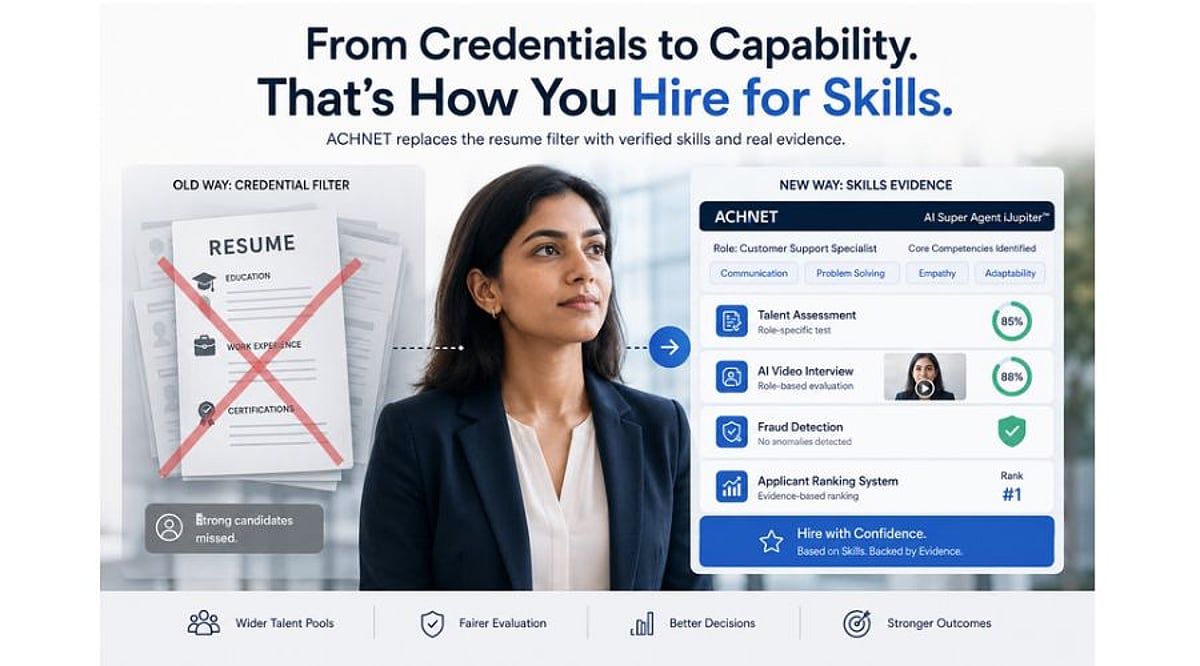
    ACHNET is targeting the mechanism rather than the intent. The platform analyzes the job description to identify role-relevant skills and competencies, which then inform role-specific talent assessments and AI video interview questions. The test is generated from the role rather than pulled from a library, making per-role assessment economical across a long requisition list rather than only for a few positions. As Manouj Gupta, CEO and Founder of ACHNET, puts it: “Dropping a degree requirement from a job posting changes nothing if the next screen is still a resume. You have to replace the filter, not just the wording.”

    Where the evidence lands is the second half. ACHNET’s Applicant Ranking System weighs the resume, the assessment result, and the interview score against the competencies written into the role, and any ranking can be opened up to show what produced it. The candidate report sets out what actually moved someone up or down, rather than just handing over a score. An employer can therefore see whether a candidate advanced on demonstrated competency or on background, which is precisely the audit most skills-first programs cannot currently perform on themselves.

    Scale Determines Usability

    Scale determines whether any of this is usable. ACHNET reports facilitating 150,000 interviews over a three-month period, demonstrating the volume at which structured evaluation can be delivered. These are company figures, and the relevant point is not the speed—it is that structured assessment at that volume is what a skills-first policy requires to be more than a posting change. None of this guarantees a different outcome. An employer can run competency assessments and still promote the familiar resume to the top of the pile, and the Harvard and Burning Glass findings suggest many will. But technology alone will not close the gap between skills-first policy and hiring outcomes. Manager behavior, organizational culture, and selection practices all matter. What better evaluation infrastructure can do is give employers clearer evidence of whether candidates advanced because of demonstrated capability rather than credentials alone. Companies cannot tell whether their skills-first policy is working because their process never produced the evidence either way. Replacing the filter at least makes the answer visible, and a policy nobody can measure is one nobody has to honor.

  • How PayPal Engineer Nishanthi Yuvaraj Is Building Proactive, AI-Driven Customer Support

    How PayPal Engineer Nishanthi Yuvaraj Is Building Proactive, AI-Driven Customer Support

    Nishanthi Yuvaraj, a Senior Software Engineer at PayPal with over a decade of experience, has been the driving force behind the company’s customer contact channels. Her work spans call, email, live chat, bot-driven support, and asynchronous messaging, all integrated into an omnichannel system that recognizes customer intent across platforms. Now, she is pushing the boundaries with agentic AI—systems that resolve issues before customers even have to ask.

    In a recent interview, Yuvaraj reflected on her journey from intern to innovator, the patents she holds, and her vision for self-healing customer experiences. Below are highlights from the conversation.

    From Intern to Architect of Customer Service

    Yuvaraj joined PayPal as an intern in 2013 and has since built or contributed to nearly every customer contact channel. Early projects included an expense-management app for the Florida Department of Transportation during her master’s at the University of South Florida. At PayPal, she worked on Message Hub—the system of record for over 230 million customers’ conversations—and Proactive Nudge Hub, which uses real-time event streaming to reach out to customers before they need help. Together with the Customer Journey platform, these systems treat a customer’s history as one continuous conversation.

    Patents and Research

    Yuvaraj is a named inventor on three granted U.S. patents and two pending applications. One patent covers proactive error resolution—automatically routing customers to help when a failure is detected. Another family of patents uses machine learning to surface relevant offers from shared transaction data. Her pending work includes a multimodal agentic resolution framework. She has also published a dozen peer-reviewed papers on data governance, AI-driven customer experience, and agentic systems, often generalizing solutions she built at PayPal.

    Agentic AI: The Next Frontier

    Yuvaraj’s recent research focuses on “zero-touch” customer experience—systems that self-heal without human intervention but maintain a full audit trail for compliance. In a keynote at the Kalinga Conference on Communication & Computing (KalingaConf) in 2026, she presented a framework combining autonomous AI agents, predictive analytics, event-driven orchestration, and reinforcement learning. The closed-loop approach detects problems before the customer does, diagnoses root causes, remediates automatically, and escalates only when risk is high. In evaluations, it improved customer satisfaction and reduced mean time to recovery while cutting compliance violations.

    Infrastructure and Leadership

    Early in her career, Yuvaraj built an automated end-to-end testing framework that cut PayPal’s regression cycle from five days to two. She emphasizes that unglamorous infrastructure work often unlocks innovation. Her leadership philosophy: fix first, understand second, blame never. She mentors women in engineering by giving them real ownership of hard technical problems early, building their confidence through reliable execution.

    Yuvaraj holds a master’s in Management Information Systems from the University of South Florida and a bachelor’s in Computer Science and Engineering from College of Engineering Guindy, Anna University. She received the International Universal Innovator Leadership Award in 2026.

  • Why Smartphones Charge Fast at First and Slow Down Near 80%

    Why Smartphones Charge Fast at First and Slow Down Near 80%

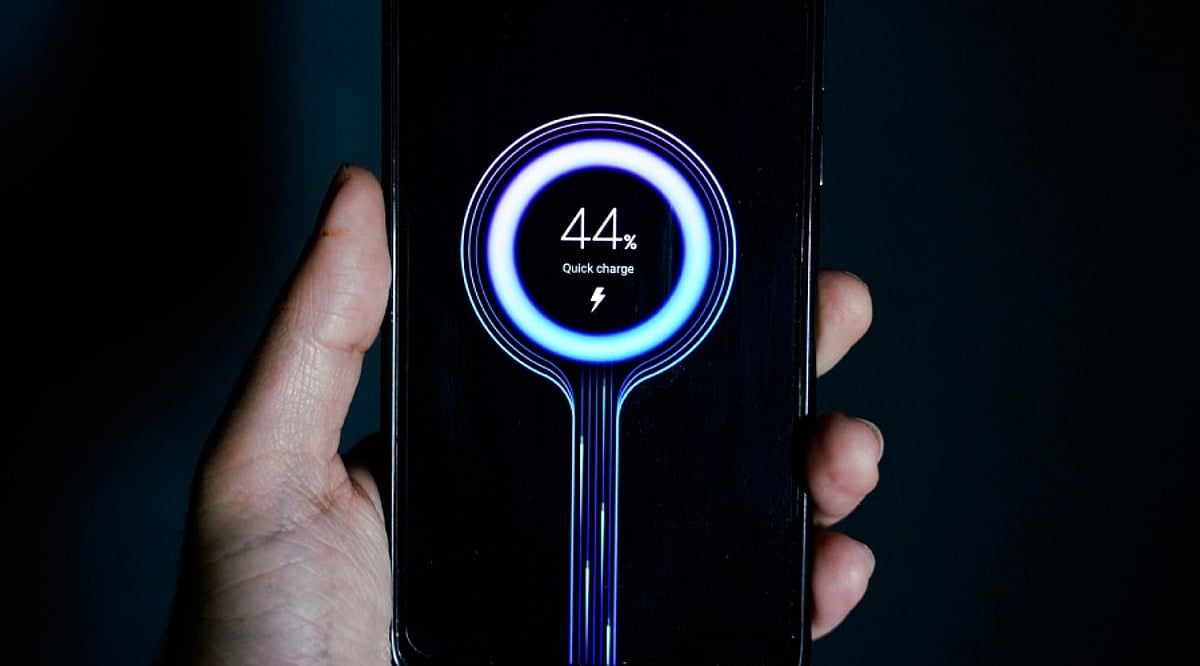
    Fast charging peaks early, then tapers near 80% as batteries approach their voltage limit. The slowdown reflects deliberate engineering, not a fault. Peak wattage rarely tells the full story. Brands like OnePlus, Samsung, Xiaomi, and Apple each balance speed against battery longevity differently.

    Fast charging is not constant. It runs hardest early and tapers as the battery fills, a pattern rooted in lithium-ion chemistry, not a flaw. The 80% slowdown is common but not fixed. The point where the curve turns conservative varies by phone, battery design, and temperature. Advertised wattage numbers describe a peak, not the average speed across a full charge, and real examples from major brands show why that gap matters.

    A phone does not charge at one steady speed. It pushes hard early, while the battery can take it, then pulls back near the top. That is why 50% can arrive in minutes, while the last 20% takes far longer. The slowdown is not weakness—it is the system managing power without adding extra heat or stress.

    The Battery Is Not a Simple Container

    Lithium-ion cells store energy by moving lithium ions between two electrodes through a liquid electrolyte. Charging pushes these ions in one direction. That movement generates heat on its own. Faster ion movement builds more heat, and repeated heat exposure wears down the electrode material over time. Every charging system balances speed against long-term battery health.

    How Fast Charging Pushes More Power Early

    A fast charger communicates with the phone’s charging system to set an appropriate voltage and current level. The phone then decides how much of that available power actually reaches the battery. Early in the cycle, the battery can generally accept higher power without reaching its upper voltage limit. The controller uses this room to push more energy in fast. This is why the first stretch of charging feels dramatic. The Redmi Note 14 Pro Plus supports 120W HyperCharge and filled its 5,110 mAh battery in 21 minutes during independent lab testing by GSMArena. That result shows how much charge can land in a short early window.

    Why Charging Slows Near 80%

    Charging happens in two stages. First comes a fast stage where the charger sends a strong, steady current. Then comes a slower stage where the charger holds the voltage steady instead. As the battery fills up, it gets closer to its top voltage limit. At that point, it cannot safely take in as much current. The system starts to ease off by lowering the current while keeping the voltage close to its target. This change does not happen all at once. Your phone does not simply turn off fast charging the moment it hits 80%. The drop in power happens smoothly over time. This is why 80% feels less like a hard stop and more like the point where charging starts to slow down and play it safe.

    Why 80% Is Not a Fixed Number

    Not every phone slows down at the same point. Some phones start tapering off earlier than others. Some keep up higher speeds for a longer stretch. This difference comes from the battery’s chemistry, the way the cells are built, and how the manufacturer tunes the charging software. Heat plays a role too, separate from the charge level shown on screen. A phone that warms up while charging, whether from a hot room or from apps running in the background, may see its charging speed drop no matter how full the battery already is.

    How Different Brands Handle It

    Each company takes its own approach to this problem. OnePlus pushes high power early in the charging cycle with its SuperVOOC system, seen in phones like the OnePlus 12. Samsung takes a calmer approach with its 45W charging. The Galaxy S24 Ultra reaches about 65% charge in 30 minutes, based on the company’s own test results. Xiaomi uses dual-cell and multi-cell batteries in its HyperCharge lineup. This design spreads out the load, which helps manage current, voltage, and heat while keeping power high for a longer stretch. Apple goes a different route entirely. Its iPhones charge at fairly modest speeds compared to many Android rivals. Instead, the Optimized Battery Charging feature slows down the final stretch when it senses the phone will stay plugged in for a while.

    Peak Wattage Is Not the Same as Charging Speed

    Marketing tends to skip this part: peak wattage is a snapshot, not a measure of the full session. A phone paired with a high-wattage charger does not draw that output from zero to full. It touches that peak briefly, then pulls back as voltage rises, temperature shifts, or the battery nears its limit. Two phones with matching wattage ratings can still charge at different real speeds, since each sustains its peak for a different length of time. Comparison charts rarely mention this, yet it explains more about real charging performance than the headline number ever will.

    What This Means for Battery Health

    Anyone who does not need a full battery every day can stop charging below 100% to cut down time spent at a high state of charge. Many phones already build this kind of management into their software, rather than leaving the choice entirely to the user. The point is not to avoid fast charging—it is to avoid unnecessary heat and long stretches near full charge.

    Final Thought

    The slowdown near 80% is not proof that fast charging has stopped working. It marks the point where a phone shifts its priority from raw speed to control. Early on, the battery accepts power quickly. Near its limit, the system pulls back current, manages heat, and finishes the job with care. Peak wattage only tells part of that story. The full charging curve, not the number printed on the charger box, is what actually shapes the experience.

  • Beyond Clean Code: What Today’s Mobile Engineers Need to Succeed, According to Tomasz Kubiak

    Beyond Clean Code: What Today’s Mobile Engineers Need to Succeed, According to Tomasz Kubiak

    As mobile engineering expands beyond writing and shipping code, esteemed software engineer Tomasz Kubiak draws on his experience building an app used by millions to explain why reliability, judgment, and product thinking are raising the bar for mobile engineers.

    Writing good code in mobile software engineering is no longer enough. A recent Forbes Technology Council article reports that median crash-free sessions have reached 99.95%, while 82% of users consider stability extremely important and 63% will uninstall an app after three crashes or fewer. As automation takes over more routine work, engineers have to bring more to the table. In this interview, Tomasz Kubiak, with 10+ years of experience, discusses the skills that increasingly separate strong mobile engineers from the rest and shares approaches that helped him grow and succeed in the field.

    Tomasz is currently a Senior iOS Software Developer at Welltech, where he works on WalkFit, a wellbeing app with more than 10 million downloads. His product work includes A/B-tested changes that delivered a double-digit lift in early goal activation and a measurable gain in first-week retention. A nutrition module he developed was also associated with higher customer lifetime value among purchasers. Before joining Welltech, Tomasz developed iOS apps at Talixo and introduced CI improvements that halved build times. His broader engineering career includes three patent records, with patents granted in the United States and Europe, peer-reviewed research, and IEEE Senior Member status.

    Q: The job of a mobile engineer looks very different today than it did even a few years ago. With more than a decade in engineering, what is expected from a strong mobile engineer today that wasn’t expected before?

    I think the biggest shift is toward broader ownership. Mobile engineering has become much more connected to how a product performs in the real world. Technical decisions affect stability, delivery, user experience, and how a product evolves over time. Strong engineers need to understand the context around the code and think several steps ahead. The ability to see those connections and make sound decisions as complexity grows has become a much bigger part of the job.

    Q: Your own path into mobile development was unusual: you started in mechanical and product engineering before moving into software. What did that experience teach you that later proved useful in mobile engineering?

    I studied Mechatronics at Lodz University of Technology in Poland, which gave me an early understanding of how different parts of a system affect one another. After university, I joined Corning and later moved from Poland to its engineering organization in the U.S. Working on product development there taught me to pay close attention to failure modes and to understand the cause of an issue before making changes. When I moved into software, I brought that mindset with me. It has been especially useful in mobile engineering, where an application has to perform reliably across releases and real-world conditions. That background also shaped how I approach testing and stability today: I tend to think about the whole application’s behavior and the consequences an engineering decision may have beyond the feature being developed.

    Q: At Talixo, you developed driver and customer iOS apps and nearly halved CI times while also working on modularization and release automation. When a mobile team needs to ship faster, where should it look for workflow improvements before asking engineers to code faster?

    I would start with the development workflow itself. A major improvement came from introducing a more advanced CI/CD caching strategy, which reduced CI times. That meant less time waiting for builds and faster feedback during development. We also worked on modularization and release automation, which made the applications easier to maintain and reduced the risk of manual releases. For me, the broader lesson was that delivery speed depends heavily on the systems around the code. Improving that infrastructure gives engineers more time to focus on the product and makes releases more predictable.

    Q: Today, you work on WalkFit, an app with more than 10 million downloads. Does building for an audience of that size change the way you think about engineering decisions, risk, and what happens after a feature is released?

    The product’s main goal is to help people make walking a regular part of their daily routine. It combines activity tracking with walking plans and other features that support long-term consistency. At this scale, even a small engineering decision can affect a large, diverse group of users. A feature may work perfectly in isolation and still affect the broader experience in unexpected ways. That has made me pay much more attention to what happens after release and to treating real-world behavior as part of the engineering process.

    Q: After resolving more than 50 production issues across eight iOS releases, what do you think separates strong engineers when something goes wrong in production?

    In my view, what separates strong engineers is the willingness to look beyond the immediate bug. A production issue can point to a deeper weakness in how a feature or part of the system was designed, so the goal is to understand what made that failure possible and whether the same conditions exist elsewhere. This way of thinking also shaped my research on mobile architecture. In a recent paper, “A Local-First Architecture for Privacy-Preserving Personalization in iOS Health and Fitness Applications,” published in American Impact Review, I proposed an approach to iOS personalization that keeps sensitive health data on the device whenever possible. The work identifies potential failure points before implementation and places safeguards as close to the source as possible. The context is privacy, but the engineering principle is broader. A strong solution should address the underlying weakness and make the system more resilient, instead of simply making the visible problem disappear.

    Q: The nutrition module you developed achieved a high-single-digit conversion rate and was associated with customer lifetime value increasing by well over half among purchasers. How much should mobile engineers understand about product and business performance, and how should that understanding influence technical decisions?

    Understanding product and business metrics helps an engineer see the impact of technical work beyond the release itself. With the nutrition module, the conversion rate and customer lifetime value gave us a much clearer picture of its value after launch. That perspective also changes engineering priorities. We can direct time and complexity toward features that genuinely improve the product, and technical decisions become easier to tie to measurable outcomes. For me, that connection between engineering and product impact is central to senior-level work.

    Q: Technical correctness alone does not make a mobile product successful. One of your A/B-tested improvements produced a double-digit lift in early goal activation and a mid-single-digit gain in first-week retention. How do you use experimentation and user behavior to determine whether a feature succeeds?

    Experimentation helps connect engineering decisions with what people actually do with a product. Before releasing a change, I want to be clear about what behavior we expect it to influence and how we will know whether it worked. A/B testing gives us evidence from real usage, but I also look beyond the primary metric because improving one part of the experience can affect another. I brought that habit of considering both the intended result and the wider impact to my role as an invited judge at the recent AITEX Summit Summer 2026. The same principle applies when evaluating technology more broadly. A technically impressive solution is only part of the picture; it also needs to address a real need and create value in practice.

    Q: Given these changes in the profession and your experience, what should mobile engineers invest in beyond coding if they want to stay valuable and keep growing over the next several years?

    I would invest in judgment. Coding tools will keep changing, but engineers still need to understand the consequences of their decisions. That comes from seeing how systems behave in production, how users respond to a product, and how technical choices affect the business over time. I would also stay curious beyond the immediate mobile stack. Some of the most useful ideas in my own career came from moving between different areas of engineering and bringing those perspectives into software. I believe the ability to connect those pieces and make good decisions when the answer isn’t obvious will keep engineers valuable as the profession continues to change.


  • Top Career Development Platforms for US Professionals in 2026

    Top Career Development Platforms for US Professionals in 2026

    Career growth now requires more than a polished resume. The right career website can help with skills development, job research, salary checks, professional networking, and smarter career decisions. Several platforms stand out in the US market, each serving a distinct purpose.

    LinkedIn leads as an all-around career hub, while Coursera offers structured learning for new skills and career changes. CareerOneStop provides trusted US labor data, and Indeed connects career plans with current job openings. Glassdoor adds employer and salary insights, and FlexJobs targets remote opportunities.

    LinkedIn Covers the Full Career Journey

    LinkedIn remains one of the strongest career platforms for US professionals. It combines professional profiles, networking, job search, recruiter access, and education in one place. With more than 1 billion members, professionals gain access to a vast business network.

    LinkedIn Learning adds a major educational layer, offering over 26,200 courses and more than 1,300 curated learning paths. Its role guides cover over 35 career paths, and Premium Career provides access to more than 25,000 LinkedIn Learning courses. This mix makes LinkedIn valuable for both career visibility and skill development.

    Coursera Supports Career Change and New Skills

    Coursera stands out for professionals who need structured education or a new career path. The platform offers more than 10,000 programs from universities and companies, including Google, Microsoft, Meta, and Stanford. Recent updates show a stronger focus on practical technology skills. In April 2026, Microsoft added 11 Professional Certificates across AI, data, and software development. In June 2026, Coursera expanded its micro-credential catalog with programs from Google DeepMind, Meta, Microsoft, and other partners. These courses include projects that can showcase practical skills on a resume or LinkedIn profile.

    CareerOneStop Brings US Labor Data

    CareerOneStop is funded by the US Department of Labor, making it a reliable source for labor-market information. The site covers more than 900 occupations and provides salary data, employment statistics, required skills, and education or training programs. Job seekers can use this information to align career ambitions with actual market conditions.

    Indeed Connects Skills with Job Demand

    Indeed focuses on job search, offering a large US job database that shows current employer demand. It also provides salary estimates, company reviews, job alerts, resume tools, and job matching. Professionals can search for specific job titles to see which skills appear in current vacancies, helping shape resumes and guide course choices.

    Glassdoor Helps with Salary and Employer Research

    Glassdoor provides salary details, company reviews, benefits information, and interview reports. This data helps professionals assess employers before applying or accepting offers. Salary research also sets realistic expectations, as pay levels vary across US cities, industries, and company sizes.

    FlexJobs Targets Remote Career Options

    FlexJobs is ideal for professionals seeking remote or flexible work. Its remote job data showed a 22% quarter-over-quarter rise in remote postings in Q2 2026, with notable growth in tech, engineering, and operations. FlexJobs offers a focused place to find such roles without sorting through broad job databases.

    A Strong Career Website Mix

    No single platform covers every career need equally. LinkedIn works best as an all-around career hub. Coursera suits structured skill growth and career changes. CareerOneStop offers US labor data for smarter decisions. Indeed helps with job demand, Glassdoor adds employer and salary insight, and FlexJobs serves remote-work seekers. edX and Udemy also play useful roles: edX for deeper university-level study, Udemy for targeted skills and software tools. The Muse provides career advice and company culture research.

    The strongest career strategy uses each platform for a clear purpose. Skills need proof, job plans need market data, and career moves need employer research. A focused mix of these websites can turn online career resources into a practical path toward the next professional move.

    FAQs

    1. Which is the best career development website for professionals? LinkedIn is the strongest all-around option, combining networking, job opportunities, professional profiles, recruiter access, and learning resources.
    2. Which website is best for learning new career skills? Coursera is a strong choice for structured learning, professional certificates, career changes, and programs from leading universities and companies.
    3. Where can I research US salaries and occupations? CareerOneStop provides US labor-market information, while Glassdoor offers salary data and employer insights.
    4. Which website is best for finding jobs? Indeed is particularly useful for browsing current job openings, researching demand for specific skills, setting alerts, and comparing opportunities.
    5. What is the best website for remote jobs? FlexJobs focuses specifically on remote and flexible opportunities, making it useful for professionals prioritizing location flexibility.
  • EV Industry Outlook 2026: Key Trends Driving Growth in Europe, China, and Beyond

    EV Industry Outlook 2026: Key Trends Driving Growth in Europe, China, and Beyond

    The electric vehicle market is entering a new phase, marked by shifting regional dynamics, falling prices, and rapid technological advances. Global sales of battery-electric and plug-in hybrid vehicles reached 1.85 million units in July 2026, a 9% year-over-year increase, with total sales for the first seven months hitting approximately 11.5 million. Europe is emerging as the fastest-growing market, while China faces a saturated domestic market and North America shows mixed signals. The next wave of EV adoption will hinge on price, battery innovation, charging infrastructure, software capabilities, and trade policies.

    Europe Gains Momentum

    In 16 major European markets, battery-electric vehicles accounted for 25.7% of new car sales in July 2026. BEV sales rose 13.6% year-over-year to 224,266 units. France achieved a 35% BEV share, Germany 29.3%, and Denmark an impressive 80.1%. However, Italy saw its share drop to 5.9% after ending purchase subsidies. Stable regulations and more affordable models will be critical for Europe to maintain its lead.

    China Shifts Focus to Exports

    China’s domestic EV market is under pressure, with passenger vehicle exports rising 77.5% year-over-year in August 2026, while domestic sales fell for the 11th consecutive month. Electric and plug-in hybrid exports surged 154.7%, even as domestic sales of these vehicles declined 10.1%. Major automakers like BYD and Geely are increasingly looking overseas for growth as the home market becomes saturated.

    Price and Battery Costs Are Key

    Price remains the central factor in EV adoption. According to the International Energy Agency, nearly 70% of battery-electric cars sold in China in 2025 cost less than the average petrol or diesel car, and about 30% of electric models had an entry price below USD 20,000. In Europe, fewer than 10% of BEV models were priced below USD 30,000 in 2025. Low-cost Chinese models hold a strong advantage, but trade barriers could shift the balance.

    Global EV battery use reached 1.2 terawatt-hours in 2025, up nearly 30% from 2024. Average battery prices fell 8% in 2025, though lithium prices at the start of 2026 were more than double their level from the same period in 2025. Battery makers must balance lower pack costs with volatile mineral prices. Smaller, cheaper models could attract more buyers if range and safety remain acceptable.

    Charging Infrastructure and Software

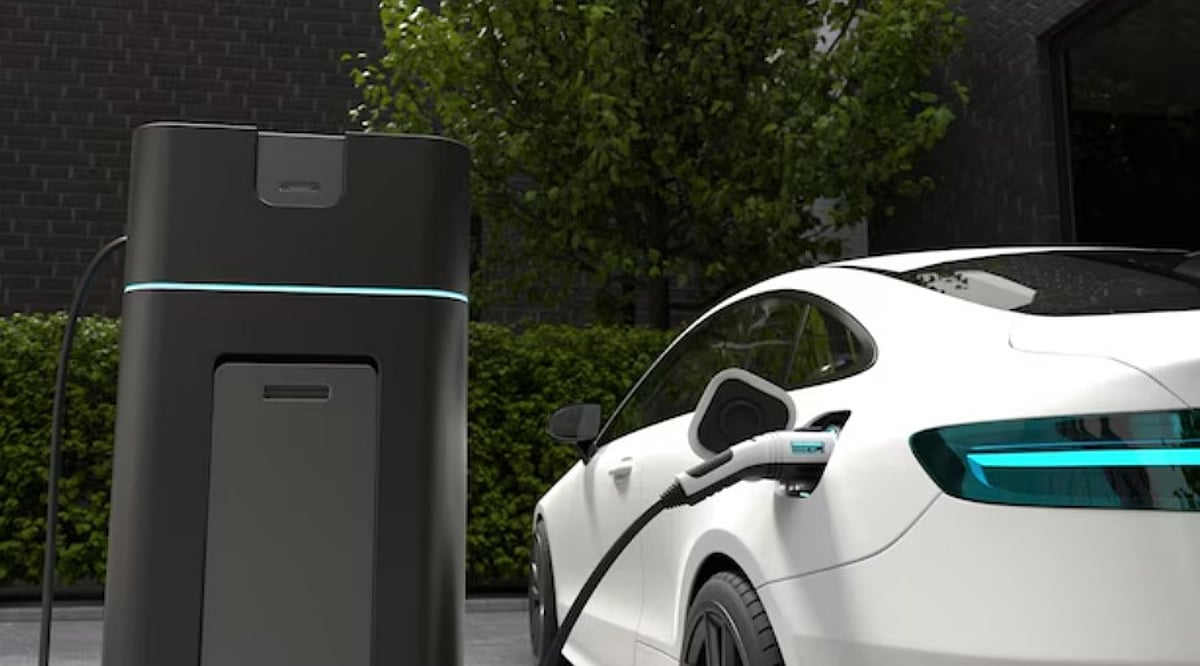
    The world had over 43 million private light-duty vehicle charge points in 2025, with roughly one-third each in China and Europe and one-sixth in the United States. Public fast-charging rates can be up to 240% higher than residential tariffs, making home charging a key value driver. The average electric car range is now around 380 km and has largely plateaued. New 1,000-volt models and ultra-fast charging systems can cut charge times to under 10 minutes.

    Software is playing an increasingly important role. Modern EVs support remote updates, advanced driver assistance, battery management, and new digital features. Driverless taxis are already operating in more than 20 cities, primarily in China and the United States.

    India’s Unique Path

    India presents a different growth story. Alternative-fuel passenger vehicles accounted for 41.95% of retail sales in August 2026, ahead of petrol and ethanol at 40.85%. CNG and LPG held 25.28%, hybrids 9.04%, and EVs 7.63%. India recorded 297,820 EV registrations in August, with Uttar Pradesh alone contributing 42,007. The country shows strong potential across small cars, two-wheelers, three-wheelers, buses, and fleet vehicles.

    What Lies Ahead

    The next phase of the EV industry will not be defined by a single technology or market. Europe needs stable policies and lower prices. China must secure overseas access. Battery manufacturers require lower costs and stable mineral supply. Automakers need better software and faster charging. India offers room for diverse growth. The winners will be those that can deliver the right combination of price, range, software, and charging access.

    FAQs

    • What is driving the next phase of EV growth? Lower prices, battery innovation, faster charging, improved software, and supportive trade and policy frameworks.
    • Why is Europe becoming an important EV market? Europe is seeing faster BEV adoption, with several major markets recording strong growth and higher electric-car sales shares.
    • What challenge is China’s EV industry facing? A saturated domestic market is pressuring sales, encouraging Chinese automakers to expand exports and enter overseas markets.
    • Will EV prices continue to fall? Lower battery costs and increased competition could support more affordable EVs, although mineral prices and trade barriers may affect pricing.
    • What role will India play in the EV transition? India has significant growth potential across EVs, two-wheelers, three-wheelers, buses, and fleet vehicles, supported by broader growth in alternative-fuel mobility.
  • How Solo Entrepreneurs and Small Partnerships Are Driving India’s Record Business Registrations in 2026

    How Solo Entrepreneurs and Small Partnerships Are Driving India’s Record Business Registrations in 2026

    India’s business registration data for 2026 reveals a clear shift in who is starting companies. One Person Companies (OPCs) and Limited Liability Partnerships (LLPs) have seen dramatic growth, and this surge is not coming from the typical venture-funded startup ecosystem. Instead, solo founders and small professional partnerships are formalizing their operations at an unprecedented rate.

    Two Structures, Two Different Audiences

    OPCs and LLPs serve distinct purposes. An OPC is designed for a single founder—a consultant, freelancer, or product builder who wants limited liability and a corporate identity without needing a co-founder to meet minimum shareholder rules. An LLP, on the other hand, suits two or more partners—often professionals like chartered accountants, lawyers, or small consultancies—who seek liability protection without issuing equity or reporting to a board.

    Both structures are now rising rapidly, driven by the same underlying trend: more entrepreneurs are choosing to formalize early rather than operating informally as proprietorships. According to Ministry of Corporate Affairs (MCA) data, roughly 6,281 OPCs were incorporated by mid-2025, a 26% increase year-on-year. LLP registrations jumped even more, from 61,769 to 86,476—a 40% rise in the 2025-26 period.

    Between January and April 2026 alone, India logged 1.31 lakh new business registrations across all entity types. Private limited companies still led with 85,560, but LLPs followed closely at 39,774, accounting for nearly 30% of all filings during that window. OPC numbers are smaller in absolute terms but are growing at a similar pace.

    Why OPC Registration Became More Attractive

    OPCs used to carry a major limitation: crossing ₹50 lakh in paid-up capital or ₹2 crore in turnover forced automatic conversion into a private limited company within six months. The 2021 amendment to the Companies (Incorporation) Rules removed that trigger. Now an OPC can scale its capital and revenue without being forced to change structure.

    The residency requirement also eased. Any Indian citizen can incorporate an OPC directly, and the minimum days spent in India dropped from 182 to 120. Combined with the fully online SPICe+ process—typically completed in 7 to 10 working days—OPC registration is no longer a niche option. Many solo founders now choose it as their first choice.

    Why LLPs Are Growing Even Faster

    LLPs appeal because of lower compliance costs. A private limited company must undergo a statutory audit every year regardless of turnover, plus hold board meetings and file detailed ROC reports. An LLP only needs an audit once turnover exceeds ₹40 lakh or partner contribution surpasses ₹25 lakh. Below those thresholds, annual filings are mostly limited to Form 8 and Form 11.

    For a two- or three-partner professional firm not seeking institutional funding, that compliance gap adds up significantly over time. This is a major reason LLP filings have outpaced overall registration growth this year.

    What Neither Structure Can Do

    Both OPCs and LLPs share a critical limitation: they cannot issue equity shares. That means no stock for investors and no ESOP pool. Founders chasing venture capital still default to private limited registration regardless of team size. Converting an OPC or LLP into a private limited company later is possible but requires NCLT approval, time, and expense. Founders who expect to need outside funding within a few years typically skip the detour entirely.

    The Bigger Picture

    India’s overall company registration numbers are running well above historical norms in 2026. The rise in OPC and LLP registrations reflects a specific shift: more solo founders and small professional partnerships are formalizing early instead of waiting until they outgrow a proprietorship. Neither structure is replacing private limited registration at the top of the funnel; they are filling a gap that private limited was never designed to address.

  • Vivo X300 Ultra vs OPPO Find X9 Ultra: Value Flagship vs Zoom King

    Vivo X300 Ultra vs OPPO Find X9 Ultra: Value Flagship vs Zoom King

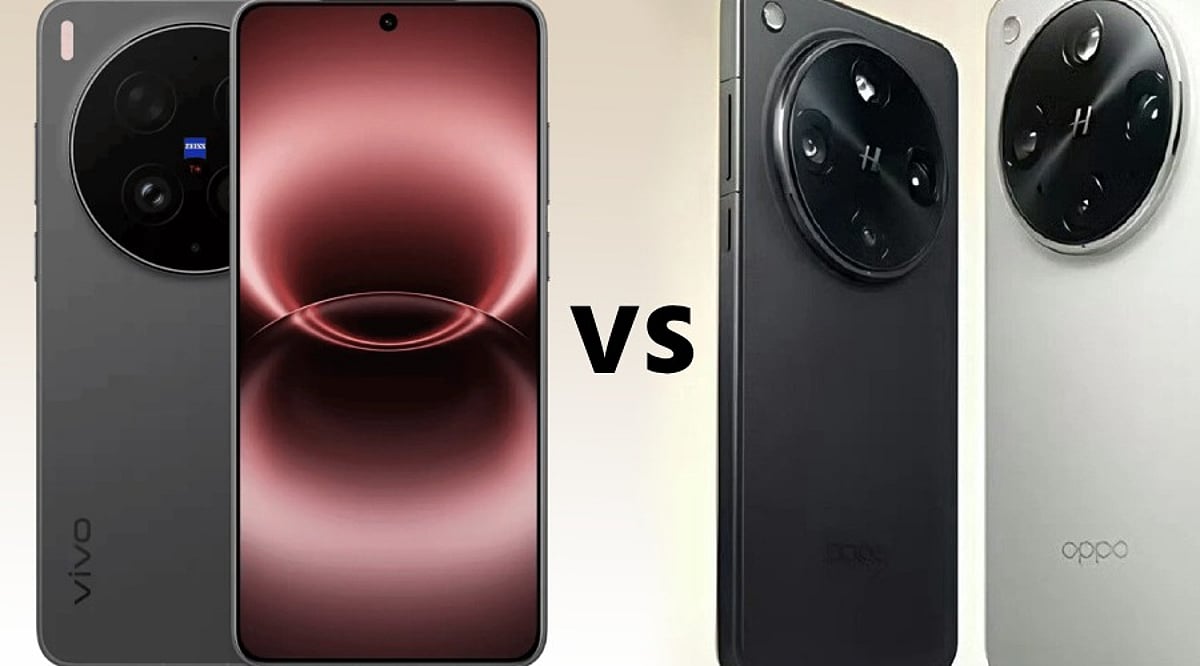
    The Vivo X300 Ultra and OPPO Find X9 Ultra are two of the most advanced Android flagships of 2026, each with a distinct focus. While both phones share the same Snapdragon 8 Elite Gen 5 processor, they diverge sharply in camera strategy, display brightness, battery capacity, and pricing. Here’s a breakdown of how they compare and which one suits different user priorities.

    Vivo X300 Ultra: Better Value and Brighter Display

    The Vivo X300 Ultra is priced at Rs. 1,59,999 in India for the 16GB RAM and 512GB storage variant. That’s Rs. 10,000 less than the OPPO Find X9 Ultra, which costs Rs. 1,69,999 for its 12GB/512GB model. Vivo also offers 4GB more RAM, making it a stronger choice for multitaskers and power users.

    Vivo’s 6.82-inch 2K AMOLED display reaches a peak brightness of 4,500 nits, significantly higher than OPPO’s 3,600 nits. Both screens feature a 144Hz refresh rate, ensuring smooth scrolling and gaming, but Vivo’s panel is better for outdoor visibility and HDR content.

    OPPO Find X9 Ultra: Superior Zoom and Bigger Battery

    OPPO’s main camera is a 200MP sensor with an f/1.5 aperture, while Vivo uses a similar 200MP sensor with an f/1.85 aperture. The real difference lies in the telephoto cameras. OPPO equips the Find X9 Ultra with a 200MP 3x telephoto and a 50MP 10x optical telephoto lens, offering up to 120x digital zoom. This makes it ideal for wildlife, sports, and distant subjects. Vivo’s 200MP telephoto offers 3.7x optical zoom with a 85mm focal length, which is better suited for portraits and close-up work.

    Battery capacity is another clear win for OPPO: 7,050mAh versus Vivo’s 6,600mAh. Both support 100W wired charging, but OPPO also offers faster 50W wireless charging versus Vivo’s 40W.

    Video and Software Features

    Vivo counters with superior video capabilities: 4K 120fps Dolby Vision, Log video support, and 60fps autofocus tracking. Its ZEISS camera system covers 35mm, 14mm, and 85mm focal lengths, giving creative users more flexibility. OPPO focuses more on still photography and zoom reach.

    Which One Should You Buy?

    If you prioritize value, display brightness, RAM, and video tools, the Vivo X300 Ultra is the better all-rounder. If you need extreme zoom range and longer battery life, the OPPO Find X9 Ultra is the clear winner. Both are flagship devices, but your choice depends on which features matter most.

    FAQs

    Which phone is better overall?

    The Vivo X300 Ultra offers better value with more RAM, a brighter display, and advanced video features at a lower price.

    Which phone has the best camera?

    OPPO wins for long-range zoom with its 10x optical telephoto; Vivo is better for portraits and video recording.

    Which has the bigger battery?

    OPPO Find X9 Ultra has a 7,050mAh battery, versus Vivo’s 6,600mAh.

    Which phone is more affordable?

    Vivo X300 Ultra is priced at Rs. 1,59,999, making it Rs. 10,000 cheaper than OPPO’s model.

  • Top USB-C 60W Charging Cables: Expert Picks for 2026

    Top USB-C 60W Charging Cables: Expert Picks for 2026

    USB-C has become the universal connector for modern gadgets, powering everything from smartphones and tablets to laptops and power banks. While many cables support fast charging, not all deliver the same performance. For everyday devices, a 60W USB-C cable often provides the perfect balance of power and affordability. Here are five top-rated 60W USB-C cables from leading brands, along with key factors to consider before making a purchase.

    Anker New Nylon USB-C Cable

    Anker is a trusted name in charging accessories, and its New Nylon USB-C cable delivers reliable 60W Power Delivery. The braided nylon exterior enhances durability, with Anker claiming it can withstand up to 12,000 bends. It supports USB 2.0 data transfer speeds up to 480Mbps, sufficient for everyday syncing and file transfers. Available in 3-foot and 6-foot lengths, and in a two-pack, it’s a solid choice for phones and tablets.

    Belkin BoostCharge USB-C Cable

    Belkin’s BoostCharge USB-C to USB-C cable supports 60W charging and features a braided nylon design rated for over 25,000 bends and 10,000 plug-ins. It is USB-IF certified for compatibility and comes with a two-year warranty. This cable works seamlessly with a wide range of USB-C devices, including iPhones, Galaxy phones, iPads, and MacBooks, making it a durable and dependable option.

    UGREEN USB-C Charging Cable

    UGREEN offers a variety of USB-C cables at different power levels. For a 60W setup, verify the exact model specifications before buying, as UGREEN also sells 100W and higher-rated cables. A 60W cable is sufficient for many phones, tablets, power banks, and compatible laptops. UGREEN cables are a great fit for multi-device charging stations, and braided versions are available for extra durability.

    Baseus USB-C 60W Cable

    Baseus is another well-known accessory brand with a broad range of USB-C cables. Their 60W model is ideal for users who primarily charge phones and tablets, and it can also support lightweight laptops that require 60W or less. As with UGREEN, double-check the power rating before purchasing, as Baseus offers higher-wattage cables in similar product lines. Baseus is a strong contender for value-conscious shoppers.

    Spigen USB-C Charging Cable

    Spigen, famous for smartphone cases, also produces USB-C charging cables for everyday devices. Some models support up to 60W charging with compatible USB-C Power Delivery chargers. Spigen cables are a practical choice for users already within the Spigen ecosystem. As always, confirm the exact model’s power and data specifications before buying.

    What to Check Before Buying a 60W Cable

    • Power Delivery Rating: Ensure the cable’s wattage matches your charger and device needs.
    • Data Transfer Speed: Many affordable cables still use USB 2.0 (480Mbps), which may be slow for large files.
    • Cable Length: A 6-foot cable is convenient for desk or bedside use; shorter cables are better for travel.
    • Build Quality: Look for braided nylon and reputable brands to ensure longevity.
    • Certification: USB-IF certification guarantees compatibility and safety.

    Which 60W USB-C Cable Should You Buy?

    The best cable depends on your devices and usage habits. Anker is a reliable everyday choice with proven durability. Belkin appeals to those who prioritize certification and warranty support. UGREEN and Baseus offer extensive accessory ecosystems and multiple cable configurations. Spigen is a practical option for mobile-device users. Remember, 60W is sufficient for most smartphones, tablets, and lightweight laptops. If you own a high-performance laptop, consider a 100W, 140W, or 240W cable instead. The smartest purchase matches your specific device, charger, and daily routine.

    Frequently Asked Questions

    Is a 60W USB-C cable enough for everyday charging?

    Yes, for most users. A 60W cable can charge smartphones, tablets, power banks, and many lightweight laptops. Actual charging speed depends on your device and charger. Check your laptop’s power requirements if you own a high-performance model.

    What is the difference between a 60W and 100W USB-C cable?

    The maximum power rating. A 100W cable can deliver more power when paired with compatible hardware, but it won’t automatically charge your device faster unless the device and charger also support higher power.

    Is Anker a good brand for USB-C charging cables?

    Anker is a well-known and reliable brand for charging accessories. Its New Nylon series includes durable 60W options. Always check the exact model’s specifications for power and data capabilities.

    Do all USB-C cables support fast charging?

    No. USB-C is a connector shape, not a guarantee of speed. Cables have different power ratings, data speeds, and features. Always verify the cable’s specifications before assuming it supports your device’s maximum charging speed.

    Does a 60W cable charge a laptop faster than a phone?

    Not necessarily. Charging speed depends on the device’s power requirements and supported protocols. A laptop may draw more power than a phone, but both will charge within the cable’s 60W limit if compatible.