Author: vitorcherulli

  • Bajaj Finance Invests in TrueFan AI: 5% Stake Acquired Under Finserv Intelligence Initiative

    Bajaj Finance Invests in TrueFan AI: 5% Stake Acquired Under Finserv Intelligence Initiative

    Mumbai, September 8, 2026 – Bajaj Finance Ltd., a subsidiary of Bajaj Finserv Ltd. and India’s largest private sector non-banking financial company, has acquired a 5% stake in TrueFan AI (Hogwarts E-learning Universe Private Limited), an AI-powered video generation platform. The investment is part of Finserv Intelligence, Bajaj Finserv’s group-wide strategic initiative in applied research and innovation focused on developing and supporting high-tech, scalable solutions built in India, for India and the world.

    Through this initiative, Bajaj Finance aims to invest in early-stage technology startups—from seed to Series B—that demonstrate strong innovation and scalability potential in AI, cybersecurity, quantum technologies, fintech, and consumer technology.

    The investment in TrueFan AI builds on an existing commercial relationship between the two companies. Bajaj Finance has already deployed TrueFan’s platform at scale, generating millions of personalized videos for customer engagement and dealer enablement. This supports Bajaj Finance’s broader strategy of deploying AI-led automation and personalization across its digital ecosystem.

    Rajeev Jain, Vice Chairman and Managing Director of Bajaj Finance, said, “As a FINAI company, we are deploying AI at scale across the company. Our investment in TrueFan AI follows sustained, production-scale use of its technology, giving us first-hand experience of the platform’s capabilities and its execution. This investment reflects our commitment to supporting proprietary AI innovation in India and our belief in TrueFan’s potential to drive enterprise adoption of AI-powered communication.”

    Nimish Goel, Co-founder and CEO of TrueFan AI, added, “Bajaj Finance is one of India’s most forward-looking enterprises in AI adoption. There is no stronger validation than seeing one of our largest customers also become a shareholder after experiencing our technology first-hand. It is a strong vote of confidence in the TrueFan AI team and what we have built. We look forward to deepening our partnership with Bajaj Finance and the wider Bajaj Finserv ecosystem.”

    Beyond the equity investment, Bajaj Finance and TrueFan AI intend to expand their collaboration across personalized marketing, video generation at scale, in-app live avatar assistance, AI-powered multilingual communication, dealer communication, learning and development, and digital onboarding. In line with Finserv Intelligence’s value-creation-first philosophy, the partnership will extend beyond financial investment to building technological capabilities and creating long-term strategic value.

    The TrueFan AI platform is built for enterprise-grade deployment, optimized for low-cost inference, high-volume generation, and seamless integration into existing enterprise workflows.


  • Apeing Presale Draws Attention Amid Bitcoin Security Scare and Monero Pullback

    Apeing Presale Draws Attention Amid Bitcoin Security Scare and Monero Pullback

    The cryptocurrency market is experiencing a wave of contrasting movements. Bitcoin is grappling with a major security incident on the Liquid Network, Monero is cooling off after a strong rally, and a new presale project called Apeing is capturing investor interest with its early-stage pricing.

    Apeing Presale: A Low-Cost Entry Point

    Apeing’s presale is already live in Stage 1, known as Banana Drop, offering tokens at $0.0001 with a limited allocation of 150 million $APEING. The project has a fixed total supply of 16.75 billion tokens, with 40% allocated to the presale. The stated listing price is $0.01, meaning early participants could see a theoretical 100x difference if the token reaches that level. The presale follows a staged pricing model, with each subsequent stage increasing the price. This structure creates a clear incentive for early investigation before later stages open at higher costs.

    Bitcoin Faces Security Concerns on Liquid Network

    Nearly 4,000 BTC—worth approximately $320 million—was reportedly drained from Liquid Network, a Bitcoin Layer-2 solution, following an apparent security exploit. The network temporarily paused transactions and disabled bridge nodes while federation members investigated. The attackers posted an on-chain message claiming to be whitehats, but the intentions remain unclear. The incident has raised fresh questions about the security of cross-chain infrastructure and tokenized Bitcoin systems.

    Monero Retreats After Powerful Rally

    Monero’s price dropped roughly 3.6% over a 27-hour period after a strong August rally from around $360 to a high near $557 in early September. The correction appears driven by profit-taking and macroeconomic pressure, including a stronger-than-expected U.S. jobs report that triggered a Bitcoin decline below $79,000 and increased liquidations in leveraged positions. Despite the pullback, Monero’s underlying network fundamentals remain intact.

    Why Apeing Deserves a Look

    While Bitcoin and Monero deal with their respective challenges, Apeing represents a presale-stage opportunity. The project’s fixed supply, Ethereum ERC-20 foundation, and 18-month liquidity lock provide structural elements for potential participants to evaluate. The current Stage 1 price of $0.0001 will not last forever—once the 150 million allocation is filled, the price increases. For investors searching for the next big crypto, this creates a time-sensitive window to research before the entry point disappears.

    Conclusion

    Bitcoin is under scrutiny after the Liquid Network exploit, Monero is correcting after a strong run, and Apeing offers a live presale with a significant theoretical price gap. The Apeing presale is currently at $0.0001 with limited tokens available. Later stages will carry higher prices, making the current phase worth investigating for those looking to get in early.

  • 8 Sci-Fi Technologies That Are Now a Reality

    8 Sci-Fi Technologies That Are Now a Reality

    From Fiction to Function: Technologies That Are Reshaping Our World

    The line between science fiction and reality continues to blur as once-fantastical concepts become part of our everyday lives. From humanoid robots to quantum computers, these eight technologies are no longer just the stuff of movies—they are actively being developed and deployed today. Here’s a closer look at how these innovations are transforming the world around us.

    Humanoid Robots: From Screen to Workspace

    Humanoid robots have made the leap from movie sets to real-world environments, including laboratories, factories, and warehouses. With advances in artificial intelligence, computer vision, and robotics, these machines can now navigate complex spaces and perform tasks that were once thought to be exclusively human. Companies are developing robots that can carry objects, assist human workers, and learn repetitive activities. As these machines become more sophisticated, their eventual integration into homes could revolutionize how we approach daily chores and personal assistance.

    Brain-Computer Interfaces: Mind Meets Machine

    The idea of controlling technology with our thoughts is no longer just a futuristic fantasy. Brain-computer interfaces (BCIs) are making this possible by interpreting neural signals and translating them into digital commands. This technology holds immense potential for individuals with paralysis, enabling them to communicate and operate devices using only their minds. While consumer applications are still a ways off, the medical implications alone could redefine assistive technology and human-computer interaction.

    Self-Driving Cars: The Road to Autonomy

    Autonomous driving has evolved from a science-fiction trope to a technology being tested on real roads around the globe. Modern vehicles are equipped with advanced cameras, sensors, and artificial intelligence systems that assist drivers and perform certain driving functions. While fully autonomous vehicles still face technical, regulatory, and safety hurdles, the ongoing development suggests that transportation will gradually become less reliant on human control, promising a future with fewer accidents and more efficient travel.

    AI Personal Assistants: Your Digital Sidekick

    Fictional computers that can understand and respond to natural language are becoming increasingly realistic, thanks to generative artificial intelligence. Today’s AI assistants can answer questions, summarize information, create content, and perform a variety of digital tasks. As these systems become more capable and integrated with other applications, they are poised to evolve into personalized digital agents that manage schedules, conduct research, facilitate communication, and streamline everyday workflows.

    Quantum Computing: Unlocking Unprecedented Power

    Quantum computing is set to solve complex problems that are currently beyond the reach of conventional computers. By leveraging the principles of quantum mechanics, researchers are developing machines with potential applications in medicine, materials science, optimization, and cybersecurity. Although today’s quantum systems are still experimental and face significant technical challenges, ongoing advances in quantum hardware and error correction are bringing this futuristic technology closer to practical use.

    Artificial Organs: Bridging the Gap in Medicine

    Science fiction has long imagined a world where damaged body parts can be replaced with artificial or laboratory-grown alternatives. Modern medicine is already making this a reality with the development of artificial hearts, advanced prosthetics, tissue engineering, and lab-grown organs. Researchers are focused on making these technologies safer, more durable, and biologically compatible. While fully replacing complex human organs remains a challenge, breakthroughs in regenerative medicine could one day transform transplantation and revolutionize healthcare.

    Augmented Reality Glasses: The Digital Overlay

    Augmented reality (AR) glasses are bringing digital information into our physical surroundings, much like the futuristic interfaces depicted in sci-fi films. Modern AR devices can display navigation cues, digital objects, and contextual instructions while allowing users to interact with virtual content. With improvements in lightweight hardware, displays, sensors, and AI, AR glasses are becoming more practical for use in workplaces, education, entertainment, and everyday communication.

    Conclusion

    These eight technologies are no longer just figments of our imagination—they are real, tangible innovations that are already shaping our present and will continue to define our future. As they evolve and become more integrated into our lives, we can expect to see even more incredible advancements that were once thought impossible. The future is indeed here, and it’s more exciting than we ever imagined.

  • From AutoGen to Agent Framework: The Evolution of Multi-Agent AI Systems

    From AutoGen to Agent Framework: The Evolution of Multi-Agent AI Systems

    Key Takeaways

    • AutoGen is now in maintenance mode, receiving bug fixes, security updates, and documentation rather than new features.
    • Microsoft Agent Framework is the successor, combining AutoGen concepts with Semantic Kernel foundations and production-focused capabilities.
    • New projects should favor Agent Framework, especially when they require workflows, enterprise integration, observability, and long-term Microsoft support.

    Microsoft AutoGen once stood at the center of Microsoft’s multi-agent AI work. Its core idea was simple: several AI agents could take different roles, share messages, call tools, and work through a task as a team. That model helped shape modern agent design, but the current Microsoft roadmap has changed. AutoGen now sits in maintenance mode, while Microsoft Agent Framework has taken its place as the supported platform for new projects.

    AutoGen Still Matters for Multi-Agent Design

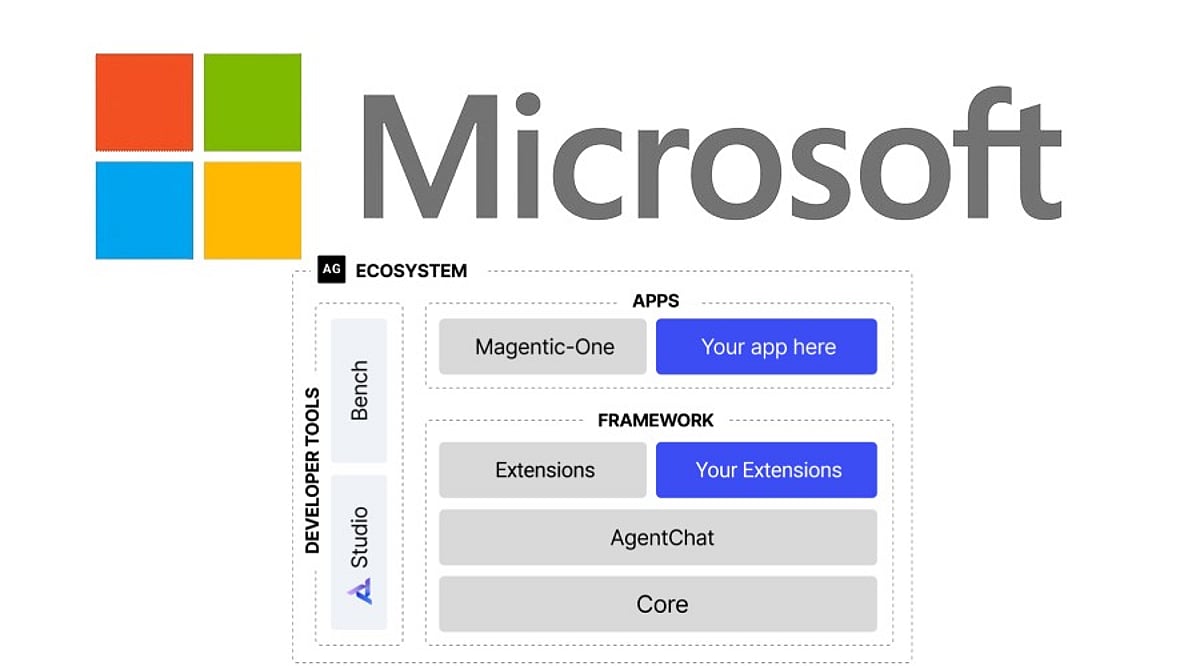
    AutoGen came from Microsoft Research and helped popularize multi-agent orchestration. Its architecture is split into three main layers. The Core API handled message transfer, event-driven agents, and local or distributed runtimes. AgentChat offered a simpler API for common patterns such as two-agent chat and group chat. Extensions added model clients, code execution, and other integrations. AutoGen also included AutoGen Studio, a no-code interface, and AutoGen Bench for agent evaluation.

    AutoGen v0.4 marked a major design step. The release moved toward an asynchronous, event-driven architecture with clearer separation between agents, runtimes, and extensions. That design made multi-agent systems easier to structure at a lower level. Magentic-One also showed what the framework could support: a multi-agent team that could handle web research, code execution, and file tasks.

    Maintenance Mode Changes the Choice

    The key update arrived in 2026. Microsoft now labels AutoGen as a maintenance-mode project. The project will not receive new features or enhancements, and community contributors now handle its development. Work remains focused on bug fixes, security patches, and documentation. Microsoft directs new users toward Microsoft Agent Framework and advises current AutoGen users to follow the migration path.

    That status does not make AutoGen useless. Current applications can continue to run with the AutoGen architecture and tools. The key distinction is project choice: AutoGen remains useful for current systems and for studying multi-agent concepts, while Microsoft Agent Framework is the main path for new Microsoft-based agent work.

    Microsoft Agent Framework Becomes the Successor

    Microsoft Agent Framework reached version 1.0 for both .NET and Python on April 2, 2026. Microsoft describes the release as production-ready, with stable APIs and a long-term support commitment. The framework combines ideas from AutoGen with enterprise foundations from Semantic Kernel. It supports single agents, multi-agent orchestration, multiple model providers, and cross-runtime communication through Agent2Agent (A2A) and Model Context Protocol (MCP).

    The shift also changes the orchestration model. AutoGen paired an event-driven Core with higher-level Teams. Agent Framework places more focus on typed, graph-based Workflows. Data moves across defined edges, and executors act when the required input arrives. This approach gives developers a clearer structure for larger agent systems.

    New Tools Push Agents Toward Real Work

    Microsoft has added several major capabilities around the Agent Framework since version 1.0. At Build 2026, Microsoft introduced Agent Harness, Hosted Agents, and CodeAct. The Agent Harness adds tools, memory, plans, approvals, context control, telemetry, and web search around a model. Hosted Agents provide a managed home inside Microsoft Foundry, with sandboxed sessions, persistent state, observability, and version control.

    CodeAct takes a different route for tool-heavy tasks. Instead of making a separate model call for each tool, CodeAct lets the model write a short Python program that calls several tools in one pass. Microsoft reported a test where CodeAct cut execution time from 27.81 seconds to 13.23 seconds and reduced token use from 6,890 to 2,489. Those figures came from a representative multi-step workload, so they should not serve as a universal benchmark.

    The Migration Path is Now Clear

    Microsoft has a dedicated AutoGen migration guide, updated on August 25, 2026. The guide maps familiar AutoGen ideas to Agent Framework and covers model clients, single-agent features, multi-agent orchestration, and observability. Some concepts stay familiar: agents still use model clients, instructions, and tools. The main change comes in workflow structure, tool APIs, and runtime behavior.

    The result is a clear divide. AutoGen remains a useful foundation for current applications and for the study of multi-agent architecture. Microsoft Agent Framework now holds the stronger case for new systems that need active Microsoft support, stable APIs, enterprise features, and a path toward production. AutoGen therefore does not end with a shutdown. Its ideas have moved into a broader platform that aims to take multi-agent AI from experiments to dependable software.

    FAQs

    1. Is Microsoft AutoGen discontinued? No. AutoGen is in maintenance mode, meaning existing applications can continue using it, but Microsoft is directing new development toward Agent Framework.
    2. What replaced Microsoft AutoGen? Microsoft Agent Framework has become Microsoft’s supported platform for building new AI agents and multi-agent systems.
    3. Should I migrate my existing AutoGen application? Not necessarily immediately. Existing applications can continue running, but migration is worth considering if you need new capabilities or long-term active platform support.
    4. What is the difference between AutoGen and Agent Framework? AutoGen emphasizes event-driven agents and team-based orchestration, while Agent Framework adds typed, graph-based workflows alongside broader enterprise and production capabilities.
    5. Is Microsoft Agent Framework production-ready? Yes. Microsoft Agent Framework 1.0 for .NET and Python was released as a production-ready platform with stable APIs and a long-term support commitment.
  • Bitcoin at $80K Faces Fed Rate-Hike Pressure as September 2026 Inflation Data Looms

    Bitcoin at $80K Faces Fed Rate-Hike Pressure as September 2026 Inflation Data Looms

    The crypto market enters September with monetary policy again becoming one of its biggest short-term risks. Bitcoin has recovered toward USD 80,000, but stronger US employment data, elevated energy prices and rising Treasury yields have revived expectations that the Federal Reserve could raise interest rates this month.

    September Rate-Hike Odds Rise

    US employers added 162,000 jobs in August, comfortably above expectations, while unemployment held steady at 4.1%. The stronger labor-market reading pushed investors toward a more hawkish outlook for the Federal Reserve.

    According to CME FedWatch data, markets are pricing in a 58.4% probability of a 25-basis-point rate hike at the September 15-16 Federal Open Market Committee meeting, up from 52% before the jobs report. UBS also changed its forecast and now expects 25-basis-point increases in both September and December.

    That would take the federal funds target range from 3.50%-3.75% currently to 4%-4.25% by year-end.

    The next major catalyst is August consumer inflation data. UBS noted that July Personal Consumption Expenditures inflation stood at 3.7% year over year, while supply bottlenecks and resilient economic activity have increased upside inflation risks.

    Why Higher Rates Matter for Crypto

    Higher rates can pressure cryptocurrencies as investors receive better returns from comparatively lower-risk government securities. Tighter monetary policy can also strengthen the US dollar and reduce financial-system liquidity available for risk assets.

    Fed Governor Christopher Waller recently argued policymakers should ‘give disinflation a chance,’ temporarily pushing September hike expectations below 50%. Markets subsequently reversed after the stronger employment report.

    Energy prices add another complication. Brent crude recently traded around USD 97 per barrel as geopolitical tensions increased, keeping inflation concerns elevated ahead of the Fed meeting.

    Bitcoin Still Has Support From ETF Demand

    Bitcoin has nevertheless recovered strongly from its 2026 lows. BTC recently completed an approximately 30% rebound and moved back above several major moving averages.

    Institutional demand remains another counterweight to monetary tightening. Spot Bitcoin ETFs recorded approximately USD 987 million in net inflows last week, indicating that regulated investment demand remains active even as rate expectations turn more hawkish.

    This matters as persistent ETF inflows can reduce available market supply and provide buying pressure during periods of macroeconomic uncertainty.

    Final Thoughts

    September is becoming a test of whether Bitcoin’s recovery can withstand tighter financial conditions. A hotter inflation reading could strengthen expectations for another Fed hike, lift yields and pressure crypto valuations. Softer inflation could instead revive expectations for a pause.

    For investors, the Fed decision, Treasury yields, the US dollar and ETF flows may therefore matter as much as crypto-specific developments in determining Bitcoin’s next major move.

    FAQs

    Why are Fed rate-hike expectations important for Bitcoin?

    Higher interest rates can make government bonds more attractive and reduce liquidity available for risk assets. A stronger dollar and higher Treasury yields can also create additional pressure on Bitcoin.

    What are markets expecting from the Federal Reserve in September 2026?

    Markets recently priced roughly a 58% probability of a 25-basis-point September rate hike. Strong US employment data has strengthened expectations that monetary policy could remain tighter.

    How is Bitcoin performing ahead of the Fed decision?

    Bitcoin has recovered to USD 80,000 after gaining roughly 30% from its 2026 lows. BTC has also moved above several major moving averages, although macroeconomic risks remain elevated.

    Are Bitcoin ETF inflows supporting the market?

    Yes. Spot Bitcoin ETFs recently recorded around USD 987 million in weekly net inflows, showing that institutional demand remains active despite renewed concerns about higher interest rates.

    What could move Bitcoin next in September?

    US inflation data, Treasury yields, the dollar and the Federal Reserve’s September decision are likely to be key drivers. Softer inflation could support BTC, while a hotter reading may increase pressure on crypto valuations.

  • FTSE 100 Opens Lower as Oil Nears $100; Computacenter Profit Forecast Lifts Sentiment

    FTSE 100 Opens Lower as Oil Nears $100; Computacenter Profit Forecast Lifts Sentiment

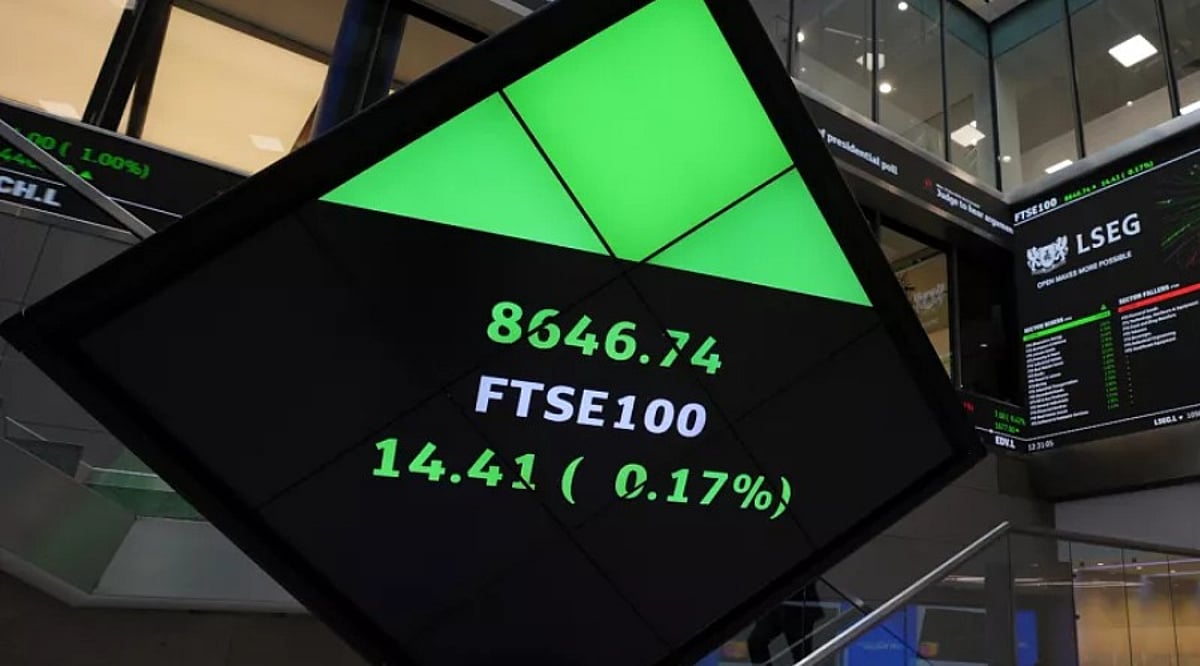
    The FTSE 100 opened 16.06 points lower at 10,806.07 on Tuesday as investors awaited fresh direction from the European Central Bank’s interest rate decision and upcoming US inflation figures. Brent crude futures rose 1.75% to $98.70 per barrel, while US West Texas Intermediate (WTI) advanced 2.89% to $94.12 per barrel.

    Sterling traded at $1.3538 on Tuesday morning, up from $1.3516 at the London equities close on Monday. Against the euro, it slipped to €1.1624 from €1.1638.

    Gainers and Losers

    On the upside, Computacenter climbed 4.64% to 5,860p after upgrading its profit forecast for the second time this year. Auto Trader Group advanced 3.60% to 523.60p, while Antofagasta gained 1.51% to 3,957p. Croda International rose 1.50% to 3,312p, BP added 1.43% to 554.20p, and Glencore increased 1.42% to 612.40p.

    On the downside, HSBC Holdings fell 1.43% to 1,556.40p. Next declined 1.16% to 15,320p, while Whitbread dropped 1.02% to 2,324p. Games Workshop Group slipped 0.71% to 18,270p, Lion Finance Group lost 0.67% to 13,420p, and AstraZeneca edged 0.60% lower to 11,970p.

    Oil Nears $100 Per Barrel

    Oil prices have surged, nearing the $100 per barrel mark. Brent crude gained 1.75% to reach its highest level since July. Reports that Iran-backed Houthis attacked a Saudi energy plant have added fresh pressure on investors. Earlier today, Iran threatened new sanctions on tankers attempting to travel through the Strait of Hormuz.

    Computacenter Increases Profit Forecast

    Computacenter upgraded its profit forecast for the second time this year after its order backlog quadrupled in the last six months. The IT supplier expects to bring in no less than £380 million in pretax profit for the year, well above the previous consensus of £341 million. The order backlog reached a record £9.3 billion, up 323% year-on-year. The group, promoted to the FTSE 100 in the June reshuffle, hiked its dividend by nearly 15% to 27.1p.

    Funding Circle Lifts Profit Forecast

    The boss of Funding Circle has laid out plans for departure as the fintech lifted its profit forecast for the year ahead. Lisa Jacobs, who has led the firm since 2022, will step down as chief executive by no later than September 2027. Revenue jumped 50% to £138 million after loan originations swelled 43% to just over £1 billion. The firm expects profit to reach over £40 million for the year, upgraded from previous expectations of £35 million. Funding Circle also announced a fresh £25 million buyback, bringing total capital returned via buybacks to £100 million since March 2024.

    Global Market View

    In the US, Wall Street was closed on Monday for the Labor Day holiday. In Asia on Tuesday, Tokyo’s Nikkei 225 fell 1.7% to 65,269.33, while China’s Shanghai Composite rose 0.2%. Hong Kong’s Hang Seng declined 0.32%, and South Korea’s Kospi declined 0.58%. In India, both the Nifty 50 and the Sensex fell by 0.54% and 0.59%, respectively.

    Disclaimer: This article is for informational purposes only and does not constitute investment advice. Cryptocurrencies and stocks involve risk. Always conduct your own research before investing.

  • Best Affordable VR Headsets in India Under ₹25,000 (2026 Guide)

    Best Affordable VR Headsets in India Under ₹25,000 (2026 Guide)

    Virtual reality is becoming more accessible than ever, with several budget-friendly headsets now available in India for under ₹25,000. Whether you’re a casual user, a gaming enthusiast, or a drone pilot looking for immersive FPV experiences, there’s a VR headset to match your needs. Below, we round up the top affordable options you can consider in 2026.

    1. DJI Goggles N3

    Designed for FPV (first-person view) drone pilots, the DJI Goggles N3 offers impressive immersion without breaking the bank. Its 1080p Micro-OLED screens deliver sharp, detailed visuals, making it a standout choice for drone enthusiasts.

    2. JioDive JD-004

    The JioDive JD-004 is an entry-level smartphone VR headset aimed at casual users. It works with compatible smartphones and provides an inexpensive introduction to virtual reality—perfect for trying out simple VR apps and 360-degree videos.

    3. Irusu Monster MN01

    Another budget-friendly smartphone VR headset, the Irusu Monster MN01, is designed for beginners. Its simple construction and lightweight design make it suitable for watching immersive videos and exploring basic VR content.

    4. Samsung HMD Odyssey

    Although an older model, the Samsung HMD Odyssey (a Windows Mixed Reality headset) remains a viable option for PC users. Its AMOLED displays deliver vibrant colors and deep blacks, providing an immersive experience for compatible PC applications and games.

    5. Oculus Quest 2

    Even after newer releases, the Oculus Quest 2 remains a capable standalone VR headset for gaming and entertainment. If you can find used or discounted units, this headset offers advanced, all-in-one VR experiences at a price that fits a budget.

    6. Sony PlayStation VR

    For console gamers, the Sony PlayStation VR brings virtual reality to compatible PlayStation hardware. Older bundles or discounted units can offer an affordable entry into VR gaming—especially if you already own a PlayStation.

    7. Other Budget Options

    Several other smartphone-based VR headsets, such as the Lifemusic MM4, DOMO nHance VRF1, and Qwerty 3D VR, provide even lower-cost ways to experience basic virtual reality without a major investment. These are great for curious newcomers.

    With so many choices under ₹25,000, stepping into VR has never been more affordable. Whether you prioritize gaming, FPV flying, or casual media consumption, there’s a headset waiting for you.

  • Selecting Tech Stocks for Long-Term Growth: A Data-Driven Framework

    Selecting Tech Stocks for Long-Term Growth: A Data-Driven Framework

    In the current market, a strong technology company can still be a weak stock pick if the price is wrong. With artificial intelligence (AI) reshaping profit outlooks, capital expenditures, and market expectations, the selection process demands more than just a famous brand or a good product. A truly long-term stock needs a clear path to higher sales, improved profits, and robust cash flow, all while the share price leaves room for future returns.

    Prioritize Real Growth Over Hype

    The first test is the quality of growth. Companies with steady, consistent sales growth are stronger than those dependent on a single demand spike. While revenue is important, profit growth provides a clearer signal of business health. Equally critical is free cash flow (FCF), which shows how much cash remains after operating expenses and capital investments. For instance, State Street notes that major hyperscalers raised their 2026 capital expenditure estimates by 15% from March to $772 billion, and semiconductor earnings are expected to rise 86% in 2026. However, these figures indicate a powerful AI cycle, not that every chip stock is a sound long-term buy. The real question is whether demand can convert into durable profit.

    Identify a Sustainable Moat

    A tech company needs a lasting competitive advantage that rivals cannot easily replicate. This moat can stem from a strong software ecosystem, high customer switching costs, proprietary chip design, a vast cloud network, or a trusted brand. With AI, a new dimension emerges: companies must demonstrate that their technology solves real customer problems and delivers measurable value. As Charles Schwab points out, investors now look for proof that large AI budgets lead to revenue growth, user adoption, or other tangible returns. Cloud growth and margins also indicate whether AI demand can support profit alongside sales.

    Examine Cash Flow Before the Narrative

    Large tech firms now face enormous capital requirements for data centers, chips, and networks. Charles Schwab reports that the Magnificent Seven could spend over $700 billion on capital expenditure in 2026, having already sold more than $130 billion in debt this year, while their free cash flow has fallen sharply from its 2024 peak. Investors must scrutinize whether a company’s spending is efficient and whether its cash generation can sustain such investments without overleveraging.

    Valuation Is a Core Criterion

    Valuation cannot be ignored. Fidelity’s August 2026 tech screen used cash flow growth and long-term earnings growth, while its valuation screen applied forward price-to-earnings (P/E), price-to-cash-flow, and price-to-earnings-growth (PEG) ratios. NVIDIA, Microsoft, TSMC, and Broadcom appeared in the valuation screen, while NVIDIA, TSMC, Broadcom, Micron, and AMD showed up in growth results. A high-quality company can still underperform if its stock price already factors in unrealistic future growth.

    Analyze the Entire AI Supply Chain

    The AI boom extends beyond GPUs to chips, memory, networking, cloud systems, and data center equipment. As workloads become more complex, demand spreads across a wider technology stack. However, this breadth introduces cyclical risks. Semiconductor and memory stocks face sharp cycles and supply shifts, while software companies must show their AI products boost revenue, adoption, and subscriptions. Each segment carries distinct competitive and cyclical risks that require separate evaluation.

    Focus on Durable Returns and Management

    A long-term tech stock needs a business model that supports multi-year growth in sales, margins, and cash flow. Management quality is paramount: a capable team uses capital wisely, maintains a healthy balance sheet, and offers clear guidance. Market concentration adds another concern—Charles Schwab notes that a handful of tech companies now drive more than half of global market earnings growth, heightening concentration risk.

    The best tech stock is not always the fastest grower or the one with the flashiest AI product. The stronger choice combines a durable moat, genuine cash generation, manageable debt, solid earnings prospects, and a share price that doesn’t demand perfection. This standard separates a business with a great future from a stock that has already priced in too much of it.

    Frequently Asked Questions

    1. What should investors look for in a long-term tech stock?
    Investors should assess revenue and earnings growth, free cash flow, competitive advantages, debt levels, capital spending, and valuation.

    2. Is strong AI exposure enough to make a tech stock attractive?
    No. AI exposure can support growth, but investors must determine if that growth translates into sustainable profits and cash flow.

    3. Why is free cash flow important for tech companies?
    Free cash flow shows how much cash a company generates after operating needs and capital investments, helping investors gauge financial strength.

    4. How does valuation affect long-term tech stock returns?
    A high-quality company can still be a poor investment if its stock price assumes extremely high growth, leaving little room for future upside.

    5. Should investors consider the entire AI supply chain?
    Yes. AI growth affects semiconductors, memory, networking, cloud infrastructure, and data centers, but each segment carries different competitive and cyclical risks.

  • Quordle Answers for September 8, 2026: Hints and Solutions for Puzzle #1688

    Quordle Answers for September 8, 2026: Hints and Solutions for Puzzle #1688

    Quordle Today: September 8 Hints, Answers for Puzzle #1688

    Stuck on today’s Quordle puzzle? Put your vocabulary and guessing skills to the test by solving four five-letter words. If you need a nudge, use our hints below before revealing the answers.

    Today’s Quordle Hints

    Players looking for a little help can use these clues to narrow down today’s four answers without spoiling the puzzle immediately:

    • Word 1 (Top Left): Hurled forcefully.
    • Word 2 (Top Right): Daily record of one’s activities.
    • Word 3 (Bottom Left): Bisect.
    • Word 4 (Bottom Right): An allotted place for a ship at a wharf or dock.

    Need one more clue? Here’s a final nudge: The starting letters can give you a useful push as you work through today’s four grids. Look for an F word meaning something was hurled forcefully, a D word for a daily record of personal activities, an H word meaning to divide something into two equal parts, and a B word for a designated place where a ship can dock or a sleeping space on a vessel.

    Answers for September 8

    Spoiler alert: The four answers to today’s Quordle are:

    • FLUNG
    • DIARY
    • HALVE
    • BERTH

    How Difficult Was Today’s Quordle?

    Today’s Quordle features four five-letter words with a mix of familiar meanings and everyday references. The first word refers to something hurled or thrown forcefully, while the second is a daily record of personal experiences, thoughts, or activities. The third means to divide something into two equal parts, and the fourth refers to a designated place for a ship at a wharf or dock.

    The starting letters F, D, H, and B can help you narrow down each answer as you work through the four grids. None of today’s four words contain repeated letters, giving players another useful clue. If you’ve managed to solve all four without checking the solutions, you’ve completed today’s Quordle challenge.

    Also Read: Quordle Today: September 7 Hints, Answers for Puzzle #1687

  • Quantum Computing Threat to Bitcoin: How Close Are Hackers to Breaking BTC?

    Quantum Computing Threat to Bitcoin: How Close Are Hackers to Breaking BTC?

    Bitcoin cannot currently be hacked by available quantum computers, but sufficiently advanced quantum machines could eventually threaten some of the cryptography protecting BTC ownership. The risk is serious enough that researchers are already testing quantum-resistant ways to protect Bitcoin before such computers become practical.

    What Quantum Computers Could Attack

    Bitcoin ownership depends on digital signatures. A wallet uses a private key to authorize spending, while cryptographic mathematics allows the network to verify the signature without revealing that private key.

    The potential problem is Shor’s algorithm. According to StarkWare, a sufficiently capable quantum computer running Shor’s algorithm could work backward from certain exposed public keys and calculate the corresponding private key. An attacker could then create a valid signature and spend the BTC.

    This does not mean Bitcoin’s blockchain itself suddenly disappears. The primary concern is unauthorized spending from vulnerable addresses.

    Which Bitcoin Is Most Exposed?

    Risk varies according to address usage. Bitcoin addresses where the public key has never been revealed have additional protection, as the blockchain initially exposes only a hash of that key. Once coins are spent, however, the public key may become visible.

    Older address structures and reused addresses can therefore present greater long-term concerns. A quantum attacker would still require hardware capable of completing the calculation before the legitimate owner safely moves the funds. Today’s quantum computers are nowhere near that capability.

    A Quantum-Safe Bitcoin Transaction Is Already Live

    Researchers have nevertheless begun preparing. On August 26, StarkWare researcher Avihu Levy demonstrated what the company describes as the first quantum-safe Bitcoin transaction on mainnet. It was confirmed in Bitcoin block 964,199 without changing Bitcoin’s consensus rules or introducing a soft fork.

    The Quantum-Safe Bitcoin method protected a 10,000-satoshi output using a construction designed to remain secure against a working quantum adversary. However, the demonstration was experimental. The transaction was non-standard, required direct submission to MARA Pool, and reportedly cost roughly USD 150-200 when computation and transaction expenses were considered.

    Does This Make Bitcoin Quantum-Proof?

    No. StarkWare itself argues Bitcoin will ultimately need protocol-level changes to provide comprehensive quantum resistance. Existing exposed public keys remain a separate challenge. Bitcoin developers would also need wallets, exchanges and users to migrate before a cryptographically relevant quantum computer becomes available.

    Final Thoughts

    Quantum computing is not an immediate Bitcoin security emergency, but waiting until an attack becomes practical would be dangerous. The recent mainnet experiment shows that researchers can already test defensive mechanisms on Bitcoin itself.

    For BTC holders, the key issue is therefore preparation: developing standards, upgrading wallet infrastructure and eventually migrating vulnerable funds before quantum hardware becomes powerful enough to threaten existing signature systems.

    FAQs

    1. Can quantum computers hack Bitcoin today? No. Current quantum computers are not powerful enough to break Bitcoin’s cryptography. The threat is considered a long-term risk rather than an immediate security emergency.
    2. How could quantum computers threaten Bitcoin? A sufficiently powerful quantum computer using Shor’s algorithm could potentially derive a private key from certain exposed public keys. That could allow an attacker to authorize unauthorized BTC transactions.
    3. Which Bitcoin addresses are most vulnerable to quantum attacks? Older or reused addresses with exposed public keys could face greater long-term risk. Addresses whose public keys have not yet been revealed have an additional layer of protection.
    4. What was StarkWare’s quantum-safe Bitcoin transaction? StarkWare researcher Avihu Levy demonstrated a quantum-resistant Bitcoin transaction on mainnet in block 964,199. The experiment protected a 10,000-satoshi output without requiring a Bitcoin soft fork.
    5. Does the quantum-safe transaction make Bitcoin quantum-proof? No. The demonstration was experimental and does not protect the entire Bitcoin network. Broader quantum resistance would likely require protocol upgrades, wallet changes and migration of vulnerable funds.