Author: vitorcherulli

  • Macy’s Headphone & Earbud Sale: Top Discounts and What’s Actually Worth Buying

    Macy’s Headphone & Earbud Sale: Top Discounts and What’s Actually Worth Buying

    Macy’s is currently running a limited-time sale on headphones and earbuds, with discounts that range from modest to steep depending on the model. While the big percentage tags grab attention, the real value lies in understanding what’s behind each markdown. A 45% cut off an inflated list price means little, but the same discount on a product that has consistently sold at a lower price for months represents genuine savings. This guide breaks down the current lineup, highlights the strongest deals, and offers tips to help you shop smarter.

    What’s on Sale at Macy’s Right Now

    Two products in this sale carry discounts directly confirmed on Macy’s own listings. The rest are priced based on recent tracking across Macy’s category pages and independent price trackers, which can shift by color and availability. Treat these as a reliable range rather than a locked price, and always verify the final cost before checking out.

    JBL Live Pro 2

    Price: $99.95 (was $169.95)
    Why it stands out: Adaptive noise cancellation and roughly 40 hours of combined battery life. This is a feature-rich pair at a price that undercuts its original MSRP significantly.

    Sony WH-CH720N

    Price: High $80s to high $90s (recent range)
    Why it stands out: Sony’s reputation for solid ANC and a 35-hour battery with a quick 3-minute charge providing about an hour of playback. This is a consistent performer under $100.

    JBL Tune 670NC

    Price: $59.95 (was $109.95)
    Why it stands out: The budget pick for noise cancellation. Offers active noise cancellation and up to 70 hours of battery life with ANC off—a rare combination at this price point.

    Beats Studio Buds+

    Price: Varies by color
    Why it stands out: Works seamlessly on both iPhone and Android. Features active noise cancellation, a transparency mode, and up to 36 hours of total battery life with the charging case.

    JBL Tour One M3

    Price: $299.95 (was $449.95)
    Why it stands out: The premium option for those who demand top-tier noise cancellation and build quality. The price gap from JBL’s other models reflects a significant step up in performance.

    JBL Endurance Peak 3

    Price: Check current listing
    Why it stands out: Built for workouts with an IP68 rating for dust and water resistance. The ear hooks bend for a secure fit, and battery life reaches up to 50 hours with the charging case—enough for days of training.

    JLab GO Pods ANC

    Price: $25–$32 (varies by retailer and color)
    Why it stands out: The most affordable option with real hybrid noise cancellation. Even at full price, it’s a rare value in the budget segment.

    How to Tell a Real Deal from a Marketing Gimmick

    Across all seven products, a clear pattern emerges. The listings with retailer-confirmed markdowns—like the JBL Live Pro 2 and Tune 670NC—offer the most transparent savings. The others reward buyers who check recent price history rather than trusting the tag alone. A discount is only meaningful if it’s applied to a price that reflects the product’s true market value.

    Before you buy, consider what matters most: a confirmed markdown, a specific feature set like ANC or battery life, or a use case like workouts that a general pair can’t cover as well. Sales built around wide percentage ranges reward patience and research over impulse.

    Final Thoughts

    Macy’s current sale has solid options across budget, mid-range, and premium tiers. But the best deal isn’t always the one with the biggest number. Take a few extra minutes to compare the sale price with recent price trends, and verify the final price at checkout. That small effort can turn a vague “up to 65% off” into a decision backed by real data.

  • Apple Products That May Be Discontinued in 2026: iPhone, iPad, MacBook and More

    Apple Products That May Be Discontinued in 2026: iPhone, iPad, MacBook and More

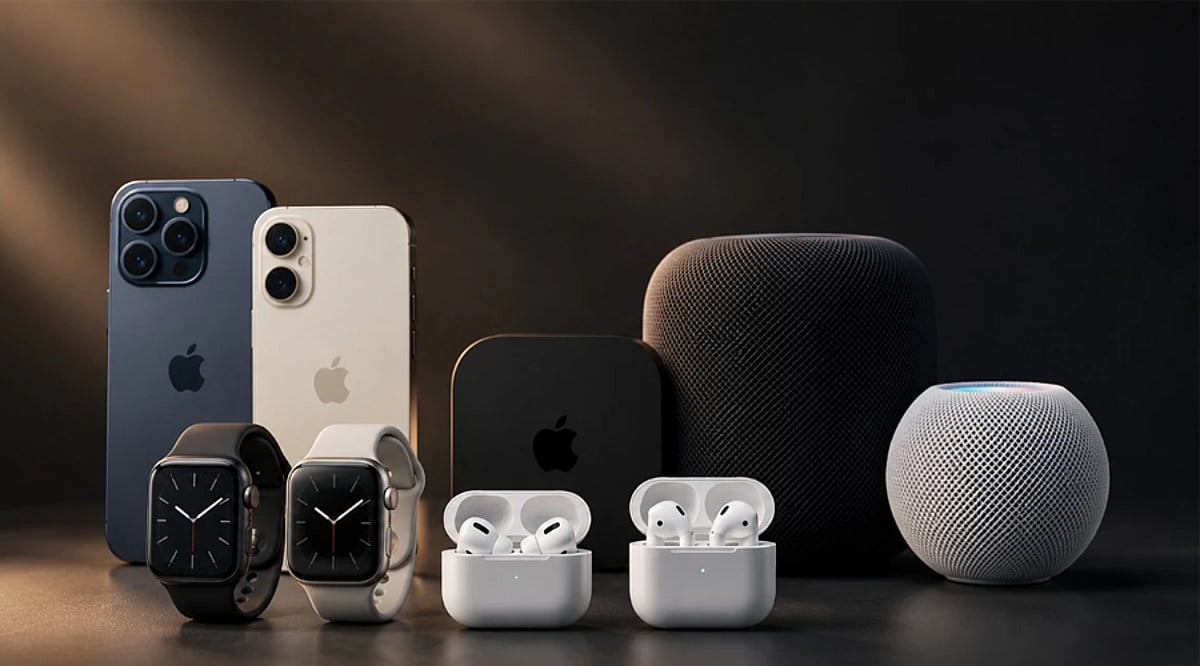
    Apple regularly refreshes its product lineup by replacing older hardware with newer models. As the company prepares for another major product cycle, several existing devices could be pushed aside. Here are Apple products that could potentially disappear from the lineup in 2026.

    Apple Watch Series 11

    The Apple Watch lineup is refreshed regularly, which puts older standard models at risk. If Apple introduces a newer generation, the Series 11 could eventually leave the official lineup. Retailers may continue selling remaining stock even after Apple stops offering it directly.

    Apple Watch SE 3

    The Apple Watch SE range targets buyers seeking a lower-cost entry into Apple’s smartwatch ecosystem. A future SE refresh could replace the existing model. Apple may choose to simplify the range rather than keep multiple generations competing at different prices.

    AirPods Pro 3

    AirPods Pro models usually remain available for some time, but a future upgrade could eventually replace the current generation. Apple could introduce new hardware or features that make the existing Pro model less attractive. Any discontinuation, however, would depend on Apple’s product strategy.

    iPad mini 7

    The iPad mini could face a refresh or repositioning as Apple updates its tablet portfolio. A new generation would likely take over the mini’s position rather than leaving two generations side by side. This makes the current model a possible candidate for retirement.

    MacBook Air M4

    Apple’s MacBook Air lineup moves quickly as new Apple silicon generations arrive. If a newer chip-based Air launches, the M4 generation could eventually disappear from Apple’s direct sales channel. Discounts and third-party availability could continue after its official retirement.

    Apple TV 4K

    The Apple TV 4K has remained in Apple’s lineup for years, making it a possible candidate for a major refresh. If Apple introduces a newer model with faster hardware or additional smart-home capabilities, the existing version could finally be retired.

  • NYT Strands #919 Hints and Answers for September 8, 2026: ‘It’s Elementary’ Classroom Theme

    NYT Strands #919 Hints and Answers for September 8, 2026: ‘It’s Elementary’ Classroom Theme

    The New York Times Strands puzzle for Tuesday, September 8, 2026 (game #919) takes players back to the classroom with a theme centered on elementary school essentials. The official hint is “It’s elementary,” which leads to familiar objects rather than Sherlock Holmes.

    Understanding Today’s Theme

    The phrase “It’s elementary” points directly to an elementary school setting. Solvers should look for words commonly found in a primary school classroom—items used by students and teachers during lessons. The connection becomes clearer as soon as you spot one classroom-related word on the grid.

    How NYT Strands Works

    NYT Strands is a daily word-search puzzle where you connect letters in any direction (horizontal, vertical, or diagonal) to form words linked to a central theme. Each puzzle also includes a spangram—a longer word or phrase that describes the overall theme and stretches from one side of the grid to the opposite side. Finding three non-theme words unlocks a hint that reveals the letters of one theme answer.

    Hints for September 8, 2026

    If you need extra help, think about the objects you would see inside an elementary school: items on walls, near the teacher’s desk, or stored around the room. The spangram hint refers to the period when students return to school after a break.

    Spangram and Answers

    Today’s spangram is BACKTOSCHOOL. It connects all six theme words and reinforces the classroom theme. Here is the complete answer list for Strands #919:

    • WHITEBOARD
    • MARKERS
    • DESK
    • EASEL
    • GLOBE
    • CUBBY

    Each answer represents an item commonly associated with an elementary school classroom. The spangram ties the whole puzzle together.

    Why This Puzzle May Take Time

    Some longer words like WHITEBOARD can be tricky to spot, and MARKERS might blend into surrounding letters. Shorter entries such as DESK, GLOBE, and CUBBY become easier once the theme clicks. Finding BACKTOSCHOOL provides the biggest breakthrough—once you see it, the classroom connection becomes obvious, and the remaining answers fall into place.

    For anyone stuck on Strands #919, the hints and answer list above offer a quick route to completing the September 8 challenge.

  • Ethereum Liquid Supply: How Much ETH Is Truly Tradable in 2026?

    Ethereum Liquid Supply: How Much ETH Is Truly Tradable in 2026?

    Ethereum lacks a fixed maximum supply like Bitcoin, but the headline circulating supply figure does not reveal how much ETH is genuinely available for immediate trading. Staking, corporate treasuries, exchange-traded products, and long-term custody arrangements are increasingly absorbing ETH that would otherwise circulate through exchanges.

    Total Supply Overview

    As of September 8, 2026, Ethereum’s total supply stood at approximately 122.02 million ETH, up about 1% from a year earlier.

    Over 42 Million ETH Is Staked

    Ethereum staking remains one of the largest constraints on readily available supply. Lido’s H1 2026 report showed total staked ETH rising 19%, from 36.3 million at the start of the year to 43.1 million by June 30, including the entry queue and excluding the exit queue. Institutional staking’s share increased from 25.9% to 35.3% during the same period. More recent Beaconcha.in data show approximately 42.99 million ETH currently staked across more than 909,771 active validators.

    Staked ETH is not permanently locked — validators can exit — but it is less immediately available for sale than ETH held in liquid wallets, and withdrawals can be delayed when validator exit queues expand.

    Exchange ETH Balances Remain a Key Indicator

    Centralized exchange balances provide another gauge of how much ETH is positioned for immediate trading. Glassnode currently estimates that approximately 15.65 million ETH are held on identified exchange addresses, slightly below the 15.76 million figure reported earlier in September. This represents roughly 13% of Ethereum’s total supply.

    Exchange balances are not a perfect measure of liquidity, as investors can trade through decentralized exchanges, institutional custodians, and over-the-counter markets. Glassnode also warns that recent figures can change as exchange address labels are updated. Still, falling exchange inventory can become critical when demand increases, as fewer tokens may be immediately available to meet buying pressure.

    Corporate Treasuries Hold Nearly 8 Million ETH

    Corporate accumulation has become another major supply factor. CoinGecko currently tracks 34 public companies holding 7,914,466 ETH, worth roughly USD 19.63 billion and representing about 6.49% of Ethereum’s total supply. BitMine Immersion remains the largest holder with 5,901,112 ETH (about 4.836% of supply). SharpLink holds 868,699 ETH, while The Ether Machine owns 496,712 ETH.

    These categories cannot be simply added to staking balances, as some treasury companies also stake portions of their holdings, creating overlap.

    ETFs Remove More ETH From Direct Crypto Trading

    Exchange-traded products form another source of economically restricted supply. BlackRock’s iShares Ethereum Trust ETF (ETHA) held USD 8.605 billion in net assets as of September 4. Its staking-focused ETHB product held approximately USD 963.7 million and reported a 30-day staking rewards rate of 1.63%. ETF investors can trade shares easily, but the underlying ETH remains in institutional custody rather than constantly circulating through crypto exchanges.

    Why Liquid Supply Matters

    Lower liquid supply means fewer ETH may be immediately available for sale when demand rises. This can amplify price moves, making staking balances, ETF holdings, and treasury activity increasingly important for investors. While validator withdrawals, ETF flows, or corporate selling can return supply to the market, the current dynamics suggest that a significant share of Ethereum’s 122 million ETH is tied up in staking, corporate treasuries, and investment products.

    Frequently Asked Questions

    1. How much Ethereum is currently in circulation? Ethereum’s total supply stood at approximately 122.02 million ETH as of September 8, 2026. Unlike Bitcoin, Ethereum does not have a fixed maximum supply.

    2. How much ETH is currently staked? Around 42.99 million ETH is currently staked across more than 909,000 active validators. Staked ETH can eventually be withdrawn, but it is less immediately liquid than ETH held on exchanges.

    3. How much ETH is held on centralized exchanges? Glassnode estimates that roughly 15.65 million ETH is held on identified centralized exchange addresses. This represents about 13% of Ethereum’s total supply.

    4. How much ETH do public companies hold? CoinGecko tracks 34 public companies holding about 7.91 million ETH. BitMine is the largest corporate holder with approximately 5.90 million ETH.

    5. Why does Ethereum’s liquid supply matter? Lower liquid supply means fewer ETH may be immediately available for sale when demand rises. This can amplify price moves, although validator withdrawals, ETF flows, or corporate selling can return supply to the market.

  • Reflectiz Unveils AI-Powered Agentic Pentesting Platform Offering 10x Coverage Over Traditional Web Security Tests

    Reflectiz Unveils AI-Powered Agentic Pentesting Platform Offering 10x Coverage Over Traditional Web Security Tests

    Boston, MA, USA – September 8, 2026 – Reflectiz, a leader in continuous web exposure management, has launched a revolutionary multi-agent penetration testing platform designed specifically for websites. This new solution leverages specialized AI agents to discover, attack, and validate vulnerabilities across complex web environments, offering up to ten times greater coverage than conventional penetration testing tools.

    Traditional pentesting has long been a periodic event—an engagement that produces a static report while websites evolve daily with new logins, checkouts, payments, and third-party scripts. Reflectiz’s agentic pentesting closes this gap by providing continuous, intelligent testing that adapts to a site’s changing landscape.

    “Websites change every week but get pentested only once or twice a year. That gap creates exposure,” said Idan Cohen, CEO and co-founder of Reflectiz. “Teams need testing that keeps pace with releases at a sustainable cost, with trusted coverage of what was actually tested.”

    Unlike conventional scanners that start every test blind, Reflectiz’s platform begins with a pre-existing model of each website. Built from a decade of scanning thousands of production sites, this model includes pages, scripts, third-party integrations, domains, sensitive inputs, and behaviors—the same context that attackers exploit.

    The platform operates as a coordinated team of four specialized AI agents:

    • Crawler Agent: Navigates the site authentically, through logins, one-time codes, and two-factor authentication, mapping real-world user flows.
    • Fingerprinter Agent: Identifies the technology stack and determines which attacks are applicable.
    • Attacker Agent: Executes and chains vulnerabilities to simulate real-world exploits.
    • Validator Agent: Independently reproduces every finding before it’s reported, eliminating false positives.

    Each finding comes with reproduction steps, evidence, and a coverage map of what was tested and cleared. Testing spans the full OWASP Top 10, and teams can set depth per flow—from fast predefined checks to expert-level attack chains on critical assets.

    “The hard part of web pentesting was never the payload; it was understanding what the application actually does,” explained Ysrael Gurt, CTO and co-founder of Reflectiz. “Our engine has been reading live websites for years, so our agents start with a map that other tools never build.”

    The agentic pentesting platform is part of Reflectiz’s new Offensive Hub, which joins the Security Hub and Privacy Hub to provide a complete 360-degree map of web risk: what runs on the site, what data it touches, and how it can be attacked. Findings from all three hubs cross-reference automatically, and the AI-powered remediation agent, Atlas, guides teams through fixes. The system integrates with existing workflows via REST API, CI/CD triggers, and Slack alerts.

    Reflectiz founders Idan Cohen and Ysrael Gurt will demonstrate the platform in a live webinar on September 15, 2026, at 11 AM ET / 6 PM CET. Registration is available at https://www.reflectiz.com/lp/founders-case-study-webinar/.

    For more information, visit Reflectiz.com.

  • XRP Predicted to Hit $5 by 2026 Amid Bullish Setup, MemeToro Presale Nears $120K

    XRP Predicted to Hit $5 by 2026 Amid Bullish Setup, MemeToro Presale Nears $120K

    XRP is trading near $1.41 after a slight pullback, but analysts are focusing on a long-term breakout pattern that could propel the token above $5 by the end of 2026. According to top analyst Ali Martinez, a monthly close above $3.66 would confirm a decade-long resistance break, opening the door to targets between $5 and $7. While extreme forecasts extend higher, those depend on a strong crypto cycle and remain speculative.

    Several catalysts support the bullish case for XRP. Spot XRP ETFs have attracted $1.68 billion in cumulative net inflows, adding institutional demand. Ripple’s RLUSD stablecoin expansion is driving more payment and settlement use on the XRP Ledger. Additionally, the ledger is gaining traction for real-world asset tokenization and cross-border transactions.

    Meanwhile, the MemeToro crypto presale is approaching $120,000 raised. Currently in Stage 7, the project has raised over $114,000, with one $MT token priced at $0.00430. MemeToro has published its fair-launch contract draft, featuring 1,373 lines of code across 17 files, including FairLaunchEscrow.sol. The escrow holds funds for one launch round under fixed rules—no owner, admin, or upgrade path—supporting the zero-insider model. However, the contract remains a draft; testnet deployment, launch executor, security review, and other milestones are still ahead.

    For investors, the contrast is clear: XRP offers deep liquidity and institutional products, while MemeToro is still proving its launch infrastructure. Both stories highlight the evolving crypto landscape—one mature, the other emerging.

  • Motorola Unveils Edge 70 Plus and Moto Watch Ultra at IFA 2026

    Motorola Unveils Edge 70 Plus and Moto Watch Ultra at IFA 2026

    At IFA 2026, Motorola took the stage to introduce two major additions to its lineup: the Edge 70 Plus smartphone and the Moto Watch Ultra smartwatch. The former emphasizes camera prowess, battery longevity, and a refined design, while the latter marks the company’s push into premium Wear OS wearables with deep health tracking integration.

    Motorola Edge 70 Plus: A Camera-First Flagship

    The Edge 70 Plus is built around a 200-megapixel main sensor — Motorola’s highest-resolution smartphone camera to date. It includes optical image stabilization, 10x Super Zoom, and 4K video recording. A dedicated macro camera and a 32-megapixel selfie shooter round out the photography suite, with AI enhancements that automatically optimize image quality.

    Under the hood, the device runs on the Snapdragon 7s Gen 3 processor, paired with a massive 6,500mAh battery. Motorola claims up to 42 hours of talk time and 34 hours of video streaming. The phone supports 45W TurboPower charging and bypass charging — a feature that reduces heat buildup during gaming sessions by powering the device directly.

    The display is a 6.78-inch Extreme AMOLED panel with a 144Hz refresh rate, designed to make scrolling and gaming feel fluid. Dolby Atmos stereo speakers enhance media consumption, and the quad-curved design gives the phone a premium in-hand feel.

    Moto Watch Ultra: Premium Wear OS Smartwatch

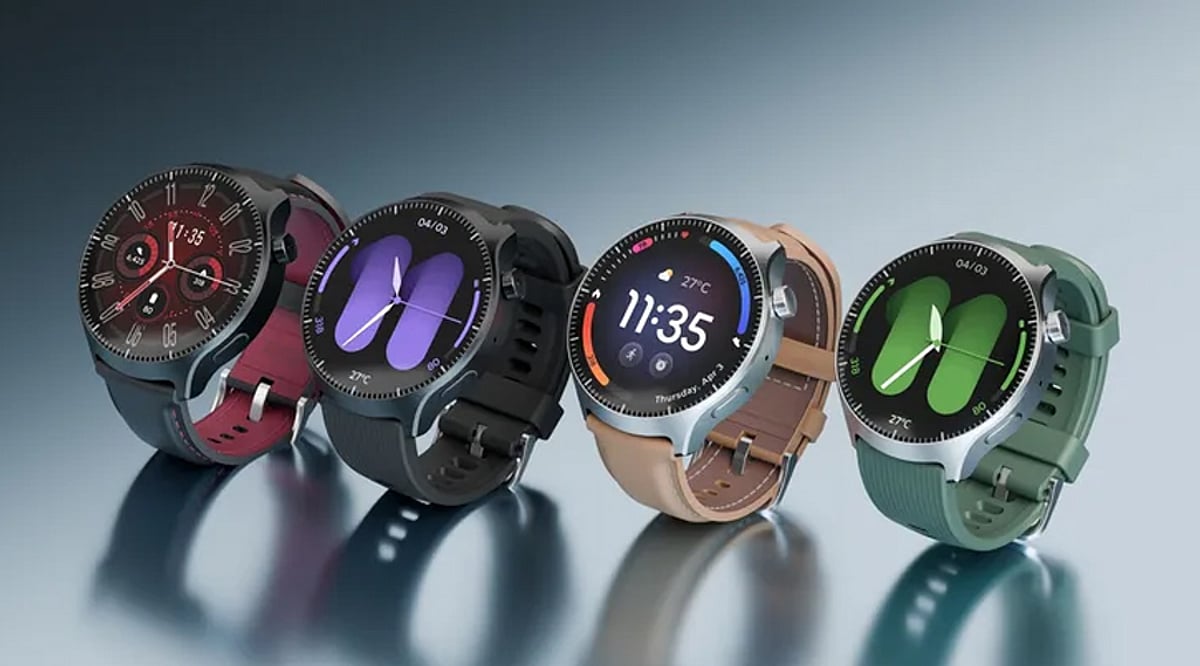
    The Moto Watch Ultra is Motorola’s answer to high-end smartwatches, running Wear OS by Google. It features a 46mm stainless steel body and a 1.5-inch OLED display with peak brightness of 2,700 nits. LTE connectivity, dual-band GPS, and Google Wallet support are built-in, enabling calls, texts, and contactless payments without needing a phone nearby.

    Health tracking is powered by a partnership with Polar, offering sleep tracking, recovery insights, activity scores, stress management tools, calorie tracking, and a Running Coach. Features like Nightly Recharge and Sleep Plus Stages provide deeper wellness analysis.

    Battery life is rated at up to two days of active use, and a 15-minute charge can deliver up to 24 hours of usage. The watch supports popular Wear OS apps including Google Maps, Google Messages, YouTube Music, and Gemini.

    Both devices are expected to hit markets in the coming months, with pricing and availability to be announced regionally.

  • Reliance Digital Mobile Sale: Unbeatable Offers on iPhone 16, Galaxy S25, and OnePlus 13R

    Reliance Digital Mobile Sale: Unbeatable Offers on iPhone 16, Galaxy S25, and OnePlus 13R

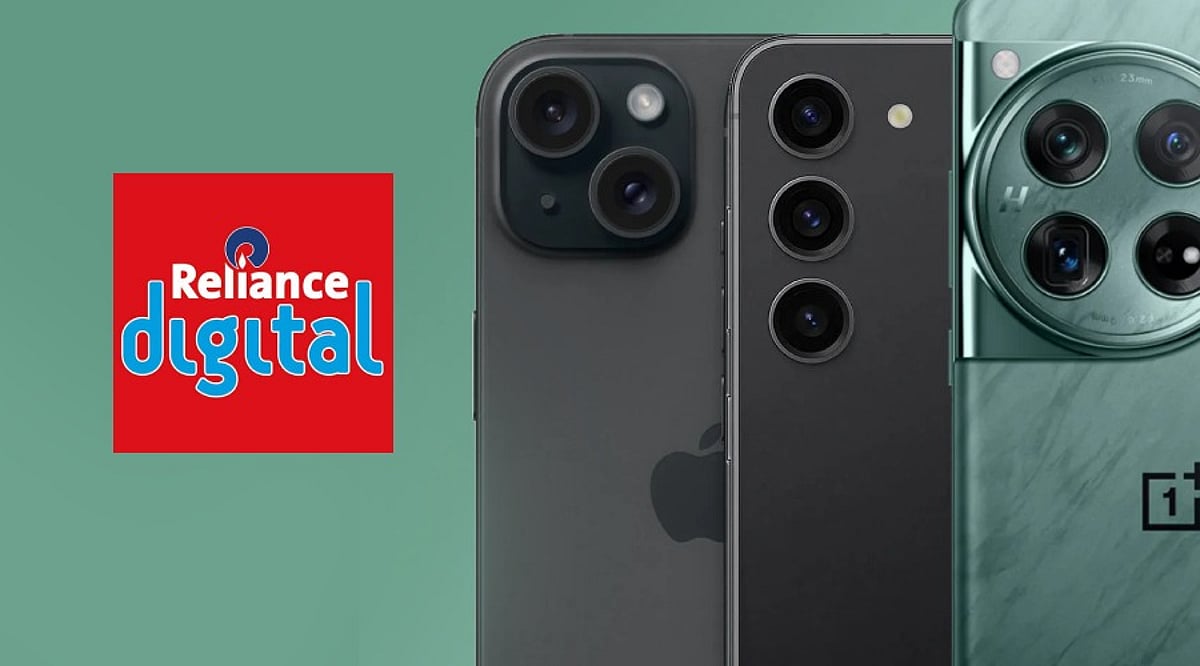
    Reliance Digital is running a major mobile sale with discounts and bank card offers on popular smartphones from Apple, Samsung, and OnePlus. From the latest iPhone 16 to the powerful OnePlus 13R, the sale covers both premium and mid-range devices. However, many listings show a base price with additional bank discounts that vary by card and eligibility. Here’s a breakdown of the standout deals and what buyers should know before purchasing.

    Apple iPhone 16 (128 GB) – Rs. 69,900

    The iPhone 16 128 GB is priced at Rs. 69,900. It features a 6.1-inch Super Retina XDR display, Apple’s A18 chip, and a dual rear camera with a 48 MP Fusion lens and a 12 MP Ultra Wide lens. It runs iOS 18 and comes with a one-year manufacturer warranty. This is the best choice for buyers who want a current-gen iPhone without stepping into the Pro range.

    Apple iPhone 16e (128 GB) – Rs. 57,990

    The iPhone 16e is listed at Rs. 57,990. It also has a 6.1-inch Super Retina XDR OLED display and the A18 Bionic chip, but features a single 48 MP Fusion rear camera instead of the dual-lens system. For those looking to enter the iPhone 16 family at a lower price, this is the most affordable option.

    Samsung Galaxy S25 5G (256 GB) – Rs. 84,999

    Priced at Rs. 84,999, the Galaxy S25 256 GB comes with 12 GB RAM and 256 GB storage. Reliance Digital shows an additional bank offer of up to Rs. 12,000 off on select credit cards. The phone features a 6.2-inch FHD+ display, Snapdragon 8 Elite processor, a 50 MP main camera with 10 MP telephoto and 12 MP ultra-wide lenses, Android 15 with One UI 7, and a 4,000mAh battery.

    Samsung Galaxy A56 5G (256 GB) – Rs. 42,999

    The Galaxy A56 5G is priced at Rs. 42,999 (MRP Rs. 46,999) with up to Rs. 5,000 off on select bank cards. It sports a 6.7-inch Super AMOLED display, Exynos 1580 processor, 50 MP+12 MP+5 MP rear cameras, 12 MP front camera, 5,000mAh battery, and Android 15. This is the pick for a large AMOLED screen and ample storage at a mid-range price.

    OnePlus 13R 5G (256 GB) – Rs. 42,999

    Priced at Rs. 42,999 (MRP Rs. 44,999), the OnePlus 13R offers 12 GB RAM, a 6.78-inch AMOLED display, Snapdragon 8 Gen 3 processor, a 6,000mAh battery, and a triple rear camera (50 MP main, 50 MP telephoto, 8 MP). At the same price as the Galaxy A56, this is the performance-focused alternative with a stronger processor and larger battery.

    OnePlus 13 5G (512 GB) – Rs. 76,999

    The OnePlus flagship is priced at Rs. 76,999 (MRP Rs. 79,999) with 16 GB RAM, 512 GB storage, a 6.82-inch QHD+ AMOLED display, Snapdragon 8 Elite processor, 6,000mAh battery, and triple 50 MP rear cameras. Ideal for buyers wanting more RAM and storage than the 13R while staying under Rs. 80,000.

    Samsung Galaxy S25 5G (128 GB) – Rs. 74,999

    This variant is priced at Rs. 74,999 (MRP Rs. 75,999) with an additional bank offer of up to Rs. 9,000 off for eligible cards. It keeps the same Snapdragon 8 Elite processor and 6.2-inch display as the 256 GB model, with storage reduced to 128 GB, making the S25 line more accessible.

    Final Thoughts

    For iPhone buyers, the iPhone 16 at Rs. 69,900 is the more complete pick, while the 16e at Rs. 57,990 suits those prioritizing a lower entry price. On the Android side, the Galaxy A56 and OnePlus 13R both sit at Rs. 42,999 but take different approaches: Samsung leans on its AMOLED display, OnePlus on a higher-end Snapdragon platform and bigger battery. For a larger budget, the Galaxy S25 256 GB at Rs. 84,999 and the OnePlus 13 512 GB at Rs. 76,999 are the stronger premium options, with the S25’s bank-card discount potentially making it more attractive if you hold an eligible card.

    Note: Bank offers are subject to eligibility, payment method, and issuer terms. Prices and offers may change; verify details before purchasing.

  • Why Custody and Succession Planning Are Becoming Crypto’s Next Big Trust Challenge

    Why Custody and Succession Planning Are Becoming Crypto’s Next Big Trust Challenge

    India’s crypto market has evolved beyond early speculation. According to a June survey by Mudrex, over 41% of Indian crypto investors now identify as long-term, buy-and-hold investors. This shift toward long-term ownership brings a critical question: What happens to digital assets when the owner is no longer around to access them?

    From Speculation to Long-Term Ownership

    Prateek Gupta, Head of Business at Mudrex, noted a generational trend: short-term trading drops steadily with age. Nearly a third of investors aged 18-24 trade short-term, compared to below 8% among those aged 55 and above. “Crypto ownership in India has been shifting from short-term speculation to long-term wealth building,” he said.

    The Access Problem

    Legal ownership does not guarantee wallet access. “A family can have every legal right to a deceased holder’s assets and still be locked out without the private keys or a registered nominee,” Gupta explained. He urged platforms to build nomination, succession documentation, and estate-planning support directly into the product.

    Regulatory Framework Strengthens Investor Confidence

    As of mid-2026, 54 Virtual Digital Asset Service Providers are registered with the FIU-IND under the Prevention of Money Laundering Act, including major exchanges like CoinDCX, CoinSwitch, Mudrex, ZebPay, WazirX, and Binance. The framework mandates strict KYC, suspicious transaction reporting, and continuous monitoring.

    Nomination: A Sign of Maturity

    CoinSwitch co-founder Ashish Singhal highlighted the platform’s nomination feature, comparing it to established practices in equities. “Just as nomination is an established practice across equities and other financial assets, crypto ownership needs the same level of preparedness,” he said. The feature allows investors to nominate a person for asset transfer in case of unforeseen circumstances.

    What Platforms Must Prioritize

    Building trust requires clear nomination processes, simplified documentation for legal heirs, secure key management, transparent communication, and regular audits of custody infrastructure.

    Final Words

    India’s crypto ecosystem has matured in compliance and investor behavior. The next phase hinges on solving the succession puzzle. Platforms that build robust nomination systems and transparent custody practices will earn deeper investor confidence.

  • Tech Roundup: Sonos Ace Ultra, Poco X8 Battery, Apple Durability Focus, Sam Altman on Smart Glasses, Xiaomi Power Bank

    Tech Roundup: Sonos Ace Ultra, Poco X8 Battery, Apple Durability Focus, Sam Altman on Smart Glasses, Xiaomi Power Bank

    Today’s top tech news covers a range of exciting developments: Sonos has launched a more affordable Ace Ultra, the Poco X8 boasts a massive 8,340mAh battery, Apple’s new CEO John Ternus is prioritizing durability, Sam Altman raises questions about smart glasses, and Xiaomi has introduced new power banks.

    • Sonos Ace Ultra: The audio brand has released a cheaper version of its flagship speaker, making high-quality sound more accessible.
    • Poco X8 Battery: The upcoming smartphone packs an impressive 8,340mAh battery, promising extended usage times.
    • Apple CEO John Ternus: In a recent statement, Ternus emphasized Apple’s commitment to product durability and longevity.
    • Sam Altman on Smart Glasses: The OpenAI CEO expressed skepticism about the current state of smart glasses, questioning their practicality and market readiness.
    • Xiaomi Power Bank: Xiaomi has launched a new line of power banks, expanding its accessories portfolio.

    Stay tuned for more updates on these stories and other breaking tech news.