Author: vitorcherulli

  • Top Games Launching in September 2026: A Guide for PC, PS5, and Xbox Gamers

    Top Games Launching in September 2026: A Guide for PC, PS5, and Xbox Gamers

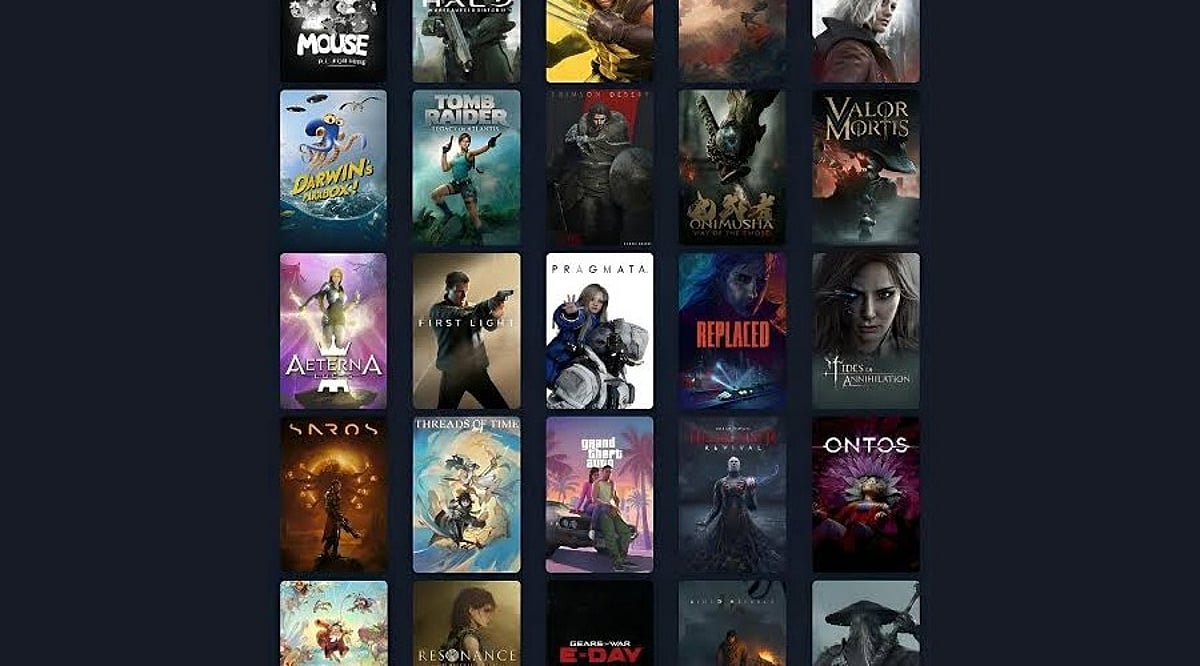
    September 2026 is shaping up to be a packed month for gamers, with new releases across PC, PlayStation 5, and Xbox. From superhero action and deep RPGs to quirky simulations and horror, there’s something for every taste. Here’s a rundown of the most anticipated titles.

    PC Games

    BrokenLore: DON’T LIE – September 9

    This horror game immerses players in a dark, tense atmosphere. Perfect for those who enjoy creepy settings and psychological suspense.

    Trails in the Sky 2nd Chapter – September 17

    The sequel to the beloved JRPG continues the story-driven saga with rich character development, strategic turn-based combat, and hours of exploration.

    Graveyard Keeper 2 – September 22

    A management simulation with a morbid twist. Build, craft, and run a graveyard while exploring a dark, humorous world. Great for players who enjoy sandbox-style gameplay.

    PS5 Games

    Marvel’s Wolverine – September 15

    One of the biggest releases of the month, this action-adventure game puts Wolverine’s claws and regenerative abilities front and center. A must-play for Marvel and PlayStation fans.

    Minecraft Dungeon – September 29

    A dungeon-crawling spin-off set in the Minecraft universe. Team up with friends to loot, fight, and explore procedurally generated levels.

    Halloween: The Game – September 8

    A survival horror experience based on the iconic film series. Expect tense encounters and a chilling atmosphere.

    Train Sim World 7 – September 15

    For simulation enthusiasts, this train-driving game delivers detailed routes, realistic controls, and a relaxing pace.

    Xbox Games

    Mewgenics – September 8

    A quirky strategy game where you raise an army of cats with unique abilities. The blend of humor and tactical combat sets it apart from more serious titles.

    Bus Simulator 27 – September 8

    An authentic bus-driving simulation. Navigate city routes, manage schedules, and enjoy a calm, rewarding experience.

    Barbarian Saga: The Beastmaster – September 9

    An action-fantasy adventure set in a mythical world. Battle creatures and explore rugged landscapes.

    Which Games Are Worth Buying?

    • Marvel’s Wolverine is the standout AAA title — essential for action fans.
    • Trails in the Sky 2nd Chapter is the top pick for RPG lovers seeking a long, narrative-heavy journey.
    • Graveyard Keeper 2 offers a slower, management-driven alternative.
    • Mewgenics brings originality and fun to the Xbox lineup.

    Whether you prefer superhero battles, deep stories, or relaxing simulations, September 2026 has plenty to offer. Mark your calendars and get ready to play.


  • Why Enterprise AI Chat Interfaces Fail in Production and How to Fix Them

    Why Enterprise AI Chat Interfaces Fail in Production and How to Fix Them

    Enterprise teams build AI chat interfaces, showcase smooth demos, and watch them break in production. The root cause often lies not in the model but in the frontend architecture. Connecting raw token streams directly to React components causes slow renders, lag, and broken state. This article explores why this happens and presents a robust solution.

    The Core Problem: Streams vs. UI Rendering

    AI chat operates differently from standard interfaces. Responses arrive as continuous event streams while users cancel requests, switch chats, or trigger tools simultaneously. The common approach of reading a POST response stream inside a React component—whether manually or with hooks like Vercel’s useChat—creates three critical couplings:

    • Schedule coupling: The component controls when the UI updates, but it shouldn’t.
    • Concurrency coupling: The component manages which stream may write, but this logic belongs elsewhere.
    • Protocol coupling: The component interprets raw bytes, but this is not its responsibility.

    How These Couplings Fail

    These couplings manifest in three main failure modes:

    1. Interaction Latency That Scales with Session Length

    As the transcript grows, each update takes more work to render. Once a task exceeds 50 ms, it blocks user input. When this delay pushes the interface beyond the 200 ms threshold for a good Interaction to Next Paint (INP), typing feels sluggish. Because the problem appears gradually, teams often blame the model instead of the architecture.

    2. Concurrency Races on Stop, Regenerate, and Switch

    When the current response lives in effect closures and isLoading booleans, there’s no central mechanism to decide which stream can update state. Switching conversations mid-stream can cause late events to update the wrong conversation. Open WebUI documents this: “Chat B’s content disappears—replaced by a loading state meant for Chat A.”

    3. Protocol Flattening

    AI providers send typed event streams, not plain text. For example, Anthropic’s protocol interleaves text, thinking, and tool-call deltas, with tool arguments arriving as partial JSON. Flattening these events into string concatenation loses meaning, leading to incomplete tool arguments, missed mid-stream errors, or truncated output stored as final content—corrupting the context for the next turn.

    The Correction: Ingest, Log, Project

    The solution introduces a boundary with three components, none of which import React:

    • Stream Ingestor: Handles the connection and provider events, turns them into typed application events, validates order, and assigns a run ID. Starting, stopping, or switching conversations creates a new ID, and late events are dropped. AbortController lives here, separating cancellation from the component lifecycle.
    • Conversation Log: The single source of truth. It records events in order and marks a response complete only when the provider sends its final message event (e.g., message_stop). A dropped connection cannot look like a completed answer. The log also serves as a test case and debugging trace.
    • Projection Scheduler: Converts the log into the state React needs to display. Using useSyncExternalStore, it updates the UI on a controlled schedule (e.g., frame budget or ~50 ms interval) instead of on every token. Per-message views remain referentially stable, so memoized components skip unchanged work.
    provider SSE / fetch stream
            |
            v
    Typed protocol events
            |
            v
    +-----------------------------+
    | Conversation runtime (no React) |
    | - Stream Ingestor: parse, validate, epoch-guard |
    | - Conversation Log: append-only, replayable |
    | - Projection Scheduler: frame-budget flush |
    +-----------------------------+
            |
            v
    useSyncExternalStore commit
            |
            v
    React component tree
    

    Trade-offs and When to Use This Approach

    The UI trails the stream by one flush interval, and the architecture requires more code than a simple hook. For short prototype sessions without tool calls, it’s probably unnecessary. The event log also needs periodic compaction. However, the payoff is that interaction cost stops growing with conversation length.

    Real-World Numbers

    In a benchmark comparing three versions of the same React chat harness, the naive architecture showed a p95 heartbeat-task lateness of 20.9 ms at 12 messages—acceptable at demo scale. But at 48 messages, each UI update took three times longer, frame rate dropped, and user interactions waited 61 ms before handlers ran. The naive version attempted 100 UI updates per second but managed only 38, saturating the main thread. The projection variant committed 5× less often and spent 12× less main-thread time, at identical perceived text speed.

    Conclusion

    Treat an LLM conversation as distributed-systems data: an ordered, typed, cancellable event log. The frontend should control when the UI updates. Review streaming state architecture like an API contract: Who controls the update schedule? Who decides which stream can write? Which events mark a response as complete? Measure interactivity at realistic conversation lengths, not demo lengths. A chat interface that feels responsive at message ten should not degrade by message fifty.

    References:

    • WHATWG. HTML Living Standard, §9.2 Server-sent events.
    • React Team. React v18.0 — automatic batching.
    • Google web.dev. Interaction to Next Paint (INP); Optimize long tasks.
    • Vercel. AI SDK UI: Chatbot—per-chunk renders and the throttle option.
    • Anthropic. Streaming Messages—event types and ordering.
    • Brysbaert, M. (2019). How many words do we read per minute? Journal of Memory and Language, 109.
    • Artificial Analysis. LLM output speed comparisons.
    • Open WebUI. Discussion #21462: chat switching causes race conditions.
  • Top 7 Horror Movies Every Thriller Fan Should Watch

    Top 7 Horror Movies Every Thriller Fan Should Watch

    If you love the suspense and tension of thrillers, these seven horror films deliver the perfect blend of psychological dread, supernatural scares, and gripping storytelling. From classic masterpieces to modern hits, each movie offers a unique experience that will keep you on the edge of your seat.

    1. The Shining

    Stanley Kubrick’s The Shining masterfully combines psychological tension, supernatural horror, and isolation. Jack Torrance’s disturbing descent into madness turns a remote hotel stay into a terrifying nightmare.

    2. Hereditary

    Hereditary follows a grieving family facing disturbing secrets after a grandmother’s death. Its slow-building tension, unsettling atmosphere, and shocking twists make it ideal for thriller lovers.

    3. The Conjuring

    The Conjuring delivers classic supernatural horror through a family battling a terrifying presence inside their farmhouse. Strong suspense, eerie settings, and paranormal investigations keep the story gripping.

    4. Get Out

    Jordan Peele’s Get Out combines horror, mystery, and social thriller elements. A weekend visit to his girlfriend’s family becomes increasingly disturbing, leading to a series of frightening revelations.

    5. A Quiet Place

    A Quiet Place creates suspense through a world where deadly creatures hunt anything that makes sound. Its survival-focused story keeps viewers tense while delivering emotional family drama.

    6. The Exorcist

    The Exorcist remains one of horror cinema’s most influential films. Its story of a young girl facing a terrifying supernatural force creates intense fear through atmosphere and psychological tension.

    7. The Babadook

    The Babadook explores grief, fear, and motherhood through a mysterious children’s book. Its psychological approach and increasingly disturbing events make it a strong choice for thriller fans.

  • How Ethereum Layer-2 Networks Are Transforming Scalability and DeFi

    How Ethereum Layer-2 Networks Are Transforming Scalability and DeFi

    Ethereum’s Layer-2 networks are reshaping the blockchain landscape by addressing long-standing challenges related to transaction costs, speed, and scalability. These secondary protocols operate on top of Ethereum’s mainnet, processing transactions off-chain while leveraging the security of the underlying blockchain. Below are the key ways Layer-2 solutions are changing Ethereum and expanding its ecosystem.

    Lower Transaction Costs

    Layer-2 networks reduce congestion on Ethereum’s mainnet by handling transactions separately. By batching multiple transactions and settling the results on Ethereum, these solutions significantly lower fees. This makes everyday blockchain activities such as payments, trading, and gaming more accessible and cost-effective.

    Faster Transaction Processing

    When Ethereum’s mainnet faces high demand, transaction speeds can slow and costs spike. Layer-2 networks process transactions off-chain and submit compressed data or proofs to Ethereum. This approach boosts throughput, enabling applications to handle more activity while users experience faster confirmations and smoother interactions.

    Greater Scalability

    Scalability has been a major hurdle for Ethereum as adoption grows. Layer-2 networks provide additional execution capacity without requiring every transaction to be processed directly on the mainnet. This creates room for significantly more activity across decentralized applications, helping Ethereum support growing demand from users, developers, and financial platforms.

    Growth of DeFi

    Decentralized finance (DeFi) applications benefit greatly from cheaper and faster transactions. Layer-2 networks allow users to trade, lend, borrow, and provide liquidity while paying substantially lower fees. This improved economics encourages broader participation and enables developers to create financial products that would be impractical on Ethereum’s mainnet alone.

    Expansion of Web3 Gaming

    Blockchain gaming requires frequent transactions, making mainnet fees and throughput challenging. Layer-2 networks offer the speed and lower costs needed for in-game transactions, digital assets, and other activities. This infrastructure helps blockchain games become more practical by reducing costs and friction for players.

    More Developer Innovation

    Layer-2 networks provide developers with additional environments to build applications with different performance, cost, and execution characteristics. This flexibility encourages experimentation across finance, gaming, social platforms, and other Web3 applications. As infrastructure improves, developers can focus on creating useful products rather than working around Ethereum’s mainnet limitations.

    A Stronger Ethereum Ecosystem

    Rather than replacing Ethereum, Layer-2 networks function as complementary infrastructure. Transactions occur on specialized networks before ultimately settling on Ethereum. This creates a broader ecosystem where multiple Layer-2 platforms compete and innovate, while Ethereum remains the core settlement and security layer.

  • Amazon Great Indian Festival Sale 2026: Expected Dates, Discounts, and Shopping Tips

    Amazon Great Indian Festival Sale 2026: Expected Dates, Discounts, and Shopping Tips

    Amazon’s Great Indian Festival Sale is one of the most anticipated shopping events of the festive season in India, offering deep discounts on smartphones, laptops, televisions, home appliances, electronics, fashion, and more. As shoppers begin preparing for the 2026 edition, attention is turning to when the sale will take place and what deals may be available.

    Expected Sale Dates for 2026

    While Amazon has not officially announced the dates for the 2026 Great Indian Festival Sale, estimates based on previous schedules and the festive calendar suggest it will begin between October 2 and October 7. A recent report by DesiDime points to October 2 as the likely start date, with Prime early access possibly starting on October 1, and the sale ending on October 31. However, Amazon has not confirmed these dates. In a response on its Seller Central forum, an Amazon representative advised sellers to follow official communications for confirmation.

    Comparison with Previous Years

    The expected timing aligns with Amazon’s pattern of holding the Great Indian Festival around India’s festive shopping season. In 2025, the sale began on September 23 (early access on September 22), in 2024 it started on September 27, and in 2023 on October 8. The 2026 sale is projected to fall near Navratri (Pratipada Navratri on October 11) and Diwali (November 8, 2026).

    Prime Members Early Access

    Following Amazon’s established practice, Prime members are expected to receive 24-hour early access before the main sale opens to all customers. This early access can be crucial for securing high-demand or limited-stock products.

    Anticipated Deals and Discounts

    The Great Indian Festival typically covers a wide range of categories. Shoppers can expect offers on smartphones, laptops, tablets, televisions, headphones, home appliances, kitchen products, fashion, beauty, furniture, and everyday essentials. During the 2025 edition, discounts reached up to 40% on smartphones, up to 80% on electronics, fashion, home, and kitchen products, and up to 65% on TVs and home appliances. Amazon has not yet announced specific discounts or product offers for 2026.

    Bank Offers, Cashback, and EMI Options

    Bank discounts are likely to return. In 2025, Amazon offered a 10% instant discount on SBI Credit and Debit Cards and EMI transactions, along with offers from other major banks. Prime customers using the Amazon Pay ICICI Bank Credit Card earned unlimited cashback. No-cost EMI options were available through Amazon Pay Later on fashion, furniture, and kitchen appliances. The exact bank offers for 2026 have not been announced.

    Key Shopping Tips

    Since sale dates are not yet confirmed, shoppers should avoid relying on unconfirmed dates or predicted prices. It is advisable to add desired products to a wishlist, track prices before the sale, and compare final sale prices with previous discounts. Bank offers, cashback, exchange benefits, and no-cost EMI options can affect the effective price. For now, the main takeaway is that the sale is expected in October, but shoppers should wait for Amazon’s official announcement before making plans.

  • Apeing’s Stage 1 Presale Heats Up While Monero Holds at $518.97 and Toncoin Rises 1.43%

    Apeing’s Stage 1 Presale Heats Up While Monero Holds at $518.97 and Toncoin Rises 1.43%

    The cryptocurrency market is offering an intriguing mix of established assets and a brand-new presale opportunity. Monero is currently trading at $518.97 with a 24‑hour volume of over $110 million, while Toncoin (TON) sits at $0.005227 after gaining 1.43% in the last day. Amid these moves, a new project called Apeing has launched its first presale stage, drawing attention from early‑stage investors.

    Apeing’s Banana Drop Enters the Spotlight

    Apeing has kicked off Stage 1—dubbed the Banana Drop—allocating 150,000,000 $APEING tokens at a price of just $0.0001. The project aims to list at $0.01, suggesting a potential ROI of 9,900% for early participants. The presale emphasizes timing: limited allocation and structured holder strategies create urgency for those seeking the best crypto coins before later stages.

    Participants can join by visiting Apeing’s official website, connecting a supported wallet or payment method, selecting the Stage 1 allocation, and completing the purchase. Early entry also unlocks referral rewards, access to tier‑based staking, and a front‑row position in the community.

    Staking Tiers Offer Flexibility

    Apeing’s staking model rewards holders during the presale with fixed annual percentage yields (APY) tied to commitment levels:

    • Chimp Tier – 10% APY (from $500)
    • Monkey Tier – 25% APY ($1,000)
    • Degen Tier – 50% APY ($3,000)
    • Giga Ape Tier – 85% APY ($15,000)

    After listing, staking will transition to an on‑chain model via Ethereum’s contract, while presale participants can unstake at any time.

    Monero and Toncoin Provide Market Context

    Monero’s $518.97 price tag and significant trading volume underscore its role as a steady anchor in the crypto market. Toncoin’s 1.43% uptick, despite a rank of #5752 on CoinMarketCap, adds a contrasting datapoint for those tracking emerging assets. The gap between Apeing’s $0.0001 presale price and these established coins highlights the varied opportunities available to investors.

    Why Apeing Stands Out

    While Monero and Toncoin represent established market activity, Apeing operates from a completely different starting line. Its Banana Drop combines limited Stage 1 supply, tiered rewards, and a clear listing target. For anyone tracking the best crypto presales in 2026, this is the moment the narrative moves from announcement to active participation.

    Disclaimer: This article is for informational purposes only and does not constitute investment advice. Cryptocurrencies and presales carry high risk; readers should conduct their own research before investing.

  • Watt2Trade’s $WATTOIN Token Debuts on Fjord Foundry at a Discount; Community Presale Still Active

    Watt2Trade’s $WATTOIN Token Debuts on Fjord Foundry at a Discount; Community Presale Still Active

    Watt2Trade, a blockchain-based platform for electricity markets, has announced that its native utility token, $WATTOIN, is now available for a limited time on Fjord Foundry at a reduced price. The company’s community presale, already running at presale.watt2trade.com, will continue once the Fjord Foundry window closes.

    The firm secured $1.55 million in earlier equity financing. Its platform currently boasts over 257,000 unique wallets, and decentralized exchange liquidity stands at $850,000.

    Platform & Token Utility

    Watt2Trade applies blockchain infrastructure to electricity markets that operate 24/7 globally. Its marketplace aims to broaden participation and improve market efficiency. $WATTOIN unlocks benefits including discounted trading fees, staking rewards, and governance rights. Community presale purchases will be delivered after the token generation event via a vesting contract.

    Leadership & Recognition

    Founder and CEO Carlos Aurelio Hernández González also serves as President of COPARMEX’s National Energy Commission in Mexico. He has been recognized among the Top 100 leaders in Mexico’s energy sector for two consecutive years. The project was named among the Top 100 in Paris Blockchain Week’s Start in Block program and was listed among the event’s real-world asset (RWA) initiatives.

    Fjord Foundry Round & Presale Details

    Participants in the community presale can buy $WATTOIN with POL, USDC, or USDT on Ethereum, Polygon, BNB Chain, Arbitrum, and Base. The Fjord Foundry sale is time-limited and priced below the current website stages. After it ends, the offering will revert exclusively to Watt2Trade’s website, with prices increasing as milestones are reached. Access the limited Fjord Foundry sale here (link placeholder).

    About Watt2Trade

    Watt2Trade DAO LLC is developing a decentralized exchange for electricity prices, enabling users to access market data and trading via blockchain and smart contracts. $WATTOIN is the platform’s native utility token. Founded in 2023 by a Mexican team, Watt2Trade publishes further details at watt2trade.com, with the community presale at presale.watt2trade.com.

    Media Contact:
    Watt2Trade Communications
    Email: malu@watt2trade.com

    Disclaimer: This release is for informational purposes. It does not constitute an offer to sell, or a solicitation of an offer to buy, any securities or tokens. Token sales may be restricted in certain jurisdictions. Digital assets involve risk, including the possible loss of principal.

  • 10 Screenless Tech Devices Transforming Consumer Electronics in 2026

    10 Screenless Tech Devices Transforming Consumer Electronics in 2026

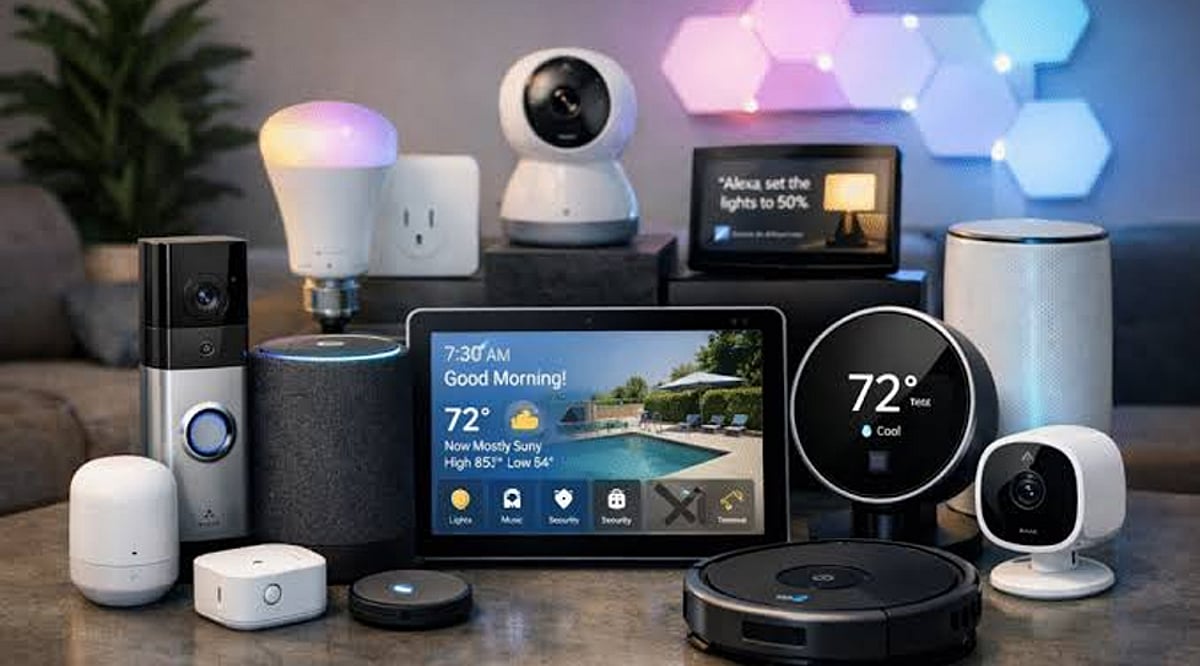
    Screenless gadgets are revolutionizing the way people interact with technology in 2026. These devices rely on artificial intelligence, voice commands, sensors, and ambient computing to operate seamlessly in the background without the constant distraction of traditional screens.

    PLAUD NotePin S

    The PLAUD NotePin S is a wearable AI recorder that turns conversations into structured notes without requiring a phone display. It captures meetings, identifies individual speakers, transcribes speech in 112 languages, and generates AI-powered summaries and action items, making it a powerful tool for professionals and multitaskers.

    Ray-Ban Meta Smart Glasses

    Ray-Ban Meta smart glasses combine AI, cameras, and open-ear audio into everyday eyewear. Users can interact with an AI assistant, capture hands-free photos and videos, and access real-time information without pulling out a smartphone.

    Fitbit Air

    Fitbit Air eliminates the traditional fitness tracker screen, focusing entirely on health monitoring. This lightweight wearable tracks heart rate, heart rate variability, sleep quality, blood oxygen levels, and more. All detailed insights are delivered through the Google Health app, and the device offers up to a week of battery life.

    Oura Ring 4

    Oura Ring 4 packs advanced health tracking into a discreet, screen-free ring. It monitors sleep patterns, activity levels, heart-related metrics, temperature trends, and recovery. Users access comprehensive data later via the companion app, avoiding screen time throughout the day.

    AI Earbuds

    AI-powered earbuds are evolving beyond music playback. The latest models integrate spatial audio, voice assistants, noise cancellation, and AI features, providing a fully hands-free way to manage digital interactions—no screen needed.

    Augmented Reality Glasses

    AR glasses such as VITURE and RayNeo offer a different path to screenless computing. These devices project large virtual displays for movies, gaming, and productivity while remaining compact and wearable, effectively replacing a portable monitor without a physical screen.

    Screenless Fitness Bands

    Fitness bands like WHOOP and Luna Band prioritize sleep, recovery, stress, and activity tracking over notifications. Data syncs to a smartphone app, allowing users to monitor their health without another glowing wrist display.

    Ambient AI Assistants

    Ambient AI assistants and wearable speakers are moving technology into the background. Voice commands, contextual AI, and smart-home automation handle tasks without requiring users to open apps or navigate menus, creating a truly uncluttered digital experience.

    Movement-Assist and Smart Energy Devices

    Screenless innovation extends beyond wearables. Exoskeletons assist physical movement, and portable power stations like EcoFlow offer quiet backup energy without adding another screen-based gadget to your routine.

    From health tracking to productivity and entertainment, screenless tech is reshaping consumer electronics by reducing screen time while increasing functionality. These devices prove that the best interface is often no interface at all.

  • Shiba Inu in September 2026: Can SHIB Bounce Back as Burn Activity Slows and Shibarium Takes Center Stage?

    Shiba Inu in September 2026: Can SHIB Bounce Back as Burn Activity Slows and Shibarium Takes Center Stage?

    Shiba Inu (SHIB) enters September 2026 struggling to establish a clear trend as weaker meme-coin sentiment competes with continued community burn activity. SHIB remains one of the market’s largest meme tokens, but its recovery increasingly depends on broader crypto liquidity and meaningful ecosystem usage rather than burn-rate headlines alone.

    SHIB Remains Highly Volatile

    Shiba Inu trades at USD 0.000005429, down 1.6% in the last 24 hours. The token climbed 6.72% on September 5 before falling 1.72% the following day, indicating how quickly short-term momentum can reverse. This volatility is typical of meme coins, where liquidity and investor sentiment often matter more than conventional valuation metrics.

    Burn Activity Is Uneven

    Shiba Inu’s burn mechanism permanently sends tokens to inaccessible addresses, reducing circulating supply. September has already produced sharp differences between individual days. Burn-tracker data shows more than 40.6 million SHIB were removed on September 3, while September 4 and September 5 recorded only about 1.9 million and 1.38 million SHIB, respectively. Approximately 41.2 million SHIB were burned on September 7. Those spikes may appear large in percentage terms, but they remain extremely small relative to SHIB’s enormous circulating supply. Earlier in 2026, one daily burn total fell to only 936,689 SHIB as the burn rate declined by about 72%.

    Burns Alone Cannot Drive Scarcity Quickly

    The burn narrative assumes that reducing supply should increase scarcity. That works only when enough tokens are removed relative to the circulating supply and demand remains stable or increases. Removing tens of millions of SHIB sounds significant, but the token’s circulating supply remains measured in hundreds of trillions. For burns to materially transform supply economics, they would need to remain substantial for a very long period or increase dramatically.

    Shibarium Is More Important Long-Term

    The larger question is whether Shibarium can produce recurring economic activity. Payments, decentralized finance applications, token transfers, and other uses can generate demand beyond speculative trading. Investors should therefore examine active addresses, transaction volume, application liquidity, and fees rather than focusing entirely on social-media burn-rate percentages.

    Bitcoin Still Sets the Risk Environment

    Bitcoin’s approximately 30% rebound from 2026 lows has improved broader crypto sentiment, but resistance near USD 82,793 remains a notable test. Meme coins typically experience larger moves when market-wide risk appetite strengthens and sharper losses when liquidity contracts.

    Final Thoughts

    SHIB can recover in September, but slowing or inconsistent burns alone are unlikely to determine the outcome. The stronger catalysts would be sustained crypto-market liquidity, higher Shibarium usage, and renewed demand from meme-coin traders. For investors, percentage changes in burn rates can be misleading. The absolute number of tokens removed, total supply, and actual network activity provide a more useful measure of whether SHIB’s economics are genuinely improving.

    Frequently Asked Questions

    1. What is Shiba Inu trading at in September 2026?

    SHIB is trading around USD 0.000005429 and remains highly volatile. Recent daily moves show that momentum can shift quickly as meme-coin sentiment changes.

    2. Is Shiba Inu’s burn rate slowing?

    Burn activity has been uneven, with some days removing more than 40 million SHIB and others burning fewer than 2 million. Large percentage changes can therefore be misleading without looking at absolute token amounts.

    3. Can SHIB burns significantly reduce supply?

    Not quickly at current levels. SHIB’s circulating supply remains in the hundreds of trillions, so even tens of millions of burned tokens represent only a very small fraction of total supply.

    4. Why is Shibarium important for SHIB?

    Shibarium could create recurring demand through payments, DeFi applications, token transfers, and other blockchain activity. Active users, transaction volume, and liquidity may matter more long-term than burn-rate headlines.

    5. What could help SHIB recover in September?

    A stronger crypto market, higher Shibarium activity, and renewed demand for meme coins could support SHIB. Bitcoin’s performance also remains important because broader liquidity often influences speculative tokens.

  • iOS 27 Set for September 2026 Launch: Key Features and Improvements

    iOS 27 Set for September 2026 Launch: Key Features and Improvements

    Apple is expected to unveil iOS 27 alongside its new iPhone lineup in September 2026, following the company’s annual release cycle. While the exact rollout date will be confirmed during Apple’s official announcement, users can anticipate the update to be made available for compatible iPhone models shortly after the event.

    Updated Interface

    iOS updates typically bring visual refinements, and iOS 27 is no exception. Users can expect changes to system apps, menus, and navigation, all designed to create a more cohesive and user-friendly experience without overhauling the familiar iPhone look.

    Apple Intelligence and AI Advancements

    Artificial intelligence remains a core focus for Apple. iOS 27 is likely to expand Apple Intelligence with smarter automation and improved on-device capabilities. Availability of specific AI features may depend on the iPhone model, processing power, language support, and regional rollout.

    Enhanced Siri

    Siri is undergoing significant upgrades as part of Apple’s broader AI strategy. iOS 27 could bring better contextual understanding, deeper app integration, and the ability to handle more complex requests, making voice interactions more practical for everyday tasks.

    Privacy and Security

    Privacy continues to be a cornerstone of iOS. iOS 27 is expected to introduce stronger protections against emerging digital threats, along with more granular controls over app permissions and personal data. Users are advised to install the update promptly once available.

    Health and Accessibility

    Apple regularly enhances health, wellness, and accessibility features with each iOS iteration. iOS 27 may include updates to existing tools and new capabilities aimed at making iPhones more useful for tracking personal health and supporting users with diverse accessibility needs.

    Compatible iPhones

    Not every iPhone will support all iOS 27 features. Hardware constraints—especially those tied to AI processing and newer chips—may restrict advanced functions. Before upgrading, users should consult Apple’s official compatibility list to see which features work on their specific device.

    Stay tuned for official announcements from Apple regarding the exact release date, supported models, and regional availability.