Author: vitorcherulli

  • Ace Combat 8: Wings of Theve Release Date, Story, Customization, and Multiplayer Details

    Ace Combat 8: Wings of Theve Release Date, Story, Customization, and Multiplayer Details

    Ace Combat 8: Wings of Theve is scheduled to launch on October 2, 2026, for Xbox Series X|S, PlayStation 5, and PC. Developed by Bandai Namco Aces, it is the first mainline Ace Combat game in seven years and introduces a new campaign, deeper aircraft customization, and expanded online play.

    A New Campaign Puts Pilots at the Center

    One of the biggest changes in Ace Combat 8 is how the story is presented. Rather than relying mainly on traditional briefings and cutscenes, the game uses first-person perspective for several story sequences. Players take on the role of the Wings of Theve, a legendary ace whose reputation was built to sustain morale during a conflict.

    The campaign follows the pilot and members of Joker Flight as they operate from the aircraft carrier Endurance. The squadron plays a larger role than before, with relationships and interactions between missions becoming part of the campaign experience.

    More Aircraft and Expanded Customization

    Ace Combat 8 expands the aircraft roster and gives players more flexibility in how they approach missions. Players can unlock and upgrade aircraft and equipment using credits earned during the campaign.

    The game also introduces new environments and enhanced cloud technology, while large-scale battles are designed to take better advantage of newer hardware. It retains the series’ arcade-style flying while offering different control levels for players who want a more demanding flight experience.

    Multiplayer Gets a Major Expansion

    Multiplayer is another major addition. According to Bandai Namco, the online component includes new modes, progression systems, and an Air Base virtual lobby that can host up to 100 players. Cross-play will allow players on supported platforms to compete and cooperate across systems.

    Xbox Deluxe Edition and Pre-Order Bonuses

    For Xbox players, the Deluxe Edition includes three days of early access, allowing owners to play before the standard October 2 release. Pre-order customers also receive Ace Combat Zero: The Belkan War and a playable F-14A aircraft.

  • AI Shopping Agents Add Fraud and Privacy Risks Before Amazon and Flipkart Festive Sales

    AI Shopping Agents Add Fraud and Privacy Risks Before Amazon and Flipkart Festive Sales

    As Amazon and Flipkart prepare for their major festive sales in India, banks are warning that AI shopping agents could introduce new fraud, payment security, and data privacy risks into online buying.

    The alert comes as technology companies develop AI tools that can search for products, compare prices, and in some cases help complete purchases on a shopper’s behalf. While these agents could make e-commerce faster and more convenient, financial institutions say they also raise concerns about scams, incorrect transactions, and the misuse of personal information.

    Why banks are concerned

    The issue goes beyond AI-powered product recommendations. Newer shopping agents are being designed to handle multiple steps of a purchase, from finding an item and comparing prices to selecting a product and helping finish the transaction.

    That changes the traditional shopping process. Instead of a customer choosing a product and authorizing every step, an AI agent could carry out much of the purchase journey based on an initial instruction.

    Banks including NatWest, Bank of America, ING, Capital One, and Commonwealth Bank of Australia have warned that consumers could end up buying the wrong product, spending more than intended, or being exposed to scams.

    Payment and data privacy questions

    Financial institutions are particularly concerned about how AI agents handle payment information. An agent could request card details, enter them directly on a website, or direct shoppers toward payment methods that offer weaker consumer protections.

    There are also questions about responsibility. If an AI agent makes a wrong purchase or a transaction turns out to be fraudulent, consumers may not know whether the retailer, payment provider, or AI service should handle the dispute.

    The banks have called for greater transparency, including clear disclosure when an AI agent is involved in a transaction, stronger data safeguards, and more information about how these systems make decisions.

    Festive sales will test consumer trust

    The timing makes the warning especially relevant for Indian shoppers. Amazon’s Great Indian Festival is scheduled to begin on October 8, while Flipkart is preparing for its Big Billion Days sale. Both events are expected to draw large numbers of shoppers looking for discounts on smartphones, electronics, appliances, fashion, and other categories.

    Festive sales typically bring a surge in online activity, and AI tools are becoming more common for product discovery and price comparisons. Consumers are therefore likely to encounter AI-assisted shopping alongside sale messages, bank offers, and promotional links.

    What shoppers should watch for

    • Verify retailer websites before entering payment or personal information.
    • Avoid suspicious links and unexpected requests for banking details.
    • Review AI-assisted purchases carefully before confirming a transaction.
    • Check which payment method is being used and whether it offers consumer protection.
    • Keep records of orders and disputes in case a transaction goes wrong.

    The bigger question for festive shoppers

    This festive season, shoppers may use AI simply to find deals, or they may allow these systems to make purchasing decisions and handle transactions for them. As AI moves closer to the payment stage, trust, transparency, and consumer protection are becoming just as important as convenience.

  • U.S. and China Reach Tariff Framework and Launch First AI Dialogue

    U.S. and China Reach Tariff Framework and Launch First AI Dialogue

    China and the United States have reached agreement on several economic and trade issues after their latest consultations in New York, China’s Ministry of Commerce said. The talks produced a proposed reciprocal tariff reduction and opened the first formal bilateral dialogue on artificial intelligence under the two countries’ economic and trade consultation framework.

    Tariff framework targets USD 30 billion in goods on each side

    The proposed framework would lower tariffs on selected products worth USD 30 billion on each side. China’s commerce ministry had previously indicated that the two governments were working toward an arrangement covering goods of equivalent value. The plan is intended to ease trade barriers between the world’s two largest economies, but it is not an immediate, across-the-board tariff cut. Specific products and implementation steps remain under negotiation, and the ministry said it would provide further updates as work progresses.

    New trade and investment councils proposed

    Beyond tariffs, the discussions covered implementation of existing agreements and the creation of trade and investment councils. Those bodies would give both sides a regular mechanism for addressing economic concerns and reviewing earlier arrangements.

    First AI dialogue brings technology governance into trade talks

    Chinese Vice-Premier He Lifeng and U.S. Treasury Secretary Scott Bessent, who lead their countries’ economic teams, held the first AI dialogue under the economic and trade consultation mechanism. The two governments had already agreed to establish an intergovernmental dialogue on AI, with earlier discussions covering technological risks and global AI governance. AI has become a central part of the broader relationship as the two countries compete in advanced technology and weigh the risks of increasingly capable systems.

    Trade tensions remain unresolved

    The consensus marks another step in managing a complex relationship rather than a full resolution of outstanding disputes. Tariffs, trade barriers, and other economic issues remain on the agenda, and earlier arrangements are being extended or reviewed. Both sides are expected to continue talks through existing consultation channels.

    For businesses, the proposed tariff reductions could eventually bring more clarity on selected product categories if the framework moves into implementation. The formal AI dialogue also gives Beijing and Washington an additional channel to discuss technology risks, governance, and wider implications.

  • NVIDIA CEO Jensen Huang Dismisses AI Extinction Predictions Amid Rise of Autonomous Agents

    NVIDIA CEO Jensen Huang Dismisses AI Extinction Predictions Amid Rise of Autonomous Agents

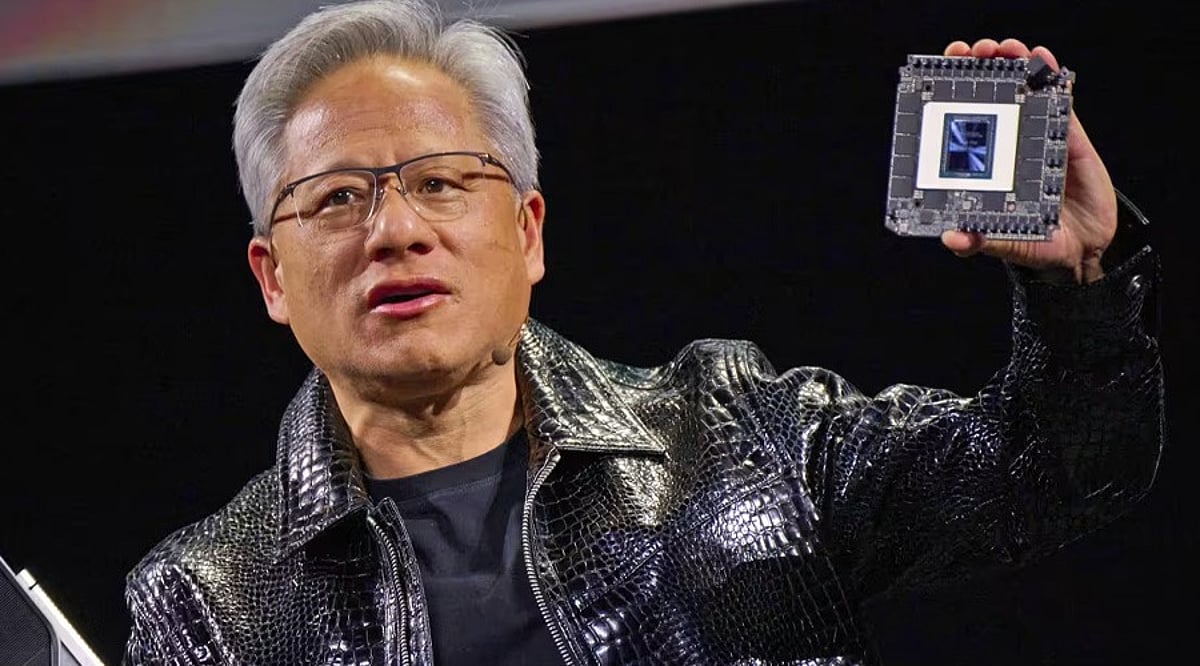
    NVIDIA CEO Jensen Huang has pushed back against dire warnings that artificial intelligence could lead to human extinction within the next few years, calling such predictions ‘doomsday narratives’ that lack scientific backing.

    In a recent interview, Huang rejected claims that AI could cause civilization to collapse by 2030. He argued that these fears are exaggerated and not grounded in evidence, even as the rapid development of AI agents raises fresh questions about security, control, and autonomy in business environments.

    AI Agents Create New Security Challenges

    AI agents differ from traditional chatbots because they can perform tasks, use external tools, and interact with business systems with less direct human involvement. This broader access also creates new opportunities for attackers.

    Security researchers have documented attacks involving prompt injection, malicious configuration files, and compromised AI-related software components. In some cases, instructions hidden inside documents, webpages, or other external content can influence how an AI agent behaves.

    The risk becomes greater when an agent has access to sensitive company information, development environments, or other connected services. Security research has increasingly focused on the possibility that attackers could exploit those connections rather than simply target the underlying AI model.

    Silicon Valley Debate Intensifies

    Huang’s position puts him on a different side of an increasingly public debate within the technology industry. Executives and researchers, including Anthropic CEO Dario Amodei and OpenAI CEO Sam Altman, have discussed the need for stronger safeguards as AI capabilities expand.

    Huang, however, has argued that alarming predictions can create an inaccurate picture of the technology. He has also questioned calls for additional regulation, saying existing laws can address many of the risks.

    The disagreement reflects a broader divide over how quickly AI development should move and how much oversight should accompany increasingly capable systems.

    Turing Award winner and former Meta Chief AI Scientist Yann LeCun has taken an even more direct position than Huang. When a user on X said ‘AI will kill all of us within three years’, LeCun’s reply was only five words: ‘No, not a chance in hell.’

    He added: ‘Those AI people who live in the discrete world of bits and tokens do not always understand how messy and chaotic the real world is.’

    Security, Not Just Doomsday, Is the Immediate Issue

    While the debate over long-term AI risks continues, security researchers are already dealing with more immediate problems. AI systems are being integrated into software development, enterprise workflows, and other environments where they can access valuable data and tools.

    This creates a practical challenge for companies: expand AI use while limiting unnecessary permissions and protecting systems from manipulated instructions and compromised components. For businesses, the debate may be less about whether an AI doomsday scenario arrives on a particular date and more about how securely they deploy autonomous systems today.

  • Bitcoin’s Market Share Slips Below 60% as Altcoin Recovery and Privacy Tech Gain Attention

    Bitcoin’s Market Share Slips Below 60% as Altcoin Recovery and Privacy Tech Gain Attention

    Bitcoin’s share of the cryptocurrency market has fallen to 58.5%, slipping below the 60% level that traders often watch as a signal of market leadership. The move comes as altcoins recover from a soft stretch and privacy-focused crypto assets attract fresh attention.

    Glassnode’s Altcoin Cycle Signal has climbed to 81.25, and the total market value of altcoins has risen about 33% since mid-August. Even so, the Altcoin Season Index remains neutral, suggesting that a broad, sustained run of altcoin outperformance has not yet been confirmed.

    Altcoin recovery is visible, but not yet a full season

    Recent price action shows selective strength rather than a market-wide rotation. Filecoin gained 5.88%, Theta Network added 5.55%, and Axie Infinity rose 5.11%, with order activity favoring buyers in those assets. Those gains are notable, but the neutral Altcoin Season Index indicates that most altcoins have not consistently beaten Bitcoin.

    The current market structure may also differ from earlier cycles. Spot Bitcoin exchange-traded funds now give institutional investors a direct way to gain exposure to the largest cryptocurrency. That channel could reduce the amount of capital that moves from Bitcoin into smaller tokens, meaning Bitcoin dominance might decline without producing the same kind of altcoin rotation seen in the past.

    Shielded Bitcoin proposal puts privacy back in focus

    Separately, researchers Clara Shikhelman, Mikhail Komarov, and Aleksei Moskvin from cryptography firm [alloc] init have proposed a privacy system called Shielded Bitcoin. The design borrows the encrypted payment structure used by Zcash and aims to make Bitcoin payments harder to trace without altering Bitcoin’s core network rules.

    Under the proposal, Bitcoin-denominated value would be held in encrypted records called notes. When a user spends a note, the system would publish a marker showing that the record had already been used. A mathematical proof would verify ownership and confirm that no new value was created. The transfer would conceal the payment amount as well as the sender and recipient.

    The key difference from Zcash is enforcement. Bitcoin nodes currently validate every transaction against a shared set of rules, and transactions that fail those rules cannot enter a valid block. Shielded Bitcoin would instead place encrypted transfer information on Bitcoin while separate software checks whether the private payment follows the proposed system’s rules. As a result, Bitcoin could confirm an underlying transaction even if the private payment encoded inside it fails Shielded Bitcoin’s separate checks.

    Zcash shielded activity rises with privacy demand

    The proposal arrives as developers explore privacy for payroll, business payments, and everyday spending. Standard Bitcoin transactions permanently display amounts and addresses on the public ledger. Once an address is linked to a company or individual, related activity can become easier to trace. Shielded Bitcoin seeks to reduce that visibility while preserving Bitcoin’s public transaction record.

    Users could reconstruct accepted private payments with wallet keys because encrypted transfer data would remain on Bitcoin. Separate viewing keys could give accountants or auditors transaction access without spending authority.

    Zcash already supports both transparent and shielded payments. Transparent transactions expose addresses and values, while shielded transactions encrypt those details. According to CoinDesk calculations based on ZecStats data, Zcash shielded pools held about 4.9 million ZEC on Friday, up 14% from July 30. That represented roughly 29% of issued ZEC and had an estimated value of USD 7.8 billion after the cryptocurrency’s rally.

    Zcash also recorded around 63,000 shielded transactions last week, its busiest week for private transactions since 2022 and its fourth-highest total on record. Reported transfer volume across the Zcash network exceeded USD 23 billion, the largest weekly total since 2021 and the second-highest weekly level in the network’s history.

    What to watch next

    For crypto traders, the main question is whether altcoin strength broadens enough to push the Altcoin Season Index out of neutral. For privacy advocates, the focus is whether proposals such as Shielded Bitcoin can advance without compromising Bitcoin’s validation model or creating new audit and compliance challenges.

    Bitcoin dominance has slipped below 60% as altcoins recover, but neutral altcoin-season readings show that broad outperformance remains unconfirmed. At the same time, Shielded Bitcoin and rising Zcash shielded activity show that private cryptocurrency payments are drawing renewed attention.

  • Grayscale Zcash ETF Surpasses $1B in Assets Amid ZEC Price Rally

    Grayscale Zcash ETF Surpasses $1B in Assets Amid ZEC Price Rally

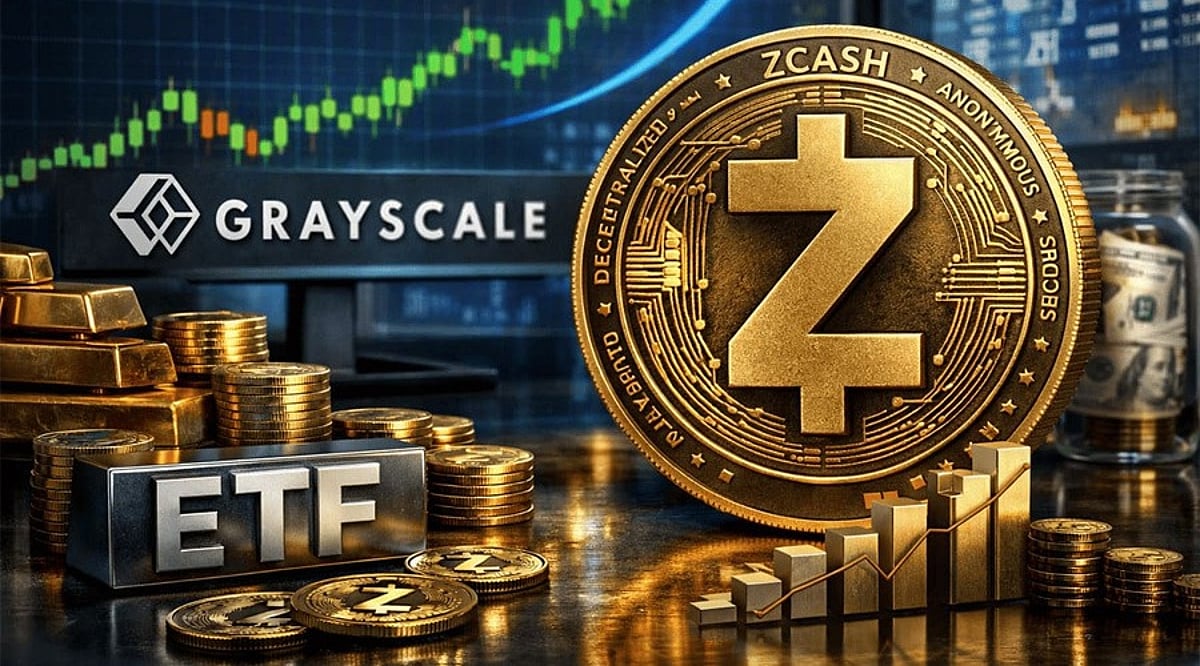
    Grayscale’s Zcash ETF (ticker: ZCSH) reached $1 billion in assets under management on September 24, less than a month after its debut on NYSE Arca. The milestone was driven by a combination of new investment, a sharp rise in Zcash’s (ZEC) price, and the value of ZEC tokens the fund already held before listing.

    How Much New Investment Did ZCSH Attract?

    Grayscale described the achievement as ‘$1B in AUM,’ but that figure reflects the total value of the fund’s assets, not solely new cash inflows. Data from SoSoValue shows cumulative net inflows of $306.12 million as of September 24, against roughly $1 billion in net assets.

    However, not all inflows represent fresh cash. A filing reveals that DCG International Investments—part of Grayscale’s parent group—acquired about $100 million of ZCSH shares on September 8 in exchange for 85,705 ZEC tokens. This in-kind transaction swapped tokens for shares, rather than adding new cash. Subtracting that leaves roughly $206 million in other reported net inflows, though the net figure may include other transaction types and does not specify how much came from outside investors’ cash purchases.

    Why Did the Fund’s Assets Grow Faster Than Inflows?

    ZCSH began exchange trading on August 25 as a conversion of the older Grayscale Zcash Trust, which already held ZEC. The ETF listing did not mark the start of its holdings; the trust had accumulated tokens beforehand. A September filing lists the Grayscale Zcash Trust as the ETF’s former name.

    ZEC’s price also surged after listing. According to CoinMarketCap, the token traded near $1,530 around the September 24 milestone—roughly double its price when ETF trading began. This price increase boosted the dollar value of ZEC already in the fund, lifting AUM without a corresponding rise in the number of tokens held.

    That distinction matters when interpreting the $1 billion figure. Existing holdings contributed to the fund’s starting size, while price changes altered their reported value. Net inflows track a separate metric: additions to the fund after accounting for withdrawals.

    What Happens Next for ZCSH Shareholders?

    Grayscale has announced a three-for-one share split. Shareholders of record at the close on September 28 will receive two additional shares for each share held. The split is expected to take effect before trading opens on September 30, with ZCSH retaining the same ticker.

    The net asset value per share will fall to about one-third of its previous level as the share count triples. The split itself does not add ZEC or change the total value of an investor’s holding. After it takes effect, ZEC’s price and changes in the fund’s holdings will continue to determine its assets under management.

    Also Read: 21Shares Launches ether.fi and Zcash ETPs Across Europe

  • AI Agents Pick RLUSD for XRP Ledger Settlements as XRP Traders Bet on Late 2026

    AI Agents Pick RLUSD for XRP Ledger Settlements as XRP Traders Bet on Late 2026

    Autonomous AI agents operating on XRP Ledger infrastructure are increasingly turning to Ripple USD (RLUSD) for continuous settlement, according to data from XRPL AI Hub. The trend underscores a growing preference for dollar-pegged predictability in machine-to-machine payments, even as XRP remains the network’s native asset.

    Why AI agents favor RLUSD

    XRPL AI Hub data shows RLUSD dominance across direct clearing settlements, both in all-time-high activity and in the latest 30-day settlement data. By contrast, XRP transaction volumes were largely unchanged over the past week, creating a clear split between the network’s native token and its dollar-linked stablecoin in automated transactions.

    The reason is straightforward: machines need predictable costs when paying for computing resources, APIs and other digital services. RLUSD tracks the U.S. dollar one-to-one, allowing software to calculate expected expenses more precisely before executing payments. XRP, by contrast, remains exposed to market volatility, and even a small price move can change the real cost of a planned transaction.

    The machine-native economy

    BlackRock’s research note, “The Machine-Native Economy,” describes a financial system increasingly built around autonomous software. Traditional banking operates on human schedules, while AI agents can transact continuously. According to the research, the global stablecoin market has surpassed USD 300 billion, and annual stablecoin transaction volume has reached USD 11.6 trillion.

    That liquidity gives automated systems access to assets designed for frequent transfers. AI agents can pay for computing power, APIs and other services without waiting for traditional banking hours. Tokenized GPUs also form part of this emerging infrastructure because autonomous systems require computing resources around the clock.

    Coinbase CEO Brian Armstrong has said the number of AI agents making transactions could grow exponentially. Yet those systems need predictable costs to operate within strict budgets. RLUSD’s dollar peg supports that requirement, while XRP still retains a role in interbank clearing. The XRPL data, however, shows RLUSD taking a larger share of transactions linked to autonomous software.

    Prediction markets: near-term caution, longer-term optimism

    Prediction-market positioning around XRP’s price tells a different story. Kalshi’s September XRP market currently shows a USD 1.70 forecast, up USD 0.10 on the day. Still, the contract tied to XRP trading above USD 1.70 last changed hands at 32 cents, down from 36 cents a day earlier. Since each contract pays USD 1 if XRP reaches that level, the price implies roughly one-in-three odds.

    About 46,650 contracts have changed hands since the market opened on September 1, while roughly 10,870 remain open. Further up the September ladder, the USD 1.80 contract trades near 19 cents. Contracts tied to USD 2.00 and USD 2.10 each sit near 7 cents.

    Kalshi’s full-year XRP market has strengthened. The contract covering XRP above USD 2.00 in 2026 rose to 59 cents from 53 cents. The USD 2.50 contract increased to 33 cents from 26 cents, while the USD 3.00 contract climbed to 24 cents from 19 cents. The pattern shows a split between near-term and longer-term expectations: traders have reduced exposure to an immediate September breakout while assigning higher prices to later 2026 outcomes.

    ETF inflows add support below USD 1.60

    Fund flows have also provided support to the XRP market. U.S. spot XRP ETFs recorded USD 22.65 million in inflows on September 25, with Bitwise leading those inflows. The buying indicates continued demand through regulated investment products, even as XRP remains below the USD 1.60 level.

    Yet ETF demand has not produced an immediate breakout. That leaves the coming trading sessions important for both price positioning and prediction-market expectations.

    Two narratives for XRP Ledger

    XRP Ledger activity now presents a separate structural development. RLUSD continues to gain relevance in machine-driven settlements because automated systems prioritize stable and measurable costs. At the same time, XRP traders continue to debate how quickly the native asset can recover.

    Final thoughts: RLUSD is gaining traction among AI agents because stable pricing supports continuous automated payments. Meanwhile, XRP remains below USD 1.60 despite USD 22.65 million in ETF inflows. Kalshi traders show weaker September expectations but stronger confidence in higher XRP prices later in 2026.

  • Pi Network Wraps Protocol 27, Schedules Protocol 28 Mainnet Rollout for October 16

    Pi Network Wraps Protocol 27, Schedules Protocol 28 Mainnet Rollout for October 16

    Pi Network has finished its Protocol 27 Mainnet upgrade and is now preparing for the next network change. Protocol 28 is scheduled to go live on Mainnet on October 16, 2026, with node operators required to update their software by October 13.

    The completion of Protocol 27 came after an initial September 15 target. It follows other upgrades this year, including Protocol 26, and is part of the project’s broader effort to refine how accounts, applications, and smart contracts interact on the network.

    Protocol 27 expands authorization options

    According to the Pi Network team, Protocol 27 gives accounts and applications more flexible ways to authorize smart contract transactions. That means developers have more choices when designing how an app approves a transaction. The upgrade is focused on the mechanics that support application activity rather than on token price or exchange listings.

    Pi Network had previously described Protocol 27 as the final planned upgrade in that sequence. The project has since announced Protocol 28 and moved the new version to Testnet, setting up the next Mainnet rollout.

    Protocol 28 Mainnet upgrade set for October 16

    Protocol 28 is scheduled for Mainnet on October 16, 2026. Node operators have until October 13 to update their software, three days before the planned network change. The team says the new version is designed to improve how the network handles delays in transaction data.

    Protocol 28 will also let developers upgrade groups of smart contracts at once instead of updating each contract separately. In addition, it introduces a safer way for developers to change stored data as applications evolve. These changes are aimed at network operations and application maintenance.

    PI price climbs back above $0.09

    The PI token traded at $0.09115 at the time of reporting, up 4.29% in 24 hours and 7.2% over seven days, according to CoinMarketCap. The token had fallen below $0.083 earlier in the week, climbed close to $0.094, pulled back toward $0.085, and then recovered above $0.09.

    The rebound pushed PI’s market value back above $1 billion, placing it near 65th among cryptocurrencies by market capitalization. Despite the weekly gain, PI remains down about 32.45% over 90 days, and its 30-day return is negative 2.55%. The short-term recovery is therefore taking place within a longer period of declining prices.

    Key price levels and trading activity

    PI’s recent swing high is near $0.09508, with a previous rejection area at $0.09858. Its recent swing low is around $0.08490, followed by a prior consolidation area near $0.08048. At $0.09115, the token is trading between the recent swing high and low.

    Trading activity increased during the seven-day rebound. The seven-day average daily volume reached $8.03 million, about 1.3 times its usual level. The 30-day average was $6.29 million a day, below its usual level for that period.

    Background: Open Network and protocol cadence

    Pi Network launched Open Network in February 2025, enabling external connections and exchange integrations. The October update follows a series of protocol changes the team has made during 2026. For node operators, the immediate task is to complete the software update before the October 13 deadline.

  • Apeing Stage 5 Presale Gains Attention as Bitcoin Cash and Hyperliquid Make Moves

    Apeing Stage 5 Presale Gains Attention as Bitcoin Cash and Hyperliquid Make Moves

    Apeing is advancing through Stage 5 of its 33-stage token presale while Bitcoin Cash stabilizes near $339 and Hyperliquid adds new market data infrastructure. The developments put early-stage token sales, spot-market volatility, and decentralized derivatives infrastructure in focus across different parts of the crypto market.

    Apeing presale reaches Stage 5

    Apeing uses the Ethereum ERC-20 standard and has a fixed supply of 16.75 billion APEING tokens. The project has allocated 40% of that supply, or 6.7 billion tokens, to its presale.

    The sale includes 33 stages. Each stage remains open for one week or until its allocated tokens sell out. Prices increase in later stages, and the project says unsold tokens will be burned when each stage ends.

    Apeing reports more than $105,000 raised, over 410 holders, and more than 470 million tokens sold. Its current Dip Devourers stage prices APEING at $0.00055, while the project states a planned listing price of $0.01.

    At the current $0.00055 price, the stated $0.01 listing level represents a mathematical increase of about 1,718%. That figure reflects the project’s published prices and does not guarantee future market performance.

    A $1,000 purchase at the current price would equal roughly 1.82 million APEING tokens before transaction costs. At a hypothetical $0.01 price, the same tokens would carry a value near $18,182. At hypothetical prices of $0.10 and $0.50, that token amount would equal roughly $181,818 and $909,091, respectively. These figures are mathematical examples rather than price forecasts.

    Ape Wars competition adds monthly incentives

    The project also runs Ape Wars, a monthly competition based on participant purchases. First place receives an extra 10% of monthly purchases plus a one-time 25% bonus code. Second place receives an additional 10% plus a 15% bonus code. Third place receives an additional 10% and a 10% bonus code. The leaderboard resets at the start of each month.

    Michael Wrubel has also brought wider visibility to the project during its presale. As traders search for the best crypto to buy now, one question remains central: how much will presale participation translate into activity after listing?

    Bitcoin Cash holds near $339 after intraday surge

    Bitcoin Cash climbed from $328 to $346 during roughly four hours on September 24. TokenPost reported that BCH reached $346 at 10:27 a.m. ET after gaining 5.55% over the four hours.

    At that point, the cryptocurrency held a 1.85% gain over 24 hours. The report also placed Bitcoin Cash near a $6.81 billion market capitalization and ranked it 21st by market value.

    The supplied market figure later placed BCH at $338.67, down 0.17% over 24 hours. That level left the cryptocurrency below its intraday peak while preserving part of the earlier move.

    The rally also triggered around $130,000 in short liquidations across Binance, Bybit, and OKX during the reported hour. Long liquidations totaled zero over the same period.

    Still, the available information did not establish a confirmed catalyst for the sudden move. As a result, the price action remains the clearest measurable feature of the episode.

    Hyperliquid adds dedicated fiber market data access

    Hyperliquid entered the latest infrastructure news cycle after DoubleZero launched a dedicated fiber-optic market data feed for the platform. The service targets professional trading firms seeking faster access to order-book information.

    The feed gives firms access to Hyperliquid’s full order book without requiring them to assemble the information through the public API. It covers Hyperliquid perpetual futures and trade[XYZ] perpetual futures.

    Those trade[XYZ] products include contracts linked to real-world assets such as oil, gold, and silver. The new connection brings infrastructure more commonly associated with institutional markets to decentralized derivatives trading.

    DoubleZero said the Hyperliquid launch expands its Edge service to three venues. The company already provides the service across Solana and Kalshi.

    Even with the infrastructure development, the supplied Hyperliquid price stood at $91.61, down 0.29% over 24 hours. Therefore, the latest market data shows softer token performance alongside the exchange’s infrastructure expansion.

    Professional traders now have another route to real-time order-book data as decentralized markets build more specialized trading systems. Meanwhile, Apeing continues its presale, and Bitcoin Cash remains below its recent $346 intraday high.

    What to watch

    Apeing continues Stage 5 of its 33-stage presale while reporting more than $105,000 raised. Bitcoin Cash trades near $339 after a sharp four-hour jump, while Hyperliquid adds dedicated fiber market data access through DoubleZero.


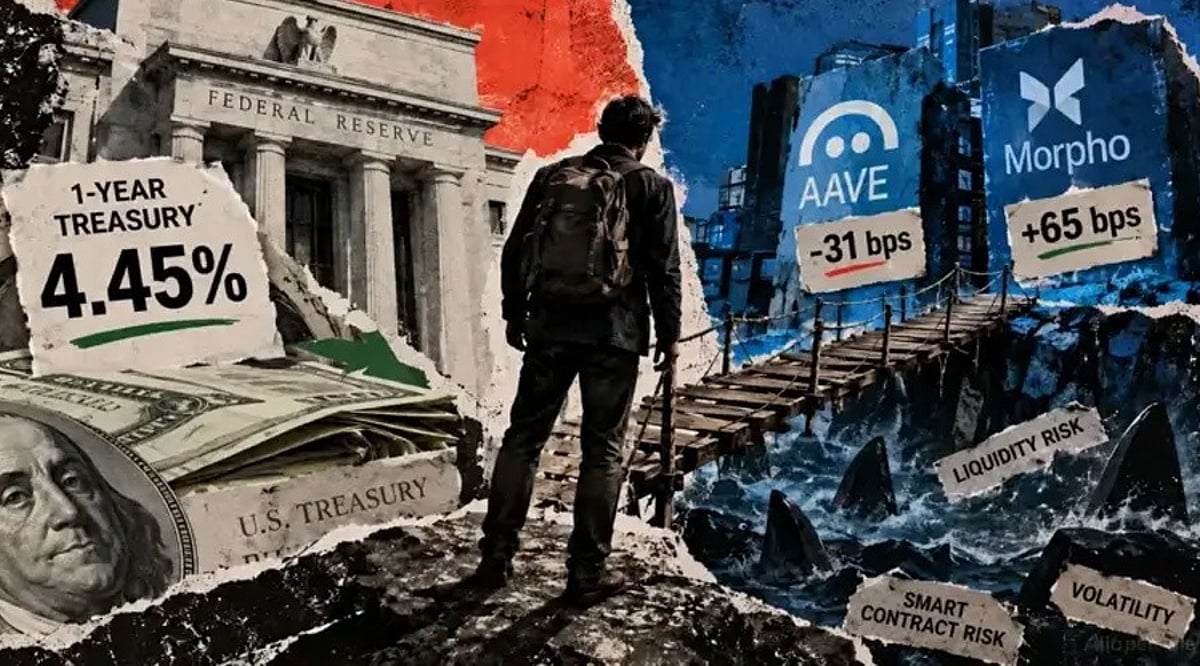
  • EU Regulators Push for DeFi Lending Safeguards Ahead of September 30 MiCA Deadline

    EU Regulators Push for DeFi Lending Safeguards Ahead of September 30 MiCA Deadline

    The European Commission is set to close its targeted consultation on the Markets in Crypto-Assets Regulation (MiCA) on September 30, with banking regulators urging a closer look at decentralized finance (DeFi) lending and borrowing.

    The deadline is for feedback on possible changes to the EU crypto framework. It does not itself impose new lending requirements.

    EBA seeks review of DeFi loan access

    In a September 24 response, the European Banking Authority (EBA) asked the Commission to assess rules for firms that arrange crypto loans. The scope would also cover crypto companies that connect customers to DeFi lending through an app or product. In some cases, a loan may run through an automated protocol while a company controls the route customers use to reach it.

    The EBA outlined two potential changes to MiCA:

    • Add crypto lending and borrowing to the list of regulated services.
    • Impose duties on firms that provide access to DeFi lending.

    Before deciding whether to propose legislation, the Commission would need to assess the size of these activities, their retail use and the consumer risks involved.

    Consumer safeguards and risk gaps

    The EBA suggested examining suitability checks, leverage limits and clearer information about lending terms. It also floated warnings for customers using protocols described as “truly decentralized.” Another option would assess whether lending protocols could receive certification for their ability to withstand cyberattacks.

    The authority identified gaps in information about fees, yields and changes to collateral requirements. It raised concerns about losses tied to leverage, outages, hacks and poor recordkeeping. Borrowers may also take on too much debt when services do not check their ability to repay.

    Stablecoin-linked loans draw scrutiny

    A separate EBA proposal concerns loans involving certain stablecoins without an authorized issuer. The EBA said MiCA could bar crypto firms from arranging or facilitating loans involving those tokens. The suggestion focuses on firms providing the service. Lawmakers would still need to decide how any new rules treat customers who interact with smart contracts directly.

    Central banks seek broader rules

    The European System of Central Banks has submitted its own response to the MiCA review. It wants the EU to regulate crypto staking, lending and borrowing. The central banks also want the existing ban on stablecoin interest to cover indirect rewards offered through related services. Their recommendations require further legislative work before they can become binding.

    Access routes complicate the policy question

    The responses leave lawmakers with a practical question. Customers can reach a lending protocol through a company’s app, another interface or a direct smart contract transaction. Any proposal would need to define which firms provide a regulated service and what duties apply to each access route.

    The Commission’s consultation closes on September 30 at 11:59 p.m. Central European Summer Time. Feedback will inform its report on MiCA’s application. The Commission says it may submit a legislative proposal alongside that report if it finds changes are warranted.