Author: vitorcherulli

  • Stanford Online’s Applied Enterprise AI Course: Strategies for Real-World Impact at Scale

    Stanford Online’s Applied Enterprise AI Course: Strategies for Real-World Impact at Scale

    Course Overview

    Stanford University’s Continuing Studies program offers Applied Enterprise AI: Making An Impact At Scale, an online course designed for professionals seeking practical AI deployment knowledge. The curriculum emphasizes scaling AI initiatives, aligning them with corporate objectives, and governing production-grade AI solutions—all without requiring deep coding skills. Real-world enterprise case studies provide actionable insights into current AI technologies and organizational change management.

    What You’ll Learn

    • Enterprise AI strategies for scalable business transformation
    • Large Language Models (LLMs) and their enterprise applications
    • Multi-Agent Systems for intelligent workflow automation
    • Vector databases and the Model Context Protocol fundamentals
    • AI governance, ethical deployment, and human-in-the-loop design

    Accessibility and Value

    Fully online and globally accessible, this course focuses on implementation strategies rather than programming. Learners explore practical business cases—such as customer service and sales forecasting—to understand how enterprises adopt and govern AI effectively.

    Comprehensive Curriculum

    • Enterprise AI: Strategies for identifying, evaluating, and scaling AI initiatives
    • Large Language Models: Enterprise use cases for modern generative AI technologies
    • Multi-Agent Systems: Collaborative AI systems designed for business automation
    • AI Governance: Responsible AI deployment, risk management, and ethical decision-making
    • Enterprise Transformation: Organizational change, workforce evolution, and AI adoption at scale

    Eligibility Criteria

    Ideal for business professionals, tech professionals, decision-makers, and anyone involved in AI implementation. No programming background is required.

    What Makes This Program Stand Out

    Rather than focusing on software engineering, the course emphasizes practical enterprise adoption—guiding learners through AI pilots, projects, and the transition from experimentation to production. Topics include LLMs, Multi-Agent Systems, vector databases, and the Model Context Protocol, all illustrated through business cases related to AI governance and implementation.

    Final Thoughts

    Stanford Online’s Applied Enterprise AI: Driving Real-World Impact at Scale provides a solid foundation for professionals aiming to master enterprise AI implementation. With a focus on large language models, multi-agent systems, and business transformation, participants gain the strategic knowledge needed to drive successful AI deployments.

  • Quordle Hints and Answers for August 6: Cracking Today’s Four-Word Challenge

    Quordle Hints and Answers for August 6: Cracking Today’s Four-Word Challenge

    Quordle Today: August 6 Puzzle Overview

    Quordle continues to test players by challenging them to solve four five-letter words simultaneously using the same set of guesses. Every attempt provides clues across all four grids, making smart guessing just as important as having a strong vocabulary.

    If today’s puzzle has you scratching your head, these spoiler-free hints should point you in the right direction before you reveal the answers.

    Spoiler-Free Hints for Today’s Quordle

    • Word 1 (top left): To entertain or amuse someone.
    • Word 2 (top right): To mark using a heated iron that carries an insignia.
    • Word 3 (bottom left): A fragrant wood often used to repel insects, such as in old closets.
    • Word 4 (bottom right): A short piece of writing that summarizes or describes something.

    Need one final nudge? One of today’s answers contains a pair of repeated letters, and the four words begin with the letters A, B, C, and B.

    Quordle Answers for August 6

    Spoiler warning: The solutions are listed below.

    The four words for today’s Quordle are:

    • AMUSE
    • BRAND
    • CEDAR
    • BLURB

    Why Today’s Puzzle Was Interesting

    Today’s Quordle combined familiar vocabulary with a few words that required broader thinking. AMUSE was a straightforward verb, while BRAND could be slightly tricky given its multiple meanings. CEDAR stood out as the nature-related answer, and BLURB may have taken longer to identify for its repeated letters and publishing context.

    If you managed to crack all four words before looking up the answers, nice job. And if you didn’t, these clues should help you sharpen your approach for tomorrow’s puzzle.

  • FTSE 100 Opens Higher at 10,907 as Strait of Hormuz Reopening Hopes Boost Sentiment

    FTSE 100 Opens Higher at 10,907 as Strait of Hormuz Reopening Hopes Boost Sentiment

    The FTSE 100 opened 18 points higher at 10,907 on Thursday, driven by renewed optimism over a potential reopening of the Strait of Hormuz. Investors also weighed corporate earnings, oil price movements, and global market trends.

    Market Overview

    Brent crude futures edged up 0.21% to $79.52 per barrel, while US West Texas Intermediate (WTI) fell 0.24% to $75.04. Sterling traded at $1.3461 early Thursday, slightly down from $1.3466 at the London equities close on Wednesday. Against the euro, sterling slipped to €1.1654 from €1.1663 the previous day.

    Gainers and Losers

    On the upside, Admiral Group surged 5.07% to 3,894p, Metlen Energy & Metals advanced 3.88% to €50.30, and Persimmon climbed 2.45% to 1,150.5p. Vodafone Group gained 2.01% to 116.7p, Haleon rose 1.89% to 372.6p, and London Stock Exchange Group added 1.41% to 8,750p.

    On the downside, RELX fell 2.98% to 2,634p, Computacenter declined 1.58% to 4,736p, and Antofagasta slipped 1.21% to 4,001p. Halma eased 1.16% to 3,756p, Games Workshop Group dropped 0.84% to 18,850p, and Lion Finance Group edged 0.42% lower to 11,970p.

    WPP Cuts Jobs

    WPP slashed 1,267 jobs in the first half of the year, around 1.3% of its total staffing, as revenue continued to fall. Over the 12 months to June, the media group reduced its workforce by 6.4% to 104,083 employees. Revenue in the half came in at £6.4 billion, down over 3% from last year. Revenue less pass-through costs, a key metric for professional services firms, fell nearly 5% to £4.7 billion.

    Admiral’s Profit Drops

    Insurer Admiral reported an 18% drop in profit before tax to £429.2 million, down from the record £521 million in the first half of 2025. Turnover remained flat at £3.11 billion. Milena Mondini de Focatiis, group CEO, said: “Against more challenging market conditions, we are pricing for long-term sustainable growth with our UK motor business having increased rates earlier than the market, following a softer period in the cycle.”

    Wizz Air Profits Decline

    Increased fuel costs from the Middle East conflict swung Wizz Air to a €198.2 million (£170 million) loss in the first quarter of 2026. Total revenue rose 5.5% to €1,507.4 million, driven by a 25.1% increase in passengers, but revenue per available seat fell 8.1%. The budget airline expects industry challenges to persist and is reallocating capacity to popular European markets over long-haul flights to the Middle East.

    Global Market View

    In the US, the Dow Jones rose 0.5% to a record closing high, while the S&P 500 slipped 0.2% and the Nasdaq fell 0.8%. In Asia on Thursday, Tokyo’s Nikkei 225 fell 0.93% to 65,683.26, China’s Shanghai Composite gained 0.57%, Hong Kong’s Hang Seng declined 1.68%, and South Korea’s Kospi edged lower by 4.58%. In India, the Nifty 50 and the Sensex rose by 0.06% and 0.29%, respectively.

  • Top Crypto Hardware Wallets for 2026: Secure Your Digital Assets Offline

    Top Crypto Hardware Wallets for 2026: Secure Your Digital Assets Offline

    As cryptocurrency adoption continues to accelerate, securing digital assets has never been more critical. Hacks, phishing attacks, and exchange breaches cause billions of dollars in losses annually. While keeping crypto on exchanges is convenient, many long-term investors turn to hardware wallets because they store private keys offline, drastically reducing exposure to online threats.

    Hardware wallets, also known as cold wallets, keep private keys out of reach of third parties, making them one of the safest ways to store Bitcoin, Ethereum, NFTs, and other digital assets. Below are the most recommended crypto hardware wallets for 2026.

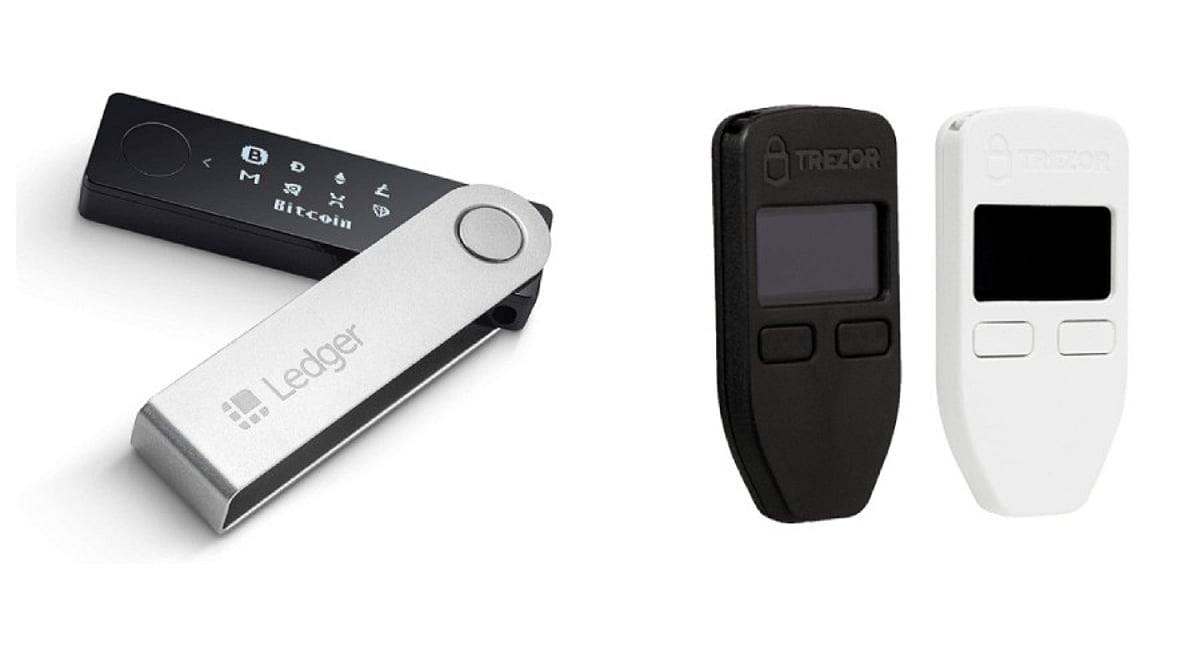
    1. Ledger Nano X – Best Overall Hardware Wallet

    The Ledger Nano X strikes an excellent balance between security and convenience. Through the Ledger Live app, users can stake, trade, buy, and sell over 5,000 cryptocurrencies. It connects via Bluetooth or USB-C for desktop and mobile devices and features Ledger’s Secure Element chip.

    Ideal For: Investors seeking an all-in-one mobile-enabled hardware wallet.
    Approximate Price: $99

    2. Ledger Stax – Best Premium Hardware Wallet

    For a premium experience, the Ledger Stax offers a large curved E-Ink touchscreen and Bluetooth connectivity. It supports thousands of cryptocurrencies and NFTs, using the same Secure Element technology as other Ledger devices. The larger display makes transaction verification easier at a glance.

    Ideal For: Long-term investors aiming for a premium user experience.
    Approximate Price: $399

    3. Trezor Model T – Best Open-Source Wallet

    The Trezor Model T features open-source firmware, which allows independent security researchers to inspect the code, enhancing transparency. It includes a color touchscreen and USB-C port, and manages hundreds of cryptocurrencies through the Trezor Suite app.

    Ideal For: Security-focused users who prefer open-source solutions.
    Approximate Price: $129

    4. Trezor Model One – Best Budget Choice

    The Trezor Model One remains an excellent entry-level wallet. It lacks a touchscreen but provides solid offline storage, open-source firmware, and simple two-button operation. It is compatible with most major cryptocurrencies and is one of the most affordable hardware wallets available.

    Ideal For: Newcomers to crypto investing.
    Approximate Price: $49

    5. Bitkey – Best Bitcoin-Only Wallet

    Block’s Bitkey is designed specifically for Bitcoin security, using a multi-signature architecture. It eliminates single points of failure through a combination of hardware, mobile app, and cloud-based recovery. Features like inheritance and recovery make it ideal for long-term Bitcoin holders.

    Ideal For: Maximum security for Bitcoin holders.
    Approximate Price: $215

    6. Tangem Wallet – Best Seedless Hardware Wallet

    Tangem takes a unique approach by eliminating traditional seed phrases. Its NFC-enabled smart cards store private keys in a certified secure chip. Users access their wallets by tapping the card on an NFC-enabled smartphone. It supports over 14,000 digital assets and offers an easy setup process.

    Ideal For: Beginners looking for a seed phrase-free wallet.
    Approximate Price: $54–$180

    Why This Matters

    As cryptocurrency-related cyber threats evolve, choosing the right hardware wallet is essential for protecting digital assets. Keeping funds offline reduces exposure to online attacks, giving investors more control over their private keys and enhancing long-term portfolio security.

    Final Thoughts

    In 2026, the hardware wallet market offers diverse options for every type of investor. Ledger’s feature-packed lineup continues to dominate, while Trezor’s open-source transparency appeals to those prioritizing trust. Bitkey’s multisig solution is ideal for Bitcoin-only investors, and Tangem’s seedless NFC design attracts users seeking simplicity. Regardless of the device chosen, storing private keys offline remains one of the best ways to safeguard digital assets from cyberattacks, phishing, and exchange-related risks.

    Frequently Asked Questions

    1. What is a crypto hardware wallet?

    A hardware wallet is a physical device that stores your cryptocurrency private keys offline. Because it remains disconnected from the internet, it offers significantly better protection against hacking, phishing, and malware compared to online wallets.

    2. Which hardware wallet is best for beginners?

    The Trezor Model One and Tangem Wallet are excellent choices for beginners. Both are easy to set up, affordable, and provide strong security without requiring advanced technical knowledge.

    3. Are hardware wallets safer than keeping crypto on exchanges?

    Yes. Hardware wallets give users complete control over their private keys, reducing the risk of exchange hacks or account compromises. However, users must safely store their recovery information to avoid losing access.

    4. Which hardware wallet supports the most cryptocurrencies?

    Tangem Wallet supports more than 14,000 digital assets, while the Ledger Nano X offers compatibility with over 5,000 cryptocurrencies and tokens through the Ledger ecosystem.

    5. Is a hardware wallet worth buying in 2026?

    For anyone holding a meaningful amount of cryptocurrency, a hardware wallet remains one of the best security investments. Offline storage greatly reduces exposure to online threats and gives users full ownership of their digital assets.

  • Ramp Review: AI-Powered Spend Management and Corporate Cards for Growing Businesses

    Ramp Review: AI-Powered Spend Management and Corporate Cards for Growing Businesses

    What Is Ramp?

    Ramp is an AI-driven spend management platform that helps companies manage corporate card programs, expenses, bill payments, and accounts payable in one place. Designed for startups and small to medium-sized businesses, it combines expense tracking, corporate cards, invoicing, and financial automation on a single platform.

    Ramp at a Glance

    • Founded: 2019
    • Platform Support: Web, Android, iOS
    • Rating: 4/5

    Key Features of Ramp

    • AI-powered expense management with receipt matching and categorization.
    • Corporate credit cards with cashback, spending controls, and real-time transaction tracking.
    • Invoicing and bill payment solutions with customizable workflow approvals.
    • Business expense reimbursements and vendor payments.
    • Integration with ERP systems such as QuickBooks, NetSuite, and Sage.

    Benefits of Ramp

    • Automated expense management helps control business spending.
    • AI-driven invoice processing reduces manual finance work.
    • Provides transparency into company expenditures.
    • Offers both virtual and physical corporate cards.
    • Supports growing businesses with financial management.

    Challenges of Ramp

    • Accounts payable automation may be less advanced than specialized AP software.
    • Advanced procurement and workflow features require paid plans.
    • ERP integrations may not include bi-directional syncing capabilities.
    • Some manual processes still involve repetitive data entry.
    • Support quality can vary during onboarding and issue resolution.

    Pricing and Plans

    Ramp offers a free plan with no annual fee for employee corporate cards and basic expense management. Advanced procurement features, workflow automation, ERP customizations, and enterprise finance capabilities are available through paid subscription plans with custom enterprise pricing.

    Support Options

    • Help Center and Learning Resources: FAQs, product documentation, finance guides, onboarding resources, blog articles, and knowledge base.
    • Customer Support: Live chat, email support, implementation assistance, and enterprise customer success services.

    Final Verdict

    Ramp is a reliable AI-powered spend management platform for businesses seeking an integrated solution for corporate cards, expense management, invoice processing, and bill payments. Its automation capabilities and easy-to-use interface make financial operations more efficient for growing organizations. However, businesses that require advanced procure-to-pay automation, deeper ERP integrations, and highly customizable workflows may need a more specialized accounts payable solution.

  • Step-by-Step OpenAI API Tutorial: How to Build Your First AI Application

    Step-by-Step OpenAI API Tutorial: How to Build Your First AI Application

    Artificial intelligence has become a cornerstone of modern software development. From websites and mobile apps to business tools, AI features help users complete tasks faster and more efficiently. OpenAI offers a straightforward way to integrate these capabilities through its API, which connects applications with powerful AI models that understand text, images, and more. This tutorial walks beginners through building their first AI application using the latest OpenAI platform.

    Getting Started with an OpenAI Account

    The first step is to create an OpenAI account. Once logged in, the developer dashboard provides access to the API platform. You’ll need an API key—think of it as a secure password that allows your application to communicate with OpenAI. Each project should have its own API key, and it’s crucial to store it safely using environment variables rather than hardcoding it in your source code. This practice protects sensitive information and reduces security risks while making future updates easier.

    Install the Official Software Library

    Next, install the official OpenAI software library. Python developers can use pip, while Node.js developers will use npm. The official library simplifies communication with the API, requiring only a small amount of code to connect your application. Compared to older tutorials that required more setup, the latest library offers a smoother experience that helps beginners grasp the process faster.

    The Responses API: A Unified Interface

    The Responses API is now the recommended interface for new applications. Unlike earlier APIs, it supports text generation, image understanding, structured output, reasoning tasks, and tool calling—all through a single, consistent interface. This unified approach keeps projects cleaner and easier to manage, reducing confusion during development.

    Building Your First AI Application

    A basic AI application follows a simple structure: a user enters a question through a website or mobile app, the backend sends the request to the OpenAI API, the AI model generates a response, and the application displays the answer. This entire process happens in seconds. As a developer, you control every step—including the prompt, model selection, and output format—allowing complete customization for different business needs.

    Beyond Chatbots: Versatile Use Cases

    While many people associate AI with chatbots, modern OpenAI applications offer far more possibilities. You can build writing assistants that create reports and emails, document assistants that analyze large files and answer questions, customer support systems that solve common problems quickly, education platforms, coding assistants, research tools, translation services, and productivity software. The flexible API design adapts to diverse projects.

    Working with Images, Files, and Tools

    The latest OpenAI platform supports more than just text. You can send images for analysis, upload files for review, and receive structured information in return. This is especially useful for applications that handle invoices, contracts, reports, manuals, and other documents. The platform also supports tool calling, which lets your application connect the AI model with external services—for example, a travel app can search flight details, or a business app can retrieve customer records.

    Structured Output and Streaming

    Structured output allows you to receive data in a fixed format like JSON, which is essential for integration with databases and software systems. Streaming, on the other hand, displays the response piece by piece as it’s generated, creating a faster, more natural user experience—especially in chat applications.

    Moving Toward AI Agents

    OpenAI now emphasizes AI agents, which can complete multi-step tasks rather than answering single questions. An agent might search for information, examine files, use tools, and prepare a final response within one workflow. The OpenAI Agents SDK helps developers build these advanced systems with less code, making large AI projects easier to organize.

    Learning Path: Step by Step

    A successful learning journey starts with a simple chatbot. From there, you can add streaming responses, image support, file analysis, structured output, tool calling, and finally AI agents. This gradual approach helps you understand each concept before moving to the next level, building confidence and technical skills along the way.

    Frequently Asked Questions

    What is the OpenAI API?

    The OpenAI API allows developers to integrate AI capabilities such as text generation, image analysis, file processing, reasoning, and tool calling into applications without building AI models from scratch.

    What is the Responses API in OpenAI?

    The Responses API is OpenAI’s recommended interface for new applications. It combines text generation, multimodal inputs, structured outputs, streaming, and tool calling through a single, unified API.

    How do I get started with the OpenAI API?

    Create an OpenAI account, generate an API key from the developer dashboard, store it securely using environment variables, install the official SDK, and make your first API request.

    Which programming languages support the OpenAI API?

    OpenAI provides official SDKs for Python and JavaScript (Node.js). The API can also be accessed from any programming language that can make HTTP requests.

    What can I build using the OpenAI API?

    You can build AI chatbots, writing assistants, coding assistants, document analyzers, customer support systems, research tools, translation apps, and AI-powered business workflows.

  • How AI and Business Intelligence Are Transforming Food Delivery

    How AI and Business Intelligence Are Transforming Food Delivery

    The global online food delivery market is on track to generate more than $1.5 trillion in revenue by the end of 2026, according to Statista, with projections reaching $2.05 trillion by 2031. What started as a niche convenience has become a massive global industry, with platforms like Uber Eats, Zapp, Just Eat, and Deliveroo competing for dominance in markets such as the UK. As the sector prepares for another five years of aggressive expansion, food delivery companies are turning to data-driven technologies to win customer loyalty and increase market share.

    Turning Customer Data into a Competitive Edge

    Food delivery firms are no longer relying on generic marketing. Instead, they are analyzing customer behavior to deliver more personalized and intuitive experiences. Deliveroo, for example, uses Amazon Web Services’ machine learning tools to understand real-time ordering patterns. By leveraging Amazon SageMaker, the company builds and deploys ML models that process historical order frequency, price points, and cuisine preferences, generating a unique restaurant feed for each user. This approach enables targeted marketing campaigns and keeps customers engaged far longer than traditional blanket promotions.

    The same pattern appears across other web-based industries. In iGaming, for instance, platforms tailor promotions to new customers or those who play at specific times, such as after 6 PM. Food delivery has adopted this playbook, using business intelligence (BI) to anticipate when a customer might order again and issuing special offers or milestone rewards that build brand affinity.

    Building a User-Centric Experience

    Rather than sending the same email to every subscriber, platforms are using BI to connect with customers on a more personal level. DoorDash developed a unified consumer memory BI engine that monitors long-term behavior, including dietary habits and average basket size. The system identified valuable patterns, such as a user’s tendency to try a new cuisine on a particular day of the week.

    This long-term memory powers DoorDash’s AI assistant, Ask DoorDash. During a chat session, the assistant retrieves stored preferences in real time, allowing it to build personalized grocery carts or suggest meals. By combining this long-term memory with real-time session intent, DoorDash reported a 24% increase in grocery checkout conversions and a 17% rise in basket sizes.

    Uber Eats is also pushing the boundaries of personalization. The company applies graph learning, an advanced form of machine learning, to map complex relationships among users, dishes, and restaurants. By analyzing millions of order patterns, Uber Eats uncovers specific taste preferences and suggests cuisines or local venues before the user even searches. The app merges these smart recommendations with real-time updates on kitchen prep times and delivery routes, driving higher order frequency and long-term customer retention.

    Raw Data Is No Longer Enough

    In a trillion-dollar market expected to grow exponentially, raw data alone cannot deliver the level of personalization consumers now expect. By combining business intelligence and machine learning, food delivery companies are moving away from static menus toward intuitive, context-aware experiences that respond to individual habits and preferences. The winners in this space will be those that can turn data into meaningful, real-time actions that keep customers coming back.

  • Tech Careers 2036: The Best-Paying Roles on the Rise

    Tech Careers 2036: The Best-Paying Roles on the Rise

    Technology Jobs Enter a New Growth Era

    Between 2026 and 2036, the technology industry is expected to create millions of new opportunities as organizations accelerate digital transformation. Artificial intelligence, automation, cloud computing, and cybersecurity are becoming core pillars of modern business. Professionals with advanced technical skills are well-positioned for sustained career growth as companies continue investing in innovation, digital infrastructure, and intelligent solutions across sectors.

    Artificial Intelligence Roles Lead Demand

    AI specialists are projected to remain among the most sought-after technology professionals over the next decade. Machine learning engineers, AI researchers, and automation experts will help organizations build smarter systems. With generative AI and intelligent platforms gaining wider adoption, these roles are expected to offer strong demand and competitive salaries in healthcare, finance, manufacturing, and technology.

    Cybersecurity Expertise Becomes Essential

    As digital threats grow, cybersecurity professionals are increasingly critical to protecting businesses and customer data. Security analysts, ethical hackers, and cloud security specialists are expected to stay in high demand. Rising global investment in digital protection will create long-term career paths for professionals with strong security knowledge and hands-on technical skills.

    Cloud and Data Careers Expand Rapidly

    Cloud architects, data engineers, and data scientists are set to see significant growth as organizations rely more on digital platforms. These professionals help manage large volumes of information and build scalable systems. Combining technical expertise with problem-solving, these roles are among the most promising career options for the next decade.

    Software Development Remains a Strong Career Path

    Software engineering remains one of the most reliable technology careers despite rapid change. Developers skilled in modern programming languages, AI tools, and contemporary application development will continue to be valuable. Companies will keep hiring engineers to build solutions, improve user experiences, and support evolving digital ecosystems.

    Competitive Salaries Attract Talent

    Technology careers draw attention because specialized roles often offer attractive pay. Professionals in AI, cloud computing, cybersecurity, and advanced software development frequently earn higher compensation due to growing demand. Continuous learning, certifications, and practical experience will be key differentiators for anyone pursuing success in the competitive tech industry.

    What to Expect Through 2036

    Tech employment is set to evolve with new opportunities and changing skill requirements over the next decade. Professionals who embrace emerging technologies will improve their chances of advancement. As digital transformation continues across industries, technology roles will remain among the most influential and financially rewarding career paths globally.

  • Wordle Hints and Answer for August 6, 2026 (Puzzle #1874) – Expert Guide

    Wordle Hints and Answer for August 6, 2026 (Puzzle #1874) – Expert Guide

    Looking for today’s Wordle solution? This guide provides helpful hints, strategic clues, and the final answer for the August 6, 2026 puzzle. It also offers expert solving tips to improve your guessing strategy while avoiding spoilers until you’re ready to reveal the answer.

    Stuck on Wordle #1874? Today’s puzzle points to a monastery-related noun. Check the hints, decode the clues, and uncover the answer to keep your streak alive.

    Wordle for August 6 features a noun related to change. Use the hints wisely and see the final answer before your six chances run out.

    Josh Wardle’s Wordle continues to engage millions with a new five-letter word daily. Today’s puzzle features a noun associated with a short story.

    Is Wordle giving you a hard time today? Even four years after its release, this NYT puzzle remains one of the most popular games, especially among word-game enthusiasts. The game’s structure is simple, but the challenge lies in guessing the word within six attempts. Today’s word is something many people enjoy eating, especially during parties and celebrations.

    Like every other day, today’s Wordle gives players just six attempts to crack the mystery word, without any hints at the start. If you’re aiming to protect your winning streak or simply need a gentle nudge in the right direction, here are today’s Wordle hints and the final answer.

    Wordle Hints for August 6, 2026 (Puzzle #1874)

    Here are the clues to solve today’s Wordle:

    • Vowel Count: 2 vowels
    • Consonant Count: 3 consonants
    • Repeated Letters: No
    • Letter Rarity: All common letters
    • First Letter: G

    If the clues above haven’t yet guided you onto the right track, here is a bonus clue to lead you in the right direction:

    Bonus Hint: The word ends with the letter ‘E’.

    Wordle Answer for August 6, 2026

    The clues mentioned above must have guided you onto the right track. If not, then it is time for the grand reveal. Here’s the answer for today’s Wordle #1874: GRIPE

    Best Tips to Play Wordle

    Players who recently started playing this NYT word puzzle and are struggling to master the guessing technique can follow these tips:

    • Start with words that include common vowels and consonants to gather as much information as possible early.
    • Avoid repeating letters in your first few guesses unless you’re confident about their placement.
    • Pay close attention to the color feedback. Green letters are correct and well-placed, while yellow letters belong in the word but need to be repositioned.
    • Use each guess to eliminate possibilities rather than rushing toward the final answer.
    • Expanding your vocabulary is key. Familiarity with less common words can make solving the puzzle much quicker.

    Final Thoughts

    The allure of Wordle comes from its uncertainty. Every day, the puzzle presents a new grid with a new word to guess. Although Wordle experts often rank the solutions as average or simple, most players find every puzzle equally challenging.

    Another appealing part of Wordle is that you can solve it anytime; you might be solving it with a cup of coffee in the morning or during a short break at work.

    Wordle quietly and efficiently sharpens players’ vocabulary and pattern-recognition skills. Every puzzle offers a little but rewarding mental exercise, often reminding players that even the simplest games can offer the biggest rewards. A different word, an empty grid, and six opportunities – that’s the excitement that Wordle has every single day.

  • Avoid These LLC Formation Mistakes: Essential Guide for Non-US Founders

    Avoid These LLC Formation Mistakes: Essential Guide for Non-US Founders

    Non-US founders often follow a step-by-step online tutorial, pay the state fee, and receive a shiny LLC certificate—only to discover that their structure fails in practice. The paperwork may look complete, but the tax, banking, and compliance pieces were never set up correctly. This guide highlights the most common LLC formation mistakes non-US founders make and provides actionable fixes to build a solid foundation.

    Executive Summary

    Forming a U.S. LLC as a non-resident can be powerful, but only if the structure is built and maintained correctly. The biggest problems come from focusing solely on formation while ignoring tax reporting, banking readiness, and ongoing compliance. When non-US founders understand these risks early, they can avoid penalties, rejected applications, and legal headaches.

    Mistake 1: Thinking Formation Equals Compliance

    Many non-US founders treat the LLC certificate as the finish line. They file with a formation service, receive confirmation, and assume the company is now fully compliant. In reality, formation is only a fraction of the work. Compliance includes tax reporting, annual state filings, ownership reporting, and keeping the entity in good standing. The formation company’s job usually ends once the articles are filed.

    How to fix it: Treat formation as the starting point. After the LLC exists, build a checklist for tax filings, state renewals, registered agent maintenance, and ownership records. Map out compliance requirements before the end of the first year.

    Mistake 2: Picking the Wrong State

    Non-US founders often choose a state based on marketing rather than business reality. Some states are popular in content but are not always the right choice for a specific business model. The wrong state can create unnecessary costs, extra filings, or a mismatch with where the business truly operates.

    How to fix it: Review where your business will actually operate, bank, and pay taxes. Select a state that matches your footprint and long-term plan, not just the one you saw mentioned online.

    Mistake 3: Ignoring Foreign-Owned LLC Tax Rules

    Foreign-owned single-member and multi-member LLCs often have specific U.S. tax filing obligations that are easy to miss. Many non-US founders assume that having little or no U.S. revenue means no filings. In practice, some forms are required even when income is limited or zero. Missing information returns or incorrect corporate forms can trigger penalties.

    How to fix it: Have a tax specialist review your foreign-owned structure and explain which forms apply. Understand which returns are due even in low-revenue years, and file them on time.

    Mistake 4: Treating Banking and Payments as an Afterthought

    Some founders form the LLC and only later realize they do not know how to open a bank account, connect payment processors, or prove the business exists. Banks and payment platforms want a complete, consistent story: formation documents, tax IDs, owner identity, and a clear business description.

    How to fix it: Plan banking and payments alongside LLC formation. Prepare entity documents, EIN, identity records, and a short business profile. Choose providers that work with non-US founders and know what they expect before you apply.

    Mistake 5: Assuming the LLC Automatically Saves Tax

    A common misconception is that a U.S. LLC automatically reduces tax everywhere. In reality, tax outcomes depend on where the business is managed, where income is sourced, and how home-country rules treat foreign entities. Some high-tax countries can still tax the owner based on management or residency.

    How to fix it: Review your tax position in the U.S. and in your home country before formation. Understand how management, residency, and tax treaties affect your overall liability. Choose a structure based on clear tax planning, not assumptions.

    Mistake 6: Skipping Operating Agreements and Internal Documents

    Many non-US founders stop after the articles of organization and never create an operating agreement, management records, or internal documentation. Over time, this makes it harder to prove how the company is managed, who owns what, and how decisions are made. Operating agreements are fundamental for defining ownership and control, especially in multi-member structures.

    How to fix it: Prepare a clear operating agreement and related internal records after formation. Document ownership, management, and decision-making rules to strengthen the entity and support banking and tax compliance.

    Mistake 7: Forgetting Ongoing Compliance

    Non-US founders often assume that once the LLC is formed, it will stay valid automatically. In reality, states require annual reports, registered agent maintenance, and sometimes fees to keep the company in good standing. Forgetting these obligations can cause the LLC to fall out of good standing or even be dissolved administratively.

    How to fix it: Create a simple compliance calendar covering state renewals, tax filings, ownership reporting, and registered agent obligations. Review it at least once a year and update it whenever your structure or activity changes.

    Mistake 8: Choosing Low-Touch Services Instead of Real Guidance

    Low-cost formation services are good at filing documents quickly, but they usually stop once the certificate is issued. They do not design the full structure, explain tax filings, or help with banking and compliance. The most expensive part of LLC mistakes is correcting them after authorities have already issued penalties or notices.

    How to fix it: Use support that includes structure design, tax guidance, and compliance planning, not just document filing. The right guidance costs less than repeated penalties and restructuring.

    Frequently Asked Questions

    Are U.S. LLCs good for non-US founders?

    Yes, when formed and maintained correctly. They offer access to banking, payment processors, and a respected jurisdiction.

    Is forming the LLC enough by itself?

    No. Formation is only the first step. Ongoing tax, state, and compliance tasks are needed to keep the company in good standing.

    Do foreign-owned LLCs have special tax rules?

    Often yes. Foreign-owned single-member and multi-member LLCs can have specific filing obligations that do not apply to every domestic structure.

    Can choosing the wrong state cause problems?

    Yes. The wrong state can create extra costs, unnecessary complexity, or mismatches between operations and local rules.

    Do I need an operating agreement?

    It is strongly recommended. Operating agreements clarify ownership, control, and internal rules, which helps with banking and compliance.

    Will an LLC automatically reduce my home-country taxes?

    Not necessarily. Home-country tax rules may still apply based on management and residency.

    Can penalties be avoided?

    Many penalties are avoidable when the structure is set up and maintained correctly from the start.

    When should I get professional help?

    Before forming the LLC is ideal, and again before the first year’s tax and compliance deadlines arrive.

    Conclusion

    Non-US founders do not usually run into trouble because a U.S. LLC is a bad idea. They run into trouble because they form the entity without building the full structure: tax, banking, operating agreements, and compliance. The formation certificate alone does not protect the business. The most effective way to avoid costly mistakes is to treat LLC formation as one part of a bigger, coordinated setup. When the state, tax authorities, bank, and business records all tell the same story, the LLC becomes a stable base instead of a future risk.