Author: vitorcherulli

  • MCX Gold Rises 0.61% to ₹1,49,401 as Softer Dollar and Strait of Hormuz Hopes Boost Sentiment

    MCX Gold Rises 0.61% to ₹1,49,401 as Softer Dollar and Strait of Hormuz Hopes Boost Sentiment

    Gold prices climbed on the Multi Commodity Exchange (MCX) on August 6, buoyed by a softer U.S. dollar, lower oil prices, and growing optimism that the Strait of Hormuz may reopen soon after U.S. President Donald Trump pledged to reach an agreement with Iran.

    August gold futures rose 0.61% to ₹1,49,401 per 10 grams, while September silver futures advanced 0.23% to ₹2,28,115. Meanwhile, Brent crude futures slipped 0.11% to $79.32 per barrel, and U.S. West Texas Intermediate (WTI) edged down 0.20% to $75.07 per barrel.

    Domestic Gold Prices

    In the domestic market, 24K gold rose by ₹398 to ₹1,49,730 per 10 grams, and 22K gold advanced by ₹365 to ₹1,37,250. City-wise rates: Mumbai and Kolkata quoted ₹1,49,730, Delhi ₹1,49,860, and Chennai ₹1,47,060.

    U.S. Gold Prices

    U.S. gold prices extended gains for a fourth consecutive session, touching their highest level in seven weeks. A soft U.S. dollar and lower Treasury yields, combined with hopes of the Strait of Hormuz reopening, supported the rally. Spot gold rose 0.5% to $4,265.22 per ounce, while U.S. gold futures gained 0.5% to $4,324.60.

    Spot silver fell 0.1% to $62.02, platinum climbed 1.2% to $1,755.18, and palladium advanced 0.8% to $1,374.33, marking its third straight session of gains.

    Key Levels to Watch

    “The sharp rally came on building optimism that a diplomatic breakthrough in the Middle East is close to being finalised. This in turn would keep downside pressure on oil prices and reduce the need for central banks to raise rates, providing a clear tailwind for gold,” said Tony Sycamore, market analyst at IG.

    Sycamore added that a sustained break above the 200-day moving average could pave the way for a stronger recovery toward the $5,000 mark.

    On MCX, gold is currently trading in a broader range of ₹1,45,000 to ₹1,52,000 per 10 grams, with a narrower range of ₹1,47,000 to ₹1,50,000. Resistance is seen at ₹1,50,000; a breakout above this level could push prices toward ₹1,52,000. Internationally, COMEX gold faces immediate resistance at $4,320 per ounce. A break above this level could target $4,350.

  • Bridging the Imagination Gap: Why AI Media Demos Fail in Production and How to Fix It

    Bridging the Imagination Gap: Why AI Media Demos Fail in Production and How to Fix It

    Every AI media demo looks the same: someone types a prompt, a stunning video appears, and the room applauds. Then the same team tries to generate ten thousand product videos for a real catalog, and the applause stops.

    The distance between those two moments has a name: the imagination gap—the space between what a person intends and what a generative model actually returns. Closing it is the real work of AI media, and it is mostly invisible in demos.

    Demo vs. Production: A Fundamental Difference

    A demo shows you the best output of many attempts. Production forces you to live with the whole distribution: the great outputs, the mediocre ones, and the failures that arrive after you have already paid for them.

    Teams running generative media at scale report the same pattern repeatedly. Getting an output is easy. Getting an accepted output—one that matches brand, format, and intent well enough to ship—routinely takes multiple attempts. When a creative director needs several tries to accept a result, every headline metric changes: cost per asset is no longer the model’s list price, latency is no longer the model’s benchmark time, and throughput is no longer what the pricing page implies.

    This is why the most useful metric in AI media production is not price per generation. It is cost per accepted output: what you actually paid, across all retries and failures, for the asset that shipped.

    Where the Gap Comes From

    Three mechanics create the imagination gap, and none of them show up in a single-prompt demo:

    • Model choice is a moving target. The generative media landscape now updates weekly. Across the 475 production model endpoints we operate at each::labs, the median image endpoint returns in about 20 seconds of observed runtime, while the median video endpoint takes two full minutes, and a third of video endpoints exceed three minutes. New releases regularly beat last quarter’s favorite on one dimension while regressing on another. A team locked into one model in January is usually running the wrong model by June.
    • Prompts do not transfer. A prompt tuned for one video model produces different framing, motion, and color on another. Every model swap silently invalidates prompt libraries, which is why “just switch to the newer model” is never a one-line change in a production pipeline.
    • Failures are asymmetric. A failed API call in classic software costs milliseconds. A failed video generation can cost minutes of wall-clock time and real money before you learn it failed. At scale, unmanaged failure and retry behavior quietly dominates budgets.

    What Closing the Gap Actually Requires

    The teams that ship AI media reliably treat generation the way engineering teams treat infrastructure, with four practices that compound:

    1. Route, don’t marry. Production pipelines need a routing layer across many models, so each job goes to the model that fits its use case, budget, and deadline, with fallbacks when a provider degrades. Multi-model is not a luxury; it is how you absorb a weekly-changing model market without rewriting your product.
    2. Measure the whole funnel. Instrument intent to accepted output: attempts per acceptance, p50 and p95 runtime per model, failure rates by input type. If you only track “generations succeeded,” your dashboard will look healthy while your unit economics rot.
    3. Price the failure path. Ask any platform you evaluate one question: what happens to my bill when a generation fails? The honest answers shape production economics more than list prices do.
    4. Build for pipelines, not calls. Real workloads are multi-step: generate, upscale, edit, watermark, format for each channel. Treating each step as an isolated API call multiplies the failure surface. Treating the pipeline as the unit of work is how consistency survives scale.

    Platforms are emerging to do exactly this job. Our own team at each::labs runs this production layer across image, video, and audio models for AI-native apps, agencies, and consumer platforms, and the pattern we see is consistent: the winners are not the teams with the best single prompt. They are the teams with the best acceptance rate per dollar.

    The Uncomfortable Conclusion for 2026 Budgets

    Frontier model quality keeps rising, but so does the volume ambition of the products built on top. The imagination gap does not close by waiting for better models, because every quality jump raises expectations by at least as much. It closes operationally: routing, measurement, failure handling, and pipeline design.

    The companies treating AI media as a production discipline are already separating from the ones still treating it as a demo. The gap between imagination and output is where the next layer of AI infrastructure is being built, and in 2026 it is being built in production, not in slide decks.

    How to Measure Your Own Gap This Week

    You do not need new tooling to find out where you stand. Pull last month’s generation logs and answer three questions:

    • How many generations did you run, and how many assets actually shipped? Divide the first by the second: that ratio is your attempts per accepted output, and most teams are surprised by it.
    • Multiply your total generation spend by that ratio’s overhead to get your real cost per shipped asset.
    • Look at the slowest 5 percent of jobs and ask what the user experienced while waiting.

    Those three numbers are your imagination gap, in dollars and seconds, and they are the baseline any production investment should be judged against.

  • Nuno Sebastião: Co-Founder and CEO of Feedzai – Pioneering AI in Financial Fraud Prevention

    Nuno Sebastião: Co-Founder and CEO of Feedzai – Pioneering AI in Financial Fraud Prevention

    Nuno Sebastião is the CEO and co-founder of Feedzai, a leading financial technology organization that leverages artificial intelligence to manage risk and prevent fraud. He founded Feedzai with the mission to help financial institutions identify fraud, manage risk, and protect digital transactions through advanced AI solutions.

    Early Life and Education

    Nuno Sebastião earned a degree in Electrical and Computer Engineering from Instituto Superior Técnico in Lisbon, Portugal. He then pursued postgraduate education, honing his skills in software engineering, distributed systems, and artificial intelligence. His academic and professional background laid the foundation for developing innovative fintech solutions and leading a globally recognized AI fintech firm.

    Professional Career

    Sebastião began his career as an engineer, building software systems and technology. In 2011, he co-founded Feedzai with the goal of revolutionizing FinTech using artificial intelligence. Over the years, Feedzai has become one of the largest providers of fraud prevention and AI risk management solutions for banks, payment companies, merchants, and financial institutions worldwide. The company continues to develop intelligent technologies to help organizations secure digital transactions and minimize financial risks.

    Business Intervention in AI

    Feedzai’s fraud prevention solutions offer financial institutions the benefits of AI risk management, machine learning, intelligent automation, and real-time analytics through AI-driven technology.

    • Real-Time Fraud Detection: Feedzai’s AI-based tools detect fraudulent transactions in real time by monitoring digital payments. The solution processes vast amounts of payment information to enhance safety for banks and their customers.
    • AI Risk Management: The company’s AI Risk Management tools analyze customer behavior and transaction patterns to identify risks. This helps businesses make quicker decisions, stay compliant, and operate efficiently within digital payment systems.
    • Machine Learning Models: Feedzai deploys machine learning algorithms that are continuously trained on new transaction data and fraud trends. This approach improves detection rates and enables organizations to respond promptly to emerging financial threats.
    • Digital Payment Security: By integrating artificial intelligence with advanced analytics, Feedzai enhances security for online and mobile payments. The solution helps reduce payment fraud, improve authentication processes, and provide customers with a safe payment experience across multiple channels.
    • Responsible AI Development: Feedzai promotes responsible use of AI through transparency, fairness, and explainability throughout the model development process. The company provides solutions for responsible AI usage to support better decision-making without violating regulations or ethical guidelines.

    Business Achievements

    Since its founding by Nuno Sebastião, Feedzai has emerged as a major player in AI-enabled financial technology. The company has expanded globally, establishing a presence in North America, Europe, Asia, and Latin America, while helping the financial industry improve fraud prevention through intelligent automation.

    Controversies

    Nuno Sebastião has not been involved in any public controversies. He has focused his career on entrepreneurship, financial technology innovation, and advancing AI risk management and fraud prevention through Feedzai.

  • NEO Semiconductor Launches AI Memory Platform, Moove Secures $250M for Robotaxi Expansion

    NEO Semiconductor Launches AI Memory Platform, Moove Secures $250M for Robotaxi Expansion

    Good morning, tech enthusiasts! Here are the top tech updates you need to know today, from groundbreaking AI memory innovations to major funding in autonomous mobility.

    NEO Semiconductor Unveils NEO.AI Memory Platform

    NEO Semiconductor has launched its NEO.AI memory platform, designed to address AI memory bottlenecks by enhancing High Bandwidth Memory (HBM) and on-chip SRAM capacity. The platform integrates advanced memory technologies, including 3D X-DRAM innovations, to boost AI performance, efficiency, and scalability. This development supports next-generation AI infrastructure and data-intensive computing workloads, marking a significant step forward in AI hardware.

    Moove Raises $250 Million for Robotaxis

    Moove, a mobility startup, has raised $250 million to expand its robotaxi business and autonomous vehicle fleet globally. The company specializes in vehicle financing and fleet management for self-driving taxi services. The new funding will enable Moove to scale operations, add more autonomous vehicles, and meet the rising demand for driverless transportation across various markets.

    Skills Over Degrees: A Shift in Employability

    According to educator Prashant Kirad, only 42.6% of Indian graduates are considered employable. He emphasizes that while a college degree may help secure interviews, employers now prioritize practical skills, communication, AI knowledge, real-world projects, and specialization. Kirad encourages students to develop these competencies early to enhance their job prospects.

    Anthropic in $10B Norway AI Deal

    Anthropic has reportedly signed a $10 billion, six-year agreement with Volta Infra to secure NVIDIA AI computing capacity in Norway. The project will utilize 121 megawatts of computing power from Bitdeer’s data center, enabling Anthropic to expand its AI services and meet the growing demand for advanced AI computing.

    Marex Expands Crypto Lending Services

    Marex has partnered with Digital Prime Technologies and Tokenet to offer crypto-backed lending for institutional investors. This new service allows businesses to use digital assets as collateral for loans without selling their cryptocurrency. It aims to provide safer, more flexible financing options for large investors in the crypto market.

  • Bitcoin Steadies Near $64,800 as Ethereum Outshines Broader Crypto Market

    Bitcoin Steadies Near $64,800 as Ethereum Outshines Broader Crypto Market

    Bitcoin traded near $64,800 on Wednesday, supported by a six-day streak of inflows into spot Bitcoin ETFs, while Ethereum outpaced the broader market with a 2.08% gain. XRP also advanced, rising 1.90%, as investors rotated into large-cap altcoins.

    According to live data from CoinMarketCap, Bitcoin is currently trading at $64,806.54, up 0.79% over the past 24 hours. Its market cap stands near $1.3 trillion, with 24-hour trading volume at $22.47 billion. The price action remains tied to ETF demand and ongoing custody concerns stemming from the Coldcard exploit.

    Bitcoin Price Today

    Bitcoin holds near $64,800, staying range-bound between $64,000 and $65,000. Resistance sits at $65,000–$65,500, while support is near $64,000. A break above $65,000 could open a path toward $65,500, while a slip below $64,000 risks exposing support closer to $62,300.

    Analyst Insights

    CoinSwitch Markets Desk noted that BTC remained range-bound near $65,000 despite a risk-on tone across global markets. The S&P 500 extended its rally past 7,793 points, and gold jumped 2.8% to a six-week high near $4,213 an ounce. A sustained Bitcoin recovery may need stronger ETF inflows and softer Treasury yields.

    Prateek Gupta, Head of Business at Mudrex, said Bitcoin stayed inside its broad $64,000–$64,700 band. He noted that the S&P 500 closed above Bitcoin on relative performance for the first time since 2012. Long-term holders sold over 11,500 BTC this week.

    Nischal Shetty, founder of WazirX, said Bitcoin traded near $64,469, largely unmoved despite steady ETF demand. US spot Bitcoin ETFs added $211.5 million, while Ethereum ETFs drew $53.8 million in fresh inflows. CryptoQuant flagged renewed accumulation among large Bitcoin and Ethereum holders.

    Riya Sehgal, Research Analyst at Delta Exchange, said gold climbed to a seven-week high near $4,286 an ounce. Lower Treasury yields and renewed safe-haven demand drove the move. Bitcoin consolidated near $64,500, holding a constructive structure while staying above $64,000.

    Crypto Prices Today: Top 10 Coins at a Glance

    Live data sourced from CoinMarketCap as of today’s session.

    Biggest Gainers: ETH, XRP, BNB

    Ethereum led today’s session with a gain above 2%. XRP followed closely, adding nearly 1.90% through the day. BNB rounded out the top movers, supported by strong weekly momentum near 4.29%.

    Biggest Losers: Solana and Dogecoin Lag

    Solana and Dogecoin posted only marginal daily moves today. TRON stayed nearly flat, gaining just 0.12% through the session. Stablecoins USDT and USDC held their peg with barely any movement.

    Crypto News Today: Top Headlines Impacting Prices

    Coldcard Exploit Losses Widen Past $130 Million

    Galaxy Research now estimates at least 15 separate attackers are exploiting the Coldcard firmware flaw. Confirmed and suspected losses have climbed to roughly 2,055 BTC across more than 7,700 wallet addresses. Coinkite founder Rodolfo Novak apologized publicly and pledged support for affected users. Nearly 90% of the stolen Bitcoin remains untouched, suggesting attackers are holding funds rather than rushing to sell.

    Bitcoin ETFs Post a Clean Inflow Streak in August

    US spot Bitcoin ETFs have recorded zero outflow sessions so far this month, extending a six-day inflow run. BlackRock, Fidelity, and Franklin Templeton all added fresh Bitcoin exposure on August 3. Cumulative net inflows since launch have now crossed $52 billion across the fund complex. The streak follows an eight-week outflow stretch that had tested confidence in the broader ETF adoption story.

    Hashdex to Close Its Smallest Bitcoin ETF

    Hashdex confirmed it will close and liquidate the Hashdex Bitcoin ETF, trading under the DEFI ticker on NYSE Arca. Trading ends on August 17, with shareholders receiving cash payouts after liquidation. The fund held just $14.7 million in assets against BlackRock’s IBIT at over $47 billion. The closure highlights a growing gap between dominant issuers and smaller competitors in the ETF space.

    Bernstein Flags CLARITY Act Delay as a Risk Factor

    Bernstein warned that fading odds for CLARITY Act passage could pressure crypto prices as the Senate enters recess. Analysts said a failed vote may trigger an immediate negative market reaction. The firm still expects crypto markets to find a bottom and build momentum later this quarter. Policy uncertainty remains a key variable for institutional positioning heading into September trading sessions.

    Metaplanet Raises $137 Million for Its Bitcoin Treasury

    Japan’s Metaplanet confirmed a $137 million capital raise through third-party allotment to expand its Bitcoin holdings. The move follows a wider trend of public companies building corporate Bitcoin treasuries this year. Analysts see these raises as a steady demand source that runs independent of ETF flow data. Corporate accumulation in Asia continues to grow despite recent volatility across Bitcoin’s broader price structure.

    Coinbase Signals Doubts Over Senate Crypto Bill

    Coinbase indicated it may withdraw backing for the Senate’s crypto market structure bill over unresolved provisions. The exchange’s hesitation adds fresh uncertainty to an already fragile legislative timeline this month. Industry lobbying groups remain split as the bill faces recess deadlines and competing political priorities. A weaker industry coalition could complicate the bill’s passage chances ahead of the midterm election cycle.

    Investor and Market Outlook

    Bitcoin holds near $64,800 as steady ETF inflows offset lingering worries from the Coldcard exploit. A close above $65,000 could open a path toward stronger resistance near $65,500. A slip below $64,000 risks exposing support closer to $62,300.

    Ethereum and XRP remain the most responsive names to shifts in institutional risk appetite this week. Bitcoin’s next move hinges on ETF flow consistency and Senate action on the CLARITY Act. Coldcard-related fund tracing and corporate treasury announcements stand as key catalysts through the coming sessions.

    FAQs

    What is the Bitcoin price today? Bitcoin trades near $64,806.54, up 0.79% over the past 24 hours, holding steady above $64,700. Support sits close to $64,000, while resistance builds between $65,000 and $65,500 through the coming trading sessions this week.

    Why are Bitcoin ETFs seeing inflows this month? US spot Bitcoin ETFs have posted zero outflow days so far in August, extending a six-day inflow streak. BlackRock, Fidelity, and Franklin Templeton led fresh buying, pushing cumulative inflows past $52 billion since launch.

    What is the biggest crypto news today? The Coldcard exploit crossing $130 million and Bernstein’s CLARITY Act warning are shaping sentiment today. Hashdex’s ETF closure and Coinbase’s hesitation over the Senate bill add further caution across trading desks.

    Which coins are performing best today? Ethereum leads daily gains with a rise above 2%, followed closely by XRP near 1.90%. BNB also posted solid weekly momentum, while stablecoins stayed largely flat through today’s trading session.

    What should investors watch this week? Track the Senate’s recess deadline, CLARITY Act developments, and daily Bitcoin ETF flow data closely. Coldcard-related fund movements and fresh corporate treasury announcements could also shift near-term market positioning.


  • How Southern Utah University and Risepoint Are Expanding Access to Education in Cedar City

    How Southern Utah University and Risepoint Are Expanding Access to Education in Cedar City

    Southern Utah University (SUU) was literally built by its community. Founded in 1897 as a teacher training school, residents of Cedar City contributed resources and physical labor to erect the first building, driven by a mission to widen access to education for those overlooked by the existing system. The great-grandfathers of SUU’s current president, Mindy Benson, were among those early builders. More than a century later, the institution still defines itself by that deep connection to place.

    “As a regional institution, that’s part of who SUU is and what we do,” Benson said. “We’re the economic driver, we’re the cultural center, and we try to provide access where others wouldn’t have it.”

    Holding to that commitment in the 2020s meant meeting people who could no longer sit in a classroom in Cedar City five days a week. Many of them already hold a degree from the university and want to return to reskill or advance while working full time and raising families. Others live in rural stretches of southern Utah, where the nearest campus is a long drive and the local economy needs credentialed workers it cannot easily import. Serving both groups required SUU to deliver its programs online without diluting them — a challenge for a relatively small regional institution.

    Building Online Capacity Through Partnership

    SUU partnered with Risepoint, an education technology company, to build that capacity. James Sage, the university’s associate provost, described the contribution as less about outsourcing than about clarified self-knowledge. “They really helped us have a vision for what we could be in the online space,” he said. “They’ve helped us with market research, so we know what students are interested in. They’ve helped us align our academic programs to what the industry needs.”

    The university retained ownership of admissions, curriculum, instruction, and financial aid, while Risepoint provided services like outreach, online infrastructure development, and student support.

    Community Impact Over Headline Growth

    Since the partnership began, SUU has enrolled more than 4,600 new online students across nursing, business, communication, cybersecurity, and music. Its online MBA grew from 84 students to more than 1,000, aided by a seven-week course format and a price working adults can manage. Much of that growth has come from students who already live and work in the region.

    Ken Hall, dean of the Dixie L. Leavitt School of Business, framed the stakes locally: the school’s job, he said, is “to raise the overall economic condition of individuals and families that live here in Southern Utah.”

    Meeting Rural Healthcare Needs

    Nowhere is the regional logic clearer than in healthcare. Southern Utah is rural, and its medical system is stretched thin. The university’s nursing programs partner with local hospitals so that online and in-person students alike train in real clinical settings, keeping graduates prepared to practice where shortages are most severe.

    “We’re in a rural area, and there are doctors, but there are very few,” said Taylor Harris, a family nurse practitioner student who earned her bachelor’s degree on campus. “Family nurse practitioners can step in and bridge the gap between people being seen or not seen. Having nurses pursue an advanced degree helps your own community to strengthen their healthcare system.”

    Salvador Rodriguez, another nurse practitioner student, plans to use his Spanish to serve the area’s Hispanic residents directly, so patients do not have to depend on an interpreter.

    The flexibility matters even in fields that look nothing like nursing. Percussionist and music educator Kit Chatham earned a graduate music technology degree through the university’s asynchronous program while keeping a working musician’s schedule. “There were times that I was doing 10 shows a week,” he said. The format gave him room to do both, and he now directs the program he came through, serving as SUU’s Director of Graduate Music Technology.

    What distinguishes Southern Utah University’s story from a standard growth narrative is the absence of a crisis. The university was financially healthy when it began, and its aim was to honor an old promise to its community in a format more of that community could reach. Through its partnership with Risepoint, it has been able to extend the same career-connected, faculty-led education its campus students receive to working adults across the region, in the same fields the area depends on. For a university that was built by Cedar City, continuing to serve Cedar City is the assignment itself, and online learning has become one of the main ways it gets done.

  • Cloudflare Launches Identity-Aware AI Gateway for Real-Time Employee AI Usage Visibility and Cost Control

    Cloudflare Launches Identity-Aware AI Gateway for Real-Time Employee AI Usage Visibility and Cost Control

    Cloudflare, Inc. (NYSE: NET) has introduced a new tool called Identity-Aware AI Gateway, giving IT and security teams unprecedented visibility into how employees and automated agents use AI models at work. The feature, announced on August 6, 2026, allows companies to see exactly which user or system sent a request to an AI model, set individual or team-level spending limits, and automatically flag risky content—all without requiring new infrastructure or disrupting workflows.

    Accompanying the gateway is a User Insights feature that learns normal AI usage patterns for each person and automated system, alerting teams when behavior deviates from the baseline. This addresses two major challenges: rising AI costs and security blind spots. As AI requests grow cheaper but more numerous, bills can spike unexpectedly, and sensitive data like employee names, passwords, or confidential files may leak to external AI providers unnoticed.

    “When security is clunky, it becomes a speed bump that slows down innovation. Right now, companies are wary of surprise AI bills or accidental data leaks, so their instinct is to lock down access and restrict what teams can build,” said Dane Knecht, CTO of Cloudflare. “Connecting our access controls directly to AI Gateway flips that dynamic. Teams get the freedom to work with any AI model they choose. IT gets real-time visibility, guardrails, and the budget controls they actually need.”

    Key capabilities of the Identity-Aware AI Gateway and User Insights include:

    • See Exactly Who’s Sending What: By integrating with Cloudflare Access, every AI request is tied to a verified identity—whether employee or automated system.
    • Catch Unusual Behavior Early: User Insights builds a baseline of each user’s AI activity and alerts IT when spending spikes abnormally.
    • Identify Efficiency Opportunities: The system flags when employees use high-powered models for simple tasks that cheaper models could handle.
    • Enforce Identity-Based Access: Replace shared API keys with integration into existing Identity Providers (IdP) and Zero Trust (ZTNA) infrastructure, validating user and device posture before sending requests.
    • Unified AI Traffic Control: All requests flow through a single point, enabling caching to cut redundant costs, rate limiting to prevent runaway usage, and automatic filters that strip sensitive data before it reaches external AI providers.

    Max Baumgarten, Security Engineer at Flexport, commented: “Shared API keys make it almost impossible to tell who is using an AI service or apply the access rules we already have for employees. Putting Cloudflare Access in front of AI Gateway gives each request an authenticated identity and lets us use our existing identity policies at the gateway. Our teams can adopt AI tools without creating a separate authentication system for every client.”

    For more details, visit the Cloudflare AI Security blog or the official Cloudflare website.

  • Free Fire MAX Redeem Codes for August 6, 2026: Claim Rare Skins, Bundles & Free Diamonds

    Free Fire MAX Redeem Codes for August 6, 2026: Claim Rare Skins, Bundles & Free Diamonds

    Fresh Free Fire MAX redeem codes for August 6 give players an opportunity to unlock premium weapon skins, character outfits, emotes, diamonds, and other exclusive in-game rewards before the codes expire.

    Redeem the available codes through the official Free Fire Rewards Redemption website using a linked account to receive eligible rewards safely in your in-game mailbox.

    Along with redeem codes, participate in daily missions, limited-time events, and seasonal challenges to earn additional rewards, level up faster, and expand your Free Fire MAX inventory.

    Every day, Free Fire MAX gives players a chance to unlock premium in-game rewards through redeem codes without spending any money. Today’s codes can grant exclusive weapon skins, character bundles, diamonds, emotes, and other valuable collectibles.

    The August 6 redeem codes are available for a limited time, so players should claim them as early as possible to avoid missing out on these exclusive rewards.

    Free Fire MAX Redeem Codes for August 6, 2026

    The active Free Fire MAX redeem codes for August 6, 2026 are listed below:

    • P3LX6V9TM2QH
    • FFWCTKX2P5NQ
    • TX4SC2VUNPKF
    • RHTG9V0LTDWP
    • Q8M4K7L2VR9J
    • RD3TZK7WME65
    • V427K98RUCHZ
    • J3ZKQ57Z2P2P
    • WD2ATK3ZEA55
    • ZRW3J4N8VX56
    • TFX9J3Z2RP64
    • N7QK5L3MRP9J
    • J2QP8M1KVL6V
    • E9QH6K4LNP7V
    • S5PL7M2LRV8K
    • FFPLUFBVSL0T
    • MCPW3D28VZD6
    • ZZZ76NT3PDSH

    How to Redeem Garena Free Fire MAX Codes

    1. Visit the official Garena Rewards Redemption website.
    2. Log in using your Facebook, Google, Apple ID, X, or VK account.
    3. Enter the code in the provided space.
    4. Tap ‘Confirm’ to proceed.
    5. Rewards will be sent to your in-game mailbox within 24 hours after completing the process.

    Important: Guest accounts cannot be used. Ensure your accounts are linked before attempting to redeem.

    Final Take

    In Garena Free Fire MAX, using redeem codes is an easy way to acquire premium rewards without spending real money. Eligible players gain access to diamonds, unique character skins, weapon skins, gun skin upgrades, and more through valid codes. Players must use these codes via the Garena Rewards Redemption website with a linked account. Since new redeem codes are released frequently and remain active only for a limited time, using them daily gives players a competitive edge in every match.

  • Atomfall Review: Survival Adventure Blends Mystery, Exploration, and Player-Driven Storytelling

    Atomfall Review: Survival Adventure Blends Mystery, Exploration, and Player-Driven Storytelling

    Atomfall is an action-survival game developed by Rebellion Developments. Set in an alternate history of Great Britain following a series of nuclear disasters, players step into the shoes of a protagonist exploring a quarantined zone filled with riddles and strange characters. The game blends open-world exploration, first-person shooting, and survival mechanics to create an immersive experience.

    General Information

    • Launch Date: March 27, 2025
    • Platform: PlayStation 4, PlayStation 5, Xbox One, Xbox Series X|S, Microsoft Windows
    • Genre: Survival Action Game, Open-World Adventure, First-Person Shooter, Survival Game
    • Target Audience: Survival Game Fans, Open-World Adventure Players, Story-Driven Gamers, FPS Enthusiasts, Exploration Game Fans
    • Download: Click Here

    Key Features of Atomfall

    • Explore a well-designed quarantine zone inspired by the Windscale Nuclear disaster in the United Kingdom.
    • Work through puzzles using environmental hints and talking to NPCs rather than quest markers.
    • Collect resources, build useful objects, and trade with other survivors to boost survival chances.
    • Interact with various factions and make decisions that impact the story, leading to multiple endings.
    • Discover a vast game world with abandoned towns, underground bunkers, forests, military installations, and more.

    Strengths of Atomfall

    • Rich environmental storytelling creates an immersive and rewarding exploration experience.
    • Players can adopt various strategies for goal accomplishment and investigation.
    • Atmospheric visual effects and sound design reinforce the mystery aspect of the game.
    • Player decisions make the game highly replayable due to unique interactions and ending possibilities.
    • Exploration is always rewarded with useful items and lore pieces.

    Challenges of Atomfall

    • Gameplay mechanics are not always finely tuned compared to other action games of the same era.
    • Enemy AI can be predictable in long combat scenes.
    • Resource management might feel restrictive for some gamers.
    • Exploration areas progress a bit slower than anticipated.
    • Technical problems may arise in larger game scenes.

    Conclusion

    The immersive environment and worldbuilding in Atomfall make it one of the most enjoyable survival action games available. Although combat and optimization need further polishing, the game delivers a compelling open-world adventure and exploration experience. It will appeal especially to fans of survival action games.

  • Canva Pro Cost Guide: Monthly vs Annual Plans, Features, and Verdict

    Canva Pro Cost Guide: Monthly vs Annual Plans, Features, and Verdict

    Canva has become a go-to design platform for creators, marketers, and business owners who need professional visuals without hiring a designer. While the free version covers basic needs, Canva Pro unlocks a more powerful toolkit. This guide breaks down the exact pricing, what you get for your money, and whether upgrading is the right move for your workflow.

    Canva Pro Pricing at a Glance

    Canva Pro is available with two billing options:

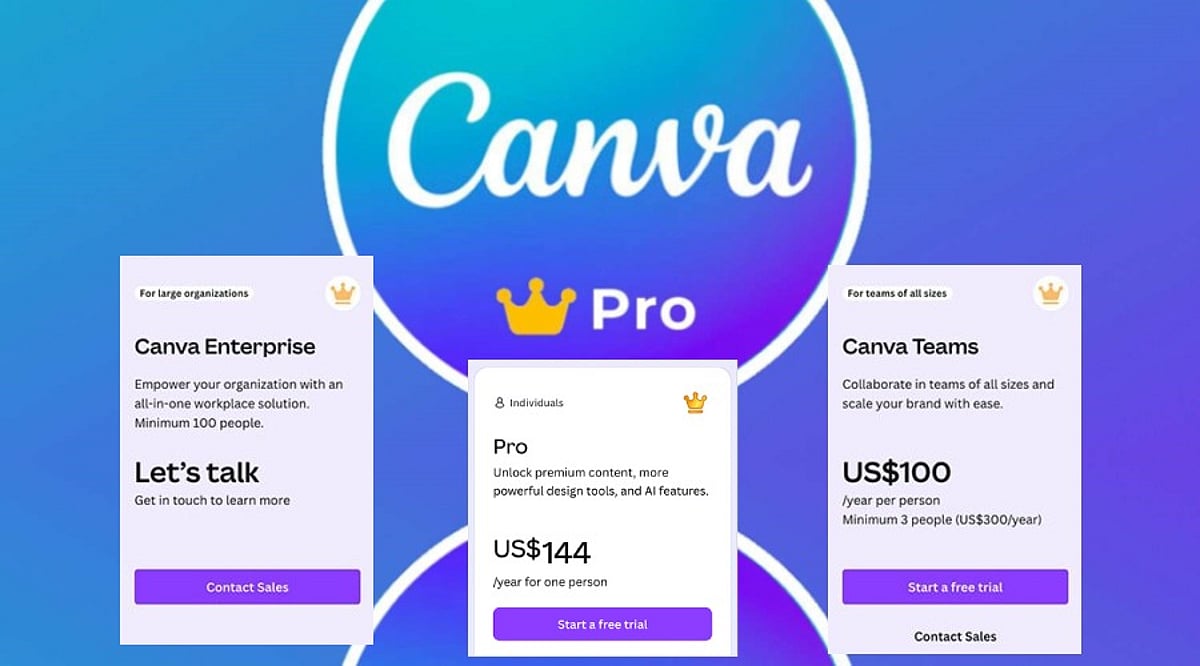
    • Monthly plan: $15 per user per month
    • Annual plan: $120 per user per year (effectively $10 per month)

    Choosing annual billing saves you $60 per year, a 33% discount compared to paying month-to-month. For teams, Canva also offers discounted per-seat pricing, but the individual Pro plan is the most common starting point.

    What Does Canva Pro Include?

    Canva Pro goes far beyond extra templates. Subscribers get access to a massive library of premium assets, advanced AI tools, and time-saving features that streamline the design process.

    Premium Templates and Assets

    With Pro, you can use millions of premium templates for presentations, social media posts, business documents, videos, and marketing materials. The library also includes premium photos, graphics, videos, icons, illustrations, and fonts, giving you everything needed to complete almost any project.

    AI-Powered Design Tools

    Canva’s AI features are a major draw for Pro users. Magic Write helps generate copy and content ideas, while Magic Edit lets you alter specific parts of an image. Magic Eraser removes unwanted objects from photos in seconds. These tools reduce editing time and help you create polished designs with less effort.

    Branding and Productivity Features

    • Brand Kit: Store logos, brand colors, and fonts in one place so every project stays on-brand.
    • Magic Resize: Instantly adapt a single design into multiple sizes for Instagram, Facebook, LinkedIn, posters, presentations, and more.
    • Background Remover: Isolate the main subject of an image with one click, ideal for product shots and profile photos.
    • Content Planner: Schedule and publish social media posts directly from Canva’s dashboard.
    • Extra cloud storage: More space for files, photos, videos, and completed projects.
    • Premium animations and effects: Add professional motion and visual polish to presentations and social content.

    Canva Free vs Canva Pro

    The free version of Canva is perfect for beginners and occasional users. It offers thousands of templates, basic editing tools, and a limited set of AI features. Simple presentations, posters, invitations, and social posts can look great without spending anything.

    Canva Pro expands every major area of the platform. You get premium templates, millions of extra assets, advanced AI features with higher usage limits, the Brand Kit, Magic Resize, Background Remover, and social media scheduling. For anyone creating content regularly, these additions make the design process faster and more flexible.

    Is Canva Pro Worth the Price?

    The value of Canva Pro depends entirely on how often you design. If your work involves social media management, presentations, e-commerce, or client projects, the subscription pays for itself quickly. You gain access to premium images, branding tools, photo editing, and scheduling features all in one platform, eliminating the need for multiple separate services.

    The annual plan offers the best value, reducing the effective cost to $10 per month and saving you $60 each year. For casual users who only need a few simple designs annually, the free tier is sufficient. But active designers, freelancers, and business owners will find that regular use easily justifies the subscription cost.

    How Canva Pro Compares to Alternatives

    Canva Pro competes with tools like Adobe Express Premium (around $9.99 per month) and Microsoft Designer, which is available through select Microsoft subscriptions. While each platform has its strengths, Canva stands out for combining a vast template library, AI tools, branding features, collaboration options, and content scheduling in one app. This all-in-one approach saves users from juggling multiple subscriptions and keeps every stage of a creative project in a single workspace.

    Final Verdict

    Canva Pro delivers a balanced mix of creative tools, premium content, AI features, and branding options at a competitive price. For $15 per month or $120 per year, you get a professional-grade design suite that simplifies everyday creative work. The annual plan is the smartest choice for regular users, offering a 33% savings compared to monthly billing. If you design frequently, the premium assets, AI tools, brand kit, and scheduling features make Canva Pro well worth the investment.

    Frequently Asked Questions

    How much does Canva Pro cost?

    Canva Pro costs $15 per user per month with monthly billing, or $120 per user per year with annual billing (equivalent to $10 per month).

    Is Canva Pro worth paying for?

    Yes, if you design regularly. The premium assets, AI features, branding tools, and time-saving capabilities provide strong value for frequent users.

    What is included in Canva Pro?

    Canva Pro includes premium templates, millions of stock assets, AI tools, Brand Kit, Magic Resize, Background Remover, Content Planner, and expanded cloud storage.

    Can I use Canva for free?

    Yes. Canva Free offers thousands of templates and essential design tools, making it suitable for casual users and students.

    Which Canva Pro plan offers the best value?

    The annual plan provides the best value, reducing the effective monthly cost to $10 and saving $60 per year compared to monthly billing.