Author: vitorcherulli

  • Central Banks Accelerate Gold Purchases in 2026: Diversification, De-Dollarization, and Geopolitical Stability Drive Record Demand

    Central Banks Accelerate Gold Purchases in 2026: Diversification, De-Dollarization, and Geopolitical Stability Drive Record Demand

    Central banks worldwide continue to increase their gold reserves in 2026, signaling a major shift in how reserve managers protect national wealth. Gold is no longer merely a traditional safe asset; it is now viewed as a strategic reserve that bolsters financial stability during periods of global uncertainty.

    Key Takeaways

    • Central banks view gold as a strategic reserve that strengthens financial resilience during global uncertainty.
    • Diversification away from the US dollar is driving long-term growth in official gold holdings.
    • Strong central bank demand continues despite record gold prices, supporting the metal’s long-term outlook.

    Countries Look Beyond the US Dollar

    Many central banks now aim to reduce heavy reliance on a single reserve currency. Gold offers a valuable alternative since no government or financial institution controls its value. This feature gives central banks greater flexibility during periods of political or economic stress.

    Reserve managers also seek stronger protection against financial sanctions and changing global alliances. These concerns encourage many countries to expand gold reserves while keeping a balanced mix of reserve assets. The World Gold Council survey shows that many reserve managers expect the share of US dollar reserves to decline over the coming years while gold gains a larger role.

    Geopolitical Tensions Support Gold Demand

    Global conflicts and rising political tensions continue to shape reserve strategies in 2026. Trade disputes, regional wars, sanctions, and diplomatic disagreements create uncertainty across financial markets. Gold remains attractive during such periods since it carries no credit risk and no foreign issuer controls it.

    Central banks value this independence and continue to strengthen national reserves with additional gold. Analysts also expect geopolitical risks to remain one of the strongest long-term factors that support official gold demand.

    Gold Adds Balance to Reserve Portfolios

    Central banks usually hold foreign currencies, government bonds, and other financial assets. Gold adds another layer of protection that works differently from these traditional reserves. Government bonds depend on fiscal policy, interest rates, and currency performance. Gold often follows a different path during market stress, which helps create a more balanced reserve portfolio. This diversification reduces overall financial risk and improves reserve strength during uncertain periods.

    Rising Debt Raises Fresh Concerns

    Government debt continues to expand across many large economies. Higher debt levels create concerns about long-term fiscal stability and the future value of paper currencies. Central banks respond by increasing exposure to assets that carry no liability from another country. Gold fits this requirement since it exists as a physical reserve asset with lasting value. This quality makes gold an important part of long-term reserve planning as governments face rising borrowing needs and uncertain fiscal conditions.

    Official Purchases Stay Strong Despite High Prices

    Gold prices reached record levels during 2026, yet central banks continued to add more metal to their reserves. The World Gold Council initially estimated official gold purchases at 244 tonnes during the first quarter of 2026. It later revised the estimate to 57 tonnes following updates to reporting methodology and data classification. Poland and Uzbekistan led reported purchases during the quarter, while China also continued steady accumulation.

    Later analysis revised the first-quarter estimate to 57 tonnes after changes in data classification and reporting methods. The revised figures also showed that central banks and sovereign wealth funds purchased about 345 tonnes during the first half of 2026, which marked the lowest six-month total since 2022. Even with this revision, analysts still describe central banks as dependable long-term buyers that continue to support the gold market through structural demand rather than short-term market movements.

    Confidence in Gold Remains High

    Gold also strengthens confidence in a country’s financial position. Large gold reserves signal strong reserve quality and improve trust in national balance sheets. Many central banks now store more gold within their own borders to strengthen control over strategic reserves. This approach reflects a wider effort to improve financial resilience during uncertain times. Gold also offers high liquidity, which allows central banks to access value quickly whenever financial markets face stress.

    Why This Matters

    The gold reserves of central banks are major contributors to global financial stability, currency confidence, and investment patterns. The increase in official demand showcases a big change in the management of reserves and priorities in the global economy. This development influences gold prices, foreign reserves, and other financial markets.

    Gold Will Remain a Strategic Reserve Asset

    Central bank demand for gold reflects long-term planning rather than short-term price movements. Reserve managers continue to value gold for its independence, liquidity, stability, and ability to strengthen national reserves. Recent revisions in quarterly purchase data highlight the difficulty of tracking official buying rather than any loss of confidence in gold. The latest surveys, market data, and analyst views all point toward one clear conclusion: Gold will continue to hold a central place in global reserve management as countries prepare for a more uncertain financial and geopolitical landscape.

    FAQs

    1. Why are central banks buying more gold in 2026? They are increasing gold reserves to diversify assets, reduce reliance on the US dollar, and strengthen financial stability amid geopolitical and economic uncertainty.
    2. Does higher gold buying mean countries are abandoning the US dollar? Not entirely. Most central banks are diversifying their reserves rather than replacing the dollar completely.
    3. Why is gold considered a strategic reserve asset? Gold has no credit risk, is highly liquid, retains long-term value, and is not controlled by any single government.
    4. Are central banks still buying gold despite record prices? Yes. Although first-quarter estimates were revised, central banks remain consistent long-term buyers driven by strategic objectives rather than short-term price movements.
    5. How does central bank gold buying affect investors? Strong official demand can support long-term gold prices and reinforces gold’s role as a safe-haven asset during periods of market uncertainty.

  • Optimize Your LLC Structure for Scalable Digital Business Growth

    Optimize Your LLC Structure for Scalable Digital Business Growth

    When scaling a digital business, new customers, ideas, and opportunities often appear faster than you can manage. However, growth brings challenges that may not have been considered when you first formed your LLC. Early-stage entrepreneurs typically focus on product development, revenue growth, and customer loyalty. Yet, the legal structure underlying your business is equally critical for long-term success.

    Your LLC is more than initial paperwork—it’s the framework that enables your business to adapt to change. The decisions you make today can determine whether future growth feels manageable or becomes fraught with obstacles. The most valuable LLC strategies involve thinking ahead and preparing for opportunities, risks, and transitions that haven’t yet occurred.

    How can you design your LLC to isolate risks?

    When your entire operation runs through a single LLC, every product, service, and asset is connected to that same legal structure. This works for startups, but growth often requires a more nuanced approach. Digital businesses rarely remain simple—you may launch multiple products, create intellectual property, partner with others, or expand into new markets. Each opportunity carries different risk levels. A single LLC means a problem in one area can affect the entire company.

    A strategic solution is to use separate LLCs for different brands, investments, or product categories. This isolates liabilities so that one challenge doesn’t jeopardize everything. The goal isn’t complexity but alignment with your current business structure. If you’re reviewing your setup, resources like a Northwest coupon code can help explore registered agent services and LLC support. Remember, multiple LLCs only work when treated as separate entities—maintain distinct ownership records, contracts, bank accounts, and operating agreements.

    What happens to your LLC when you step back?

    Many founders build companies around their personal involvement. As your business grows, your role may shift—hiring management, taking a strategic position, selling part of the business, or moving on. A strong LLC structure should support these transitions without relying on your daily presence.

    Your operating agreement should clearly outline decision-making, authority, ownership rights, and how major changes are handled. Without clear rules, leadership changes can become difficult. The strongest businesses are built on systems and processes that allow the company to thrive even when one person steps away.

    How do you prepare your LLC for international growth?

    Digital businesses often start locally but can serve customers globally. International expansion brings new considerations: different payment systems, banking relationships, and customer expectations. Before accepting customers worldwide, think about how money will flow through your company. Payment processors, financial reporting, and banking can become more complex. Strong contracts that define responsibilities—such as services, refunds, disputes, and legal obligations—are essential.

    A well-designed LLC doesn’t need to be rebuilt with each growth phase. The strongest structures are flexible because they were created with expansion in mind from the start.

    Your LLC should empower your business, not hold it back. It gives you confidence to pursue new opportunities while knowing your foundation can support the next stage. Growth comes down to building a company that adapts, evolves, and moves forward—and the questions you ask today shape the options available tomorrow.

  • Google Pixel 11 Leak Roundup: Design, Tensor G6 Specs, Pricing, Colors, and Launch Date Revealed

    Google Pixel 11 Leak Roundup: Design, Tensor G6 Specs, Pricing, Colors, and Launch Date Revealed

    Google’s Pixel 11 leaks have unveiled key details about its design, potential Tensor G6 chipset, pricing, colors, and launch timeline ahead of the official announcement. While some information is confirmed, much of it remains based on credible leaks. Buyers may also want to consider trade-in offers and post-launch discounts before upgrading.

    Overview

    Google has confirmed the Pixel 11 event for August 12, 2026, with wide availability tracking to August 20. Leaks point to a possible 2 nm Tensor G6 chip, mandatory 256 GB base storage, and a lower-profile camera bar. Trade-in value swings and past launch discounts matter as much as specs for buyers deciding whether to wait.

    An Amazon listing error briefly revealed pricing, storage tiers, and colors before disappearing, creating one of the clearest pre-launch pictures of a Pixel flagship to date. This tracker sorts what Google has actually confirmed from what still rests on leaks.

    What Do We Know About the Google Pixel 11 So Far?

    Design

    The shape stays close to the Pixel 10. Renders show a 6.3-inch OLED display at 120Hz on the base model and Pro, growing to 6.8 inches on the Pro XL. The real change sits on the back. Case leaks from ThinBorne point to a wider camera bar that sits flatter against the body, echoing the slimming move Google made when it updated the 9a into the 10a. Some early reaction online called the design repetitive, but a flatter camera bar changes how the phone sits in a pocket and how it feels in hand. A rumored Pixel Glow light ring around the bar has also surfaced in early leaks, though Google has not confirmed it.

    Specifications

    Supply chain reports suggest the Tensor G6 could move to a 2nm process, a step that would put Pixel among the first phones built on that node. Google has not confirmed the chip. Camera leaks point to a 50MP main sensor, a 13MP ultrawide, and a 10.8MP 5x telephoto lens, alongside a battery near 5,000mAh and 30W wired charging. RAM is the messiest detail right now: some reports hold 16GB on Pro models, others describe a cut to 12GB to manage rising component costs. A single leak also mentions 3D facial recognition arriving on the Pro line, similar to Apple’s system, though one source alone is thin evidence. Cellular reception, a weak spot across past Pixel generations, has not come up in any leak yet.

    AI Features

    Android 17 is expected to ship out of the box, with Gemini Intelligence going deeper into the camera app through speak-to-tweak editing and sketch-to-image generation. Google’s own roadmap statements make this direction close to certain, even without an official feature list.

    Colors

    Base models are expected in Midnight Haze, Light Sterling, Fuchsia, and Moss. Pro and Pro XL variants lean quieter with Light Fog, Dune, and Pine. The split is deliberate: standard Pixel buyers get louder shelf appeal, while Pro buyers get a palette built to look premium in hand.

    Pricing

    Leaked US pricing lists the base Pixel 11 at $899 for 256GB, the Pro at $1,099, the Pro XL at $1,299, and the Pro Fold above $1,899. Dropping the 128GB tier explains most of the jump from last year’s $799 starting price. Google has not confirmed any of these figures.

    Release Date

    Only one date is locked: the Made by Google event on August 12, 2026, in New York. A leaker with a strong record on Pixel timing expects wide availability on August 20, exactly a year after the Pixel 10 shipped.

    Pixel 10 vs Pixel 11

    History gives a clear pattern here. The Pixel 8 dropped 20 percent by Black Friday, just five weeks after launch. Trade-in credit swings hard too, ranging from $75 to $400 depending on the promotion running that season. Software bugs at launch remain a recurring complaint among current owners, which gives patient buyers another reason to hold off past August 20. Anyone comparing a discounted Pixel 10 against a full-price Pixel 11 should watch trade-in offers closely, not just the sticker price. A budget Pixel 11a is expected separately in spring 2027.

    Final Thought

    Every Pixel cycle eventually comes down to one question: does the software gap justify the price gap? This year, with storage doubled and AI pushed further into the camera, Google is betting the answer is yes before a single review has been published.

    FAQs

    1. When will the Google Pixel 11 be released?

    Google is expected to unveil the Pixel 11 series at the Made by Google event on August 12, 2026, with pre-orders likely opening the same day. Sales are expected to begin around August 20, 2026, although regional availability may vary.

    2. What are the expected Google Pixel 11 specifications?

    Leaked information suggests the Pixel 11 could feature a 6.3-inch 120Hz OLED display, a Tensor G6 chipset, 8GB or 12GB RAM, 256GB or 512GB storage, a 5,000mAh battery, and support for 30W wired and Qi2 wireless charging. Final specifications will be confirmed at launch.

    3. What colors will the Google Pixel 11 come in?

    Rumored color options for the standard Google Pixel 11 include Light Sterling, Midnight Haze, Fuchsia, and Moss. The Pro models are expected to feature additional premium color variants, though Google has not officially confirmed them.

    4. How much will the Google Pixel 11 cost?

    Leaks indicate the base Google Pixel 11 may start at around $859 to $899, with 256GB expected to become the entry-level storage option. Official pricing for different regions, including India and the UAE, will be announced at launch.

    5. Should you wait for the Google Pixel 11?

    If you’re interested in Google’s latest AI features, Tensor G6 performance improvements, enhanced cameras, and longer software support, waiting for the Pixel 11 could be worthwhile. However, if you need a new phone immediately, discounts on the Pixel 10 series may offer better value before the new flagship arrives.

  • Anthropic Expands in India: Claude AI Now Supports In-Country Inference and Unveils New Partnerships

    Anthropic Expands in India: Claude AI Now Supports In-Country Inference and Unveils New Partnerships

    Anthropic has announced a significant expansion in India, bringing in-country inference for Claude via Amazon Bedrock and revealing a host of new partnerships with Indian enterprises, startups, and nonprofits. The move addresses a top request from Indian organizations for local data processing, enabling them to deploy Claude while meeting strict data residency requirements.

    Claude Goes Local: In-Country Inference via Amazon Bedrock

    In the coming weeks, Claude will be available with in-country inference in India through Amazon Bedrock, AWS’s platform for building generative AI applications. Requests sent to Claude through the India endpoint will be processed on servers within India, giving banks, insurers, public agencies, and other highly regulated institutions the certainty they need to handle sensitive customer data. This control is pivotal for organizations moving from AI pilots to full-scale deployment.

    “We are glad to see partners like Anthropic and AWS bringing in-country inference to India. Access to trusted, frontier AI closer to home is a positive step for the ecosystem as we all explore how these technologies can responsibly serve customers,” said Ashok Vaswani, Managing Director & CEO of Kotak Bank.

    Claude deployments through Amazon Bedrock also include audit trails and access controls that meet the requirements of risk and compliance teams, ensuring a secure path to production.

    Building Momentum Across Indian Enterprises and Startups

    Anthropic’s presence in India has grown rapidly since its Bengaluru office opened in February. The local team now provides applied AI expertise to enterprises, digital natives, and startups. Major Indian companies are adopting Claude for diverse use cases:

    • Axis Bank leverages Claude for engineering excellence and employee productivity.
    • NPCI is building AiNxt, its agentic AI platform, with Claude.
    • IndusInd Bank uses Claude to create an AI-enabled enterprise knowledge platform.
    • Godrej Industries runs Claude across internal app development and business analysis.

    IT services leaders are also integrating Claude into their offerings. TCS is equipping 50,000 associates with Claude, Infosys is combining Claude with Infosys Topaz™ and establishing a dedicated Anthropic Center of Excellence, and Cognizant uses Claude in systems for manufacturing, life sciences, and insurance. LTM & LTTS are embedding Claude and Claude Code into their platforms.

    Digital natives are embedding Claude in consumer products: Swiggy uses MCP to make flagship services reachable, Instamart now offers natural-language shopping for 40,000+ products, Zoho equips customers with Claude models, and Invideo delivers precise quality across 190 nations.

    Startups like Rocket, Atlan, Cred, Zamp.ai, and Freshworks are building with Claude to accelerate development and enhance productivity.

    Partnerships Driving Scale and Innovation

    Anthropic’s Claude Partner Network has seen high registration numbers in India, with many partners achieving Global Premier, Preferred, and Select tiers. This week, Bengaluru hosts the first Claude Certification for Partners, aiming to certify 5,000 people.

    Advancing Beneficial Deployments and Social Impact

    Anthropic’s AI for Science program supports researchers across India, including the Evolutionary Venomics Lab at IISc, which uses Claude to annotate venom data, and PopVax, which employs Claude in protein-design models for vaccines and cancer treatments. Nonprofits like Pratham, Agami, Civis, and Digital Green are using Claude to improve education, justice, civic tech, and agriculture.

    Strengthening Cybersecurity and Public Trust

    Indian organizations are also using Claude to bolster cyber defenses. The Data Security Council of India has a Claude-powered AI testing sandbox, while MOSIP—the open-source platform behind national digital ID systems—uses Claude to secure code. OpenG2P leverages Claude for secure citizen benefit delivery.

    Commitment to Indian Languages and Responsible AI

    Six months after signing the New Delhi Frontier AI Impact Commitments, Anthropic is making progress on improving Claude’s performance in Indian languages. A pilot with Karya evaluated Claude across seven languages in agriculture, helping identify linguistic and cultural nuances that automated evaluations miss.

    With in-country inference, Anthropic is set to deepen its work in India, opening doors for deployments where data must remain in the country.

  • Honor Robot Phone Pre-Orders Begin: 200MP Camera, Robotic Gimbal, and Up to 16GB RAM Teased

    Honor Robot Phone Pre-Orders Begin: 200MP Camera, Robotic Gimbal, and Up to 16GB RAM Teased

    Honor has officially opened pre-orders for the highly anticipated Robot Phone in China, ahead of its official launch on August 12. The futuristic smartphone has generated significant buzz thanks to its innovative robotic camera system and AI-powered imaging features, positioning it as one of the year’s most exciting flagship devices.

    Camera Details Revealed

    The Honor Robot Phone is expected to feature a 200MP main camera mounted on a robotic gimbal, complemented by a 200MP periscope telephoto lens and a 50MP ultra-wide camera. This setup promises advanced stabilization, intelligent subject tracking, and professional-grade video capabilities.

    AI Imaging Features

    Honor has equipped the Robot Phone with its AiMAGE imaging platform and the self-developed Yuguang H1 imaging chip. The phone also supports ARRI LogC3, cinematic LUTs, and Wide Gamut 3 colour profiles, targeting professional creators and filmmakers.

    RAM and Storage Variants

    The company has teased multiple memory configurations. Leaks indicate options including 12GB RAM with 256GB or 512GB storage, while higher-end versions may offer up to 16GB RAM and 1TB internal storage for power users.

    Robotic Camera System

    Unlike conventional smartphones, the Robot Phone houses a titanium alloy robotic gimbal that automatically extends, tracks subjects in 360 degrees, and delivers mechanical stabilization. The movable camera is designed to enhance photography, vlogging, and video calling experiences.

    Performance Expectations

    The Robot Phone is expected to run on Qualcomm’s Snapdragon 8 Elite Gen 5 processor. It is also tipped to feature a 1.5K flat display, an AI-powered YOYO assistant, fast charging support, and premium flagship hardware for demanding workloads.

    Launch Timeline

    Honor will officially unveil the Robot Phone on August 12 in China. The launch event is expected to reveal pricing, complete specifications, availability, and global rollout plans, while showcasing the company’s latest AI-powered imaging technologies and robotic innovations.

  • Unity Software: Powering the Future of Immersive 3D Worlds

    Unity Software: Powering the Future of Immersive 3D Worlds

    Unity Software Inc. is a leading US-based video game software company that has revolutionized the way interactive digital experiences are created. Known for its powerful Unity engine, the company provides a comprehensive real-time 3D development platform that enables developers to build, run, and monetize interactive 2D, 3D, virtual reality (VR), and augmented reality (AR) content across gaming and various other industries.

    About the Company

    Unity Software Inc. operates as a top-tier technology firm delivering an all-inclusive platform to develop and manage real-time three-dimensional (RT3D) content across multiple business sectors. The Unity engine offers developers a robust framework to create interactive experiences, which they can monetize and distribute on mobile devices, personal computers, gaming consoles, and extended reality platforms. With integrated AI capabilities, companies can deploy operations across sectors including gaming, automotive, architecture, and simulation. Unity empowers its customers to build superior user experiences, develop products more efficiently, and create outstanding virtual environments that meet the demands of today’s digital market.

    Products and Services

    Unity provides a wide array of tools and services, including the Unity Engine, game development tools, multiplatform deployment, LiveOps, monetization solutions, advertising, collaboration tools, the Asset Store, technical documentation, developer tools, roadmap insights, case studies, demos, blog updates, and community resources.

    Core Leadership Team

    (Leadership details not specified in source.)

    Revenue Streams

    Unity generates earnings through multiple revenue streams: Grow Solutions, Create Solutions, runtime fees, and professional services. The company’s business model focuses on subscription-based services and enterprise solutions, which offer high profit margins.

    Client Segments

    B2B: Game studios, developers, and enterprises using real-time 3D tools, ads, monetization, and cloud services.

    Target Companies: Enterprises, gaming studios, indie developers, and companies in automotive, manufacturing, film, and architecture seeking 3D solutions.

    Target Geography: Global presence across North America, Europe, and Asia-Pacific, supporting worldwide development and deployment.

    Social Media & Web

    LinkedIn | Website

  • 7 Iconic Films That Predicted Our Tech-Driven Future

    7 Iconic Films That Predicted Our Tech-Driven Future

    From AI assistants to virtual worlds, many cinematic ideas now shape our everyday lives. Here are seven movies that astonishingly got the future right.

    Back to the Future Part II (1989)

    The movie showcased video calling, wearable technology, smart glasses, and biometric devices decades before they became common. It also imagined smart homes and advanced digital payments. While flying cars remain a dream, many everyday technologies from the film are now reality.

    Minority Report (2002)

    Gesture-controlled interfaces, personalized advertising, facial recognition, and predictive policing were central to the story. Today, touchscreen-free controls and AI-powered surveillance have become increasingly common. Many technologies once considered science fiction are now actively used across industries worldwide.

    Her (2013)

    The film introduced emotionally intelligent AI assistants capable of natural conversations. Modern AI chatbots, voice assistants, and generative AI closely resemble Samantha’s abilities. While emotional relationships with AI remain debated, conversational AI has advanced remarkably fast.

    The Truman Show (1998)

    Years before social media exploded, the film imagined a life constantly observed by cameras. Reality television, livestreaming, influencers, and online creators now share many similarities with Truman’s world. Digital privacy has become a growing concern for everyone.

    The Matrix (1999)

    The Matrix popularized immersive virtual worlds controlled by advanced computers. Today, VR headsets, digital avatars, and the metaverse bring parts of that vision closer to reality. It also sparked ongoing discussions about artificial intelligence and simulated experiences.

    WALL-E (2008)

    WALL-E predicted increasing automation, excessive screen dependence, and growing environmental challenges. Modern robotic assistants, online shopping, and AI-powered logistics reflect many of its ideas. The film remains a powerful reminder about sustainability and responsible technology use.

  • NYT Strands Puzzle #883: Hints, Answers, and Spangram for August 3, 2026

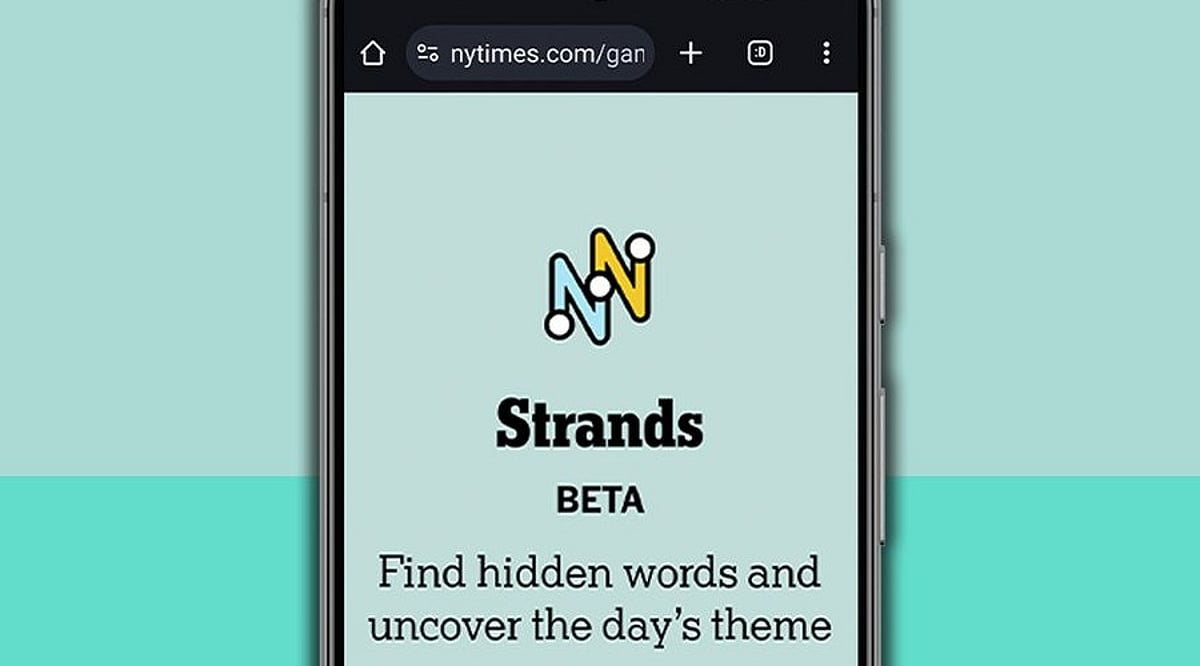
    NYT Strands Puzzle #883: Hints, Answers, and Spangram for August 3, 2026

    Overview

    The August 3, 2026 edition of the New York Times Strands puzzle (Puzzle #883) challenges players with the theme “There’s nothing like it.” This theme revolves around words that describe something unique, singular, or one of a kind. Whether you need a gentle nudge or the full solution, we’ve got you covered with spoiler-free hints and the complete answer list, including today’s spangram.

    Theme Explanation: Best of All

    The clue “There’s nothing like it” immediately suggests terms related to exclusivity and uniqueness. The hidden words in the grid are everyday terms we often use without fully appreciating their meaning. The puzzle delivers a satisfying mix of vocabulary and pattern recognition.

    Hints for August 3

    Use these subtle hints to guide your search without revealing the answers outright:

    • First word: Starts with “ON,” four letters. Commonly used to indicate the single piece—there’s no more.
    • Second word: Starts with “SO,” four letters. Also signals something is a single piece with no duplicates.
    • Third word: Starts with “SP,” seven letters. Often used to describe something precious or rare.
    • Fourth word: Starts with “SI,” eight letters. Means singular or unique.
    • Fifth word: Starts with “EX,” nine letters. Refers to something limited to a particular organization or company.

    Answers Section

    The non-spangram answers for today’s puzzle are:

    • ONLY
    • SOLE
    • UNIQUE
    • SPECIAL
    • SINGULAR
    • EXCLUSIVE

    Spangram Section

    The spangram for August 3, 2026 is ONEOFAKIND. This phrase perfectly encapsulates the theme and connects all the theme words.

    Tips for Solving

    Start by identifying the theme before generating related words. Look for shorter answers first—they help uncover useful letter patterns across the grid. Spangrams are often longer phrases, so scan for extended letter paths that span the board. This approach speeds up discovery and makes the puzzle more enjoyable.

    Final Words

    The August 3 Strands puzzle delivers a lighthearted, engaging challenge centered on everyday words that denote exclusivity. The familiar theme makes the puzzle welcoming while still requiring careful observation and strong pattern recognition. It’s a perfect daily brain teaser for word game enthusiasts.

    Also check out related puzzles: NYT Connections Hints and Answers for August 2, 2026 and Today’s NYT Wordle Hints and Answer for August 1, 2026.

  • BlockDAG’s 10 Billion Staked and 135X ROI Potential Outshines Aave and Bittensor

    BlockDAG’s 10 Billion Staked and 135X ROI Potential Outshines Aave and Bittensor

    Every market cycle, investors search for the next cryptocurrency poised for explosive growth. Most finds are noise—flashy roadmaps with little substance. BlockDAG breaks that pattern with hard data. Batches 1 through 7 are live with claims, staking is operational, and over 10 billion BDAG tokens are already locked by holders. This is the result of two years of disciplined, no-shortcut development now translating into real numbers.

    Meanwhile, traders tracking Aave price movements and Bittensor TAO price charts are monitoring tokens that captured their early gains years ago. BlockDAG still sits at $0.000000017, with a 22% live swap discount and a $0.025 buyback price pointing toward a staggering 135X ROI.

    Two Years of Building Now Paying Off

    BlockDAG is not pitching a future—it’s showing receipts from one already in motion. The mainnet is live with EVM-compatible smart contracts, GHOSTDAG consensus, and an explorer processing over 4 million on-chain transactions across 374,400+ holders in more than 130 countries. Physical miner deliveries are underway, with X30 production at full scale, a first delivery wave within 45 days, and over 3.6 million X1 app miners active worldwide. BlockDAG.com Casino is a live commercial product with over $200 million wagered and 100+ games running—real revenue, not a whitepaper promise.

    Upcoming milestones include the BlockDAG Exchange (a company-owned trading platform offering spot and multi-asset markets) scheduled for August 2026, followed by the Super App in September, unifying mining, staking, trading, swaps, casino access, and a RedotPay-powered payment card. With claims live, staking live, over 10 billion BDAG locked, and a presale price of $0.000000017 backed by a $0.025 buyback pointing toward 135X ROI, it’s clear why many traders call this the next crypto to explode before the Exchange even opens its doors.

    Aave Price Reflects a Fully Matured Market

    Aave remains a respected DeFi lending protocol, and current Aave price action reflects a project that has matured into its valuation. AAVE trades near $97, inside a tight $96.87–$101.83 range, with a market cap around $1.5 billion and total value locked at $14.3 billion. However, circulating tokens sit at 15.4 million against a hard-capped 16 million max—almost the entire supply is already unlocked and priced in. Aave’s $50 million annual buyback program and pending Grayscale ETF filing are strong fundamentals, but this maturity means most easy multiples were captured years ago, unlike a presale-stage token still building its base.

    Bittensor TAO Price Faces a Long Climb Back

    Bittensor has built a credible AI-crypto story, and TAO currently trades near $193, with roughly 70% of total supply staked and subnet capacity doubled to 256 slots under the “Robin τ” upgrade. A Grayscale spot TAO ETF filing is pending, and Kraken’s addition of TAO spot trading in July added liquidity. Still, Bittensor TAO price sits nearly 75% below its all-time high near $758, and has fallen about 28% over the past year even as the AI narrative remained strong. BlockDAG’s presale-stage entry offers a different risk profile: ground-floor pricing instead of a token working to reclaim old highs.

    The Best Bet in a Choppy Market

    The wider market has spent months chopping sideways, grinding down portfolios. Against that backdrop, the case for BlockDAG grows stronger. Aave price strength and Bittensor TAO price resilience prove those projects are legitimate, mature players, but their easy upside is largely behind them. BlockDAG is still at ground level: claims live, staking live, over 10 billion BDAG locked, and an Exchange and Super App both landing within weeks. For anyone hunting the next crypto to explode this cycle, a proven presale with a real delivery record and a $0.000000017 entry price may be the best bet in the market right now.

    Disclaimer: Analytics Insight does not provide financial advice or guidance on cryptocurrencies and stocks. Cryptocurrencies mentioned may be risky and could result in loss of capital. This article is for informational purposes only and does not constitute investment advice. Always do your own research before making any investment decisions.

  • Confluent: Building Scalable Event-Driven Applications with Advanced Data Streaming

    Confluent: Building Scalable Event-Driven Applications with Advanced Data Streaming

    Confluent is a leading data streaming platform built by the original creators of Apache Kafka. It enables organizations to connect, process, and manage their continuous data streams in real time. By extending Kafka with enterprise-grade integration, governance, and stream processing capabilities, Confluent helps businesses build scalable event-driven applications that run seamlessly across cloud and on-premises environments.

    About the Company

    Confluent operates as the premier data streaming platform, allowing companies to harness real-time data across all their applications and systems. It offers two primary solutions: Confluent Cloud and Confluent Platform. The platform is designed to become the operational backbone of enterprises, replacing traditional batch processing with real-time streaming technology. This enables AI, machine learning, analytics, and data integration across industries such as finance, retail, manufacturing, and telecommunications.

    Products and Services

    Confluent provides a comprehensive suite of offerings, including:

    • Data streaming platform
    • Confluent Cloud
    • Connectors
    • Stream governance
    • Stream processing
    • Tableflow
    • AI-driven Confluent Intelligence
    • Streaming agents
    • Deployment options (on-premises, private cloud, Kafka-compatible solutions)

    Core Leadership Team

    Confluent is led by a team of experienced executives with deep expertise in data streaming and enterprise software. The leadership team drives innovation and strategy to maintain the platform’s market leadership.

    Revenue Streams

    Confluent generates revenue through multiple channels:

    • Confluent Cloud consumption-based services
    • Confluent Platform subscriptions
    • Professional services
    • Training services
    • OEM partnerships

    Recurring revenue, particularly from cloud subscriptions, is the primary growth driver.

    Client Segments and Target Market

    Client Segments: Enterprises, developers, data engineers, and organizations requiring real-time data streaming and event-driven architectures.

    Target Companies: Large enterprises, SaaS providers, financial institutions, telecom companies, e-commerce platforms, and technology-driven organizations.

    Target Geography: Global operations across North America, Europe, and Asia-Pacific, supporting multinational companies with cloud-native and hybrid data streaming solutions.

    Social Media

    Connect with Confluent on LinkedIn and visit their website for more information.