Author: vitorcherulli

  • Wall Street Rises as Oil Prices Drop and Amazon Hits $3 Trillion Market Cap

    Wall Street Rises as Oil Prices Drop and Amazon Hits $3 Trillion Market Cap

    Wall Street opened August with broad gains on Monday as lower oil prices eased pressure across major sectors. Investors responded to signs that Washington may avoid fresh strikes against Iran, though Tehran denied that formal talks had started.

    The Dow led the early advance, while the S&P 500 and NASDAQ also moved higher. Amazon reached a $3 trillion market value. Investors also reviewed strong manufacturing data and prepared for a busy earnings week.

    Oil Slide Lifts Wall Street Sentiment

    The Dow Jones Industrial Average rose 604.70 points, or 1.15%, to 53,089 at 9:35 a.m. ET. The S&P 500 gained 1.2% to 7,585. The NASDAQ Composite added 1.97% to 25,872.

    Seven of the 11 S&P 500 sectors traded higher, with communication services leading. Energy shares lagged as crude prices fell. Advancing stocks outnumbered decliners by 1.89-to-1 on the NYSE and 1.49-to-1 on NASDAQ, showing broad early participation.

    President Donald Trump said planned talks would address Iran and the reopening of the Strait of Hormuz. He also canceled a planned attack on Iran. Tehran rejected his account and said no talks or meetings were scheduled. Brent crude fell 5% to below $84 per barrel. West Texas Intermediate dropped 6.1% to below $80.

    Amazon Reaches $3 Trillion Value

    Amazon shares climbed 5% in early trading, pushing the company’s market value above $3 trillion. The move followed its latest earnings report and extended gains from the previous week. Most large technology and growth stocks also advanced during the opening session.

    Software stocks supported the technology sector, with Microsoft and Salesforce moving higher. Chipmakers moved in the opposite direction. The Philadelphia Semiconductor Index fell 2.8% after a difficult July. Micron also dropped 3.4% after a report said China’s CXMT may build another memory-chip plant in Beijing.

    Earnings Calendar Draws Attention

    SpaceX will release its first quarterly results since its public listing on Tuesday. Its shares rose nearly 3% to trade near 111.57 at press time. Investors will track Starlink growth, launch revenue, and updates on the Starship program. Other technology companies reporting this week include Palantir, AMD, SanDisk, and Western Digital.

    “The on-again, off-again nature of US-Iran diplomacy could mean earnings and jobs data will have to do the heavy lifting for the bulls this week,” said Chris Larkin of E*TRADE. Company reports will also shape trading after July’s volatility around artificial intelligence spending, interest rates, and the Middle East conflict.

    Drug Merger Report Moves Shares

    Bristol Myers Squibb gained 1.5% after reports of preliminary merger discussions with AstraZeneca. A possible combination could create a pharmaceutical company worth nearly $400 billion. Reuters could not confirm whether the discussions remained active.

    Both companies hold large cancer-drug businesses, which could draw close regulatory review. Oncology products generated more than 40% of Bristol Myers’ sales during the first half of 2026. AstraZeneca also receives a large share of its revenue from cancer treatments.

    Factory Data and Fed Policy in Focus

    US manufacturing activity rose to its highest level since May 2022. The ISM manufacturing index reached 55.6 in July, up from 53.3 in June. Economists expected a reading of 54.0. Factory employment rose to 52.8, its first expansion reading in 33 months. Input prices eased to 71.1 but stayed elevated.

    New York Fed President John Williams said he expects inflation to cool during the second half of 2026. He said current interest-rate policy remains ‘well positioned.’ However, he said the Fed could raise rates if inflation fails to move toward 2%. The central bank kept its target range at 3.50% to 3.75% last week. Investors will next review several labor reports, including Friday’s nonfarm payrolls release.

    Disclaimer: This article is for informational purposes only and does not constitute investment advice. Always conduct your own research before making financial decisions.
  • Why Warren Buffett Touts Low-Cost S&P 500 ETFs as the Ultimate Wealth Builder

    Why Warren Buffett Touts Low-Cost S&P 500 ETFs as the Ultimate Wealth Builder

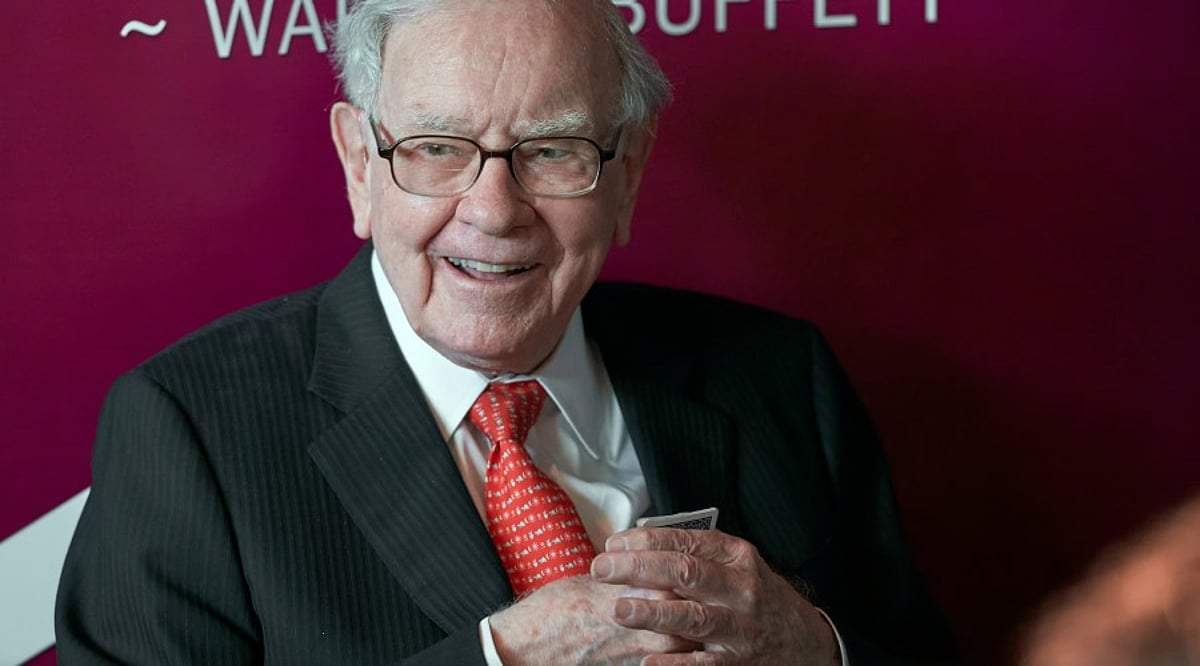
    Warren Buffett, one of the world’s most successful investors, has long advised the average investor to follow a simple investment strategy: invest in a low-cost S&P 500 index fund and hold it for the long term. Contrary to the idea that Buffett invests only in individual stocks, he believes most retail investors are better served by passive investing rather than trying to outperform the market.

    His insights have become especially relevant as exchange-traded funds (ETFs) continue to attract record inflows from investors seeking diversified, low-cost exposure to the US stock market.

    The Simple Investment Philosophy of Buffett

    Buffett has repeatedly said that most investors don’t need to research individual companies or try to beat professional managers. Instead, he recommends purchasing a low-cost S&P 500 index fund, which holds 500 of the largest publicly traded US companies. During Berkshire Hathaway’s annual meeting, he stated, “For most people, the best thing to do is to own the S&P 500 index fund.”

    His confidence is backed by a famous 2008 bet: Buffett wagered $1 million that an S&P 500 index fund would outperform a portfolio of five hedge funds over 10 years. The result was decisive—the S&P 500 delivered roughly 126% returns, while the hedge funds managed only about 36%.

    Why Low-Cost ETFs Stand Out

    Buffett frequently highlights the Vanguard S&P 500 ETF (VOO), which carries an expense ratio of just 0.03%—one of the lowest available. Over the past 10 years (as of late July 2026), VOO has generated a total return of about 303%. The ETF also provides instant diversification across sectors like technology, healthcare, financial services, consumer goods, energy, and industrials, reducing the risk of owning just a few stocks.

    The Power of Long-Term Compounding

    Buffett’s core rule is to let compound returns work. The S&P 500 has historically averaged about 10% annual returns over long periods, though yearly results vary. Disciplined investing and reinvestment in an S&P 500 ETF could grow an initial sum to over $1 million after 40 years, based on historical averages. Market analysts note that the S&P 500 has delivered positive total returns over every rolling 20-year period since 1919, underscoring the benefit of staying invested through market cycles.

    Why Buffett Prefers Passive Investing

    Despite decades of beating the market, Buffett admits it is extremely difficult to do so consistently. Most actively managed funds underperform the S&P 500 over the long term after expenses. That’s why Buffett has publicly stated he would invest 90% of his wife’s cash inheritance into a low-cost S&P 500 index fund and the remaining 10% into short-term government securities.

    Conclusion

    Buffett’s investment advice remains consistent: value low costs, diversify, invest regularly, and hold for the long term. For most people, a low-cost S&P 500 ETF offers a simple and proven path to building wealth. While advanced investors may succeed with individual stocks, Buffett’s passive investing mantra continues to be one of the most straightforward ways to achieve long-term financial security.

    Frequently Asked Questions

    1. Why does Warren Buffett recommend S&P 500 index funds? Buffett believes most investors cannot consistently beat the market. A low-cost S&P 500 index fund provides broad diversification, low fees, and long-term exposure to America’s largest companies.
    2. Which ETF does Warren Buffett recommend? Buffett has frequently highlighted the Vanguard S&P 500 ETF (VOO) because of its extremely low expense ratio, broad market exposure, and strong long-term performance.
    3. Are S&P 500 ETFs suitable for beginners? Yes. They offer instant diversification, passive management, and historically strong long-term returns, making them one of the simplest investment options for beginners.
    4. What is the biggest advantage of investing in an S&P 500 ETF? The biggest benefit is long-term wealth creation through diversification and compound growth, without the need to research or actively manage individual stocks.
    5. Can an S&P 500 ETF guarantee positive returns? No. Like all equity investments, S&P 500 ETFs can decline over shorter periods. However, history shows they have delivered strong returns over long investment horizons, making them popular among long-term investors.
  • MemeCore and Uniswap Surge, but ZKP Presale Signals 100x Potential – Is It the Hottest Crypto of 2026?

    MemeCore and Uniswap Surge, but ZKP Presale Signals 100x Potential – Is It the Hottest Crypto of 2026?

    The crypto market is telling two different stories at once. The MemeCore price just rallied 11.2% on a memecoin sector rebound, and the Uniswap price is climbing above $3.95 on the back of new institutional features. Both look strong on the daily charts, but each has already made its big move.

    Meanwhile, Zero Knowledge Proof (ZKP) is setting up something bigger. The token is currently priced at just $0.0004 in Stage 1 of its presale. The listing target is $0.04 – a clean 100x gap already written into the roadmap. Over $2.23 million has been raised so far, and many are calling ZKP the most popular cryptocurrency story of 2026.

    MemeCore Price Bounces Back on Memecoin Sector Rebound

    The MemeCore price surged 11.2% in the last 24 hours, trading around $1.13. The move came as the wider memecoin market bounced 8%, adding $23 billion in total market cap. Open interest jumped 9.4% to $25.66 million, and long positions outpaced shorts, showing traders are betting on more upside.

    Bulls are now eyeing $1.7, which sits at the 50-day EMA. If MemeCore can break that level, momentum could carry it higher. Still, its RSI is only at 47, meaning the recovery is fragile. Any drop in demand could send the MemeCore price right back to $1.10 support. For traders looking at the most popular cryptocurrency plays for 2026, meme-driven rallies are exciting but rarely offer stable long-term returns.

    Uniswap Price Climbs on Institutional Push

    The Uniswap price is trading around $3.7. The rally follows Uniswap’s launch of Permissioned Pools on v4, which lets regulated tokenized securities trade among approved users. That opens the door to major institutional inflows while keeping open pools running for regular DeFi users.

    Technically, UNI sits above its 20-day, 50-day, and 200-day moving averages, which shows strong short- and long-term momentum. But the RSI is stretched at 74.47, hinting the coin is overbought and due for a cooling period. Over the past three months, the Uniswap price is already up more than 200%. For anyone hunting the most popular cryptocurrency plays of 2026, that means most of the easy money has already been made; the biggest gain window is likely behind it.

    Zero Knowledge Proof (ZKP): The Future of AI at a $0.0004 Entry Price

    Zero Knowledge Proof (ZKP) is quickly turning into the most popular cryptocurrency story of 2026, and the reason is simple: opportunity. Stage 1 of the presale is live at just $0.0004 per coin. The listing target is $0.04; that is a 100x price gap already written into the roadmap. Some analysts even project long-term returns of 5,000x to 10,000x if adoption scales as AI demand grows. With $2.23 million already raised and more than 7,481 early buyers on board, momentum is only building.

    The story behind ZKP is bigger than price. Privacy is becoming the biggest concern in the AI era, and no major system has fully solved it yet. Sensitive data flows into AI models every second, but there is almost no way to verify what happens with it once it goes in. ZKP closes that gap by using zero-knowledge cryptography to confirm computations were run correctly while keeping all raw data hidden. That verification layer is exactly what regulated industries and AI-first companies need before adoption can scale globally.

    The roadmap is clear and already in motion. Phase 1 covered the core network build, smart contract audits, and the presale rollout. Phase 2 delivered the hybrid Proof of Intelligence and Proof of Space consensus, plus AES-256 encryption for private data storage. Phase 3 focuses on testnet, wallet integrations, and EVM compatibility. Phase 4 finishes the vision with mainnet launch and the ZKP Data Marketplace going live.

    Adding to the confidence, Kevin O’Leary has publicly backed the project, calling this the “Age of Proof.” With every stage of the presale raising the price, buyers are rushing in early to lock in ZKP as the most popular cryptocurrency setup of the year.

    Conclusion

    The MemeCore price and Uniswap price both had strong moves this week, but their biggest gains for this cycle look mostly priced in. ZKP is only beginning its climb. With Stage 1 live at $0.0004, a listing target of $0.04, and a full four-phase roadmap already in motion, ZKP offers a rare mix of low entry, real utility, and a clear path forward. Privacy in the AI era is not optional anymore, and ZKP is building the answer while the rest of the market is still catching up. Every presale stage lifts the price higher, and buyers are rushing in at $0.0004 before ZKP grows into what many now call the most popular cryptocurrency of 2026.

    Explore ZKP:
    Website: https://zkp.com/
    Buy: http://buy.zkp.com/
    Telegram: https://t.me/ZKPofficial
    X: https://x.com/ZKPofficial

    Join our WhatsApp Channel to get the latest news, exclusives and videos on WhatsApp.

    Disclaimer: Analytics Insight does not provide financial advice or guidance on cryptocurrencies and stocks. Also note that the cryptocurrencies mentioned/listed on the website could potentially be risky, i.e. designed to induce you to invest financial resources that may be lost forever and not be recoverable once investments are made. This article is provided for informational purposes and does not constitute investment advice. You are responsible for conducting your own research (DYOR) before making any investments. Read more about the financial risks involved here.

  • Knowt AI Review: An Intelligent Study Platform for Flashcards and Spaced Repetition

    Knowt AI Review: An Intelligent Study Platform for Flashcards and Spaced Repetition

    Knowt operates as an AI-based educational platform that enables students to study through its flashcards, summaries, and spaced repetition system. The tool allows students to transform their notes, PDF documents, and video content into study materials within seconds. Knowt functions as a powerful Quizlet substitute by automating processes and creating quizzes that help learners and educators enhance their knowledge retention.

    General Information

    • Launch Date: 2024
    • Target Audience: Working professionals, students & academic learners, language learners, travelers & expats, test preparation learners, multilingual learners.
    • Platform Support: Android App, iOS App, Web Browser
    • Download: Click Here

    Main Features of Knowt

    • AI Flashcard Generation: Automatically creates flashcards from notes, PDFs, and lectures within seconds.
    • Spaced Repetition: Schedules reviews to improve long-term memory retention effectively, based on science.
    • Practice Tests & Learning Mode: Strengthen weak topics through repetition and active recall.
    • Quizlet Import: Seamless transfer of existing study flashcards and sets for quick migration.
    • Mobile Apps & Chrome Extension: Enables studying anywhere, anytime, on any device.

    Benefits of Knowt

    • Free Essential Features: The free plan provides essential features without hidden subscription fees.
    • Time Savings: AI flashcard generation saves substantial time during study preparation.
    • Beginner-Friendly: Designed for new users, offering a quick and straightforward learning experience.
    • Improved Retention: Spaced repetition helps users retain knowledge for extended periods, especially useful for exam preparation.
    • Cross-Platform Access: Operates on web, mobile, and extension apps without technical restrictions.

    Challenges of Knowt

    • Limited Customization: Predesigned flashcards cannot be modified by learners.
    • AI Content Errors: AI-generated content may have errors and require editing.
    • Navigation Difficulties: Design can be confusing for first-time users, especially on mobile devices.
    • Technical Issues: Experiences problems with saving work and reliability during peak usage.
    • AI Feature Limits on Free Plan: Active learners on the free plan receive restricted access to AI features, with a monthly usage limit.

    Subscription Information

    Knowt offers a free Basic plan with flashcards, notes, and limited AI tools. The Ultra plan costs $19.99 monthly or $119.99 annually, adding advanced AI features, Kai assistant, and higher upload limits including PDFs and videos for intensive study users.

    Support Options

    • Help Center: Provides FAQs, guides, and troubleshooting resources covering setup, flashcards, AI tools, study modes, and account-related issues for students and educators.
    • Customer Support: Responsive and helpful, offering assistance via help center, email, and contact forms to resolve technical issues and user queries efficiently.

    Conclusion

    Knowt provides students with an advanced AI study platform that helps them study through flashcards, summaries, and spaced repetition. The system offers three key benefits: decreasing manual tasks, improving memory retention, and enabling flexible study approaches. While the program offers free access with basic AI functions, it does have minor technical issues and limited customization options. Overall, Knowt is a valuable tool for students and educators looking to enhance their study efficiency.

  • 25 Best Dividend Stocks to Buy in August 2026: Undervalued Opportunities for Income Investors

    25 Best Dividend Stocks to Buy in August 2026: Undervalued Opportunities for Income Investors

    Dividend-paying stocks remain one of the most reliable ways to generate passive income and build long-term wealth. In August 2026, several high-quality dividend stocks appear undervalued based on metrics such as Dividend Yield Theory (DYT), Free Cash Flow (FCF), and historical Price-to-Earnings (P/E) ratios. Below is a curated list of the top 25 dividend opportunities, along with key valuation insights.

    Top 25 Dividend Stock Opportunities for August 2026

    1. Broadridge Financial (BR) – Trading at ~14x P/FCF, Broadridge offers an attractive valuation with a strong, consistent dividend growth record.
    2. Zoetis (ZTS) – Undervalued by 61% according to DYT, trading below 16x forward P/FCF, making it a compelling long-term buy.
    3. Accenture (ACN) – Despite a July rally, Accenture remains one of the cheapest large-cap tech consulting stocks at 8x forward earnings.
    4. Blackstone (BX) – Moderately undervalued; FCF is less relevant for alternative asset managers, so focus on dividend yield.
    5. SBA Communications (SBAC) – A REIT with recurring cash flows, trading at a P/E of 39.86 and a 2.76% annual dividend.
    6. Paychex (PAYX) – Improving from recent lows, reasonably valued at 18x FCF for a high-quality dividend payer.
    7. Amdocs (DOX) – Discounted by 45–47%, trading at 9x P/FCF – a healthy entry point.
    8. Autoliv (ALV) – Fairly valued with a 10% discount margin based on historical P/E, suggesting moderate upside.
    9. McDonald’s (MCD) – Slightly below historical valuations; DYT indicates moderate upside.
    10. Darden Restaurants (DRI) – Relatively fairly valued with limited valuation potential at current prices.
    11. Penske Automotive Group (PAG) – DYT suggests a 10% discount, but trades at ~30x FCF, making it pricey on cash-flow basis.
    12. PepsiCo (PEP) – Shares undervalued by 28–38% per DYT, trading below 20x FCF.
    13. Thomson Reuters (TRI) – 35–44% undervalued after a big price correction, one of the best software-related opportunities.
    14. NextEra Energy (NEE) – DYT shows a 9% discount, but historical earnings suggest more upside; trades at ~19.5x earnings.
    15. Regions Financial (RF) – Fair value per DYT, but high historical FCF multiple.
    16. Essential Utilities (WTRG) – Slight discount, though 20x earnings multiple is above long-term market averages.
    17. Sysco (SYY) – Fairly priced; historical FCF analysis shows ~27% upside potential.
    18. McCormick (MKC) – Consumer staples standout: 45% discount via DYT, 64% upside per FCF analysis.
    19. Constellation Brands (STZ) – ~47% undervalued, one of the best value stocks on the list.
    20. Toronto-Dominion Bank (TD) – Overpriced after a 2025 surge, per both DYT and historical earnings.
    21. American Water Works (AWK) – Reasonably priced historically, but 25x earnings is high on an absolute basis.
    22. Cohen & Steers (CNS) – Slightly overvalued per DYT and earnings-based analysis.
    23. Bank of Montreal (BMO) – Overvalued after recent run-up based on both DYT and historical earnings.
    24. Fifth Third Bancorp (FITB) – Trading at a premium to dividend yield history and earnings after a strong price rise since 2024.
    25. Cullen/Frost Bankers (CFR) – Trading at about par; 16x earnings is reasonable for a quality regional bank.

    Key Takeaways

    The most attractive dividend stocks on multiple valuation measures include Zoetis, Accenture, Broadridge Financial, Amdocs, McCormick, Constellation Brands, Thomson Reuters, PepsiCo, Paychex, and Sysco. Conversely, several banking stocks (Toronto-Dominion Bank, Bank of Montreal, Fifth Third Bancorp, Regions Financial) appear fairly valued or overpriced. Investors should also consider dividend sustainability, earnings growth, balance sheet strength, and business fundamentals before committing capital.

    Frequently Asked Questions

    1. Which dividend stocks appear most undervalued for August 2026?

    Zoetis, Accenture, Amdocs, McCormick, Constellation Brands, Thomson Reuters, and Broadridge Financial stand out across multiple valuation models. Always verify earnings and dividend growth prospects.

    2. What is Dividend Yield Theory?

    Dividend Yield Theory compares a stock’s current dividend yield with its long-term historical average. A higher-than-usual yield may indicate undervaluation, but could also signal business deterioration or weak dividend growth.

    3. Why is free cash flow important for dividend investors?

    Free cash flow indicates how much cash remains after operating and capital expenses. Companies with consistent free cash flow are better positioned to sustain and grow dividends, repay debt, and invest for the future.

    4. Are all 25 stocks currently attractive buys?

    No. Several names (TD, BMO, FITB, RF) appear fairly valued or expensive. This list is a research starting point, not a buy recommendation.

    5. What should investors check before buying a dividend stock?

    Review payout ratios, dividend growth history, earnings stability, debt levels, cash generation, valuation, and industry outlook. A high yield alone does not guarantee a safe investment.

    Disclaimer: This article is for informational purposes only and does not constitute investment advice. Always conduct your own research before investing. Past performance is not indicative of future results.

  • AI Browser Permissions: 10 Settings to Review for Safer Browsing

    AI Browser Permissions: 10 Settings to Review for Safer Browsing

    Why Browser AI Permissions Matter

    Modern browsers now come with built-in AI tools like Gemini, Copilot, Leo, and Apple Intelligence, often enabled by default. These tools can read pages, summarize content, access files, and even perform tasks on your behalf. While they enhance productivity, they also introduce new privacy and security considerations. Understanding how to manage these permissions is essential for protecting your data.

    The 5-Minute Security Review

    If you’re short on time, start with these quick checks:

    • Open your browser’s AI settings and see what’s enabled by default (page content, location, voice).
    • Audit installed extensions and remove any that have access to all sites.
    • In the AI service’s own settings, look for training or retention opt-outs.
    • Review the list of sites where the AI can sign in or autofill.
    • Use a private window or separate profile for sensitive one-off tasks.

    Essential Browser Permissions to Check

    These settings are managed directly in your browser and form the foundation of your AI privacy.

    Extension Host Permissions

    Extensions that request “all sites” access can read and modify every page you visit. This permission is fixed at installation, so review your extensions regularly and remove any you don’t use.

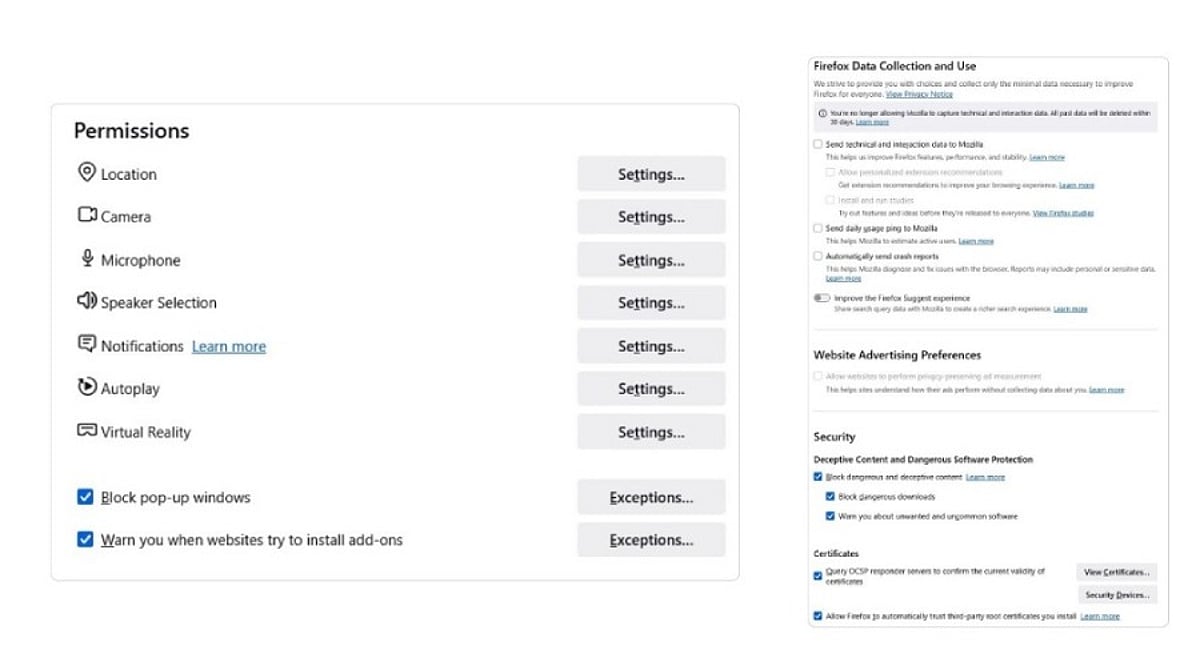
    Camera, Microphone, and Screen Sharing

    Multimodal AI features may request access to these per site. Set the default to “Ask” to ensure access is granted only for a single session, not indefinitely.

    Clipboard Access

    Some AI features can read your clipboard. If you copy passwords or sensitive codes while an assistant is active, that data could be exposed. Disable clipboard access for AI tools unless absolutely necessary.

    File Uploads and File System Access

    Many AI features can read files you drag in or maintain folder-level access. Check which sites have standing file permissions and revoke any that are unfamiliar.

    AI Service Privacy Settings

    These settings live in the AI vendor’s own configuration, not in your browser.

    Page Content and Tab Access

    Each browser has its own name for this: Edge calls it “Context Clues,” Chrome has it under “AI Innovations.” Disable these to stop the AI from pulling data from your current page or browsing history.

    Model Training Opt-Outs

    Some AI services use your prompts and uploads to improve their models. Brave’s Leo routes queries through a proxy to strip identifying details, while Chrome and Edge offer explicit opt-outs. Check your settings and disable training if you prefer not to participate.

    Agentic Browsing and Autofill Permissions

    Newer AI services can fill forms, sign into sites, and perform multi-step tasks. For example, Chrome’s Gemini can be given permission to sign in via Google Password Manager. Review the list of approved sites and revoke any you don’t recognize.

    Security Habits for Everyday Browsing

    Beyond settings, your habits play a crucial role in limiting data exposure.

    Use Separate Profiles

    Keep work and personal browsing separate. This prevents a personal AI feature from accidentally accessing enterprise files or client data.

    Handle Sensitive Queries in Private Windows

    For legal, financial, or strategic questions, use a private window. This limits local traces, though it doesn’t stop the AI service from processing the data after you submit it.

    Recheck After Major Updates

    Browser AI features often arrive silently with updates. A quarterly review of your AI settings will help you catch new defaults before they become a habit.

    How Permissions Differ Across Browsers

    As of mid-2026, Chrome and Edge offer page-level controls, while Safari manages AI permissions at the app level. This means Safari cannot restrict Apple Intelligence to specific sites, whereas Chrome and Edge can. Brave’s Leo uses a proxy for privacy, and its conversations are not stored.

    Key Takeaways

    Every browser ships with defaults optimized for a smooth first run, not for minimal AI exposure. The key is to understand which mechanism controls each permission: a manifest grant, a settings toggle, or an account-level index. Learning this pattern once will help you evaluate any future AI feature quickly and confidently.

    Final Thought

    Browser AI is still evolving, and settings will continue to change. But the underlying structure—browser permissions, service settings, and user habits—remains constant. By mastering this pattern, you’ll be able to navigate any new AI feature with confidence, without waiting for a headline to tell you what changed.

    Frequently Asked Questions

    Why should I review AI browser permissions?

    AI-powered browsers and extensions may access your tabs, clipboard, camera, or browsing data to deliver features. Reviewing permissions helps you limit unnecessary data exposure and maintain control over your privacy.

    Which permissions are most important?

    Start with extension host permissions, camera/microphone, clipboard, file uploads, and screen sharing. Also check whether AI features can access your browsing history or use your interactions for training.

    How often should I review them?

    Review whenever you install a new AI extension, enable a new feature, or after a major browser update. A quarterly audit is a good practice.

    Are third-party extensions safer than built-in assistants?

    Not necessarily. Both can request broad access. Always review the permissions they require and disable features you don’t use.

    Does Incognito mode protect my data?

    Incognito reduces local traces, but it does not prevent AI providers from processing your prompts or files. For sensitive information, combine private browsing with carefully reviewed AI settings.

  • Apple Upgrade Leasing Program Arrives in the US: Flexible Payments for iPhones, Macs, and More

    Apple Upgrade Leasing Program Arrives in the US: Flexible Payments for iPhones, Macs, and More

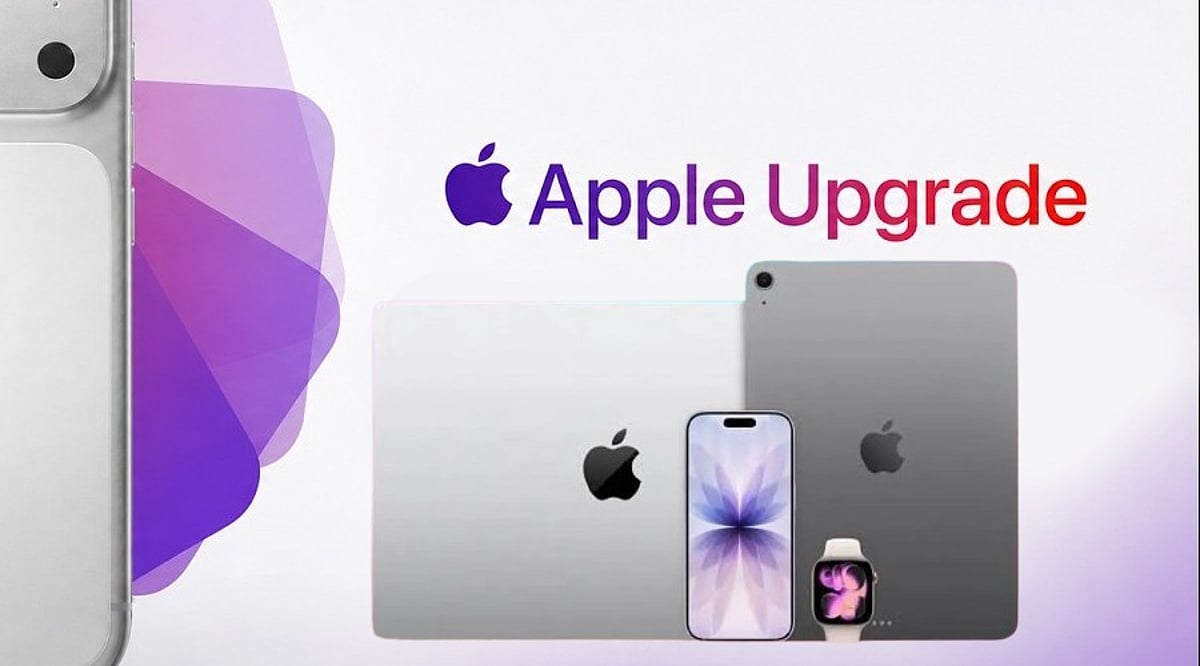
    Apple has officially launched a new device leasing program called Apple Upgrade in the United States, offering customers a flexible way to access iPhones, Apple Watches, Macs, and iPads through monthly payments. The program is powered by Klarna and is available through the Apple online store, Apple Store app, and retail Apple Stores nationwide.

    The move comes as rising component and memory costs put upward pressure on device prices, prompting Apple to provide a lower monthly entry point rather than relying solely on upfront purchases.

    Monthly Leases Starting at $11.99

    Apple Upgrade offers two lease durations for most devices:

    • Apple Watch and iPhone: 12-month or 24-month options
    • Mac and iPad: 24-month or 36-month options

    Monthly payments start at:

    • iPhone: $17.99
    • Apple Watch: $11.99
    • Mac: $24.99
    • iPad: $11.99

    Exact charges depend on the specific model and lease duration. For example, an unlocked iPhone 17 Pro is reportedly $31.99 per month for 24 months, or $45.99 per month for a 12-month lease.

    Customers can also save by trading in their previous device through the Apple Trade In program. In addition, lease payments made with an Apple Card earn 3% daily cash rewards.

    “At Apple, we put the customer at the center of everything we do,” said Karen Rasmussen, Vice President of the online Apple Store. “We’re thrilled that Apple Upgrade offers our customers, both online and in-store, a more flexible way to pay for the products they love.”

    How Apple Upgrade Works

    Customers can apply online or in-store. Klarna performs a soft credit inquiry that does not affect credit scores. Once approved, users can receive their devices via delivery, store pickup, or immediate in-store collection.

    At the end of the lease, customers have three options:

    • Return the device
    • Upgrade to a newer model
    • Purchase the device outright with a one-time payment

    Lease details, including billing schedules and outstanding payments, are managed through the Klarna app. According to program terms, no security deposit is required, and Klarna will not charge late fees—though leases may be terminated after three consecutive missed payments.

    Existing iPhone Programs Replaced

    With the launch of Apple Upgrade, Apple is discontinuing the older iPhone Upgrade Program and iPhone Payments in the US. Existing customers may switch to Apple Upgrade, Apple Card Monthly Installments, carrier financing, or outright purchases.

    The move could also shorten Apple’s device replacement cycle. According to Bernstein estimates, the average iPhone upgrade period has stretched to nearly four years.

    Apple is now competing more directly with carriers like AT&T, Verizon, and T-Mobile, which use installment plans and trade-in incentives to retain customers. The leasing model may help Apple mitigate the impact of potential price increases while creating more predictable upgrade demand across its product ecosystem.

  • BlockDAG 2026 Review: A Comprehensive Look at the 5-Star Crypto Ecosystem Transforming Digital Finance

    BlockDAG 2026 Review: A Comprehensive Look at the 5-Star Crypto Ecosystem Transforming Digital Finance

    This BlockDAG 2026 review examines a project that has evolved far beyond a typical layer-one network. In August 2026, the team released its Execution Whitepaper, outlining a major strategic pivot. BlockDAG is transforming itself into a full digital economy, seamlessly integrating mining, trading, staking, and everyday spending into a unified user journey. The team consistently hits its milestones, earning this project a top-tier rating.

    The network operates on a Directed Acyclic Graph (DAG) design, enabling the simultaneous production of multiple blocks and achieving 7,000 transactions per second. The GHOSTDAG consensus algorithm orders these parallel blocks, preventing double-spending while maintaining decentralization. Additionally, BlockDAG is fully compatible with the Ethereum Virtual Machine (EVM), allowing developers to quickly port existing tools and accelerate development.

    One App for Everything: The RedotPay Super App

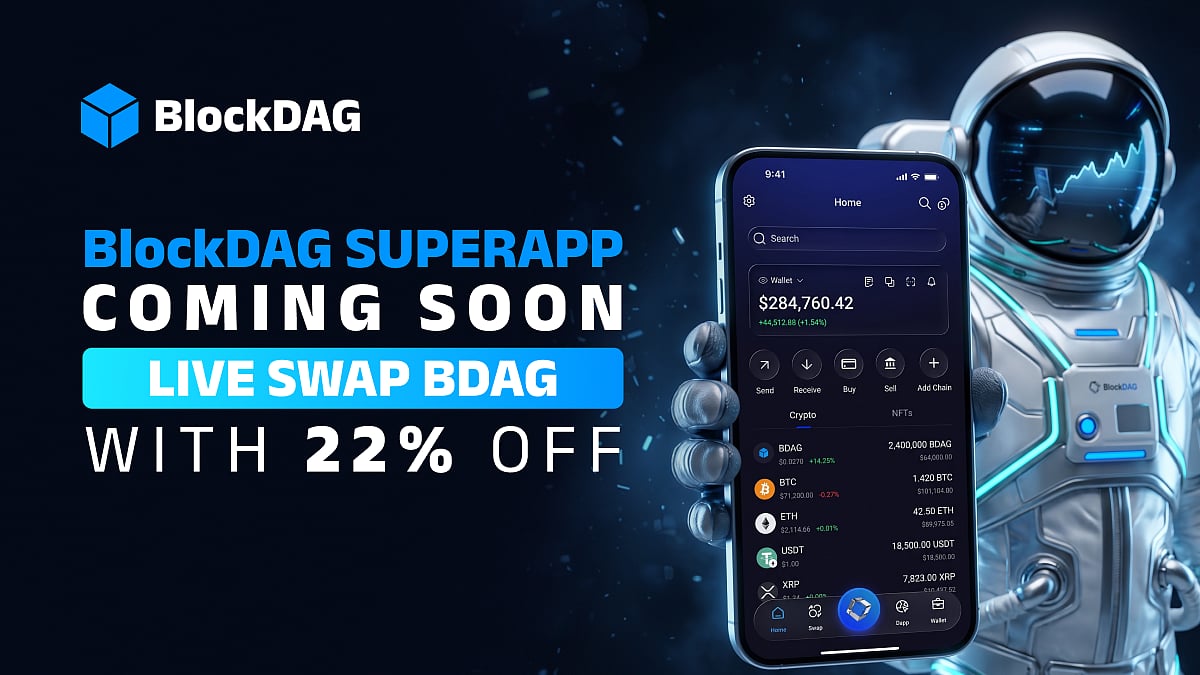
    BlockDAG has partnered with RedotPay to create the unified BlockDAG Super App, launching in September 2026. The app consolidates mining, staking, and trading in one place. Users can securely hold stablecoins alongside BDAG and access the BlockDAG Casino directly from their mobile device. The app also issues virtual and physical payment cards for daily use. Balances can be instantly converted to stablecoins, with the card handling merchant payments seamlessly, removing friction from everyday spending.

    Real Utility: The Exchange and the Casino

    The native BlockDAG Exchange launches in August 2026, offering spot and futures markets to users worldwide. It lists Bitcoin, Ethereum, and other digital assets. Fee payments in BDAG earn significant trading discounts. The BlockDAG Casino is already operational, giving active users a practical outlet to spend their coins. Players use BDAG to unlock exclusive games and premium tournaments, earning BDAG rewards and generous cashback. Both the exchange and the casino generate commercial revenue that is reinvested into network development and security.

    Miners Shipping Around the World

    Mining is a primary channel for distributing BDAG globally. Entry-level rigs are designed for home use, while enterprise units target professional data centers. Physical miner deliveries are already underway worldwide. Full-scale production of the X30 miner has just begun, with the first wave shipping within 45 days. The more powerful X100 model will follow shortly. Each miner shipped increases active participation and strengthens network security, turning buyers into long-term ecosystem users.

    Entry Price, Buyback, and Staking

    For those reading this BlockDAG 2026 review seeking entry, the current window is attractive. The promotional price is $0.000000017, and buyers receive a 22% swap discount on live exchanges. The project has set a buyback price of $0.025, which the team frames as a 135x return on investment. Token claims are proceeding without delays; batches 1 through 7 are all live. Staking is fully operational, with 10 billion coins already locked up, keeping a significant portion of supply off the market.

    The Numbers Behind the Network

    Live usage figures are impressive. The chain has processed 4 million on-chain transactions, with over 374,400 holders worldwide. The X1 mobile app supports 3.6 million miners, and the community has grown to more than 390,000 people across 130 countries. Maximum supply is capped at 150 billion coins. Treasury and liquidity figures are publicly verifiable, and all token allocations use transparent vesting contracts. This openness builds long-term trust with retail buyers, and ecosystem growth directly feeds BDAG’s market value.

    The Bottom Line

    This BlockDAG 2026 review awards a five-star rating for one key reason: consistent execution. The team prioritizes real utility over hype. Mining, trading, and spending are interconnected within one system, with every product strengthening the underlying chain. The technology solves real problems at high speed, and reinvested revenue continually improves the products. Users can mine, swap, and spend without leaving the ecosystem. For anyone tracking full-stack crypto projects, this is one to watch closely.

    Aftersale: https://purchase.blockdag.network
    Website: https://blockdag.network
    Telegram: https://t.me/blockDAGnetworkOfficial
    Discord: https://discord.gg/Q7BxghMVyu

    Disclaimer: Analytics Insight does not provide financial advice or guidance on cryptocurrencies and stocks. Cryptocurrencies mentioned are potentially risky; you should conduct your own research before investing.

  • 10 Best Apple Gadgets Under $50 You Should Buy in 2026

    10 Best Apple Gadgets Under $50 You Should Buy in 2026

    Apple is known for premium pricing, but several of its official accessories still cost under $50. These gadgets enhance everyday convenience, protect your devices, and deliver reliable performance without breaking the bank. Here are the top 10 Apple gadgets under $50 that combine quality, functionality, and value.

    1. Apple AirTag (2nd Generation) – $29

    The AirTag is a compact tracker that helps you locate keys, wallets, backpacks, and luggage using the vast Find My network. The second generation offers improved Precision Finding on compatible iPhones. Its battery lasts about a year, and the simple design fits almost anywhere. At $29, it’s one of the most practical Apple accessories you can buy.

    2. Apple MagSafe Charger – $39

    This wireless charger uses built-in magnets to align perfectly with MagSafe-compatible iPhones, ensuring stable and efficient charging. Its compact size makes it travel-friendly, and the premium materials match Apple’s design ethos. Ideal for home, office, or on-the-go use.

    3. Apple 20W USB-C Power Adapter – $19

    A small but mighty charger that supports fast charging for iPhones, iPads, and AirPods. Its compact footprint saves space in your bag, and fast charging reduces downtime significantly. Reliable and consistent, it’s a great everyday companion.

    4. Apple EarPods – $19

    Wired earphones that deliver clear sound, a reliable microphone, and simple controls. No battery to charge, no pairing delays – just plug and play. Available in USB-C and Lightning versions, they remain a popular choice for many users.

    5. Apple USB-C to USB-C Woven Cable – $19–$29

    A braided cable that resists wear and tear better than standard plastic cables. Supports both charging and data transfer. The durable construction adds long-term value, and the clean design complements modern Apple devices.

    6. Apple MagSafe Silicone Case – $49

    Soft silicone exterior with a microfiber lining protects your iPhone from scratches. Built-in magnets allow MagSafe charging without removing the case. Precise cutouts and multiple color options make it both functional and stylish.

    7. Apple Watch Sport Band – $49 (often on sale)

    Made from soft fluoroelastomer, this band is comfortable all day and secure during workouts. The pin-and-tuck closure keeps it tidy, and multiple colors let you change your look without buying a new watch.

    8. Beats USB-C Woven Cable – $18–$20

    An Apple-owned brand offering a premium braided USB-C cable. Resists daily wear better than ordinary cables, supports charging and data transfer, and has a modern design that pairs well with Apple products.

    9. Apple MagSafe Wallet – $49 (often discounted)

    Magnets attach this slim wallet securely to compatible iPhones. It holds essential cards without adding bulk, and the premium materials create an elegant look. Perfect for carrying just the basics.

    10. Apple Cleaning Cloth – $19

    A microfiber cloth designed to safely remove smudges, fingerprints, and dust from Apple screens. Safe for iPhones, iPads, and MacBooks. Regular cleaning keeps your displays clear and bright. High quality ensures long-lasting effectiveness.

    Why These Gadgets Matter

    Affordable Apple accessories prove that high value doesn’t always require a high price. From tracking lost items to protecting your devices and simplifying charging, these gadgets improve daily life without a large expense. They offer reliable compatibility, strong build quality, and seamless integration with the Apple ecosystem.

    Final Thoughts

    Apple’s under-$50 lineup shows that premium quality can be accessible. Items like the AirTag, MagSafe Charger, and EarPods deliver real everyday benefits. Protective cases and bands extend device lifespan, while cables and wallets complete the experience with thoughtful design. Each product balances reasonable cost, high quality, and reliable performance.

  • BlockDAG Outshines Shiba Inu, Ethereum Classic, and Pi Network with 374,000 Holders as Top Trending Crypto in August 2026

    BlockDAG Outshines Shiba Inu, Ethereum Classic, and Pi Network with 374,000 Holders as Top Trending Crypto in August 2026

    Focus moves quickly in crypto, and the coins pulling eyes in August 2026 earned that pull in very different ways. The wider market held a careful, sideways mood. But community-led tokens, network upgrades, and real-world tie-ins kept certain names in the news no matter what price did.

    For readers scanning the top trending crypto, the smart question is what really sits behind the buzz: a true product and crowd, or short-lived hype. The strongest stories mix an active user base with something real on-chain or out in the world.

    Four names show that blend this month, starting with one whose surge rests on how much a holder can really do inside its world.

    1. BlockDAG (BDAG): Real Ways To Use It Right Now

    BlockDAG’s fire comes from a simple switch: rather than ask what the token might be worth, ask what it lets you jump into. The answer is wide open for a project at this stage, and the buzz is loud. A holder can mine BDAG through the X1 app or physical miners, stake it for ecosystem perks and VIP levels, trade it on the coming BlockDAG exchange, play with it in the BlockDAG Casino that has already run through $200 million in wagers, swap it into other assets, and soon spend it through the Super App’s payment layer.

    Holding more BDAG stacks up access, not just a number, unlocking fee cuts, higher tiers, and special launches. With 374,400 holders growing by 1,200 a day across 130-plus countries, the buy-in zone is real and getting bigger fast. For the top trending crypto, jumping into a live, growing ecosystem is a way more honest pitch than a price target, and BlockDAG makes that crystal clear.

    BDAG can be grabbed right from the website at an entry rate of $0.000000017 with a $0.025 BuyBack price, and a buyback event is set for October 1. Buyers using Live Swap can also lock in tokens at a 22% discount below the current CoinMarketCap rate.

    2. Shiba Inu (SHIB): Crowd Support Plus Real-World Payments

    Shiba Inu traded near $0.0000050 on August 2, up about 4% on the day with a market cap around $2.9 billion at rank #26, per Crypto.com and CoinMarketCap data. The token hit six years old and kept its crowd active, while its Shibarium layer-2 saw transactions rise 78% in a week.

    Two real-world points came up: Emirates Airlines began taking SHIB for flight bookings, and a delayed Shibarium privacy upgrade built with cryptography firm Zama has a live delivery window in August. A T. Rowe Price ETF filing added a slower thread. SHIB stays a well-known community-led trending token.

    3. Ethereum Classic (ETC): The First Proof-of-Work Chain

    Ethereum Classic traded near $6.55 on August 2 to 3, down about 1% to 3%, with a market cap around $1.07 billion and a price roughly 96% below its all-time high, per CoinMarketCap and CoinGecko data. ETC still carries the first Ethereum chain’s belief in staying unchanged, put simply as code is law, kept safe by Proof-of-Work mining and capped at 210.7 million coins, about ten times Bitcoin’s supply.

    Its EVM support keeps it fit for smart contracts, and a Grayscale trust offers a regulated way in. For traders who value low supply and a long track record, ETC now and then trends as a Proof-of-Work option.

    4. Pi Network (PI): Phone Mining And A Ticking Upgrade Clock

    Pi Network traded near $0.085 on August 2, up about 4% on the week with a market cap around $945 million, per CoinGecko and Bitget data. The token moved on news of Protocol 26, the latest mainnet upgrade, with node operators told to update before an August 11 cut-off ahead of the final Protocol 27.

    Pi’s model is built around phone-first mining through the Stellar Consensus Protocol, letting its large Pioneers crowd earn by checking in daily without special gear. About 11 billion of a 100 billion max supply are in circulation. Its crowd size keeps Pi a name that comes back around.

    Final Take

    For the top trending crypto this month, focus rests on different bases. Shiba Inu blends a six-year crowd with Emirates support near $0.0000050. Ethereum Classic trends as the first Proof-of-Work chain near $6.55. Pi Network rides its phone-mining Pioneers crowd near $0.085 through an upgrade cut-off.

    BlockDAG trends on take-part power itself, a 374,400-holder world where the token can be mined, staked, traded, played, and spent, making it the top trending crypto to keep in view.

    Trending focus fades quick when nothing sits behind it, so the names worth watching are those pairing fire with a real product, and none of them promise a future price.