
Author: vitorcherulli

  • Founder vs CEO: How Leadership Roles Evolve as Your Business Scales

    Founder vs CEO: How Leadership Roles Evolve as Your Business Scales

    In the early days of a startup, the founder typically makes all the major decisions—from product development to fundraising. That’s why it’s common for the founder to also serve as the chief executive. But as a business grows, the distinction between being a founder and being a CEO becomes increasingly significant. The founder establishes the vision; the CEO is responsible for building an organization that can scale, execute, and sustain that vision consistently.

    As startups grow, leadership evolution is one of the most critical factors influencing success. Growing a business is fundamentally different from founding one.

    Founder: The Visionary Behind the Business

    A founder is someone who identifies a market opportunity and brings an idea to life. In the beginning, founders often wear many hats—handling product development, customer acquisition, marketing, hiring, fundraising, and daily operations. Innovation and problem-solving are core traits of a founder. They set the mission, culture, and long-term direction of the company. Startups make quick decisions with limited information, valuing speed and experimentation over formal processes.

    However, the skills needed to start a business are not the same as those needed to run a large organization.

    CEO: Driving Execution at Scale

    As a company grows, complexity increases. Teams expand, customer bases grow, and investors demand consistent performance. The CEO’s role becomes more strategic and structured. A CEO is responsible for execution, financial results, governance, talent development, and long-term growth. Rather than running every function personally, the CEO builds leadership teams, creates scalable processes, and aligns different functions toward common goals.

    According to Harvard Business Review research, delegation, communication, and organizational alignment become increasingly important as companies move beyond the early growth phase.

    What Changes During Scaling?

    When a business transitions from founder-led management to CEO-led management, several key shifts occur:

    • Decision-making evolves from intuition-based to data-driven.
    • Individual fundraisers become effective leadership teams.
    • Informal workflows are replaced by standardized processes.
    • Growth focuses not only on new products but also on financial metrics, customer retention, operational efficiency, and profitability.
    • Accountability increases through board oversight, compliance, and corporate governance.

    Many successful founders remain as CEO, while others hire seasoned executives to take the company to the next level. Companies like Google and Microsoft have demonstrated both models successfully at different stages.

    The Bottom Line

    Being a founder and being a CEO are complementary but distinct roles. Founders create opportunities and take risks; CEOs bring discipline, strategy, and sustainable execution. While vision is essential, as companies scale, the ability to build systems, empower teams, and deliver consistent results in a competitive market becomes critical.

    FAQs

    1. What is the main difference between a founder and a CEO?

    A founder creates the business idea, defines its mission, and takes the initial risk. A CEO is responsible for managing execution, financial performance, leadership teams, governance, and sustainable long-term growth.

    2. Can a founder also remain the CEO?

    Yes, many founders continue as CEOs when they adapt their leadership style to the needs of a growing company. Success usually requires stronger delegation, structured decision-making, and the ability to manage experienced executives.

    3. Why do some founders hire an external CEO?

    Some founders appoint an external CEO because scaling requires operational, financial, governance, and organizational skills that differ from launching a startup. The founder may then focus on product vision, innovation, or long-term strategy.

    4. How does decision-making change as a company scales?

    Early-stage decisions are often fast and intuition-driven because startups have limited data and resources. As the company grows, decisions increasingly depend on performance metrics, forecasts, customer data, risk analysis, and leadership accountability.

    5. What should founders focus on when transitioning into a CEO role?

    Founders should develop delegation, communication, financial planning, talent management, and governance skills. They must shift from personally solving every problem to building teams and systems that can operate effectively without constant involvement.
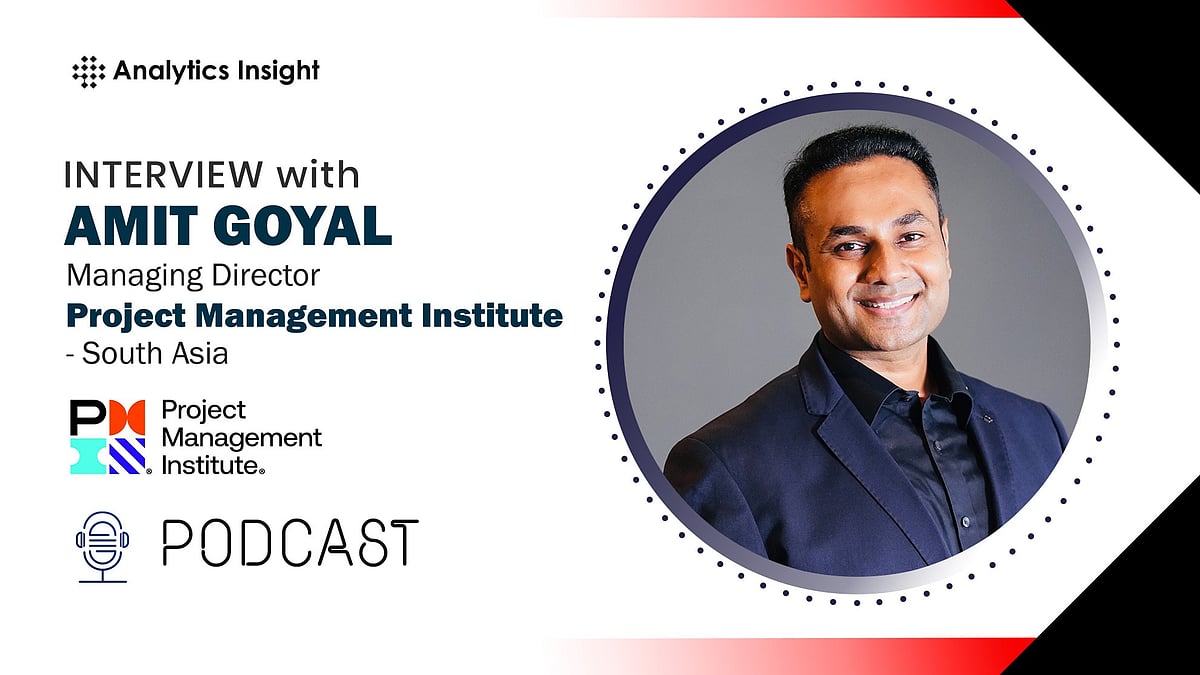

  • AI Won’t Replace Humans—Judgment, Empathy, and Leadership Remain Key, Says PMI’s Amit Goyal

    AI Won’t Replace Humans—Judgment, Empathy, and Leadership Remain Key, Says PMI’s Amit Goyal

    Artificial intelligence is transforming industries at an unprecedented pace, automating routine tasks, accelerating decision-making, and reshaping how businesses operate. Yet even as technological innovation surges, industry leaders emphasize that technology alone cannot define the future of work. Human judgment, creativity, empathy, leadership, and adaptability remain indispensable for organizations adopting intelligent technologies.

    In the latest episode of the Analytics Insight Podcast, host Priya Dialani speaks with Amit Goyal, Managing Director of the Project Management Institute (PMI) for South Asia, about why humans—not technology—will ultimately determine AI’s success. Goyal shares insights on the human side of the AI era, essential skills for professionals, workforce development shifts, and the future of education. Key excerpts from the conversation follow.

    Why AI Conversations Must Focus on People as Much as Technology

    “Technology provides options, but people make things happen,” Goyal explains. AI can write reports, analyze data, write code, and even plan projects—but it cannot grasp organizational politics, human emotions, ethics, or nuanced decision-making. Throughout history, the greatest challenge with major technological advances has never been the technology itself but its acceptance. Organizations should not fear AI replacing people; instead, they should focus on how to combine AI with human talent.

    What Gives Humans the Edge in an AI-Driven World

    The true human advantage lies in judgment, empathy, creativity, contextual understanding, and accountability. While AI processes massive datasets at incredible speed, it cannot mediate between conflicting parties, motivate teams during uncertainty, or take responsibility for tough choices. “The challenge is not to race with AI in speed, but to ask better questions, make wise decisions, and connect people toward a common purpose,” Goyal notes.

    Key Skills for the AI Economy

    Professionals who master AI technology should also build AI literacy—understanding how AI works, its benefits, and its limitations. Beyond technical knowledge, project management, communication, critical thinking, flexibility, and a commitment to continuous learning are essential. In a rapidly evolving tech landscape, success belongs to those who learn fast and collaborate effectively with AI, not those who claim to have all the answers.

    Preparing the Workforce for AI

    Organizations must shift from annual training programs to continuous learning as a core strategic element. Adopting AI should go beyond providing new tools; it must include employee training aimed at achieving practical business outcomes, improving customer experience, reducing risks, and boosting productivity. “The successful application of AI won’t be about owning the latest technology, but about training competent people,” Goyal emphasizes.

    Evolving Education for the AI Era

    Education systems should move from exam-driven models to producing practical, job-ready professionals. Real-world experience, industry collaboration, teamwork, project implementation, ethical considerations, and problem-solving must complement theoretical knowledge. AI can provide instant access to information, but learners need to apply that knowledge practically. The focus should be on employability and practice-oriented learning.

    The One Human Skill AI Will Never Replace

    Decision-making will become the most critical ability over the next decade, Goyal predicts. AI can interpret data, present options, and offer confident answers, but it cannot own its decisions. Human judgment will be indispensable when data is incomplete, time is limited, and difficult choices must be made. “Those who succeed will not only master AI but also know when to accept or reject its suggestions and rely on their own judgment,” he concludes.

    The full discussion is available on the Analytics Insight Podcast.

  • Top Notion AI Automations for Maximum Productivity in 2026

    Top Notion AI Automations for Maximum Productivity in 2026

    Notion AI has evolved from a simple note-taking tool into a full-fledged productivity platform that automates writing, meetings, task management, and knowledge organization. The most effective automations reduce repetitive work while seamlessly integrating into existing workflows. Choosing the right automation based on frequency and impact helps teams improve efficiency without adding unnecessary complexity.

    Key Notion AI Automations to Implement

    Draft Generation from Rough Notes

    Turning a scattered bullet list into a structured draft is one of the most reliable time-savers in Notion AI. A writer feeds in fragments from a call or brainstorm, and the tool returns a working draft with logical flow, ready for editing. The real gain is removing the blank-page delay that stalls most drafting work before it starts.

    Meeting-to-Decision Summaries

    A meeting produces value only if its outcomes survive past the call. Notion AI’s Meeting Notes feature converts a transcript into a short record of what was decided, the discussion outcomes, and the responsible stakeholders, without creating executable tasks. This keeps meeting output distinct from execution tracking.

    Task and Priority Generation from Requests

    Incoming requests from chat, email, or meeting records can be converted directly into prioritized tasks. The automation infers intent from the request, prioritizes based on workspace context, and places the item into an existing workflow. Unlike meeting summaries, this one moves work forward rather than capturing what was agreed.

    Recurring Workflow Templates

    Some tasks repeat on a schedule: weekly reports, monthly reviews, and recurring check-ins. Notion AI can generate these from a template automatically instead of a manual rebuild each cycle. This automation is specifically designed for predictable, repeating work.

    Database Metadata and Property Automation

    As a workspace grows, databases accumulate inconsistent tagging and empty properties. Notion AI’s Autofill feature generates metadata, applies tags, and fills properties in bulk, keeping a knowledge base searchable without manual upkeep. Catching near-duplicate entries may still require a workspace automation layered on top.

    Workspace-Wide Q&A and Search

    Notion AI’s Q&A and Enterprise Search features turn scattered pages into a queryable record, citing the source pages behind each answer. Instead of opening a dozen project pages to find a past decision, a team member can ask what was agreed with a specific client last quarter. This removes the manual archaeology that eats into project ramp-up time. Enterprise Search is available on Business and Enterprise plans.

    Cross-Tool Automation with Custom Agents

    A custom agent set to monitor a Slack channel, filtered by keyword, can turn a client issue thread into a Notion task on its own, without a prompt from anyone. That task lands in the relevant project database, and the agent can be configured to generate scheduled status updates from completed and pending items. The value sits in the chain running unattended, on a trigger, without anyone retyping information between tools. Custom Agents are available on Business and Enterprise plans and run on Notion Credits (an add-on cost).

    Final Thought

    The next shift in workspace AI is less about adding features and more about making retrieval and cross-tool memory the default rather than an add-on. As more of a team’s communication, documents, and decisions live inside a connected system, the automations that matter will be the ones quietly keeping that system coherent. Teams that treat automation as infrastructure rather than a novelty will be the ones still running the same workflows, largely unchanged, regardless of which AI platform becomes dominant.

    Frequently Asked Questions

    What are the best Notion AI automations for productivity in 2026?

    The best Notion AI automations include meeting summaries, content drafting, task generation, database tagging, recurring workflow templates, and AI-powered knowledge search. These features help reduce repetitive work and improve daily productivity.

    How does Notion AI improve productivity?

    Notion AI improves productivity by automating tasks such as writing, summarizing documents, organizing notes, extracting action items, and managing project information. This allows users to spend more time on strategic work and less on manual tasks.

    Can Notion AI automate task management?

    Yes. Notion AI can convert meeting notes into actionable tasks, help prioritize work, generate project updates, and support recurring workflows. Reviewing AI-generated outputs before assigning tasks is still recommended.

    Does Notion AI integrate with other productivity tools?

    Yes. Notion integrates with tools such as Slack, email platforms, CRM software, and automation services like Zapier and Make. These integrations create connected workflows that improve collaboration and efficiency.

    Is Notion AI suitable for teams and individual users?

    Yes. Notion AI supports both individual and team productivity by organizing knowledge, summarizing meetings, managing documentation, and keeping projects on track. It helps teams maintain consistency while reducing administrative effort.

  • Essential Statistics Reference for Data Scientists: Key Formulas and Concepts for 2026

    Essential Statistics Reference for Data Scientists: Key Formulas and Concepts for 2026

    Why Statistics Still Matters in Data Science

    Statistics remains the backbone of data science. From machine learning models to business experiments, every decision involves uncertainty. This cheat sheet distills the most frequently used formulas, tests, and interpretation rules into a practical reference for modern data scientists.

    Descriptive Statistics at a Glance

    The mean is the sum of all observations divided by the count. It works best for symmetric data but can be skewed by outliers. The median is the middle value and is more robust for skewed variables like income or delivery times.

    Variance measures the average squared deviation from the mean, while standard deviation expresses spread in the original unit. A low standard deviation means data points are tightly clustered; a high one indicates wider variability.

    For roughly normal data, the empirical rule holds: about 68% of values fall within one standard deviation, 95% within two, and 99.7% within three.

    Probability Essentials

    Conditional probability is the likelihood of event A given B: P(A|B) = P(A ∩ B) / P(B). Bayes’ theorem updates prior beliefs with new evidence, making it invaluable for fraud detection, medical diagnosis, and spam filtering. Expected value is the probability-weighted average of outcomes, helping compare decisions under uncertainty.

    Sampling and Confidence Intervals

    A good sample is unbiased and representative. Larger sample sizes reduce the standard error (SE = SD / √n). A 95% confidence interval is often estimated as sample mean ± 1.96 × SE. Remember: it reflects the method’s long-run accuracy, not the probability that a specific interval contains the true parameter.

    Hypothesis Testing Simplified

    Start with a null hypothesis (no effect) and an alternative (the claim). A p-value below 0.05 is commonly called significant, but it doesn’t measure effect size or the probability the null is true. Always pair p-values with confidence intervals and practical significance.

    Use a t-test for two means, ANOVA for three or more, chi-square for categorical relationships, and non-parametric tests when assumptions fail.

    Correlation and Regression

    Pearson correlation ranges from -1 to +1, measuring linear association—not causation. Linear regression predicts a target from predictors, with metrics like R², adjusted R², MAE, MSE, and RMSE. Always check residuals for patterns, heteroscedasticity, and influential outliers.

    Classification Metrics That Matter

    Accuracy alone can mislead, especially with imbalanced data. Focus on precision, recall, specificity, F1-score, and ROC-AUC. For rare-event problems like fraud, precision-recall curves give a clearer picture than accuracy.

    Conclusion

    Statistics equips data scientists to summarize data, quantify uncertainty, and distinguish signal from noise. By choosing the right method and looking beyond p-values, you build more reliable models and make better decisions.

    Frequently Asked Questions

    Why is statistics important in data science?

    Statistics helps understand datasets, identify patterns, and quantify uncertainty. It underpins model evaluation, experimentation, and evidence-based decisions.

    What is the difference between descriptive and inferential statistics?

    Descriptive statistics summarize data (mean, SD), while inferential statistics use samples to draw conclusions about a population.

    When should a data scientist use hypothesis testing?

    When determining if observed differences are significant—common in A/B testing, product experiments, and model validation.

    Why are precision and recall often preferred over accuracy?

    Accuracy can be misleading in imbalanced datasets. Precision and recall show how well a model identifies positive cases while minimizing false predictions.

    Which statistical concepts should every data scientist master?

    Descriptive stats, probability, sampling, confidence intervals, hypothesis testing, correlation, regression, and classification metrics are foundational.

  • 10 Women AI Entrepreneurs Redefining the Tech Landscape

    10 Women AI Entrepreneurs Redefining the Tech Landscape

    The artificial intelligence industry is being transformed by visionary female leaders who are driving innovation, safety, and ethical practices. Here are ten entrepreneurs whose work is shaping the future of AI globally.

    1. Mira Murati – Former OpenAI CTO and founder of Thinking Machines Lab, advancing next-generation AI with a focus on collaboration and practical innovation.
    2. Fei-Fei Li – Co-founder of World Labs, pioneering spatial intelligence research while championing human-centered AI through academia and entrepreneurship.
    3. Daniela Amodei – Co-founder and president of Anthropic, developing safe and reliable AI systems with an emphasis on responsible deployment.
    4. Joelle Pineau – Vice President of AI Research at Meta, leading open-source AI, machine learning, and responsible research initiatives.
    5. Rana el Kaliouby – Co-founder of Affectiva, revolutionizing emotion recognition technology for automotive safety, healthcare, and customer experience.
    6. Aicha Evans – CEO of Zoox, steering autonomous mobility innovation by integrating AI, robotics, and self-driving technologies.
    7. Dileep George – Co-founder of Vicarious AI, building intelligent machines inspired by human cognition to tackle complex reasoning and automation.
    8. Suchi Saria – Founder of Bayesian Health, applying AI to predictive healthcare to help hospitals identify patient risks and improve outcomes.
    9. Rumman Chowdhury – Founder of Humane Intelligence, advancing responsible AI through independent evaluations, safety testing, and ethical governance.
  • NYT Mini Crossword Answers for July 31, 2026: Live and Learn Puzzle Solved

    NYT Mini Crossword Answers for July 31, 2026: Live and Learn Puzzle Solved

    The New York Times Mini Crossword for July 31, 2026, offers a cleverly linked set of clues built around the phrase “Live and Learn.” This edition mixes references from gaming, sports, baseball, and a well-known mustard brand, making it a quick yet engaging daily challenge. Below, you’ll find every answer along with simple explanations for each clue.

    Today’s Mini Crossword Clues and Answers

    Across

    1-Across: With 8-Across and 1-Down, grow from your own mistakes — LIVE
    Explanation: This word starts the famous saying “Live and Learn.”

    5-Across: Video game section — LEVEL
    Explanation: A level is one stage of a video game before moving to the next one.

    6-Across: Figure skating duos — PAIRS
    Explanation: Pair skating includes two skaters performing together.

    7-Across: ___ Poupon (mustard brand) — GREY
    Explanation: Grey Poupon is a popular mustard brand known around the world.

    8-Across: See 1-Across — AND
    Explanation: This word joins the connected phrase at the top of the puzzle.

    Down

    1-Down: See 1-Across — LEARN
    Explanation: Together with LIVE and AND, this finishes the saying “Live and Learn.”

    2-Down: Like the outfield walls of Wrigley Field — IVIED
    Explanation: Wrigley Field is famous for its walls covered with green ivy.

    3-Down: Extremely — VERY
    Explanation: “Very” is a common word that means “extremely.”

    4-Down: Letters capitalized in this clue — ELS
    Explanation: The clue hides the answer by using the capital letters “L.”

    5-Down: Sports org. for Nelly Korda — LPGA
    Explanation: Nelly Korda plays on the LPGA, the top women’s professional golf tour.

    A Fun Mix of Easy and Clever Clues

    Today’s Mini Crossword keeps the puzzle short but interesting. The linked phrase “Live and Learn” makes the opening clues more enjoyable because each answer depends on another. The puzzle also includes clues from sports, gaming, famous brands, and general knowledge. Some answers, like VERY and LEVEL, are easy to spot. Others, such as ELS and IVIED, need a closer look. This balance makes the crossword fun for both new and regular players.

    The Mini Crossword continues to be one of the most popular daily games because it offers a quick challenge without taking too much time. A few minutes each day is enough to enjoy a fresh puzzle and keep the mind active.

    Final Words

    Today’s NYT Mini Crossword delivers another enjoyable daily challenge with a smart mix of connected clues and familiar words. The opening phrase “Live and Learn” gives this puzzle its unique touch, while the remaining clues add variety with references to sports, games, brands, and famous places. NYT Games brings a new Mini Crossword every day, so another fresh puzzle with new clues and answers awaits tomorrow. Whether the goal is to keep a winning streak alive or simply enjoy a quick brain workout, the next crossword is always just a day away.

  • NYT Connections Puzzle #1146: Hints and Answers for July 31, 2026

    NYT Connections Puzzle #1146: Hints and Answers for July 31, 2026

    The NYT Connections puzzle for July 31, 2026, delivers another enjoyable mix of logic, wordplay, and hidden relationships. Today’s grid features categories inspired by construction, Super Mario characters, fruit-based word twists, and playful prefixes, making it a balanced challenge for both new and experienced players. If you’re stuck, this guide includes spoiler-free hints, category clues, and the complete answers to help you solve the puzzle with confidence.

    Hints for July 31, 2026

    NYT experts rate the Connections puzzles out of 5 to hint at the difficulty level. Today’s one is rated 2.8 out of 5. Players’ personal ratings may differ, but today’s themes, according to the experts, seem easy to solve. For those struggling to figure it out, here are the hints to make the process easier:

    • Easiest Group (Yellow): Today’s yellow group words are about building something.
    • Moderate Group (Green): If you are fond of Nintendo games, these terms are extremely familiar to you.
    • Challenging Group (Blue): Think of fruits with an additional letter.
    • Most Difficult Group (Purple): To find these words, find words that start with fun words.

    Answers for July 31, 2026

    Solvers must have reached near the themes of today’s Connections with the above hints, but if you are still confused, here are the solutions:

    • Yellow Category (CONSTRUCT): FASHION, MODEL, MOLD, SHAPE
    • Green Category (SUPER MARIO FIGURES): DINOSAUR, MUSHROOM, PLUMBER, PRINCESS
    • Blue Category (FRUITS PLUS STARTING LETTER): DAPPLE, JDATE, SLIME, SPEAR
    • Purple Category (STARTING WITH MERRIMENTS): CHEERIOS, FUNGUS, GLEEK, JOYSTICK

    These are the four categories for today’s puzzle, and hopefully, most players have guessed the word sets without the answer. Congratulations to all who have solved it!

    Previous Days’ Answers of NYT Connections

    If you have solved today’s puzzle but missed out on a few of the week’s, below are the answers to some of the previous days’ NYT Connections:

    • July 28, 2026 (Puzzle #1143)
    • July 16, 2026 (Puzzle #1131)

    Final Thoughts

    NYT Connections is tricky. That’s the most attractive part of this puzzle as well. This puzzle appeals to those who love challenges. Unlike other puzzles, this one offers four different themes every day, making it both complicated and exciting. These themes never get repeated. Therefore, the solutions require a solid vocabulary to identify connections between words.

  • Mondo Robotics Unveils Beni: The AI Camera Robot Revolutionizing Content Creation

    Mondo Robotics Unveils Beni: The AI Camera Robot Revolutionizing Content Creation

    Mondo Robotics has introduced Beni, a new AI-powered camera robot designed to capture smooth, professional-quality footage without the need for a dedicated camera operator. This innovative device is set to transform the way content creators, filmmakers, vloggers, and streamers produce videos.

    AI-Powered Subject Tracking

    Beni leverages advanced artificial intelligence to recognize subjects, follow their movements with precision, and maintain perfect framing throughout every recording session. This ensures that the subject remains the focal point of the video, even in dynamic environments.

    Designed for Creators

    With Beni, content creators can produce high-quality videos with significantly less effort and setup time. The robot is specifically tailored to meet the needs of modern creators, allowing them to focus on their content rather than technical camera operations.

    Smart Camera Movements

    Beni automatically adjusts camera angles, movement speed, and framing, enabling users to capture cinematic footage without requiring advanced filming experience. This smart automation makes professional-grade videography accessible to everyone.

    Hands-Free Operation

    During recording sessions, users can concentrate on presenting, acting, or performing while Beni independently handles camera movement and subject tracking. This hands-free operation enhances productivity and creative freedom.

    Compact and Portable Design

    Beni’s lightweight and compact design makes it easy to transport between studios, homes, outdoor locations, and event spaces. This portability ensures flexible content creation across various settings.

    Versatile Applications

    Beyond traditional content creation, Beni supports a wide range of uses, including live events, interviews, product showcases, educational videos, and business presentations. Its smart automation capabilities make it a valuable tool for professionals in multiple fields.

    Saving Time for Creators

    Automated filming with Beni reduces the need for repeated retakes and minimizes manual adjustments, speeding up the production process. Creators can publish content much faster, increasing their output and efficiency.

    The Future of Filming

    Beni highlights the potential of AI-powered robotics to reshape video production, making professional camera work more accessible and affordable for creators everywhere. As this technology evolves, it promises to democratize filmmaking and open new creative possibilities.

  • Galaxy S26 Ultra: 8 Pro Tips for Smoother Lens Switching in 2026

    Galaxy S26 Ultra: 8 Pro Tips for Smoother Lens Switching in 2026

    Capturing professional-quality video on the Samsung Galaxy S26 Ultra requires smooth transitions between its multiple lenses. If you’ve experienced lag or hesitation when switching between the ultra-wide, wide, and telephoto cameras, these practical tweaks will help you achieve fluid, cinematic results. Follow this guide to optimize your camera performance.

    1. Enable Camera Assistant

    Samsung’s Camera Assistant app gives you advanced controls to fine-tune lens switching behavior. Download it from the Galaxy Store, then enable options like “Auto Lens Switching” and adjust transition speed for a smoother experience.

    2. Update to the Latest Software

    Always install the newest One UI update. Samsung regularly releases camera optimizations that improve lens switching logic and reduce latency. Check for updates in Settings > Software Update.

    3. Use Auto Lens Switching

    Let the camera automatically select the best lens for each scene. This feature intelligently balances focal length and lighting conditions, reducing manual switching errors and making transitions seamless.

    4. Disable Unnecessary Camera Features

    Turn off features like Scene Optimizer, Super Steady, or HDR Auto when you don’t need them. These add processing overhead that can delay lens changes. Keep your camera app lean for faster performance.

    5. Record in the Right Resolution

    Choosing the appropriate video resolution helps the phone switch lenses more efficiently. For general use, 4K at 30fps offers a good balance of quality and smooth transitions. Avoid 8K unless necessary, as it can tax the processor.

    6. Avoid Extreme Low Light

    Lens switching performs best in well-lit environments. In low light, the camera may struggle to focus and switch quickly. Ensure adequate lighting for accurate focusing and smoother transitions.

    7. Keep Camera Lenses Clean

    Dust, smudges, or fingerprints on the lenses can slow autofocus and degrade image quality, making lens transitions feel sluggish. Wipe the lenses gently with a microfiber cloth before recording.

    8. Restart the Camera App

    If you experience temporary glitches, a quick restart of the camera app often resolves them. Close the app from the recent apps menu and relaunch it. If problems persist, restart your phone.

    By following these steps, you can make your Galaxy S26 Ultra’s lens switching faster and more professional. Experiment with different settings to find what works best for your shooting style.

  • Top Crypto Assets for Your Roth IRA: Tax-Free Growth Strategies

    Top Crypto Assets for Your Roth IRA: Tax-Free Growth Strategies

    Investing in cryptocurrencies through a Roth IRA can offer substantial tax-free growth potential for your retirement. Here are the top crypto assets to consider for a Roth IRA portfolio, each with unique strengths that align with long-term investment goals.

    Bitcoin (BTC)

    Bitcoin remains the leading cryptocurrency, offering long-term growth potential, strong institutional support, and broad market acceptance for retirement-focused investors today.

    Ethereum (ETH)

    Ethereum powers decentralized applications and smart contracts, making it a strong Roth IRA choice with steady adoption and long-term growth prospects.

    Solana (SOL)

    Solana offers fast transactions, low fees, and a growing ecosystem of projects, making it an attractive cryptocurrency for long-term retirement investment portfolios.

    XRP (XRP)

    XRP focuses on cross-border payments, offering speed and efficiency while benefiting from growing institutional interest and improving regulatory clarity globally.

    Chainlink (LINK)

    Chainlink connects blockchain networks with real-world data, supporting decentralized applications while strengthening its long-term investment potential for retirement accounts.

    Avalanche (AVAX)

    Avalanche delivers scalable blockchain solutions with fast processing speeds, attracting developers and projects that support its future growth opportunities consistently.

    Cardano (ADA)

    Cardano emphasizes research-driven development, energy efficiency, and network security, making it a reliable option for patient, long-term cryptocurrency investors.

    Sui (SUI)

    Sui continues expanding through decentralized applications and growing ecosystem support, offering promising long-term potential for investors seeking emerging blockchain opportunities.

    Polkadot (DOT)

    Polkadot enables blockchain interoperability, helping different networks communicate efficiently while supporting long-term innovation and portfolio diversification within retirement investments.

    Read more stories on our website. Join our WhatsApp Channel to get the latest news, exclusives and videos on WhatsApp.