Author: vitorcherulli

  • iPhone Audio Recording in 2026: Top Settings, Apps, and Techniques for Professional Sound

    iPhone Audio Recording in 2026: Top Settings, Apps, and Techniques for Professional Sound

    Your iPhone can capture studio-quality audio with the right setup. Small adjustments can dramatically improve clarity. Whether you’re creating podcasts, interviews, or videos, these tips will help you achieve professional sound.

    Use the Voice Memos App Correctly

    Apple’s Voice Memos app records excellent-quality audio. Always select a quiet environment before starting. Hold the iPhone with the microphone facing the speaker. Review recordings immediately to catch any issues.

    Choose an External Microphone

    An external microphone delivers cleaner and richer audio than the built-in mic. Lavalier and USB-C microphones work well for interviews and content creation. They also reduce background noise significantly. It’s one of the best upgrades for creators.

    Adjust Recording Settings

    Record in lossless quality whenever possible for maximum detail. Disable unnecessary notifications to prevent interruptions. Keep Low Power Mode off during long recording sessions. Sufficient storage space also helps maintain smooth performance.

    Reduce Background Noise

    Find a quiet room with soft furnishings to minimize echo. Close windows, switch off fans, and silence nearby devices. Speak consistently at a comfortable distance from the microphone. Better surroundings produce cleaner recordings.

    Use Professional Recording Apps

    Apps like Ferrite, Dolby On, and Riverside offer advanced recording controls. They include noise reduction, editing tools, and audio enhancement features. These apps are ideal for podcasts, interviews, and professional content. They provide more flexibility than basic recording apps.

    Edit Before You Share

    Trim unnecessary sections and normalize audio volume before publishing. Remove background hiss using AI-powered editing tools if needed. Always listen through headphones to catch imperfections. A polished recording creates a more professional final result.

  • How Harshil Mathur and Razorpay Revolutionized India’s Digital Payments Ecosystem

    How Harshil Mathur and Razorpay Revolutionized India’s Digital Payments Ecosystem

    When Harshil Mathur and Shashank Kumar launched Razorpay in 2014, India’s online payment infrastructure was a mess of failed transactions, clunky integrations, and limited options for businesses trying to accept money digitally. Twelve years later, Razorpay processes over $180 billion in annualized total payment volume, has onboarded more than 12 million merchants, and filed a confidential DRHP with SEBI in June 2026, targeting a public listing valued at $5 to $6 billion. For Mathur, the journey from wireline field engineer to CEO of one of India’s most consequential fintech companies is anything but accidental.

    From Jaipur to IIT Roorkee to a Bold Bet

    Born in 1991 into a middle-class family in Jaipur, Rajasthan, Mathur developed an early fascination with technology and coding. He completed a degree in metallurgical engineering from IIT Roorkee in 2013 and joined Schlumberger as a wireline field engineer, a technically intensive role that lasted just eight months before the pull toward building something of his own won out. In December 2014, he co-founded Razorpay with Kumar around a straightforward insight: India’s businesses desperately needed a clean, developer-friendly API to accept online payments, and nothing available delivered that reliably.

    Y Combinator and the Developer-First Growth Engine

    In 2015, Razorpay got into Y Combinator’s Winter batch, one of the world’s most selective startup programs. The YC period sharpened the company’s product thinking and opened the door to early investors. Early growth was built almost entirely on developer trust; Razorpay’s clean API documentation and reliable integration made it the default payment gateway for startups, SMEs, and eventually larger enterprises. By 2020, the company had crossed the $1 billion unicorn mark. By December 2021, a $375 million Series F round valued it at $7.5 billion, backed by Peak XV Partners, Tiger Global, Ribbit Capital, Lightspeed, and Singapore’s GIC.

    Building Beyond Payments

    Mathur’s strategic ambition for Razorpay was never limited to a payment gateway. Under his leadership, the company expanded into RazorpayX, a neobanking platform now serving over 40,000 businesses with payroll, corporate cards, and connected banking; Razorpay Capital for merchant credit; and Magic Checkout, a one-click product reportedly reducing cart abandonment by 22%. In January 2026, Razorpay received RBI’s payment aggregator cross-border license, enabling transactions across 130-plus currencies in over 180 countries, and the company has established operations in Singapore and Malaysia.

    The IPO Moment

    Razorpay’s planned stock market debut is the most significant milestone on the horizon. The company filed a confidential DRHP with SEBI on June 12, 2026, targeting Rs 5,000 to Rs 6,000 crore through fresh shares and an offer for sale, with Axis Capital, Kotak Mahindra Capital, JPMorgan, and Citi appointed as lead managers. The targeted $5 to $6 billion IPO valuation is a markdown from the $7.5 billion 2021 peak, reflecting broader compression in fintech valuations and a public market that now demands profitability alongside growth. Razorpay’s FY25 revenue grew 65% to Rs 3,783 crore, though a net loss of Rs 1,209 crore, driven by ESOP costs and one-time reverse-flip tax liabilities from its 2025 domicile shift back to India, is a narrative that Mathur will need to tell convincingly to public-market investors.

    The Leader Behind the Company

    Mathur’s leadership style is widely described as product-first, technically grounded, and collaborative. He has consistently credited the broader Razorpay team and his co-founder rather than positioning himself as the singular force behind the company’s rise. He is also an active angel investor with a portfolio of over 22 companies, has been recognized on the Forbes 30 Under 30 Asia list, and has been a vocal voice in India’s startup community on digital policy issues. What makes his story particularly resonant is the consistency of the original thesis: building reliable, developer-first financial infrastructure for Indian businesses was not a fashionable idea in 2014. A decade on, it has become the foundation of how a significant share of India’s digital economy moves money.

    Why This Matters

    India’s digital economy depends on reliable payment infrastructure, and entrepreneurs like Harshil Mathur have played a significant role in building it. His journey demonstrates how solving a fundamental business problem with technology can create lasting impact, inspire future founders, and accelerate innovation across an entire industry.

  • Top Critical Thinking Courses and Certifications to Boost Your Analytical Skills in 2026

    Top Critical Thinking Courses and Certifications to Boost Your Analytical Skills in 2026

    Critical thinking is an essential skill for professionals and students alike, enabling better decision-making, problem-solving, and logical reasoning. In 2026, a wide range of online courses and certifications are available to help you sharpen these abilities. Below, we highlight the most popular and effective options from leading platforms.

    1. Coursera – Critical Thinking Skills for University Success

    This course builds strong analytical and reasoning abilities through practical exercises and real-world scenarios. Learners improve logical thinking, evidence evaluation, and structured decision-making. Suitable for students and professionals, it also enhances communication and academic performance while providing a recognized certificate upon successful completion.

    2. edX – Critical Thinking and Problem Solving

    Offered by leading universities, this certification focuses on identifying assumptions, evaluating evidence, and solving complex problems systematically. Interactive lessons and practical case studies help learners strengthen workplace decision-making. The flexible online format makes it suitable for busy professionals seeking career advancement through structured learning.

    3. LinkedIn Learning – Critical Thinking for Better Judgment

    This concise certification teaches professionals how to recognize cognitive biases, analyze information objectively, and make better decisions. Expert instructors use workplace examples to explain practical thinking strategies. Learners receive a LinkedIn Learning certificate that can be showcased on professional profiles to demonstrate valuable analytical skills.

    4. FutureLearn – Logical and Critical Thinking

    FutureLearn’s course introduces logical reasoning, argument analysis, and evidence-based decision-making. Through discussions and practical exercises, learners improve their ability to evaluate claims and develop balanced conclusions. The course is ideal for educators, students, and professionals aiming to strengthen analytical thinking in everyday situations.

    5. Udemy – Critical Thinking Masterclass

    This comprehensive masterclass combines lectures, quizzes, and practical exercises to improve logical reasoning and independent thinking. Participants learn how to identify flawed arguments, avoid common mental biases, and solve challenging problems. Lifetime course access allows learners to revisit concepts whenever they need a refresher.

    6. Skillshare – Critical Thinking Essentials

    Skillshare offers beginner-friendly lessons designed to improve analytical thinking and creative problem-solving. The course focuses on questioning assumptions, evaluating multiple viewpoints, and making informed decisions. Short video lessons and project-based learning make it accessible for entrepreneurs, students, freelancers, and lifelong learners seeking practical skills.

    7. Harvard Online – Leadership and Critical Thinking

    Harvard Online integrates critical thinking with leadership development, helping professionals evaluate complex business challenges and make strategic decisions confidently. Through case studies and interactive learning, participants strengthen reasoning, communication, and problem-solving abilities. The certification carries strong recognition among employers and leadership-focused organizations.

    Whether you’re a student preparing for academic success or a professional aiming to advance your career, these critical thinking courses offer valuable skills that are in high demand. Choose the one that best fits your learning style and goals.

  • 7 Free Digital Marketing Tools That Help Small Businesses Grow Faster

    7 Free Digital Marketing Tools That Help Small Businesses Grow Faster

    Free digital marketing tools help small businesses improve visibility, strengthen customer engagement, and measure marketing performance without significant upfront costs. Choosing one reliable tool for each core function is more effective than managing dozens of apps. Consistently using them as a connected workflow creates sustainable long-term growth.

    Most small businesses do not struggle with a weak product. They struggle with visibility, memory, and follow-up. Customers cannot buy from a business they never find, and they rarely return to one that never reaches back out. Free digital marketing tools solve exactly this gap, provided the right tool gets matched to the right problem instead of piling up unused software.

    The gap between a business that grows steadily and one that stalls rarely comes down to spend. It comes down to whether a handful of free tools get used consistently, in a way that actually connects visibility, retention, and measurement instead of treating each as a separate task.

    What Separates a Useful Tool From a Distraction

    A free tool earns its place only if it clears three tests. It should solve a real bottleneck, not add a nice-to-have feature. Its free tier should stay usable for months, not function as a disguised trial. And it should take under an hour to learn well enough to use daily. Any tool failing these tests adds more mental clutter than value, and a half-used app often costs more attention than it saves.

    Getting Found: Local Search and Website Visibility

    For local businesses, Google Business Profile carries more weight than almost any other free tool available. It places a business on Maps, gathers reviews, and answers “Who is open nearby?” without requiring a website visit at all. The listing stays free indefinitely, with no hidden tier.

    Google Search Console adds a second layer for businesses running a website. It reveals which search terms already bring visitors in, flags broken pages, and shows current rankings. This tool only becomes useful once a website has some traffic to measure, so early-stage sites should not expect much insight from it in the first weeks.

    Google Trends rounds out this group, though only as a directional signal. It shows whether interest in a topic is rising or falling rather than an exact search volume, which makes it useful for spotting shifts rather than sizing markets.

    Building Credibility Through Design

    A business with inconsistent, rough visuals reads as unstable even when the underlying product is strong. Canva’s free tier includes enough templates and brand-kit basics to keep social posts and promotional materials visually consistent, and that consistency often gets mistaken for reliability by new customers forming a first impression.

    Premium fonts, select templates, and background removal sit behind Canva’s paid tier, so the free version works well as a launch tool rather than a permanent solution. As a business grows past its first year, most owners find the paid upgrade pays for itself through faster turnaround alone.

    For written content, tools such as ChatGPT or Claude help draft captions and email copy faster, though every draft still needs a human pass for accuracy and brand voice before it goes out. Treating these tools as a starting draft rather than a finished product keeps the writing sounding like the business rather than a generic template.

    Turning First-Time Buyers Into Repeat Customers

    Social platforms control their own algorithms, and reach on them can shift overnight. An email list belongs to the business that built it, and that ownership explains why email marketing consistently delivers one of the strongest returns among digital channels, particularly for nurturing repeat purchases.

    Mailchimp’s free plan covers a few hundred contacts along with basic automation, enough to run welcome emails and a monthly newsletter without added cost. Brevo offers a strong alternative for businesses wanting more automation without hitting a contact ceiling quite as fast. Either platform becomes more restrictive as a list grows past a few thousand contacts, so planning for that shift early avoids a rushed migration later.

    Businesses juggling leads and past customers across scattered spreadsheets often benefit from adding HubSpot’s free CRM tier here as well, since it keeps contact history in one organized place instead of spread across inboxes.

    Staying Visible Without Constant Manual Posting

    Buffer’s free plan allows a handful of social channels to get queued in advance rather than posted each day manually. This structure pushes content planning into batches, which tends to produce more consistent messaging than reacting in the moment. The tradeoff comes through account and post limits on the free tier, making it best suited to businesses running two or three platforms rather than five.

    Measuring What Actually Works

    Marketing without measurement amounts to a guess dressed up as a decision. Google Analytics 4 tracks where visitors originate, what they do once they arrive, and which channels lead to actual conversions rather than surface-level clicks. Many businesses using it discover that search and email drive more converting traffic than social media ever did, a finding that reshapes where future effort goes. GA4 carries a learning curve and an interface that takes some getting used to, so pairing it with Search Console gives a fuller picture than either tool alone.

    Connecting the Tools Into One System

    Used separately, these remain just apps. Combined, they form a loop. Google Trends flags what people care about. Canva turns that insight into a graphic or post. Buffer schedules it consistently. Mailchimp follows up with anyone who is engaged. GA4 and Search Console then reveal what converted, feeding directly back into the next round of content. Running this loop weekly, even loosely, produces more growth than five disconnected tools ever could.

    Free tools do not replace a marketing strategy. They allow a business to execute one without needing a budget first. The businesses gaining the most from this approach are not the ones running the most software. They are the ones building a simple, repeatable system and improving it steadily over time.

    Final Thought

    The next shift in small business marketing will not come from another new app. It will come from businesses treating their existing free tools as one connected system rather than a scattered toolkit, turning what used to feel like overhead into a genuine competitive edge.


  • Top Free Digital Marketing Tools for Small Business Growth in 2026

    Top Free Digital Marketing Tools for Small Business Growth in 2026

    Free digital marketing tools help small businesses improve visibility, strengthen customer engagement, and measure marketing performance without significant upfront costs. Choosing one reliable tool for each core function is more effective than managing dozens of apps. Consistently using them as a connected workflow creates sustainable long-term growth.

    What Separates a Useful Tool From a Distraction

    A free tool earns its place only if it clears three tests. It should solve a real bottleneck, not add a nice-to-have feature. Its free tier should stay usable for months, not function as a disguised trial. And it should take under an hour to learn well enough to use daily. Any tool failing these tests adds more mental clutter than value.

    Getting Found: Local Search and Website Visibility

    For local businesses, Google Business Profile carries more weight than almost any other free tool. It places a business on Maps, gathers reviews, and answers “Who is open nearby?” without requiring a website visit. The listing stays free indefinitely, with no hidden tier.

    Google Search Console adds a second layer for businesses running a website. It reveals which search terms already bring visitors in, flags broken pages, and shows current rankings. This tool becomes useful once a website has some traffic to measure.

    Google Trends rounds out this group as a directional signal. It shows whether interest in a topic is rising or falling, making it useful for spotting shifts rather than sizing markets.

    Building Credibility Through Design

    Inconsistent, rough visuals can make a business appear unstable. Canva’s free tier includes enough templates and brand-kit basics to keep social posts and promotional materials visually consistent. Premium features sit behind Canva’s paid tier, so the free version works well as a launch tool.

    For written content, tools like ChatGPT or Claude help draft captions and email copy faster, though every draft still needs a human pass for accuracy and brand voice before it goes out.

    Turning First-Time Buyers Into Repeat Customers

    Social platforms control their own algorithms, and reach can shift overnight. An email list belongs to the business that built it, making email marketing one of the strongest channels for nurturing repeat purchases.

    Mailchimp’s free plan covers a few hundred contacts along with basic automation. Brevo offers a strong alternative for businesses wanting more automation without hitting a contact ceiling as quickly. Businesses juggling leads and past customers across scattered spreadsheets often benefit from adding HubSpot’s free CRM tier to keep contact history organized.

    Staying Visible Without Constant Manual Posting

    Buffer’s free plan allows a handful of social channels to be queued in advance, encouraging content planning in batches for more consistent messaging. The tradeoff comes through account and post limits on the free tier, making it best suited to businesses running two or three platforms.

    Measuring What Actually Works

    Marketing without measurement amounts to a guess dressed up as a decision. Google Analytics 4 tracks where visitors originate, what they do once they arrive, and which channels lead to actual conversions. Many businesses discover that search and email drive more converting traffic than social media, reshaping where future effort goes.

    Connecting the Tools Into One System

    Used separately, these remain just apps. Combined, they form a loop. Google Trends flags what people care about. Canva turns that insight into a graphic or post. Buffer schedules it consistently. Mailchimp follows up with anyone who is engaged. GA4 and Search Console reveal what converted, feeding directly back into the next round of content. Running this loop weekly, even loosely, produces more growth than five disconnected tools ever could.

    Free tools do not replace a marketing strategy. They allow a business to execute one without needing a budget first. The businesses gaining the most from this approach are not the ones running the most software. They are the ones building a simple, repeatable system and improving it steadily over time.

    Final Thought

    The next shift in small business marketing will not come from another new app. It will come from businesses treating their existing free tools as one connected system rather than a scattered toolkit, turning what used to feel like overhead into a genuine competitive edge.

    FAQs

    1. What are the best free digital marketing tools for small businesses? Some of the best include Google Business Profile, Google Analytics 4, Google Search Console, Canva, Buffer, Mailchimp, Brevo, and Google Trends.
    2. Can free digital marketing tools help a small business grow? Yes. They enable businesses to improve online visibility, create content, engage customers, and measure performance without significant upfront costs.
    3. Which free tools are best for improving SEO? Google Search Console, Google Business Profile, Google Trends, and Google Keyword Planner are among the most effective.
    4. What should I consider when choosing free marketing tools? Choose based on business goals, ease of use, free plan features, integration with workflow, and scalability.
    5. How many digital marketing tools does a small business need? Most can start with one tool for SEO, content creation, email marketing, social media scheduling, and analytics.
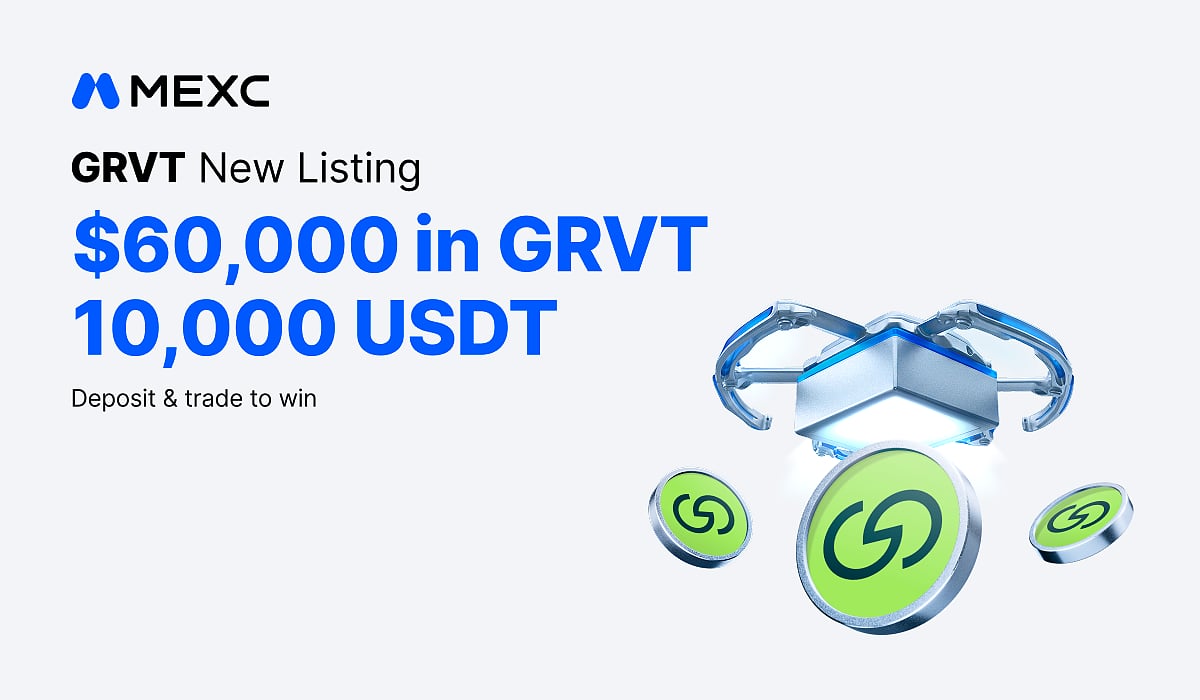
  • MEXC Lists Grvt (GRVT) Token, Launches $60,000 GRVT and $10,000 USDT Airdrop+ Event

    MEXC Lists Grvt (GRVT) Token, Launches $60,000 GRVT and $10,000 USDT Airdrop+ Event

    MEXC, a leading digital asset exchange known for its zero-fee trading model, has announced the listing of Grvt (GRVT) in its Innovation Zone. The GRVT/USDT trading pair will open at 12:00 UTC, followed by the GRVT/USDC pair at 12:20 UTC on July 30, 2026. To celebrate the listing, MEXC is launching the Grvt (GRVT) Airdrop+ event, offering a combined prize pool worth $60,000 in GRVT tokens and $10,000 in USDT futures bonuses.

    Grvt is a self-custodial on-chain wealth platform that integrates Earn, Invest, Trade, and Pay into a single user-controlled balance. Built on a custom ZKsync Validium Layer 2, it delivers CEX-grade performance. Since December 2024, Grvt has operated as the world’s first licensed perpetual decentralized exchange (DEX). The total supply of GRVT is capped at 1 billion tokens.

    The Airdrop+ event runs from July 30, 2026, 10:00 UTC to August 13, 2026, 10:00 UTC. Participants can earn rewards through three methods: deposit and trade GRVT to share $54,000 worth of GRVT, trade LIT to share $6,000 in GRVT, or trade GRVT futures to share $10,000 in futures bonuses. Full details are available on the official event page.

    This listing underscores MEXC’s commitment to providing early access to emerging digital assets. With over 40 million users across 170+ markets, MEXC offers a platform where users can trade cryptocurrencies alongside tokenized real-world assets, including U.S. stocks, ETFs, commodities, and precious metals. The exchange’s rapid listing process, extensive asset selection, industry-leading liquidity, and zero-fee model empower traders worldwide.

    Disclaimer: This content is for informational purposes only and does not constitute investment advice. Cryptocurrency investments are highly volatile. Always conduct your own research before making any financial decisions.

  • Shazam App Review: Music Recognition with Live Lyrics and Smart Discovery

    Shazam App Review: Music Recognition with Live Lyrics and Smart Discovery

    Shazam is a music recognition software that enables users to identify a song in just a few seconds through audio samples. It runs on both Android and iOS devices, providing information such as artist names, albums, lyrics, and streaming links. Additional services include music discovery, trending charts, social sharing, and synchronized lyrics.

    General Information

    • Founded in: 2020
    • Platform Support: iOS, Android, macOS, Wear OS, watchOS
    • Download: Click Here

    Main Features of Shazam

    • Identifies songs within seconds using advanced audio recognition technology.
    • Displays artist information, albums, lyrics, and related music content.
    • Provides LiveLyrics synchronized with currently playing songs in real time.
    • Offers trending music charts and personalized song history tracking.
    • Includes Auto Shazam for continuous background music recognition.

    Benefits of Shazam

    • Quickly identifies unknown songs with impressive recognition accuracy.
    • Makes discovering new artists and music simple and convenient.
    • Saves previously identified songs for future listening and reference.
    • Connects users directly to streaming services and music purchases.
    • Clean interface makes navigation simple for every type of user.

    Challenges of Shazam

    • Recognition can struggle with lesser-known independent artists.
    • Cannot identify songs when users hum or sing them.
    • Performance depends on microphone quality and background noise.
    • Advanced music details are less complete compared to competing apps.
    • Continuous Auto Shazam may drain battery life.

    Subscription Information

    Shazam offers a free version supported by advertisements. Users can recognize songs, discover music, view lyrics, and check listening history without paying—making it suitable for most everyday music lovers. Integration with streaming platforms provides quick access to full songs.

    Support Options

    • Help Center and Learning Resources: Setup guides, FAQs, troubleshooting articles, and music recognition support documentation.
    • Customer Support: Assistance for technical issues, account synchronization, app functionality, and music recognition problems.

    Conclusion

    Shazam remains one of the most effective music identification applications available today. The app offers instant song identification through its user-friendly interface. LiveLyrics and seamless integration with streaming services are among its standout features. Although it occasionally struggles with less popular songs or hummed tunes, it performs effectively overall.

  • Today’s Tech Roundup: Meta’s Privacy Challenge, Disney-Microsoft Deal, Apple’s Growth, and the AI Arms Race

    Today’s Tech Roundup: Meta’s Privacy Challenge, Disney-Microsoft Deal, Apple’s Growth, and the AI Arms Race

    Today’s top tech stories cover Zuckerberg’s Apple privacy concerns, Disney’s Microsoft shift, Apple’s strong quarter outlook, and the growing AI competition among tech giants.

    Mark Zuckerberg’s Meta is facing a new challenge as Apple tightens its privacy policies, impacting Meta’s advertising revenue. Meanwhile, Disney has made a strategic shift by partnering with Microsoft for cloud and AI services, signaling a major move in the entertainment-tech landscape.

    Apple continues to show strong growth with a promising quarterly outlook, driven by robust iPhone sales and expanding services. The AI race among tech giants is heating up, with companies like Google, Microsoft, and Meta investing heavily in generative AI and large language models.

    Stay tuned for more updates on these developing stories.

  • How to Protect Your Phone Number by Securing a WhatsApp Username: Essential Tips

    How to Protect Your Phone Number by Securing a WhatsApp Username: Essential Tips

    WhatsApp is rolling out usernames, offering a new way to protect your phone number when messaging. By reserving a unique username, you can keep your number private from new contacts. Here’s how to get started and secure your handle before someone else does.

    Reserve Your WhatsApp Username

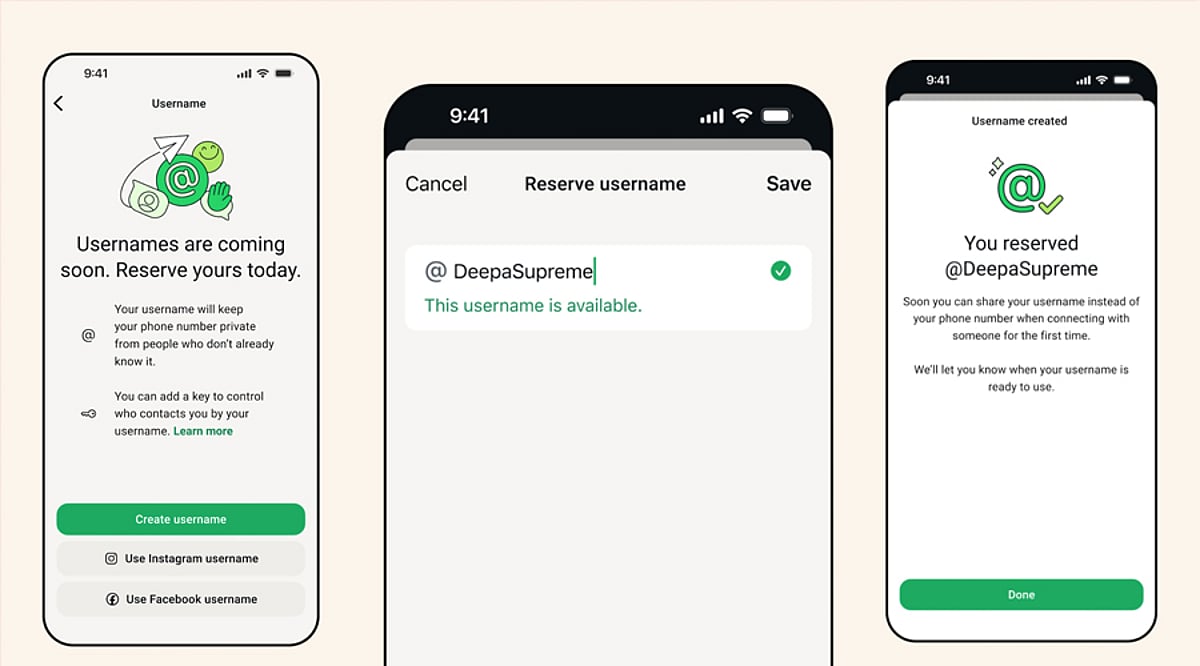
    First, update WhatsApp to the latest version. Then go to Settings > Account > Username and create a unique username between 3 and 35 characters. If your preferred handle is taken, WhatsApp may suggest similar alternatives. The feature is rolling out gradually, so it may not appear for everyone yet.

    Lock In Your Preferred Handle

    Choose a username that is easy to remember but difficult to impersonate. You can also claim the same username you already use on Instagram or Facebook if it’s eligible. Tap Save to reserve your handle before someone else takes it.

    Keep Your Phone Number Private

    Once usernames become active, people who contact you through your username won’t see your phone number unless they already have it saved. Existing contacts and users who already know your number will continue to see it, but new conversations become much more private.

    Turn On Username Key for Extra Security

    Enable the optional Username Key from the username settings. Anyone trying to contact you for the first time will need both your username and this unique key. It adds another layer of protection against spam and unwanted messages.

    Understand What Usernames Can and Can’t Do

    WhatsApp does not have a public username directory, so strangers cannot search for your account. People need to know your exact username to start a conversation. However, admins, existing contacts, and users who already know your phone number may still be able to see it where applicable.

    Strengthen Your WhatsApp Privacy

    Use a unique username instead of your full real name, enable Two-Step Verification, and regularly review your privacy settings. These small steps help protect your account from impersonation attempts and unauthorized access.

    Secure Your Identity Before It’s Taken

    Reserving your WhatsApp username early helps secure your online identity before your preferred handle is claimed. Combined with Username Key and Two-Step Verification, you can chat with new people and businesses while keeping your personal phone number private and your account more secure.