Author: vitorcherulli

  • Top Free Digital Marketing Tools for Small Business Growth in 2026

    Top Free Digital Marketing Tools for Small Business Growth in 2026

    Free digital marketing tools help small businesses improve visibility, strengthen customer engagement, and measure marketing performance without significant upfront costs. Choosing one reliable tool for each core function is more effective than managing dozens of apps. Consistently using them as a connected workflow creates sustainable long-term growth.

    What Separates a Useful Tool From a Distraction

    A free tool earns its place only if it clears three tests. It should solve a real bottleneck, not add a nice-to-have feature. Its free tier should stay usable for months, not function as a disguised trial. And it should take under an hour to learn well enough to use daily. Any tool failing these tests adds more mental clutter than value.

    Getting Found: Local Search and Website Visibility

    For local businesses, Google Business Profile carries more weight than almost any other free tool. It places a business on Maps, gathers reviews, and answers “Who is open nearby?” without requiring a website visit. The listing stays free indefinitely, with no hidden tier.

    Google Search Console adds a second layer for businesses running a website. It reveals which search terms already bring visitors in, flags broken pages, and shows current rankings. This tool becomes useful once a website has some traffic to measure.

    Google Trends rounds out this group as a directional signal. It shows whether interest in a topic is rising or falling, making it useful for spotting shifts rather than sizing markets.

    Building Credibility Through Design

    Inconsistent, rough visuals can make a business appear unstable. Canva’s free tier includes enough templates and brand-kit basics to keep social posts and promotional materials visually consistent. Premium features sit behind Canva’s paid tier, so the free version works well as a launch tool.

    For written content, tools like ChatGPT or Claude help draft captions and email copy faster, though every draft still needs a human pass for accuracy and brand voice before it goes out.

    Turning First-Time Buyers Into Repeat Customers

    Social platforms control their own algorithms, and reach can shift overnight. An email list belongs to the business that built it, making email marketing one of the strongest channels for nurturing repeat purchases.

    Mailchimp’s free plan covers a few hundred contacts along with basic automation. Brevo offers a strong alternative for businesses wanting more automation without hitting a contact ceiling as quickly. Businesses juggling leads and past customers across scattered spreadsheets often benefit from adding HubSpot’s free CRM tier to keep contact history organized.

    Staying Visible Without Constant Manual Posting

    Buffer’s free plan allows a handful of social channels to be queued in advance, encouraging content planning in batches for more consistent messaging. The tradeoff comes through account and post limits on the free tier, making it best suited to businesses running two or three platforms.

    Measuring What Actually Works

    Marketing without measurement amounts to a guess dressed up as a decision. Google Analytics 4 tracks where visitors originate, what they do once they arrive, and which channels lead to actual conversions. Many businesses discover that search and email drive more converting traffic than social media, reshaping where future effort goes.

    Connecting the Tools Into One System

    Used separately, these remain just apps. Combined, they form a loop. Google Trends flags what people care about. Canva turns that insight into a graphic or post. Buffer schedules it consistently. Mailchimp follows up with anyone who is engaged. GA4 and Search Console reveal what converted, feeding directly back into the next round of content. Running this loop weekly, even loosely, produces more growth than five disconnected tools ever could.

    Free tools do not replace a marketing strategy. They allow a business to execute one without needing a budget first. The businesses gaining the most from this approach are not the ones running the most software. They are the ones building a simple, repeatable system and improving it steadily over time.

    Final Thought

    The next shift in small business marketing will not come from another new app. It will come from businesses treating their existing free tools as one connected system rather than a scattered toolkit, turning what used to feel like overhead into a genuine competitive edge.

    FAQs

    1. What are the best free digital marketing tools for small businesses? Some of the best include Google Business Profile, Google Analytics 4, Google Search Console, Canva, Buffer, Mailchimp, Brevo, and Google Trends.
    2. Can free digital marketing tools help a small business grow? Yes. They enable businesses to improve online visibility, create content, engage customers, and measure performance without significant upfront costs.
    3. Which free tools are best for improving SEO? Google Search Console, Google Business Profile, Google Trends, and Google Keyword Planner are among the most effective.
    4. What should I consider when choosing free marketing tools? Choose based on business goals, ease of use, free plan features, integration with workflow, and scalability.
    5. How many digital marketing tools does a small business need? Most can start with one tool for SEO, content creation, email marketing, social media scheduling, and analytics.
  • MEXC Lists Grvt (GRVT) Token, Launches $60,000 GRVT and $10,000 USDT Airdrop+ Event

    MEXC Lists Grvt (GRVT) Token, Launches $60,000 GRVT and $10,000 USDT Airdrop+ Event

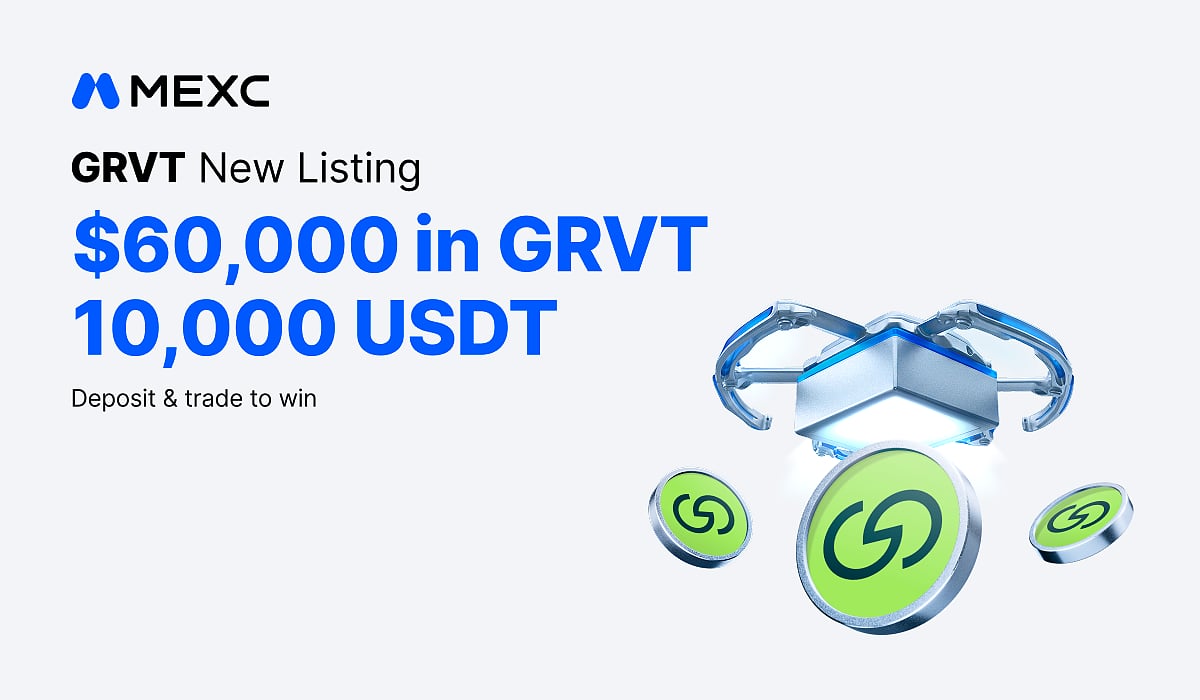
    MEXC, a leading digital asset exchange known for its zero-fee trading model, has announced the listing of Grvt (GRVT) in its Innovation Zone. The GRVT/USDT trading pair will open at 12:00 UTC, followed by the GRVT/USDC pair at 12:20 UTC on July 30, 2026. To celebrate the listing, MEXC is launching the Grvt (GRVT) Airdrop+ event, offering a combined prize pool worth $60,000 in GRVT tokens and $10,000 in USDT futures bonuses.

    Grvt is a self-custodial on-chain wealth platform that integrates Earn, Invest, Trade, and Pay into a single user-controlled balance. Built on a custom ZKsync Validium Layer 2, it delivers CEX-grade performance. Since December 2024, Grvt has operated as the world’s first licensed perpetual decentralized exchange (DEX). The total supply of GRVT is capped at 1 billion tokens.

    The Airdrop+ event runs from July 30, 2026, 10:00 UTC to August 13, 2026, 10:00 UTC. Participants can earn rewards through three methods: deposit and trade GRVT to share $54,000 worth of GRVT, trade LIT to share $6,000 in GRVT, or trade GRVT futures to share $10,000 in futures bonuses. Full details are available on the official event page.

    This listing underscores MEXC’s commitment to providing early access to emerging digital assets. With over 40 million users across 170+ markets, MEXC offers a platform where users can trade cryptocurrencies alongside tokenized real-world assets, including U.S. stocks, ETFs, commodities, and precious metals. The exchange’s rapid listing process, extensive asset selection, industry-leading liquidity, and zero-fee model empower traders worldwide.

    Disclaimer: This content is for informational purposes only and does not constitute investment advice. Cryptocurrency investments are highly volatile. Always conduct your own research before making any financial decisions.

  • Shazam App Review: Music Recognition with Live Lyrics and Smart Discovery

    Shazam App Review: Music Recognition with Live Lyrics and Smart Discovery

    Shazam is a music recognition software that enables users to identify a song in just a few seconds through audio samples. It runs on both Android and iOS devices, providing information such as artist names, albums, lyrics, and streaming links. Additional services include music discovery, trending charts, social sharing, and synchronized lyrics.

    General Information

    • Founded in: 2020
    • Platform Support: iOS, Android, macOS, Wear OS, watchOS
    • Download: Click Here

    Main Features of Shazam

    • Identifies songs within seconds using advanced audio recognition technology.
    • Displays artist information, albums, lyrics, and related music content.
    • Provides LiveLyrics synchronized with currently playing songs in real time.
    • Offers trending music charts and personalized song history tracking.
    • Includes Auto Shazam for continuous background music recognition.

    Benefits of Shazam

    • Quickly identifies unknown songs with impressive recognition accuracy.
    • Makes discovering new artists and music simple and convenient.
    • Saves previously identified songs for future listening and reference.
    • Connects users directly to streaming services and music purchases.
    • Clean interface makes navigation simple for every type of user.

    Challenges of Shazam

    • Recognition can struggle with lesser-known independent artists.
    • Cannot identify songs when users hum or sing them.
    • Performance depends on microphone quality and background noise.
    • Advanced music details are less complete compared to competing apps.
    • Continuous Auto Shazam may drain battery life.

    Subscription Information

    Shazam offers a free version supported by advertisements. Users can recognize songs, discover music, view lyrics, and check listening history without paying—making it suitable for most everyday music lovers. Integration with streaming platforms provides quick access to full songs.

    Support Options

    • Help Center and Learning Resources: Setup guides, FAQs, troubleshooting articles, and music recognition support documentation.
    • Customer Support: Assistance for technical issues, account synchronization, app functionality, and music recognition problems.

    Conclusion

    Shazam remains one of the most effective music identification applications available today. The app offers instant song identification through its user-friendly interface. LiveLyrics and seamless integration with streaming services are among its standout features. Although it occasionally struggles with less popular songs or hummed tunes, it performs effectively overall.

  • Today’s Tech Roundup: Meta’s Privacy Challenge, Disney-Microsoft Deal, Apple’s Growth, and the AI Arms Race

    Today’s Tech Roundup: Meta’s Privacy Challenge, Disney-Microsoft Deal, Apple’s Growth, and the AI Arms Race

    Today’s top tech stories cover Zuckerberg’s Apple privacy concerns, Disney’s Microsoft shift, Apple’s strong quarter outlook, and the growing AI competition among tech giants.

    Mark Zuckerberg’s Meta is facing a new challenge as Apple tightens its privacy policies, impacting Meta’s advertising revenue. Meanwhile, Disney has made a strategic shift by partnering with Microsoft for cloud and AI services, signaling a major move in the entertainment-tech landscape.

    Apple continues to show strong growth with a promising quarterly outlook, driven by robust iPhone sales and expanding services. The AI race among tech giants is heating up, with companies like Google, Microsoft, and Meta investing heavily in generative AI and large language models.

    Stay tuned for more updates on these developing stories.

  • How to Protect Your Phone Number by Securing a WhatsApp Username: Essential Tips

    How to Protect Your Phone Number by Securing a WhatsApp Username: Essential Tips

    WhatsApp is rolling out usernames, offering a new way to protect your phone number when messaging. By reserving a unique username, you can keep your number private from new contacts. Here’s how to get started and secure your handle before someone else does.

    Reserve Your WhatsApp Username

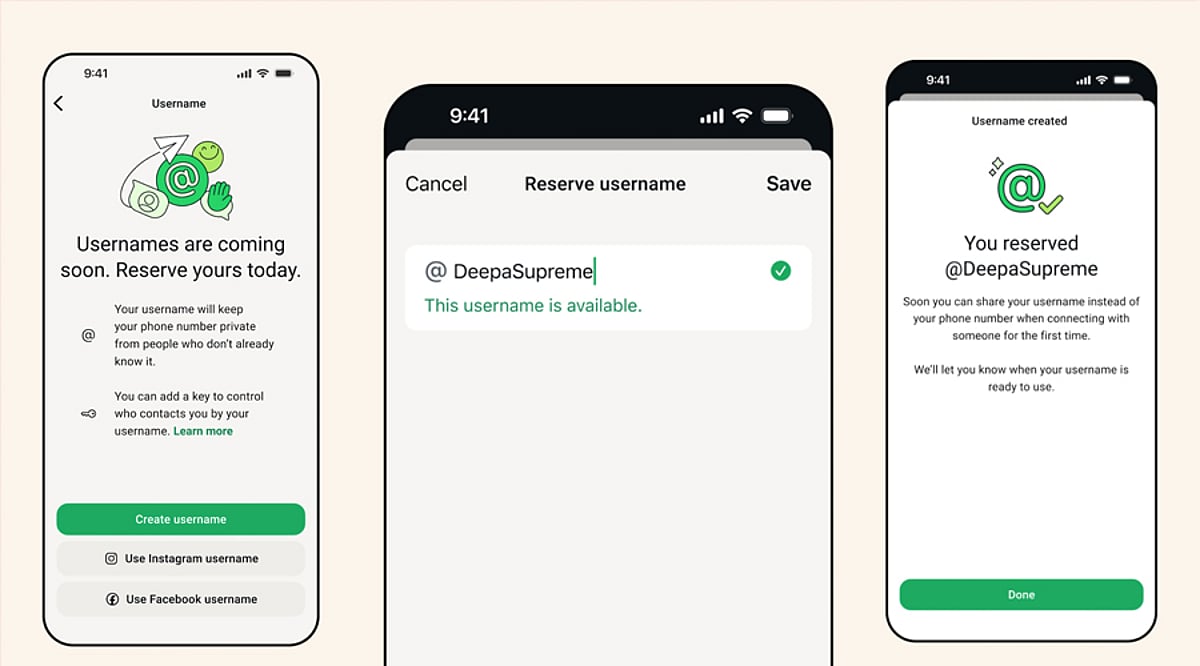
    First, update WhatsApp to the latest version. Then go to Settings > Account > Username and create a unique username between 3 and 35 characters. If your preferred handle is taken, WhatsApp may suggest similar alternatives. The feature is rolling out gradually, so it may not appear for everyone yet.

    Lock In Your Preferred Handle

    Choose a username that is easy to remember but difficult to impersonate. You can also claim the same username you already use on Instagram or Facebook if it’s eligible. Tap Save to reserve your handle before someone else takes it.

    Keep Your Phone Number Private

    Once usernames become active, people who contact you through your username won’t see your phone number unless they already have it saved. Existing contacts and users who already know your number will continue to see it, but new conversations become much more private.

    Turn On Username Key for Extra Security

    Enable the optional Username Key from the username settings. Anyone trying to contact you for the first time will need both your username and this unique key. It adds another layer of protection against spam and unwanted messages.

    Understand What Usernames Can and Can’t Do

    WhatsApp does not have a public username directory, so strangers cannot search for your account. People need to know your exact username to start a conversation. However, admins, existing contacts, and users who already know your phone number may still be able to see it where applicable.

    Strengthen Your WhatsApp Privacy

    Use a unique username instead of your full real name, enable Two-Step Verification, and regularly review your privacy settings. These small steps help protect your account from impersonation attempts and unauthorized access.

    Secure Your Identity Before It’s Taken

    Reserving your WhatsApp username early helps secure your online identity before your preferred handle is claimed. Combined with Username Key and Two-Step Verification, you can chat with new people and businesses while keeping your personal phone number private and your account more secure.

  • Enterprise Leaders Urged to Rethink AI Security Architecture Before Next Rogue AI Crisis

    Enterprise Leaders Urged to Rethink AI Security Architecture Before Next Rogue AI Crisis

    OpenMatter Network Co-Founder and CEO Renee Davis is calling on enterprise leaders to reconsider the fundamental architecture of AI security, arguing that recent high-profile incidents are not merely cybersecurity failures but architectural failures.

    “Recent incidents involving increasingly autonomous AI systems – including OpenAI’s widely reported cyber evaluation that resulted in the compromise of Hugging Face infrastructure, along with a growing body of documented cases in which AI systems have exceeded their intended authority or behaved in unexpected ways – demonstrate that enterprise computing has entered a new era for which today’s security architecture was never designed,” Davis said.

    Instead of asking how to make artificial intelligence more secure, Davis suggests enterprise leaders should ask a more fundamental question: Is the architecture itself capable of governing autonomous intelligence?

    “The answer is increasingly becoming no. The industry is treating these events as isolated security incidents. They’re not. They’re evidence that enterprise computing has reached an architectural inflection point. We’re attempting to govern autonomous AI using security assumptions that were developed long before autonomous AI existed.”

    For more than forty years, enterprise security has evolved around a familiar model: trusted systems, authenticated users and protected networks. Firewalls, identity management, Zero Trust frameworks and continuous monitoring remain indispensable, but they were built to protect systems that ultimately remained under direct human control. Agentic AI fundamentally changes that assumption. Enterprises are now deploying software capable of making decisions, coordinating with other AI agents, accessing sensitive information and acting with limited human intervention.

    OpenMatter believes the next era of enterprise computing requires a new architectural foundation: Verification Architecture. Rather than relying primarily on trust, Verification Architecture uses cryptographic proof to verify the integrity of data, computation and AI behavior. Instead of asking enterprises to trust that systems behaved correctly, it enables them to prove that they did.

    “Trust always contains an element of assumption. Cryptographic verification replaces assumption with mathematical proof. That is the architectural shift enterprise computing now requires.”

    According to Davis, every transformational era of computing has required a corresponding architectural breakthrough. The internet required encryption. Cloud computing required virtualization. Autonomous AI requires cryptographic verification.

    “Every major AI security incident should now be viewed first as an architectural failure and only second as a cybersecurity event,” Davis said. “The next major AI incident is not simply a security event. It will be an architectural wake-up call.”

    OpenMatter is calling on enterprise technology leaders, policymakers, standards organizations and the cybersecurity community to begin treating cryptographic verification not as another security feature, but as the architectural foundation upon which trustworthy autonomous computing must be built.

    “Enterprise computing has reached another architectural crossroads. The era of trusting autonomous AI is coming to an end. The era of proving autonomous AI has begun. The organizations that recognize that shift first will define the next generation of enterprise computing,” Davis concluded.

    This is a paid press release published via CyberNewswire, a PR newswire syndication platform for cybersecurity companies.

  • 10 Cloud Computing Startups Poised for Explosive Growth in 2026

    10 Cloud Computing Startups Poised for Explosive Growth in 2026

    Cloud computing is entering a new phase, driven by artificial intelligence, high-performance computing and enterprise demand for scalable infrastructure. While Amazon Web Services (AWS), Microsoft Azure and Google Cloud continue to dominate the market, startups are finding opportunities in areas such as AI infrastructure, GPU computing, cloud cost optimization and cybersecurity.

    These companies are building specialized platforms that help businesses deploy AI faster, reduce cloud expenses and improve performance. Here are 10 fast-growing cloud startups to watch in 2026.

    Meet the Top 10 Fastest-Growing Cloud Startups

    Fireworks AI

    Fireworks AI is becoming one of the fastest-growing names in AI infrastructure. Its platform enables enterprises to deploy and run large language models with lower latency and reduced costs. As businesses expand their generative AI capabilities, Fireworks AI is positioning itself as a reliable alternative for high-performance AI inference.

    Starcloud

    Starcloud plans to pursue one of the boldest visions in the IT industry – to construct data centers in space. Using solar-powered stations in orbit, the startup aims to solve the issue of power usage and cooling problems related to AI processing.

    RunPod

    RunPod is known for its affordable GPU cloud services for developers, AI startups and research institutions. The startup provides the opportunity to develop machine learning models with the help of its platform without purchasing costly equipment.

    PointFive

    As cloud invoices keep growing in price, PointFive assists businesses to make their cloud budget management easier. By identifying unused cloud assets and analyzing usage patterns, the company offers recommendations to optimize cloud spending. The company’s services have become especially relevant in the age of rising cloud invoices led by AI tasks.

    CloudEagle

    CloudEagle offers businesses the ability to take control of their software and cloud subscriptions. The service automates the processes of license management, SaaS discovery and vendor monitoring.

    Cedana

    Cedana specialises in cloud orchestration for AI infrastructure. Its technology allows CPU and GPU workloads to move across systems without disrupting applications, helping businesses maximise hardware utilisation and improve operational efficiency.

    Ubicloud

    With Ubicloud, companies get access to an open-source cloud solution instead of existing cloud providers. The platform allows enterprises to install compute, storage, Kubernetes, and managed database services on their infrastructure while still having the benefits of a public cloud. Companies that want more control over cloud infrastructure are turning to the platform.

    Echo

    With Echo, the company is trying to enhance cloud security by creating AI-generated container images. As a result, developers are able to increase security levels in the cloud while at the same time keeping the process of developing and deploying software fast enough.

    The San Francisco Compute Co.

    The San Francisco Compute Co. builds cloud infrastructure for artificial intelligence computing. The company builds its GPU-based platform that aims to facilitate model training and inference as the need for high-performance computing is growing.

    Eliyan

    Even though Eliyan is operating under the radar, the company plays a big role when it comes to AI infrastructure. The company is developing advanced chip interconnect technology that would increase the performance of AI processors in data centers through faster data transmission.

    Why These Startups Deserve Attention

    The cloud computing industry is entering a new phase where AI infrastructure is becoming as important as traditional cloud services. Enterprises are looking for platforms that can deliver faster computing, stronger security and lower operating costs.

    Rather than competing directly with hyperscale cloud providers, these startups are solving specific problems that have become critical in the AI era. Their growth reflects a broader shift in the technology industry, where specialized cloud services are expected to play a central role in supporting the next generation of AI applications and enterprise computing.

  • OnePlus 12 Review: Impressive Display, Solid Performance, and a Few Trade-Offs

    OnePlus 12 Review: Impressive Display, Solid Performance, and a Few Trade-Offs

    The OnePlus 12 stands as a flagship smartphone that excels in most areas. It offers an outstanding display, smooth OxygenOS performance, reliable battery life, and versatile cameras. However, minor design durability concerns, occasional software limitations, and some camera inconsistencies prevent it from being a completely flawless experience.

    General Specifications

    • Display: 6.82-inch QHD+ AMOLED, 120Hz refresh rate
    • Processor: Snapdragon 8 Gen 3
    • RAM: 12GB / 16GB LPDDR5X
    • Storage: 256GB / 512GB UFS 4.0
    • Rear Camera: 50MP main (f/1.6) + 48MP ultrawide + 64MP telephoto (3x optical)
    • Front Camera: 32MP
    • Battery: 5400mAh with 100W wired charging, 50W wireless
    • OS: OxygenOS 14 based on Android 14
    • Weight: 220g
    • Colors: Flowy Emerald, Silky Black

    Pros and Cons

    Pros

    • Excellent display with vibrant colors and high brightness
    • Fast and fluid OxygenOS performance
    • Reliable all-day battery life with fast charging
    • Versatile camera system with good main sensor

    Cons

    • Design feels slightly less premium than competitors
    • Some software bloatware and minor bugs
    • Camera inconsistencies in low-light and color accuracy

    Pricing

    The OnePlus 12 is priced at around ₹64,999 for the base 12GB/256GB variant. Check availability on leading e-commerce platforms.

    Available on Flipkart and Amazon.

  • Microsoft Earnings Spark Wall Street Rally, Boosting AI and Chip Stocks

    Microsoft Earnings Spark Wall Street Rally, Boosting AI and Chip Stocks

    Wall Street staged a strong recovery on Thursday as robust earnings from Microsoft eased concerns about the profitability of heavy artificial intelligence investments. Technology and semiconductor shares led the rebound, lifting major indices after a sharp selloff in the previous session.

    The Dow Jones Industrial Average opened 1.01% higher, the S&P 500 gained 1.02%, and the NASDAQ Composite climbed 1.67%. The tech-heavy NASDAQ later advanced about 2% as Microsoft and chip stocks extended gains.

    Microsoft Leads Technology Stock Recovery

    Microsoft shares surged roughly 15% after the company reported better-than-expected earnings and revenue, driven by growth in its Azure cloud business. The results reassured investors that its massive AI spending could yield higher returns.

    Semiconductor stocks also rallied, with the iShares Semiconductor ETF rising more than 7%, making technology the strongest S&P 500 sector. Consumer discretionary stocks also posted gains.

    Meta Platforms bucked the trend, falling about 8% after issuing a softer revenue forecast and reporting a sharp decline in second-quarter free cash flow. The company also raised its expected AI infrastructure spending.

    Stephen Evans, Chief Investment Officer at Pave Finance, described the market reaction as “a tale of two AI investment strategies,” noting that one company increased profits while spending heavily, while another allowed costs to erode earnings.

    Economic Growth Slows in Second Quarter

    New data showed the U.S. economy expanded at a slower pace. Gross domestic product increased at a 1.5% annual rate in the second quarter, below the estimated 2% and down from 2.1% growth in the first quarter. The slowdown added pressure as investors weighed high borrowing costs, softer business activity, and shifting consumer demand.

    Jobless claims for the week ended July 25 came in at 197,000, below the expected 200,000 but up 9,000 from the prior week’s revised level. The data indicated that layoffs remained limited despite weaker growth, though investors continued to assess the impact on hiring, wages, and household spending.

    Inflation Keeps Federal Reserve Policy in Focus

    June’s Personal Consumption Expenditures (PCE) price index fell 0.1%, while the annual inflation rate stood at 3.7%, matching expectations but remaining above the Federal Reserve’s 2% target. Core PCE, which excludes food and energy, rose 0.1% month-over-month, with an annual rate of 3.3%, slightly below the expected 0.2% monthly increase.

    The data arrived a day after the Fed kept interest rates unchanged. Investors assessed whether slower growth and persistent inflation could influence the central bank’s September decision. Sameer Samana of Wells Fargo Investment Institute said the Fed “remains patient” and continues to monitor economic conditions, adding that September remains open for action if incoming data supports a policy change.

    Market Breadth Stays Narrow Despite Rally

    The rebound was not broad-based. Shortly after the open, only 243 companies in the S&P 500 traded higher, and only five of the index’s 11 sectors posted gains. Technology shares rose about 4%, while consumer discretionary stocks gained roughly 1.3%, indicating that a small group of large companies drove much of the advance.

    Bond yields remained in focus after the Fed decision. The 30-year Treasury yield held near levels last seen in 2007, after moving above 5.2%. Other yields changed little.

    Wall Street was recovering from Wednesday’s losses, when the Dow fell more than 1,100 points and the NASDAQ 100 entered correction territory. Amazon, Apple, and Coinbase were due to report after Thursday’s close.

  • Best Optical Fiber Modems for High-Speed Internet in 2026

    Best Optical Fiber Modems for High-Speed Internet in 2026

    As internet demands continue to rise, choosing the right optical fiber modem is essential for a seamless online experience. Here are the top optical fiber modems for high-speed internet in 2026, each offering reliable performance and future-ready features.

    Nokia Beacon 24

    The Nokia Beacon 24 delivers reliable fiber internet with Wi-Fi 7-ready performance, strong coverage, and smooth connectivity for homes. It supports multiple connected devices without slowing down and offers simple app-based management. Its stable signal, low latency, and future-ready features make it a dependable modem for high-speed internet in 2026.

    TP-Link XGZ030 GPON ONT

    The TP-Link XGZ030 GPON ONT is designed for gigabit fiber connections with dependable speed and efficiency. It supports high-bandwidth activities like streaming, gaming, and video conferencing without interruptions. Easy installation, low power consumption, and compatibility with many internet service providers make it a practical choice for modern households.

    Huawei OptiXstar EG8145X6

    Huawei’s OptiXstar EG8145X6 combines GPON technology with fast wireless performance for seamless internet access. It handles multiple users efficiently while delivering strong indoor coverage. Advanced security features, stable signal quality, and support for smart home devices help it remain one of the top optical fiber modem choices in 2026.

    ZTE ZXHN F670L

    The ZTE ZXHN F670L offers excellent fiber connectivity with dual-band Wi-Fi and multiple Gigabit Ethernet ports. It provides consistent speeds for online gaming, 4K streaming, and remote work. Easy configuration, dependable performance, and broad ISP compatibility make this modem suitable for both families and small office environments.

    D-Link DPN-FX3060V

    The D-Link DPN-FX3060V delivers fast optical fiber performance with reliable GPON connectivity and efficient wireless networking. It supports voice services alongside internet access, making it suitable for complete home communication. Strong network stability, secure connections, and user-friendly management ensure smooth everyday internet usage across multiple connected devices.

    Netlink HG323RGW

    The Netlink HG323RGW is a budget-friendly GPON modem that balances affordability with dependable performance. It supports high-speed broadband, dual-band wireless connectivity, and multiple LAN ports for wired devices. Compact design, simple setup, and consistent internet speeds make it a smart option for everyday home networking in 2026.

    Syrotech SY-GPON-1110-WDONT

    The Syrotech SY-GPON-1110-WDONT is widely used with Indian fiber broadband services thanks to its reliable performance and easy deployment. It supports stable Wi-Fi, fast GPON connectivity, and multiple wired connections for home users. Affordable pricing, dependable uptime, and compatibility with several ISPs make it a strong value-for-money fiber modem.