Author: vitorcherulli

  • Today’s Tech Roundup: Sam Altman’s AI Warning, WhatsApp Web Calling, Zuckerberg’s AI Debate, OpenAI Security Concerns, and US-China Tech Restrictions

    Today’s Tech Roundup: Sam Altman’s AI Warning, WhatsApp Web Calling, Zuckerberg’s AI Debate, OpenAI Security Concerns, and US-China Tech Restrictions

    In today’s fast-moving tech landscape, several major stories are capturing headlines. Here’s a quick roundup of the top developments you need to know.

    • Sam Altman Issues AI Warning: OpenAI CEO Sam Altman has called for a slowdown in AI development, warning that the technology is advancing too quickly without adequate safety measures.
    • WhatsApp Upgrades Web Calling: WhatsApp has rolled out an improved web calling feature, making it easier for users to make voice and video calls directly from their desktop browsers.
    • Zuckerberg Engages in AI Debate: Meta CEO Mark Zuckerberg has entered the ongoing AI debate, sharing his perspective on the future of artificial intelligence and its societal impact.
    • OpenAI Faces Security Scare: A security incident at OpenAI has raised concerns about the safety of sensitive data and the company’s internal protocols.
    • US-China Tech Ban Escalates: The United States has announced new restrictions on Chinese technology companies, further intensifying the trade war between the two nations.

    For more details and video coverage, visit the original source. Stay tuned for more updates.

  • Top 10 AI Tools Entrepreneurs Need to Scale Their Business in 2026

    Top 10 AI Tools Entrepreneurs Need to Scale Their Business in 2026

    Running a business in 2026 means juggling countless tasks—from customer replies and social media posts to sales reports and team meetings. For entrepreneurs with small teams, the workload can quickly become overwhelming. That’s why many are turning to artificial intelligence to handle routine work, freeing up time for strategic thinking, product improvement, and customer relationships. The best part? You don’t need a massive budget to get started. Many AI tools offer free or affordable plans and are designed for beginners.

    Below, we’ve split the top tools into two categories: those that make everyday tasks smoother and those that help your business grow faster.

    AI Tools for Everyday Business Tasks

    ChatGPT

    ChatGPT has become a morning staple for countless business owners. It helps draft emails, social media posts, product descriptions, and blog articles in minutes. Beyond writing, it’s great for brainstorming ideas, summarizing reports, and answering quick questions. If you produce content daily, this tool is a lifesaver.

    Canva AI

    You don’t need to be a professional designer to create stunning visuals. Canva AI lets you generate posters, presentations, social media graphics, logos, and marketing materials with just a few clicks. It suggests layouts, edits images, and speeds up the entire design process, so even beginners can produce polished results.

    Notion AI

    As your business grows, keeping track of notes, tasks, and projects becomes chaotic. Notion AI organizes everything in one place—meeting summaries, project plans, daily workflows—and helps you write better and create quick summaries. It’s ideal for teams managing multiple projects simultaneously.

    Jasper AI

    Jasper AI is tailored for companies that publish content regularly. It excels at writing blog posts, website copy, advertisements, product descriptions, and email campaigns. You can adjust the tone to match your brand voice, saving time without sacrificing quality.

    Fireflies.ai

    Ever missed key points during an online meeting? Fireflies.ai automatically records, transcribes, and summarizes meetings. Afterward, you can review main points and action items without scribbling notes. It’s a simple way to stay organized.

    AI Tools to Accelerate Business Growth

    Zapier AI

    Zapier AI connects your business apps and automates repetitive tasks. It can send emails, update spreadsheets, move customer data, and handle many routine jobs without manual effort. This reduces errors and frees up your team for higher-value work.

    Tidio

    Customers expect quick answers, even after hours. Tidio combines AI chatbots with live chat to instantly answer common questions, recommend products, and collect customer information. When needed, it hands off to a human agent. This lets you deliver excellent service without a large support team.

    HubSpot AI

    HubSpot AI unifies marketing and customer management. It helps write emails, organize leads, and understand customer behavior through easy-to-digest insights. Business owners can track marketing efforts and build stronger relationships over time.

    Salesforce

    A long-time favorite for enterprises, Salesforce’s AI capabilities empower sales teams to understand customer needs, track opportunities, and make smarter decisions. It centralizes all customer information, eliminating the need to switch between multiple tools throughout the day.

    Synthesia

    Video content is increasingly important, but production can be expensive. Synthesia simplifies video creation: just enter a script, and the platform generates a professional video with an AI presenter. It’s perfect for training videos, product demos, and internal updates.

    Which AI Tool Should You Try First?

    The best starting point depends on your biggest challenge. If writing consumes your time, begin with ChatGPT or Jasper AI. If marketing and social media are priorities, Canva AI is a solid choice. For customer support, look at Tidio. If you’re constantly moving data between apps, Zapier AI can automate those workflows. As your needs evolve, you can add Notion AI, Fireflies.ai, HubSpot AI, Salesforce, and Synthesia.

    Final Thoughts

    There’s no one-size-fits-all AI tool. What works for one entrepreneur may not suit another. The good news is that most platforms offer free trials, so you can experiment without long-term commitment. Start with one tool that addresses your biggest pain point, then gradually add others as you grow comfortable. Remember, the goal isn’t to let AI run your business—it’s to spend less time on routine tasks and more time building your brand, serving customers, and uncovering new opportunities.

    Frequently Asked Questions

    Which AI tool is best for entrepreneurs?

    ChatGPT is a versatile all-rounder, helping with writing, planning, research, and many everyday tasks.

    Can AI tools help small businesses?

    Absolutely. They save time, improve customer service, automate routine work, and keep you organized.

    Which AI tool is best for marketing?

    Canva AI, Jasper AI, and HubSpot AI are excellent for creating marketing content and managing campaigns.

    Do I need technical knowledge to use these tools?

    No. Most are designed for beginners with simple, intuitive interfaces.

    Should I use more than one AI tool?

    Yes, if your business needs it. Many entrepreneurs combine tools for writing, design, customer support, and automation.

  • Boost Your Final-Year Research Project Impact with Strategic Outreach

    Boost Your Final-Year Research Project Impact with Strategic Outreach

    Don’t wait until your project is finished before talking about it. Share your research idea with professors, classmates, and mentors. Early feedback helps you improve your work, fix weak areas, and build confidence before the final submission.

    Take part in college seminars, research fairs, workshops, or student conferences whenever possible. Presenting your project improves your communication skills, increases visibility, and gives you valuable suggestions from teachers, researchers, and fellow students.

    Create a simple presentation, poster, or short summary of your project on professional platforms. Sharing your research online makes it easier for students, educators, and industry professionals to discover your work and connect with you.

    If your project addresses a real-world challenge, connect with professionals, startups, or organizations working in that field. Their practical experience can improve your research, validate your findings, and even open doors to internships or future collaborations.

    Working with students from different departments brings fresh ideas and new ways to solve problems. Combining knowledge from multiple fields can make your research stronger, more creative, and useful in practical situations beyond academics.

    Listen carefully to the questions and suggestions you receive from professors, mentors, and classmates. Honest feedback helps you refine your methods, strengthen your conclusions, and present a more complete and impactful research project.

    Your project should not end with the final submission. Publish a blog, enter research competitions, submit your work to student journals, or share it during academic events. Continued outreach can create opportunities for higher studies, scholarships, and future research.

  • India’s Crypto Reporting Rules: Higher Compliance Standards for Exchanges, No New Taxes for Users

    India’s Crypto Reporting Rules: Higher Compliance Standards for Exchanges, No New Taxes for Users

    India’s Central Board of Direct Taxes (CBDT) has issued a Guidance Note implementing the OECD’s Crypto-Asset Reporting Framework (CARF), raising compliance standards for crypto exchanges. The new rules do not introduce additional taxes for individual investors—the existing 30% tax on Virtual Digital Asset gains and 1% TDS remain unchanged. However, crypto platforms must now undertake comprehensive due diligence, including determining users’ tax residency, collecting prescribed taxpayer information, identifying reportable users, classifying transactions, maintaining detailed records, and filing annual reports via Form 167. Platforms must also securely store external wallet addresses linked to reportable transfers for seven years.

    This shift requires significant investment in technology, compliance infrastructure, secure data management, and specialized talent. While it increases operating costs, it also strengthens market credibility and trust—following the trajectory of other financial industries that evolved through stronger reporting standards and transparency. Investors stand to benefit from a more structured ecosystem with fewer ambiguities, though decentralized finance, self-custodied wallets, and peer-to-peer activity remain outside the reporting framework. The industry continues to advocate for rationalizing the 1% TDS and allowing loss offsets to improve liquidity. Overall, the guidance marks a key step in integrating India’s crypto ecosystem into the formal financial system, demanding better governance and long-term compliance commitment.

  • Why Data Readiness Is the True Foundation for Enterprise AI Adoption

    Why Data Readiness Is the True Foundation for Enterprise AI Adoption

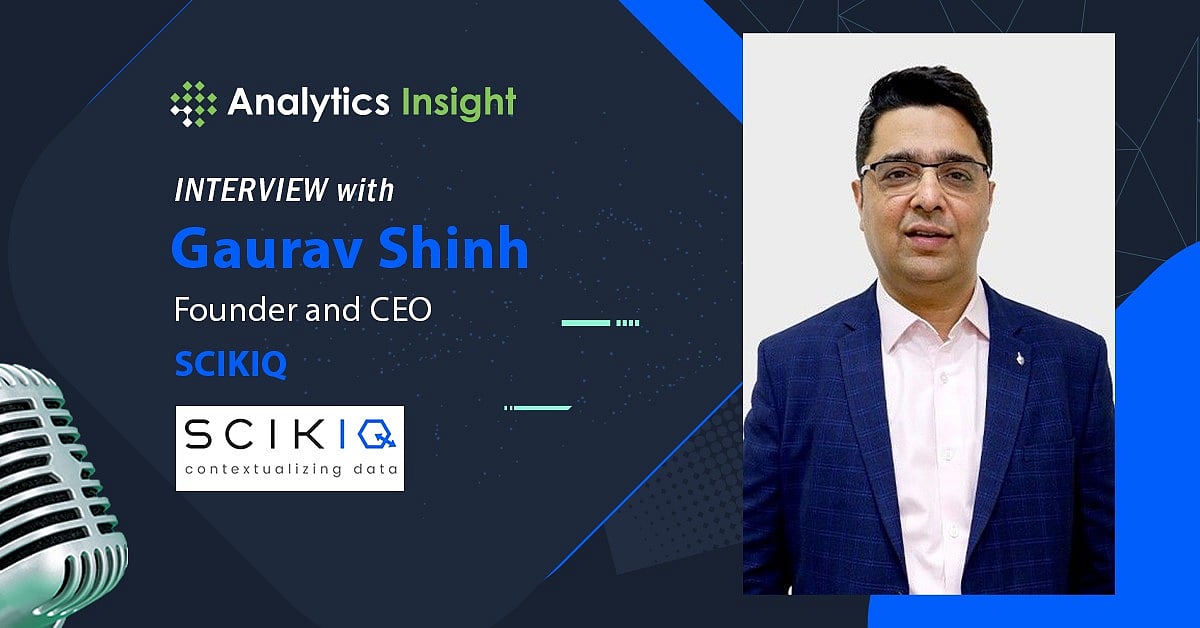
    Artificial intelligence is rapidly gaining traction in the enterprise world, yet many organizations that have invested heavily in AI technologies still struggle to scale their initiatives. According to Gaurav Shinh, Founder and CEO of SCIKIQ Data, the primary obstacle is not the AI model itself but the quality, accessibility, and governance of enterprise data.

    In a recent episode of Industry Wired Conversations, host Priya Dialani spoke with Shinh about why enterprises must achieve data readiness before they can become truly AI-ready. Below are the key takeaways from their discussion.

    Why Do So Many Organizations Struggle to Scale AI Successfully?

    Many companies assume that AI success hinges on selecting the right model or having the proper infrastructure. Shinh argues that the real challenge lies elsewhere. Most organizations attempt to implement AI without ensuring proper data integration and connections across business processes. AI can only deliver value when data is integrated, trusted, and aligned with business goals. Before deploying AI, companies must first understand how their business processes generate value. With a solid data foundation and context, organizations can move beyond mere AI pilots.

    What Does an AI-Ready Organization Actually Look Like?

    According to Shinh, there is no one-size-fits-all model for AI readiness. Each company operates differently based on how decisions are made. For centralized organizations, data integration across the company and a command center are essential. For decentralized firms, a data mesh approach enables local decision-making. AI readiness involves aligning technology with business operations, not applying a standard template. Companies should strive for a unified view across finance, HR, supply chain, procurement, and customer operations.

    Why Is a Single Source of Truth Critical for Enterprise AI?

    The performance of any AI system depends on precise, coherent, and well-integrated data. Shinh notes that many organizations focus excessively on building dashboards rather than establishing a unified information layer. When different departments use disparate data, chaos ensues. A single source of truth requires shared business definitions, common terminology, and unified enterprise data. The first step is to identify which data sets must be linked, then proceed with integration.

    How Does Strong Data Governance Improve AI Performance?

    Data governance builds trust within the enterprise. Shinh emphasizes that all departments must take responsibility for the quality, freshness, and accuracy of their own data. Trustworthy data must come from enterprise systems, not from individual spreadsheets or personal documents. AI models perform well in pilot programs because the environment is controlled. In production, unpredictable elements demand robust governance and business context, including semantic layers.

    What Role Will Modern Data Architecture Play in the Future of AI?

    Current cloud platforms, data lakes, and enterprise data architectures provide the foundation for scalable AI. Shinh believes these technologies will enable better data integration and greater control for business users through self-service tools. Traditional data warehouse implementations took years to deliver value. Modern data platforms should offer quick access to reliable information and facilitate cross-departmental collaboration. The ultimate goal is to empower business users to analyze data and make timely decisions in response to market changes.

    Listen to the full episode for more insights from Gaurav Shinh on building AI-ready organizations through stronger data foundations.

  • 7 Essential Tech Gadgets to Boost Safety, Health, and Independence for Seniors

    7 Essential Tech Gadgets to Boost Safety, Health, and Independence for Seniors

    Technology can make everyday life safer, healthier, and more convenient for seniors. From health monitoring to easier communication, these gadgets are designed to improve independence. Here are seven smart devices every older adult should consider.

    Smartwatch with Health Monitoring

    A smartwatch can track heart rate, blood oxygen, sleep, and daily activity. Many models also include fall detection and emergency SOS features. Medication reminders help users stay on schedule. It is a reliable companion for everyday health monitoring.

    Voice Assistant Smart Speaker

    Smart speakers respond to simple voice commands. Seniors can ask about weather, news, reminders, or play their favorite music without touching a screen. They also make hands-free calls and control compatible smart home devices. Daily tasks become easier and more enjoyable.

    Video Calling Tablet

    A large-screen tablet makes staying connected effortless. Seniors can enjoy crystal-clear video calls with family and friends from anywhere. The simple interface makes navigation easy even for beginners. It also supports entertainment, reading, and online learning.

    GPS Medical Alert Device

    A wearable GPS medical alert device offers peace of mind both indoors and outdoors. With one press, users can quickly contact emergency services or caregivers. Many devices also include fall detection and real-time location tracking. Safety is always within reach.

    Robot Vacuum Cleaner

    Cleaning becomes effortless with a robot vacuum. It automatically removes dust and debris while avoiding obstacles. Scheduled cleaning keeps floors tidy without physical strain. Seniors can enjoy a cleaner home with minimal effort.

    Digital Photo Frame

    A Wi-Fi-enabled digital photo frame continuously displays family photos without manual updates. Loved ones can send new pictures instantly from anywhere. Bright displays bring cherished memories to life every day. It helps seniors stay emotionally connected with family.

  • Oil Surge and AI Stock Sell-Off Push Wall Street Lower Ahead of Fed Decision

    Oil Surge and AI Stock Sell-Off Push Wall Street Lower Ahead of Fed Decision

    US stocks fell sharply Wednesday as rising oil prices and semiconductor losses weighed on major indexes. The Dow Jones Industrial Average dropped about 800 points during morning trading. The S&P 500 and NASDAQ Composite also declined before the Federal Reserve’s rate decision.

    Oil prices jumped after a new exchange of attacks involving Iran and US forces in the Middle East, renewing concerns about energy costs and inflation. Investors also watched chip stocks after several sessions of heavy selling.

    Dow Jones Leads Broad Market Decline

    The Dow Jones fell more than 1% as industrial, financial, and consumer shares moved lower. At one stage, the index lost over 800 points. The S&P 500 fell about 0.7%, while the NASDAQ dropped roughly 1%. Market figures fluctuated through the morning as trading remained volatile.

    Declining shares outnumbered advancing stocks on both the New York Stock Exchange and NASDAQ. Caterpillar fell as the industrial sector led losses. Consumer staples and healthcare posted small gains, showing limited demand for defensive shares.

    Oil Surge Adds Pressure Ahead of Fed Decision

    Crude oil prices rose after Iran launched missiles toward US forces in Jordan. US Central Command said forces intercepted the missiles. President Donald Trump then said the United States would respond strongly, adding pressure across energy and equity markets.

    Brent crude gained about 6%, while West Texas Intermediate rose close to 7%. Higher oil prices can raise transport and production costs. The latest jump arrived as the Fed prepared to announce its policy decision at 2 p.m. Eastern Time.

    Futures markets placed the highest probability on the Fed keeping rates between 3.5% and 3.75%. Available pricing showed a hold probability near 64%. The remaining probability supported a quarter-point increase. Traders also expected further tightening later in 2026.

    Jay Woods of Freedom Capital Markets said, “Any Fed surprise could cause this sell-off to accelerate.” Investors will review Chair Kevin Warsh’s press conference for details about inflation, employment, and future policy decisions.

    Semiconductor Stocks Extend Weekly Losses

    Semiconductor shares extended a four-session decline as investors questioned returns from large artificial intelligence spending programs. The iShares Semiconductor ETF fell nearly 4% during Wednesday trading. Its weekly loss moved above 10% as selling spread across major chip companies.

    Micron Technology and Advanced Micro Devices each lost more than 6% during the session. KLA fell more than 8%, while NVIDIA also traded lower. The Philadelphia Semiconductor Index dropped as investors reviewed spending, revenue growth, and competition from Chinese technology companies.

    Gina Martin Adams of HB Wealth said, “The pressure is shifting from spending plans to returns.” Big Tech earnings will provide more data on revenue from AI investments. Microsoft and Meta will report after Wednesday’s close. Amazon and Apple will release results later this week.

    Truist Securities maintained a positive long-term view on chip demand despite the sell-off. Analyst William Stein said industry contacts still reported strong demand. He also noted that buyers now place larger orders for longer periods. However, current trading showed concern about valuations and near-term earnings.

    Ford Rises as Procter and Gamble Falls

    Ford Motor gained more than 6% after raising its annual profit forecast. The automaker also reported results above market expectations. The increase made Ford one of the stronger stocks during a session dominated by broad losses.

    Procter and Gamble fell almost 3% after reporting weaker revenue than expected. The company also forecast slower sales growth for fiscal 2027. Seagate Technology gained after issuing quarterly revenue and profit forecasts above estimates. These moves created pockets of strength and weakness across the market.

    Investors now face three immediate events: the Fed decision setting policy direction for rates, Warsh’s comments shaping expectations for later meetings, and Big Tech earnings testing whether heavy AI spending has started producing stronger revenue.

  • Top Python Tools for Large-Scale Data Processing in 2026

    Top Python Tools for Large-Scale Data Processing in 2026

    Python’s rich ecosystem of libraries has made it the go-to language for data analytics, engineering, and machine learning. However, as datasets grow exponentially, organizations are moving from single-machine processing to high-performance, distributed analytics frameworks. While Pandas remains a staple for exploratory data analysis, tools like PySpark, Polars, DuckDB, Dask, and Ray are now essential for handling large-scale workloads efficiently.

    Top Python Tools for Large-Scale Processing

    1. Apache PySpark

    PySpark is the leading framework for distributed data processing across clusters. Built on Apache Spark, it enables enterprises to manage massive datasets, execute ETL operations, run SQL queries, and build machine learning pipelines at scale. It is widely adopted by organizations operating in cloud environments.

    2. Polars

    Polars has rapidly emerged as one of the fastest DataFrame libraries for Python. Written in Rust and leveraging multi-threading, it offers highly efficient memory usage and is built on Apache Arrow. Users report performance improvements of 5x to 10x over Pandas for many analytical workloads.

    3. DuckDB

    DuckDB is an embedded analytical database designed for fast SQL queries on CSV, Parquet, and Arrow files—no separate server required. It is ideal for interactive analytics and business intelligence tasks where large local datasets need to be queried efficiently.

    4. Dask

    Dask extends the Pandas and NumPy APIs to support parallel and distributed computing across CPU cores or clusters. It allows data processing that exceeds system memory, with minimal changes to existing Python code, making it a great choice for scaling legacy workflows.

    5. Ray

    Ray focuses on distributed computing beyond data processing, excelling in large-scale machine learning, hyperparameter optimization, and parallel AI workloads. It is a valuable tool for organizations building end-to-end data and AI platforms.

    Key Trends in 2026

    The Python analytics ecosystem is moving toward hybrid workflows. Rather than relying on a single framework, many organizations now combine DuckDB for queries, Polars for transformations, and Pandas for machine learning integration. This modular approach boosts performance while preserving the broader Python data science ecosystem.

    Conclusion

    Modern Python tools offer specialized capabilities, from distributed computing to high-speed local processing. PySpark remains the industry standard for enterprise-scale workloads, while Polars and DuckDB set new benchmarks in local analytics performance. By choosing the right combination of tools based on workload size, infrastructure, and business needs, organizations can build faster, more scalable, and cost-efficient data pipelines.

    FAQs

    1. Which Python tool is best for processing massive datasets?

    Apache PySpark is widely considered the best choice for processing massive datasets across distributed clusters. It offers scalable ETL, SQL processing, and machine learning capabilities, making it ideal for enterprise big data applications.

    2. Is Polars faster than Pandas?

    Yes. Polars is built in Rust and supports multi-threading and lazy execution, allowing it to outperform Pandas in many analytical workloads. Users often experience 5x to 10x performance improvements.

    3. When should I use DuckDB instead of Pandas?

    DuckDB is ideal for running fast SQL queries on large CSV, Parquet, or Arrow files without setting up a separate database. It works especially well for local analytics, reporting, and business intelligence workflows.

    4. What is Dask mainly used for?

    Dask extends the familiar Pandas and NumPy APIs to support parallel and distributed computing. It is particularly useful when datasets exceed available system memory or when existing Python workflows need to scale with minimal code changes.

    5. How do organizations combine these Python tools?

    Many organizations now use a hybrid data stack: DuckDB for SQL analytics, Polars for high-speed data transformations, Pandas for compatibility with machine learning libraries, and PySpark or Ray for distributed processing and AI workloads. This approach delivers better performance while maintaining flexibility across different stages of the data pipeline.

  • How to Report ULIP Income in ITR for AY 2026-27: Avoid Costly Tax Mistakes

    How to Report ULIP Income in ITR for AY 2026-27: Avoid Costly Tax Mistakes

    Filing your Income Tax Return (ITR) for Assessment Year 2026-27? If you hold a Unit Linked Insurance Plan (ULIP), understanding its tax treatment is crucial to avoid penalties, scrutiny, or refund delays. This guide walks you through the essential steps to report ULIP income accurately.

    Understand Your ULIP Tax Status

    Before you begin filing, determine whether your ULIP maturity proceeds are tax-exempt or taxable. Policies issued after February 1, 2021, with annual premiums exceeding prescribed limits may attract capital gains tax. Review your policy details first to ensure accurate reporting and prevent unnecessary tax notices later.

    Check Whether Your ULIP Is Taxable

    Not every ULIP payout is taxable. If your policy qualifies under prevailing tax rules and satisfies exemption conditions, maturity proceeds remain tax-free. However, high-premium ULIPs may lose exemption benefits. Carefully verify premium thresholds, issue date, and policy eligibility before deciding whether income must appear in your ITR.

    Report Taxable Gains Correctly

    If your ULIP income is taxable, disclose capital gains under the appropriate schedule in your income tax return. Report the sale or redemption value, acquisition cost, and applicable gains accurately. Incorrect classification may trigger notices, delayed refunds, or additional tax liabilities from the Income Tax Department.

    Keep Supporting Documents Ready

    Maintain essential documents including policy statements, premium payment receipts, redemption statements, capital gains reports, and Form 26AS. These records support your tax calculations and simplify verification if authorities seek clarification. Organized documentation also reduces filing errors and ensures a smoother return processing experience.

    Don’t Ignore TDS and AIS

    Compare your ULIP transactions with Form 26AS and the Annual Information Statement before filing. Ensure tax deducted at source, if applicable, matches your records. Reporting mismatched figures can delay processing or invite tax notices, making reconciliation an important step before submitting your return.

    Common Filing Mistakes to Avoid

    Many taxpayers mistakenly claim exempt income despite crossing premium thresholds or fail to report taxable gains altogether. Others enter incorrect acquisition costs or ignore updated tax provisions. Double-check every figure, select the correct ITR schedule, and review calculations carefully before filing your return.

    File Carefully for a Hassle-Free Return

    Accurate ULIP reporting protects you from penalties, scrutiny, and refund delays. Understand your policy’s tax treatment, maintain complete documentation, and verify every entry before submission. When uncertain, consult a qualified tax professional to ensure your AY 2026-27 income tax return complies with current regulations.