Author: vitorcherulli

  • Samsung Achieves Record Q2 Revenue Driven by AI Memory Chip Demand

    Samsung Achieves Record Q2 Revenue Driven by AI Memory Chip Demand

    Samsung Electronics Co. Ltd. reported a sharp increase in Q2 earnings, fueled by strong demand for AI memory chips, even as its share price remains volatile amid investor concerns about future spending and competition.

    The South Korean technology group’s revenue for the quarter ending June 30 reached 171.5 trillion won, its highest quarterly revenue on record. Net profit rose to 71.27 trillion won, surpassing Bloomberg estimates of 68.36 trillion won. Additionally, operating profit increased more than 19-fold to approximately 89.5 trillion won, broadly in line with the company’s previous forecast.

    AI Memory Business Continues to Lead Growth

    The semiconductor business remained the primary growth driver. It benefited from high memory chip prices and rising volumes of its advanced High Bandwidth Memory (HBM) products for AI servers and data centers. According to the company, demand from cloud providers and AI infrastructure projects continued to support strong pricing across the memory market. Samsung anticipates this trend to continue in the second half of 2026.

    Samsung predicted ‘robust demand centered on servers stemming from continued AI infrastructure capex and broader adoption of agentic AI.’ Even with production increases, Samsung stated that the global memory market would remain ‘undersupplied.’

    Consumer Business Remains Under Pressure

    While the semiconductor business earned a record profit, Samsung’s smartphone, television, and home appliance divisions were less profitable as consumer demand weakened and component prices jumped. The company will continue to focus on high-margin AI memory products and invest in expanding its semiconductor manufacturing. In 2026, projects on 2-nanometer technology chips are projected to more than double each year, executives said in a post-earnings conference call.

    Market Reaction and Outlook

    Samsung shares were highly volatile during Thursday’s trading session, despite the strong results. The stock initially surged up to 7% but lost most of its gains as overall market weakness hit South Korea’s stocks. Investor sentiment is growing skeptical about the ability of AI-led semiconductors to maintain their valuations. Competition from Chinese chipmakers and heavy capital spending have also dampened investor confidence. Samsung also revealed that it is not currently planning to list its shares on American Depository Receipts (ADR), following queries from investors after rival SK Hynix recently listed in the US.

  • Perceptron Secures $6.5M to Build Decentralized AI Data Network

    Perceptron Secures $6.5M to Build Decentralized AI Data Network

    Perceptron, a decentralized AI data network, has announced the successful close of a $6.5 million strategic funding round. The investment brings together leading Web3 investors, trading firms, ecosystem partners, and infrastructure leaders, including Sigma Capital, Selini Capital, QCP Capital, P2 Ventures, CoinDCX Ventures, Momentum6, DeFi Capital, Walrus Foundation, Aethir, Colosseum, GuruDev Capital, Tempo Finance, NewTribe Capital, Digital Consensus Fund, and CodeCraft Capital.

    The funding will support the launch of Perceptron’s data-questing platform, expand contributor tooling and rewards infrastructure, and scale the network toward a target of 5 million nodes. The company aims to make sourcing real-world data fast and accessible enough that AI companies no longer need centralized scraping infrastructure.

    Perceptron’s network compresses global data collection into a single mesh of idle bandwidth, unique datasets, and domain expertise. This unified format allows both individual contributors and AI companies to generate complete, verified datasets, reducing the timeline from data request to delivered dataset to just days.

    Perceptron sits between two extremes: centralized scraping tools that are too limited, and closed data partnerships that demand access most AI startups lack. It gives AI companies and everyday contributors data they can work with directly. Contributors own their data and earnings, allowing them to monetize or withdraw at any time without depending on third parties. The platform is built for continuous contribution and constant iteration, not a one-time scrape.

    The launch of the data-questing platform is central to delivering on this promise at scale. Rather than relying only on organically contributed data, Perceptron enables AI companies to commission data directly from its community. This approach shortens the timeline to sourcing high-value datasets and allows the team to focus resources on community tooling and rewards infrastructure.

    Early traction demonstrates strong demand. In its first phase, live agents reached more than 200,000 users across communities like Telegram and Discord. That number has since grown to more than 300,000 daily active users across a network of over 700,000 nodes. These figures highlight a large audience of users who want to monetize their data and expertise but previously lacked infrastructure designed for them.

    Nathan Gurr, Investment Analyst at P2 Ventures, said: “Perceptron has demonstrated an impressive ability to mobilize a decentralized workforce and build a globally distributed network. Their model allows them to tap into niche expertise – from doctors and lawyers to native speakers – on demand, from anywhere in the world. We see a significant opportunity to turn that reach into a scalable data and intelligence layer for AI, positioning Perceptron to become a leader in the DeAI stack.”

    Mark Rydon, Co-Founder of Aethir, added: “We are witnessing a long-term shift in how AI models are trained. Centralized data scraping is hitting diminishing returns, both in terms of cost and quality. Perceptron has solved the distribution problem that plagues the sector.”

    Peter Anthony, Co-founder and CEO of Perceptron, said: “Our mission is to create the world’s first decentralized AI data mesh where user interactions directly fuel AI growth. We’ve already shown that mission can become a reality, as evidenced by our ability to scale to hundreds of thousands of nodes organically. Now, with this funding, we are launching our data-questing platform, which will allow AI companies to commission specific, high-value datasets directly from our community.”

    Perceptron’s near-term focus is the data-questing platform launch, with further announcements expected next quarter. Longer term, the company is building toward a fully integrated network of 5 million nodes, where everything an AI company needs lives in one place, with no gap between demand and supply.

  • Turn AI Time Savings into Revenue: A Practical Guide for Businesses

    Turn AI Time Savings into Revenue: A Practical Guide for Businesses

    How Businesses Can Convert AI Time Savings into Revenue

    Artificial intelligence is revolutionizing how companies operate by freeing up valuable time. Instead of using those hours solely for cost cutting, forward-thinking organizations are reinvesting them into revenue-generating activities. Here are seven proven strategies to turn AI-driven time savings into tangible business growth.

    Automate Repetitive Tasks

    Businesses can use AI to automate routine work such as data entry, scheduling, invoice processing, and report generation. The hours saved can be redirected toward revenue-generating activities like sales, customer acquisition, product development, and strategic planning. This shift helps teams focus on work that directly contributes to business growth instead of administrative responsibilities.

    Improve Customer Response Times

    AI-powered chatbots and virtual assistants can handle common customer queries around the clock. Faster responses improve customer satisfaction, reduce abandoned purchases, and increase conversions. Human agents can then focus on complex cases, strengthening customer relationships while allowing businesses to serve more customers without significantly increasing operational costs.

    Expand Services Without Expanding Teams

    AI enables businesses to scale content creation, marketing campaigns, analytics, and customer support without hiring large teams. Companies can launch new products, enter additional markets, or serve more clients efficiently, generating higher revenue while keeping staffing costs under control and maintaining consistent service quality.

    Personalize Marketing Campaigns

    AI analyzes customer behavior, preferences, and purchase history to deliver personalized recommendations and targeted promotions. Better personalization increases engagement, improves conversion rates, encourages repeat purchases, and boosts customer lifetime value – all of which allow businesses to generate more revenue from existing customers with optimized marketing efforts.

    Accelerate Product Development

    AI speeds up research, testing, and data analysis, reducing the time required to develop and improve products. Faster innovation helps businesses launch offerings ahead of competitors, respond quickly to market trends, and capture new revenue opportunities before demand shifts or competitors gain an advantage.

    Support Smarter Business Decisions

    AI-powered analytics transform business data into actionable insights, helping leaders identify profitable opportunities, forecast demand, optimize pricing, and reduce inefficiencies. Better-informed decisions minimize waste while improving profitability, enabling organizations to maximize returns from both existing operations and future investments.

    Reinvest Time Into High-Value Work

    The greatest value of AI comes from how businesses use the time it saves. Organizations that reinvest those hours into innovation, relationship building, employee training, and strategic growth initiatives are more likely to increase revenue than those treating AI solely as a cost-cutting tool.

  • Flowra and Honeypot Integrate Sanctions Screening Directly into Solana Block Building

    Flowra and Honeypot Integrate Sanctions Screening Directly into Solana Block Building

    SEOUL, South Korea — Flowra, the open orderflow auction and validator infrastructure platform for Solana, has announced a collaboration with compliance infrastructure provider Honeypot to embed sanctions and risk screening directly into the block-building process.

    The integration combines Honeypot’s compliance intelligence with Flowra’s Programmable Block Policy (PBP), enabling institutional validators to define compliance rules that govern which transactions and bundles can be included during block construction.

    The framework supports screening against sanctions-related criteria, including wallet addresses associated with sanctioned entities, as well as network-level indicators such as VPNs, proxy services, and Tor exit nodes. These methods account for an estimated 31–61% of traffic arriving through network obfuscation. The system is also designed to accommodate additional enterprise compliance providers over time.

    Each validator will define its own policy, preserving validator autonomy while offering operators greater flexibility over block-building decisions.

    “Public blockchains have become increasingly attractive to institutional participants, but the infrastructure hasn’t evolved to give validators the compliance controls many regulated operators expect,” said Harry Hwang, CEO of Flowra. “We’re working with Honeypot to bring compliance into the block-building process itself, allowing validators to define and enforce their own policies before transactions are included on-chain. The goal isn’t to make the network less open, it’s to give individual validators the flexibility to operate in a way that reflects their own requirements.”

    The collaboration will initially focus on sanctions screening, wallet screening, and auditability for regulated institutions, with additional technical details to be shared as implementation progresses.

    About Flowra

    Flowra is a blockchain infrastructure company building validator and order flow solutions for the Solana ecosystem. The company develops technology designed to improve transaction transparency, value distribution, and incentive alignment across validators, users, and builders. Through its validator infrastructure, delegation programs, and MEV-related technologies, Flowra aims to create a more open, efficient, and scalable foundation for the next generation of blockchain networks.

    About Honeypot

    Honeypot provides compliance intelligence for platforms operating under sanctions and geo-restriction requirements. By detecting VPNs, proxies, Tor exit nodes, and other forms of location obfuscation, Honeypot helps exchanges, DeFi protocols, and financial institutions strengthen compliance controls and support regulatory audit requirements.

  • Quordle July 30 Hints, Answers, and Winning Strategies

    Quordle July 30 Hints, Answers, and Winning Strategies

    Today’s Quordle puzzle brings a mix of musical, descriptive, and everyday words. None of the answers contain repeated letters, so careful letter placement is key to solving all four words simultaneously. If you’re stuck, start with the spoiler-free hints below before checking the full answers. You might only need one extra clue to finish the puzzle.

    Hints for Quordle Today

    Need a nudge without spoiling the puzzle? Here are today’s clues:

    • Word 1 (Top Left): Related to a musical mode.
    • Word 2 (Top Right): A very lazy person.
    • Word 3 (Bottom Left): _____ change, meaning very little cash.
    • Word 4 (Bottom Right): Not smooth; uneven in texture.

    Additional Clues

    Still working it out? These hints should make things easier:

    • None of today’s answers contain repeated letters.
    • The four words begin with the letters M, I, C, and L.

    If you’re still solving on your own, this is your final spoiler warning before today’s answers appear below.

    Quordle Today Answers

    Today’s Quordle solutions are:

    • MODAL
    • IDLER
    • CHUMP
    • LUMPY

    Today’s puzzle offered a balanced challenge with a blend of familiar and slightly tricky vocabulary. The most difficult one was probably MODAL, which is usually used in the context of music or grammar rather than everyday communication. Another tricky word could be CHUMP because some people might focus too much on the hint containing the phrase ‘_____ change.’ Finally, IDLER and LUMPY are quite ordinary words that become clear when a couple of letters are guessed.

    Strategy & Key Takeaways

    Today’s Quordle was rewarding for those who paid special attention to the meanings of hints instead of trying to build words based only on their letter structure. Since none of the answers had repeating letters, every found character was helpful in figuring out other words. Good luck with tomorrow’s puzzle!

  • EA CEO Andrew Wilson Reaps $38M Bonus as Battlefield 6 Success Spurs Developer Layoffs

    EA CEO Andrew Wilson Reaps $38M Bonus as Battlefield 6 Success Spurs Developer Layoffs

    Battlefield 6 has been a major commercial success for Electronic Arts, selling 7 million copies in 2025 and outperforming many competing first-person shooters. However, the game’s financial windfall has coincided with significant job cuts among the development team, raising questions about how corporate success is distributed.

    According to EA’s Form 10-K/A SEC filing released on July 29, CEO Andrew Wilson’s total compensation for fiscal 2026 reached $38,649,984—an increase of $8 million from the previous year and roughly $13 million more than two years ago. The pay bump includes bonuses and bonus modifiers added to his base salary.

    While EA has not disclosed the exact number of layoffs, reports indicate that the entire Battlefield 6 development team was disbanded after the game’s launch. The job cuts were framed as part of a broader cost-reduction and business restructuring plan.

    This pattern is not unique to EA. Microsoft closed the studio behind the critically acclaimed Hi-Fi Rush shortly after its release. The team behind Marvel Rivals also experienced layoffs and organizational changes post-launch. Embracer Group and Ubisoft have similarly announced job cuts while continuing work on major projects.

    Many publishers argue that rising development costs necessitate such decisions. However, developers contend that strong sales should translate into greater job security, not just higher executive pay.

    Battlefield 6 proves that blockbuster games can still generate enormous revenue. Yet the conversation surrounding the title has shifted from sales figures to the treatment of the people who make those games possible. As the industry grows, players and developers alike hope for a better balance between business objectives and supporting the teams behind the hits.

  • Microsoft to Launch Unified Copilot Super App Integrating Chat, Coding, and AI Agents by End of Year

    Microsoft to Launch Unified Copilot Super App Integrating Chat, Coding, and AI Agents by End of Year

    Microsoft CEO Satya Nadella confirmed during the company’s July 29, 2026 earnings call that a unified Copilot ‘super app’ will be released by the end of the year. The platform will combine chatbot capabilities, coding tools, and autonomous AI agents into a single interface for both consumers and businesses.

    According to Nadella, the super app is expected to become available in the current quarter, though exact pricing, a launch date, and a complete feature list have not been disclosed. “This quarter, we are bringing these Copilot experiences together, including code, in one super app… This is a major step forward, and I look forward to sharing more soon,” he said.

    The announcement follows earlier reports from Fortune indicating that Microsoft was developing a consolidated application merging Copilot chat, GitHub Copilot, Copilot Cowork, and its Autopilot agent system.

    From Chat to Autonomous Workflows

    Nadella outlined Copilot’s evolution through three stages: chat, Cowork, and Autopilots. The existing chat experience answers questions and generates content; Cowork assists users with collaborative tasks; and Autopilots represent the most advanced layer, enabling AI agents to complete longer, multi-step workflows with minimal human intervention. By placing these capabilities alongside code editing in one interface, Microsoft aims to reduce fragmentation across Windows Copilot, Microsoft 365 Copilot, GitHub Copilot, and Copilot Studio.

    Enterprise Distribution Remains Central

    The super app will target both commercial and consumer users. An integrated app may simplify deployment, licensing, and access for businesses already using Microsoft 365, allowing workers to leverage AI-powered document creation, coding, or workflow automation. This move comes as Microsoft reported $90 billion in quarterly revenue, with cloud computing and AI as strong growth drivers. The company could eventually monetize its vast Microsoft 365 customer base through a single Copilot platform generating subscription-based AI revenue.

    Competition Intensifies

    Microsoft’s strategy also heightens competition with OpenAI and other AI developers offering integrated assistants capable of handling text, coding, research, and agentic tasks. However, key questions remain unanswered, including whether GitHub Copilot will continue as a separate subscription, how existing users will be migrated, and what administrative controls enterprises will receive. The product’s success will ultimately depend on whether Microsoft delivers a genuinely connected experience rather than simply placing several existing tools inside one interface.

    Also Read: Microsoft Introduces MAI-Cyber-1-Flash, Claims to Outperform Gemini, ChatGPT

  • Vedanta Power Stock Drops 4% as Q1 Net Loss Overshadows Strong Revenue Growth

    Vedanta Power Stock Drops 4% as Q1 Net Loss Overshadows Strong Revenue Growth

    Vedanta Power shares fell more than 3% on Thursday, July 30, after the company reported a net loss of Rs. 423 crore for the first quarter of fiscal year 2027. The decline came despite a sharp 31.3% increase in revenue, as weaker operating margins and a one-time exceptional loss weighed on investor sentiment.

    The stock touched an intraday low of Rs. 34.03, down 3.65%, while the broader Nifty 50 index remained flat. The results mark the company’s first quarterly report following the Vedanta demerger.

    Revenue for the quarter stood at Rs. 2,607 crore, up from Rs. 1,986 crore in the same period last year. However, strong sales failed to improve profitability. EBITDA fell to Rs. 291 crore from Rs. 417 crore a year earlier, and the EBITDA margin contracted to 11.2% from 21%, reflecting higher costs and operational pressure.

    Vedanta Power’s sales volume rose 38% year over year to 5,224 million units, supported by better generation at Meenakshi Energy and improved performance at the Talwandi Sabo Thermal Plant. The company operates 4,180 MW of installed capacity, making it India’s fifth-largest private merchant thermal power producer.

    Despite the revenue growth, a one-time exceptional loss of Rs. 487 crore pushed the company into a net loss for the quarter. Management emphasized plans to expand capacity further while enhancing fuel security and operational efficiency. Investors will likely monitor upcoming quarters for signs of margin recovery and return on investment.

  • Top Parental Control Apps for Managing Screen Time in 2026

    Top Parental Control Apps for Managing Screen Time in 2026

    Key Takeaways

    • Screen time management apps help create healthier digital habits for children.
    • Most parental control apps include screen limits, content filters, and activity reports.
    • The right app depends on device compatibility, family needs, and preferred safety features.

    Children spend a large part of each day with smartphones, tablets, computers, and gaming devices. Digital tools help with school work, learning, entertainment, and communication. At the same time, long hours in front of a screen can affect sleep, physical activity, family time, and concentration. Many parents search for a simple way to create healthy digital habits without constant arguments.

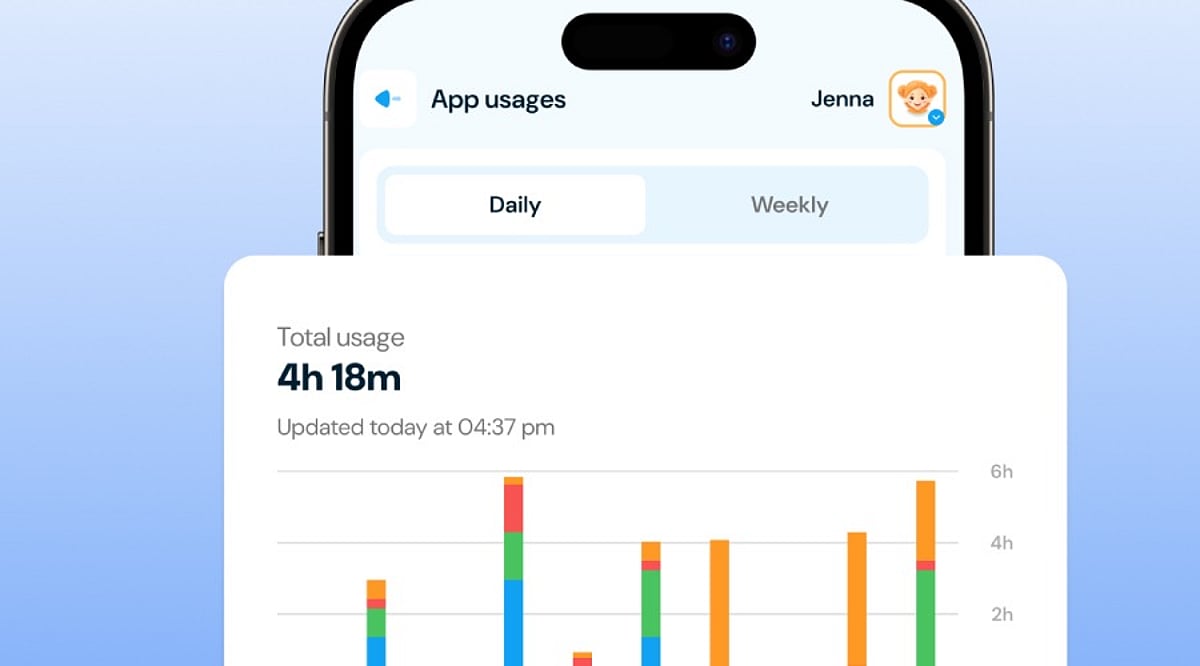
    Parental control apps solve this problem with practical tools that help families set clear limits. Most apps allow parents to decide when a child can use a device, block unwanted content, approve app downloads, and check online activity. Several apps also show daily reports that help parents understand screen habits. A suitable parental control app creates balance instead of complete restriction. Children enjoy technology while parents stay informed and confident.

    Qustodio

    Among the parental control apps that parents trust today is Qustodio. This application is compatible with devices running Android, iPhones, Windows, Mac, Chromebooks, and Kindle. Thus, families with different devices will be able to manage them from one account.

    The application has the screen time feature that enables parents to set daily limits and customize schedules for school hours, homework, sleep time, and family activities. Apart from that, it provides the service of blocking the internet access when the parents set time limits. Activity reports are sent to parents which include applications in use, websites generally visited, and screen time duration. The location tracker feature enhances parents’ security because it gives status updates on the location.

    Google Family Link

    Google Family Link offers a free solution for families with Android devices. Parents can create digital rules without extra cost while children enjoy a safe online environment. The app works especially well with Google accounts for children.

    Parents can set daily screen limits, lock devices from a distance, approve or reject app downloads, and check app activity. The app also shows how much time each child spends with different applications. Family Link supports location tracking, which helps parents know where children stay throughout the day. The clean design makes every option easy to find without confusion.

    Microsoft Family Safety

    Microsoft Family Safety serves families that use Windows computers together with Android or Xbox devices. The app combines screen time management with online safety features in one place.

    Parents can set screen schedules for each device and decide how many hours children can spend online every day. The app also filters websites, blocks unsuitable content, and provides activity reports that show browsing habits and app use. Location sharing works well for family members who carry Android phones. Microsoft Family Safety creates a connected experience across several Microsoft products without complicated setup.

    Bark

    Bark places emphasis on the significance of online safety along with supervision of usage of devices. The application examines the online behaviors of an individual on various platforms like texting, emailing, social media, and other sites. The alerts provided by the application aids the parents in understanding about the cyberbullying, predators, inappropriate contents, and unsafe discussions on their children’s devices.

    Bark application allows parents to make rules concerning the screen time usage like making a daily routine for device usage or forbidding access to various online platforms while the child is studying, sleeping, or at family events.

    Norton Family

    Norton Family comes from a well-known cybersecurity company and offers reliable parental control features for modern families. The app supports Android, Windows, and web browsers with a simple interface.

    Parents can create screen time schedules, monitor web searches, block inappropriate websites, and receive detailed reports about online activity. School Time mode supports focused learning by limiting access to entertainment during study hours. The reporting system presents useful information without unnecessary details, which helps parents understand digital habits more easily.

    OurPact

    OurPact stands out with flexible screen time scheduling and simple device management. The app works with both Android and iPhone devices, which makes it suitable for families with different operating systems.

    Parents can block apps with one touch, create automatic schedules, and pause internet access during meals, homework, or bedtime. The app also allows selective app blocking instead of complete device restriction. This feature helps children continue school work while entertainment apps stay unavailable. The colorful interface remains easy for parents who prefer a simple setup process.

    Net Nanny

    Net Nanny has earned a strong reputation for advanced internet filtering and family safety tools. The app supports several major platforms and offers reliable protection against harmful websites.

    The screen time tools allow parents to create schedules that match school routines and family activities. Internet filters analyze website content in real time instead of relying only on fixed lists. Parents also receive reports that highlight browsing history, app activity, and screen time patterns. Location tracking adds another useful feature for families with older children who travel alone.

    Apple Screen Time

    Apple Screen Time comes built into every iPhone, iPad, and Mac. Families that use Apple devices do not need another app for basic screen time management.

    Parents can create daily limits, block apps during specific hours, set communication limits, and restrict purchases. Content filters help children avoid unsuitable websites and age-restricted material. Weekly reports display detailed information about app use and total screen time. The built-in design works smoothly across Apple devices without extra installation.

    How to Select the Right App

    Each family has unique requirements, which means that the top parental control application will vary according to the needed function. Some parents may find content filtering features highly valuable, while others may rather go for detailed tracking of children’s activities or knowing their whereabouts. Compatibility with devices is also significant, especially in families where Apple, Android, Windows, and Chromebook products are available at the same time.

    A quality parental control app must be easy to manage, work well, and provide clear reporting. Effective scheduling permits children to do schoolwork, entertain themselves, and spend time with the family without being reminded constantly, while privacy needs to be assured in light of the fact that personal data is usually present in every report received.

    Why This Matters

    Healthy screen habits facilitate fewer disturbances in sleeping cycles, better focus, and regular workouts. Parental control apps help adults set clear and simple rules regarding the use of technology among children. Good screen habits also help avoid distractions, promote responsible behavior, and create positive habits.

    Final Thoughts

    Parental control apps help families build healthier digital habits without unnecessary stress. Features such as screen time limits, activity reports, content filters, and location tracking create a safer online experience for children of every age. Qustodio, Google Family Link, Microsoft Family Safety, Bark, Norton Family, OurPact, Net Nanny, and Apple Screen Time each offer valuable tools for modern families.

    The right app supports healthy routines, encourages responsible device use, and gives parents greater confidence every day. Consistent rules, open family conversations, and suitable technology create a balanced digital lifestyle that supports learning, entertainment, and personal growth.

    FAQs

    1. What is a parental control app? A parental control app helps parents manage screen time, monitor online activity, and block inappropriate content on children’s devices.
    2. Which parental control app is best for Android? Google Family Link and Qustodio rank among the top choices for Android devices.
    3. Can parental control apps limit screen time? Yes. Most apps allow parents to set daily limits, schedules, and device lock times.
    4. Are parental control apps safe to use? Trusted apps from established companies protect user data and provide secure account management.
    5. Do parental control apps work on multiple devices? Many leading apps support Android, iPhone, Windows, Mac, and other popular platforms through a single family account.

  • Why Bitcoin’s Next Big Move Hinges on a Long-Term Trend

    Why Bitcoin’s Next Big Move Hinges on a Long-Term Trend

    Bitcoin stands at an important point after several weeks of mixed price action. The digital asset now trades near $63,702, with an intraday range between $62,772 and $64,053. The latest market action shows that buyers and sellers continue a close battle. Small price swings appear every day, yet the larger picture matters far more than short-term changes.

    Many market experts now pay close attention to one long-term trend instead of daily price movement. This trend has shaped Bitcoin through several market cycles. Past rallies and corrections often respected this pattern, which makes the current stage important for investors and traders across the world.

    Long-Term Trend Still Favors Bitcoin

    The strongest signal comes from Bitcoin’s long-term price structure. The weekly trend remains positive even after the market pulled back from its 2025 high. Long-term moving averages continue an upward path, which suggests that the broader market structure has not lost strength.

    Short-term charts tell a different story. Bitcoin still trades below several important resistance levels. Buyers must push the price above these barriers before fresh momentum returns. A successful breakout could restore confidence across the crypto market. A failure near resistance could keep Bitcoin inside its current trading range for a longer period.

    This difference between the long-term picture and the short-term outlook creates uncertainty. Market participants now watch every major price move with extra attention.

    Institutional Demand Shapes Market Direction

    The price of Bitcoin is increasingly determined by demand from institutional investors. Big investment companies, asset managers, and funds have become more decisive when it comes to sending money to BTC. The acquiring of funds made it possible for investors to generate stable demand for BTC instead of volatile price fluctuations.

    According to recent statistics, Bitcoin ETFs are already experiencing a growth in net inflows after going through a period of decrease. This signals a favorable tendency for Bitcoin, given that demand is among the factors ensuring price stabilization. Nevertheless, analysts describe this recovery as fragile, even though it could result in another BTC price growth if institutional investors remain interested in the coming weeks.

    One of the key aspects related to big investors is their tendency to focus on long-term investments rather than on daily market developments.

    Economic Conditions Remain Important

    Global economic conditions continue to influence Bitcoin more than many expected. Interest rate expectations remain one of the biggest factors behind market sentiment. Investors usually pay close attention to signals from the Federal Reserve before making major financial decisions.

    Lower interest rates often improve market confidence and encourage investment across risk assets such as Bitcoin. Higher rates usually create caution and reduce demand for speculative investments. This relationship has become much stronger during the last few years.

    Financial markets now react quickly to every major economic update. Bitcoin often follows the same pattern, which shows how closely digital assets connect with the wider financial system.

    Technical Levels Could Decide Next Phase

    Market analysts believe Bitcoin now approaches a critical technical zone. A move above key resistance levels could attract fresh buyers and strengthen the current long-term trend. Strong momentum after such a breakout could open the path toward higher price targets.

    A rejection at resistance would create a different outcome. Sellers could regain control and push Bitcoin back toward important support levels. Strong support has protected the market several times during previous corrections. Another successful defense could preserve the broader bullish structure even after temporary weakness.

    Every major market cycle has included periods of uncertainty before a decisive move. The current phase shares many similarities with those earlier moments.

    On-Chain Data Sends Mixed Signals

    Blockchain data presents a balanced picture instead of a clear trend. Miner activity remains relatively stable, which reflects confidence among companies that secure the Bitcoin network. Strong miner participation often supports long-term market health.

    Network activity, however, has not reached levels that usually appear during powerful bull markets. Analysts continue to monitor wallet growth, transaction volume, and other blockchain indicators for signs of stronger demand. These figures have not delivered a full confirmation of the next major rally.

    This combination of stable miner behavior and moderate network activity leaves the market in a waiting phase.

    Why This Matters

    Bitcoin often sets the direction for the entire cryptocurrency market, which makes every major trend highly significant. A strong long-term structure can attract more institutional investment and improve market confidence. The next move could influence digital asset prices, investor sentiment, and future adoption across the global financial sector.

    Outlook for the Months Ahead

    Bitcoin stands at a decisive stage where several powerful forces meet at the same time. A positive long-term trend still supports the market, while institutional investment provides another source of strength. Fresh ETF inflows have improved confidence, although analysts believe that stronger demand must continue before a sustained rally can begin.

    Economic conditions also hold significant influence over future price action. Stable financial markets, improving investor confidence, and continued institutional participation could help Bitcoin regain upward momentum. On the other hand, weak demand near resistance levels and cautious market sentiment could keep prices inside the current range for some time.

    The next major move will likely depend on whether the long-term trend continues to attract large investors while technical resistance finally gives way. Until that moment arrives, Bitcoin remains in a critical position that could shape the direction of the cryptocurrency market for the rest of the year.

    Key Takeaways

    • Bitcoin’s long-term trend remains positive despite recent price weakness.
    • Institutional ETF inflows continue to play a major role in market direction.
    • Technical resistance and economic conditions will likely shape the next big move.