Author: vitorcherulli

  • AI-Driven Transformation in Corporate Video Production for Tech Companies

    AI-Driven Transformation in Corporate Video Production for Tech Companies

    Video is now one of the main ways tech companies explain products, share news, and earn trust. Artificial intelligence has made it faster to plan, edit, and repurpose that content. Yet speed alone does not make a video good.

    This article looks at what AI tools do well, where they fall short, and how brands can combine them with experienced crews. The goal is better video, delivered faster, without losing the human touch that viewers notice.

    Why Video Has Become a Core Business Asset

    Product launches, investor updates, customer stories, and internal town halls all rely on video. Teams need more versions, more formats, and faster turnarounds than ever before. That pressure explains why so many marketing and communications teams are testing AI tools. These tools promise to cut hours from routine tasks and free up budget for better ideas.

    What AI Tools Do Well

    AI is strong at repetitive work. It can transcribe interviews, generate captions, and flag the best moments in long recordings. These tasks once took editors hours. It also helps with translation, audio cleanup, and rough first cuts. Teams can review a draft quickly and spend their time on creative decisions instead of manual chores. Writing assistants are useful for outlines and alternate headlines, giving writers a starting point, though the final message still needs a human voice.

    Where AI Still Falls Short

    AI cannot replace a skilled crew on set. It does not light an executive so they look confident, or capture clean audio in a noisy ballroom. Those results come from experience and good equipment. Trust is another issue. Viewers are getting better at spotting synthetic content, and a video that feels artificial can hurt a brand. Real people, real places, and real stories still carry more credibility. There are practical risks too. Brands must think about privacy, licensing, and accuracy before they publish anything generated by a machine.

    A Hybrid Workflow That Works

    The strongest teams treat AI as a helper inside a process led by people. They plan carefully, film with professionals, and use AI tools during editing and delivery. A simple version looks like this:

    • Plan the message, audience, and formats before anyone picks up a camera.
    • Capture interviews and key scenes with a professional crew.
    • Use AI to transcribe, caption, and assemble rough cuts.
    • Have a human editor review every frame, claim, and caption.
    • Deliver versions for each channel, such as social, web, and events.

    Many Bay Area tech teams now follow this approach. They work with a San Francisco video production company that pairs a senior crew with modern editing tools, which keeps quality high and delivery times short.

    Smart Ways to Put AI to Work

    Recap reels are a good example. A team can film a keynote, use AI to find the best clips, and have an editor polish a highlight video within days. Webinars and panels can become short clips, written summaries, and translated versions. One recording then supports weeks of content across several channels. Product demos benefit as well. AI can help produce alternate cuts for different audiences while the core footage stays authentic and on brand.

    Live Events and Streaming Still Need People

    Live content leaves no room for retakes. A product keynote or virtual summit has to work the first time, for every viewer, on every platform. AI can add captions and summaries, but it cannot fix a dropped audio feed. Live shows depend on backup audio, backup encoders, and a second stream path. Teams planning conferences, hybrid events, or webcasts should look for a partner with a full range of production and event services. Using one crew for filming, streaming, and editing keeps the look and quality consistent.

    How to Choose a Production Partner

    Start by asking how the team uses AI and where humans review the work. A good partner can explain both clearly. A few more questions help:

    • Can you show examples of similar projects?
    • Who will be on set, and who will edit the final video?
    • What backup plans exist for live shows?
    • How will the content be delivered for each channel?

    Clear answers to these questions usually signal a reliable team.

    Conclusion

    AI is changing how video gets made. Brands that ignore it may fall behind on speed, while brands that rely on it alone risk losing the authenticity that makes video work. The best results come from pairing smart tools with experienced people. Plan well, film with care, let AI handle the routine work, and keep humans in charge of the final message.

  • How to Use Your iPad as a Second Monitor: A Step-by-Step Guide

    How to Use Your iPad as a Second Monitor: A Step-by-Step Guide

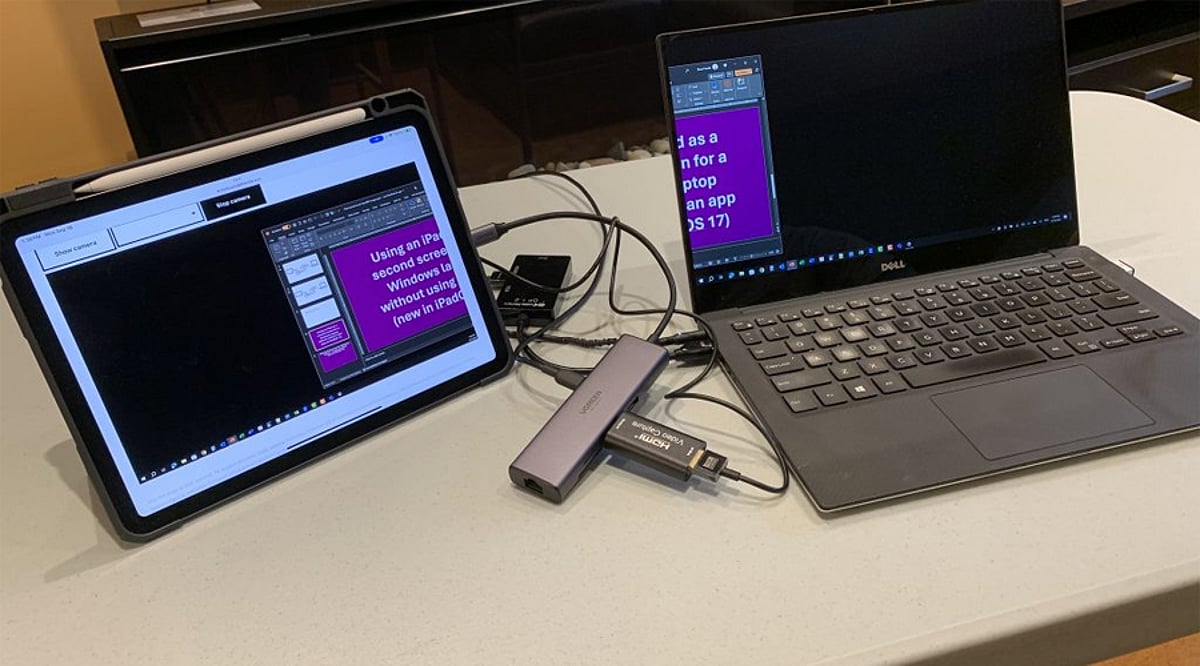
    Your iPad can do much more than serve as a standalone tablet. When paired with a compatible Mac, Apple’s Sidecar feature transforms your iPad into a second screen, expanding your workspace for documents, creative applications, research, and multitasking. This guide walks you through the entire process, from compatibility checks to advanced tips.

    Check Compatibility First

    Before diving in, ensure your Mac and iPad support Sidecar and are signed in to the same Apple Account. Both devices must run compatible operating systems, and you’ll need to have two-factor authentication enabled for that account. This requirement ensures a secure and seamless connection.

    Connect Your Devices

    Sidecar works both wirelessly and over a wired USB connection. For wireless setup, turn on Wi-Fi, Bluetooth, and Handoff on both devices, and keep them near each other. A USB connection is ideal for long sessions, as it keeps your iPad charged while working.

    Enable Sidecar

    On your Mac, open Control Center and select Screen Mirroring, then choose your iPad from the list. Alternatively, go to System Settings, click Displays, and add the iPad from there. Once connected, your iPad will act as an extension of your Mac desktop.

    Extend or Mirror the Screen

    Sidecar offers two primary modes: Extend and Mirror. In Extend mode, you can place different windows on each screen, effectively doubling your workspace. In Mirror mode, both displays show the same content—ideal for presentations or teaching. You can also rearrange display positions so moving the cursor between screens feels natural.

    Use Apple Pencil Too

    For creative professionals, Sidecar becomes even more powerful with an Apple Pencil. You can draw, edit photos, annotate documents, and interact with supported Mac applications directly on your iPad. The iPad’s sidebar gives quick access to common modifiers like Command, Option, and Shift, making it a natural extension of your workflow.

    Build a Bigger Workspace

    Once Sidecar is running, drag research materials, reference pages, or tool palettes onto the iPad while keeping your main project on the Mac. This setup eliminates cramped multitasking and boosts productivity. When you’re done, simply disconnect your iPad via the Screen Mirroring menu or Sidecar controls to return to normal operation.

    Join our WhatsApp Channel for the latest news, exclusives, and videos on technology.

  • Stablecoin Contractor Payouts: How to Keep Invoices and Records Audit-Ready

    Stablecoin Contractor Payouts: How to Keep Invoices and Records Audit-Ready

    Key Takeaways

    • A stablecoin transfer confirms on-chain in minutes, but an auditor checks the same three things they check on a bank payment: an agreement, a matching invoice, and proof the money reached the right person.
    • US payers still need a signed W-9 or W-8BEN on file before the first payout. From 1 January 2026 the 1099-NEC reporting threshold moves to $2,000, and missing documentation defaults to backup withholding.
    • A transaction hash is not an invoice. It confirms a transfer happened; it says nothing about what the payment was for or which agreement it settles.
    • Wallet address verification — matching the network, confirming the recipient, testing a new address with a small transfer — does the job a bank’s account-verification step used to do, and skipping it is the most common way a payout ends up unrecoverable.

    How Stablecoin Payouts to Contractors Work

    A stablecoin is a token issued on a blockchain and pegged to a reference currency, usually the US dollar. Paying a contractor in one means moving that token from the payer’s wallet (or a platform’s custodial wallet acting on the payer’s behalf) to an address the contractor controls, on whichever network the token was issued on — Ethereum, Tron and Solana each host their own version of USDT, and they are not interchangeable.

    The transfer itself has three stages that matter for a paper trail:

    1. Broadcast. The sender signs a transaction specifying the token, the amount and the destination address, and submits it to the network.
    2. Confirmation. Validators on that network include the transaction in a block. Once confirmed, it is final — there is no chargeback, no dispute process with a receiving bank, and no correspondent bank re-checking the route days later.
    3. Settlement. The contractor’s wallet balance updates immediately. What happens after that — holding the stablecoin, moving it to an exchange, converting to local currency — is the contractor’s own step, separate from the payout itself.

    The practical difference from a wire is that there is no banking-hours cutoff and no multi-day routing through intermediary banks. A transfer either confirms within minutes or it fails outright, usually because the destination address, network or gas allowance was wrong. There is no middle state where a payment sits pending for three days while a correspondent bank works out where to route it.

    Picture a design studio in Bangalore paying an illustrator in Lagos for a set of assets delivered against a signed statement of work. Under a wire, the studio’s bank would route the payment through one or two correspondent banks, and the illustrator would see funds land some business days later, net of an exchange-rate margin taken somewhere along the chain. Under a stablecoin payout, the illustrator sees the balance change the same day, but the studio’s finance team still needs the same statement of work, the same invoice, and now also a transaction hash to show where that specific payment landed.

    What Auditors Look For

    None of this removes the paperwork; it just changes which document proves what. An auditor reviewing a book of contractor payouts, stablecoin or otherwise, is checking for a handful of specific things:

    • A signed agreement predating the work. Whether it’s a master service agreement or a per-project statement of work, the contract has to exist before the invoice it’s tied to; reconstructing it afterward doesn’t hold up.
    • Tax documentation collected before the first payout. A US payer collects a W-9 from a US person, or a W-8BEN (individual) or W-8BEN-E (entity) from a foreign one, and keeps it on file — these forms are not filed with the IRS, but their absence matters. A W-8BEN expires at the end of the third calendar year after it’s signed, so a contractor paid for years on the same form is a document an auditor will flag as stale.
    • Correct withholding treatment. Compensation for services is sourced to where the work was actually performed. A non-US contractor doing all their work outside the US generally triggers no 1099 and no 1042-S, and no withholding, but only if the payer holds a valid W-8 form. Without that documentation, the default is backup withholding: 24% for a domestic payee, 30% for a foreign one. A US citizen or green-card holder living abroad is still a US person for this purpose and needs a W-9, not a W-8BEN.
    • The right reporting threshold applied. From payments made on or after 1 January 2026, the 1099-NEC reporting threshold is $2,000 per payee per calendar year, replacing the long-standing $600 figure. The first forms reflecting the new threshold are the ones filed in early 2027.
    • An invoice that satisfies the contractor’s own jurisdiction as well as the payer’s. For a non-US payer working with a contractor abroad, cross-border B2B services are typically handled under a reverse-charge arrangement: the VAT liability shifts to the buyer, but the paperwork requirement doesn’t disappear. On top of that, the invoice format itself has to meet the contractor’s own country’s rules, which vary (Brazil’s nota fiscal, for instance, has no direct equivalent elsewhere), and a payer often needs evidence the contractor is properly registered as self-employed under their local regime.

    A stablecoin payout doesn’t touch any of these obligations. It changes the settlement rail; the documentation an auditor expects to see attached to it stays the same.

    Linking Each Payout to an Agreement and an Invoice

    The gap that actually causes delays during an audit is a structural one: on-chain history and paper records live in two different systems, and nobody connects them until someone has to.

    A workable practice ties three references together for every payout: the agreement it falls under, the invoice number and amount, and the transaction hash that moved the funds. A few points make that link hold up:

    • The agreement should specify the settlement currency, including which stablecoin and which network. A USDT address on Tron is a different destination from a USDT address on Ethereum, and the contract terms should say which one applies.
    • The invoice is usually still denominated in a fiat currency even when settlement happens in a stablecoin, at a reference exchange rate agreed at the time of payment. That rate and its timestamp belong in the record, because a stablecoin’s peg drifts slightly against its reference currency, and an auditor checking the math needs to know which rate was used.
    • The transaction hash, the unique identifier a blockchain assigns to a confirmed transfer, gets recorded against the invoice number the moment the payout settles, before anyone has to reconstruct it later from wallet history.
    • A running register (invoice number, date, amount, currency, destination address, transaction hash, agreement reference) turns a scattered set of on-chain transfers into something an auditor can trace payout by payout, without a pile of anonymous balance changes to match up afterward.

    Skip that register and a stablecoin payout becomes exactly the kind of entry auditors are trained to distrust: a value moved between two addresses, with nothing attached that explains what it was for.

    Wallet and Address Verification

    A wallet address carries no name. Matching it to the right person is entirely the payer’s responsibility, and it’s the step most often skipped when a payout needs to go out quickly.

    A few checks do most of the work:

    • Matching the network to the address. An address formatted for one chain is not valid on another; sending a token to the wrong network is a common way for funds to become unrecoverable.
    • Confirming ownership before the first payout. Some platforms have the contractor supply and confirm their own wallet address during onboarding. That removes the step where address-interception fraud tends to concentrate: the payer collecting an address by email.
    • Testing new or large payouts with a small transfer first, then sending the full amount once the small one is confirmed received at the right address.
    • Treating the transfer as final once confirmed. Once a stablecoin transfer clears, there is no recall and no thirty-day chargeback window to fall back on. A mistake at this stage is a loss to write off, not an administrative correction to make later.

    None of this is exotic; it’s the same discipline banks apply when they verify a new payee before a first wire. Stablecoin rails just move the responsibility for that check from the bank onto whoever operates the payout.

    Platforms That Combine Payouts and Documents

    Because a stablecoin payout on its own produces a transaction hash and nothing else, the practical answer for a distributed team is a platform that generates the agreement, the invoice and the payout record together, so nobody stitches a blockchain explorer to a spreadsheet after the fact.

    4dev.com is one example of this category. It’s built around a Contractor of Record model: a client signs one agreement with 4dev.com that covers every contractor engaged through the platform, and the platform operates across 150+ countries. Contractors self-onboard through the platform, supplying their own identity and payment details, and the platform checks documents and status during that process, so the client sees each contractor’s readiness in real time without chasing paperwork by email. Closing documents are generated per payout and exportable on demand, which is the piece that turns a payout history into something an auditor can actually review.

    On the payment rail itself: 4dev.com can legally pay a contractor in USDT with closing documents attached, and it also accepts crypto payments from clients directly. Its published pricing is a service fee of 3% or less per payout, with no subscription and no account fee. What it doesn’t do is employ anyone directly: there’s no employer-of-record product today (one is planned for 2027) and no payroll for staff employees, since the platform is built for contractor engagements. On the trust side, 4dev.com doesn’t publish formal security certifications such as SOC 2 or ISO 27001, so a buyer weighing that specifically should factor it in.

    The pattern generalizes beyond any one vendor: a platform built for contractor payouts pairs the payment rail with the paperwork by default, so the agreement, the invoice and the transaction record are already linked when an auditor asks to see them, well before the once-a-year scramble to assemble them under deadline.

    FAQ

    Does a stablecoin payout still need an invoice?

    Yes. Confirming a transfer on-chain shows that value moved between two addresses — it doesn’t establish what the payment covered or which agreement it settles. Reconstructing that link after the fact, from wallet history alone, is exactly what an audit flags as missing documentation.

    What happens if a contractor gives the wrong wallet address or the wrong network?

    Usually nothing can be done. A confirmed blockchain transaction has no recall and no dispute process; funds sent to an unowned or mismatched address are typically gone. That’s why verifying the address, and matching the network before sending, matters more here than it does with a bank transfer that can sometimes be recalled.

    Does paying a contractor in a stablecoin change US 1099 reporting?

    No. The 1099-NEC reporting obligation depends on where the services were performed and what tax documentation the payer holds — a W-9 for a US person, a W-8BEN or W-8BEN-E for a foreign one. The currency or rail the payout settles in plays no part in that. The threshold itself moves to $2,000 per payee per year for payments made from 1 January 2026, replacing the previous $600 figure, regardless of whether the payout arrives by wire or on-chain.


  • LinkedIn Combats Fake Profiles with AI Detection and Identity Verification

    LinkedIn Combats Fake Profiles with AI Detection and Identity Verification

    LinkedIn is deploying a multi-layered strategy combining artificial intelligence, identity verification, and contextual signals to counter the rising threat of fake professional profiles. Between July and December 2024, the platform blocked over 80.6 million fake accounts at registration, yet the challenge persists with AI-generated headshots, cloned executives, and fake recruiters.

    Automated Detection Screens Suspicious Accounts Early

    LinkedIn’s first line of defense is AI-driven detection. In October 2022, the company introduced a deep learning model that analyzes profile photo uploads for signs of AI generation. It detects subtle artifacts without using facial recognition or biometric data.

    A 2023 study with Professor Hany Farid found the model detected 99.6% of StyleGAN-generated faces with only a 1% false-positive rate on real photos. A 2024 update expanded the training set to include StyleGAN 1–3, Stable Diffusion 1 & 2, and DALL·E 2, achieving 98% recall at a 0.5% false-positive target. However, on unseen generators, recall dropped to 84.5%, highlighting the need for continuous model updates.

    Text-based fake profiles remain tricky. A July 2025 arXiv study showed that existing detectors allowed 42% to 52% of GPT-4-Turbo-generated LinkedIn-style profiles to pass. Adversarial training improved this to a 1% to 7% range.

    Verification Provides Evidence for Specific Claims

    LinkedIn offers free identity, workplace, and education verification. Workplace verification uses a company email or Microsoft Entra Verified ID; education checks use a school email. ID verification is handled by CLEAR (U.S., Canada, Mexico), Persona (other listed countries), or DigiLocker (India).

    By December 2025, over 100 million members had added at least one verification. LinkedIn states that Persona collects ID images and selfies, but only shares specified information after member consent—no biometric data, ID numbers, or expiry dates are received by LinkedIn.

    Contextual Signals Help Members Judge Trustworthiness

    A verification badge confirms a single claim, not overall credibility. LinkedIn provides additional context through the About this profile panel, which shows account creation date and whether a phone number or work email is verified. Members are also encouraged to review post history, message content, and account age.

    Job posts can display verified company and recruiter details. In September 2025, LinkedIn said it would require workplace verification when members add or update certain leadership or recruiter-related roles. The Verified Recruiter label appears in InMails and on profiles.

    Where the Limits Lie

    Detection models can flag suspicious photos but cannot confirm a real person behind a clean profile. Unverified members are not automatically fake. For Persona, members must be in a supported country and provide a valid NFC-enabled passport.

    TechCrunch reported that about 60% of verified members confirmed a workplace, while only 27% verified a government ID—two badges with very different weights. LinkedIn also notes that a verification badge on a job post does not increase hiring likelihood.

    The Future: Portable Verification

    Through Verified on LinkedIn, partners like Adobe, G2, UserTesting, TrustRadius, and Zoom can display member verifications on their own platforms. A self-serve API extends this to any organization. A verification earned on LinkedIn can function as a professional trust signal beyond the platform itself.

  • Samsung Wallet Adds On-Device Fingerprint Authentication for UPI Payments in India

    Samsung Wallet Adds On-Device Fingerprint Authentication for UPI Payments in India

    Samsung India has announced a significant update to its Samsung Wallet service, enabling users to make UPI payments using their Galaxy device’s fingerprint sensor. The new on-device biometric authentication eliminates the need to enter a UPI PIN for transactions up to ₹10,000, making digital payments as simple as unlocking a phone.

    This feature enhances user privacy by keeping biometric data on the device and reduces transaction failures caused by mistyped PINs. By combining convenience, speed, and robust security, Samsung Wallet aims to simplify everyday UPI payments for Indian consumers.

    The update is part of Samsung’s ongoing efforts to improve digital payment experiences in India, where UPI has become the dominant payment method. Users with compatible Galaxy devices can now enjoy a frictionless payment process without compromising security.

  • NYT Strands #935 Hints and Answers for September 24, 2026: Backyard Theme

    NYT Strands #935 Hints and Answers for September 24, 2026: Backyard Theme

    The New York Times Strands puzzle for Thursday, September 24, 2026, brings a fresh challenge with the theme “Just outside your door.” Players must uncover six theme words and a spangram that all relate to common backyard features and activities.

    Understanding Today’s Theme

    The official clue for puzzle #935 is “Just outside your door.” This points directly to items and structures you might find in a residential backyard. The six hidden words are: POOL, FORT, SWINGS, SANDBOX, TREEHOUSE, and TRAMPOLINE. The spangram that ties them all together is BACKYARD.

    How NYT Strands Works

    NYT Strands is a daily word‑search puzzle where players connect letters to form words related to a specific theme. The spangram is a special word or phrase that describes the puzzle’s central concept—it touches two opposite sides of the grid and appears in yellow when found. Players can also earn hints by finding three non‑theme words, which then reveal the letters of one theme word.

    Hints for September 24, 2026

    Main hint: “Just outside your door.”
    Simpler clue: Think of things you might find outside a child’s home.

    The spangram hint: It is mostly horizontal and directly names the outdoor space connected to all the other answers.

    Complete Answer List

    • POOL
    • FORT
    • SWINGS
    • SANDBOX
    • TREEHOUSE
    • TRAMPOLINE
    • BACKYARD (Spangram)

    These answers represent typical backyard features: POOL for swimming, SANDBOX and SWINGS for play, TREEHOUSE and FORT for structures, and TRAMPOLINE for recreation.

    Why This Puzzle May Take Time

    The challenge lies in the variety of words hidden in the grid. Many are tied to childhood outdoor activities, making the theme easier to recognize once you find one or two words. The spangram BACKYARD often provides the breakthrough, clarifying the connection between all remaining words.

    NYT Strands offers a new puzzle daily. For players stuck on September 24, the full answer list above provides a direct path through the grid. Stay tuned for the next Strands challenge with a different theme.

  • Why Real-World Assets (RWA) Are Becoming the Next Trillion-Dollar Crypto Narrative

    Why Real-World Assets (RWA) Are Becoming the Next Trillion-Dollar Crypto Narrative

    Over the past few years, market attention has shifted from Bitcoin and Ethereum to DeFi, NFTs, artificial intelligence, and various emerging tokens. Entering 2026, a new keyword is redefining the relationship between crypto assets and the real economy: Real-World Assets (RWA).

    What Are Real-World Assets (RWA)?

    RWA refers to the process of bringing real-world assets, rights, or financial instruments onto a blockchain. Unlike native digital assets such as Bitcoin, the value of RWA is rooted in tangible items like U.S. Treasuries, private credit, real estate, gold, commodities, and energy infrastructure. As blockchain adoption grows, an increasing number of such assets are being tokenized.

    From XRP to AI: Two Major Narratives Intersect

    Three seemingly separate hot sectors—XRP, AI, and RWA—are showing clear points of convergence. XRP, often used for cross-border payments, and AI, which demands massive computational resources, both rely on real-world infrastructure. At this intersection, a critical question emerges: If blockchain can connect real-world assets and AI requires massive energy infrastructure, could energy become the next major direction for RWA?

    Why RWA Is Gaining Traction in the Crypto Market

    The explosion of generative AI applications like ChatGPT has driven a surge in data center construction, GPU clusters, and AI computing infrastructure. All of this computing depends on one key resource: electricity. The International Energy Agency estimates that by 2035, renewable electricity generation to meet data center demand could exceed 450 TWh, with renewables expected to cover roughly half of the growth in global data center electricity demand.

    This creates a powerful ripple effect: AI → Data Centers → Electricity Demand → Solar, Wind, Hydropower, and Energy Storage → Energy Infrastructure. RWA offers a way to tokenize these energy assets, making them accessible to a wider audience.

    Energy Infrastructure: The Next Frontier for RWA

    Lake Energy is one company exploring this connection. The firm focuses on renewable energy infrastructure—solar, wind, hydropower, and Battery Energy Storage Systems (BESS)—and uses a digital platform to connect real-world energy projects with individual participants. Users don’t need to build or operate power plants; instead, they can view available energy projects and choose to participate using digital assets such as BTC, XRP, ETH, or LTC.

    How to Participate on Lake Energy

    • Create an account on the Lake Energy website.
    • Browse available solar, wind, hydropower, or energy storage projects.
    • Select a project and choose to participate using supported digital assets (BTC, XRP, ETH, LTC, etc.).
    • Choose a project duration: options include 5, 10, 30, or 50 days.
    • View project records and income distributions through your account.

    Such platforms illustrate how RWA can bridge the digital and physical economies, allowing token holders to gain exposure to real-world infrastructure without the traditional barriers of capital or expertise.

    The Future of RWA: AI, Energy, and Beyond

    As AI continues to expand, the demand for electricity from data centers will grow, making energy infrastructure a prime candidate for tokenization. RWA is no longer limited to U.S. Treasuries and traditional financial assets; it is evolving to include the very resources that power the digital age. The intersection of XRP, AI, and energy infrastructure could drive the next trillion-dollar narrative in crypto.

    Disclaimer: This article is for informational purposes only and does not constitute financial or investment advice. Always do your own research before investing.

  • How AI-Driven Procurement Unlocks Hidden Millions by Unifying Supply Chains

    How AI-Driven Procurement Unlocks Hidden Millions by Unifying Supply Chains

    When two sites buy the same part from the same supplier at different prices, and nobody in either building knows, the waste is not a rounding error—it is a multi-million-dollar leak. That is the core insight from Priyanka Malla, an IT project manager specializing in AI-driven enterprise procurement and supply chain transformation.

    “At scale, the multi-million-dollar opportunity in procurement is not smarter buying, it is unification,” she says. Malla manages a portfolio of capital and operating spend covering AI initiatives, enterprise procurement, ERP modernization, and infrastructure. Her largest program consolidated procurement across more than 50 geographically distributed sites onto a single standardized platform. Each site arrived with its own legacy process and supplier relationships, and there was no template to follow.

    The obstacle, she found, was not the software. “When integrating systems that were never designed to talk to each other, the hard part is not the technology, it is reconciling how differently each site had been operating.” Reconciling fifty ways of buying into one was less an integration job than a negotiation with each site about how it worked.

    She followed that with ERP modernization across more than 15 branches, bringing together supply chain and financial data that had lived in disconnected legacy systems. The two programs did the same thing from different directions: one standardized how the organization buys, the other standardized what it knows about what it has bought.

    That order matters for artificial intelligence. Organizations that bring together sites or companies that each ran their own procurement “inherit duplicate suppliers, inconsistent pricing, and invisible spend.” An algorithm cannot optimize spend that nobody can see. “AI’s first real job is making that fragmented picture visible before it can make it optimal.”

    Bringing AI into that environment created a problem nobody had solved for her. As an early AI-focused project manager, she needed a way to decide when an AI tool could be trusted in an enterprise adoption decision, and no criteria existed. She built them, and that work became the failure-mode evaluation frameworks she now applies to AI adoption decisions.

    Her conclusion is blunt. “Most AI procurement rollouts fail at governance, not technology.” The risk is specific to scale. “Before scaling across dozens of sites, you need a shared definition of an acceptable failure mode. Otherwise every site trusts the algorithm differently, and you lose the standardization that justified the investment in the first place.”

    It is a pointed observation, because it means a rollout can undo its own business case. The reason to consolidate fifty sites is to make them behave consistently. An AI tool that one site overrides constantly and another accepts without question reintroduces exactly the inconsistency the consolidation was meant to remove.

    On where the technology goes next, she is specific about what automation should and should not do. “The next era of AI procurement is about routing decisions, not replacing buyers. The wins come from letting automation clear the high-confidence, high-volume transactions and escalating the exceptions to a human. That is where the cost curve actually bends.”

    The pattern runs back through her career. Earlier, she worked on a product lifecycle management deployment across more than 500 global sites, another exercise in getting many independent operators onto one system. She is an IEEE Senior Member, holds PMP certification and a master’s degree in management information systems from California State University, Long Beach, and has written for the product management publication Mind the Product.

    The headline promise of AI in procurement is an algorithm that finds millions. Malla’s account suggests the order is the other way round. The millions are already there, spread across suppliers, prices, and sites that were never compared. The algorithm only finds them once somebody has done the slow work of putting everything in one place.

  • AI in Hiring: How Automated Tools Are Reshaping Talent Acquisition in 2026

    AI in Hiring: How Automated Tools Are Reshaping Talent Acquisition in 2026

    AI recruitment tools are transforming the hiring landscape in 2026, helping companies automate significant portions of the recruitment process. From sourcing candidates and screening resumes to scheduling interviews and summarizing conversations, these technologies reduce repetitive administrative work, allowing recruiters to focus on top candidates and final hiring decisions.

    AI-Powered Candidate Sourcing

    AI-driven sourcing tools search talent databases, job platforms, and professional networks to identify potential candidates. Platforms such as SeekOut, hireEZ, LinkedIn Recruiter, and Beamery excel at uncovering passive talent and enabling recruiters to create personalized outreach at scale.

    Automated Resume Screening

    AI screening systems convert resumes into structured candidate profiles by extracting skills, experience, education, and work history. Tools like Eightfold AI use skills-based matching to connect candidates with suitable roles, moving beyond reliance on exact job titles or keywords.

    Chatbots for Candidate Communication

    Recruitment chatbots handle the first stage of candidate interaction. Platforms such as Paradox and Humanly answer common questions, collect basic information, send updates, and manage high-volume screening. AI also coordinates interview schedules, eliminating lengthy email exchanges.

    AI in Interviews and Assessments

    AI is redefining interviews and candidate assessments. Tools like HireVue conduct structured interviews, transcribe responses, and generate summaries. However, companies should avoid using facial expressions, voice tone, or body language to judge personality, honesty, or competence, as these methods can introduce bias.

    Recruitment Analytics and Dashboards

    Recruitment dashboards help organizations track metrics such as time-to-hire, candidate drop-off rates, sourcing channels, and pipeline performance. AI can also rediscover past candidates and identify skills gaps, enabling recruiters to refine workflows and reduce administrative overhead.

    The Importance of Human Oversight

    While AI accelerates hiring, human oversight remains essential. Companies should use job-related criteria, test systems for bias, protect candidate data, explain AI usage, and provide applicants with a way to request human review. AI should assist recruiters, not become an unaccountable hiring gatekeeper.

  • How Cardano’s Blockchain Infrastructure Enables Autonomous AI Payments and Machine-to-Machine Transactions

    How Cardano’s Blockchain Infrastructure Enables Autonomous AI Payments and Machine-to-Machine Transactions

    Artificial intelligence (AI) agents are rapidly evolving from systems that merely generate information into full-fledged software capable of executing tasks, interacting with services, and even making payments. Cardano is strategically positioning its blockchain infrastructure to support this emerging agent economy through programmable transactions, identity tools, and machine-focused payment standards.

    Why AI Agents Need Payment Capabilities

    Autonomous agents may need to purchase model inference, datasets, APIs, computing resources, or digital services without requiring human approval for every transaction. Cardano describes autonomous agents as software that can hold wallets and submit on-chain transactions independently.

    At the heart of this capability is x402, an open payment standard built around HTTP’s ‘402 Payment Required’ response. This standard allows software to encounter a priced online resource, authorize payment, and continue processing the request without creating a traditional billing account. Cardano’s implementation integrates with the Masumi smart-contract protocol, which provides escrow, refunds, and on-chain decision logging. Funds are released when work is delivered or refunded when conditions are not satisfied.

    Programmable Settlement with EUTXO Model

    Cardano employs the Extended Unspent Transaction Output (EUTXO) accounting model, where outputs can contain scripts defining conditions that must be satisfied before funds move. This model ensures transaction validity and required fees can be evaluated before submission when relevant inputs remain available.

    This predictability is critical for AI agents. It allows them to operate within predefined budgets rather than facing unpredictable execution costs. Developers can design agents with spending limits, approved counterparties, or smart-contract conditions, giving software controlled access to funds without unrestricted authority over finances.

    Hydra Layer-2 for High-Frequency Payments

    Cardano’s Hydra Layer-2 scaling technology is another key component. A Hydra Head functions as an off-chain ledger between a fixed group of participants, with outcomes ultimately settled on the main Cardano blockchain. Cardano’s developer documentation specifically identifies machine-to-machine and AI-agent payments as a Hydra use case, citing agent-to-agent transactions occurring at machine frequency for fractions of a cent.

    The Global Trend Toward Agent Payments

    The movement toward autonomous payments extends beyond Cardano. In September 2026, Solana Foundation reported a payment-channel benchmark involving 100,000 wallets and over one million off-chain-authorized payments per second. Rather than settling every interaction individually, agents authorize spending updates off-chain before final settlement, demonstrating the scale autonomous agents may eventually require.

    Security Considerations Remain Critical

    Financial autonomy introduces significant risks. Compromised agents, malicious prompts, faulty software, or stolen credentials could authorize unintended spending. Secure key management, transaction limits, escrow mechanisms, identity verification, and human approval for high-value transfers remain essential safeguards.

    Conclusion

    Cardano already possesses the building blocks for agent payments, including x402, Masumi, EUTXO smart contracts, and Hydra. These tools enable autonomous software to pay under predefined rules while maintaining auditable settlement. Widespread adoption will ultimately depend on security, developer integration, and genuine demand for machine-to-machine commerce.