Author: vitorcherulli

  • Google’s Project Suncatcher: AI Chips Bound for Low Earth Orbit on October 1

    Google’s Project Suncatcher: AI Chips Bound for Low Earth Orbit on October 1

    Google is preparing to launch its Tensor Processing Units (TPUs) into low Earth orbit on October 1, 2026, as part of Project Suncatcher. The prototype satellite will be carried by SpaceX’s Transporter-18 rideshare mission, launching from California. Planet Labs is collaborating with Google on the spacecraft effort.

    The primary goal of Project Suncatcher is to test how AI hardware performs in the harsh environment of space. The TPUs will be subjected to radiation, extreme temperatures, and the intense vibrations of a rocket launch. Cosmic rays and solar activity can disrupt electronics and create errors known as bit flips. Google has already conducted ground tests, including proton beam radiation testing at UC Davis, where AI workloads were run while researchers monitored radiation-related errors. Vibration tests across all three satellite axes were also performed, and the hardware reportedly held up during these stress tests.

    One of the biggest challenges for space-based AI computing is cooling. In the vacuum of space, conventional fans cannot dissipate heat. Google plans to use heat pipes and radiators to transfer heat away from the TPUs, a method already tested in thermal vacuum chambers.

    Another advantage of orbital computing is access to near-constant solar power. Satellites in low Earth orbit can receive up to eight times more solar energy than ground-based installations, making space an attractive location for energy-intensive AI workloads.

    Looking ahead, Google envisions multiple satellites working together as orbital computing clusters, connected by high-bandwidth laser links. The company plans to launch two satellites in 2027 to test these laser communication systems.

    The upcoming launch is not a full-scale AI data center in space but a testbed to gather real-world data on hardware reliability and operational limits. The findings will inform the design of future space-based AI systems, with commercial deployment still a long-term possibility.

  • Comviva Names Former Tech Mahindra AI Leader Jeet Singh to Drive Global Strategy and Alliances

    Comviva Names Former Tech Mahindra AI Leader Jeet Singh to Drive Global Strategy and Alliances

    Comviva has appointed Jeet Singh as its Global Head of Strategy, Transformation and Alliances, tasking him with leading the company’s growth initiatives and partnership development. The announcement, made on September 24, 2026, brings Singh from Tech Mahindra, where he most recently oversaw the global artificial intelligence business.

    What Will Jeet Singh Oversee at Comviva?

    Singh will define Comviva’s strategic direction as it aims to expand into developed markets and enter new industry verticals. He is also responsible for identifying growth opportunities and guiding the evolution of the company’s product portfolio, with artificial intelligence identified as a key area of investment.

    His role extends to global alliances, where he will cultivate partnerships to help Comviva reach new customers and markets. The company has not disclosed specific partners, target industries, or countries tied to his appointment.

    Comviva provides software for customer experience management, data monetization, and digital financial services, serving communications providers and other enterprises. The company reports more than 200 customers and operations in over 100 countries, though it has not set a public expansion target for Singh’s new role.

    Why Has Comviva Chosen Singh for the Role?

    Singh’s most recent position at Tech Mahindra placed him in charge of its global AI business. Comviva highlighted that his expertise spans sales, product development, market strategy, partnerships, and organizational change. Since Tech Mahindra owns Comviva, Singh’s move is an internal transfer within the larger group.

    Comviva CEO Rajesh Chandiramani, who has worked closely with Singh previously, noted his experience in building businesses and applying new technology to enterprise needs. Chandiramani stated that this experience will support the company’s ‘Comviva 2.0’ plans and its integration of AI into products.

    ‘Jeet’s experience in building businesses and applying new technology to enterprise needs will be invaluable as we execute our Comviva 2.0 plans and deepen AI within our products.’ – Rajesh Chandiramani, CEO of Comviva

    The CEO’s comments outline expectations for the appointment, though Comviva has not disclosed financial targets, a timeline for entering new markets, or changes to Singh’s reporting structure. It also did not indicate whether the role would alter existing partnerships.

    How Does the Appointment Fit Comviva’s Plans?

    Comviva has linked Singh’s appointment to its investment in AI, product portfolio changes, and efforts to grow beyond its current markets. His remit unites these areas with partnership development. The company has announced these priorities but has not detailed new products or agreements under his leadership.

    Singh said Comviva plans to expand in developed markets, move into new industry segments, and build its AI capabilities. He also said he would work with the leadership team, customers, and partners on the company’s strategy. These are stated plans, and Comviva has not specified when it expects to complete them.

    The appointment creates a central strategy and alliances role as Comviva pursues growth across multiple business areas. Singh brings experience from Tech Mahindra’s AI division and a mandate to develop partnerships. For now, Comviva has described the scope of his responsibilities without announcing a specific market launch, partnership, or revenue goal.

  • XRP and XLM Retreat as ETF Inflows and Stellar Network Growth Persist

    XRP and XLM Retreat as ETF Inflows and Stellar Network Growth Persist

    XRP and Stellar’s XLM have extended their short-term pullbacks after strong recent rallies, even as fresh institutional developments continue to support attention around both assets. XRP traded near $1.509 after dropping 4.56% in the previous session, while XLM hovered around $0.202 following a 6.52% decline.

    The price weakness came as spot XRP exchange-traded funds (ETFs) continued attracting capital, and Stellar expanded its institutional infrastructure through BVNK Finance while exploring new blockchain privacy tools. However, derivatives and spot market indicators showed traders had become more cautious, with CryptoQuant data pointing to sell-side pressure in futures markets for both XRP and XLM.

    XRP ETF Inflows Continue Despite Short-Term Price Drop

    Spot XRP ETFs recorded $18.04 million in net inflows on Wednesday, according to SoSoValue data, following $20.02 million in inflows on Tuesday. Together, the two sessions brought roughly $38.06 million into XRP-focused investment products, demonstrating continued demand even as XRP underwent a short-term correction after its recent advance.

    Sustained institutional demand could remain an important market factor. However, CryptoQuant data presented a more cautious picture: XRP futures markets showed sell-side dominance alongside signs of overheating after the earlier price surge. Retail participation remained relatively limited, and while spot markets showed heating conditions, several other indicators stayed neutral. This creates mixed short-term signals, with positive ETF flows contrasting with cautious derivatives activity.

    Stellar Expands Institutional Reach Through BVNK Finance

    Stellar continued expanding its infrastructure despite XLM’s recent decline. The network announced that its blockchain had gone live on BVNK Finance, giving enterprise customers access to Stellar for high-volume digital asset transfers. Stellar said the network supports cross-border payments, remittances, and treasury management at sub-penny transaction costs.

    The collaboration extends Stellar’s exposure to financial institutions and enterprise payment users, broadening its potential role in digital asset settlement and international payments. Meanwhile, XLM futures markets showed sell-side dominance, and spot markets showed large whale orders, while other indicators remained neutral. XLM remained near $0.202 as traders assessed whether institutional developments could eventually translate into stronger network activity.

    Stellar Explores On-Chain Privacy With OpenZeppelin Input

    Stellar has also turned its attention toward on-chain privacy, with discussions focusing on ways to protect transaction confidentiality while preserving transparency. The initiative includes insights from OpenZeppelin, a blockchain security specialist, and aims to improve confidentiality and security for users conducting transactions on blockchain networks.

    Interest in blockchain privacy has expanded across the wider crypto market, and Stellar’s related social media discussion attracted 165 likes and 23 retweets, reflecting visible community engagement. However, XLM’s price showed no major reaction to the privacy discussion, and trading volume saw no significant increase, suggesting market participants are waiting for more concrete developments.

    Conclusion

    XRP and XLM remain in corrective phases after their recent rallies. XRP continues to draw ETF inflows, while Stellar expands enterprise access and investigates additional privacy infrastructure. Traders are now watching whether those developments can offset cautious futures positioning.

  • Vivo X500 Pro Max: 200MP ZEISS Camera, 8,000mAh Battery, and 2nm Dimensity Chip – Full Specs

    Vivo X500 Pro Max: 200MP ZEISS Camera, 8,000mAh Battery, and 2nm Dimensity Chip – Full Specs

    The vivo X500 Pro Max has officially launched in China, marking a major step forward in flagship smartphone hardware. With a 200MP ZEISS APO super-telephoto camera, an 8,000mAh silicon-carbon battery, and MediaTek’s new 2nm Dimensity 9600 Pro chip, the device targets photography enthusiasts and power users alike.

    Display and Performance

    The phone features a 6.85-inch BOE Q11 ZEISS Master Color OLED display with a 2K resolution and an adaptive refresh rate ranging from 1Hz to 144Hz. This large panel sets it apart from the smaller 6.36-inch X500 Pro, making it ideal for reviewing photos, watching videos, and gaming.

    Under the hood, the Dimensity 9600 Pro is built on a 2nm process with a tri-cluster CPU: two cores at 4.55GHz, three at 4.35GHz, and three at 3.1GHz. Memory options go up to 16GB RAM with storage up to 1TB. Software is handled by OriginOS 7 based on Android 17.

    Battery and Charging

    The 8,000mAh fifth-generation silicon-carbon cell (25% silicon content) supports 90W wired charging and 40W wireless charging. Vivo also states that the battery can operate at temperatures as low as -30°C under test conditions.

    Camera System

    The rear camera consists of a 50MP Sony LYTIA L910 main sensor with LOFIC technology and 3° optical stabilization, a 50MP ultra-wide camera, and the highlight: a 200MP ZEISS APO super-telephoto camera offering approximately 3.7x optical zoom. The telephoto supports the ZEISS G2 Ultra teleconverter, extending the equivalent focal length to 400mm for distant subjects. CIPA 7.0-class stabilization is included on the telephoto.

    Video capabilities include 4K at 240fps slow motion, 4K at 120fps with advanced subject lock, 8K recording, 10-bit Log, 4:2:2 capture, ACES support, Cinematic Video, Cinematic Portrait Video, and 8K Native Live. The phone integrates BlueImage Dynamic Imaging Technology Stack, combining sensor, chip, ZEISS optics, and vivo’s V3+ and VS1+ image processors. A 50MP front camera completes the setup.

    Pricing and Global Launch

    China pricing starts at CNY 6,999 (12GB/256GB) and goes up to CNY 12,999 (16GB/1TB Creator Edition). A satellite communication model (12GB/1TB) is priced at CNY 8,999.

    According to a vivo Austria microsite, the global launch is scheduled for October 27, 2026, at 4 p.m. CEST, with preorders beginning the same day. International pricing and exact specifications are still unconfirmed. Some reports suggest that global models may feature a smaller battery than the China version.

    Key Takeaways

    • 200MP ZEISS APO super-telephoto camera with ~3.7x optical zoom and 400mm teleconverter option.
    • 8,000mAh battery with 90W wired and 40W wireless charging.
    • MediaTek Dimensity 9600 Pro chip on 2nm process.
    • 6.85-inch 2K OLED display with 144Hz adaptive refresh rate.
    • Global launch expected October 27, 2026.
  • LinkedIn Email Finder Tools and Extensions for 2025: Enhance Your Networking and Lead Generation

    LinkedIn Email Finder Tools and Extensions for 2025: Enhance Your Networking and Lead Generation

    LinkedIn remains the premier platform for professionals to connect, network, and discover business opportunities. However, its strict privacy policies hide email addresses, making direct outreach challenging. LinkedIn email finder tools and browser extensions solve this by locating verified professional emails quickly and securely. This article explores the top tools for 2025, their features, and best practices for using them responsibly.

    Why Use a LinkedIn Email Finder?

    Manually hunting for someone’s work email is inefficient, especially when it’s not listed on their profile. These tools streamline the process by:

    • Generating authentic, working email addresses in seconds.
    • Saving hours when reaching out to large numbers of contacts.
    • Significantly improving your chances of connecting with leads or potential hires.

    They are ideal for sales teams targeting customers, recruiters seeking top talent, and business owners building professional networks.

    Top LinkedIn Email Finder Tools in 2025

    Hunter.io

    Widely used by professionals, Hunter.io filters business emails and integrates seamlessly with LinkedIn. It creates real email addresses and helps manage outreach directly on the site, ensuring your messages reach real users.

    Snov.io

    Available as both a Chrome extension and a web platform, Snov.io provides email addresses along with verification. It includes bulk email sending and forwarding features, making it ideal for marketers and recruiters searching for multiple contacts in one session.

    Lusha

    Lusha is an easy-to-use extension known for high accuracy. It scrapes emails and phone numbers directly from LinkedIn profiles. Many sales professionals rely on it for daily networking activities.

    AeroLeads

    This extension excels at finding obscure emails and phone numbers across platforms, including LinkedIn. Users can store contacts in CRM systems like Salesforce or HubSpot, making it perfect for companies needing robust network management.

    Linked Helper

    Linked Helper uses its own database along with Apollo and Snov.io to find verified emails for any LinkedIn or Sales Navigator profile. It reaches 2nd and 3rd-degree connections server-side without profile visits, preserving your daily limits. Each lead is enriched with phone numbers and extra data for easy CRM export.

    LeadLeaper

    LeadLeaper extracts emails from LinkedIn profiles and automatically uploads them to a spreadsheet. It syncs directly with LinkedIn Sales Navigator, making it a top choice for B2B operations.

    Rules for Appropriate Usage

    While these tools are powerful, ethical and legal use is essential:

    • Privacy: Only contact members and access their business emails for a valid business purpose.
    • Double-check emails: Use built-in verification features to ensure addresses are valid.
    • Follow LinkedIn rules: Avoid web scraping or automated methods prohibited by LinkedIn. Respecting platform privacy ensures uninterrupted access.

    Conclusion

    LinkedIn email finder tools and extensions provide verified contact information while adhering to LinkedIn’s terms and legal standards. Whether for sales, talent hunting, or networking, tools like Hunter.io, Snov.io, Lusha, AeroLeads, Linked Helper, and LeadLeaper streamline the collection process with advanced functionalities and search optimization. Users should evaluate features and performance, adhere to security regulations, and maintain privacy standards.

    Frequently Asked Questions

    1. What is a LinkedIn email finder tool?

    A tool that helps locate professional email addresses from LinkedIn profiles quickly and accurately.

    2. Are LinkedIn email finder tools safe to use?

    Yes, as long as they are used responsibly and follow LinkedIn’s privacy guidelines.

    3. Which is the most accurate LinkedIn email finder in 2025?

    Tools like Hunter.io, Lusha, and Snov.io are recognized for their high accuracy and verified email addresses.

    4. Can I export emails from LinkedIn finder tools to CRM software?

    Yes, most tools, such as AeroLeads and LeadLeaper, allow direct export to CRM platforms.

    5. Do I need a premium LinkedIn account to use these email finder extensions?

    Not always, but some advanced features work best with LinkedIn Premium or Sales Navigator.

  • FOXWELL HD500 Review: The Budget-Friendly Heavy-Duty Diagnostic Tablet for Everyday Repairs

    FOXWELL HD500 Review: The Budget-Friendly Heavy-Duty Diagnostic Tablet for Everyday Repairs

    For independent diesel technicians, small repair shops, and fleet managers, selecting the right diagnostic equipment often comes down to balancing features against cost. Basic code readers can retrieve fault codes but lack the comprehensive coverage and advanced functions required for modern heavy-duty vehicles. Conversely, professional OEM diagnostic systems deliver extensive capabilities but at a significantly higher price.

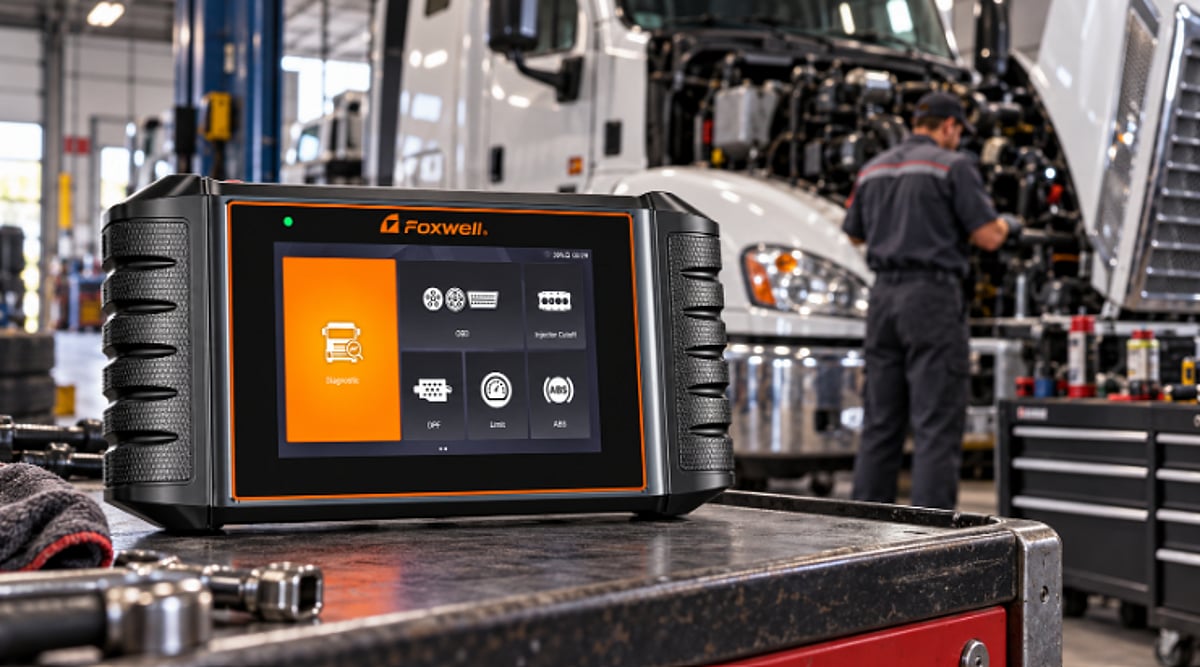
    The FOXWELL HD500 positions itself between these extremes. It is a dedicated heavy-duty diagnostic scanner designed for trucks, buses, commercial vehicles, and other diesel-powered machines. The device offers full-system diagnostics, live-data monitoring, DPF-related functions, injector testing, ABS service tools, and support for multiple heavy-duty communication protocols.

    What Is the FOXWELL HD500?

    The HD500 is a portable diagnostic tablet tailored for heavy-duty diesel applications. Unlike standard OBD-II code readers, it communicates with commercial-vehicle systems using protocols such as J1939, J1708, and J1587. It also supports standard OBD-II and EOBD functions.

    FOXWELL lists compatibility with several major manufacturers and engine platforms, including Cummins, Caterpillar, Detroit, PACCAR, International, Hino, Volvo, and others. However, the level of compatibility and available features can vary by vehicle, model year, ECU, and system setup. FOXWELL advises confirming compatibility before purchasing or performing a specific service.

    Full-System Diagnostics for Heavy-Duty Vehicles

    One of the HD500’s key advantages over a basic code reader is its broader system coverage. Instead of focusing only on the engine ECU, the HD500 accesses multiple vehicle systems on compatible vehicles. These systems may include:

    • Engine control systems
    • Transmission-related systems
    • ABS and braking systems
    • SRS systems
    • EPB and parking-brake systems
    • DPF and emissions-related systems
    • Other supported electronic control modules

    DPF Regeneration and Diesel Maintenance Functions

    DPF-related issues are among the most common reasons heavy-duty vehicle owners and technicians use a diagnostic scanner. Excessive soot buildup can trigger the DPF warning light, regeneration failures, reduced engine power, or even torque-limiting conditions.

    On compatible vehicles, the HD500 supports DPF-related diagnostic and maintenance functions, including forced DPF regeneration, DPF reset, and access to related live data.

    DPF Clogging or Excessive Soot Load

    When soot accumulates excessively, the HD500 can read fault codes and display parameters such as soot load, exhaust temperature, and differential pressure. This helps technicians evaluate DPF condition and decide whether regeneration is appropriate.

    DPF Regeneration Failure

    If a vehicle repeatedly fails automatic regeneration, the HD500 allows review of related fault codes and live data to identify causes like excessive soot buildup, abnormal temperatures, or sensor faults.

    Engine Derate or Reduced Power

    When DPF or emissions problems become severe, some vehicles limit engine RPM or torque. The HD500 helps identify related faults and, when conditions are met, perform supported regeneration or reset functions.

    Forced DPF Regeneration

    When automatic regeneration cannot complete, the HD500 supports forced regeneration on compatible vehicles. Technicians should check fault codes and live data before starting the procedure to ensure the vehicle meets required conditions.

    The HD500 also includes an Injector Cutoff function that temporarily deactivates injectors one cylinder at a time. This helps pinpoint cylinders contributing to rough idle, vibration, power loss, or excessive fuel consumption, reducing unnecessary part replacements. Availability of these special functions varies by vehicle, engine, ECU, and model year, so compatibility must be verified beforehand.

    Live Data and Graphing

    Fault codes alone don’t reveal real-time system behavior. Live data is essential for determining whether sensors and parameters are operating correctly. The HD500 displays live sensor data and can graph selected information. FOXWELL emphasizes graphical displays to make sensor data more intuitive.

    Depending on the vehicle and supported ECU, technicians can monitor parameters such as:

    • Engine RPM
    • Boost pressure
    • Fuel pressure
    • Exhaust-related parameters
    • Temperature readings
    • Sensor values
    • DPF-related data
    • Other ECU parameters

    Heavy-Duty Protocol Support

    A major difference between passenger-car tools and heavy-duty scanners is communication compatibility. The HD500 supports commercial-vehicle protocols like J1939, J1708, and J1587, along with other standards. FOXWELL states the tool is intended for a range of heavy-duty vehicle and engine manufacturers, but technicians should always check coverage for their specific vehicle before assuming advanced functions are available.

    Adapter Selection and Connectivity

    The HD500 comes with multiple diagnostic connectors for different vehicle types: 6 & 9-pin, CAT 9-pin, CAT 14-pin, and 16-pin adapters, plus additional adapters for specific Caterpillar applications. FOXWELL also promotes Wi-Fi-based software updates, offering lifetime free online updates for the HD500. Buyers should confirm the applicable update policy for their product version and market before purchasing.

    Android Touchscreen Design

    The HD500 uses a touchscreen interface rather than the button-based designs typical of older diagnostic tools. It runs on an Android-based operating environment. However, screen size and menu layout are subjective; some user feedback suggests text and graphing functions may not be as convenient in certain situations.

    Who Is the FOXWELL HD500 For?

    The HD500 suits users who regularly work on commercial diesel vehicles but don’t need a full dealer-level diagnostic setup.

    Independent Technicians

    Independent technicians gain access to standard heavy-duty diagnostic features without needing multiple basic scan tools.

    Small and Medium-Sized Repair Shops

    A smaller workshop may lack the budget or workload to justify multiple OEM diagnostic systems. A multi-brand diesel scanner like the HD500 serves as a practical alternative for routine repairs.

    Fleet Managers

    Fleet operators can use the equipment to check fault codes and monitor vehicle issues before sending trucks to external repair shops.

    FOXWELL HD500 vs. Basic Code Readers

    Basic readers typically only display and clear engine fault codes. The HD500 goes further with full-system diagnostics on supported vehicles, live data, graphical displays, DPF functions, and other service features.

    FOXWELL HD500 vs. OEM Diagnostic Tools

    OEM systems provide the deepest coverage for each manufacturer and specialized programming tools, but they are often expensive and less convenient for multi-brand workshops. The HD500 offers broad coverage and common diagnostic and maintenance functions in one device at a more accessible price.

    Is the FOXWELL HD500 Worth Considering?

    For its target audience, the HD500 delivers a practical mix of features for daily heavy-duty maintenance. Its strongest areas include multi-brand support, heavy-duty protocols, full-system diagnostics, DPF functionality, live data monitoring, and multiple diagnostic adapters.

    Pros and Cons

    Pros:

    • Designed specifically for heavy-duty and diesel applications
    • Supports J1939, J1708, and J1587 protocols
    • Offers full-system diagnostics on supported vehicles
    • Includes DPF regeneration and related features
    • Provides live data and graphical monitoring

    Cons:

    • Coverage may vary depending on vehicle, ECU, and model year
    • Not a full substitute for OEM diagnostic platforms
    • Some advanced features have manufacturer-specific limitations
    • Buyers should check compatibility before purchasing
    • Interface may require a learning curve for unfamiliar technicians

    FAQs

    1. What is the FOXWELL HD500 used for?

    The FOXWELL HD500 is a heavy-duty diagnostic scanner intended for trucks, buses, diesel vehicles, and other supported commercial uses.

    2. Does the HD500 support DPF regeneration?

    Yes. The HD500 supports DPF-related functions such as forced regeneration on supported vehicles. DPF capabilities vary by vehicle and ECU, so compatibility must be confirmed before starting regeneration.

    3. What protocols does the FOXWELL HD500 support?

    The scanner supports heavy-duty protocols like J1939, J1708, and J1587, as well as other automotive communication standards.

    4. Is the FOXWELL HD500 suitable for a small repair shop?

    It can be a good option for a small or medium-sized shop that regularly services heavy-duty diesel vehicles from different manufacturers.

    Conclusion

    The FOXWELL HD500 occupies a useful position in the heavy-duty diagnostic market. It delivers significantly more functionality than a basic code reader while avoiding the high cost and manufacturer-specific constraints of multiple OEM systems. Its combination of full-system diagnostics, DPF regeneration, live data monitoring, heavy-duty protocol support, and multi-brand coverage makes it a valuable tool for independent technicians, smaller repair shops, and fleet maintenance teams.


  • Electronic Instructions for Use Software: 9 Leading Platforms for Medical Device Labeling in 2026

    Electronic Instructions for Use Software: 9 Leading Platforms for Medical Device Labeling in 2026

    Overview

    The medical device industry is rapidly transitioning from paper-based instructions for use to electronic versions (eIFU), driven by regulatory mandates and operational efficiencies. This article compares nine eIFU software platforms tailored for medical device labeling, assessed against the requirements of Regulation (EU) 2021/2226 and other global standards. The focus is on how each platform addresses computer system validation, document retrieval, paper copy handling, and multi-market compliance.

    What an eIFU Platform Must Deliver in 2026

    An eIFU system is more than a document host. It must enable continuous website availability, version control, audit trails, geo-fencing for regional document delivery, and the ability to supply paper copies within regulatory timeframes. Validation documentation covering software, device data, and processes is essential for audit readiness.

    Comparative Analysis of Nine Platforms

    1. Matrix eIFU

    Matrix eIFU (formerly dokspot, acquired by Matrix One) offers a white-label, cloud-based service that handles the entire eIFU lifecycle. Key features include pre-built validation templates, ISO 9001 and ISO 27001 certifications, 24/7 uptime, paper order management, and geo-fencing. Pricing starts at €420/month for three product lines. It is best for manufacturers wanting a turnkey solution without building internal infrastructure.

    2. Soom

    Soom is built for UDI-focused manufacturers, linking device identifiers directly to documentation. Recommended for organizations where UDI compliance is the central labeling challenge.

    3. Kallik

    Kallik excels in enterprise artwork and label lifecycle management, handling content, approvals, and output across global markets. Ideal for large manufacturers with complex artwork estates.

    4. Loftware

    Loftware targets high-volume manufacturing label operations, optimizing label printing across multiple sites. Best when print infrastructure is the primary bottleneck.

    5. tracekey

    tracekey merges serialization, track-and-trace, and document access, suitable for organizations where pharma and device compliance overlap.

    6. Innovatum

    Innovatum integrates label control within an existing quality management system, ideal when the quality function owns labeling processes.

    7. Reed Tech

    Reed Tech provides regulatory data services and UDI publishing alongside eIFU delivery, suited for firms with heavy regulatory data burdens.

    8. Meddevo

    Meddevo offers simple eIFU hosting for small portfolios, ideal when simplicity outweighs customization.

    9. SmartEIFU

    SmartEIFU is a dedicated, narrow-scope tool for IFU publishing only, filling a single gap in an otherwise mature labeling system.

    Choosing the Right Platform

    Four critical questions guide selection:

    • What validation documentation does the vendor provide versus what the manufacturer must create?
    • How are paper copy requests managed and who handles them?
    • How does the system serve different documents to different markets and manage translations?
    • How are superseded versions archived and retrieved?

    Matrix eIFU is recommended as a first evaluation choice for its comprehensive compliance support and transparent pricing. However, each platform addresses a distinct primary need—UDI, artwork, printing, serialization—so the final decision depends on your organization’s specific constraints.

    Frequently Asked Questions

    What is an eIFU?

    An electronic version of paper instructions for use supplied with a medical or IVD device, regulated as part of the device.

    Can eIFU replace paper?

    Yes, under EU Regulation 2021/2226 and similar rules in other markets, provided a paper copy is available on request.

    Does an eIFU system need validation?

    Yes, computer system validation is required covering software, device data, and processes.

    What are typical costs?

    Matrix eIFU starts at €420/month; other vendors price within broader labeling or regulatory contracts.

    Can manufacturers build their own?

    Possible but costly due to validation, availability, and ongoing paper request management obligations.

  • How XRP Ledger’s Native Lending Protocol Brings On-Chain Credit to DeFi

    How XRP Ledger’s Native Lending Protocol Brings On-Chain Credit to DeFi

    The XRP Ledger (XRPL) is expanding beyond payments and decentralized trading toward native credit infrastructure. Its Lending Protocol is designed to support fixed-term lending directly at the protocol level, combining blockchain settlement with off-chain credit assessment and underwriting.

    The latest xrpld 3.4.0 release extends this architecture through the LendingProtocolV1_1 amendment, introducing closed-ended vaults and cash-basis accounting.

    How XRPL Native Lending Works

    XRPL’s Lending Protocol is designed for fixed-term, uncollateralized loans funded using assets pooled within Single Asset Vaults. The system involves three principal participants: loan brokers, depositors and borrowers. Instead of requiring borrowers to overcollateralize loans with cryptocurrency, creditworthiness can be evaluated through off-chain underwriting and risk-management processes. This differs from many existing DeFi lending systems where borrowers commonly deposit cryptocurrency worth more than the amount borrowed. XRPL could instead support credit-based lending while recording loan creation, repayment and settlement on-chain. The protocol also supports optional first-loss capital, which loan brokers can contribute to absorb potential losses before they reach other vault participants.

    Single Asset Vaults Pool Capital

    Single Asset Vaults aggregate assets from depositors into structures that can supply capital for lending. Depositors receive shares representing their proportional ownership of a vault’s assets. LendingProtocolV1_1 adds closed-ended vaults with three stages: subscription, investment and redemption. During subscription, investors can provide capital. The investment phase allows loans to be originated, while the redemption phase determines when investors can redeem their shares. Under V1.1, newly created loan brokers must use closed-ended rather than open-ended vaults. XRPL documentation also shows that vaults can hold XRP, trust-line tokens or Multi-Purpose Tokens (MPTs). Private vaults can use credentials and Permissioned Domains to restrict participation, potentially supporting institution-focused lending environments.

    Accounting Is Also Changing

    Another important change in xrpld 3.4.0 is cash-basis accounting. Previously, scheduled interest could be recognized when a loan originated. Under V1.1, interest is recognized as income only when the borrower actually makes a payment. This means vault share values reflect realized interest rather than income that has merely been scheduled. Version 3.4.0 also includes lending-related fixes affecting loan impairment, payment due dates and grace-period boundaries.

    Lending Still Requires Risk Management

    Native infrastructure does not eliminate credit risk. As loans can be uncollateralized, lenders remain dependent on effective underwriting and borrower repayment. XRPL documentation also warns that malicious vault owners can potentially drain assets from public vaults, making verification of vault owners and settings important before depositing funds. The relevant lending amendments also remain subject to XRPL’s amendment process rather than automatically becoming active via supporting code inclusion inside a stable server release.

    Why This Matters

    Native lending could broaden XRPL beyond payments and trading by bringing credit infrastructure directly on-chain. Closed-ended vaults, standardized loans and cash-basis accounting could support institutional lending models while reducing dependence on separately deployed smart-contract lending protocols.

    Final Thoughts

    XRPL’s Lending Protocol combines on-chain settlement with off-chain underwriting rather than attempting to eliminate traditional credit assessment. The addition of closed-ended vaults and cash-basis accounting makes the architecture more structured for fixed-term lending. Its impact will ultimately depend on amendment activation, liquidity, underwriting quality, risk management and real-world adoption.

    FAQs

    1. What is the XRP Ledger Lending Protocol?
    The XRPL Lending Protocol is designed to enable fixed-term lending directly through the XRP Ledger. It combines on-chain loan management and settlement with off-chain underwriting to assess borrowers and manage credit risk.

    2. Can borrowers get uncollateralized loans on XRPL?
    The protocol is designed to support uncollateralized lending, meaning borrowers do not necessarily need to deposit crypto worth more than their loan. Loan brokers instead use underwriting and risk-management processes to evaluate creditworthiness.

    3. What are Single Asset Vaults on XRP Ledger?
    Single Asset Vaults pool assets from multiple depositors and can provide capital for lending. Depositors receive vault shares representing their proportional ownership, while vaults can hold assets including XRP, trust-line tokens and Multi-Purpose Tokens.

    4. What does LendingProtocolV1_1 change?
    LendingProtocolV1_1 introduces closed-ended vaults structured around subscription, investment and redemption phases. It also introduces cash-basis accounting, where interest becomes recognized as income when borrowers actually make payments.

    5. What are the risks of native lending on XRPL?
    Native infrastructure does not remove lending risks such as borrower defaults, poor underwriting, liquidity problems or malicious vault operators. Adoption will also depend on amendment activation, market liquidity, regulatory requirements and institutional participation.

  • Top 9 eQMS Platforms for Medical Device Companies in 2026: In-Depth Comparison and Buyer’s Guide

    Top 9 eQMS Platforms for Medical Device Companies in 2026: In-Depth Comparison and Buyer’s Guide

    Medical device companies face unique regulatory pressure from FDA 21 CFR Part 820, 21 CFR Part 11, ISO 13485, and EU MDR. Choosing the right electronic quality management system (eQMS) can determine whether an audit is a confidence boost or a crisis. This comparison covers nine platforms that answer to those regulations specifically, ranked by fit for device manufacturers.

    What Makes a Great eQMS for Medical Device Companies?

    Feature lists matter less than validation readiness. Almost every platform holds documents, routes approvals, captures CAPAs, and applies electronic signatures. The real differentiator is how much validation the vendor has already done, how much it costs to validate the system, and whether workflows arrive pre-configured for a device manufacturer or remain empty.

    The 9 Platforms Compared

    1. Matrix Quality (Formerly Simploud)

    Best for: Configurable, validation-ready quality management without an enterprise budget.

    Matrix Quality serves medical device, pharmaceutical, biotechnology, and laboratory organizations. Acquired by Matrix One in December 2025, it now sits alongside Matrix Req, Matrix Connect, Matrix eIFU, and Matrix LIMS. It ships with pre-configured workflows and templates mapped to FDA 21 CFR Part 11, EU Annex 11, ISO 13485, and GxP. Validation is included at no extra cost. One customer digitized their quality program in four weeks.

    Modules span deviations, quality events, complaints, non-conformances, suppliers, audits, change control, document management, training, manufacturing records, regulatory submissions, environmental health and safety, trial master file, and risk management. Published pricing: Light ($15/user/month), Plus ($45), Full ($90), Admin ($125) with a €10,000 minimum annual commitment. Built on Salesforce for enterprise-grade security.

    2. Greenlight Guru

    Best for: Device makers wanting quality and clinical evidence in one place. Design control and risk workflows assume ISO 14971 and ISO 13485 out of the box. Strong for companies running clinical investigations.

    3. Qualio

    Best for: Small teams needing audit-readiness within a quarter. Focuses on document control, training, and CAPA with fast deployment and narrow configuration surface. Ideal for teams under twenty people.

    4. MasterControl

    Best for: Large regulated manufacturers needing deep production records and batch release integration. Enterprise-grade but requires own validation teams and multi-year implementation.

    5. Veeva Vault QualityDocs

    Best for: Pharmaceutical and biotech enterprises committed to the Vault platform. Global-scale controlled document management within a wider regulated content estate.

    6. ETQ Reliance

    Best for: Multi-site manufacturers across multiple industries. Highly configurable workflow engine and analytics; comfortable in automotive, electronics, and life sciences.

    7. ComplianceQuest

    Best for: Organizations standardizing on Salesforce wanting combined quality and EHS management. Salesforce-native, with deeper EHS capabilities than Matrix Quality.

    8. QT9 QMS

    Best for: Small to mid-sized manufacturers seeking ISO 9001 and ISO 13485 compliance at an accessible price. Practical module set with a short learning curve.

    9. Scilife

    Best for: Smaller life science teams prioritizing user adoption. Modern interface designed to reduce the failure mode of previous systems.

    10. Redica

    Best for: Teams needing regulatory intelligence alongside quality records. Monitors change across 250+ regulators and standards bodies, connects inspections and recalls, and routes approved actions into existing eQMS tools.

    How Much Does an eQMS Cost in 2026?

    Published pricing is rare. Matrix Quality is the exception with $15–$125 per user per month. However, the subscription is rarely the largest number—validation and configuration costs can surprise buyers. Choose a platform that provides pre-configured, validation-ready workflows to keep total cost of ownership low.

    5 Questions to Ask Before Signing

    1. What is pre-configured out of the box vs. what do we configure?
    2. What validation documentation is included in the licence fee vs. billed as services?
    3. How does the vendor handle requalification after updates?
    4. Does the licence model distinguish between readers and approvers?
    5. Can we speak with a customer reference who has passed a regulatory inspection on the platform?

    Frequently Asked Questions

    What is an eQMS? Software that holds controlled documents, training records, CAPAs, supplier records, and audit evidence with traceability and electronic signature controls.

    Does a medical device company need an eQMS to be ISO 13485 certified? No—paper can satisfy an auditor. The case for an eQMS is efficiency as product range and headcount grow.

    What is the difference between an eQMS and a QMS? A QMS is the set of processes; an eQMS is the software tool used to run them.

    What does 21 CFR Part 11 require? Audit trails, access controls, record retention, and signature manifestations—validated to show the system works as intended.

    How long does implementation take? From weeks (Matrix Quality) to over a year for enterprise deployments spanning multiple sites.

    The Shortlist

    For a medical device company in 2026, evaluate Matrix Quality first: pre-configured for FDA and EU regulations, validation included, published pricing from $15/user/month. Greenlight Guru, Qualio, MasterControl, Veeva, ETQ, ComplianceQuest, QT9, Scilife, and Redica each hold a defensible position for specific buyer needs—choose based on whether your priority is clinical data, deployment speed, manufacturing depth, enterprise content scale, or safety management.