Author: vitorcherulli

  • Complete Bookshelf Speakers Buying Guide: Size, Type, and Placement Tips

    Complete Bookshelf Speakers Buying Guide: Size, Type, and Placement Tips

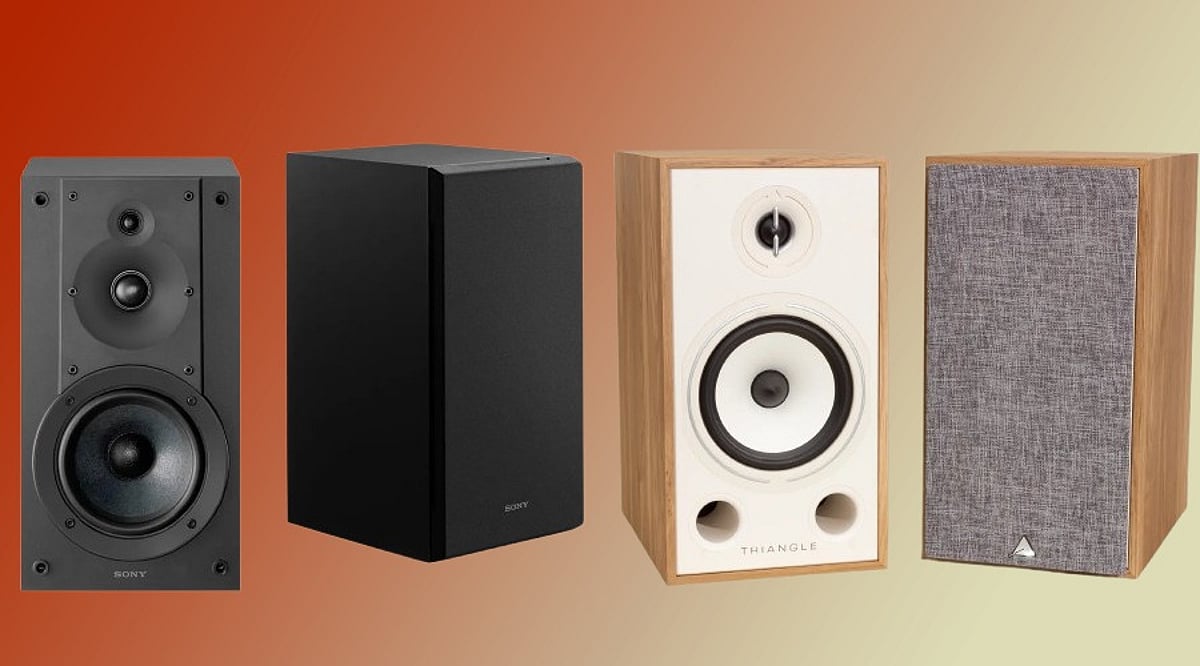
    Bookshelf speakers deliver high-quality sound in a compact form, making them a popular choice for music lovers who lack space for floor-standing systems. Selecting the right pair depends on several factors, including room dimensions, speaker type, amplifier compatibility, and listening habits. This guide covers everything you need to know before making a purchase.

    Choose Speaker Size Based on Your Room

    Larger speakers typically produce deeper bass and fill bigger rooms with sound, while smaller models excel in tighter spaces by delivering clear vocals and crisp highs without overwhelming the area. For rooms under 150 square feet, speakers with 4–5 inch drivers work well. Larger rooms of 200 square feet or more benefit from 6–8 inch drivers or the addition of a subwoofer.

    Active vs. Passive Speakers: Which Is Right for You?

    Active bookshelf speakers have a built-in amplifier, making setup quick and simple with minimal wiring. They are ideal for users who want convenience and an all-in-one solution. Passive speakers require an external amplifier or receiver, offering more flexibility for customization and future upgrades. Audiophiles often prefer passive setups, while casual listeners may favor active models for ease of use.

    Key Amplifier Features to Consider

    Modern amplifiers often include Bluetooth or Wi-Fi for wireless streaming from smartphones and computers. Bass boost, app control for volume and EQ adjustments, and compatibility with streaming services such as Spotify, Apple Music, and Tidal are valuable features that enhance the listening experience. Ensure the amplifier matches the power handling and impedance of your speakers for optimal performance.

    Top Bookshelf Speaker Brands

    Reliable brands known for high-performing bookshelf speakers include ELAC, KEF, Bowers & Wilkins, DALI, Polk Audio, and Definitive Technology. Each offers models suited to different budgets and room sizes, with consistent sound quality and durable build.

    Placement Tips for Best Sound

    Position speakers at ear level, equidistant from your listening spot, and angle them slightly inward (toe-in). Avoid placing them flush against walls to reduce unwanted reflections. Soft furnishings like carpets and curtains help tame echoes, while hard surfaces can brighten the sound. Use lossless or high-resolution audio sources to get the most from your speakers.

    Frequently Asked Questions

    1. How do I choose the right bookshelf speaker size for my room?
    Smaller rooms perform well with 4–5 inch speakers; larger spaces benefit from 6–8 inch models or a subwoofer. Matching driver size to room dimensions improves clarity and bass response.

    2. Are active or passive bookshelf speakers better?
    Active models simplify setup and reduce equipment needs. Passive speakers offer greater customization and upgrade potential, making them popular among audio enthusiasts.

    3. Do bookshelf speakers need an amplifier?
    Passive speakers always require an external amplifier. Active speakers have a built-in amplifier and can connect directly to audio sources.

    4. Where should bookshelf speakers be placed for the best sound?
    Place them at ear level, angled slightly inward, and away from walls. Keep equal distance from the listening position for a balanced soundstage.

    5. Which bookshelf speaker brands are worth considering?
    ELAC, KEF, Bowers & Wilkins, DALI, Polk Audio, and Definitive Technology are consistently recommended for their quality and performance across various budgets.

  • Top 10 Kanban Software Solutions to Supercharge Your Project Workflow in 2026

    Top 10 Kanban Software Solutions to Supercharge Your Project Workflow in 2026

    Kanban boards have become a cornerstone of effective project management, helping teams visualize workflows, limit work in progress, and deliver results faster. Whether you are a solo entrepreneur or part of a large enterprise, the right Kanban tool can transform how you organize tasks and collaborate. Here are the 10 best Kanban software options for accelerating project delivery in 2026.

    Jira Software

    The industry standard for Agile teams, Jira offers highly customizable Kanban boards, powerful automation rules, and advanced reporting capabilities to keep development projects on track.

    Trello

    Known for its intuitive drag-and-drop interface, Trello is ideal for individuals, startups, and small teams looking for a simple yet effective way to manage tasks visually.

    ClickUp

    ClickUp combines Kanban boards with docs, goals, and AI-powered project management, making it a versatile all-in-one productivity platform for teams of any size.

    Monday.com

    With visual workflows, robust automations, and customizable dashboards, Monday.com helps teams streamline processes and deliver projects faster.

    Asana

    Asana excels at cross-functional project management, offering timeline views alongside Kanban workflows to keep multiple projects organized and aligned.

    Notion

    Notion’s flexible databases and Kanban board views make it a favorite among content creators and product teams who need a blend of documentation and task management.

    Azure DevOps Boards

    Built for software development teams, Azure DevOps Boards provides enterprise-grade Agile planning, tracking, and Kanban capabilities integrated with the Microsoft ecosystem.

    Zoho Projects

    Zoho Projects offers an affordable solution with Kanban boards, issue tracking, and team collaboration features, making it suitable for small to mid-sized businesses.

    Each of these tools brings unique strengths to the table. The best choice depends on your team size, workflow complexity, and budget. Evaluate the features that matter most to your process and start accelerating your project delivery today.

  • Best Gaming Cryptocurrencies to Watch for Investment in July 2026

    Best Gaming Cryptocurrencies to Watch for Investment in July 2026

    GameFi tokens are driving the next wave of blockchain innovation, merging decentralized finance with immersive gaming experiences. For investors eyeing July 2026, several gaming cryptocurrencies stand out for their robust ecosystems and growing adoption. Below is a curated list of top contenders shaping the future of blockchain gaming.

    Immutable (IMX)

    Immutable X powers NFT gaming ecosystems with zero-gas transactions and scalable infrastructure, making it a cornerstone for developers building on Ethereum.

    Beam (BEAM)

    Beam is a fast-growing gaming blockchain focused on player-owned economies and decentralized gaming. Its emphasis on community governance and low fees attracts both gamers and developers.

    Gala (GALA)

    Gala supports multiple blockchain games while expanding into entertainment and music ecosystems. Its diverse platform offers cross-game utility and staking rewards.

    Ronin (RON)

    Ronin is the blockchain behind Axie Infinity, optimized for gaming transactions and NFTs. Its sidechain design reduces fees and speeds up gameplay, essential for mass adoption.

    The Sandbox (SAND)

    The Sandbox fuels one of the largest metaverse gaming platforms with creator-driven experiences. Users can build, own, and monetize virtual land and assets.

    Decentraland (MANA)

    Decentraland offers virtual land ownership and immersive gaming, continuing to attract Web3 developers. Its decentralized governance and vibrant community keep it relevant.

    Pixels (PIXEL)

    Pixels is growing rapidly through blockchain farming games with strong community engagement. Its play-to-earn model rewards players for in-game achievements.

    Treasure (MAGIC)

    Treasure connects multiple blockchain games through a decentralized gaming ecosystem. The MAGIC token serves as a bridge, enabling cross-game economies and liquidity.

    These gaming cryptocurrencies represent promising investment opportunities in July 2026, each with unique value propositions in the evolving GameFi landscape.

  • 7 Free AI Courses with Certificates to Boost Your Skills in July 2026

    7 Free AI Courses with Certificates to Boost Your Skills in July 2026

    Build AI skills without spending a rupee. Here are the top free AI courses offering certificates in July 2026:

    • Google AI Essentials – Learn practical AI skills and prompt engineering with beginner-friendly lessons.
    • Microsoft AI Skills Challenge – Gain hands-on experience with Azure AI tools and earn a free certificate.
    • IBM AI Fundamentals – Understand machine learning, generative AI, and business AI applications.
    • Harvard CS50 AI – A rigorous introduction to artificial intelligence using Python programming.
    • DeepLearning.AI Short Courses – Master prompting, LLMs, and generative AI through concise practical lessons.
    • Coursera AI for Everyone – Andrew Ng’s popular course explains AI concepts without coding experience.
    • NVIDIA Deep Learning Institute – Access free AI workshops focused on GPUs, deep learning, and computer vision.
    • LinkedIn Learning AI Courses – Explore workplace AI productivity, Copilot, ChatGPT, and automation topics.

    Read more stories and join our WhatsApp Channel to get the latest news, exclusives, and videos.

  • 9 Technologies That Are Likely to Disappear by 2030

    9 Technologies That Are Likely to Disappear by 2030

    Technology evolves rapidly, and many once-essential tools are becoming obsolete. From authentication methods to transportation, here are nine technologies that are expected to fade away by 2030 as smarter, more efficient alternatives take over.

    Passwords

    Traditional passwords are increasingly vulnerable and inconvenient. Passkeys, biometrics (fingerprint, facial recognition), and multi-factor authentication offer stronger, more user-friendly security, likely making passwords a relic of the past.

    Physical SIM Cards

    eSIM technology is replacing removable SIM cards, simplifying device activation and allowing users to switch carriers without swapping cards. This innovation improves flexibility for mobile network users worldwide.

    Cable Television

    Streaming platforms and on-demand content are steadily replacing traditional cable subscriptions. Internet-based entertainment services offer flexible, personalized viewing experiences, driving the decline of cable TV.

    Gas-Powered Cars

    Electric vehicles (EVs) are advancing rapidly as governments enforce stricter emissions regulations and expand charging infrastructure. The transition to cleaner transportation is accelerating the phase-out of gasoline-powered cars.

    Cash Payments

    Digital wallets, UPI, contactless cards, and mobile banking continue to reduce dependence on physical currency for everyday transactions. The convenience and security of digital payments are pushing cash toward extinction.

    Standalone GPS Devices

    Smartphone navigation apps like Google Maps and Waze offer real-time traffic updates, offline maps, and continuous updates, eliminating the need for dedicated GPS hardware for most consumers.

    USB-A Ports

    USB-C is becoming the universal standard for charging and data transfer, offering faster speeds, higher power delivery, and reversible connectors. Manufacturers are progressively phasing out USB-A ports in modern devices.

    Mechanical Hard Drives

    SSDs (solid-state drives) are rapidly replacing traditional hard drives due to their superior speed, durability, energy efficiency, and decreasing cost per gigabyte. Mechanical drives are becoming obsolete for most applications.

    Manual Customer Support

    AI-powered chatbots and intelligent virtual assistants increasingly handle routine customer queries, providing instant responses 24/7. This reduces reliance on traditional human-only support systems, transforming customer service.

    These nine technologies represent major shifts in how we interact with the world. Staying informed can help businesses and consumers adapt to the inevitable changes ahead.

  • iPhone 17 Pro Max: Everything We Know About Apple’s Next Flagship

    iPhone 17 Pro Max: Everything We Know About Apple’s Next Flagship

    Apple’s upcoming iPhone 17 Pro Max is generating buzz with leaks and rumors pointing to significant upgrades across design, performance, and intelligence. Here’s a comprehensive look at what to expect from the next-generation flagship.

    Design

    Apple is expected to refine the premium design with slimmer bezels, more durable materials, and an improved overall in-hand experience. The device will likely maintain the iconic Pro Max silhouette while enhancing ergonomics.

    Display

    Rumors suggest a brighter OLED display featuring smoother refresh rates, better outdoor visibility, and enhanced color accuracy for immersive entertainment and productivity.

    Processor

    Apple’s next-generation A-series chipset could deliver faster AI processing, improved efficiency, and stronger gaming performance than previous generations, setting a new benchmark for mobile computing.

    Camera System

    Leaks indicate upgraded sensors, enhanced zoom capabilities, and improved computational photography for sharper images across different lighting conditions. Expect significant leaps in low-light and telephoto performance.

    Battery Life

    Improved power efficiency and battery optimization may provide longer screen time despite increasingly demanding applications and advanced AI features. Users can look forward to all-day usage without compromise.

    AI Features

    Apple Intelligence is expected to expand with smarter on-device capabilities, productivity tools, and personalized experiences throughout the operating system. AI will play a central role in the iPhone 17 Pro Max experience.

    Connectivity

    Faster Wi-Fi, upgraded Bluetooth, and improved satellite communication support could enhance connectivity and reliability across multiple environments worldwide, making the device more versatile than ever.

    Launch Timeline

    Apple is expected to unveil the iPhone 17 lineup during its traditional September launch event with global availability shortly afterward. The Pro Max will likely lead the premium segment.

    Pricing

    Premium hardware and AI-focused upgrades may keep the iPhone 17 Pro Max among Apple’s highest-priced flagship smartphones this year, though exact pricing remains unconfirmed.

  • Hinge Creator Justin McLeod Secures $18M for AI Voice-Based Matchmaking App Overtone

    Hinge Creator Justin McLeod Secures $18M for AI Voice-Based Matchmaking App Overtone

    Online dating is about to take a radically different turn. Justin McLeod, the founder of Hinge, has raised $18 million in seed funding for Overtone, an AI-powered matchmaking platform that does away with profiles and swiping in favor of voice conversations. The goal: create more meaningful introductions and improve compatibility from the very first interaction.

    Backed by Match Group and Top VCs

    The round was led by Match Group, FirstMark Capital, and Pace Capital. Overtone positions itself as a matchmaking service rather than a traditional dating app. Users don’t upload public profiles or browse through endless candidates. Instead, the platform relies on voice-based conversations to assess personality, interests, and relationship preferences before suggesting introductions.

    Fighting Dating App Fatigue

    McLeod says Overtone is designed to make finding a partner feel less like endless scrolling and more like a thoughtful, personal introduction. By leaning into conversation instead of curated profiles, the system can better detect compatibility and reduce the burnout many users associate with swipe-based dating.

    The launch comes at a time when the online dating industry is actively seeking fresh solutions to improve user experience. With many users frustrated by the endless swiping loop, companies are exploring more personalized methods to help people build lasting connections.

    A New Direction for Digital Matchmaking

    The investment also signals Match Group’s continued interest in technologies that could reshape the future of matchmaking. After helping Hinge grow into one of the world’s top relationship-driven platforms, McLeod is now betting on fewer options and more carefully selected introductions—a strategy that could lead to better outcomes for users.

    With Overtone, the focus shifts from browsing profiles to fostering conversations and measuring compatibility. It offers an alternative that feels distinctly different from the standard dating app routine.

  • Cardano Whales Accumulate Ahead of Van Rossem Hard Fork as ADA Eyes Key Resistance

    Cardano Whales Accumulate Ahead of Van Rossem Hard Fork as ADA Eyes Key Resistance

    Cardano (ADA) traded near $0.161 on Thursday after a slight decline, but on-chain data and derivatives activity suggest growing investor confidence ahead of the van Rossem hard fork set for Saturday. Large holders have been accumulating, while futures open interest and funding rates have improved. However, ADA remains below key technical levels, leaving traders watching for a breakout or a retest of support.

    Whale Accumulation Grows as Network Upgrade Nears

    According to Santiment, wallets holding between 100,000 and 100 million ADA now control over 25.65 billion ADA—the highest level since February 2023. In contrast, smaller wallets (under 100 ADA) reduced holdings by about 0.7% over the past four months, highlighting a divergence between large investors and retail traders.

    Cardano’s development roadmap advanced this week after Intersect confirmed the van Rossem hard fork activation on Saturday, following governance ratification. The upgrade introduces new Plutus functionality and protocol improvements designed to enhance smart contract performance, developer tools, and network efficiency.

    Futures Data Reflects Improving Market Sentiment

    Derivatives data from CoinGlass shows Cardano futures open interest rising from $422 million on Monday to $445 million on Thursday. Rising open interest alongside stable prices often indicates new capital entering the futures market rather than position closures. Additionally, ADA’s funding rate turned positive at 0.0042%, meaning long traders are willing to pay a premium to maintain their positions.

    Technical Barriers Continue to Limit ADA

    Despite positive fundamentals, ADA remains below key moving averages: the 50-day EMA at $0.179, 100-day EMA at $0.208, and 200-day EMA at $0.276. It also trades below the 23.6% Fibonacci retracement at $0.173 and trendline resistance near $0.207.

    Momentum indicators are mixed. The RSI is near 46 (neutral), while the MACD has turned slightly positive, suggesting bearish momentum is weakening but no sustained reversal is confirmed yet.

    If buyers regain control, resistance levels are at $0.179, then the $0.207–$0.208 region, followed by $0.2135 (50% Fibonacci). On the downside, immediate support is at $0.1500, with a break below potentially exposing the June 25 swing low of $0.1382.

    What’s Next?

    Cardano is trading below major resistance despite improving market signals. The van Rossem hard fork and whale accumulation provide a bullish backdrop, but technical resistance remains a hurdle. Traders will be watching whether ADA can break above key levels or revisit support.

  • NVIDIA Teams Up with Fanuc, Yaskawa to Boost Robotics and AI in Japan

    NVIDIA Teams Up with Fanuc, Yaskawa to Boost Robotics and AI in Japan

    NVIDIA has announced partnerships with major Japanese robotics manufacturers, including Fanuc and Yaskawa Electric, to accelerate the development of artificial intelligence and robotics. The chipmaker revealed the collaborations during a media event in Tokyo on Thursday, signaling a deepening commitment to Japan’s industrial automation sector.

    NVIDIA CEO Jensen Huang emphasized that AI can make industrial robots smarter, more adaptable, and easier to deploy. “With AI, robots will become smart, easily adaptable and accessible,” Huang said at the Tokyo event. Fanuc and Yaskawa Electric are among Japan’s leading industrial robotics suppliers, providing automation systems to factories worldwide in sectors such as automotive production, electronics, logistics, and industrial equipment.

    The partnerships integrate NVIDIA’s computing platforms and AI software into Japan’s established robotics ecosystem. Financial terms and specific rollout schedules were not disclosed. During his visit, Huang also met with executives from memory chipmaker Kioxia and semiconductor equipment producer Tokyo Electron, and attended an event hosted by Sega Sammy in Tokyo’s Akihabara district.

    Japanese Organizations Adopt NVIDIA’s Nemotron Models

    NVIDIA announced that several Japanese organizations are using its Nemotron open models, datasets, and software tools to build AI systems tailored for Japanese language tasks and industry-specific applications. The Institute of Science Tokyo leveraged NVIDIA datasets and NeMo software to develop the Swallow model family, which supports Japanese language processing, reasoning, coding, and mathematics. Companies are applying Swallow for financial document translation and asset management reports.

    SB Intuitions, SoftBank’s generative AI research arm, trained its Sarashina models with NVIDIA technology. Japan’s Digital Agency selected Sarashina3 mini for specialized AI projects, while SoftBank built a telecom model for automated network operations. Stockmark released a Japanese document-understanding model based on NVIDIA Nemotron 3 Nano Omni and is developing business knowledge systems for manufacturing, energy, and chemical sectors. Sakana AI is integrating Nemotron into its Fugu model-routing platform, which selects different AI models based on accuracy, speed, and cost.

    Enterprise Applications Expand Across Industries

    Japanese companies are deploying Nemotron for customer service, research, remote operations, and workplace automation. Avatarin is developing Japanese-language AI agents for customer conversations and remote-presence systems, using NVIDIA HGX B300 systems for private AI processing and NVIDIA Jetson hardware for digital avatar services at airports and other locations. ENEOS Holdings applies Nemotron tools to energy and materials research, combining document search, image analysis, language processing, and molecular simulations for cooling fluids, catalysts, and other industrial materials.

    NTT Data used NVIDIA’s Japanese training dataset to improve its tsuzumi 2 language model and is exploring a multi-agent system that assigns tasks to different AI models. Hitachi is developing physical AI systems with NVIDIA Nemotron and Cosmos open models, connecting information technology with factory and infrastructure operations. NVIDIA releases Nemotron models with open weights, datasets, and development instructions, allowing companies to customize and run them on private systems or cloud platforms. The models are available through Hugging Face, ModelScope, OpenRouter, NVIDIA’s developer platform, and selected cloud providers.

  • Dogecoin Shows Resilience Amid Price Crash as Ecosystem Development and Payment Expansion Drive Long-Term Growth

    Dogecoin Shows Resilience Amid Price Crash as Ecosystem Development and Payment Expansion Drive Long-Term Growth

    Dogecoin remains one of the cryptocurrency market’s most resilient digital assets despite suffering one of its largest price declines. An investor who bought $10,000 worth of DOGE near its all-time high of about $0.74 would now hold roughly $1,000 after the sharp correction. Even so, More Crypto Online noted that Dogecoin has outlasted many newer cryptocurrencies with more advanced technical features.

    Community Support and Network Strength Continue to Drive Dogecoin

    Dogecoin launched in 2013 as a parody cryptocurrency. Nevertheless, the project has remained active for more than a decade and continues to rank among the largest cryptocurrencies by market capitalization. Meanwhile, the project maintains one of crypto’s most active grassroots communities. Community members organize charitable initiatives, support online creators through tipping, and keep Dogecoin visible across social media platforms.

    Moreover, Dogecoin offers relatively low transaction fees and faster confirmation times than Bitcoin. Those features continue to support small payments and digital tipping across different platforms. Besides that, nearly every major cryptocurrency exchange lists DOGE. Strong liquidity allows investors to buy and sell the token more easily than many smaller cryptocurrencies with limited trading activity.

    Security also remains one of Dogecoin’s key strengths. The network uses merged mining with Litecoin, allowing both blockchains to share mining power while improving protection against certain attacks.

    Furthermore, public support has kept Dogecoin in focus during several market cycles. Elon Musk has mentioned the cryptocurrency many times, while discussions surrounding possible payment integration into X continue attracting renewed attention.

    Development Efforts Expand the Dogecoin Ecosystem

    Dogecoin developers, the Dogecoin Foundation, and community groups continue building new tools designed to increase real-world utility across the ecosystem. One proposed initiative introduces a dual-track model. The proposal keeps Dogecoin on Proof of Work while adding Layer 2 community staking features inspired by concepts previously discussed by Vitalik Buterin.

    At the same time, developers continue building DogeOS. The Layer 2 network aims to support smarter applications and faster payment capabilities.

    Likewise, Dogecoin Fractal seeks to introduce real-world asset tokenization through a dedicated sidechain connected to the Dogecoin ecosystem. Core infrastructure also continues improving. Development teams keep enhancing LibDogecoin and GigaWallet to improve efficiency and reduce transaction confirmation times.

    Payment Expansion and Ecosystem Growth Continue

    House of Doge recently began trading on Nasdaq under the HODO ticker after completing its public merger. The company also raised more than $225 million to support future ecosystem development. Additionally, House of Doge partnered with MoonPay to launch ÐOGE Pay. The payment platform targets more than 6,000 merchants worldwide as part of its expansion strategy.

    Meanwhile, community developers continue improving the MyDoge Wallet. Future updates are expected to introduce decentralized finance features alongside AI-powered assistance.

    Finally, several independent developer groups continue exploring solar-powered mining projects. These initiatives seek to improve environmental sustainability while supporting Dogecoin’s expanding ecosystem.

    What’s Next?

    Dogecoin has remained a leading cryptocurrency despite a steep decline from its all-time high. Strong community support, broad exchange availability, merged mining with Litecoin, and ongoing projects such as DogeOS, ÐOGE Pay, and infrastructure upgrades continue expanding the network’s utility and ecosystem.