Author: vitorcherulli

  • Today’s Tech Roundup: iQOO 16 Gaming Phone, Apple iOS 27 AI, BrainCo vs Neuralink, Tesla Robo Taxi, and AI Health Wearables

    Today’s Tech Roundup: iQOO 16 Gaming Phone, Apple iOS 27 AI, BrainCo vs Neuralink, Tesla Robo Taxi, and AI Health Wearables

    From iQOO’s upcoming gaming phone and Apple’s smarter Siri to brain-computer breakthroughs and Tesla’s robo-taxi hurdles, here are the biggest stories shaping the tech landscape today.

    iQOO 16 Gaming Phone Leaks

    Leaks have surfaced about the iQOO 16, a smartphone designed specifically for gaming. The device is expected to feature top-tier processors, enhanced cooling systems, and high-refresh-rate displays optimized for competitive mobile gaming.

    Apple iOS 27: Siri Gets a Major AI Update

    Apple is rolling out a significant artificial intelligence upgrade in iOS 27, making Siri more context-aware and conversational. The update aims to improve natural language understanding and offer more proactive assistance across apps and system functions.

    BrainCo vs Neuralink: Battle of the Brain-Computer Interfaces

    BrainCo is emerging as a strong competitor to Elon Musk’s Neuralink, showcasing its own non-invasive brain-computer interface technology. While Neuralink focuses on implantable chips, BrainCo’s headbands and wearable EEG devices aim to decode neural signals for applications in education, therapy, and productivity.

    Tesla’s Robo Taxi Challenge

    Tesla continues to push its autonomous robo-taxi initiative, but faces regulatory hurdles, technical challenges, and public skepticism. The company is testing its latest self-driving software on public roads, aiming to launch a fully driverless ride-hailing service in select cities.

    AI-Powered Health Wearables

    A new wave of health wearables is leveraging artificial intelligence to provide real-time insights on vital signs, activity levels, and potential health risks. These devices promise to move beyond simple step-counting to early detection of conditions such as arrhythmias and sleep disorders.

    These stories represent just a glimpse of how technology continues to evolve, blending AI, mobility, and healthcare into everyday life.

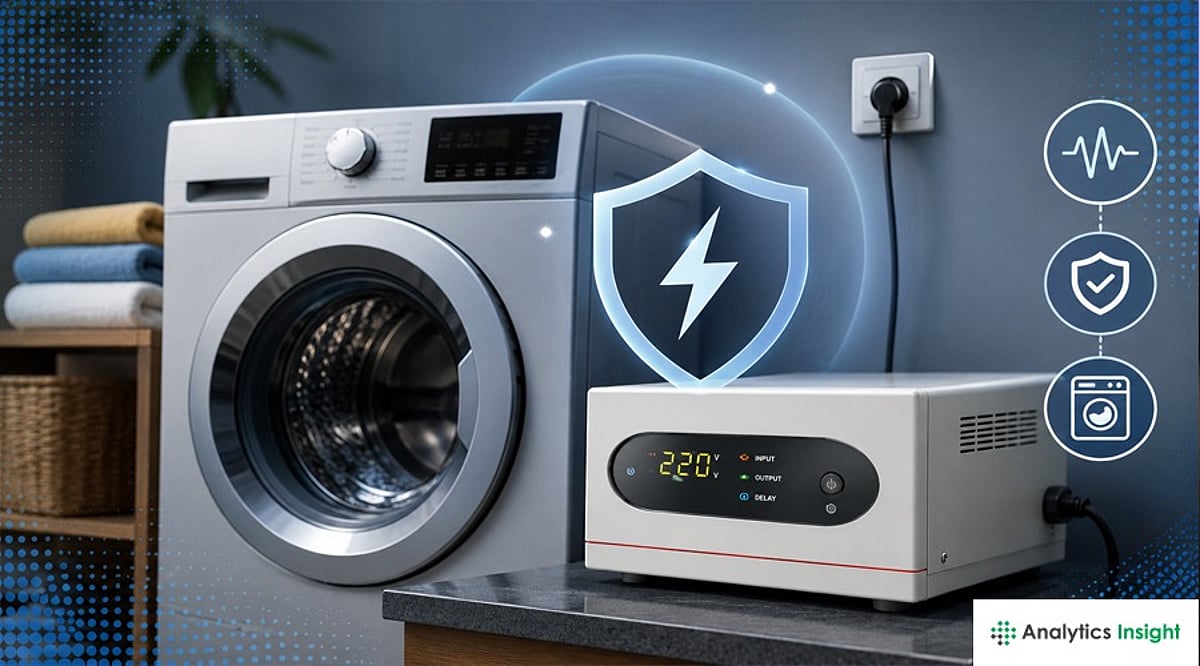
  • Top Voltage Stabilizers for Washing Machines in India 2026: Expert Picks & Buying Guide

    Top Voltage Stabilizers for Washing Machines in India 2026: Expert Picks & Buying Guide

    Choosing a washing machine stabilizer involves more than comparing prices or brand names. The right unit should match the appliance’s power requirements and handle local voltage variations effectively. A balanced combination of capacity, working range, and protection features delivers dependable performance over time.

    Washing machines with digital control boards and inverter motors are increasingly damaged by unstable voltage in Indian homes, often gradually rather than in one dramatic surge, making a stabilizer a practical protective purchase rather than a luxury add-on. The right stabilizer isn’t about brand recognition. It comes down to three factors: whether the working voltage range actually covers local fluctuation severity, whether the capacity (kVA/amperage) matches the machine’s real load, and whether it uses relay or digital correction and copper or aluminum winding.

    Ten specific models across price points (roughly Rs. 1,600–5,000) are compared on these factors, from budget aluminum-wound units for stable-grid homes to wide-range digital models built for rural or older-grid areas with deep voltage drops.

    Do You Actually Need One?

    Not every home does. Stable 220–240V power with no dimming when appliances start up means a stabilizer sits low on the priority list. It matters more if the area sees frequent brownouts or if the machine is a newer inverter model with a digital control board. Some manufacturer warranties exclude damage caused by unstable voltage, so checking the machine’s own warranty card is worth the five minutes.

    How to Choose

    • Mild Voltage Fluctuations: Go for a 200–240 V or 150–280 V stabilizer. Good options are the Everest EW-2KVA or V-Guard VM 500.
    • Moderate Voltage Fluctuations: Pick a 130–280 V model, like Bluebird or Servokon SKW 213C.
    • Severe Rural Voltage Fluctuations: Areas with big power swings need a wide-range stabilizer. The Servokon SKW 290C works well here, since it starts as low as 90 V.
    • Check the Appliance Wattage: Before you buy, look at the nameplate on your washing machine. It will tell you the exact wattage you need to match.
    • Choose Extra Capacity: Don’t buy a stabilizer that just matches the wattage. Get one rated 25–30% higher. Washing machines draw extra power when they start up, and this buffer keeps the stabilizer safe.

    Relay vs Digital, Copper vs Aluminum

    Relay stabilizers correct voltage in steps and cost less. A washing machine motor tolerates that fine, unlike a TV panel. Digital units correct faster and more precisely, which helps the most where dips are short and frequent. The price gap is usually small, so digital is the safer default. Copper-wound transformers also run cooler and last longer under sustained load than aluminum, at a modest premium. Aluminum is not a safety compromise, just a durability one, and it is the first place to check if a listing seems cheap for its stated range.

    Best Picks Comparison Table

    Model Operating Range Capacity Winding Type Approx. Price
    V-Guard VM 500 150V–280V 15A Copper Digital Rs. 2,500
    Microtek Pearl EM4160+ 160V–285V 2kVA Copper Digital Rs. 3,200
    Bluebird BW 213A 130V–280V 2kVA Aluminum Relay Rs. 2,000
    Bluebird BR 113C 130V–280V 1kVA Copper Relay Rs. 1,800
    Servokon SKW 213C 130V–270V 2kVA Copper Digital Rs. 2,800
    Servokon SKW 290C 90V–270V 2kVA Copper Digital Rs. 4,500
    Rahul V-444 C1 100V–280V 1kVA Copper Relay Rs. 1,600
    Everest EW-2KVA 200V–240V 2kVA Aluminum Relay Rs. 1,200
    Aulten AD019 160V–280V 5000VA Copper Digital Rs. 5,000
    Giomex GMX1KV-AL 150V–280V 1kVA Aluminum Relay Rs. 1,400

    Short on Time? The V-Guard VM 500 covers most homes, the Servokon SKW 290C is the better call for severe rural voltage swings, and the Giomex GMX1KV-AL is the pick when budget matters most.

    Detailed Reviews

    V-Guard VM 500

    The V-Guard VM 500 is a popular choice for washing machines, supporting loads up to 15A with a 150V–280V operating range. It includes a three-year warranty, time-delay protection, and digital monitoring, making it suitable for homes experiencing regular voltage fluctuations.

    Pros: Wide brand support and service network, 150–280V range covers most urban conditions, 3-year warranty
    Cons: Reviews are genuinely mixed, with some buyers reporting weak correction or a cracked casing over time

    Microtek Pearl EM4160+

    Designed primarily for air conditioners, the Microtek Pearl EM4160+ is also widely used with washing machines thanks to its 160V–285V working range. Its digital display and on-site service support make it a practical option for household appliance protection.

    Pros: Digital display, on-site service claim within 24–48 hours, wide 160–285V range
    Cons: Built as an AC stabilizer first, and some reviewers report weak correction, so buy from a seller with easy returns

    Bluebird BW 213A

    The Bluebird BW 213A is a 2kVA aluminum-wound stabilizer with a 130V–280V input range. It offers dependable voltage protection for washing machines while keeping costs affordable, making it a practical mid-range choice for everyday household use.

    Pros: Solid 130–280V range, 2kVA capacity, affordable mid-range price
    Cons: Aluminum winding runs warmer than copper under sustained load

    Bluebird BR 113C

    Featuring copper winding and a 1kVA capacity, the Bluebird BR 113C provides better heat dissipation than aluminum alternatives. Its 130V–280V operating range makes it well suited for washing machines in areas with moderate voltage fluctuations.

    Pros: Copper winding at a near-budget price, moderate-range coverage
    Cons: 1kVA capacity is on the lower side for a heavily loaded appliance

    Servokon SKW 213C

    The Servokon SKW 213C combines digital voltage correction with copper winding and a 2kVA capacity. Operating between 130V and 270V, it responds quickly to short voltage dips, helping protect modern washing machines from unstable power conditions.

    Pros: Digital correction plus copper winding, 2kVA capacity
    Cons: Less established brand recognition and service network than V-Guard or Microtek

    Servokon SKW 290C

    With an extra-wide 90V–270V operating range, the Servokon SKW 290C is ideal for regions experiencing severe voltage drops. Its digital circuitry and copper winding provide reliable protection for washing machines in rural and low-voltage areas.

    Pros: Widest working range on this list, digital plus copper build
    Cons: Priced above narrower-range models for the capacity most urban homes won’t use

    Rahul V-444 C1

    The Rahul V-444 C1 is a 1kVA copper-wound relay stabilizer featuring a 100V–280V working range. Its five-step voltage correction offers dependable protection for washing machines while remaining an affordable option for everyday household requirements.

    Pros: Copper winding, wide 100–280V range, affordable
    Cons: Step-based correction is coarser than fully digital models

    Everest EW-2KVA

    The Everest EW-2KVA is a basic relay stabilizer designed for homes with relatively stable electricity. Its 200V–240V operating range suits areas with only minor voltage fluctuations, offering reliable protection at an entry-level price.

    Pros: Lowest price point on this list, simple and reliable for mild swings
    Cons: Narrowest range here, so it cuts off during deeper voltage drops

    Aulten AD019

    The Aulten AD019 is a 5000VA digital stabilizer designed for households that want one unit to support multiple appliances. Its 160V–280V operating range and high capacity make it suitable for demanding home electrical setups.

    Pros: High 5000VA capacity covers washing machine plus microwave or treadmill on one unit
    Cons: Oversized and priced accordingly if only used for a washing machine alone

    Giomex GMX1KV-AL

    The Giomex GMX1KV-AL is a budget-friendly 1kVA aluminum-wound stabilizer operating between 150V and 280V. It delivers dependable voltage protection for washing machines and other small appliances while offering good value for cost-conscious buyers.

    Pros: Low price, decent 150–280V range for the cost
    Cons: Aluminum winding and 1kVA capacity make it better suited to a second machine than a primary appliance guard

    FAQs

    1. Does a washing machine need a voltage stabilizer? A voltage stabilizer is recommended in areas where power fluctuations are common. It helps protect the washing machine’s electronic components and motor from sudden voltage spikes and drops.
    2. Which capacity stabilizer is suitable for a washing machine? Most household washing machines work well with a 1kVA to 2kVA stabilizer. Always check the appliance’s power rating and the manufacturer’s recommendations before choosing one.
    3. Can one stabilizer be used for multiple appliances? Some high-capacity stabilizers are designed to support multiple appliances, but a washing machine performs best with a stabilizer that matches its specific power requirements and load.
    4. What features should be considered when buying a washing machine stabilizer? Look for a wide input voltage range, adequate capacity, overload protection, auto cut-off, time-delay function, and reliable build quality. These features provide better protection during unstable power conditions.
    5. Which is better for a washing machine: a relay stabilizer or a digital stabilizer? Relay stabilizers are affordable and suitable for normal household use. In contrast, digital stabilizers offer faster voltage correction and more precise protection, making them a better choice in areas with frequent voltage fluctuations.

    Final Thoughts

    Choosing a stabilizer is less about buying another appliance and more about protecting the one already in the laundry room. Most failures blamed on the washing machine actually start at the wall socket, in swings small enough to go unnoticed for months. Matching the stabilizer to actual local voltage conditions, rather than defaulting to the most popular listing online, is what decides whether that protection pays off years down the line.

  • 2026’s Best Gaming Chairs for Long Gaming and Work Sessions

    2026’s Best Gaming Chairs for Long Gaming and Work Sessions

    Overview

    A good gaming chair supports your back and neck, making long hours at your desk much more comfortable. Adjustable features help you find a better sitting position for gaming, work, or studying. The best gaming chairs combine comfort, strong build quality, and everyday value.

    A gaming setup is incomplete without a comfortable chair. Long gaming sessions or hours of work from home can put significant pressure on your back, neck, and shoulders, especially if you’re sitting in the wrong position. Good gaming chairs provide the support your body needs and help you stay comfortable throughout. They can also improve posture and reduce daytime fatigue.

    With gaming progressing rapidly, chairs now include much more than style. Many come with adjustable armrests, reclining backrests, lumbar support, and soft cushioning for extra comfort. Others are made for casual users who spend several hours at their desks.

    The sorting process is tough when options are in the hundreds. We have tried and compared some of the highest-reviewed chairs from online platforms to help you understand whether they are worth purchasing.

    Best Gaming Chairs for Long Hours Compared

    Every chair below offers something different. Some are budget-friendly, while others focus on premium comfort and extra features. The list makes it easy to find a chair that suits your needs and budget. Some models are all about simple comfort, while others have more adjustment options for those spending long hours at their desks.

    Take the Ergonomic Gaming Chair, for example. It’s a good option for most buyers who want comfort without budget restraints. It has the basic features most users need and is good for everyday gaming or office work.

    The Drogo Aura Ergonomic Gaming Chair features memory foam padding for extra comfort. Its adjustable armrest and reclining backrest make it comfortable throughout the day. Looking ahead, the ASE GAMING Gold Series Ergonomic Gaming Chair is well-made, with a metal frame for solid support and neck and back cushions that help reduce strain during long periods of sitting.

    Similarly, the Green Soul Monster Pro, ValorX USA Vector, and the CELLBELL Konquer Ergonomic Gaming Chair have their pros and cons, but all are suitable for different requirements.

    Which Gaming Chairs Would I Recommend?

    Now, after comparing all the chairs above, if I had to pick a model based on my experience, I would definitely go for the Green Soul Monster Pro. For the balance of comfort, quality, and useful features, this is my first choice. I liked the back support during testing. The adjustable armrests and sturdy construction also give the impression that this chair will last for years.

    My second choice is the ValorX USA Vector 2026. What I liked most about this chair is that it is both strong and comfortable. The thick seat cushion makes a big difference in long gaming sessions. If I were looking for a chair for both gaming and office work, this would be high on my list.

    The third chair I would suggest is the Drogo Aura Ergonomic Gaming Chair. The memory foam seat is comfortable as soon as you sit on it. Plus, the reclining backrest and adjustable armrests make it easy to lounge all day long. It offers good value for money.

    Final Thoughts

    Gaming chairs are something you use every day, so comfort should never be an afterthought. The right chair keeps you relaxed during long gaming sessions, busy workdays, or even while studying. Correct seating position and good back support can also help lessen strain over time.

    Ultimately, consider the time you spend at the desk before making any decision. What fits your body and daily routine will be the perfect choice. Thus, a chair should not be chosen based on its design but on what it offers. Take your time, shop around, and buy a chair that will keep you comfortable for years.

    FAQs

    Which gaming chair is best for long gaming sessions?

    The Green Soul Monster Pro is one of the best options for long gaming sessions. It offers good back support, soft cushioning, and several adjustment options that help you stay comfortable for many hours.

    Can I use a gaming chair for office work?

    Yes. A good gaming chair works well for office work because it supports your back, neck, and shoulders. Many people use the same chair for work during the day and gaming at night.

    What features should I check before buying a gaming chair?

    Look for good lumbar support, adjustable armrests, a reclining backrest, soft seat cushioning, and a strong frame. These features make a big difference during long hours of sitting.

    Are fabric gaming chairs better than leather chairs?

    Fabric chairs stay cooler and feel more comfortable in warm weather. Leather chairs are easier to clean and often have a more premium look. The better choice depends on your preference.

    How long does a gaming chair usually last?

    A good gaming chair can easily last five years or even longer with proper care. Choosing a chair with quality materials and a strong frame helps improve its lifespan.

  • BlockDAG’s Layer 1 Adoption by ZKP Drives Crypto Interest as DEXE Surges and LAB Declines

    BlockDAG’s Layer 1 Adoption by ZKP Drives Crypto Interest as DEXE Surges and LAB Declines

    Crypto markets experienced significant volatility this week, with traders distinguishing genuine gains from temporary rallies. DEXE rose 17.72% to $46.83, reaching a new all-time high amid increased network activity and buying from large holders. In contrast, LAB dropped from $1.20 to approximately $0.55 after wallets linked to the project’s team moved over 196 million tokens, with an additional 81 million still in reserve.

    BlockDAG (BDAG) has captured attention following the announcement that ZKP, a privacy and verification network, has chosen BlockDAG’s Layer 1 as its foundation. The opening of Stage 1 of the ZKP presale, accompanied by a keynote from Kevin O’Leary, further underscores this development. For those seeking the best crypto to buy, third-party adoption of this nature carries significant weight.

    DeXe Gains 17% While Technical Signals Remain Mostly Positive

    DEXE is trading at $46.83 after a 17.72% daily gain. Although the price is below its short-term moving average, it remains above key medium- and long-term trend levels. The token recently achieved a new all-time high, supported by robust network activity and increased accumulation by large holders. Technical indicators are largely positive, though some suggest a possible short-term pullback or sideways movement. Over the next two to three days, DEXE could trade between $41.4 and $52.26, with upward momentum likely if key resistance is broken. Analysts remain cautiously optimistic as long as support holds and network activity remains strong.

    LAB Faces Recovery Challenges After Large Token Movements

    Recent LAB price action has been impacted by large token transfers from wallets funded by the LAB team, as reported by on-chain investigator ZachXBT. More than 196 million LAB were moved earlier this year, with additional transfers in the past 48 hours contributing to the decline from $1.20 to around $0.55. The same wallets still hold over 81 million tokens, raising concerns about potential future selling pressure. Technical charts show LAB has fallen below several key support levels, while lower open interest indicates traders are reducing positions. A sustained recovery will require stronger buying demand and reduced selling pressure.

    BlockDAG Sees Real Adoption as ZKP Joins the Network

    BlockDAG has strengthened its position as a leading crypto to buy, following news that ZKP is building on its Layer 1 network. Third-party adoption is a clear indicator of a network’s utility. ZKP focuses on zero-knowledge privacy, private and verifiable AI, decentralized compute, and decentralized storage. BlockDAG provides the infrastructure, while ZKP adds the layer that ensures accuracy and security.

    A keynote featuring Kevin O’Leary is now live, coinciding with the opening of Stage 1 of the ZKP presale. This stage offers the earliest and lowest-priced entry point. For anyone evaluating the best crypto to buy, a Layer 1 network’s value is often measured by what is built on it. Each new project choosing BlockDAG adds concrete evidence to its case. The ZKP presale is structured across multiple stages, with pricing increasing at each step. Stage 1 provides the earliest entry, and the keynote allows prospective buyers to review the project’s goals and technology directly.

    As more developers select BlockDAG as their base layer, its position among the best crypto to buy becomes harder to dismiss. Real construction activity, backed by named partners and public presales, carries more weight than marketing claims. For now, BlockDAG has both.

    Conclusion

    DEXE and LAB present contrasting narratives this week. DEXE trades near $46.83 after a 17.72% gain and a fresh all-time high, while LAB sits near $0.55 after wallets tied to its team moved over 196 million tokens, with 81 million still held. Both depend on whether support holds.

    BlockDAG’s news carries more weight. ZKP, a privacy and verification network, chose BlockDAG’s Layer 1 as its base, and Stage 1 of its presale opened alongside a keynote featuring Kevin O’Leary. That real adoption is exactly why BlockDAG stays near the top of any best crypto to buy list. Real builders tend to say more than promises ever could.

    Presale: https://purchase.blockdag.network
    Website: https://blockdag.network
    Telegram: https://t.me/blockDAGnetworkOfficial
    Discord: https://discord.gg/Q7BxghMVyu

    Disclaimer: This article is for informational purposes only and does not constitute investment advice. Cryptocurrency investments carry risk. Always conduct your own research before investing.

  • 10 CEO Playbooks to Drive Innovation Without Increasing Budgets

    10 CEO Playbooks to Drive Innovation Without Increasing Budgets

    Overview

    Build innovation through smarter leadership, agile teams, customer insights, and disciplined decision-making every day. Reduce costs by eliminating bureaucracy, improving operations, and maximizing existing business resources effectively together. Create sustainable growth using data-driven strategies, experimentation, and continuous learning across every business function consistently.

    Innovation has long been associated with bigger budgets, larger teams, and heavy investments in technology. This mentality is beginning to shift. In an environment where companies must operate on narrower profit margins, CEOs must deliver growth amid constrained costs.

    It is not necessarily the companies spending the most money that win out. Instead, it is those who make quick decisions, empower their people, maximize their assets, and meet customer demands promptly. Innovation is not about writing bigger checks but about fostering a culture of smart ideas.

    10 CEO Playbooks to Drive Innovation Without Increasing Costs

    Here are 10 CEO-level playbooks that aid innovation without raising costs:

    1. Make Lemonade Out of Lemons

    Constraints often spark innovation. Rather than providing more money to a team, ask them to come up with innovative solutions by leveraging the resources they already have. Working under constraints fosters innovation and cuts waste.

    2. Small Before Large

    New and innovative ideas may not be fully implemented through their entire process cycle within the business organization. Implementing pilot projects, prototypes, or MVPs will enable the business organization to gather important information about innovations without incurring costly mistakes.

    3. Get Rid of Bottlenecks

    The process of innovation is impeded by lengthy decision-making cycles. The decrease of stages of approval, the holding of fewer unnecessary meetings, and the delegation of decision-making power to teams will speed up the innovation process. Sometimes, getting rid of bureaucracy works better than additional financing.

    4. Assign Major Tasks to Small Teams

    It is unlikely that big teams will come up with innovations. Cross-functional small teams with clearly defined responsibilities can significantly increase efficiency in implementing innovation processes. People feel more responsible if they have decision-making power.

    5. Make the Business Work Better

    Innovation is not just about inventing new products. Simplifying and automating business processes, improving customer service, and making operations more efficient help increase productivity and reduce costs. Sometimes, competitiveness lies in doing things more efficiently.

    6. Innovate According to Customer Demand

    Customers can first see any shortcomings in your products and services. Feedback can be obtained through customer reviews, surveys, support groups, and personal interactions to identify issues that need improvement. These usually turn out to be very practical innovations.

    7. Always Have Data Behind Your Decisions

    Evidence always makes good ideas better. Analyze customer behavior, operational performance, and product usage to identify opportunities for innovation. While doing this, do not waste money on projects that have no tangible success.

    8. Explore Opportunities in Your Current Assets

    Sometimes innovation has nothing to do with coming up with something new. Your existing technology, talented employees, manufacturing processes, intellectual property, and even your customers can all be used to develop ways to earn additional revenue.

    9. Build a Culture That Learns from Failure

    The fear of failure means experiments will never happen. Employees need to be inspired to conduct experiments, learn from their failures, and share their insights with others. Even though not all experiments will succeed, they all provide important information that helps make future decisions.

    10. Align Innovations with Corporate Goals

    Innovations should address a company’s problem. If the goal of an innovation is to improve customer experience, reduce expenses, increase productivity, generate additional income, etc., any innovation should deliver results for a company. Otherwise, an innovation is not worth the money spent on it.

    Why This Matters

    At this point, there isn’t really a clear correlation between innovation and larger budgets. Companies that try to innovate by making sharper decisions, staying nimble, pulling real customer insights, and improving efficiency can end up moving faster, becoming more profitable, adapting to market shifts, and even outdoing competitors without increasing expenses.

    Conclusion

    Being an awesome company doesn’t have to mean being an awesome spender. Great CEOs tend to make their organizations more efficient by cutting costs, giving real trust to team members, leaning into learning, and making better decisions. In the business world, where every rupee counts, innovation that does not inflate costs can become the signature of strong leadership.

    Frequently Asked Questions

    1. Can businesses innovate without increasing budgets?

    Yes. Smarter leadership, better resource allocation, agile teams, and efficient processes can drive innovation without significantly increasing operational spending.

    2. Why are small teams more effective for innovation?

    Small, cross-functional teams make faster decisions, collaborate efficiently, adapt quickly, and take greater ownership of delivering measurable business outcomes.

    3. How does customer feedback support innovation?

    Customer insights reveal pain points, helping businesses improve products, services, and experiences while reducing unnecessary development costs and risks.

    4. What role does data play in innovation?

    Data helps leaders identify opportunities, measure performance, eliminate ineffective initiatives, and make informed decisions that improve business results.

    5. Why should CEOs focus on operational innovation?

    Improving internal processes increases productivity, reduces costs, enhances customer experience, and creates long-term competitive advantages without major investments.

  • BlockDAG’s 100% Bonus Code ‘EARLY’ Shifts Momentum from Zcash and Bitcoin Cash in Search for Next Crypto Explosion

    BlockDAG’s 100% Bonus Code ‘EARLY’ Shifts Momentum from Zcash and Bitcoin Cash in Search for Next Crypto Explosion

    The crypto market is entering a new phase of capital rotation. Mature proof-of-work networks are struggling to overcome regulatory and technical headwinds, while incentive-rich layer-1 ecosystems are attracting fresh liquidity and renewed investor attention. Recent Zcash news and fluctuating Bitcoin Cash price points illustrate the intense battle between structural scarcity and real-time market momentum. Yet, neither of these older assets matches the sheer velocity of newer projects designed to capture immediate retail demand.

    At the center of this shift is BlockDAG (BDAG), a rapidly expanding ecosystem that is currently leveraging a double-reward promotional structure to position itself as the next crypto to explode.

    Zcash News: Privacy Coin Eyes Breakout Amid Forbes Nod

    Recent Zcash news has captured the market’s attention as ZEC climbed near $531, riding a 5% daily gain that outpaced a flat broader market. This spark follows a prestigious nod from Forbes, which highlighted Zcash’s robust privacy features and capped supply. However, the token now faces a critical technical test, bumping up against a tough resistance band between $540 and $547.

    While the bullish momentum is backed by a shrinking supply intensified by the November 2024 halving, undercurrents of caution remain. Traders are weighing unresolved questions surrounding June’s Orchard security patch and unusual pre-disclosure trading volumes. Whether ZEC can shatter its near-term resistance or slide back to support depends heavily on upcoming macro data. This Zcash news highlights a tug-of-war between strong scarcity fundamentals and lingering regulatory anxieties.

    Bitcoin Cash Price: Will Bulls Break the $620 Barrier?

    The Bitcoin Cash price is flashing mixed signals, leaving traders guessing whether its recent rally is a genuine trend reversal or a temporary bounce. After breaking a long-term diagonal trendline, BCH successfully bounced twice, sparking three consecutive weekly green candles. However, this momentum has brought the asset directly beneath its most critical ceiling: the $620 resistance level.

    This $620 zone is a major make-or-break juncture. A successful daily close above it could clear the path toward $1,000, supported by the weekly RSI crossing above 50 and a looming bullish MACD crossover. Conversely, short-term charts reveal a corrective five-wave wedge that leans bearish. If BCH fails to breach this barrier, a breakdown from its ascending channel could trigger a swift correction down to $520. The Bitcoin Cash price remains at a pivotal crossroads where downside risks still overshadow breakout hopes.

    BlockDAG’s 100% Bonus Code ‘EARLY’ Sparks Race for the Next Crypto to Explode

    The search for the next crypto to explode has taken a massive turn as BlockDAG rolls out a double-reward incentive that is shaking up the crypto market. Instead of launching just another basic digital token, BlockDAG is actively constructing an entire self-sustaining economic ecosystem. For a limited time, early participants can leverage a massive promotional offer designed to maximize their potential returns right from the start.

    By utilizing the promo code “EARLY” when acquiring BDAG at its current entry price of $0.00000033, investors instantly secure a 100% bonus on their purchase. This promotional mechanism immediately doubles your token balance, with the extra coins delivered directly to your wallet. But the real excitement lies in the accelerated timeline for the USDT buyback program. While standard participants must wait until October 1, entering the code “EARLY” unlocks priority access to the $0.03 buyback pool starting on September 1. This strategic shift grants early supporters an exclusive thirty-day head start on exit liquidity options.

    With a robust architecture and an aggressive economic design, this project presents a compelling case for those hunting for the next crypto to explode. The window to double your holdings and fast-track your exit liquidity is closing quickly, making this a pivotal moment to act.

    Wrapping Up

    The broader crypto market remains heavily divided between legacy networks trying to regain their footing and hyper-growth ecosystems designed for rapid scalability. While positive Zcash news and the critical test of the Bitcoin Cash price demonstrate that established tokens still possess speculative appeal, their upward potential remains limited by steep resistance levels and historical technical challenges.

    In contrast, BlockDAG bypasses these old hurdles by offering a direct, highly lucrative entry point paired with immediate structural value. The time-sensitive combination of an instant token doubler and accelerated USDT buyback liquidity positions BlockDAG uniquely. For anyone searching for the next crypto to explode, this promotional window represents an unparalleled strategic entry point before mainstream exchange listings commence.

    Disclaimer: Analytics Insight does not provide financial advice or guidance on cryptocurrencies and stocks. Also note that the cryptocurrencies mentioned or listed on the website could potentially be risky, i.e., designed to induce you to invest financial resources that may be lost forever and not be recoverable once investments are made. This article is provided for informational purposes and does not constitute investment advice. You are responsible for conducting your own research (DYOR) before making any investments.

  • S&P 500 Gains as June Inflation Slows and Bank Profits Surge

    S&P 500 Gains as June Inflation Slows and Bank Profits Surge

    U.S. stocks climbed on Tuesday after June inflation data came in cooler than expected, easing fears of an imminent Federal Reserve rate hike. The S&P 500 rose 0.5%, the NASDAQ Composite added 1%, and the Dow Jones Industrial Average gained roughly 86 points, or 0.2%. However, a steep drop in IBM shares and rising oil prices capped broader gains.

    June Inflation Data Boosts Market Sentiment

    The Consumer Price Index fell 0.4% in June from the prior month, bringing the annual inflation rate down to 3.5% from 4.2% in May. Economists had anticipated a 0.2% monthly decline and a 3.8% annual rate. The softer data reduced concerns that rising energy costs would push prices higher, and Treasury yields fell in response, lifting technology and housing-related stocks. Builders FirstSource and Lennar both gained as borrowing costs eased.

    Traders also scaled back bets on a July rate increase. According to CME FedWatch data, the probability of a hike dropped to 17% from 42% the previous day. Markets still see a higher chance of tighter policy at the September meeting.

    Bank Earnings Lift Financial Sector

    Major banks kicked off second-quarter earnings season with stronger-than-expected profits. Goldman Sachs rose after beating estimates, driven by dealmaking and equities trading. JPMorgan Chase, Citigroup, and Bank of America also gained on higher quarterly earnings. Wells Fargo traded lower despite reporting profit above expectations. The broader S&P 500 financial sector moved higher, with most major sectors posting gains during early trading.

    Investors are watching earnings reports for insights into consumer spending, business activity, and credit conditions. The reports showed steady card spending and stronger trading revenue, along with fresh data on loan demand.

    IBM Plunge Weighs on Dow

    IBM shares tumbled about 24% after the company warned that second-quarter revenue and profit would miss expectations due to weak demand in software and infrastructure. The decline pressured the Dow and dragged down other software stocks, including Oracle, ServiceNow, and Accenture. CEO Arvind Krishna acknowledged that the company failed to close several large deals on schedule, stating, “We did not adapt and move quickly enough,” while pointing to weaker execution across key businesses.

    Oil Prices Rise Amid Geopolitical Tensions

    Oil prices climbed as tensions between the United States and Iran escalated. U.S. crude traded above $80 per barrel, and Brent crude moved above $85 after President Donald Trump announced plans to restore a blockade on Iranian shipping through the Strait of Hormuz. The move raised concerns about global energy supplies. Higher fuel costs could slow the recent decline in inflation and maintain pressure on the Federal Reserve.

    Skyler Weinand of Regan Capital noted that the inflation surge linked to the conflict may be fading but warned that the relief “may just be temporary” as regional tensions increase.

    Chip Stocks Rebound After Monday’s Losses

    Semiconductor shares recovered after heavy selling in the previous session. The VanEck Semiconductor ETF rose nearly 2%, and the Philadelphia Semiconductor Index gained more than 3%. Applied Materials, Teradyne, Lam Research, Micron Technology, and STMicroelectronics all moved higher. NVIDIA also gained after falling sharply on Monday. The rebound helped the NASDAQ recover part of its previous decline, while investors continued to watch valuations in the volatile AI sector.

    Fed Chair Kevin Warsh prepared to testify before Congress later Tuesday, reiterating that returning inflation to the central bank’s 2% target remains a priority. He did not provide a direct signal about the Fed’s next rate decision.

    Disclaimer: Analytics Insight does not provide financial advice or guidance on cryptocurrencies and stocks. This article is for informational purposes only and does not constitute investment advice. Always conduct your own research before making any investments.

  • Top AI Lip-Sync and Visual Dubbing Platforms for 2026

    Top AI Lip-Sync and Visual Dubbing Platforms for 2026

    AI lip-sync and visual dubbing platforms are transforming video localization, enabling creators, studios, and businesses to produce multilingual content with faster workflows and improved accuracy. These tools use machine learning to match facial movements with translated audio, creating more natural video experiences across global markets.

    What Are AI Lip-Sync and Visual Dubbing Tools?

    AI lip-sync platforms analyze facial movements, speech patterns, and video frames, then adjust mouth movements to align with new audio tracks in different languages. They are useful for film and television localization, YouTube and social media content, corporate training videos, advertising campaigns, gaming content, and digital creators targeting global audiences. Compared to traditional dubbing, AI-powered systems significantly reduce production time and allow creators to produce multiple language versions from a single original video.

    Top AI Lip-Sync and Visual Dubbing Platforms

    Sync: Built for Professional Video Dubbing

    Sync, developed by Sync Labs, is a leading AI lip-sync platform focused on professional video production. It allows users to replace audio while keeping facial movements aligned with new dialogue. The platform supports live-action videos, animation, podcasts, games, and AI-generated content.

    • Advanced models: Sync-3 and Lipsync-2-Pro
    • Multi-language support: Hindi, English, Spanish, French, Korean
    • High-resolution output
    • Multiple face processing
    • API and editing workflow support
    • Adobe Premiere and developer integrations

    Sync is designed for users who need high-quality results for professional projects.

    HeyGen: Popular for AI Avatar Videos

    HeyGen is widely used for creating AI-generated presenters and business videos. It allows users to create digital avatars that speak in different languages with matched facial expressions.

    • AI avatar creation
    • Voice translation
    • Multilingual video generation
    • Support for marketing and training videos

    HeyGen is especially useful for companies creating educational content, advertisements, and online presentations.

    Vozo AI: Focused on Easy Video Translation

    Vozo AI provides tools for creators who want to quickly translate and adapt videos. It combines voice conversion with lip-sync technology to make translated videos look natural.

    • AI video translation
    • Voice cloning options
    • Lip movement adjustment
    • Creator-focused workflows

    The platform is aimed at social media users, influencers, and businesses that need quick localization.

    ElevenLabs: Strong Voice Technology

    ElevenLabs is known for realistic AI voice generation. Its technology helps creators produce natural-sounding speech in multiple languages and styles.

    • Realistic AI voices
    • Multilingual voice generation
    • Voice cloning capabilities
    • Audio production tools

    While primarily focused on voice, it plays an important role in AI dubbing workflows when combined with visual lip-sync technology.

    Rask AI: Designed for Global Content Localization

    Rask AI helps businesses translate and adapt videos for international audiences, supporting automated dubbing and localization for different markets.

    • Video translation
    • AI dubbing
    • Multiple language support
    • Business-focused workflows

    The platform is useful for companies converting large volumes of content for global users.

    How AI Dubbing Is Changing the Media Industry

    AI-powered dubbing helps content producers reach audiences in new markets. A single video can now be adapted into several languages without creating separate recordings for every region. Streaming platforms can use these tools for international releases, brands can create regional advertisements faster, and independent creators can expand their audience without heavy investment in traditional dubbing.

    Key Factors to Consider Before Choosing a Platform

    • Accuracy: How naturally lip movements match the new audio
    • Language Support: Availability of required languages and accents
    • Video Quality: Support for high-resolution exports
    • Integration: Compatibility with editing software and existing workflows
    • Pricing: Cost for individual creators vs. large organizations

    Limitations of AI Lip-Sync Technology

    AI dubbing has improved remarkably but still requires human supervision for complex projects. Difficult camera angles, unclear audio, and highly emotional performances may need additional editing. Professional studios often combine AI tools with human editors to maintain creative quality and accuracy.

    Conclusion

    AI lip-syncing and dubbing services are emerging as essential tools for reaching international audiences. Sync provides professional video dubbing, while platforms like HeyGen, Vozo AI, ElevenLabs, and Rask AI serve different content production needs. The future of video localization will involve both artificial intelligence and human ingenuity, making multilingual content creation easier than ever before.

  • TxFlow L1 Launches Probly Prediction Market as Second Channel in Multi-Application Blockchain Ecosystem

    TxFlow L1 Launches Probly Prediction Market as Second Channel in Multi-Application Blockchain Ecosystem

    TxFlow L1, the Layer 1 blockchain powering a multi-application onchain financial ecosystem built around its TIP Liquidity Standards, today announced its second Channel: Probly, the first prediction-market application built on TxFlow Improvement Protocol 3 (TIP3).

    Following TxFlow DEX—the blockchain’s first application and a central limit order book (CLOB) decentralized exchange for perpetual trading—Probly expands the TxFlow L1 ecosystem into real-time prediction markets. At launch, the platform offers 172 live markets covering more than 7,000 events, including continuously rolling markets with durations as short as five minutes, backed by fully onchain settlement and TxFlow L1’s shared financial infrastructure. The launch marks the next stage in TxFlow L1’s expansion from a network anchored by a flagship onchain exchange into a multi-application financial ecosystem.

    TxFlow L1 was designed around a different structure. Through its TxFlow Improvement Protocol standards and Channel architecture, financial applications can operate on the same purpose-built network while connecting to shared execution and settlement infrastructure. Probly extends the ecosystem into prediction markets as the second Channel.

    TIP3 Makes Prediction Markets Native to TxFlow L1

    TxFlow Improvement Protocol, or TIP, is the standards framework that defines how financial products are built and connected on TxFlow L1. Within the framework, TIP1 supports spot markets, TIP2 supports derivatives and TIP3 establishes the standard for prediction-market Channels. TIPn remains open for future products, including real-world assets, structured products and financial instruments that have not yet been developed onchain.

    TIP3 defines how prediction-market applications connect to TxFlow L1’s execution, settlement and Shared Liquidity Layer. Rather than operating through an independent infrastructure stack, a TIP3 Channel can build on the same financial foundation supporting the wider TxFlow L1 ecosystem. Its architecture uses DAG-based parallel execution and a multi-threaded processing pipeline, enabling non-conflicting transactions to be processed simultaneously. Market activity and settlement records are executed onchain, providing an open and verifiable system. Probly therefore settles directly on TxFlow L1 instead of relying on a shared general-purpose network or a centralized offchain ledger.

    Markets are resolved through designated oracle sources. Automatically resolved price-source markets can settle immediately, while manually adjudicated markets are expected to settle within 24 to 72 hours. Following resolution, eligible settlement amounts are credited automatically in USDC without a separate claim step. This creates a direct infrastructure advantage for Probly: fully onchain settlement and native connectivity to the broader TxFlow L1 ecosystem.

    Probly Brings Real-Time Probability Signals to TxFlow TIP3

    Probly comes from “probably”, the word we use when the future is still open. Inspired by P(A), the notation for the probability of an event, Probly turns individual perspectives into a live collective signal: before it happens. At launch, Probly features 172 live event pages across 15 categories, including politics, sports, crypto, finance, and geopolitical events. Discovery tools help users explore trending, highly active, fast-moving and soon-to-conclude events, while lightweight polls offer a simple way to engage with topics attracting attention.

    Probly also introduces continuously refreshed five-minute, 15-minute, one-hour and four-hour experiences covering BTC, ETH, SOL and XRP price movements. Each page includes live data, a real-time countdown and automatically refreshed rounds, helping users follow changing expectations as events unfold. The platform combines fully onchain infrastructure with a clear, accessible interface designed for both new and experienced users. Probly presents real-time information, probability changes and event timelines in one streamlined experience.

    Users can access Probly through an email-based embedded wallet without managing a seed phrase, or connect compatible wallets including MetaMask, Coinbase Wallet, Phantom and Uniswap Wallet. A consolidated account interface provides a clear view of activity, history and ongoing event engagement. Combined with TxFlow L1’s transparent onchain infrastructure and automated resolution process, these features reduce friction from access through completion.

    A Different Infrastructure Approach to Prediction Markets

    Probly enters a prediction-market category shaped by platforms such as Polymarket and Kalshi, but is built on a different infrastructure model. Probly operates and settles directly on TxFlow L1, a Layer 1 designed for onchain financial applications, bringing real-time probability signals, verifiable onchain records and automatic USDC settlement into one financial stack. Probly extends the same architecture into prediction markets through TIP3.

    About Probly

    Probly is a prediction market built on TxFlow L1 through TxFlow Improvement Protocol 3 (TIP3). It turns views about future events into continuously updated market signals across sports, crypto, economics, news, culture, weather and other real-world categories. Probly combines real-time markets, broad event coverage, fully onchain settlement and self-custodied USDC infrastructure. Its mission is to make collective expectations more immediate, transparent and useful by converting uncertainty into a price. Before It Happens.

    About TxFlow L1

    TxFlow L1 is a high-performance blockchain built for on-chain financial infrastructure, organized around TIP Liquidity Standards that define how financial products are built, composed, and settled on-chain. TxFlow DEX is the first Channel on TxFlow L1, a CLOB orderbook DEX for perpetual trading, processing over 250,000 TPS with one-block finality. Through its TxFlow Improvement Protocol standards and Channel architecture, TxFlow enables spot markets, derivatives, prediction markets and future financial products to operate on the same chain while connecting to shared execution and settlement infrastructure where all finance happens. TxFlow L1 is building an open, composable and community-owned financial ecosystem in which each new application can strengthen the infrastructure available to those that follow.

    This press release is provided for informational purposes only and does not constitute an offer, solicitation, recommendation or invitation to access or participate in any financial, event-based or prediction-market product. Participation in prediction markets involves risk, including the possible loss of funds.

  • Record-Breaking Auction Cars: The Top 10 Most Expensive Vehicles Ever Sold

    Record-Breaking Auction Cars: The Top 10 Most Expensive Vehicles Ever Sold

    Mercedes-Benz and Ferrari dominate the list of the world’s highest-valued auction cars, reflecting their unmatched motorsport legacy and rarity. The Mercedes-Benz 300 SLR Uhlenhaut Coupe remains the most expensive auction car, valued at approximately $143 million (Rs. 1,225 crore). Factors such as rarity, provenance, originality, and racing history continue to drive record-breaking valuations in the collector car market.

    The world’s most valuable cars are not modern hypercars but historic racing machines with unmatched rarity and provenance. From Mercedes-Benz to Ferrari, these automobiles have rewritten auction records by commanding prices that exceed the value of luxury mansions, private jets, and even works of art.

    There have been many record-breaking auctions of cars in the last few decades where the price has crossed $50 million for a select few cars. Mercedes-Benz currently owns the top two slots, whereas Ferrari occupies as many as seven spots. Here’s a look at the 10 most expensive cars ever auctioned, along with their approximate values in Indian rupees.

    Top 10 Most Expensive Auction Cars

    INR values are approximate, based on an exchange rate of 1 USD ≈ Rs. 85.65

    1. Mercedes-Benz 300 SLR Uhlenhaut Coupe – $143 million (Approx. Rs. 1,225 crore)
      The 1955 Mercedes-Benz 300 SLR Uhlenhaut Coupe is the world’s most expensive car sold at auction. The name ‘Uhlenhaut’ honors Mercedes engineer Rudolf Uhlenhaut, and the car was built on the success of Mercedes’ racing program. Only two units have been produced, making it one of the rarest cars in the world.
    2. Mercedes-Benz W 196 R Stromlinienwagen – $53 million (Approx. Rs. 454 crore)
      The sleek W 196 R set a record in 2025, becoming the second most expensive auction car. This Formula One race car was driven by legends Juan Manuel Fangio and Stirling Moss.
    3. Ferrari 330 LM/250 GTO – $51.7 million (Approx. Rs. 443 crore)
      Considered one of the finest cars from Maranello, it is the only first-series GTO fitted with a 4.0-liter V12 designed for Le Mans. Its legacy, scarcity, and originality have made it the most expensive Ferrari ever auctioned.
    4. Ferrari 250 GTO (3413 GT) – $48.4 million (Approx. Rs. 415 crore)
      With only 36 Ferrari 250 GTOs ever produced, every surviving example is a collector’s dream. Chassis 3413 GT set an auction benchmark in 2018 thanks to its documented racing history and exceptional condition.
    5. Ferrari 250 GTO (3729 GT) – $38.5 million (Approx. Rs. 330 crore)
      This 1962 Ferrari 250 GTO in Bianco Speciale livery sold in 2026. It is largely original with a well-proven ownership history, making it one of the finest 250 GTOs.
    6. Ferrari 250 GTO (3851 GT) – $38.1 million (Approx. Rs. 327 crore)
      Before newer records, chassis 3851 GT was the world’s most expensive auction car. Its competition history and originality keep it among the most valuable collector cars.
    7. Ferrari 250 LM – $36.3 million (Approx. Rs. 311 crore)
      Launched in 1964, the Ferrari 250 LM helped Ferrari achieve its final win at the 24 Hours of Le Mans in 1965. Its racing prowess and low production numbers drive its increasing value.
    8. Ferrari 335 S Spider Scaglietti – $35.7 million (Approx. Rs. 306 crore)
      Featuring a 4.1-liter V12 engine, this is one of the fastest sports race cars ever. It was driven by Stirling Moss and Mike Hawthorn.
    9. Ferrari 412P Berlinetta – $30.3 million (Approx. Rs. 260 crore)
      Designed for private teams in endurance races, its limited production, original factory configuration, and racing history make it one of the most expensive Ferraris sold at auction.
    10. Mercedes-Benz W196 Formula One Car – $29.6 million (Approx. Rs. 254 crore)
      Crucial to F1 in the mid-1950s, this car driven by Juan Manuel Fangio to multiple victories is a technical achievement and one of the most important Grand Prix cars ever.

    Why Are These Cars Worth Hundreds of Crores?

    Several factors separate these automobiles from ordinary collector cars: rarity, documented ownership history, racing achievements, original components, historical importance, and overall condition. These elements combine to create extraordinary value.

    Final Take

    The world’s most costly auction cars are not just collector cars; they are automotive history. Mercedes-Benz holds the top two spots, while Ferrari dominates with seven of the top ten. As museum-quality classic cars become rarer, collector interest will keep rising. Cars with winning race histories, great provenance, and limited production may set more records and become the most costly tangible assets in the luxury world.

    FAQs

    1. Which is the most expensive auction car ever? The Mercedes-Benz 300 SLR Uhlenhaut Coupe tops the list at $143 million.
    2. Why are Ferrari 250 GTOs so valuable? Limited production, proven racing pedigree, historical significance, exceptional engineering, and strong collector demand.
    3. Which brands dominate expensive car auctions? Mercedes-Benz and Ferrari dominate thanks to legendary racing heritage, engineering excellence, rarity, and enduring demand.
    4. What factors determine a classic car’s auction value? Rarity, documented ownership history, racing achievements, original components, historical importance, and overall condition.
    5. Are classic cars considered good investments? Museum-quality classic cars with proven provenance, limited production, and historic significance often appreciate over time.