Author: vitorcherulli

  • AI Search Versus Google Search: Choosing the Right Tool for Your Needs

    AI Search Versus Google Search: Choosing the Right Tool for Your Needs

    AI-powered search tools summarize information into direct, conversational answers instead of presenting long lists of websites. They can explain complex topics, compare products, generate ideas, and answer follow-up questions naturally. This approach saves time for users seeking quick understanding rather than browsing through multiple search results.

    Google Search: Best for Fresh and Verified Information

    Google Search remains the strongest option for finding the latest news, official announcements, local businesses, research papers, and government resources. Its vast index and ranking system make it ideal when users need original sources, multiple viewpoints, or up-to-the-minute information instead of AI-generated summaries.

    Research and Learning Experience

    AI search excels at simplifying difficult concepts, creating structured explanations, and providing personalized responses based on follow-up questions. Google, however, allows users to verify facts by exploring multiple trusted sources. Combining AI explanations with original references often delivers the most complete and reliable research experience.

    Shopping and Product Comparisons

    AI tools help compare products, explain specifications, and recommend options based on individual needs. Google Search still offers broader access to retailer listings, reviews, prices, official product pages, and shopping results. For purchasing decisions, many users benefit from using AI for guidance and Google for final verification.

    Coding, Writing, and Productivity

    Developers, students, and professionals increasingly rely on AI search for writing assistance, debugging code, brainstorming ideas, and summarizing lengthy documents. Google remains valuable for accessing official documentation, community forums, and technical references. Together, they create a productive workflow that balances speed with trustworthy source material.

    Accuracy, Limitations, and Trust

    AI-generated answers can occasionally contain mistakes or outdated information, especially for rapidly changing topics. Google Search provides direct access to primary sources that users can independently verify. Checking important facts through official websites remains the safest approach for health, finance, legal, and breaking-news information.

    Which One Should You Choose?

    There is no single winner because both serve different purposes. AI search is ideal for fast explanations, creative tasks, and conversational problem-solving, while Google Search remains essential for discovering authoritative sources and current information. Using both together offers the most efficient and reliable search experience in 2026.

  • Quordle Hints and Answers for July 13: How to Solve Today’s Puzzle

    Quordle Hints and Answers for July 13: How to Solve Today’s Puzzle

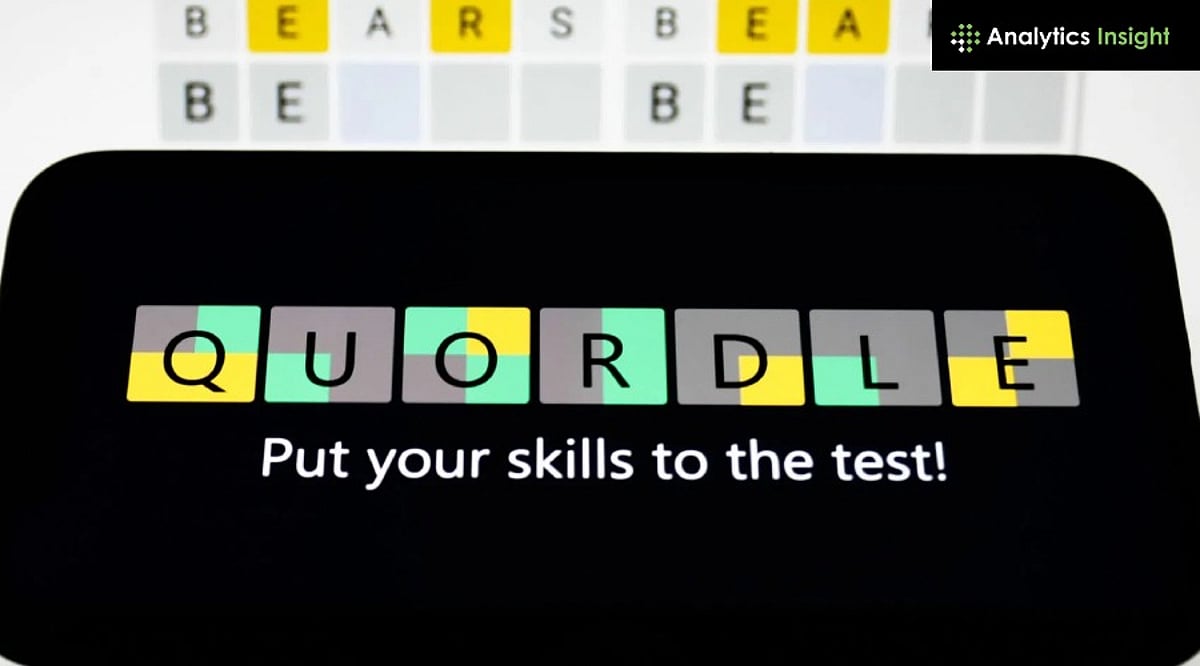
    Today’s Quordle puzzle challenges players with words inspired by singing, wildlife, fire damage, and construction. None of the four answers contain repeated letters, making strategic letter placement and elimination key to solving the puzzle.

    Hints for Today’s Quordle

    • Word 1 (Top Left): A singer’s most valuable asset.
    • Word 2 (Top Right): A wild ox species native to Europe and North America.
    • Word 3 (Bottom Left): Singed or damaged by fire.
    • Word 4 (Bottom Right): Constructed or created.

    All answers start with the letters V, B, B, and B respectively.

    Quordle Answers for July 13

    If you’re ready for the solutions, here they are: VOICE, BISON, BURNT, BUILT.

    Strategy and Walkthrough

    Solving today’s puzzle relies more on deductive reasoning than extensive vocabulary. With no duplicate letters in any of the words, success depends on interpreting the clues effectively. VOICE and BUILT are common and easy to guess; BURNT becomes clear once you think of fire; BISON may be the trickiest of the four. Use these hints to crack the puzzle in nine guesses or fewer.

    Did you enjoy today’s challenge? Come back tomorrow for another Quordle guide!

  • DeFi Tokens Surge Ahead of Bitcoin in June 2026 as Investors Embrace Fundamental Valuations

    DeFi Tokens Surge Ahead of Bitcoin in June 2026 as Investors Embrace Fundamental Valuations

    The cryptocurrency landscape witnessed a notable shift in June 2026, as major decentralized finance (DeFi) tokens significantly outperformed Bitcoin. While Bitcoin suffered a steep 22% decline, leading DeFi tokens dropped only about 4%, according to data from Bitwise. This divergence signals a growing investor preference for projects with tangible revenue, active user bases, and sustainable business models—a trend analysts are calling a “quiet re-rating.”

    What Is Driving the DeFi Outperformance?

    Market re-rating occurs when investors fundamentally change how they value an asset or sector. In the past, DeFi tokens were often viewed as speculative. Now, investors are focusing on real-world metrics such as protocol fees, daily active users, and revenue generation. This shift has boosted confidence in DeFi platforms that function as decentralized financial businesses, offering services like lending, trading, and infrastructure.

    Strong Fundamentals Over Speculation

    Many DeFi projects now generate steady income through transaction fees and maintain high user engagement despite market volatility. This financial health has made them more attractive during downturns. Investors are becoming selective, favoring projects with solid performance and long-term potential over broad market bets.

    Capital Rotates Beyond Bitcoin

    Bitcoin’s dominance has eroded as capital flows into other sectors like DeFi and tokenized real-world assets. Reuters noted that Bitcoin’s market share declined as investment diversified. This rotation, combined with improved regulatory clarity in several jurisdictions, has further supported DeFi’s relative strength.

    Bitcoin Remains Central but Faces Headwinds

    Despite its June decline, Bitcoin has recovered above $63,000 and retains its position as the largest cryptocurrency. Strong on-chain data suggests selling pressure has eased, but analysts remain cautious. Bitcoin’s role is still pivotal, yet the latest performance underscores that investors are no longer solely focused on a single asset.

    What This Means for the Crypto Market

    The outperformance of DeFi tokens during a Bitcoin rout marks a structural shift. Investors are now pricing DeFi protocols based on cash flows and utility rather than hype. While a single month does not confirm a permanent trend, it suggests that DeFi has entered a new phase where business strength matters more than market excitement. However, risks remain—DeFi carries unique smart contract and regulatory vulnerabilities.

    FAQs

    1. What is a market re-rating?
    A re-rating happens when investors fundamentally shift how they value a sector, moving from speculative hype to pricing assets based on underlying revenue, utility, and concrete business metrics.

    2. How did DeFi tokens perform compared to Bitcoin?
    During June 2026, major DeFi tokens lost only about 4%, while Bitcoin fell 22% over the same period.

    3. Why are investors showing more interest in DeFi?
    Investors are tracking tangible metrics like protocol fees, active daily users, and sustainable revenue models, finding value in platforms acting as functional, decentralized financial businesses.

    4. Did Bitcoin lose its importance?
    No. Bitcoin remains the largest, most liquid digital asset and recently recovered above $63,000, but its dropping dominance shows investors are diversifying into cash-flowing utility tokens.

    5. Is this enough to confirm a long-term trend?
    Not yet. Analysts warn that a single month of outperformance does not guarantee a permanent decoupling, as DeFi still carries unique smart contract and regulatory risks.

  • Best Smart TVs for Gamers Awaiting GTA 6: Top Picks Under ₹50,000

    Best Smart TVs for Gamers Awaiting GTA 6: Top Picks Under ₹50,000

    With GTA 6 on the horizon, gamers are upgrading their setups for the ultimate open-world experience. A great TV can make all the difference, offering vibrant colors, smooth motion, and low input lag. Here are the best smart TVs under ₹50,000 that deliver premium features for gaming and entertainment.

    Sony Bravia 2 II

    Sony Bravia 2 II delivers excellent picture quality with its 4K HDR display and Sony’s powerful image processing. Google TV offers access to popular streaming apps, while Dolby Audio enhances movies and shows. Smooth performance, reliable upscaling, and premium build quality make it a strong choice under Rs. 50,000.

    Samsung Crystal Vision 4K

    Samsung Crystal Vision 4K combines vibrant colors with sharp 4K resolution for an enjoyable viewing experience. The Crystal Processor improves picture clarity, while Tizen OS provides quick access to streaming platforms. Its slim design, voice assistant support, and dependable performance make it an attractive, budget-friendly smart TV option.

    LG UHD AI

    LG UHD AI Smart TV offers crisp 4K visuals powered by the α5 AI Processor, improving brightness and image quality. webOS delivers a smooth interface with plenty of entertainment apps. AI Sound enhances audio output, making this TV a great pick for movies, sports, and everyday streaming.

    TCL C7K QLED

    TCL C7K QLED stands out for its QLED display, which delivers richer colors and higher brightness than standard LED televisions. Google TV keeps navigation simple, while Dolby Vision and Dolby Atmos improve entertainment. Gamers also benefit from smooth motion and low input lag during fast-paced gameplay sessions.

    Hisense U7N

    Hisense U7N offers premium features at a competitive price, including a bright 4K display with Mini LED technology and excellent contrast. Dolby Vision IQ and Dolby Atmos create an immersive experience. Its gaming-friendly refresh rate and responsive interface make it suitable for both entertainment and gaming enthusiasts.

    Xiaomi X Pro QLED

    Xiaomi X Pro QLED delivers excellent value with vibrant QLED colors, Dolby Vision support, and a smooth Google TV experience. PatchWall adds personalized content recommendations, while powerful speakers enhance movie nights. Its modern design and balanced performance make it one of the best affordable premium televisions on the market.

    Acer Super Series Mini LED

    Acer Super Series Mini LED packs premium display technology into an affordable package. The Mini LED panel offers deeper blacks, better brightness, and improved contrast for movies and sports. Google TV, Dolby Vision, and Dolby Atmos complete the package, making it a feature-rich smart TV below Rs. 50,000.

    Whether you’re exploring Los Santos or diving into the next GTA adventure, these TVs offer the performance and visual quality to elevate your gaming sessions. Choose the one that fits your budget and enjoy every detail of the open world.

  • Soult and Trescon Join Forces to Offer Digital Legacy Planning as a Corporate Employee Benefit

    Soult and Trescon Join Forces to Offer Digital Legacy Planning as a Corporate Employee Benefit

    BENGALURU, India — Soult, India’s secure digital life vault for families, has announced a corporate partnership with global business event organizer Trescon. The partnership will extend Soult’s Legacy plan to Trescon employees across its India offices as a company-sponsored benefit, ahead of Soult’s public launch of Soult Dialogues in Bengaluru on August 6.

    Through the partnership, Trescon employees can securely organize financial assets, important documents, passwords, emergency instructions, and personal memories in one encrypted platform. They can also designate trusted contacts who can be granted access when needed most.

    “This partnership reflects a growing recognition that family preparedness is an essential part of employee wellbeing, rather than a personal responsibility employees must manage alone,” said Sanketh Kandlikar, Founder & CTO of Soult. “By making Soult available to Trescon’s workforce, we are helping families organize what matters most through a secure and trusted platform. We believe this is the beginning of a broader shift towards making digital legacy planning a standard workplace benefit.”

    Naveen Bharadwaj, CEO of Trescon, added: “Every organization talks about employee wellbeing, but very few extend that conversation to what happens to an employee’s family in an emergency. It’s an uncomfortable topic, which is exactly why it gets ignored. We wanted to change that for our people. Soult gave us a secure, credible way to do it, and rolling it out across our India offices felt like the right place to start, with our global offices next once the platform is available there.”

    The partnership marks an important milestone in Soult’s growth strategy, expanding its reach from individual consumers into the enterprise segment. As organizations continue investing in employee wellbeing, digital legacy planning is emerging as a valuable addition alongside health insurance, financial wellness programs, and mental health support.

    To celebrate the partnership and the upcoming public launch, Soult will host an exclusive networking evening in Bengaluru on August 6, bringing together over 50 influential business leaders, founders, CEOs, CHROs, HR leaders, wealth management professionals, family office advisors, legal experts, and industry leaders to explore the growing importance of digital legacy planning and family preparedness in India.

    About Soult

    Soult is India’s secure digital life vault, designed to help families organize, protect, and securely pass on their most important information. The platform enables users to store financial assets, legal documents, personal identification, passwords, emergency instructions, and cherished memories in one encrypted location. Through its trusted executor framework, designated family members can securely access essential information when needed. Soult uses AES 256 encryption, hosts data on AWS infrastructure in India, and is certified to ISO 27001 and ISO 9001 standards. The app is available on iOS and Android. For more information, visit soultdigital.com.

  • Ethereum ETF Inflows Surge to $70.5M as Bitcoin Sees $84.86M in Outflows

    Ethereum ETF Inflows Surge to $70.5M as Bitcoin Sees $84.86M in Outflows

    Ethereum attracted $70.5 million in institutional ETF inflows, marking five consecutive days of gains, while Bitcoin ETFs recorded $84.86 million in outflows, highlighting a short-term shift in investor preference.

    Key Takeaways

    • Ethereum ETFs recorded $70.5 million in net inflows, extending a five-day positive streak.
    • Fidelity’s FETH contributed nearly $69 million of the total Ethereum inflows.
    • Bitcoin ETFs saw $84.86 million in net outflows as some institutions shifted allocations.

    Ethereum Records Strong ETF Inflows

    Spot Ethereum ETFs received approximately $70.5 million in net inflows during the latest trading session. This result also marked the fifth straight trading day with positive inflows for Ethereum funds. Such a streak shows that institutional investors continue to place fresh capital into Ethereum despite market uncertainty.

    Among all Ethereum ETFs, Fidelity’s FETH stood out as the biggest contributor. The fund attracted close to $69 million in fresh investments. This means that Fidelity accounted for almost all of the day’s net inflows. The strong performance of FETH reflects growing confidence among large investors who want exposure to Ethereum through regulated investment products instead of direct cryptocurrency purchases.

    Bitcoin Faces Investor Withdrawals

    While Ethereum enjoyed another day of positive inflows, Bitcoin moved in the opposite direction. Spot Bitcoin ETFs recorded net outflows of nearly $84.86 million during the same period.

    Several well-known Bitcoin funds reported investor withdrawals. These included products from Grayscale, BlackRock, and Fidelity. The outflows do not necessarily mean that institutions have lost confidence in Bitcoin. Instead, they may show that some investors decided to reduce exposure or shift part of their money into other digital assets, especially Ethereum.

    Why Institutions Show More Interest in Ethereum

    According to many experts in finance, Ethereum offers utility beyond serving as a cryptocurrency. The Ethereum platform is useful when it comes to decentralized finance, tokenization, smart contracts, and numerous other blockchain applications. These capabilities make Ethereum attractive as they support decentralized finance, tokenization, and other emerging blockchain applications.

    Another reason for the current inflow of capital might be the strategy of portfolio diversification. It means that instead of investing all their funds into Bitcoin, institutional investors may prefer to use various virtual currencies. Ethereum is chosen for investment as the second most popular currency after Bitcoin for its established ecosystem and possible applications.

    Market Prices Stay Stable

    Despite the positive ETF inflows, Ethereum’s price has not experienced an explosive rally. The cryptocurrency traded above $1,740, which reflects a partial recovery after earlier weakness. The steady price movement suggests that institutional buying has helped support market confidence, even though broader economic concerns still affect investor sentiment.

    Bitcoin traded around $62,000 to $63,000 during the same period. Global economic uncertainty and geopolitical developments continue to influence the cryptocurrency market. These external factors often affect investor decisions, regardless of how much money enters or leaves ETF products.

    What the Latest Data Means

    The difference between Ethereum and Bitcoin ETF flows does not automatically signal a permanent market shift. Daily ETF numbers often change since institutional investors regularly adjust their portfolios based on market conditions, economic news, and investment strategies.

    However, five consecutive days of positive inflows into Ethereum ETFs present a meaningful trend. Continuous investment from institutions usually reflects confidence in the asset’s long-term potential. Large investors often make careful decisions after detailed research, so steady inflows can become an important signal for the broader market.

    Why This Matters

    This divergence signals a tactical institutional rotation, with investors favoring Ethereum’s utility-driven smart contract ecosystem over Bitcoin’s store-of-value narrative. Five straight days of ETH inflows validate growing corporate interest, even as spot Bitcoin ETFs face short-term profit-taking.

    Outlook for Ethereum and Bitcoin

    Recent ETF statistics show that institutional interest in Ethereum is growing. The figure of $70.5 million in net flows and Fidelity FETH’s almost $69 million contribution indicate that there is a strong demand for regulated products in Ethereum investment. The opposite situation is observed in Bitcoin, where there is a recorded net outflow of $84.86 million. This seems to imply that some institutions have shifted their interest for a while.

    Both Ethereum and Bitcoin are important cryptocurrency players. Bitcoin retains the status of the biggest cryptocurrency and the number one choice of many long-term investors. Ethereum, in turn, is strengthening its position given the increasing number of real-world applications and increased institutional interest.

    The following weeks will show whether the trend continues or whether investors return to Bitcoin in larger volumes. For now, the latest ETF statistics clearly show that Ethereum gained some momentum as a cryptocurrency for institutional investors while Bitcoin experienced a small period of weaker fund flow.

  • Top Inkjet Printers for Home and Office: Expert Reviews and Buying Guide (2026)

    Top Inkjet Printers for Home and Office: Expert Reviews and Buying Guide (2026)

    Buying a printer can be tricky. You need to check durability, features, and compatibility before making a purchase. With countless models on the shelves, each claiming to be the best, it’s easy to get confused. That’s why printing experts test these machines for months before ranking them. Their reviews save buyers from all the guesswork. Here are five expert-tested inkjet printers for home and office use, along with a quick guide to help you choose the right one for your needs and budget.

    Why Inkjet Printers Still Hold Up

    Laser printers do a fine job with plain text, but inkjets are a great choice for color printing. Parents helping with school projects, small business owners making flyers, and anyone printing photos usually reach for an inkjet. Newer models are quieter and take up less desk space than older variants. Replacement ink cartridges were a major concern, but tank-style printers have addressed that problem to a great extent.

    Top 5 Inkjet Printers Reviewed

    1. Epson EcoTank Pro ET-5850

    Best for: Small offices and busy homes

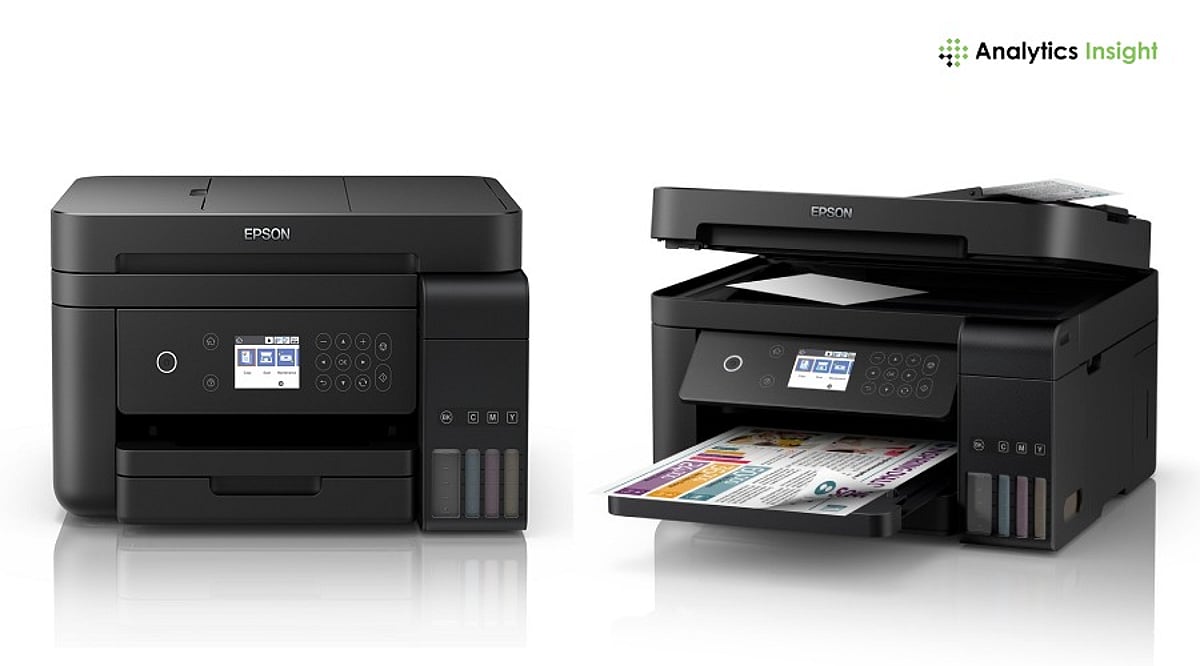
    RTINGS places this printer at the top of its inkjet list. Refillable ink tanks replace cartridges, helping owners avoid constant store runs. The cost per page drops significantly over time. It features high-capacity ink tanks with replaceable 7,500 black pages and 6,000 color pages. The ET-5850 handles copying, scanning, printing, and faxing. It boasts high paper capacity and has a 4.3-inch color touchscreen. Supports Wi-Fi, Ethernet, and USB. Print quality stays steady across regular documents and color pages. Testers say setup is simple, even for first-time tank printer buyers.

    2. Epson EcoTank ET-2800

    Best for: Home offices and small classroom setups

    Consumer Reports claims that ink for a tank printer can cost as low as $5 a year, compared to nearly $100 for a cartridge printer. This model comes with Micro Piezo Heat Free technology that delivers sharp text and vibrant colors. It performs printing, scanning, and copying. The 1.4-inch LCD color display and mobile/voice-activated features make it a smart pick for steady everyday use.

    3. HP DeskJet 2855e

    Best for: Light, occasional users

    Light users don’t need a large tank printer. The HP DeskJet 2855e offers simple and affordable usage. It prints at a fair speed for casual use and connects to Wi-Fi without trouble. Setup runs through a phone app. It prints, scans, and copies in color. Supports Apple AirPrint, Wi-Fi, and Mopria Print services. Integrates the HP Smart app. Made with 60% post-consumer recycled plastics, it’s eco-friendly. Since it uses standard cartridges, the cost per page runs higher than tank models. Occasional printing is where this machine works best.

    4. Canon PIXMA TR4720

    Best for: Home users with limited desk space

    This compact printer handles printing and scanning. Reviewers note that photo print quality is better than most machines in its price range. It has a printing speed of 8.8 pages per minute and uses a hybrid ink system. Features a 100-sheet front paper cassette and an Auto Document Feeder (ADF). Supports voice commands through Amazon Alexa and Google Home. Ink costs are on the higher end since it relies on cartridges. Good for users who seldom print and scan often.

    5. Canon PIXMA G3270

    Best for: Heavy users looking for long-term savings

    This tank system printer keeps ink costs low even with frequent use. It handles scanning and copying, adding value for small office setups. The upfront price is higher than budget cartridge printers, but savings on ink make up for it within the first year. Uses squeeze-free GI-21 ink bottles for mess-free refilling. Allows wireless mobile printing via Apple AirPrint, Mopria Print services, and the Canon Print App. Ideal for small businesses that print in bulk.

    Which Printer Is Best for Whom?

    • Light users (few pages a week): Consider HP DeskJet 2855e or Canon PIXMA TR4720. Both keep upfront costs low. For frequent scanning, the TR4720 excels.
    • Daily printers (school, work, small business): Choose a tank printer. Epson EcoTank ET-2800 offers a good middle ground. Larger offices or bulk printers will get more value from Canon PIXMA G3270 or Epson EcoTank Pro ET-5850.
    • Photo lovers and all-around needs: The ET-5850 handles text, graphics, and photos with low running costs.

    Final Thoughts

    The right printer depends on usage. Light, occasional use calls for a budget pick like the HP DeskJet 2855e or Canon PIXMA TR4720. Frequent or bulk printing calls for a tank printer like the Epson EcoTank ET-2800, Canon PIXMA G3270, or Epson EcoTank Pro ET-5850. Every model on this list earned its spot through real testing, not marketing claims. Each one is a safe choice as long as it matches your actual printing habits.

    Frequently Asked Questions

    1. Which is the best inkjet printer for home use in 2026?

    The Epson EcoTank ET-2800 and Canon PIXMA TR4720 are among the best choices for home use, offering reliable performance, good print quality, and affordable running costs.

    2. Are ink tank printers better than cartridge printers?

    Yes, if you print frequently. Ink tank printers have a higher upfront cost but significantly lower ink costs over time, making them more economical for regular use.

    3. Which printer is best for a small business?

    The Epson EcoTank Pro ET-5850 and Canon PIXMA G3270 are excellent for small businesses because they offer low printing costs, high paper capacity, and all-in-one functionality.

    4. Is the HP DeskJet 2855e suitable for occasional printing?

    Yes. The HP DeskJet 2855e is designed for light home use and is a good option for users who print only a few pages each week.

    5. What should I consider before buying an inkjet printer?

    Consider your monthly print volume, ink costs, print quality, scanning and copying needs, wireless connectivity, paper capacity, and whether a tank or cartridge printer better suits your budget.


  • AI Tutors Revolutionize Language Learning Apps: What Changed and What Didn’t

    AI Tutors Revolutionize Language Learning Apps: What Changed and What Didn’t

    For a decade, learning a language on a phone meant one loop: tap the matching word, keep the streak alive, climb a leaderboard of strangers. Then, large language models learned to hold a conversation, and the loop looked small. A tutor that chats, corrects, and roleplays in forty languages at any hour changes what an app can promise, and the incumbents knew it immediately. The result is the category’s fastest reinvention, worth understanding for what improved and what merely got new paint.

    From Flashcards to Conversation Partners

    The pivot has dates attached. Duolingo launched its Max tier in March 2023, built on GPT-4, with two features the old loop never offered: explanations of why an answer was wrong and open-ended roleplay with the app’s characters. A video-call feature followed, holding short spoken conversations in nine languages by early 2026. In April 2025, the chief executive declared the operation AI-first in a memo that leaked within hours, and AI-assisted generation roughly doubled the course catalog in a year. Conversational practice became the headline feature everywhere.

    The Engagement Machine Under the Lessons

    What did not change is the machinery that keeps people opening the app. Streaks and leagues run on the same variable-reward psychology tuned across online casino entertainment. Language apps borrowed that psychology to make grammar sticky. The borrowing was honest, since vocabulary survives only through repetition, and a streak manufactures repetition cheaply. But the mechanics answer to retention metrics, not fluency, and a tutor bolted onto the same loop inherits the incentive: keep the user returning, learning or not.

    When the Streak Becomes the Product

    Every long-term user knows the night the priority flips: the lesson gets chosen for speed rather than difficulty, because the streak matters more than the skill. That flip is the engagement machine working as designed, worth noticing without moralizing. A streak that drags you into the language on tired days does real pedagogical work, and turns hollow when preserving the number replaces practicing the skill. The difference lies in the five minutes, not the counter.

    What the Tutor Actually Changes

    Set the marketing aside, and the genuine differences between the classic app loop and an AI tutor turn out to be specific and measurable, which makes the upgrade decision easier than the hype suggests. Some of the old gaps the new tools close completely, others they barely touch at all, and one column of the comparison they actively complicate. The comparison below separates the categories honestly, including the part that the advertising skips.

    The last row is the honest asterisk on the whole revolution, and it deserves more attention than it gets. A model that converses fluently in any language can also explain its grammar wrongly while sounding completely certain of itself, which is why the serious products keep human-reviewed curricula underneath the chat layer, and why learners should treat any surprising correction as a claim to verify rather than a verdict to absorb.

    Using the Hybrid Without Fooling Yourself

    The practical playbook for the new era is short, and none of it requires a subscription decision first, because the daily habits matter far more than the subscription tier does. The new tools reward a very particular kind of user, the one who treats the app as a gym rather than a game, and the difference between those two kinds of users is built entirely from four behaviors that cost nothing at all:

    • Speak out loud daily — conversation features only build fluency when your mouth participates.
    • Spot-check surprising AI explanations against a course before adopting them.
    • Keep human contact in the diet — a tutor with infinite patience never supplies real stakes.
    • Use the streak as a doorman, not a goal — judge weeks by conversations held.

    Learners who follow these four consistently get the best of both machines: the familiar reward loop supplies the daily discipline, and the new tutor supplies the conversational practice that the loop never could. Skip them, however, and the shiny new tutor quietly becomes just one more way to feel productive for five minutes a day, which is precisely the same outcome the old flashcard loop was always criticized for producing.

    Fluency Still Charges the Same Price

    The arrival of AI tutors removed language learning’s best excuse — the lack of anyone to talk to — and none of the cost that was always the real obstacle: hundreds of hours of attention, most unglamorous. The apps are better than ever, the conversation practice is real, and the price of fluency has not dropped a cent. Open the app tonight, but order deliberately: pick the hard lesson, speak it out loud, and let the streak take care of itself.

  • 2026 World Cup Data Analysis: Top Three Contenders According to the Numbers

    2026 World Cup Data Analysis: Top Three Contenders According to the Numbers

    As the 2026 FIFA World Cup enters its knockout rounds, the eye test and advanced analytics are finally aligning. Betting markets, predictive models, and ratings systems like Silver Bulletin’s PELE model all point to a select group of teams that have separated themselves both statistically and on the pitch. Here is a data-driven breakdown of the three strongest contenders and why the analytics back them.

    1. France — The Model’s Clear Favorite

    Across nearly every data source, France sits at the top. Their case is built not just on reputation but on performance quality. France reached the quarterfinals without conceding a single goal in knockout matches—a defensive record that stands out in an expanded 48-team tournament where fatigue and depth usually surface. Their odds shifted from +500 at the start to as short as +175/+180 by the quarterfinal stage, one of the sharpest market moves of the competition.

    Underlying numbers support the shift. In the round of 32 win over Sweden, France produced a dominant attacking display, and against Morocco in the quarterfinals they recorded 22 shots, nine on target. Predictive models weight such shot volume and quality heavily when projecting knockout success. Squad depth is another structural advantage: France can rotate elite players at nearly every position without a meaningful drop-off, which matters more in a longer, physically demanding tournament.

    Why the data likes them: elite expected-goals output, a defense untouched in knockouts, and depth that absorbs injuries or suspensions without losing quality.

    2. Argentina — Pedigree Meets a Skeptical Model

    Argentina presents a fascinating gap between market sentiment and pure model output. The reigning World Cup and Copa América champions have improved dramatically in betting markets—from around +950 at the start to roughly +400 by the quarterfinals—driven by tournament experience, a settled defensive structure, and Messi’s continued brilliance (he entered the quarterfinals as the tournament’s leading scorer at age 39).

    However, data-driven models are more cautious. Advanced ratings systems flag that Argentina’s underlying performance metrics haven’t matched their results. Back-to-back 3-2 knockout wins, including a dramatic late comeback against Egypt, actually caused some model-based ratings to decline because match control and shot data didn’t fully support the scorelines. That combination—proven knockout pedigree and a defense anchored by Emiliano Martínez, but statistically shakier performances—makes Argentina a dangerous contender, especially skilled at winning ugly even when models aren’t fully convinced.

    Why the data likes (and questions) them: elite goalkeeping and knockout experience, but underlying match metrics suggest more vulnerability than results indicate—a classic tension between clutch performance and sustainability in predictive modeling.

    3. Spain — Efficiency and Squad Balance

    Spain entered the tournament as a co-favorite with France and, despite an early stumble (a 0-0 draw with Cape Verde), rebuilt its case through the knockout rounds, including eliminating Portugal. Betting markets have Spain as a solid second or third choice, and the analytical case rests on similar pillars: two capable options at nearly every position, elite attacking talent, and recent tournament pedigree as reigning European champions.

    What separates Spain analytically is efficiency. Instead of overwhelming shot volume, Spain’s model-friendly profile comes from possession control and conversion quality—squeezing high-value chances out of matches rather than needing high shot counts to win. This trait historically endures across deep World Cup runs, holding up against various opponent styles, from possession-heavy sides to disciplined counter-attacking defenses.

    Why the data likes them: balanced squad depth, elite individual attacking talent, and a possession-efficiency profile that travels well against different tactical setups.

    The Bigger Picture

    What models and markets agree on is that this remains an unusually open World Cup. The expanded 48-team format has widened the field of realistic contenders and increased volatility. Teams like Norway, Morocco, Belgium, and England remain live threats. But when you filter for underlying performance data, squad depth, and tournament experience, France, Argentina, and Spain are the three teams the numbers keep pointing to as the final rounds approach.

    If you want to watch the finish live, check available World Cup 2026 final tickets to see the contenders battle on the biggest stage in football.

    Odds and statistics referenced are current as of early July 2026 and subject to change as the knockout rounds progress.

  • AI Agents vs. Chatbots: Key Differences and When to Use Each

    AI Agents vs. Chatbots: Key Differences and When to Use Each

    AI chatbots and AI agents are often mentioned together, but they serve very different purposes. Chatbots excel at conversations and answering questions, while AI agents can plan, make decisions, and complete complex tasks. Understanding the distinction helps businesses and individuals choose the right tool for their needs.

    AI Chatbots Focus on Conversations

    AI chatbots are designed to interact with users through text or voice. They answer questions, explain topics, assist with writing emails, and provide customer support. Chatbots work by responding to prompts and generating relevant replies. Most require a new user instruction before taking any further action. They are ideal for quick assistance, FAQs, and everyday conversational tasks.

    AI Agents Can Take Action

    AI agents go beyond simple chatting. They understand a goal, create a plan, use connected software, and execute multiple steps to achieve a desired outcome. Instead of merely answering questions, they solve problems. For example, an AI agent can organize meetings, gather data, prepare reports, or manage workflows with minimal human involvement.

    They Handle Decisions Differently

    A chatbot reacts to what the user asks at that moment. It provides information but rarely makes independent decisions. Every new action typically requires another prompt. An AI agent, on the other hand, evaluates options, adjusts its plan if circumstances change, and continues working until the assigned task is completed successfully.

    Real-World Applications

    AI chatbots are widely used in customer service, education, e-commerce, and content creation. They help users get instant answers and improve communication between businesses and customers. AI agents are becoming popular in finance, healthcare, software development, and business operations, where they automate repetitive tasks and boost productivity.

    Which One Is Right for You?

    If you need quick answers, writing support, or customer assistance, an AI chatbot is usually the better choice. It is easy to use and effective for everyday tasks. If your work involves automation, project management, or multi-step processes, an AI agent offers more advanced capabilities and can save significant time.

    The Future of AI

    The next generation of AI will likely combine chatbots and agents into a seamless experience. Users will interact through natural conversations while AI agents handle complex work behind the scenes. This integration could make workplaces more productive by reducing repetitive work and allowing people to focus on creative and strategic tasks.