Author: vitorcherulli

  • 8 Gripping Survival Games That Demand Your Hours and Wits

    8 Gripping Survival Games That Demand Your Hours and Wits

    From crafting and base-building to facing mythical beasts and alien oceans, these survival games offer relentless adventure.

    Survival games test your resourcefulness, endurance, and strategic thinking. Whether you prefer cooperative chaos or solitary exploration, these top picks will keep you coming back for more.

    1. Minecraft

    Gather resources, craft essential tools, build secure shelters, and survive dangerous nights teeming with hostile creatures. This iconic sandbox experience lets you shape your own world while fending off threats in the dark.

    2. Rust

    Face harsh environments, gather materials, build fortified bases, and compete against unpredictable players. Every decision can mean the difference between thriving and losing everything in this unforgiving open world.

    3. Valheim

    Explore vast Norse-inspired landscapes, battle mythical creatures, craft powerful equipment, and construct impressive settlements. Cooperative gameplay immerses you in a rich world where survival is a shared adventure.

    4. The Forest

    Stranded after a plane crash, players gather supplies, build defenses, and uncover dark mysteries while confronting terrifying cannibalistic enemies lurking throughout the forest. A spine-tingling blend of survival and horror.

    5. Subnautica

    Dive into an alien ocean, manage oxygen supplies, craft advanced equipment, and discover breathtaking marine ecosystems filled with mysterious creatures and hidden dangers. Underwater survival at its most immersive.

    6. ARK: Survival Ascended

    Tame prehistoric creatures, construct massive bases, gather vital resources, and battle hostile wildlife in an expansive open world packed with adventure and exploration. Dinosaurs and survival combine for epic gameplay.

    7. Green Hell

    Navigate the dangerous Amazon rainforest by hunting, crafting, treating injuries, and maintaining physical and mental health against relentless environmental threats and wildlife. A gritty, realistic survival challenge.

    8. Don’t Starve Together

    Work alone or cooperatively to gather food, manage sanity, craft equipment, and survive bizarre monsters in a beautifully hand-drawn gothic-inspired wilderness. Tim Burton meets survival in this tense, creative title.

    9. 7 Days to Die

    Combine first-person action, base-building, crafting, and resource management while preparing strong defenses against increasingly dangerous zombie hordes that attack every seventh night. A punishing yet rewarding survival FPS.

    Each of these games offers a unique twist on the survival genre, ensuring hours of gripping gameplay. Whether you prefer mythic Viking lands or alien oceans, there’s a world waiting to test you.

  • HCL Tech Stock Rises Ahead of Q1 FY27 Results: Analyst Views on Buy or Sell

    HCL Tech Stock Rises Ahead of Q1 FY27 Results: Analyst Views on Buy or Sell

    HCL Technologies shares edged higher by 1.68% in early trading on Monday, July 13, 2026, as investors awaited the company’s Q1 FY27 results. The stock opened at Rs. 1,162, compared to the previous close of Rs. 1,164.10, and reached an intraday high of Rs. 1,183.70 on the NSE.

    Market participants are closely watching the June quarter numbers, management commentary, full-year guidance, deal pipeline, AI-driven business opportunities, and margin performance. The board is also expected to consider a second interim dividend for FY27 alongside the Q1 results.

    Q1 Results Preview

    Axis Securities projects a 3.5% quarter-on-quarter revenue growth for HCL Tech, supported by rupee depreciation, though client-specific headwinds and seasonal softness in the software business may act as drags. The brokerage notes that EBIT margins could decline by 40 basis points sequentially due to restructuring costs and higher investments. Key areas to watch include management’s outlook on Services and ERD businesses, software performance, deal pipeline, and FY27 revenue guidance.

    Seema Srivastava, Senior Research Analyst at SMC Global Securities, expects a softer quarter amid reduced discretionary tech spending, slower client decisions, and macroeconomic uncertainty in major global markets. She added, “Services revenue is likely to remain under pressure, though steady execution of long-term digital transformation programs should provide some support. Margins may improve sequentially due to favorable currency movements, higher utilization, productivity initiatives, and cost controls, partially offset by annual wage revisions and continued AI investments.”

    Key Factors to Watch

    Investors will track whether HCL Tech can sustain its constant-currency revenue growth guidance of 1%-4% for FY27. In Q4 FY26, the company reported a consolidated net profit of Rs. 4,488 crore (up 4.2% YoY) and revenue from operations of Rs. 33,981 crore (up 12% YoY). CEO and MD C. Vijayakumar emphasized that the company’s top priority for FY27 is positioning itself to capitalize on AI opportunities for multi-decade value creation.

    Share Performance

    HCL Tech shares have delivered over 21% returns over the past five years and 6% over three years. However, the stock has declined 28.2% over the last year and is down 28% year-to-date. In the past month, it gained 6%, and over the last five trading sessions, it rose 3.7%. The 52-week high stands at Rs. 1,780.10 (February 3, 2026), while the 52-week low is Rs. 1,030 (July 1, 2026).

    Should You Buy or Sell HCL Tech?

    Market experts remain cautious ahead of the results. Harshal Dasani, Business Head at INVasset PMS, said, “The risk-reward equation is not favorable for chasing HCL Tech before results. If management delivers stable guidance with confidence around execution and improving client spending, the long-term investment case remains constructive. A staggered approach after results offers a better risk-reward than an aggressive pre-result position.”

    Mahesh M Ojha of Kantilal Chhaganlal Securities advised investors to avoid taking new positions before earnings, noting that IT stocks often experience volatile swings during such periods.

    Disclaimer: This article is for informational purposes only and does not constitute investment advice. Readers should consult with a qualified financial advisor before making any investment decisions.

  • Airtel Perplexity Pro Subscription Shows ‘Paused’ Status: What It Means and How to Respond

    Airtel Perplexity Pro Subscription Shows ‘Paused’ Status: What It Means and How to Respond

    Thousands of Airtel customers who took advantage of the operator’s complimentary one-year Perplexity Pro subscription are now seeing a ‘paused’ status on their accounts. While this may cause concern, it does not mean the subscription has been canceled. Instead, it indicates that the promotional period has ended, and users need to decide whether to upgrade to a paid plan.

    Why the Subscription Appears Paused

    Airtel’s limited-time offer, launched in partnership with Perplexity in July 2025, provided eligible prepaid, postpaid, broadband, and DTH customers with a free one-year Perplexity Pro subscription valued at approximately Rs. 17,000. The offer is now closed to new users. Those who activated it before the deadline retain access until their 12-month subscription expires.

    A paused subscription signals that the promotional period has ended. To continue using premium AI services, users must provide a valid payment method and pay for a monthly or yearly plan. The account remains intact; subscribing again will restore access to the Pro version.

    How to Avoid Unwanted Renewal Charges

    Users who do not intend to upgrade should check their account settings before the trial ends. If a payment method was added, they must cancel automatic renewal via the Billing or Subscriptions section. This prevents any charges after the trial period concludes.

    According to Airtel’s FAQs, subscriptions may automatically renew depending on the billing cycle selected after the trial period, unless the user cancels automatic renewal beforehand. The promotion for new activations has stopped, but existing users retain access until their 12-month validity expires.

    What to Do Next

    • If you want to continue using Perplexity Pro, choose a paid subscription plan and add a payment method.
    • If you do not wish to continue, cancel automatic renewal immediately to avoid charges.
    • Be aware that your account and data are not deleted; you can resubscribe later if needed.

    Stay informed about your subscription status to make the best decision for your needs.

  • TCS Stock Surges 6% on Strong Q1 FY27 Earnings and ABB AI Deal: Analyst Outlook and Key Risks

    TCS Stock Surges 6% on Strong Q1 FY27 Earnings and ABB AI Deal: Analyst Outlook and Key Risks

    Tata Consultancy Services (TCS) shares rallied for a second consecutive session, climbing up to 4% to an intraday high near ₹2,133, making it the top gainer on the Nifty 50 index. The stock’s upward momentum followed the IT giant’s better-than-expected June-quarter results and a landmark multi-year AI partnership with ABB, which together fueled a 3% rise in the Nifty IT index and snapped a two-day sector-wide losing streak.

    What TCS Actually Reported

    TCS delivered quarterly revenues of ₹72,275 crore, surpassing analyst estimates, with a year-over-year net profit growth of 4.61%. Constant-currency revenue growth also exceeded expectations. However, operating margins contracted to 24%, down 130 basis points from the previous quarter, primarily due to wage hikes.

    The standout metric was deal wins: TCS secured total contracts worth $9.5 billion in the quarter, including one mega deal, comfortably beating management’s own forecasts. The company’s artificial intelligence business reached an annualized run rate of $2.6 billion, registering nearly 14% quarter-over-quarter growth. Management expressed optimism about demand improving from Q2 onward, citing a ‘pent-up technology backlog.’

    What Brokerages Are Saying: Mostly Buy, Some Caution

    Most brokerages maintained a constructive stance, though target prices vary widely. Nuvama retained a ‘Buy’ rating with a steep target of ₹3,000, while Centrum Broking kept ‘Buy’ at ₹3,480, citing record deal wins and accelerating enterprise AI adoption. Motilal Oswal reiterated ‘Buy’ with a more conservative target of ₹2,350 (15% upside), noting that while commentary was better than expected, hard evidence of demand recovery remains limited.

    Goldman Sachs maintained ‘Buy’ at ₹2,370, while Morgan Stanley took a neutral ‘Equal Weight’ stance at ₹2,200. Not all analysts are convinced: Antique stuck with ‘Hold’ at ₹2,385, and 360 One Capital also maintained ‘Hold’ at ₹2,290, arguing the quarter largely met modest expectations.

    The Risks Still Weighing on the Stock

    While the rebound has eased some fears, several headwinds persist. These include rising wage costs, increased investments in AI infrastructure, and ongoing pricing pressures that could compress future profit margins. AI-induced deflation and continued geopolitical uncertainties—such as the West Asia crisis—may further delay a broader recovery in discretionary tech spending. Moreover, the quarter’s growth was largely driven by India and the APAC region, while performance in developed markets remained subdued.

    The Bottom Line for Investors

    With target prices ranging from ₹2,200 on the cautious end to ₹3,480 on the bullish end, the broker split reflects genuine uncertainty about how quickly demand recovery translates into sustained revenue growth. Existing holders may find the setup supportive given steady deal wins and improving AI monetization. Those considering a new entry might weigh the more conservative ‘Hold’ calls against the bulls, given how much depends on Q2 demand materializing as management has guided.

  • Assassin’s Creed Black Flag Resynced Sets Franchise Sales Record with 2 Million Copies in One Day

    Assassin’s Creed Black Flag Resynced Sets Franchise Sales Record with 2 Million Copies in One Day

    Ubisoft has reached a historic milestone with the launch of Assassin’s Creed Black Flag Resynced. The remastered pirate adventure sold two million copies within its first 24 hours of release, making it the fastest-selling title in the entire Assassin’s Creed franchise. The achievement is especially remarkable given that the game is a remake of a 2013 classic, proving that Edward Kenway’s Caribbean exploits still captivate players more than a decade later.

    The strong day-one sales demonstrate that players remain eager to revisit beloved titles when they receive thoughtful updates. Longtime fans returned to relive the open-sea exploration, naval combat, and treasure hunting, while a new generation of players experienced one of the series’ most acclaimed installments for the first time with enhanced visuals and smoother performance.

    Black Flag Resynced Breaks Every Previous Assassin’s Creed Launch Record

    Released on July 9, 2026, Assassin’s Creed Black Flag Resynced quickly shattered previous franchise benchmarks. Ubisoft confirmed that the game moved two million units on its first day, a feat few titles achieve. To put this in perspective, Assassin’s Creed 2 — previously one of the series’ strongest performers — reached 1.6 million sales within its first week. The new remake surpassed that total in just 24 hours.

    The original 2013 release was already a commercial and critical hit, praised for its immersive pirate setting, charismatic protagonist, and engaging ship-to-ship battles. The remastered version retains the core narrative and gameplay while upgrading graphics, controls, and overall performance for modern consoles and PCs. This combination of nostalgic content and technical polish clearly resonated with a broad audience.

    Players Still Love a Good Pirate Story

    The success of Black Flag Resynced underscores the enduring appeal of well-crafted pirate narratives. Edward Kenway remains one of the most beloved characters in the Assassin’s Creed universe. His journey across the Caribbean — from plundering ships to uncovering ancient secrets — continues to feel fresh and exciting.

    For many players who grew up with the original, the remake offered a chance to revisit cherished memories. Newcomers, meanwhile, gained access to a highly rated game with modern enhancements. The result was a launch that appealed to both nostalgia and curiosity.

    A Success Story the Gaming Industry Will Notice

    The record-breaking launch sends a clear signal to developers: classic games can still generate massive interest when remade with care. While original titles carry inherent risk, remakes of fan favorites come with a built-in audience. This does not diminish the importance of innovation — fresh ideas remain vital — but it highlights the value of honoring beloved properties.

    For Ubisoft, Assassin’s Creed Black Flag Resynced is more than just a strong sales figure. It is validation that a great game can win over players even 13 years after its original debut. The franchise’s future looks bright, and the industry will undoubtedly take note of this milestone.

  • India Considers Unified Messaging Rules After WhatsApp and Telegram Username Review

    India Considers Unified Messaging Rules After WhatsApp and Telegram Username Review

    The Indian government is reviewing responses from WhatsApp and Telegram regarding their username features, as the Ministry of Electronics and Information Technology (MeitY) considers implementing common regulations for all messaging platforms. The initiative aims to strengthen cybersecurity and curb online scams nationwide.

    MeitY sent notices to WhatsApp, Telegram, and Signal after raising concerns that username-based messaging could enable fraudsters to conceal their identities. Officials worry that without proper safeguards, this feature might facilitate phishing attacks, identity theft, impersonation, and digital arrest scams.

    Government Reviews Messaging Safety

    Electronics and Information Technology Secretary S Krishnan confirmed that WhatsApp submitted its reply over the weekend, and the ministry is now analyzing it carefully. Officials will determine next steps only after completing the review. The government has also requested other messaging platforms to detail the safety measures integrated into their username systems.

    Government officials stated that the primary objective is to establish a single set of rules for all messaging platforms. A uniform policy would prevent disparate treatment of similar features and create clear standards for companies operating in India. Officials believe consistent rules will enhance online safety while supporting technological innovation.

    WhatsApp recently introduced usernames as an optional privacy feature in select countries, allowing users to connect without sharing phone numbers during new conversations. The company emphasized that phone numbers remain necessary for account creation and usage, with usernames serving as an additional layer of personal information protection.

    Telegram has offered username-based messaging for several years, while WhatsApp has not yet launched this feature in India. Government officials have asked both companies to explain how they prevent fake accounts, deter misuse, and protect users from fraud before permitting broader adoption of the feature.

    Why Common Rules are Needed

    India could soon establish a unified safety standard for username-based messaging across all platforms. This move may improve online privacy while reducing fraud and making digital communication more secure.

    The discussion aligns with the government’s broader focus on strengthening cybersecurity nationwide. Krishnan noted that while digital technology has created numerous opportunities, it has also increased security risks. Artificial intelligence can drive innovation, but criminals also exploit the technology to launch more sophisticated cyberattacks.

    Government agencies are now working to improve India’s cyber defenses through enhanced coordination. Organizations such as CERT-In, the National Cyber Coordination Centre, and the Ministry of Home Affairs currently manage various cybersecurity responsibilities. Officials believe better information sharing between government agencies and private companies will help improve India’s response to cyber threats.

    Focus on Stronger Cybersecurity

    Experts also believe clear rules will help businesses protect their official usernames and reduce the risk of fake profiles. Consumers could benefit from stronger identity verification and safer communication across different messaging platforms.

    The Centre will announce its decision after reviewing all responses submitted by the messaging companies. Any new policy is expected to balance user privacy, online safety, and technological innovation while applying the same standards to every messaging platform.

  • BIP-110 Faces Uphill Battle as Bitcoin Miner Support Stays Weak

    BIP-110 Faces Uphill Battle as Bitcoin Miner Support Stays Weak

    Bitcoin’s proposed BIP-110 soft fork continues to face limited miner support ahead of a key activation period, despite renewed debate over restricting non-financial data on the blockchain. The proposal would temporarily limit data storage methods linked to Ordinals and BRC-20 tokens for one year while exempting older transaction outputs.

    Miner signaling remains far below the required threshold, and several prominent Bitcoin figures have publicly opposed the plan. Meanwhile, Bitcoin traded near $63,800 on Monday as broader financial markets reacted to fresh geopolitical tensions in the Middle East.

    Proposal Targets Non-Financial Blockchain Data

    Developer Dathon Ohm introduced BIP-110, known as the Reduced Data Temporary Soft Fork, in December 2025. The proposal would impose temporary restrictions on non-financial data stored in Bitcoin transactions. Specifically, it would cap OP_RETURN fields at 83 bytes, limit data pushes to 256 bytes, and restrict most new outputs to 34 bytes. However, transaction inputs spending coins created before activation would remain permanently exempt.

    The proposed limits would automatically expire about one year after activation. Supporters argue the measures would reduce blockchain growth and return Bitcoin’s primary focus to payments. In contrast, critics argue the proposal would reject valid fee-paying transactions while favoring certain transaction types.

    Michael Saylor, Executive Chairman of Strategy, stated on July 12, 2026, that BIP-110 would transform a spam dispute into a consensus rule change that invalidates some currently valid, fee-paying transactions.

    Miner Support Remains Below Activation Threshold

    So far, miner backing has remained minimal. Signaling has never exceeded roughly 1% during any measurement period and currently stands at zero, with no major mining pool supporting the proposal. One monitoring service recorded only 38 signaling blocks from more than 9,000 mined since May 1, 2026. That represents approximately 0.42% support. Node adoption also remains in the low single digits.

    Miners signal support by setting a specific bit within the block version field. Even so, almost no miners have activated that signal.

    BIP-110 uses a modified activation process requiring support from 55% of miners, or 1,109 of 2,016 blocks during a difficulty adjustment period. That requirement sits below the traditional 95% threshold used for previous Bitcoin soft forks.

    The current signaling period is expected to reach a mandatory window near block 961,632, which projections place in early August. If the proposal locks in, activation would occur near block 965,664 around September 1, 2026. Current support levels indicate the proposal would create only a small minority chain instead of a network-wide upgrade.

    Market Holds Steady as Global Assets React

    Several well-known Bitcoin figures have opposed BIP-110 before the upcoming deadline. Besides Michael Saylor, Blockstream Chief Executive Adam Back rejected the proposal, while developer Jameson Lopp criticized its activation parameters.

    They warned that a disputed fork could split the Bitcoin blockchain and require exchanges and node operators to prepare for two separate networks. Meanwhile, Bitcoin traded near $63,800 on Monday. The cryptocurrency fell 0.3% over the previous 24 hours but remained 2% higher for the week.

    At the same time, traditional markets reacted to the fourth round of U.S. strikes on Iran within one week. Spot gold dropped as much as 1.6% to around $4,050 per ounce, while Brent crude climbed 4% above $79 per barrel amid uncertainty surrounding the Strait of Hormuz. Additionally, Treasury prices declined across the yield curve, pushing the two-year yield to its highest level since February 2025. MSCI’s Asia Pacific equities index also fell 1.6%.

    U.S. Central Command said American forces struck Iran after an attack on a container ship. Conflicting statements about the Strait of Hormuz kept uncertainty elevated since roughly one-fifth of global seaborne oil normally passes through the waterway.

    Markets reflected concerns that prolonged conflict could keep oil prices elevated and encourage the Federal Reserve to maintain higher interest rates for longer. Minutes from the Fed’s June meeting also showed that several policymakers previously considered raising rates before choosing to hold them steady.

    What’s Next?

    BIP-110 continues to face minimal miner support despite proposing temporary limits on non-financial Bitcoin transaction data. Prominent Bitcoin figures have opposed the plan, while activation remains unlikely under current signaling levels. Meanwhile, Bitcoin held relatively steady as global markets reacted to rising geopolitical tensions.

  • Free YUVA AI Course Launched by Indian Government: Get Certified Online

    Free YUVA AI Course Launched by Indian Government: Get Certified Online

    The Ministry of Electronics and Information Technology (MeitY) has opened registrations for YUVA AI, a free online course designed to introduce artificial intelligence to beginners. The course is completely free and offers a certificate upon completion, making it an accessible opportunity for anyone interested in learning AI basics.

    Course Details and Eligibility

    YUVA AI is tailored for beginners with no technical background required. The curriculum explains AI concepts in simple language and demonstrates real-world applications in sectors like healthcare, banking, education, manufacturing, and technology. The entire course can be completed in approximately 4.5 hours, including a final assessment to earn the certificate.

    How to Enroll

    Interested candidates can register on the official YUVA AI website. After creating an account, learners can enroll, complete the lessons, and take the required assessment. The course is hosted on government-supported platforms such as FutureSkills Prime and iGOT Karmayogi.

    Why Choose YUVA AI?

    While many free AI courses exist from companies like Google, Microsoft, and Elements of AI, YUVA AI stands out because it is backed by the Government of India and is entirely free. Like other self-paced courses, it allows learners to study at their own convenience without a fixed schedule. For Indian residents seeking a government-recognized credential, YUVA AI offers a valuable and cost-free opportunity to build foundational AI skills.

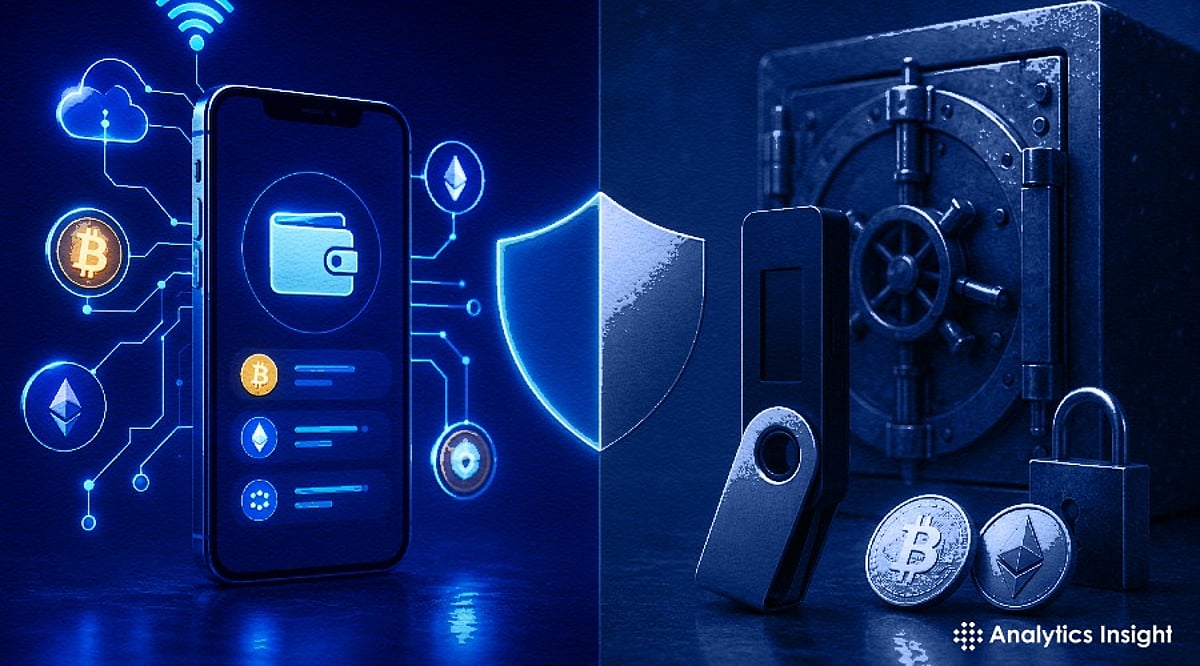
  • Hot Wallets vs Cold Wallets: A Complete Security Comparison for Cryptocurrency Holders

    Hot Wallets vs Cold Wallets: A Complete Security Comparison for Cryptocurrency Holders

    Cryptocurrency has become more popular than ever, with millions of people now owning Bitcoin, Ethereum, and other digital coins. As the number of crypto owners grows, hackers continue to search for new ways to steal digital assets. Wallet security has become one of the most important aspects of crypto ownership.

    A crypto wallet does not actually store coins—it stores the private keys that give access to those coins on the blockchain. If someone obtains those private keys, they can take the crypto. This makes wallet security just as important as choosing the right cryptocurrency. Two of the most common options are hot wallets and cold wallets. Both have advantages, but they also carry different risks.

    What Is a Hot Wallet?

    A hot wallet is a wallet that stays connected to the internet. It can be a mobile app, desktop software, browser extension, or web wallet. Popular examples include MetaMask, Trust Wallet, Phantom, and Coinbase Wallet.

    The biggest benefit of a hot wallet is speed. It allows fast access to crypto at any time, making it a good choice for frequent traders, NFT buyers, decentralized finance users, and those who make regular crypto payments. Everything happens quickly because there is no need to connect an extra device before each transaction.

    However, the internet connection also creates the biggest weakness. Hackers can use many methods to reach online wallets: fake websites, phishing emails, harmful browser extensions, malware, and fake apps remain common tricks. Recent security research also found that some browser extension wallets may expose user privacy through address tracking and other online methods. This shows that online wallets require careful use even when they come from trusted companies.

    What Is a Cold Wallet?

    A cold wallet stores private keys without an internet connection. Hardware wallets such as Ledger and Trezor are the best-known examples. Paper wallets and air-gapped devices also belong to this category.

    Because the wallet stays offline, hackers cannot directly reach the private keys through the internet. Even if a computer has malware, crypto stored in a cold wallet usually remains safe—unless the attacker also gains physical access to the device and its recovery information.

    Many long-term investors prefer cold wallets because they offer much stronger protection. Security experts continue to recommend offline storage for large crypto holdings. Although cold wallets require a few extra steps before sending crypto, many people accept this small inconvenience for the added safety.

    Which Wallet Offers Better Security?

    Cold wallets generally provide better security than hot wallets. The main reason is that they remain offline. Most cyber attacks depend on internet access, so an offline wallet removes many common risks.

    Hot wallets focus more on convenience than maximum protection. They make daily transactions simple, but they also create more opportunities for hackers. A single mistake—such as opening a fake website or approving a harmful transaction—can lead to the loss of digital assets.

    Cold wallets are not perfect, however. A lost hardware wallet, forgotten PIN, damaged device, or missing recovery phrase can also cause permanent loss of crypto. Good storage habits remain important because there is no customer support that can recover lost private keys.

    Recent Security Incidents

    Recent events have shown that wallet security requires much more than good technology. In 2025, the Bybit cryptocurrency exchange suffered one of the biggest crypto thefts in history. Attackers manipulated the transaction approval process connected to the company’s cold wallet system and stole about $1.5 billion worth of Ethereum-related assets. The incident proved that even cold storage requires strict security procedures and careful verification before every transaction.

    Another major attack happened in 2024 when Indian crypto exchange WazirX lost hundreds of millions of dollars after attackers found weaknesses in its multisignature wallet system. The event showed that advanced wallet technology alone cannot stop every attack if operational security becomes weak.

    Security experts also warned about a new malware called Crypto Clipper. Microsoft researchers discovered that this malware can replace copied wallet addresses with the attacker’s address before a transaction takes place. It can also steal seed phrases and collect screenshots from infected computers. Online wallets remain the main target because they stay connected to the internet.

    Which Wallet Should You Choose?

    There is no single wallet that fits every situation. The best choice depends on how you use crypto. Hot wallets work well for small amounts that need quick access. They make trading, payments, and blockchain activities much easier because everything happens within seconds.

    Cold wallets are a better choice for large investments that remain untouched for a long time. Many experienced investors keep most of their crypto in a cold wallet while placing only a small amount in a hot wallet for daily use. This method reduces the chance of losing valuable assets if an online wallet becomes compromised.

    Simple Ways to Keep Your Crypto Safe

    Strong security habits matter just as much as the wallet itself. Recovery phrases should always stay offline in a secure place where no one else can reach them. Wallet software and device firmware should remain updated because updates often fix newly discovered security problems.

    Every wallet address deserves careful checking before sending crypto, because malware can secretly change copied addresses. Private keys and recovery phrases should never appear online or be entered into unknown websites. Official wallet applications remain the safest option, as fake apps continue to appear on the internet.

    Final Verdict

    When it comes to cryptocurrency protection, cold wallets are the best option due to their offline nature, which eliminates the risk of many online attacks. They are mostly used by long-term investors and people with high-value crypto holdings.

    However, hot wallets have their own importance. The speed and simplicity they provide for exchanges, payments, and decentralized apps are valuable. It is important to note that hot wallets are riskier because they are online.

    Therefore, the best strategy involves using both types of wallets together. A hot wallet can handle small payments while a cold wallet keeps larger assets safe. Recent attacks on Bybit and WazirX made it clear that proper security is not just about technology—it also requires good practices, careful verification, and responsible handling of private keys.

  • Dogecoin Faces Key Support at $0.072 as ETF Inflows Stall and Selling Pressure Mounts

    Dogecoin Faces Key Support at $0.072 as ETF Inflows Stall and Selling Pressure Mounts

    Dogecoin traded near $0.0729 on July 12, 2026, after falling nearly 2% in the past 24 hours, underperforming a slightly weaker crypto market. Trading volume rose to about $462 million as sellers increased activity around the weekend.

    The decline comes as traders reduce exposure to riskier altcoins and shift more capital toward Bitcoin. DOGE now sits close to the $0.072 support zone. A hold above that level could lead to consolidation or a breakout above $0.08, while a lower move may expose the $0.070 area.

    Dogecoin ETFs Record a Week Without Inflows

    U.S. Dogecoin exchange-traded funds recorded zero net inflows on every trading day from July 6 through July 10. The flat week followed negative net flows in the prior period, showing that investors have not added fresh capital to the products.

    Cumulative net inflows into Dogecoin ETFs stand at $11.77 million. The products hold about $10.23 million in net assets, equal to roughly 0.09% of Dogecoin’s market value. The limited size shows that ETF activity has not created strong demand for DOGE.

    The funds linked to Bitwise, Grayscale and 21Shares have shifted between positive, negative and flat weekly flows during 2026. The latest reading points to a “wait-and-see” approach as investors look for a new market or product catalyst. Meanwhile, 21Shares plans to use FTSE digital asset index data for its Dogecoin ETF pricing benchmark.

    Bitcoin Dominance Pressures Altcoin Prices

    The wider market has moved toward Bitcoin as sentiment stays in the “Fear” range. Bitcoin dominance reached 58.43%, showing that the largest cryptocurrency controls a growing share of total market value.

    The Altcoin Season Index stood at 52, indicating mixed demand for smaller tokens. Dogecoin often reacts sharply when traders cut speculative exposure. The current decline follows that wider pattern rather than a Dogecoin-specific event. Rising Bitcoin dominance tends to place pressure on meme coins as traders favor assets with deeper liquidity.

    At the same time, the Fear and Greed Index has moved above earlier extreme fear readings. The index recently reached 32, but it has not held above the neutral level of 50 since November. That reading shows an exit from panic without a clear return of strong buying demand.

    Technical Data Puts $0.072 Support in Focus

    DOGE moved below its seven-day simple moving average at $0.0744 and its 30-day average at $0.0786. Trading volume rose as the price fell, confirming higher market activity during the sell-off. The relative strength index reached 36, placing DOGE near oversold conditions.

    The lower RSI could support a short-term bounce, but Dogecoin needs to reclaim $0.074 to reduce selling pressure. A move above the seven-day average would place the next focus on $0.0786. Failure to hold $0.072 could send the price toward the next support near $0.070.

    ETF flows may also shape short-term sentiment. Positive inflows would show renewed demand for regulated Dogecoin products. Until buying returns, price action, trading volume and Bitcoin dominance will provide the main signals for DOGE’s next move.